

Written by: Matt Beuchel, CEO, Plura AI | Last updated: July 31, 2026
Key Takeaways for High-Volume Teams
- Industry average first-response time remains 42 to 47 hours, while Plura AI consistently delivers sub-5-second contact.3
- Contacting a lead within 5 minutes delivers the 100x contact advantage, and responding within 60 seconds drives a 391% conversion lift.3
- Over 40% of high-intent leads arrive after hours, where most manual teams lack coverage and lose opportunities.
- Manual teams cannot hit sub-5-minute SLAs at scale without proportional headcount; AI infrastructure is required to close the gap.
- Plura AI’s FCC-licensed carrier stack and 24/7 AI coverage let operators achieve sub-5-second response without adding reps, so you can book a live demo today.
Research Behind Speed to Lead Benchmarks
The foundational research on lead response time comes from a 2007 MIT/InsideSales.com study led by Dr. James Oldroyd, which analyzed more than 15,000 leads across six companies.4 The study found that B2B firms responding to inbound leads within five minutes were 100x more likely to make contact and 21x more likely to qualify the lead than those waiting 30 minutes.
Harvard Business Review’s 2011 analysis audited 2,241 U.S. companies and showed a similar pattern.4 Between 24% and 63% of companies never respond to inbound leads, and average response times range from 29 to 42 hours. Responding within one hour made firms 7x more likely to qualify a lead than waiting an additional hour, and 60x more likely than waiting 24 hours or more.3
Subsequent research has confirmed these findings. Artemis GTM’s 2026 Speed to Lead Benchmark Study reported that average B2B lead response time still sits near 42 hours, and only about 7% of B2B teams consistently respond within 5 minutes.4
Why Speed to Lead Drives Revenue
Speed to lead directly affects contact and conversion rates. Contacting a lead within 5 minutes makes them up to 100x more likely to connect, and responding within 60 seconds lifts conversions by 391%. No verified study supports the claim that 78% of prospects buy from the first responder; this figure is untraceable folklore repeated across vendor blogs, while documented research shows 100x higher contact odds for 5-minute versus 30-minute responses.
The decay curve for lead intent is steep. Foundational studies show that contact probability falls sharply after the initial minutes, and odds of success drop significantly after 30 minutes or more.
Non-response remains the dominant failure mode. A RevenueHero study of 1,000 companies found that 63.5% never responded to leads at all, and responding companies averaged more than 29 hours for first response. Drift’s 2017 study of 433 sales teams found that only 7% of companies respond to leads within 5 minutes and 55% take more than 5 business days to respond.
Manual teams cannot hit sub-5-minute SLAs at scale without proportional headcount. AI infrastructure becomes the deciding variable once volumes cross a few hundred daily interactions.
Run your numbers through Plura’s calculator to check your ROI in real time.
Speed to Lead Benchmarks by Industry in 2026
Now that the universal impact of response time is clear, the following benchmarks show how targets vary by industry and response tier.
| Response Tier | Response Time | Conversion Impact | Source |
|---|---|---|---|
| Industry standard | 42 to 47 hours | Baseline (lowest conversion) | InsideSales / XANT, 2026 |
| 5-minute threshold | Under 5 minutes | Delivers the 100x contact advantage | HBR / MIT, cited by Plura |
| 60-second threshold | Under 60 seconds | 391% conversion lift versus slower follow-up | Velocify Lead Response Study |
| Sub-5-second (Plura) | Under 5 seconds | Captures the first-responder advantage documented across speed-to-lead research | Plura AI platform data |
Industry-specific response time medians, drawn from CalLeads AI’s 2026 benchmark table and Sales on Demand’s 2026 compiled benchmarks, are as follows.
| Industry | Average Response Time | Best-in-Class Target |
|---|---|---|
| Healthcare (non-dental) | 21.7 hours | Under 5 minutes |
| Insurance | 3.4 to 8 hours | Under 60 seconds |
| Financial services | 4 to 6.7 hours | Under 30 minutes |
| Legal services | 13 minutes median (2025) | Under 5 minutes |
| Real estate | 15 to 17 hours | Under 5 minutes |
| Home services / HVAC | 8.1 hours; 88% over 5 min | Under 60 seconds |
| SaaS / B2B technology | 42 hours | Under 5 minutes |
| Franchise networks | Varies by unit; 67% missed-call rate at peak | Under 60 seconds, all locations |
Vertical-specific conversion multipliers reinforce the urgency. In insurance, agencies responding within 1 minute see 3 to 4x higher bind rates than those responding after 30 minutes. In real estate, agents responding within 5 minutes are 100x more likely to reach the lead than those waiting 30 minutes. In mortgage, lenders responding within 5 minutes are 9x more likely to convert leads than those responding after 30 minutes.
After-Hours Lead Response Targets
Over 40% of high-intent inquiries arrive during evenings and weekends, according to the Blazeo 2026 Speed-to-Lead Benchmark Report. The same report indicates that many teams have limited coverage for after-hours leads, which often results in slow or no response.
Prompt responses to after-hours leads can improve contact rates compared to delayed follow-up the next day. Without automated coverage, a substantial portion of after-hours leads may never receive a timely touch.
The recommended SLA model for after-hours leads uses instant AI acknowledgment within seconds of submission, followed by queued human follow-up at the next available rep window. Responding promptly to after-hours leads improves contact rates compared to waiting until the next business day.
Six-Step Plan to Hit Sub-5-Minute Response
This six-step framework fits any high-volume operator running 500 or more daily interactions across voice and SMS channels.
- Audit current response times. Pull timestamps from your CRM for lead submission and first contact attempt. Calculate median and 90th-percentile response times by lead source and time of day. Identify after-hours gaps and SLA breach patterns. RevenueHero 2024 data shows that firms with a formal response-time SLA hit the 15-minute standard 54.9% of the time versus 29.5% without one, which reflects a 25-point gap driven by measurement and accountability.
- Map lead sources to response tiers. Assign each lead source a response-time target. Demo requests and pricing inquiries receive a sub-5-minute target. Standard form fills receive a 15-minute target. Content downloads can route to nurture. Tier assignment clarifies which sources need AI coverage first.
- Configure 24/7 AI coverage on Tier 1 sources. Deploy an AI SMS or AI voice agent to handle first contact on high-intent leads the moment they submit. AI coverage removes the human queue for first touch and cuts response time from hours to seconds across time zones and days of the week.
- Set quiet-hours rules by state. Configure time-zone-aware calling and texting windows for every lead source, because outbound contact rules vary by state and channel. Plura supports compliance with TCPA, DNC, and 50+ state rule sets through automated quiet-hours enforcement that removes manual calendar management. Consult qualified counsel for your specific obligations.
- Integrate your CRM. Sync lead data, response timestamps, and conversation transcripts to your CRM in real time. Plura integrates with HubSpot, Salesforce, Zoho, and 50+ tools so every AI interaction logs against the correct contact record without manual entry.
- Measure weekly. Track first-response time, contact rate, conversion rate, and SLA breach rate by lead source. Conversation intelligence highlights which scripts close and which objections recur, so teams can improve workflows continuously rather than treat configuration as a one-time project.
How Plura Delivers Sub-5-Second Response
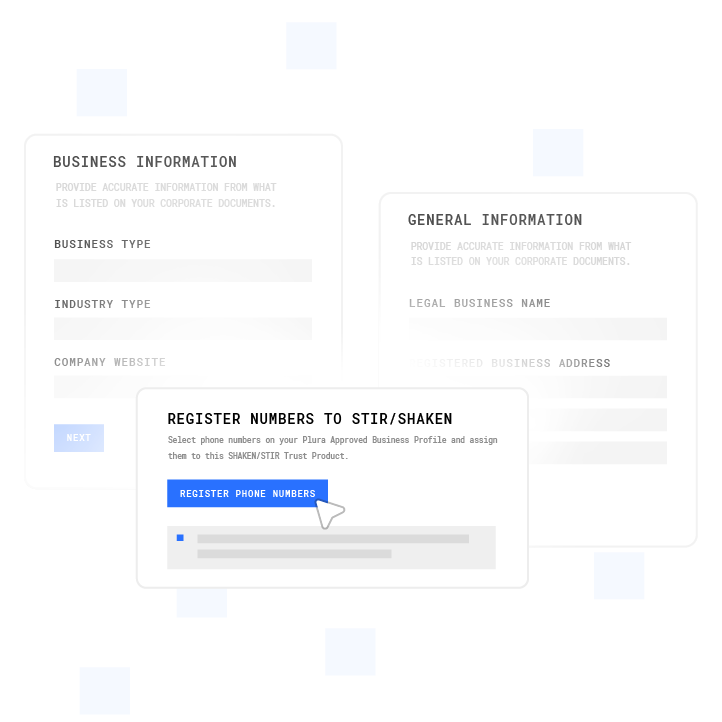
Plura AI operates as an FCC-licensed carrier, not an API reseller built on top of a third-party communications platform. Voice originates on Plura’s domestic infrastructure, which enables branded caller ID issuance at the carrier level, SHAKEN/STIR caller ID verification on every outbound call, and real-time DNC scrubbing before each contact attempt. Most AI voice tools route through third-party CPaaS providers and inherit that provider’s caller ID reputation instead of their own.
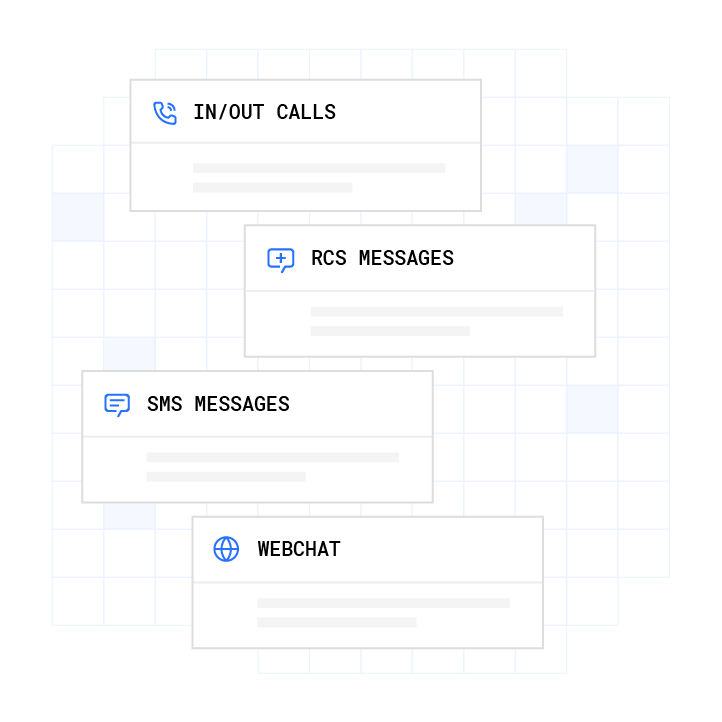
The platform’s Stateful Conversation Database keys every interaction to a customer token across voice, SMS, RCS, and webchat. An AI SMS thread started at 9 a.m. carries full context into a voice call at noon, so no channel starts from zero. This cross-channel memory allows Plura to run substantive qualification conversations instead of simple first-touch acknowledgments.
Plura’s compliance infrastructure supports compliance with TCPA, DNC, SOC 2, HIPAA, ISO certification, GDPR, and SHAKEN/STIR caller ID verification as core platform layers. Every outbound contact is checked against federal and state DNC registries in real time before dial. Quiet-hours rules enforce automatically through time-zone detection. Consent records are timestamped and immutable. Customers remain responsible for their own compliance obligations, and Plura provides infrastructure that supports those obligations.
The result is speed to lead under 5 seconds, 24/7, across every channel, without adding reps. Organizations deploying AI for speed to lead see response times drop from hours to seconds and connection rates increase by 3x to 5x.
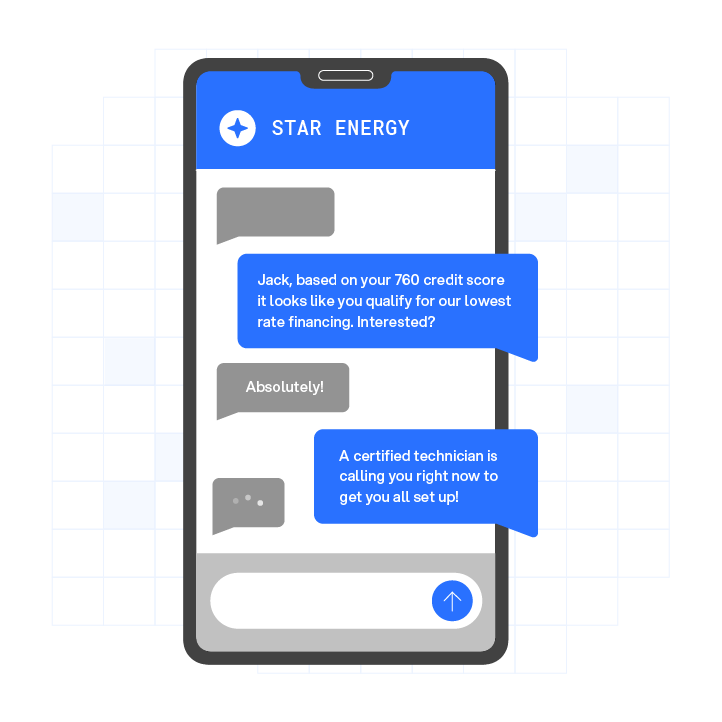
Book a live demo with Plura to see sub-5-second response in action across voice and SMS.
30-Day Measurement Checklist for Speed to Lead
Use the following metrics to evaluate performance in the first 30 days after deploying AI-assisted lead response.
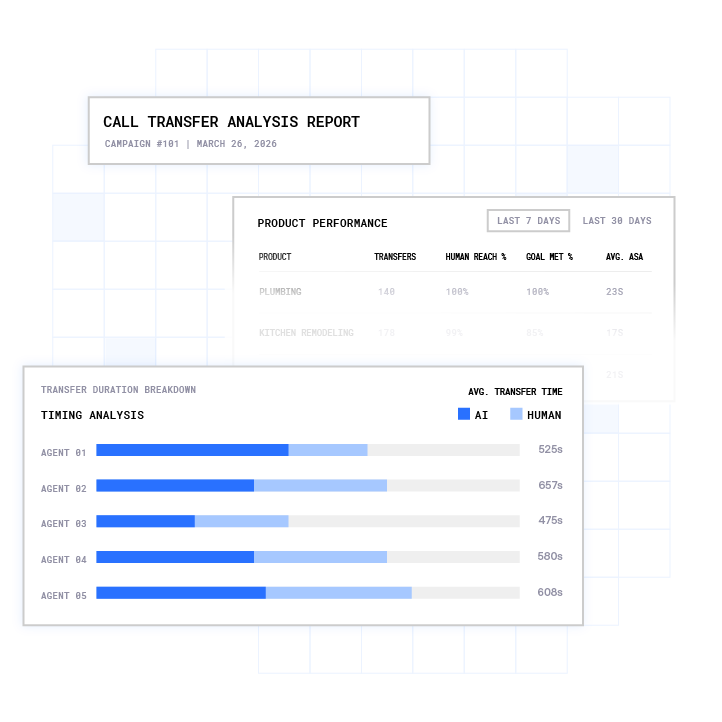
- First-response time: Median and 90th-percentile time from lead submission to first AI contact attempt, segmented by lead source and time of day.
- Contact rate: Percentage of leads that result in a two-way conversation, tracked separately for business-hours and after-hours submissions.
- Conversion rate: Percentage of contacted leads that advance to a qualified opportunity or booked appointment, compared against your pre-deployment baseline.
- Compliance adherence: Count of DNC scrub blocks, quiet-hours enforcements, and consent records logged. Review with your compliance team or qualified counsel against your applicable regulatory obligations.
- Cost per qualified lead: Total platform cost divided by qualified leads generated, compared against your prior cost per qualified lead from manual outreach.
Frequently Asked Questions
What is a good speed-to-lead benchmark in 2026?
The research-backed target for most industries is under 60 seconds. The 391% conversion advantage documented by Velocify highlights how quickly performance improves once teams reach that threshold. Documented research shows a strong first-responder advantage, even though specific claims that 78% of buyers purchase from the first company do not trace back to primary studies. For high-intent leads such as demo requests, pricing inquiries, and contact form submissions, the competitive standard in 2026 is under 5 minutes during business hours, with instant automated acknowledgment for after-hours submissions. The industry average remains 42 to 47 hours, so teams hitting the 60-second threshold compete against a baseline that often feels non-responsive to prospects.
How does after-hours lead response affect conversion rates?
Prompt response to after-hours leads improves contact rates compared to waiting until the next morning. Given that nearly half of high-intent leads arrive outside business hours, teams without automated coverage leave a large share of pipeline at risk. The recommended model uses instant AI acknowledgment within seconds of submission, with human follow-up queued for the next available rep window. This approach captures the benefits of immediate response without requiring on-call staffing.
Why cannot manual teams hit sub-5-minute SLAs at scale?
Manual teams face limits from headcount, shift coverage, and single-channel operation. A rep handling one call cannot respond to an SMS lead at the same time, and a team working 9 to 5 cannot respond to a 9 p.m. form submission without on-call staffing. Blazeo’s 2026 benchmark of 573 companies found that approximately 62% of AI-using companies meet the under-15-minute response standard, compared to 39% of manual-only businesses. The gap widens further at sub-5-minute and sub-60-second thresholds. For operators running 500 or more daily interactions, manual coverage requires headcount increases that erode the ROI of faster response.
What compliance considerations apply to automated lead response?
Automated outbound voice and SMS contact intersects with several regulatory frameworks, including TCPA, DNC, and state-level calling and texting window restrictions.2 These frameworks describe consent requirements, calling hours, and opt-out handling, among other obligations. Plura supports compliance with TCPA, DNC, SOC 2, HIPAA, ISO certification, GDPR, and SHAKEN/STIR caller ID verification through built-in infrastructure such as real-time DNC scrubbing before each contact, automated quiet-hours enforcement by time zone, and immutable consent logging.1 Operators remain responsible for their own compliance obligations and should consult qualified counsel regarding their specific regulatory requirements before deploying automated outreach.
How do I measure whether my speed-to-lead improvement is generating ROI?
Five metrics matter most: first-response time, contact rate, conversion rate, compliance adherence, and cost per qualified lead. Establish a pre-deployment baseline for each metric using CRM timestamp data. After deploying AI-assisted response, track weekly changes in contact rate and conversion rate by lead source. Cost per qualified lead provides the clearest ROI signal, since you can divide total platform cost by qualified leads generated and compare against your prior cost from manual outreach. Plura’s conversation intelligence highlights which scripts and conversation paths drive the highest conversion rates, which supports continuous improvement instead of a static deployment.
Conclusion: Turning Benchmarks Into Daily Practice
The 2026 speed-to-lead data is consistent across major benchmark studies. The industry average first-response time sits between 42 and 47 hours, while responding within 5 minutes delivers the 100x contact advantage and responding within 60 seconds drives a 391% conversion lift. A large share of high-intent leads arrive after hours, where many teams still have limited or no coverage.
Manual teams cannot close this gap at scale. The operators hitting sub-5-minute and sub-60-second SLAs in 2026 rely on AI infrastructure, not additional headcount. Plura’s FCC-licensed carrier stack delivers sub-5-second first contact across AI SMS and AI voice, 24/7, with real-time DNC scrubbing, SHAKEN/STIR caller ID verification, and a Stateful Conversation Database that carries context across every channel.
The six-step framework in this guide applies regardless of platform. Teams that audit current response times, map lead sources to tiers, configure 24/7 AI coverage, set quiet-hours rules, integrate their CRM, and measure weekly are the ones capturing the first-responder advantage that the research describes.
Run your numbers through Plura’s calculator to check your ROI in real time.
Compare Plura’s plans and rates to see which tier fits your lead volume and speed-to-lead goals.
1 Plura AI maintains SOC 2, HIPAA, ISO, and GDPR posture as part of its platform infrastructure. References to compliance frameworks in this article describe Plura’s platform capabilities and do not constitute a guarantee that any customer using Plura will themselves be compliant with applicable laws or standards. Customers remain solely responsible for their own regulatory obligations, certifications, consent management, recordkeeping, and the claims they make to their own end users. Consult qualified legal counsel for guidance specific to your use case.
2 This article describes regulatory frameworks at a general level and does not constitute legal advice. Laws and regulations vary by jurisdiction, change over time, and apply differently depending on facts and circumstances. Readers should consult qualified legal counsel before making compliance decisions.
3 Performance figures, customer outcomes, and industry statistics referenced in this article are drawn from cited third-party sources or Plura customer case studies. Individual results vary based on implementation, use case, industry, audience, and execution. Past or aggregate performance is not a guarantee of future results.
4 References to third-party products, services, companies, or research are made for informational and comparative purposes only. Plura AI is not affiliated with, endorsed by, or sponsored by any third party named in this article unless explicitly stated. Trademarks and product names referenced remain the property of their respective owners.
This article is provided for informational purposes only and reflects Plura AI’s understanding at the time of publication. Product capabilities, integrations, and specifications are subject to change. For the most current information, visit plura.ai.
This article was produced with the assistance of AI tools and reviewed by Plura AI prior to publication.