Best Sales Automation Tools for High-Volume Outbound Teams
ON THIS PAGE
Written by: Matt Beucler, CEO, Plura AI | Last updated: August 28, 2026
Updated August 2026
Sales automation tools that handle thousands of calls and texts each month need carrier-owned infrastructure, real-time TCPA and DNC compliance support, and stateful cross-channel memory.2 Plura AI delivers that layer with AI Voice, AI SMS, AI RCS, and an AI Predictive Dialer. Teams gain sub-5-second response, branded caller ID, and built-in SOC 2, HIPAA, ISO certification, GDPR, SHAKEN/STIR caller ID verification, TCPA compliance support, and DNC compliance support.1
Key Takeaways for High-Volume Sales Leaders
Generic sales tools like Apollo, Outreach, and Clay lack carrier-owned infrastructure, real-time compliance enforcement, and stateful cross-channel memory required for high-volume operations.4
Prospecting, CRM, engagement, and conversation intelligence platforms each solve only part of the workflow and rely on third-party CPaaS routing that creates spam labeling and compliance gaps.
Plura AI is an FCC-licensed carrier that delivers branded caller ID, SHAKEN/STIR verification, real-time DNC and TCPA compliance support, and sub-5-second response across voice, SMS, RCS, and webchat.
Plura’s Stateful Conversation Database maintains full context across every channel so AI agents never repeat questions or lose prior objections, which drives 2 to 3 times more appointments for solar and home services teams.3
Teams replacing 15 human SDRs with Plura see six-figure annual savings; book a live demo with Plura to experience the carrier-grade automation layer.
Prospecting and Enrichment Tools at High Volume
Prospecting platforms such as ZoomInfo, Apollo, and Clay excel at list-building and data enrichment for teams running hundreds of outreach sequences per month. The global sales tech market is projected to reach USD 20.3 billion by 2034, driven largely by demand for enrichment and intent data.5 At that scale, the category delivers real value.
Problems surface when volume climbs into the thousands of daily interactions. Enrichment data is pulled in batch jobs, not in real time during the conversation. A lead who fills out a form at 9 a.m. often gets contacted at noon with stale qualification data.
The larger issue is the lack of a carrier relationship. Prospecting tools pass a phone number or email address to a separate dialer or SMS platform. That platform usually routes through a third-party CPaaS (Communications Platform as a Service, the API-only telecom layer that providers like Twilio sell to vendors that do not own their own carrier). This structure means no branded caller ID, no DNC scrubbing before dial, and no compliance enforcement at the point of contact.
Studies show that SDRs using AI tools can increase emails sent per day while positive reply rates may decline. Generic enrichment tools accelerate that volume-without-quality problem instead of solving it.
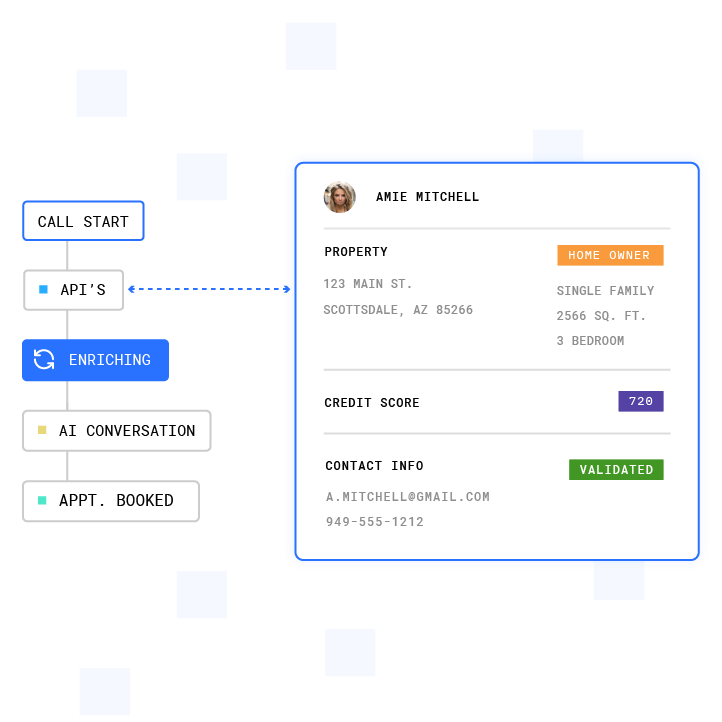
Plura Lead Intelligence enriches customer data with AI-powered insights, validation, and lead qualification to improve conversion performance.
CRM workflow automation fires triggers, sends an email, creates a task, or updates a field, but it does not hold a conversation. It does not dial a number, handle a live objection, or remember what was said on a prior SMS thread when a voice call comes in. At high volume, the gap between CRM record and live conversation becomes the compliance exposure point.
A CRM has no built-in mechanism to check a number against the National DNC Registry before a rep dials it. It has no quiet-hours enforcement by time zone. It stores consent records, but it does not enforce them at the moment of contact.
TCPA class actions filed in the first half of 2025 increased 95.2% compared to the same period in 2024, reaching 1,052 cases. CRM-only automation does not reduce that exposure. It concentrates it because the volume is high and the enforcement layer is absent.
The dialer creates that ceiling. Most engagement platforms route calls through a third-party CPaaS. The caller ID presented to the prospect is not branded at the carrier level. It reflects whatever reputation the CPaaS number pool carries.
Human SDRs dial 15 to 25 times per hour while AI voice agents can run 100 to 500+ simultaneous calls, delivering a 20 to 50 times scale advantage per seat. Generic engagement platforms cannot support that throughput without routing through infrastructure they do not own. That structure creates both a performance bottleneck and a compliance gap.
Yes, SHAKEN/STIR caller ID verification and branded caller ID issued at the carrier level on every outbound call
Yes, voice and SMS share the same Stateful Conversation Database, so context persists across every touchpoint
Why Standalone Conversation Intelligence Misses Live Context
Conversation intelligence tools such as Gong, Chorus, and Salesloft Conversations record calls, transcribe them, and surface coaching insights. Post-call AI automation transcribes calls, generates summaries, logs CRM data, and surfaces talk-to-listen ratios and key topics, eliminating the 30 to 60 minutes per day reps typically spend on manual logging. That shift creates a real productivity gain for teams where humans handle the talking.
For high-volume AI-driven operations, the limitation is timing. Post-call analysis is retrospective. It explains what happened after the conversation ends, but it does not feed that intelligence back into the next conversation in real time.
A prospect who raises a price objection on a Monday call often receives the same opening script on a Wednesday SMS follow-up. The conversation intelligence tool and the SMS platform do not share memory, so the AI cannot adapt based on prior objections.
For teams running thousands of monthly interactions, the compounding cost of that context loss is significant. Every repeated question, every re-explained offer, and every missed objection signal represents a conversion that did not happen.
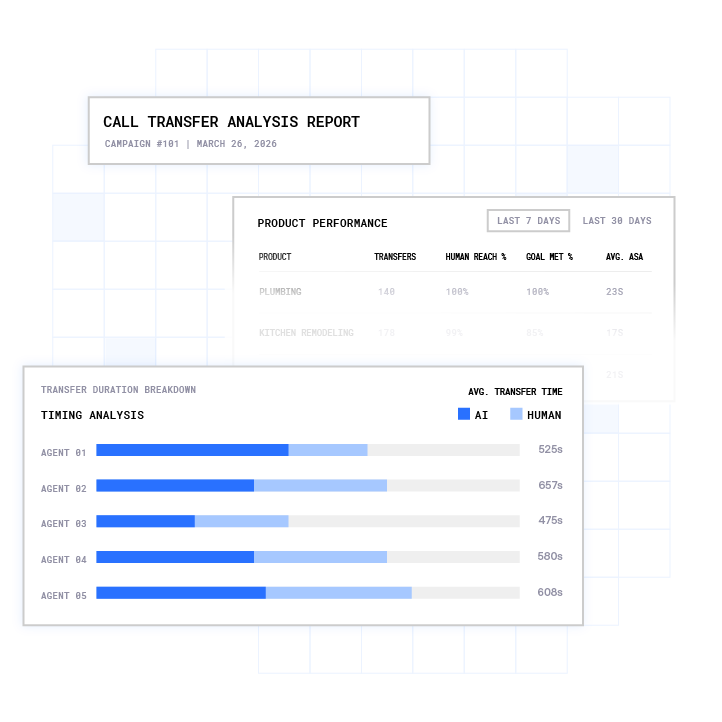
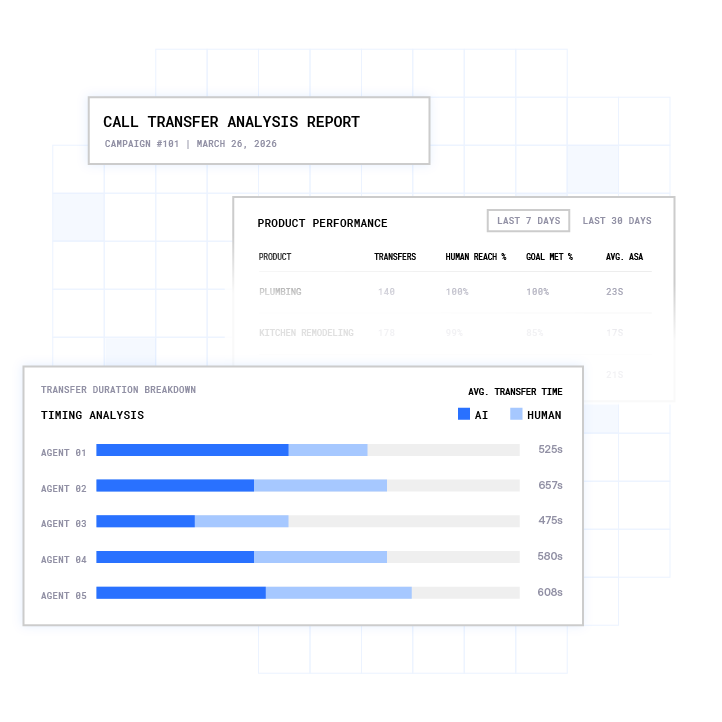
Plura Conversation Intelligence gives businesses AI-powered analytics, call transfer tracking, and customer interaction insights across every conversation.
Yes, analyzes every interaction across voice, SMS, RCS, and webchat and feeds findings back into workflow tuning
Yes, compliance enforcement sits upstream of every conversation, not as a post-call audit layer
Yes, intelligence reads from and writes to the same Stateful Conversation Database the AI agents use live
AI Voice and SMS Agents on an FCC-Licensed Carrier
Prospecting, CRM, outreach, and conversation intelligence each solve part of the high-volume outbound problem. None of them owns the carrier. That structural gap drives spam labeling, compliance exposure, and context loss at scale.
Plura AI operates as its own FCC-licensed audio bridging carrier, which means voice traffic does not route through Twilio or another CPaaS. Because Plura owns the carrier layer, branded caller ID is issued directly at the carrier level instead of being bolted on through a reseller. This ownership also enables SHAKEN/STIR caller ID verification on every outbound call and real-time DNC scrubbing before each dial. TCPA compliance enforcement, quiet-hours rules, consent logging, and opt-out processing function as a first-class layer of the platform rather than a loose configuration.
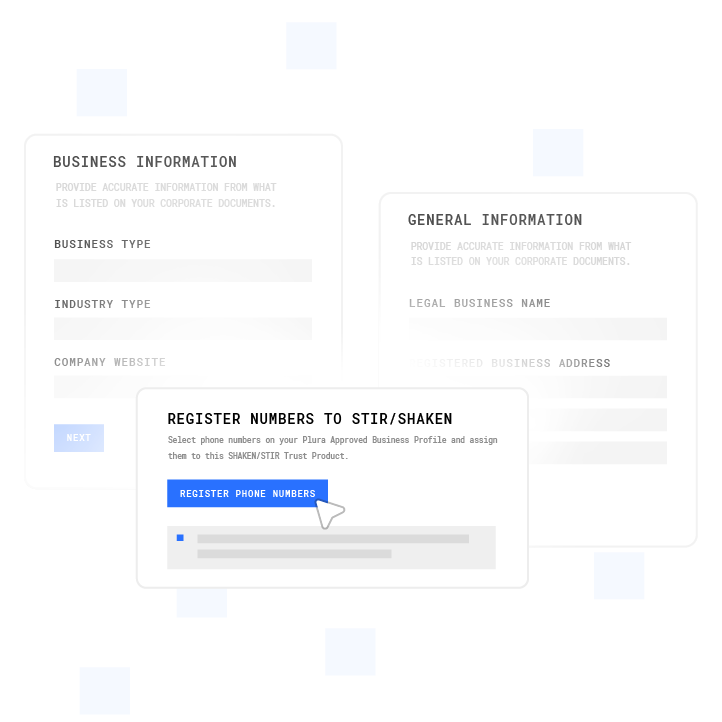
Plura’s FCC-licensed AI communications platform simplifies compliant business registration and phone number provisioning for AI Voice, SMS, RCS, and Webchat workflows.
The second structural gap is memory. Plura’s AI Voice, AI SMS, AI RCS, and AI Webchat all share a single Stateful Conversation Database. Every interaction is keyed to a customer token, phone number, email, or ID. Every channel then inherits the full memory of every prior touchpoint.
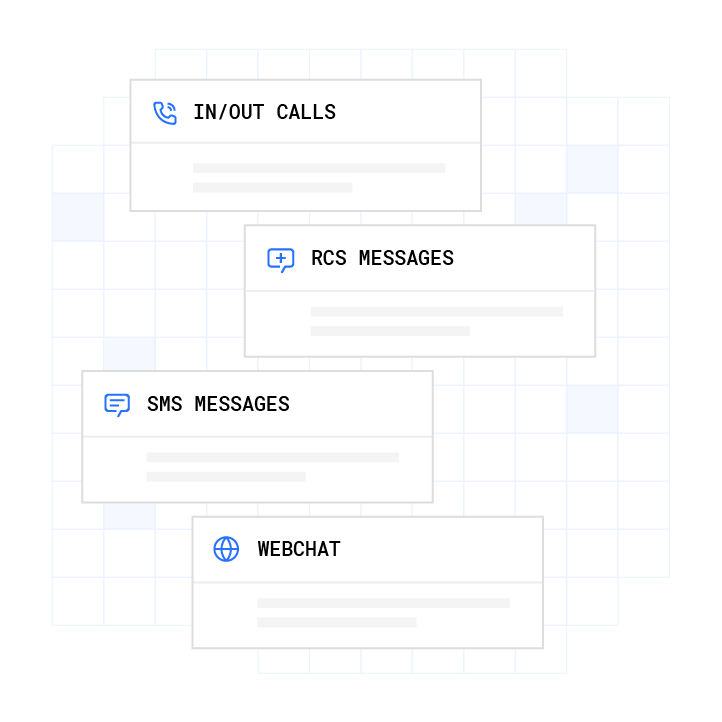
Plura Unified Inbox centralizes AI Voice, SMS, RCS, and Webchat conversations into one streamlined omnichannel communication workspace.
A prospect who texts at 9 a.m. is the same prospect when the AI Predictive Dialer reaches them at noon. The AI already knows what was offered, what was declined, and what remains open.
Plura Predictive Dialer automates outbound calling with AI-powered pacing, transfer optimization, and real-time performance analytics.
Twilio-based tools cannot replicate this structure. They rent the carrier layer, so caller ID reputation belongs to the CPaaS, DNC scrubbing functions as a bolt-on, and conversation memory across channels requires custom engineering that most operators cannot maintain at scale.
Book a live demo with Plura to see the carrier-grade automation layer running across voice, SMS, RCS, and webchat in a single workflow.
90-Day ROI Math for a 15-Rep Replacement Scenario
The economics of replacing human SDRs with AI agents are straightforward. The default scenario on Plura’s ROI calculator uses a 15-agent operation paying $20 per hour with standard taxes, benefits, and commissions, at a 40% talk-utilization rate typical of human contact-center work. That operation costs $60,000 per month to run.
Replacing that team with Plura at $15 per hour, 100% talk utilization, and 6 Plura agents doing the work of 15 humans drops the monthly cost to $14,400. The savings stack as follows:
30-day savings: $45,600
12-month savings: $547,200
60-month savings: $2,736,000
For higher-volume operations, the same model produces a Total Cost of Ownership of $700,000 per year against a traditional contact-center benchmark of $7,000,000. That gap represents a 10 times cost reduction on equivalent volume.
What are the best sales automation tools for high-volume outbound teams in 2026?
High-volume outbound teams perform best with tools that own their carrier infrastructure, support TCPA and DNC compliance before every contact, and maintain stateful memory across voice, SMS, RCS, and webchat. Generic prospecting platforms, CRM automation, and sales engagement tools handle parts of the workflow but lack carrier-grade infrastructure. Plura AI addresses all three gaps with an FCC-licensed carrier, a Stateful Conversation Database, and the compliance framework described earlier, running across four channels on a single platform.
Which CRM is best for sales teams running thousands of monthly interactions?
No CRM alone is sufficient for high-volume outbound operations. CRMs such as Salesforce, HubSpot, and Zoho act as the system of record for accounts and deals, but they do not initiate or manage live conversations at carrier grade. The practical answer for high-volume teams is a CRM paired with a carrier-owned AI platform. Plura integrates with HubSpot, Salesforce, and Zoho, writing conversation outcomes back to the CRM in real time while the AI handles the actual contact, compliance enforcement, and cross-channel memory.
Will CRM be replaced by AI in sales operations?
CRM systems are unlikely to be replaced outright, but their role is narrowing. In 2026, the CRM functions as a record store and reporting layer, while AI agents handle customer conversations, lead qualification, and follow-up cadences. The operational intelligence that used to live in CRM dashboards increasingly comes from AI conversation platforms that analyze every interaction across voice, SMS, RCS, and webchat. Teams that treat CRM and AI as complementary layers, rather than alternatives, see the strongest pipeline results.
What is stateful cross-channel memory and why does it matter for outbound sales?
Stateful cross-channel memory means that every interaction a customer has across voice, SMS, RCS, and webchat is stored in a single database keyed to that customer’s identity. When the AI contacts a prospect by phone, it already knows what was said in the prior SMS thread, including what was offered, what was declined, and which objections were raised. Without stateful memory, each channel starts from zero. The customer has to re-explain themselves, the AI cannot reference prior offers, and conversion rates suffer. Plura’s Stateful Conversation Database is the architectural layer that makes cross-channel memory possible at scale.
How does carrier-grade infrastructure reduce spam labeling for outbound calls?
Spam labeling occurs at the carrier level. When an AI voice platform routes calls through a third-party CPaaS such as Twilio, the caller ID reputation belongs to that CPaaS number pool, not to the operator’s brand. Plura issues branded caller ID directly through its FCC-licensed carrier, so calls present with the company’s name instead of an unfamiliar number. SHAKEN/STIR caller ID verification runs on every outbound call, which destination carriers use to verify legitimate origination. Platforms that rent their carrier layer cannot match this control because they do not manage the identity layer at the point of origination.
What compliance frameworks does Plura support for high-volume voice and SMS outreach?
Plura supports compliance with SOC 2, HIPAA, ISO certification, GDPR, SHAKEN/STIR caller ID verification, TCPA, and DNC frameworks. The platform enforces real-time DNC scrubbing before every outbound contact, logs consent records with timestamps, applies quiet-hours rules automatically by time zone, and exports audit-ready reports on demand. Customers remain responsible for their own regulatory obligations and the claims they make to their end users. Plura provides the infrastructure layer. Teams with specific compliance questions should consult qualified legal counsel and review the applicable regulations directly.
Conclusion: The Carrier-Grade Layer High-Volume Teams Are Missing
Generic sales automation tools such as prospecting platforms, CRM workflows, engagement cadences, and post-call analytics each solve one piece of the high-volume outbound problem. None of them owns the carrier, enforces compliance at the point of contact, or maintains stateful memory across voice, SMS, RCS, and webchat by default. That missing layer limits scale and increases risk.
Plura AI supplies that layer through an FCC-licensed carrier, a Stateful Conversation Database, and a compliance engine that runs before every dial as part of the core platform. AI agents then operate on top of that foundation.
1 Plura AI maintains SOC 2, HIPAA, ISO, and GDPR posture as part of its platform infrastructure. References to compliance frameworks in this article describe Plura’s platform capabilities and do not constitute a guarantee that any customer using Plura will themselves be compliant with applicable laws or standards. Customers remain solely responsible for their own regulatory obligations, certifications, consent management, recordkeeping, and the claims they make to their own end users. Consult qualified legal counsel for guidance specific to your use case.
2 This article describes regulatory frameworks at a general level and does not constitute legal advice. Laws and regulations vary by jurisdiction, change over time, and apply differently depending on facts and circumstances. Readers should consult qualified legal counsel before making compliance decisions.
3 Performance figures, customer outcomes, and industry statistics referenced in this article are drawn from cited third-party sources or Plura customer case studies. Individual results vary based on implementation, use case, industry, audience, and execution. Past or aggregate performance is not a guarantee of future results.
4 References to third-party products, services, companies, or research are made for informational and comparative purposes only. Plura AI is not affiliated with, endorsed by, or sponsored by any third party named in this article unless explicitly stated. Trademarks and product names referenced remain the property of their respective owners.
5 This article contains forward-looking statements regarding industry trends, technology adoption, and future capabilities. These statements reflect current expectations and are subject to change. Plura AI undertakes no obligation to update forward-looking statements except as required.
This article is provided for informational purposes only and reflects Plura AI’s understanding at the time of publication. Product capabilities, integrations, and specifications are subject to change. For the most current information, visit plura.ai.
This article was produced with the assistance of AI tools and reviewed by Plura AI prior to publication.