

Written by: Matt Beucler, CEO, Plura AI | Last updated: August 29, 2026
Key Takeaways for 2026 AI Call Center Decisions
- Only platforms that own their FCC-licensed carrier stack and run 100% U.S. infrastructure can realistically support full AI agent replacement in 2026.
- Plura AI is the sole provider that meets these requirements while running stateful, omnichannel conversations across voice, SMS, RCS, and webchat.
- Offshore BPOs face growing scrutiny from the FCC NPRM and state onshoring laws, which turns many contracts into compliance risks.
- CPaaS-based AI tools lack carrier ownership, branded caller ID, and real-time DNC enforcement, which limits their ability to scale under 2026 rules.
- Teams ready to replace their call-center stack with carrier-grade AI can book a live demo with Plura AI today.
Market Context: Why Legacy Call Center Models Are Failing
High-volume operators now face rising interaction volume, shrinking response-time expectations, fragmented channels, and tighter U.S. compliance scrutiny. These pressures force a full review of legacy call-center models.
U.S. contact center spend runs $25 to $50 billion annually, with 60 to 70% of operating costs tied to agent labor. Annual agent turnover runs 30 to 45%, which keeps hiring and retraining constant. At the same time, the industry standard for first contact on an inbound lead is 47+ hours, even though a 60-second response lifts conversions by 391%.
The $400 billion offshore BPO industry is also losing its regulatory cover. The FCC’s Notice of Proposed Rulemaking (NPRM, CG Docket No. 26-52) proposes capping offshore customer-service calls at 30% and prohibiting offshore handling of sensitive consumer data. Companion federal legislation and state laws in New York, New Jersey, Connecticut, Missouri, and Florida already restrict offshore handling of medical, financial, and consumer data. Readers should consult the regulation or qualified counsel for obligations specific to their operations.
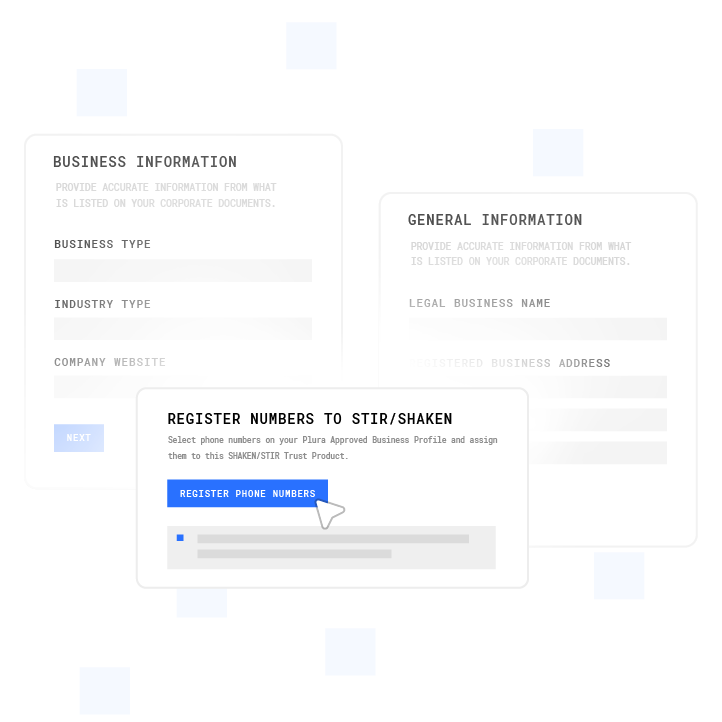
The wave of AI voice and SMS tools that arrived in the last two years looks like an escape hatch but usually is not. Most vendors are API resellers built on third-party telecom carriers. They cannot own branded caller ID, enforce real-time DNC scrubbing at the carrier level, or align with the FCC’s proposed foreign-infrastructure restrictions.4
Executive Summary: A Six-Point Evaluation Framework
Leaders evaluating AI call center software need a structured model, not feature checklists. Five criteria separate full AI agent replacement from AI-assisted tools: speed, channel coverage, compliance posture, integration depth, and operational fit. U.S. carrier ownership is the sixth factor that determines whether a platform can sustain full replacement in 2026.
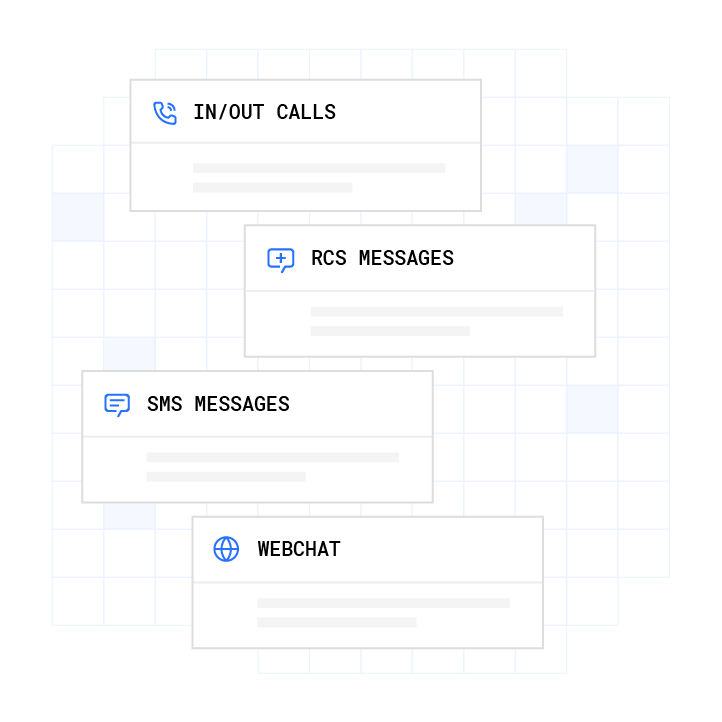
Plura AI addresses all six. It operates as its own FCC-licensed audio bridging carrier, not a wrapper on Twilio or another CPaaS provider. Its AI voice agent, AI SMS, AI RCS, and AI webchat all share a Stateful Conversation Database. A customer who texted at 9 a.m. is recognized when the call comes at noon. Voice origination, model hosting, data storage, and call recording all run on domestic infrastructure.
Book a live demo with Plura to see the full carrier stack in action.
Industry Landscape: Four Call Center Solution Paths
High-volume operators in 2026 choose from four solution categories, each with distinct cost, control, and regulatory trade-offs.
In-house human teams deliver quality and control but carry a cost structure that breaks at scale. A 100-seat contact center running traditional operations costs $4 million to $7 million annually, with linear scaling. More volume requires proportional headcount.
Offshore BPOs solved the cost problem for two decades through wage arbitrage. The fully loaded cost per hour for offshore call centers, including turnover, training, QA, management, and technology, is $14 to $22. That model now faces the FCC NPRM, state onshoring laws, and sensitive-data restrictions. Every offshore contract a covered entity holds becomes a compliance exposure that leaders should review with counsel.
CPaaS-based AI tools, built as wrappers on Twilio or similar carriers, offer fast deployment but lack carrier ownership. They cannot issue branded caller ID under their own identity, cannot enforce compliance before the call leaves the network, and carry foreign-infrastructure exposure under the FCC NPRM.
End-to-end AI platforms with owned carrier infrastructure form the only category positioned for full agent replacement under 2026 U.S. regulatory conditions. Plura is the only option in this category that holds an FCC license, runs 100% U.S. infrastructure by architecture, and delivers stateful omnichannel conversations across all four channels.
Strategic Tradeoffs: AI Automation vs Human Oversight
The choice between full AI agent replacement and AI-assisted tools is a structural decision. It affects cost, compliance risk, and scalability for every campaign.
Most organizations already run some AI or automation. Only a small percentage report AI autonomously resolving a meaningful share of customer interactions from start to finish. That gap between adoption and full replacement is where most operators stall.
AI-assisted tools such as copilots, agent assist, and summarization make existing agents faster. A study of more than 5,000 service agents found that access to an AI assistant lifted issues resolved per hour by about 15% on average, with newer agents improving as much as 35%.3 These tools preserve human judgment for complex interactions but do not reduce headcount or break the linear cost structure.
Full AI agent replacement removes the human from routine contacts. Plura voice agents scale instantly to handle 10x volume overnight with zero additional hiring or training, while offshore call centers typically require 4 to 8 weeks to recruit and train additional agents. The AI Predictive Dialer routes only live connections to human agents when escalation is warranted, which maximizes talk time per seat.
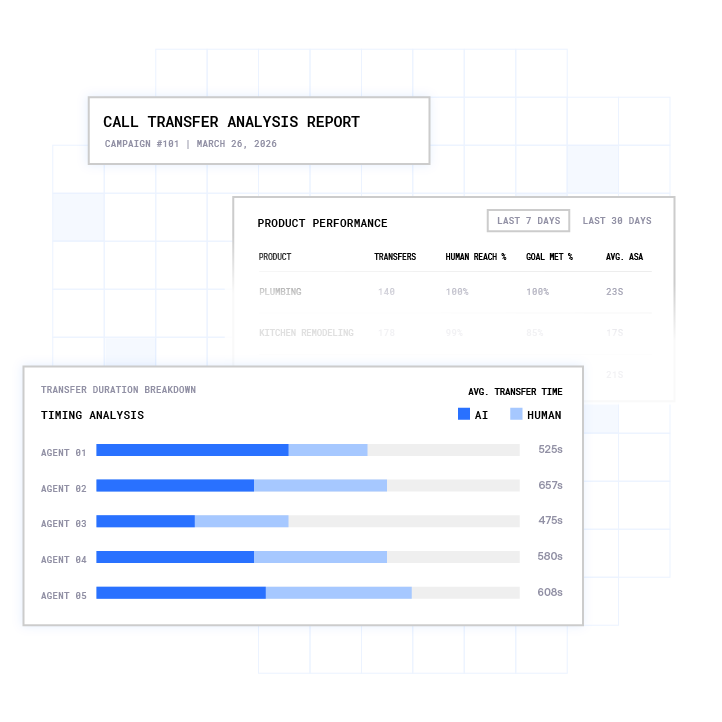
Channel orchestration adds another layer of complexity that many teams underestimate. In Plura, voice, SMS, RCS, and webchat share one architecture rather than four disconnected tools. The conversation intelligence layer reads from the same Stateful Conversation Database across every channel, so pricing offers made in SMS remain visible when the voice call arrives. The no-code workflow builder lets operators design these cross-channel pathways without engineering support.
Implementation Readiness: Six Checks Before You Deploy
Teams should run a quick readiness assessment across six dimensions before selecting a platform. Each step builds on the previous one.
- Interaction volume: Start by confirming volume. A practical floor of 500 daily interactions or $5,000 monthly paid-media spend usually justifies the deployment depth required for full AI replacement.
- Process maturity: Once volume is confirmed, review process documentation. Call scripts, qualification criteria, and escalation rules must exist in writing because AI cannot replace a process that has not been defined.
- Data quality: With workflows documented, validate data quality. CRM records, consent documentation, and DNC suppression lists need to be current and accessible through integrations before go-live.
- Compliance requirements: Next, map TCPA, DNC, HIPAA, SOC 2, and state-level rules to the platform’s enforcement layer. Readers should consult qualified counsel to determine which frameworks apply to their operations.
- Internal ownership: Assign a clear owner for conversation workflow iteration. This role differs from a technical administrator and focuses on ongoing performance improvement.
- Integration needs: Finally, map CRM, calendar, payment, and attribution systems. Plura connects to 50+ tools across HubSpot, Salesforce, Zoho, Calendly, Stripe, and others.
Common AI Deployment Pitfalls to Watch For
- Automating broken workflows: AI executes the process it receives. If the qualification script underperforms or the escalation path is unclear, the AI will repeat those failures at scale. Teams should audit workflows before building the agent.
- Underestimating compliance complexity: TCPA and DNC compliance involve more than checkbox settings. A compliant AI calling workflow can include purpose-specific consent capture, real-time DNC suppression, automated opt-out processing targeting under 2 seconds, and immutable audit logs retained for at least 5 years. Plura supports these requirements at the platform level, while operators remain responsible for their own compliance posture and should consult qualified counsel.
- Treating channels as separate systems: Deploying an AI voice agent from one vendor and an AI SMS tool from another creates two separate memories. A customer who texted yesterday must re-explain themselves on today’s call. Stateful cross-channel memory functions as an architectural requirement, not a future add-on.
- Measuring activity instead of outcomes: Call volume, message count, and handle time are activity metrics. Cost per completed action, conversion rate, and pipeline growth are outcome metrics. The conversation intelligence layer surfaces outcome-based metrics, not just dashboard summaries.
Comparison: Plura AI vs Human Teams, BPOs, and CPaaS AI
| Criterion | In-House Teams | Offshore BPOs | CPaaS-Based AI Tools | Plura AI |
|---|---|---|---|---|
| Speed to first contact | Hours to days, depending on human queues | Hours, affected by time zones and shift coverage | Seconds, with pickup rates tied to carrier behavior | Under 5 seconds across voice, SMS, RCS, and webchat |
| Channel coverage | Voice primary, SMS and chat via separate tools | Voice and email primary, limited SMS and RCS | Voice and SMS, RCS and webchat vary by vendor | Voice, SMS, RCS, and webchat on one stateful database |
| Compliance posture | Manual processes with human error risk on TCPA and DNC | Offshore data handling exposed to FCC NPRM CG Docket No. 26-52 and state onshoring laws | Compliance added later, no carrier-level DNC enforcement before dial | TCPA, DNC, HIPAA, SOC 2, and SHAKEN/STIR caller ID verification supported at the carrier level before every contact1 |
| Integration depth | CRM-dependent, manual data entry common | Limited, offshore teams use client-provided tools | API-based, integration quality varies by vendor | 50+ integrations across CRM, calendar, payment, attribution, and enrichment |
| Operational fit (scalability) | Linear headcount growth, 2 to 4 week ramp per hire | 4 to 8 weeks to recruit and train additional agents | Scales on volume, but lack of carrier ownership limits branded ID and compliance enforcement | Instant scalability to 10x volume with no hiring or training lag |
| U.S. carrier ownership | No, relies on third-party telephony | No, uses offshore infrastructure | No, operates as a CPaaS reseller that rents the carrier layer | Yes, FCC-licensed audio bridging carrier with 100% U.S. infrastructure by architecture |
AI and Call Center Jobs: What Actually Changes
Gartner projects that agentic AI will autonomously resolve 80% of common customer service issues without human intervention by 2029.5 AI is taking over specific categories of call center work rather than the entire function.
A December 2025 Gartner survey found that over 80% of organizations expect to reduce agent headcount within 18 months through attrition, hiring pauses, or layoffs, while nearly 80% plan to move agents into new positions. Routine, high-volume, low-complexity interactions shift to AI, while the contact center function remains.
63% of customers do not believe AI could ever replace human beings in customer service roles, citing advantages in solving complex, multi-issue, billing, and technical problems. Most high-volume operators land on a hybrid model where AI handles the volume and humans handle the exceptions. Plura’s escalation architecture supports this pattern directly, with warm-transfer paths from AI to U.S. agents built into every workflow.
How Call Centers Use AI Across the Customer Journey
AI agents now sit alongside copilots, knowledge search, traditional chatbots, and automated summarization as core capabilities in modern contact centers. Teams use AI across the full interaction lifecycle, not just at the moment of customer contact.
The primary use cases in 2026 fall into three categories.
- Full conversation handling: AI voice agents and AI SMS agents manage inbound qualification, outbound follow-up, appointment scheduling, and lead nurturing end to end. Plura’s AI voice agent handles calls from greeting to handoff, with SHAKEN/STIR caller ID verification on every outbound call and branded caller ID issued at the carrier level.
- Agent assistance: Copilots surface real-time guidance, suggested responses, and compliance language during live calls. This agent assistance delivers the 15% productivity lift described earlier without reducing headcount requirements.
- Post-interaction intelligence: Automated summarization, transcript analysis, and conversion pattern detection. Plura’s conversation intelligence layer generates client-ready reports automatically and feeds findings back into workflow tuning.
Many companies also use agentic AI for customer self-service, with organizations that measure its impact often reporting revenue gains and reduced costs.
Current Call Center Software Stacks and the Shift to AI-Native
January 2026 ContactBabel research reports that 21% of U.S. contact centers use agent assistance or a copilot, with more than 7 in 10 planning to use this type of generative AI within two years. Most stacks still combine a CCaaS platform, a CRM, a separate dialer, and a compliance bolt-on, each with its own contract and integration risk.
The dominant CCaaS platforms were designed for human agents, then extended with AI features. Five9, for example, follows the per-seat licensing model with the 3-to-6-month deployment cycle typical of legacy CCaaS platforms.4 These systems focus on human agent management rather than autonomous AI conversation handling.
The shift toward AI-native platforms is accelerating. Metrigy’s research found that 79% of companies already running AI voice and chat agents plan to upgrade or replace them by 2027.5 Leaders cite the gap between what CPaaS-based AI tools promise and what they deliver on compliance, carrier ownership, and cross-channel memory.
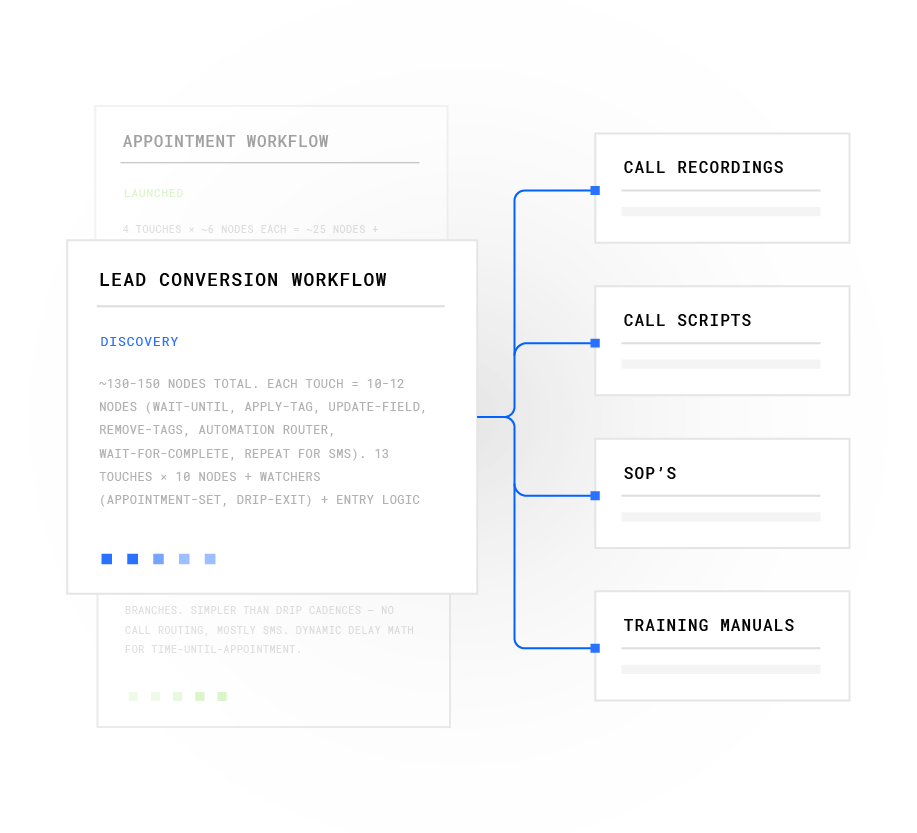
Plura replaces the dialer, the AI voice platform, the SMS tool, the compliance bolt-on, and the analytics layer with a single stack. Plura deployment takes 2 to 4 weeks from contract to live AI conversations across all channels, compared with 3 to 6 months for traditional enterprise CCaaS setups.
Book a live demo with Plura to see how the platform replaces your current stack.
Conclusion: Applying the Framework in a Tightening Regulatory Climate
The six-point framework of speed, channel coverage, compliance posture, integration depth, operational fit, and U.S. carrier ownership creates a clear decision boundary in 2026. Platforms that do not own their carrier stack cannot enforce compliance before the call leaves the network, cannot issue branded caller ID under their own identity, and may not align with the FCC NPRM’s foreign-infrastructure proposals. Offshore BPOs face a regulatory wall that state and federal law continues to build. In-house human teams carry a cost structure that AI has made difficult to justify for routine, high-volume interactions.
The 10x cost reduction outlined at the start, $700,000 versus $7 million on equivalent volume, reflects the structural impact of carrier ownership and full AI replacement. The 30-day ROI on a 15-agent replacement scenario is $45,600, with 12-month savings of $547,200.3 The platform delivers 3x average ROI in 90 days, 47% average pipeline growth, and 90% faster lead-response time in the default scenario.
All regulatory references in this article describe frameworks neutrally. Readers should consult the regulation or qualified counsel to determine obligations specific to their operations and jurisdictions.
Run your numbers through Plura’s ROI calculator to check your cost savings in real time.
Compare plans and rates side by side at plura.ai/pricing.
Frequently Asked Questions
What is the difference between full AI agent replacement and AI-assisted tools in a call center?
Full AI agent replacement means the AI handles a customer interaction from start to finish, including greeting, qualification, objection handling, and disposition, without a human agent in the loop for routine contacts. AI-assisted tools, also called copilots or agent assist, keep a human agent on the call and surface real-time guidance, suggested responses, and compliance language to support that agent. The structural difference is cost and scalability. Full replacement breaks the linear relationship between volume and headcount, while AI assistance makes existing agents more productive without reducing the number of seats required.
The compliance implications also differ. Full replacement requires the AI platform to support TCPA, DNC, consent management, and quiet-hours rules through automated enforcement on every contact. AI-assisted tools rely on the human agent to apply those rules correctly. Plura’s architecture supports full replacement with carrier-level enforcement built into every outbound contact, plus defined escalation paths to U.S. agents when a workflow gate triggers.
What 2026 regulatory requirements affect AI voice calls in U.S. call centers?
Several regulatory frameworks are active or proposed as of August 2026. The FCC’s February 2024 Declaratory Ruling classified AI-generated voice calls within the TCPA’s artificial or prerecorded voice category, which confirms that existing consent, identification, and opt-out obligations apply to AI outbound calls.2 The FCC NPRM (CG Docket No. 26-52) proposes capping offshore customer-service calls at 30% and prohibiting offshore handling of sensitive consumer data, including passwords, multi-factor authentication codes, Social Security numbers, and banking data.2
State-level activity includes California’s AI transparency requirements that reached their operative date in August 2026, Texas’s Responsible AI Governance Act effective since January 2026, and onshoring or data-restriction laws in New York, New Jersey, Connecticut, Missouri, and Florida. These frameworks are described here neutrally. Readers should consult the regulation or qualified counsel to determine which requirements apply to their specific operations, verticals, and customer geographies.
How does Plura AI support TCPA and DNC compliance for high-volume outbound operations?
Plura supports compliance through platform-level enforcement built into every outbound contact, rather than a paperwork layer added after the fact. Every outbound contact is checked against federal and state DNC registries in real time before dial, which blocks non-compliant numbers before the first attempt. Consent records are timestamped and immutable, with express written consent tracked per contact. Quiet-hours rules enforce automatically through time-zone detection on the contact, applying state and federal calling-window restrictions to every campaign.
SHAKEN/STIR caller ID verification runs on every outbound voice call. The compliance dashboard exports audit-ready reports in one click for legal review, carrier requirements, or regulatory inquiries. Plura provides this infrastructure, while customers remain responsible for their own compliance posture, certifications, and the claims they make to their end users. Readers should consult qualified counsel to confirm how these platform capabilities map to their specific regulatory obligations.
What is the total cost of ownership difference between Plura AI and a traditional 15-agent contact center?
Using the default inputs on Plura’s ROI calculator, a 15-agent operation paying $20 per hour with standard taxes, benefits, and commissions at 40% talk utilization costs $60,000 per month to operate. Replacing that team with Plura at $15 per hour, 100% talk utilization, and 6 Plura agents doing the work of 15 humans drops the monthly cost to $14,400. The 30-day savings are $45,600, the 12-month savings are $547,200, and the 60-month savings are $2,736,000.
For larger operations, Plura’s TCO of $700,000 per year replaces the traditional $7 million contact center cost structure on equivalent volume in the default scenario. These figures reflect the calculator’s baseline assumptions. Actual results depend on call volume, average handle time, current agent cost structure, and deployment configuration. Operators can adjust all inputs directly at plura.ai/calculator to model their specific operation.
How long does it take to deploy Plura AI for a high-volume contact center operation?
Most operations deploy Plura in 2 to 4 weeks from contract to live AI conversations across all channels. The onboarding sequence includes a discovery audit of the customer’s business and call economics, intake of sample calls, SOPs, and existing scripts, an overnight build of a dynamic conversation mockup, a review meeting to iterate on the mockup, engineering build of the production workflow, a pilot test on a subset of real calls, and full go-live.
Complex multi-step intake flows, such as a 25-question health-history survey, typically run closer to one to two months because the workflow logic itself requires additional design and validation time. Every annual contract includes a 90-day opt-out window. If the deployment is not delivering, the customer is not held to the annual term.
1 Plura AI maintains SOC 2, HIPAA, ISO, and GDPR posture as part of its platform infrastructure. References to compliance frameworks in this article describe Plura’s platform capabilities and do not constitute a guarantee that any customer using Plura will themselves be compliant with applicable laws or standards. Customers remain solely responsible for their own regulatory obligations, certifications, consent management, recordkeeping, and the claims they make to their own end users. Consult qualified legal counsel for guidance specific to your use case.
2 This article describes regulatory frameworks at a general level and does not constitute legal advice. Laws and regulations vary by jurisdiction, change over time, and apply differently depending on facts and circumstances. Readers should consult qualified legal counsel before making compliance decisions.
3 Performance figures, customer outcomes, and industry statistics referenced in this article are drawn from cited third-party sources or Plura customer case studies. Individual results vary based on implementation, use case, industry, audience, and execution. Past or aggregate performance is not a guarantee of future results.
4 References to third-party products, services, companies, or research are made for informational and comparative purposes only. Plura AI is not affiliated with, endorsed by, or sponsored by any third party named in this article unless explicitly stated. Trademarks and product names referenced remain the property of their respective owners.
5 This article contains forward-looking statements regarding industry trends, technology adoption, and future capabilities. These statements reflect current expectations and are subject to change. Plura AI undertakes no obligation to update forward-looking statements except as required.
This article is provided for informational purposes only and reflects Plura AI’s understanding at the time of publication. Product capabilities, integrations, and specifications are subject to change. For the most current information, visit plura.ai.
This article was produced with the assistance of AI tools and reviewed by Plura AI prior to publication.