

Written by: Matt Beucler, CEO, Plura AI | Last updated: August 29, 2026
Key Takeaways
- Franchise contact centers lose efficiency because of structural gaps in systems and process. Average missed-call rates of 55-67% persist when leaders rely on human-only models that require linear headcount increases to improve coverage.3
- Plura AI solves these challenges with a three-tier knowledge hierarchy (Brand, Region, Location), a single stateful conversation memory across all channels, and intelligent call routing that cuts misrouted calls by up to 35%.
- The 90-day playbook delivers measurable ROI through phased deployment: discovery and piloting (Days 1-30), full network rollout of AI voice/SMS/routing (Days 31-60), and per-location dashboards with 100% automated QA (Days 61-90).
- Separate franchisee-support AI and customer-facing AI layers free 15-20 hours per week for operations teams while supporting brand compliance across every location through centralized visibility and real-time metrics.
- Multi-unit franchise operations leaders improve contact center efficiency with AI by deploying Plura across independent locations. Book a live demo with Plura to see the franchise deployment architecture in action.
90-Day Rollout Checklist
This checklist breaks the deployment into three phases that build on each other. Skipping ahead creates gaps in the knowledge hierarchy and QA coverage that weaken results.
- Days 1-30: Run a discovery audit of call economics and existing scripts. Map the Brand, Region, and Location knowledge hierarchy. Pilot on 3-5 locations to validate routing logic and script adherence before network-wide rollout.
- Days 31-60: Deploy the AI voice agent, AI SMS, and intelligent call routing across all locations. Activate the franchisee-support AI layer for internal operations questions.
- Days 61-90: Enable per-location dashboards, run 100% automated quality assurance (QA), and measure return on investment with the ROI calculator.
The Problem: Structural Gaps That Drain Franchise Contact Center Performance
Home-services franchisees answer only about 26% of inbound calls on average, with studies showing 74.1% going unanswered. Franchises average a 67% missed-call rate during peak hours.3 That gap reflects structural infrastructure issues, not a lack of effort from staff, so accountability-only approaches cannot close it.
The financial exposure compounds quickly. Contact centers typically cost $5–$16 per live call (higher in regulated industries), while overall support operating expense commonly runs 4–8% of ARR for mid-market SaaS. Performance gaps between the best and worst locations in a franchise system often run 3x to 5x. Front-desk turnover in hotel and salon franchises typically runs 40–70% annually, which means each new hire resets the quality clock at that location.
Human-only models cannot scale without linear headcount increases. PwC research found that 52% of consumers stopped buying from a brand after a bad experience. In a franchise network, one fumbled call at one location damages the brand every other franchisee has paid to license.
The Solution: Plura AI’s 90-Day Franchise Contact Center Playbook
Plura AI is the only platform that owns its FCC-licensed carrier and maintains single stateful conversation memory across every franchise location.4 Voice, AI SMS, RCS (Rich Communication Services), and AI webchat all share one Stateful Conversation Database. A customer who texted at 9 a.m. is recognized when the call comes at noon. They avoid re-introducing themselves and repeating qualification details.
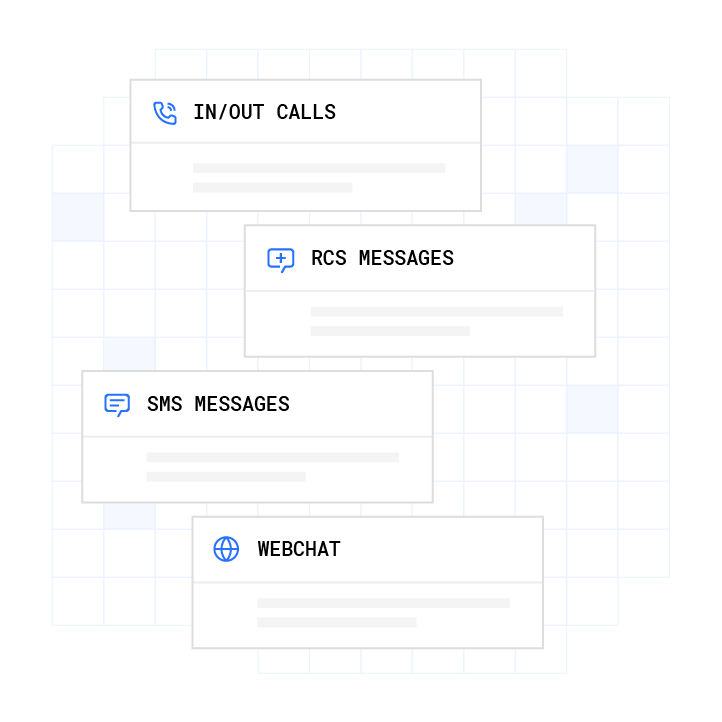
The 90-day playbook below maps seven steps to the specific gaps that generic AI tools and centralized BPO (Business Process Outsourcing) models leave open in franchise networks.
Book a live demo with Plura to see the franchise deployment architecture in action.
Step 1: Building a Three-Tier Franchise Knowledge Layer
Franchise AI deployments work best with a three-tier knowledge hierarchy. Brand-level knowledge governs every location. Regional knowledge adds market-specific context. Location knowledge handles local hours, staff names, and local promotions. The table below shows how each tier maps to specific content types and control responsibilities.
| Tier | Scope | Examples | Who Controls It |
|---|---|---|---|
| Brand | All locations | Greeting script, compliance disclosures, pricing floors | Corporate / Franchisor |
| Region | Location cluster | Regional promotions, state-specific disclosures, territory rules | Regional Manager |
| Location | Single unit | Local hours, staff escalation contacts, local offers | Franchisee |
A governed knowledge layer lets subject matter expert corrections propagate automatically to all connected AI agents. A brand-level script update reaches every location the moment it is published, instead of waiting for a retraining cycle.
Step 2: Standing Up a Separate Franchisee-Support AI Layer
Customer-facing AI and franchisee-support AI serve different audiences and must stay separated. The franchisee-support layer ingests operations manuals, brand standards guides, training materials, and historical support tickets to deliver instant answers to franchisees on internal questions. It never touches customer data.
Implementing an AI-powered franchisee support hub can reduce monthly support ticket volume across the network. Franchise operations teams typically recover 15-20 hours per week when AI-powered support hubs handle repetitive questions. When the system cannot answer a question, it flags the documentation gap for the support team and creates a continuous improvement loop.
Step 3: Routing Calls by Location and Intent
AI call routing in 2026 is shifting from simple queueing to intent-aware, real-time routing that understands why a customer is calling and sends them directly to the right expert.5 Plura’s routing layer reads caller intent in the first few seconds of natural speech, matches the call to the correct location or department, and transfers with full context already loaded.
AI-powered intent detection delivers the misrouting reduction mentioned earlier and keeps callers with the right team. For franchise networks where one location may be overwhelmed while another has capacity, intelligent routing prevents dropped calls at busy sites without requiring manual supervisor intervention.
Step 4: Real-Time Agent Copilot and After-Call-Work Automation
For interactions that require a human agent, Plura’s real-time agent assist surfaces accurate answers during live calls and removes the knowledge-search delays that extend handle time. McKinsey analyses discuss performance gaps and AHT improvements in contact centers but do not report that top-quartile centers operate with average handle times 20% to 30% lower than the industry median.4
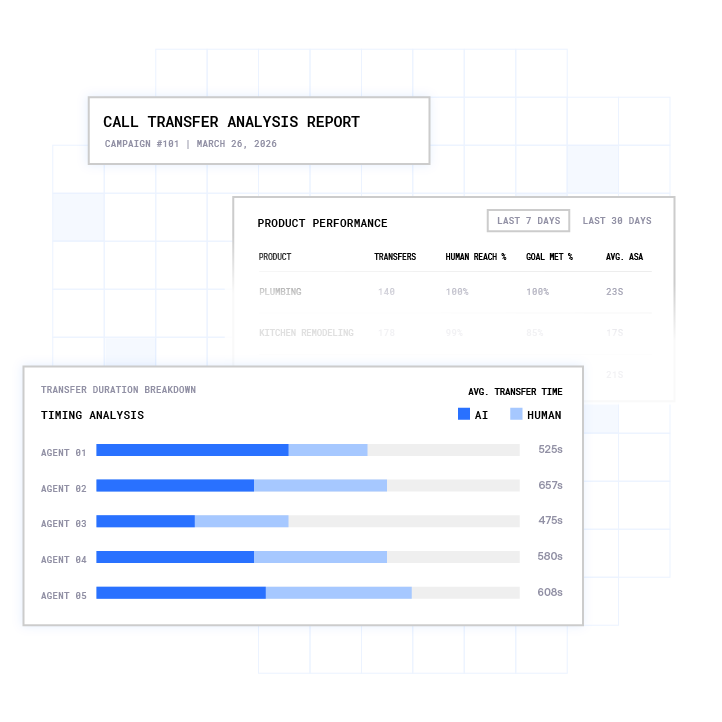
After-call-work automation generates conversation summaries and CRM (Customer Relationship Management) updates immediately after each interaction. Recovering 3 minutes of after-call work per call across 1,000 daily interactions returns 50 agent-hours per day to productive capacity.
Step 5: Scaling to 100% QA for Brand Consistency
Traditional manual QA samples 2% to 5% of interactions. Automated QA uses conversational AI to score 100% of calls against defined criteria including script adherence, compliance disclosures, empathy markers, resolution quality, and regulatory requirements.
For franchise networks, 100% QA coverage means brand drift is detected at the call level, not discovered weeks later in a customer complaint. Every location’s call quality appears in the same dashboard and is scored against the same Brand-level criteria established in Step 1.
Step 6: Revenue-Capture Workflows That Qualify and Book Leads
Plura contacts leads from websites, Google Business Profiles, or ad campaigns within 60 seconds via SMS or voice call. The AI Predictive Dialer manages outbound follow-up sequences. AI SMS runs qualification threads that hand off warm buyers to a live agent. AI customer service texting handles post-booking support without adding headcount.
Up to 85% of customers whose calls go unanswered will not call back, according to a 2025 CallRail report on small-business marketing.3 Plura helps franchises handle peak-season spikes in call volume without temporary staff and without sacrificing response times.
Book a live demo with Plura to see how revenue-capture workflows deploy across a franchise network.
Step 7: Per-Location KPI Dashboards for Accountability
Centralized visibility is the operational layer that makes every other step accountable. Plura’s per-location dashboards surface call answer rates, lead response times, conversion rates, and QA scores for every unit in the network. Corporate sees the full picture. Regional managers see their cluster. Franchisees see their own location. No location can overestimate its performance when the data is centralized and real-time.
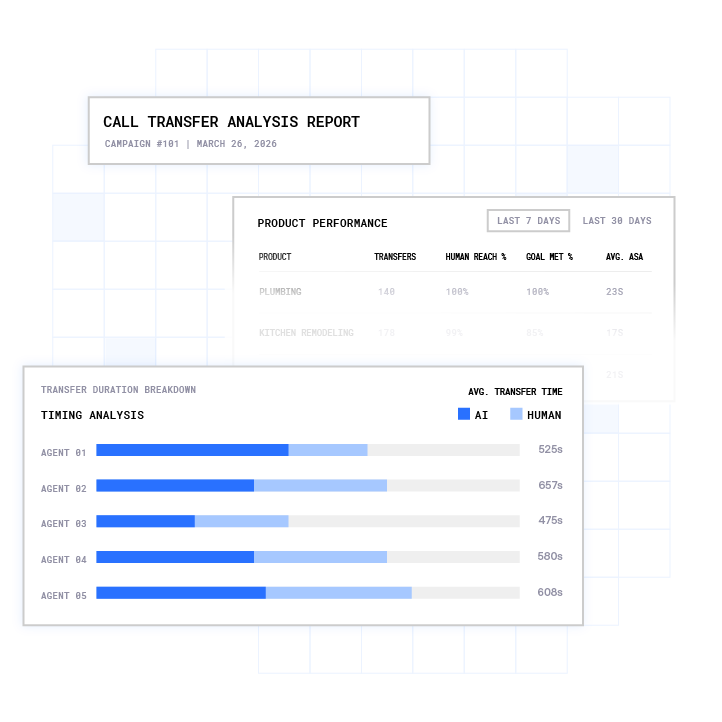
Franchisees routinely overestimate how well they are handling leads, which is why accountability-only approaches fail without supporting infrastructure. Per-location dashboards solve this by replacing self-reported data with verified metrics and making performance gaps visible before they compound into lost revenue.
Comparison: Centralized vs. Location-Aware AI
The table below illustrates how location-aware architecture addresses the four structural gaps that centralized-only AI leave open in franchise networks.
| Dimension | Centralized-Only AI | Location-Aware AI (Plura) | Impact |
|---|---|---|---|
| Knowledge scope | Brand-level only | Brand, Region, and Location tiers | Local policies enforced without manual overrides |
| Routing logic | Single national queue | Intent-aware routing per location | Up to 35% fewer misrouted calls |
| Conversation memory | Session-only or channel-siloed | Single stateful database across all channels | No repeated qualification across touchpoints |
| Franchisee support | Shared customer-facing queue | Separate internal AI layer | Up to 75% reduction in support ticket volume |
Comparison: Human-Only vs. Hybrid Models
The table below quantifies the operational and cost differences between traditional staffing and AI-augmented models across four key metrics.
| Metric | Human-Only Model | Hybrid AI-Human Model (Plura) | Source |
|---|---|---|---|
| Call answer rate | ~26% average | 100% within two rings | Plura franchise guide |
| Annual staff turnover | 40-70% | 0% for AI agents | Plura contact center guide |
| Monthly cost (50-seat equivalent) | $35,000-$50,000 | $8,000-$15,000 | Plura contact center guide |
| After-hours coverage | Voicemail or additional shift cost | 24/7/365 with no added headcount | CMSWire / AmplifAI 2026 |
The 10/20-70 Rule and Its Franchise Application
The 10/20-70 rule is a framework for AI deployment investment: 10% of effort goes to selecting the AI model, 20% to building the technology and data infrastructure, and 70% to change management, workflow integration, and continuous iteration. Most franchise operators invert this ratio, spending the majority of their budget on model selection and very little on the operational layer, which is why many AI deployments fail to close the missed-call gap despite significant investment.
Applied to a franchise rollout, the 70% layer maps directly to the seven steps above. Script governance, knowledge hierarchy mapping, franchisee buy-in, phased piloting, and per-location dashboard adoption are the work that determines whether AI closes the missed-call problem detailed above or simply adds another tool to the stack. Successful franchise support outsourcing requires tight documentation, clear escalation rules, franchisee buy-in, and phased rollouts starting with pilots of five to ten units. Plura’s 90-day playbook aligns with this ratio through discovery and piloting in the first 30 days, full deployment in days 31-60, and optimization and measurement in days 61-90.
Frequently Asked Questions
How does Plura AI handle brand compliance across locations that have different local policies?
Plura uses a three-tier knowledge hierarchy: Brand, Region, and Location. Brand-level knowledge is set by corporate and applies to every location without exception. Regional knowledge adds market-specific context that regional managers control. Location knowledge covers unit-specific details like local hours and escalation contacts, which franchisees manage within the boundaries corporate sets. When a script update is published at the Brand tier, it propagates to every connected AI agent immediately. No retraining cycle. No waiting for a regional manager to cascade the update manually. The 100% automated QA layer then scores every call against the current Brand-tier criteria, so drift is detected at the interaction level rather than discovered in a complaint weeks later.
What is the franchisee-support AI layer and how does it differ from customer-facing AI?
The franchisee-support AI layer is an internal tool that answers operational questions from franchisees, such as how to interpret the operations manual, where to find brand standards, or how to handle a specific escalation scenario. It is trained on internal documentation and has no access to customer data. The customer-facing AI layer handles inbound calls, outbound lead follow-up, SMS qualification threads, and booking workflows. Keeping these two layers separate prevents internal operational content from surfacing in customer conversations and prevents customer data from being accessible in franchisee support queries. As noted in Step 2, the franchisee-support AI layer significantly reduces monthly support ticket volume, with the remaining tickets limited to genuinely complex issues that require human judgment.
How long does it take to deploy Plura AI across a multi-unit franchise network?
The 90-day playbook follows three phases. Days 1-30 cover discovery, knowledge hierarchy mapping, and a pilot on 3-5 locations. Days 31-60 cover full network deployment of AI voice, AI SMS, and intelligent routing. Days 61-90 cover per-location dashboard activation, franchisee-support AI layer enablement, and 100% QA coverage. Simple inbound qualification flows are typically built in days. More complex multi-step intake workflows take longer because the conversation logic itself requires design and validation. Every Plura annual contract includes a 90-day opt-out window, so if the deployment is not delivering measurable results, operators are not held to the full term.
How does Plura AI support compliance posture across multi-state franchise networks?
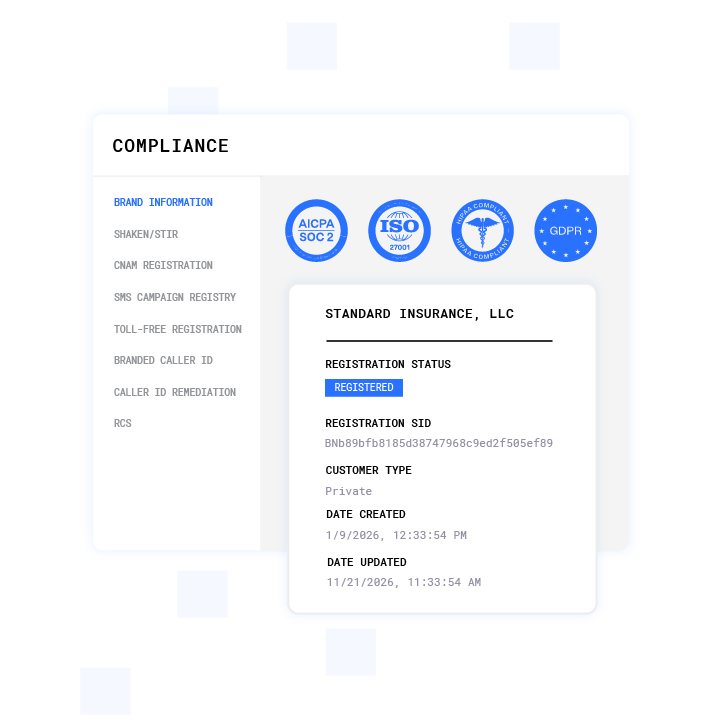
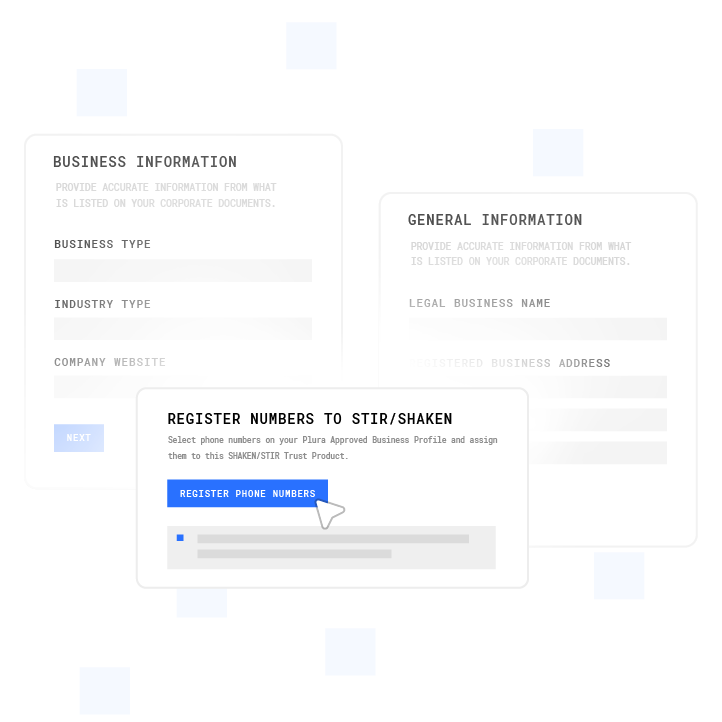
Plura supports compliance posture on every outbound contact by referencing SOC 2, HIPAA, ISO, GDPR, SHAKEN/STIR caller ID verification, TCPA compliance, and DNC compliance frameworks.1 Every outbound contact is checked against federal and state DNC registries in real time before dial. Consent records are timestamped and immutable. Quiet-hours rules enforce automatically through time-zone detection, applying state and federal calling-window restrictions to every campaign. Operators in regulated verticals should consult qualified counsel regarding their specific obligations under applicable law.2 Plura provides the infrastructure, and customers remain responsible for their own compliance posture and downstream use.
Conclusion: Deploy Plura AI in 90 Days
A 55-67% missed-call rate across a franchise network reflects a systems problem, not a staffing problem. Human-only models cannot answer 100% of calls within two rings, enforce Brand-level scripting at every location, maintain conversation memory across channels, or deliver per-location QA coverage without linear cost increases. Plura’s 90-day playbook addresses each of these gaps with a carrier-owned, stateful AI platform that rolls out across the full network in three structured phases.
The economics are measurable before deployment begins. Run your numbers through Plura’s ROI calculator to check your ROI in real time.
Compare plans and rates side by side at plura.ai/pricing.
1 Plura AI maintains SOC 2, HIPAA, ISO, and GDPR posture as part of its platform infrastructure. References to compliance frameworks in this article describe Plura’s platform capabilities and do not constitute a guarantee that any customer using Plura will themselves be compliant with applicable laws or standards. Customers remain solely responsible for their own regulatory obligations, certifications, consent management, recordkeeping, and the claims they make to their own end users. Consult qualified legal counsel for guidance specific to your use case.
2 This article describes regulatory frameworks at a general level and does not constitute legal advice. Laws and regulations vary by jurisdiction, change over time, and apply differently depending on facts and circumstances. Readers should consult qualified legal counsel before making compliance decisions.
3 Performance figures, customer outcomes, and industry statistics referenced in this article are drawn from cited third-party sources or Plura customer case studies. Individual results vary based on implementation, use case, industry, audience, and execution. Past or aggregate performance is not a guarantee of future results.
4 References to third-party products, services, companies, or research are made for informational and comparative purposes only. Plura AI is not affiliated with, endorsed by, or sponsored by any third party named in this article unless explicitly stated. Trademarks and product names referenced remain the property of their respective owners.
5 This article contains forward-looking statements regarding industry trends, technology adoption, and future capabilities. These statements reflect current expectations and are subject to change. Plura AI undertakes no obligation to update forward-looking statements except as required.
This article is provided for informational purposes only and reflects Plura AI’s understanding at the time of publication. Product capabilities, integrations, and specifications are subject to change. For the most current information, visit plura.ai.
This article was produced with the assistance of AI tools and reviewed by Plura AI prior to publication.