
Written by: Matt Beucler, CEO, Plura AI
Updated June 2026
Key Takeaways for High-Volume Teams
- SMS follow-up conversion optimization relies on hyper-personalization, fast pacing, and single CTAs to lift response and sales rates.
- The 47-hour industry average for first contact creates a major conversion gap. Responding within 5 minutes can increase conversions by up to 391%.1
- Effective sequences use concise messages, one clear CTA, zero-party personalization, and real-time DNC/TCPA checks to drive results.
- Stateful cross-channel memory across SMS, voice, RCS, and webchat removes re-qualification friction and improves conversion performance at scale.
- Plura AI executes SMS follow-up sequences in under 5 seconds on 100% U.S. infrastructure while supporting compliance, and you can see it in a live demo with Plura.
The Execution Gap Between Lead Capture and First SMS Contact
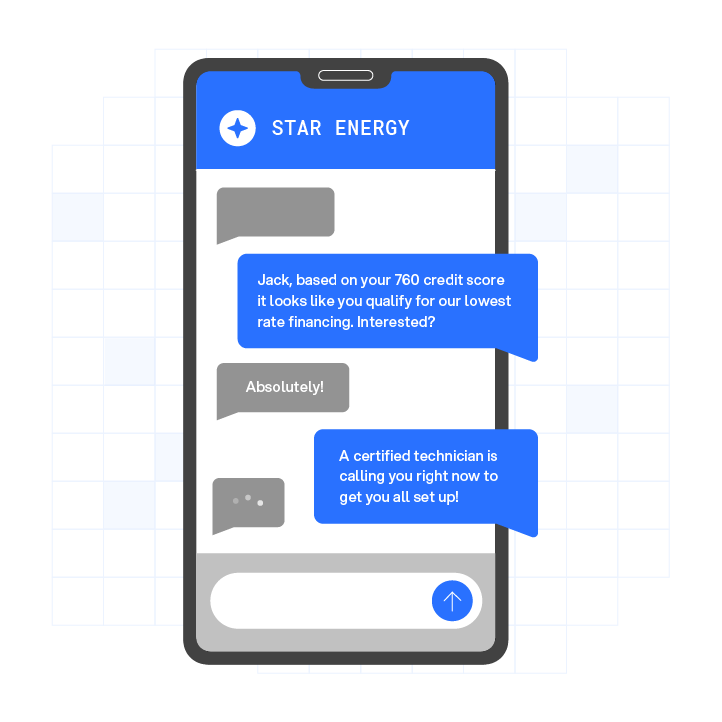
The industry standard for first contact on an inbound lead is 47+ hours, and that delay erases conversion revenue. Lead conversion rates drop 10x after the first 5 minutes, and responding within 60 seconds lifts conversions by 391%.1 A Harvard Business Review study found that companies responding within five minutes are 100x more likely to connect with a prospect than those waiting 30 minutes.4
SMS is the channel best positioned to close that gap. 98% of text messages are opened, with 90% read within 3 minutes (Gartner, 2024).1 Email typically sees a 20-30% open rate and a slower read time, so the arithmetic is clear. The channel works. Execution speed and sequence design create the real performance spread.
Who This SMS Follow-Up Framework Serves
Given the scale required to make sub-5-minute response times operationally viable, this guide serves marketing directors, agency owners, contact-center leaders, and franchise operators running 500+ daily interactions or $5,000+ monthly in paid-media spend. At that volume, a 47-hour average response time is not a minor inefficiency. It is a structural revenue leak.
The framework below assumes you have a CRM, a lead capture mechanism, and an SMS platform capable of automation. If your current stack cannot trigger a text within seconds of a form fill, the measurement section later in this guide shows what that delay costs in real conversion terms.
See sub-5-second SMS follow-up in a live Plura demo and watch it run on live lead data.
Step-by-Step: Building an SMS Follow-Up Sequence That Converts
Step 1: Set Timing Windows That Protect the First 5 Minutes
The 5-minute rule is the highest-impact variable in SMS follow-up conversion optimization. Organizations deploying AI for speed to lead see response times drop from hours to seconds and connection rates increase by 3x to 5x.1
For follow-up messages beyond the first touch, Attentive’s analysis of over 25 billion messages highlights timing windows that lift SMS engagement, click-through rates, conversions, and revenue per send.4 These windows only work when messages arrive at the right local time for each recipient, so time-zone automation becomes mandatory at scale. Every send should reference the recipient’s local time, not the sender’s server location.
TCPA-related guidelines describe commercial SMS quiet hours of 8 AM to 9 PM in the recipient’s local time zone.3 Readers should consult qualified legal counsel for guidance specific to their campaigns and states of operation.
Step 2: Write Concise, Lock-Screen-Ready Messages
Attentive’s analysis of over 25 billion SMS campaign messages suggests that longer messages can lower conversion rates and recommends concise copy when possible. Standard SMS segments cap at 160 characters. Crossing that limit splits the message, raises delivery costs, and dilutes attention.
Write for the lock screen so the lead can understand the offer in a single glance. One clear idea, one clear benefit, and one clear action keep the message easy to act on.
Step 3: Use a Single CTA in Every Message
Each message in a follow-up sequence should carry one instruction. Salesforce Product Marketing Director Cassandra Salcedo notes that every text needs a clear, singular purpose, or the audience will read the alert and move on without acting.4
Attentive’s analysis suggests that offer messages perform better when they avoid combining too many elements like multiple questions and stacked social proof. One message, one action, and one path forward keep the decision simple.
Step 4: Apply Zero-Party Personalization to Every Touch
Zero-party data is information the lead explicitly provided during opt-in or intake, and it gives you the cleanest personalization input. Reference the specific product they asked about, the location they selected, or the appointment type they requested.
Using second-person language (you, your, yourself) in offer messages can lift conversion and click-through rates by making offers feel personally relevant. Combine that voice with the lead’s own data points to keep each message grounded in their stated intent.
Step 5: Enforce Real-Time DNC and TCPA Guardrails
TCPA-related claims can involve statutory damages of $500 to $1,500 per text or call, with class action settlements averaging $6.6M in 2023 (FCC, 2025; WebRecon LLC, 2024).3 Every outbound SMS should be checked against federal and state DNC registries before send, and consent records should be timestamped and retained.
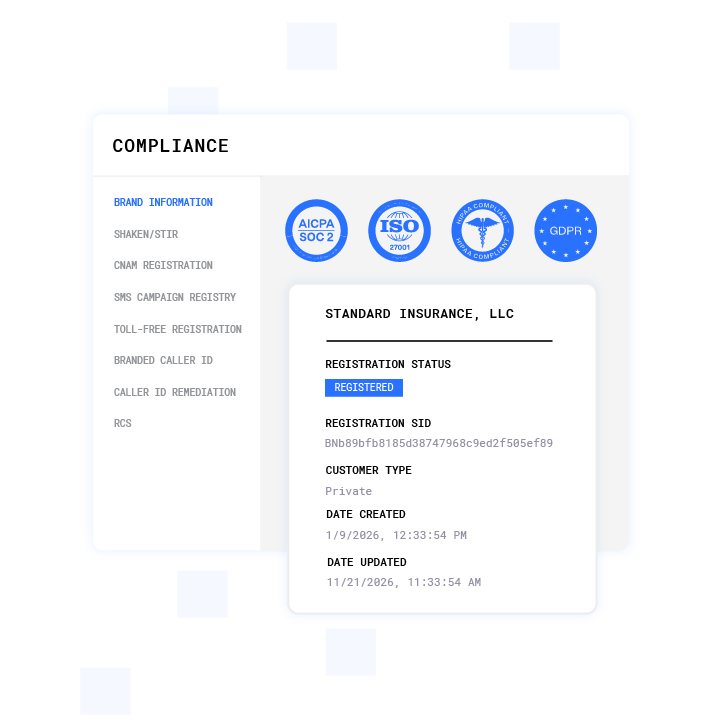
As of April 2025, FCC guidance describes that businesses should honor opt-out requests made through any reasonable communication method, not just STOP replies, and remove the contact in a timely manner. Plura’s Compliance Engine checks every outbound contact against federal and state DNC registries in real time before send, maintains immutable consent records, and automates quiet-hours enforcement by time zone. Customers remain responsible for their own compliance obligations and should consult qualified legal counsel.
Step 6: A/B Test One Variable at a Time
Each sequence iteration should test a single variable, such as send time, message length, CTA phrasing, or personalization token. Salesmsg’s 2026 SMS Benchmark Report found that shorter messages can achieve strong response rates, with response rates declining as message length increases.4
Run tests on statistically significant sample sizes before rolling changes to the full sequence. This approach keeps performance gains attributable to specific changes instead of guesswork.
Step 7: Measure and Iterate on Core Metrics
Teams should track response rate, contact rate, conversion rate, and compliance adherence on every sequence. Salesmsg’s 2026 SMS Benchmark Report notes that a significant portion of SMS replies come from follow-up messages rather than the initial text, with moderate sequence lengths often performing best.
Sequences that stop after one touch leave most conversions untouched. Structured measurement makes it clear where to extend, shorten, or rewrite.
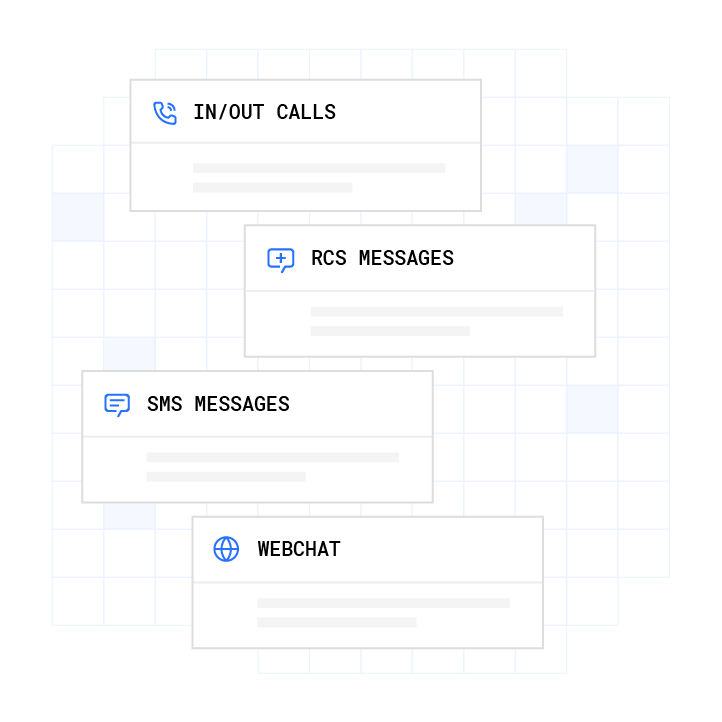
Stateful Cross-Channel Memory for SMS, Voice, RCS, and Webchat
The most common failure point in SMS follow-up sequences is not timing or copy. Fragmented data creates the real breakdown. A lead who receives an SMS at 9 AM and a call at noon should not have to re-explain their situation.
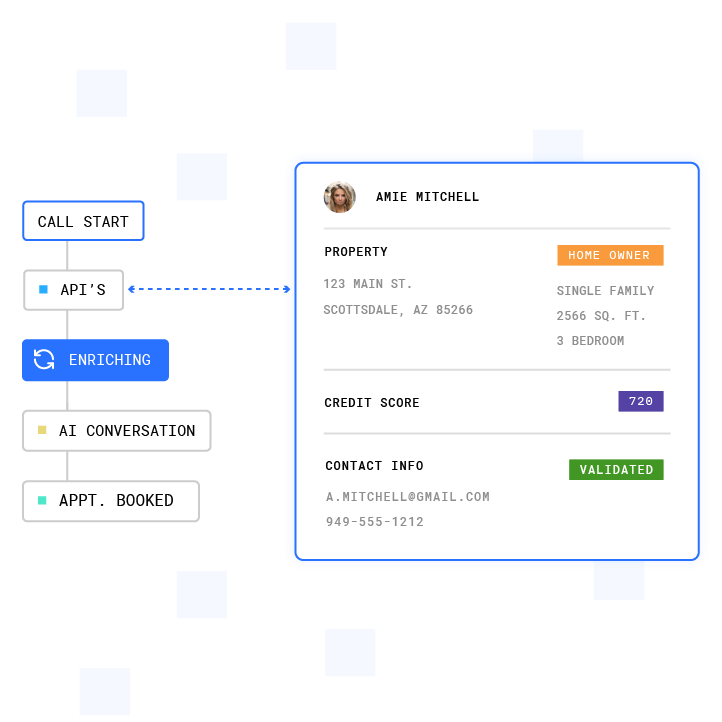
Plura’s Stateful Conversation Database keys every interaction to a customer token, such as phone number, email, or ID, across voice, SMS, RCS, and webchat. The AI agent that sent the morning text can handle the afternoon call already knowing what was offered, what was accepted, and what objections surfaced.
This cross-channel memory turns a sequence into a conversation. Sequences push messages. Conversations accumulate context. At scale, context becomes the conversion variable that simple sequences cannot match.
Plura’s AI Lead Intelligence layer enriches every lead with 30+ data sources in real time during the conversation, so personalization extends beyond what the lead typed into a form field.
Common SMS Follow-Up Challenges
Spam flags. SMS messages sent from unregistered numbers are often filtered or blocked by carriers. All major carriers including AT&T, T-Mobile, and Verizon block unregistered A2P 10DLC traffic entirely. Teams should register campaigns through The Campaign Registry before sending at volume.
Opt-out friction. TCPA-related guidance does not describe a send-first-opt-out-later model for marketing SMS, and sending before documented consent can create risk. Many operators build opt-out confirmation into the first message of every sequence and suppress contacts system-wide immediately after an opt-out. Legal counsel can provide guidance on specific consent and opt-out obligations.
Fragmented data. When SMS, voice, and CRM data live in separate systems, agents re-qualify leads who already answered key questions. A unified inbox that consolidates all channel interactions per customer token removes this friction for both agents and customers.
Measuring SMS Follow-Up Success
Four metrics define SMS follow-up sequence performance for most operators.
Response rate. SMS campaigns often achieve response rates around 45%, compared to email’s 6%. Sequences that sit below a 20% response rate on the first touch usually require copy and timing review.
Contact rate. This metric tracks the percentage of leads reached after at least one sequence touch. Plura’s AI agents contact leads in under 5 seconds, compared to an industry standard of 47+ hours, which lifts contact rate before any copy changes occur.
Conversion rate. Text-to-buy SMS campaigns can achieve competitive conversion rates. Automated sequences typically outperform manual sends because they protect timing and consistency.
Compliance adherence. Teams should track opt-out rate, DNC suppression rate, and quiet-hours enforcement rate. Dotdigital’s 2026 Global benchmark report notes that an unsubscribe rate under 1% is considered good for the channel. Rates above 2% often signal consent or targeting issues that tooling alone cannot solve.
Scaling SMS to Voice, RCS, and Webchat
SMS usually serves as the entry point, but the highest-performing operators treat it as one layer in a multi-channel sequence. Voice, RCS, and webchat then share the same conversation memory.
Businesses pairing SMS with calling achieve a 2.6x engagement lift, according to Salesmsg’s 2026 SMS Benchmark Report.
RCS delivers branded, interactive messages with rich media and in-message actions such as document signing and payments inside the native message thread, without sending the lead to a webpage. Webchat captures leads at peak intent, on the page they already read.
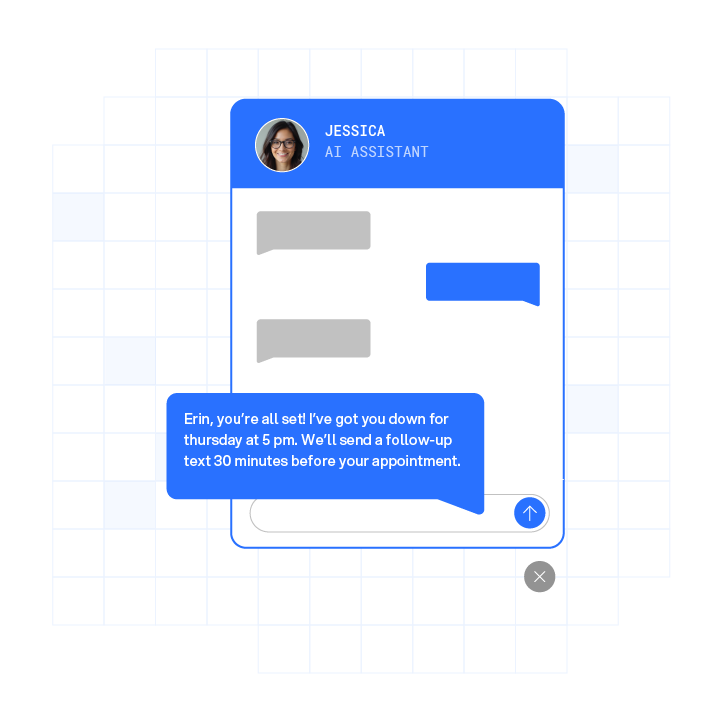
In healthcare deployments, where appointment adherence directly affects revenue, Plura supports up to 40% improvement in no-shows through coordinated SMS and voice reminder sequences running on shared stateful memory. All healthcare deployments on Plura use HIPAA-aligned encryption, sensitive-data redaction, and audit-ready logging by default. Customers remain responsible for their own HIPAA compliance obligations.
Frequently Asked Questions
What is the 5-minute rule in SMS follow-up conversion optimization?
The 5-minute rule refers to the finding that contacting a lead within 5 minutes of their inquiry makes them up to 100x more likely to connect than leads contacted after 30 minutes. This reflects the same dramatic conversion drop documented earlier in this article.
For SMS follow-up sequences, the first message should trigger automatically at the moment of lead capture, not when a sales rep reaches their queue. Plura executes first contact in under 5 seconds on 100% U.S. infrastructure, which closes much of the gap between lead capture and first touch that erodes paid-media ROI.
How long should an SMS follow-up sequence be?
Data from Salesmsg’s 2026 SMS Benchmark Report, based on millions of messages from 3,500+ businesses, identifies moderate sequence lengths as effective for persistence without annoyance. A substantial portion of SMS replies come from follow-up messages rather than the initial text, so sequences that stop at one or two touches miss many potential conversions.
Each message in the sequence should carry a single CTA, adjust the angle or offer slightly from the prior touch, and respect quiet-hours restrictions in the recipient’s local time zone.
What compliance frameworks relate to automated SMS follow-up sequences?
Automated SMS follow-up sequences in the United States operate within several overlapping frameworks. The TCPA describes consent concepts, quiet-hours expectations, and opt-out handling for automated marketing texts. The DNC registry defines which numbers may be contacted. A2P 10DLC registration is required by carriers for business SMS at volume.3 State-level rules in Florida, Oklahoma, Washington, Texas, and others describe stricter quiet-hours windows than federal defaults.
Plura’s Compliance Engine supports customers as they manage TCPA-related obligations, DNC suppression, SOC 2, HIPAA, ISO certification, GDPR, and SHAKEN/STIR caller ID verification requirements.2 Customers remain responsible for their own compliance obligations and should consult qualified legal counsel for guidance on their specific situation.
What message length tends to produce higher SMS conversion rates?
Multiple analyses recommend concise SMS copy. Longer messages can reduce conversion rates, and Salesmsg’s 2026 SMS Benchmark Report indicates that response rates can decline as length increases.4
The practical ceiling for a single SMS segment is 160 characters. Crossing that threshold splits the message into multiple segments, increases cost, and reduces attention. One idea, one CTA, and one link usually perform best.
How does stateful cross-channel memory improve SMS follow-up performance?
Stateful cross-channel memory means that every interaction a lead has across SMS, voice, RCS, and webchat lives in a single database keyed to that lead’s contact token. When the follow-up sequence moves from SMS to a voice call, the AI agent already knows what the text offered, how the lead replied, and which objections appeared.
This continuity removes re-qualification friction, reduces the number of touches needed to advance a lead, and creates conversations that feel continuous instead of disjointed. Plura’s Stateful Conversation Database powers this memory layer across all four channels, so operators running multi-channel sequences retain context between touches.
Conclusion: Close the Execution Gap, Not Just the Copy Gap
SMS follow-up conversion optimization is primarily an execution challenge, not a pure copywriting exercise. The 5-minute rule, single-CTA structure, zero-party personalization, real-time DNC and TCPA guardrails, and stateful cross-channel memory each provide documented levers for lifting response and conversion rates.
Operators who close the execution gap automate the first touch in seconds instead of hours and carry context from that first text into every call, message, and webchat session that follows. Plura executes SMS follow-up sequences in under 5 seconds on 100% U.S. infrastructure, with a Compliance Engine that supports customer efforts across TCPA, DNC, SOC 2, HIPAA, ISO certification, GDPR, and SHAKEN/STIR caller ID verification. The Stateful Conversation Database ensures that every channel touch builds on the last.
1 Performance figures, customer outcomes, and industry statistics referenced in this article are drawn from cited third-party sources or Plura customer case studies. Individual results vary based on implementation, use case, industry, audience, and execution. Past or aggregate performance is not a guarantee of future results.
2 Plura AI maintains SOC 2, HIPAA, ISO, and GDPR posture as part of its platform infrastructure. References to compliance frameworks in this article describe Plura’s platform capabilities and do not constitute a guarantee that any customer using Plura will themselves be compliant with applicable laws or standards. Customers remain solely responsible for their own regulatory obligations, certifications, consent management, recordkeeping, and the claims they make to their own end users. Consult qualified legal counsel for guidance specific to your use case.
3 This article describes regulatory frameworks at a general level and does not constitute legal advice. Laws and regulations vary by jurisdiction, change over time, and apply differently depending on facts and circumstances. Readers should consult qualified legal counsel before making compliance decisions.
4 References to third-party products, services, companies, or research are made for informational and comparative purposes only. Plura AI is not affiliated with, endorsed by, or sponsored by any third party named in this article unless explicitly stated. Trademarks and product names referenced remain the property of their respective owners.
This article is provided for informational purposes only and reflects Plura AI’s understanding at the time of publication. Product capabilities, integrations, and specifications are subject to change. For the most current information, visit plura.ai.
This article was produced with the assistance of AI tools and reviewed by Plura AI prior to publication.