
Written by: Matt Beucler, CEO, Plura AI | Last updated: August 29, 2026
Key Takeaways
- AI call centers for healthcare use voice agents to handle most routine patient calls and route clinical triage to licensed staff, within HIPAA-aligned workflows and executed BAAs.
- Healthcare-focused platforms need reliable EHR connectivity, carrier-level controls, accent accuracy testing, and support for state AI disclosure laws to succeed in 2026.
- High-impact evaluation criteria include FCC-licensed carrier ownership, real-time DNC scrubbing, 99.9% uptime SLAs, and bidirectional EHR connectivity across 50 or more systems.
- AI handles administrative tasks such as scheduling and reminders at scale, while human teams retain responsibility for clinical triage, behavioral health, and controlled-substance requests.
- Plura AI delivers HIPAA-aligned, SOC 2-certified voice agents with cross-channel memory and U.S. infrastructure; book a live demo to see how it improves patient call handling.1
Defining an AI Call Center for Healthcare Operations
An AI call center for healthcare is a platform that uses AI voice agents to manage inbound and outbound patient calls, automate appointment scheduling, conduct intake, and route clinical escalations to human staff. Healthcare deployments operate within HIPAA-aligned data flows, execute signed Business Associate Agreements (BAAs) with every vendor that touches protected health information (PHI), and pass real-world accent and triage accuracy tests before going live on patient-facing lines.
Practical AI Use Cases in Healthcare Call Centers
Voice AI in 2026 can handle 60 to 80 percent of inbound healthcare call volume reliably3, with the remaining calls requiring human judgment for clinical triage, complex disputes, or emotionally sensitive situations. Core use cases in healthcare contact centers include:
- Patient intake and eligibility verification
- Appointment scheduling, rescheduling, and confirmation
- Prescription refill routing
- Post-visit follow-up and readmission prevention
- After-hours call coverage
- No-show reduction through proactive outreach
Appointment scheduling, rescheduling, and reminders often represent 40 to 60 percent of inbound call volume in health systems and can reach 70 to 80 percent containment with a well-designed AI voice agent.3 The average speed to answer in healthcare call centers is 4 minutes 24 seconds against a target of 50 seconds, and 60 percent of patients abandon a call if they have been waiting more than one minute.3
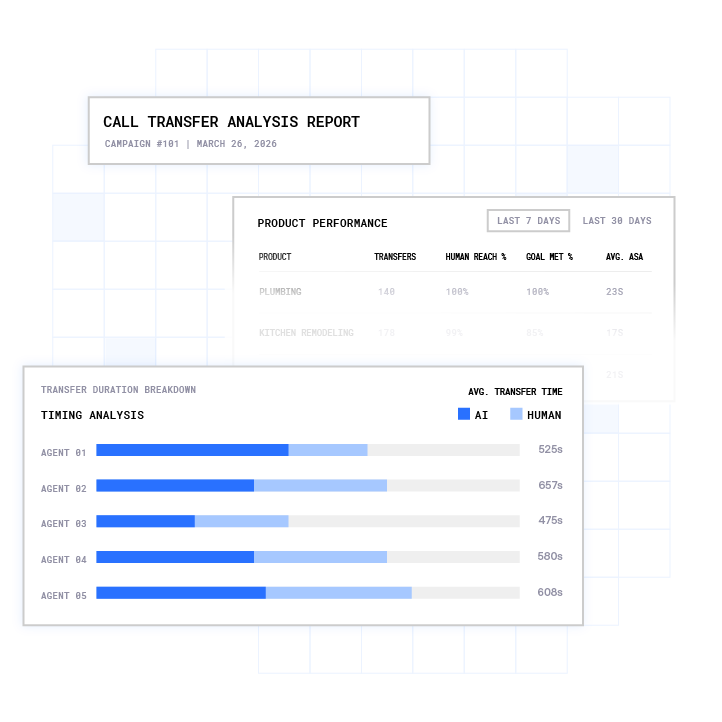
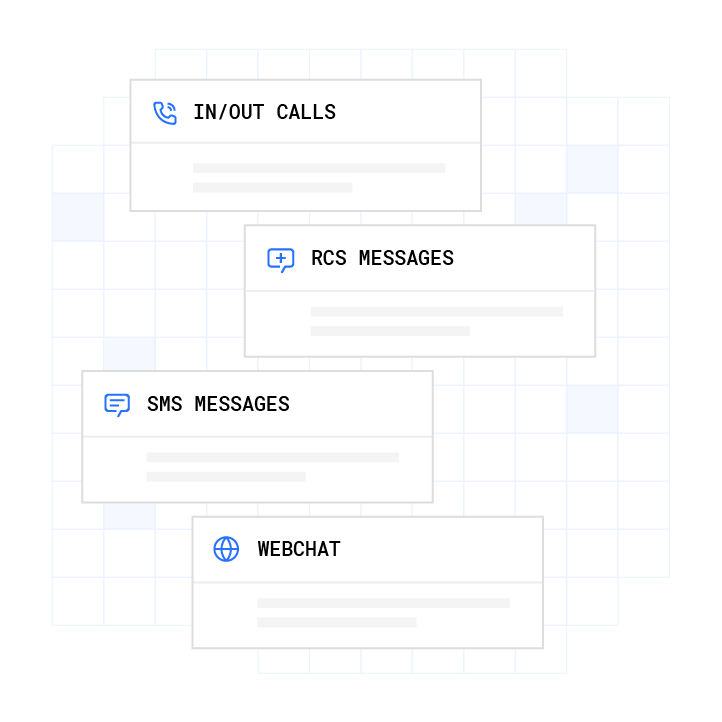
Plura AI’s AI voice agent handles inbound and outbound calls on Plura’s own FCC-licensed audio bridging carrier, with stateful conversation memory shared across AI SMS, RCS, and AI webchat. Plura’s healthcare deployments support the no-show reduction cited above through proactive outreach and reminders. See the full healthcare use-case breakdown at plura.ai/industries/healthcare.
Book a live demo with Plura to see how AI handles patient calls end to end.
7-Step Evaluation Checklist for Healthcare AI Call Centers
- HIPAA execution, not just a checkbox. Any vendor that creates, receives, maintains, or transmits PHI must execute a BAA that explicitly permits the contemplated upstream and downstream data flows. Verify that the BAA addresses inference-time processing, every subprocessor, and audio storage. Ask whether PHI is used to train shared models. Plura supports HIPAA-aligned encryption, access controls, and audit logging across voice, SMS, RCS, and webchat.1
- EHR integration depth. Pilots frequently fail when the new system cannot read from or write to the EHR, which turns automation into additional manual work. Confirm whether the integration is bidirectional and certified for your specific EHR, how many EHR systems the platform supports, and whether data flows in real time. Only 39% of healthcare contact centers currently have EHR integration. Plura’s integrations directory covers more than 50 tools; confirm EHR-specific connectivity during your discovery call.
- Carrier ownership vs. CPaaS dependency. Most AI voice platforms route calls through a third-party Communications Platform as a Service (CPaaS) such as Twilio, which prevents branded caller ID at the carrier level and pushes compliance controls downstream. Plura is its own FCC-licensed audio bridging carrier. Plura owns its telecom infrastructure and holds an FCC carrier license, whereas platforms that depend on Twilio operate as a software layer without a carrier license.4 This distinction affects SHAKEN/STIR caller ID verification, real-time DNC scrubbing, and TCPA compliance enforcement before each dial.2
- Accent and triage accuracy testing. Accents caused the largest average performance drop of approximately 10 percentage points on task completion in the τ-Voice benchmark, exceeding the impact of turn-taking and background noise. Require per-accent word error rate and intent accuracy data, not blended averages. See the dedicated testing section below.
- U.S. infrastructure resilience. 93% of U.S. healthcare organizations experienced at least one cyberattack in 20253, with healthcare breaches averaging $7.42 million per incident the prior year. Verify that voice origination, model hosting, data storage, and call recording all sit on domestic infrastructure. Plura runs on 100% U.S. infrastructure by architecture, with a 99.9% uptime SLA and automatic failover.
- State AI disclosure law support. Texas HB 149 took effect January 1, 2026 and requires disclosure when an AI system is used in relation to a healthcare service or treatment.2 California Health and Safety Code Section 1339.75 requires a disclaimer identifying generative AI involvement at the beginning and end of audio communications.2 Confirm that the platform supports configurable disclosure scripts and logs delivery timestamps per patient and state. Consult qualified counsel on your specific disclosure obligations.
- ROI gates and pilot terms. Initial implementation costs for AI call center automation in healthcare typically range from $150,000 to $700,000 depending on the number of use cases and depth of EHR integration.3 Set pre-defined go/no-go thresholds for misbooking rate, mis-triage rate, cost per call, and abandonment rate before signing. Plura’s annual contracts include a 90-day opt-out window if the deployment is not delivering. Run your numbers through Plura’s ROI calculator to check your ROI in real time.
Testing Accent Handling in Healthcare Voice AI
Voice agents often show different intent accuracy across accents, so per-cohort testing is necessary to uncover disparities that blended averages hide. A blended accuracy figure does not meet healthcare needs, because a mis-triage event carries clinical and liability consequences.
A structured accent-handling test protocol for healthcare AI call centers should include the following steps:
- Map the real caller accent mix from your existing call recordings, broken out by patient population and geography.
- Build per-accent caller profiles using realistic telephony audio, not clean studio samples. Narrowband telephony codecs strip audio detail and compound accent errors.
- Run identical task scenarios across all accent cohorts, covering appointment scheduling, prescription refill routing, and clinical escalation triggers.
- Report word error rate (WER) and intent accuracy broken down by accent cohort, not as a blended average.
- Establish a parity threshold. Any underperforming cohort must be remediated via accent-diverse audio, domain vocabulary, or speech-to-text changes, and the full matrix re-tested before release.
- Test clinical escalation triggers using adversarial scenarios where patients use indirect language, downplay symptoms, or present ambiguously. Validate handoff execution including context passing to live agents.
- Run automated regression testing after any conversation flow change, NLU model update, or prompt modification to detect silent triage accuracy regressions before deployment.
NLP models used in AI triage are highly sensitive to linguistic variation, dialects, multilingual input, and limited English proficiency, yet model evaluations rarely account for these factors, which creates safety risks for patients with accents or non-native language use. Require vendors to provide equity-stratified performance data disaggregated by age, language, and ethnicity before signing a contract.
For clinical triage routing, enterprise-grade voice AI for healthcare requires ASR latency under 300 ms from end of utterance to response and accuracy of 95% or higher for general conversation and 98% or higher for key clinical vocabulary. Set these as contractual minimums, not aspirational targets.
Healthcare Roles AI Supports vs. Roles That Stay Human
AI call center platforms automate structured, high-volume administrative workflows, while licensed clinicians retain responsibility for medical judgment.
Roles AI handles effectively in healthcare contact centers:
- Patient intake and demographic verification
- Appointment scheduling, confirmation, and rescheduling
- Prescription refill routing to pharmacy or clinical staff
- Insurance eligibility pre-screening
- After-hours call coverage and message capture
- Proactive outreach for no-show reduction and appointment reminders
- Post-visit follow-up calls for routine care instructions
Roles that require human staff regardless of AI deployment:
- Clinical triage decisions involving urgent or ambiguous symptom presentations
- Behavioral health and crisis intervention calls
- Complex prior authorization disputes
- Calls involving controlled-substance requests
- Any interaction where a licensed clinician’s judgment is the required output
Tennessee SB 1580 prohibits developers and deployers of AI systems from advertising or representing that such systems are qualified or capable of acting as licensed mental or behavioral health professionals.2 Maine’s LD 2082 bars licensed mental health professionals from allowing AI to directly interact with clients in therapeutic communications or to make independent therapeutic decisions or generate treatment plans without their review and approval. Consult qualified counsel on how these and similar state laws apply to your specific deployment.
Plura’s managed workflows include explicit escalation guardrails. When a patient’s response falls outside defined workflow paths, the AI warm-transfers the call to a U.S. agent with full conversation context. Sensitive data, including PHI and PII, is redacted at the field level before handoff.
Vendor Comparison: Infrastructure and Compliance Capabilities
| Capability | Plura AI | Twilio-based API resellers | Offshore BPO vendors |
|---|---|---|---|
| FCC-licensed carrier stack | Yes, owns FCC-licensed audio bridging carrier, and voice originates on Plura’s domestic infrastructure | No, depends on Twilio and operates as a software layer without a carrier license4 | Not applicable, human agent model |
| Branded caller ID (SHAKEN/STIR) | Issued at carrier level, with SHAKEN/STIR authentication on every outbound call | Inherited from third-party CPaaS, cannot issue under own carrier identity | Not applicable |
| HIPAA support | HIPAA-aligned controls with SOC 2 certification1, including end-to-end encryption, access controls, and audit logging | Relies on third-party CPaaS BAA for HIPAA coverage | Variable, and offshore handling of PHI faces growing state-law restrictions |
| Stateful cross-channel memory | Voice, SMS, RCS, and webchat share one Stateful Conversation Database keyed to customer token | Typically stateless or single-channel, so context does not persist across channels by default | Dependent on individual agent notes and CRM discipline |
| U.S. infrastructure | All components domestic (see item 5 above for details) | Variable, with many routing through global cloud infrastructure | Offshore by design, exposed to FCC NPRM CG Docket No. 26-52 and state onshoring laws |
| Real-time DNC scrubbing | Every outbound contact checked against federal and state DNC registries before dial, with TCPA controls enforced at platform level | Bolted on, and compliance is the customer’s responsibility to configure | Dependent on vendor-specific processes |
| Uptime SLA | 99.9% uptime SLA with automatic failover and no single point of failure | Dependent on third-party CPaaS SLA | Dependent on offshore staffing and connectivity |
90-Day Pilot Plan with Conversion and Compliance Metrics
A 90-day pilot on a scoped call line, not the full contact center, provides a practical way to validate an AI call center platform before full deployment. Set go/no-go thresholds before the pilot begins.
Pre-launch (Days 1-14):
- Execute BAA with the platform vendor and confirm all subprocessors are covered, so the legal foundation is in place before PHI flows through the system.
- Complete a HIPAA risk analysis update to include the AI system under 45 CFR § 164.308(a)(1)(ii)(A), documenting how the new vendor fits into your existing security posture.
- Verify that EHR integration is bidirectional and certified for your specific EHR instance, because integration failures often block scale.
- Run accent and triage accuracy testing across your patient population’s accent mix to establish performance baselines.
- Configure state-specific AI disclosure scripts for Texas, California, and any other applicable states, then confirm logging of delivery timestamps.
- Set contractual minimums for ASR latency under 300 ms and intent accuracy of at least 95% for general conversation and 98% for clinical vocabulary.
- Define escalation playbooks for chest pain, suicidal ideation, controlled-substance requests, and other high-risk scenarios, and align them with staffing plans.
Active pilot (Days 15-60):
- Track misbooking rate, mis-triage rate, and wrong-provider routing rate weekly to catch issues early.
- Monitor call abandonment rate against the industry benchmark of under 5% and compare it with your historical performance.
- Measure cost per call against your current baseline of $4 to $8 per call in direct labor for human agents.
- Audit a random sample of call transcripts weekly for PHI handling and escalation accuracy, and feed findings into workflow updates.
- Track no-show rate on AI-confirmed appointments versus a control group to quantify impact on visit completion.
- Review DNC and TCPA compliance logs and confirm that monitoring shows no violations.
Evaluation and scale decision (Days 61-90):
- Compare automation rate against the 60 to 80 percent benchmark for mature healthcare deployments and document any gaps.
- Calculate a 12-month ROI projection using actual cost-per-call and volume data from the pilot period.
- Confirm EHR write-back accuracy, with zero duplicate records and zero uncommitted appointments in production.
- Run a full accent cohort re-test after any NLU or workflow changes made during the pilot to confirm stability.
- Present a compliance audit export to legal and IT for sign-off before full deployment, including logs, BAAs, and test results.
Run your numbers through Plura’s ROI calculator to check your ROI in real time.
HIPAA and 2026 Testing: Common Questions
What did the proposed 2025 HIPAA Security Rule update change for AI voice platforms?
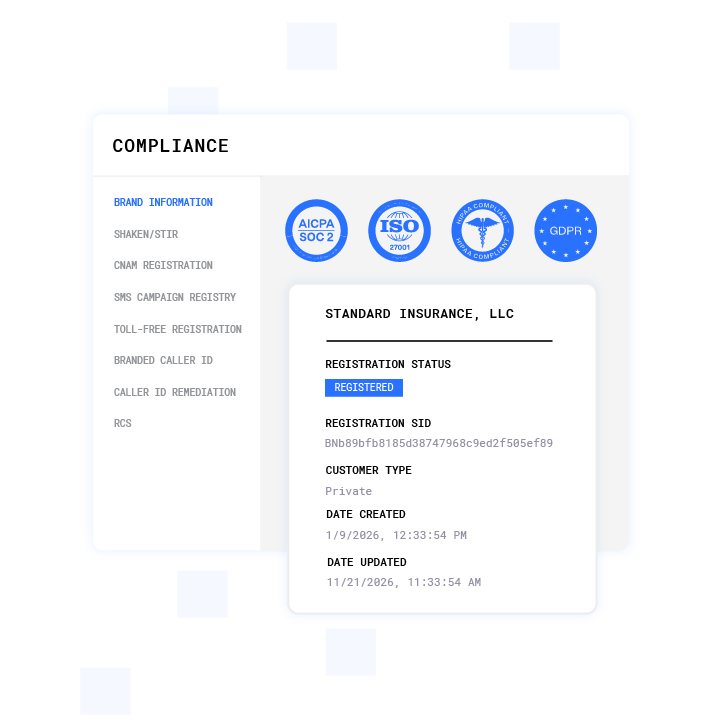
The HHS Office for Civil Rights published a proposed HIPAA Security Rule modernization on January 6, 2025 that, if finalized, would eliminate the addressable and required distinction in §164.312 and make encryption of ePHI at rest and in transit mandatory with no exceptions. The proposal would also require annual risk assessments, penetration testing, and a technology asset inventory for every system that touches ePHI, explicitly including AI tools. The proposed rule was still under review as of August 2026. Healthcare organizations evaluating AI call center platforms in 2026 should assume these requirements may apply within the procurement window of contracts signed this year and consult qualified counsel on their specific obligations. Plura supports HIPAA-aligned encryption, access controls, and audit logging across all channels.1
Does every AI vendor touching PHI need a signed BAA?
Under 45 CFR 160.103 and 164.502(e), any vendor that creates, receives, maintains, or transmits PHI on behalf of a covered entity qualifies as a business associate and triggers BAA requirements. This scope includes inference-time processing, so if an AI vendor’s infrastructure processes PHI even transiently during a model call, that vendor functions as a business associate. BAAs should address physical security of data centers, permitted data uses, restrictions on using PHI to train shared models, and audit rights. Consult qualified counsel to confirm your BAA covers every vendor and subprocessor in your AI data flow.
What state AI disclosure laws apply to healthcare voice AI in 2026?
Texas HB 149 (effective January 1, 2026) describes disclosure expectations when an AI system is used in relation to a healthcare service or treatment, no later than the date the service is first provided. California Health and Safety Code Section 1339.75 (effective January 1, 2025) describes a disclaimer identifying generative AI involvement at the beginning and end of audio communications. Idaho’s Conversational AI Safety Act and Nebraska’s identical law (both effective July 1, 2027) describes disclosure expectations when users interact with AI chatbots. Tennessee SB 1580 (effective July 1, 2026) prohibits representing AI systems as capable of acting as licensed mental or behavioral health professionals. Multistate operators should log patient state, AI function, disclosure version, and delivery timestamp for every interaction. Consult qualified counsel on the specific disclosure requirements applicable to your organization and patient population.
How should healthcare organizations evaluate EHR integration before committing to an AI call center platform?
Verify whether the integration is bidirectional and certified for your specific EHR instance, not just the EHR brand. Confirm how many total EHR and practice-management systems the platform supports and whether data flows in real time or on a delay. Ask specifically about FHIR R4 certification status for Epic, athenahealth, and any other EHRs in your environment. Test for silent failures, because uncommitted appointments after completed patient calls are a common production failure mode that may not appear during sandbox testing. EHR sync failures can add up to 15 minutes of manual reconciliation per uncommitted record, which erodes the labor savings the platform is intended to generate.
What infrastructure requirements distinguish a compliant AI call center platform from a non-compliant one in 2026?
The April 2026 HSCC Cybersecurity Working Group guide on third-party AI risk identifies data lineage tracking, model auditability, embedded third-party dependencies, and post-deployment monitoring as core evaluation criteria for AI supply chain risk in healthcare. For voice AI specifically, the key infrastructure questions include carrier ownership, data locality, and auditability. Ask whether the vendor owns its carrier stack or routes through a third-party CPaaS, whether all data is processed on U.S. infrastructure, whether the BAA covers every subprocessor including the LLM provider, and whether there is an immutable audit log for every PHI interaction. Platforms that route voice through a third-party CPaaS cannot enforce controls at the carrier level and may not be able to confirm that PHI avoids foreign infrastructure. Plura is its own FCC-licensed audio bridging carrier, runs on 100% U.S. infrastructure by architecture, and provides one-click audit-ready exports for compliance review.
Book a live demo with Plura and compare plans and rates side by side at plura.ai/pricing.
Updated August 29, 2026
1 Plura AI maintains SOC 2, HIPAA, ISO, and GDPR posture as part of its platform infrastructure. References to compliance frameworks in this article describe Plura’s platform capabilities and do not constitute a guarantee that any customer using Plura will themselves be compliant with applicable laws or standards. Customers remain solely responsible for their own regulatory obligations, certifications, consent management, recordkeeping, and the claims they make to their own end users. Consult qualified legal counsel for guidance specific to your use case.
2 This article describes regulatory frameworks at a general level and does not constitute legal advice. Laws and regulations vary by jurisdiction, change over time, and apply differently depending on facts and circumstances. Readers should consult qualified legal counsel before making compliance decisions.
3 Performance figures, customer outcomes, and industry statistics referenced in this article are drawn from cited third-party sources or Plura customer case studies. Individual results vary based on implementation, use case, industry, audience, and execution. Past or aggregate performance is not a guarantee of future results.
4 References to third-party products, services, companies, or research are made for informational and comparative purposes only. Plura AI is not affiliated with, endorsed by, or sponsored by any third party named in this article unless explicitly stated. Trademarks and product names referenced remain the property of their respective owners.
This article is provided for informational purposes only and reflects Plura AI’s understanding at the time of publication. Product capabilities, integrations, and specifications are subject to change. For the most current information, visit plura.ai.
This article was produced with the assistance of AI tools and reviewed by Plura AI prior to publication.