

Written by: Matt Beucler, CEO, Plura AI
Updated July 2026
Key Takeaways for High-Volume U.S. Messaging Teams
-
RCS Business Messaging delivers branded, interactive experiences with rich media, read receipts, and in-message actions that drive materially higher engagement than plain SMS.
-
The most effective 2026 approach is RCS-first with automatic SMS fallback, which preserves reach while lifting engagement on supported devices.
-
Automatic fallback, stateful conversation memory, and carrier-level support for TCPA, DNC, and SHAKEN/STIR are table stakes for high-volume, regulated U.S. marketing and support operations.
-
Plura AI executes RCS-first plus SMS fallback on its own FCC-licensed carrier stack with SOC 2, HIPAA, ISO, GDPR, and full cross-channel state preservation.1
-
Ready to upgrade your messaging stack? See the RCS-first architecture running on 100% U.S. infrastructure in a live demo.
RCS vs SMS: Side-by-Side View for U.S. Operators
|
Attribute |
SMS |
RCS Business Messaging |
|---|---|---|
|
Reach |
Every U.S. mobile device |
2+ billion devices globally, with SMS fallback covering the rest |
|
Rich media |
Text only, with MMS images at extra cost |
Images, carousels, video, interactive buttons, and in-message documents |
|
Branding |
Phone number only, no verified sender name |
Verified brand name, logo, and color scheme displayed in thread |
|
Engagement |
Baseline open and click rates |
Higher engagement, 80% read rate, 35% click-through rate vs. SMS3 |
|
Analytics |
Delivery receipts only |
Read receipts, button-tap tracking, in-thread conversion events |
|
Compliance posture |
TCPA compliance, DNC compliance, 10DLC registration required |
TCPA compliance, DNC compliance, carrier brand verification required; Plura adds SOC 2, HIPAA, ISO certification, GDPR, SHAKEN/STIR caller ID verification1 |
|
Fallback capability |
N/A (is the fallback) |
Automatic SMS fallback when RCS is unavailable, with Plura executing this at the carrier level and preserving stateful memory |
Operational Risks to Address Before RCS Launch
RCS Business Messaging carries three operational risks that marketing directors and contact-center leaders should address before deployment.
Device and carrier compatibility. RCS requires support from both the sender platform and the recipient’s device and carrier. Plura’s AI RCS reaches 2+ billion devices, yet a segment of any list will not receive RCS natively. Without automatic fallback, those contacts miss the message entirely instead of receiving a plain SMS version.
Spam-labeling risk. RCS brand verification does not automatically prevent spam classification. High send volumes, poor list hygiene, or unverified sender profiles can trigger carrier-level filtering. Platforms that do not own their carrier stack cannot remediate spam labels at the source. Plura issues branded caller ID and remediates spam labels directly through its FCC-licensed carrier, applying the same reputation logic to RCS that it applies to voice.
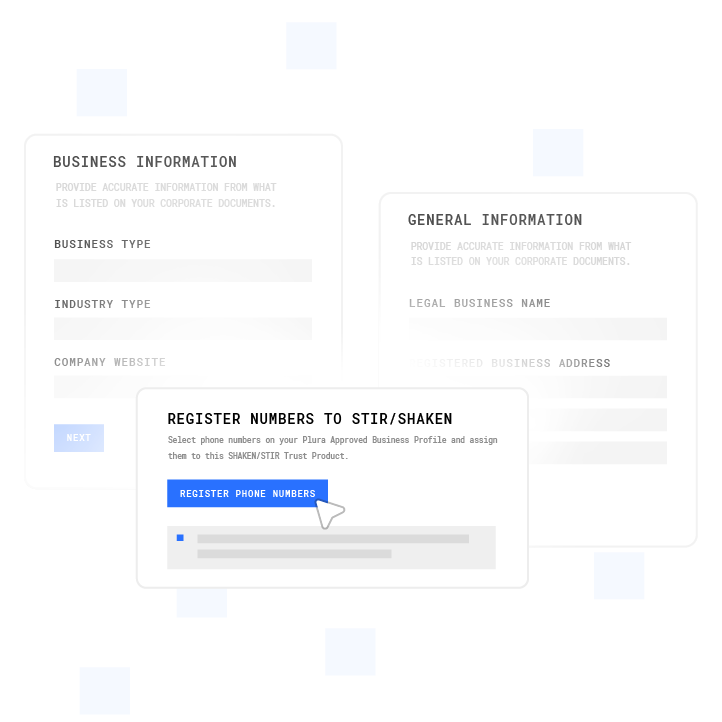
Carrier registration requirements. RCS Business Messaging requires brand verification through the carrier ecosystem before a business can send. This process takes time and specific documentation. Platforms built on third-party CPaaS layers introduce an additional registration intermediary, which slows approval and creates a compliance handoff outside the sender’s direct control.
Troubleshooting common RCS delivery failures. The most frequent causes of failed RCS delivery are unverified brand profiles, recipient devices that do not support RCS, carriers that have not enabled RCS for that number, or message content that triggers spam filters. Each of these issues requires carrier-level access to resolve, not just platform configuration changes. Operators running on a platform that owns its carrier stack can address these problems at the source.
How SMS Fits in a 2026 RCS-First Strategy
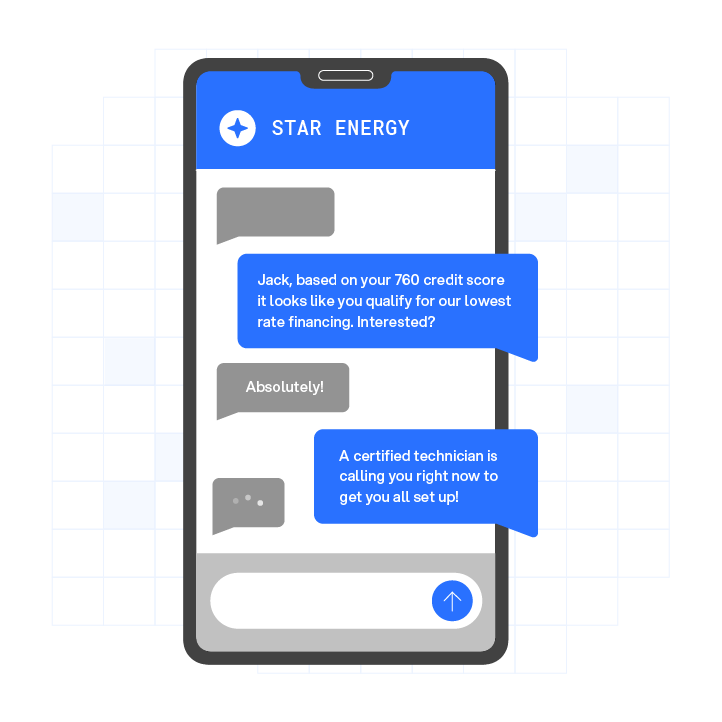
SMS is not obsolete, but its role is narrower. The channel remains essential for authentication codes, emergency alerts, and any recipient whose device or carrier does not support RCS. SMS no longer serves as the default rich-engagement channel for marketing and support.
The shift accelerated in 2024 when Apple added RCS support to iOS 18, which ended the iMessage-only wall that had limited RCS reach on iPhones in the United States. As of mid-2026, major U.S. carriers including AT&T, T-Mobile, and Verizon support RCS across their networks.4 A large and growing share of U.S. consumer devices can now receive RCS messages natively without an app download.
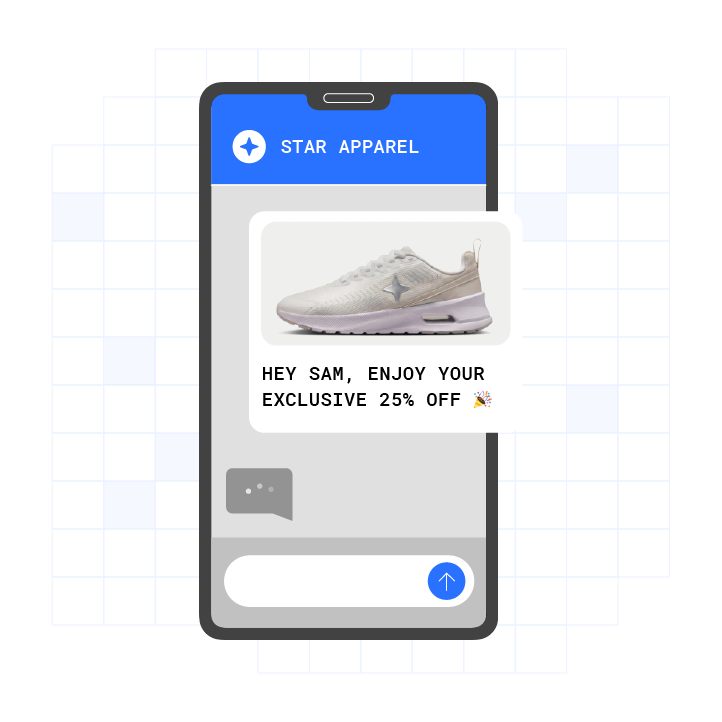
SMS remains the universal fallback channel. Any RCS-first strategy that omits automatic SMS fallback will miss part of the audience. RCS upgrades the experience for capable devices, while SMS covers the remainder. Plura’s stateful conversation database preserves context across both channels, so a customer who receives an RCS message and later responds via SMS is recognized as the same contact with the same conversation history.
Consumer RCS vs RCS Business Messages (RBM)
Consumer RCS is the peer-to-peer messaging protocol that replaces SMS between individuals. It provides read receipts, typing indicators, higher-resolution media sharing, and group messaging features that carriers and device manufacturers enable on modern smartphones.
RCS Business Messages, or RBM, is the enterprise-grade layer built on that protocol. RBM adds verified brand identity, a registered sender profile with logo and color scheme, interactive action buttons, in-message payment and document flows, and analytics that make the channel measurable for marketing and support teams. Businesses send RBM through a platform that has completed carrier brand verification.
This distinction matters for compliance and deliverability. Consumer RCS messages carry no brand verification. RBM messages carry a verified sender identity that the recipient’s device displays alongside the message. For regulated verticals, that verification layer can serve as a consent and audit-trail anchor. Plura’s AI RCS delivers RBM with rich media, in-message DocuSign and PandaDoc document flows, in-message Stripe payments, and personalized AI-rendered video inside the thread.4
See RBM with in-thread payments and document signing running in a live environment, and schedule your demo.
Cost and ROI Benchmarks for 2026
Per-message pricing for SMS in the United States typically runs on A2P 10DLC registered numbers, with costs varying by carrier, volume tier, and platform markup. Platforms built on CPaaS resellers pass through a wrapper cost on top of carrier rates.
RCS Business Messages carry a higher per-message cost than plain SMS at equivalent volume, which reflects the richer payload and brand verification infrastructure. The ROI case for RCS rests on engagement lift rather than matching SMS pricing. At the engagement rates documented above, the cost-per-conversion for RCS is lower than SMS even when the cost-per-message is higher.
For operators running Plura’s full stack, broader economics appear at plura.ai/calculator. A 15-agent contact-center operation costs approximately $60,000 per month under a human-staffed model. Plura’s AI agents handling equivalent volume run at approximately $14,400 per month, with 30-day savings of $45,600 and 12-month savings of $547,200.3 RCS functions as one channel inside that stack, and ROI compounds across voice, SMS, RCS, and webchat running on shared stateful memory.
Understanding these economics clarifies when RCS justifies its higher per-message cost. The next step is mapping each use case to the right channel.
Channel Selection Framework by Use Case
The channel choice maps directly to campaign type. Use this framework to route each use case.
Marketing campaigns (promotions, re-engagement, product launches). Use RCS-first. The branded sender profile, carousel format, and interactive buttons drive the engagement lift that supports the business case. Automatic SMS fallback covers non-RCS devices.
Customer support (case updates, appointment confirmations, status notifications). Use RCS-first for devices that support it, with SMS fallback for the rest. Read receipts in RCS confirm that customers saw the update, which reduces inbound follow-up volume.
Commerce (order confirmations, payment requests, contract signings). Use RCS-first. In-thread Stripe payments and DocuSign or PandaDoc document flows close transactions without redirecting customers to a browser. SMS fallback delivers a link for non-RCS devices.
Authentication (one-time passwords, verification codes). Use SMS. Authentication codes are time-sensitive, universally deliverable, and do not benefit from rich media. SMS fits this use case.
High-stakes outbound (lead follow-up, qualification, negotiation). Use RCS-first with voice escalation. Plura’s stateful conversation database allows the AI agent that sent the RCS message at 9 a.m. to pick up the voice call at noon already knowing what was said, what was offered, and which objections were raised.
How Automatic SMS Fallback Works in Practice
Automatic fallback operates at the carrier level, not as a simple platform toggle. The platform first attempts RCS delivery to the recipient’s number. If the carrier confirms that the device does not support RCS or that the number is not RCS-enabled, the platform sends the message again as SMS without operator intervention. The customer still receives the message, and analytics log which channel delivered it.
Platforms built on third-party CPaaS layers implement fallback through API calls to the CPaaS provider, which introduces latency, a compliance handoff, and a cost markup at each step. Plura executes fallback on its own FCC-licensed carrier stack, with no third-party intermediary in the path.
The compliance dimension of fallback matters for regulated verticals. TCPA compliance and DNC compliance obligations apply to both the RCS attempt and the SMS fallback, and consent records need to cover both channels.2 Plura’s compliance engine applies real-time DNC scrubbing and TCPA consent verification before the first delivery attempt, regardless of which channel ultimately delivers the message. The compliance certifications documented in the comparison above apply across the full channel stack, including both RCS attempts and SMS fallback. Operators in regulated verticals should consult qualified counsel regarding their specific consent and disclosure obligations under applicable law.
Implementation-Readiness Checklist for RCS-First Programs
Before deploying RCS Business Messaging:
Verify that your platform has completed RCS brand verification with the major U.S. carriers, because unverified senders cannot deliver RBM. Once verification is complete, confirm that automatic SMS fallback is configured at the carrier level rather than as a manual retry, since fallback determines whether non-RCS devices receive your message. With delivery infrastructure confirmed, audit your consent records to ensure they cover both RCS and SMS delivery, as TCPA obligations can apply to both channels. Your DNC scrubbing should run before the first delivery attempt on every send, not as a post-send filter, to reduce compliance exposure. Finally, verify that your analytics capture channel-level delivery and engagement separately so you can measure RCS lift against the SMS baseline on the same list.
Common pitfalls:
The most common implementation mistake treats RCS and SMS as separate campaigns with separate consent records, which creates audit exposure. The same separation problem appears at the infrastructure level when operators run fallback through a CPaaS intermediary, which adds latency and a compliance gap between the RCS attempt and the SMS delivery. Even when consent and infrastructure are unified, deploying RCS without stateful conversation memory means a customer who responds via SMS after receiving an RCS message is treated as a new contact, which breaks the conversation thread. Plura’s stateful conversation database eliminates that gap by keying every interaction to the same customer token across channels.
Walk through this implementation checklist against your current stack in a live session and see how it maps to your environment.
Frequently Asked Questions
Does RCS Business Messaging work on iPhones in the United States?
RCS Business Messaging now reaches supported iPhones in the United States. Apple added RCS support in iOS 18, released in 2024, which extended RCS compatibility to iPhone users. As of mid-2026, iPhone users on major U.S. carriers can receive RCS messages natively. The branded sender profile, read receipts, and interactive buttons that define RCS Business Messages display in the iPhone’s native Messages app for supported devices. Devices running older iOS versions or on carriers that have not enabled RCS receive the SMS fallback version of the message.
What compliance frameworks apply to RCS Business Messaging in the United States?
RCS Business Messaging in the United States operates under CTIA Messaging Principles and Best Practices plus carrier requirements, while TCPA applicability remains unsettled and is not established as equivalent to SMS.2 Carrier brand verification is required for senders. For operators in healthcare, financial services, and legal verticals, HIPAA considerations can apply to any protected health information transmitted through the channel. Operators should consult qualified legal counsel regarding their specific obligations under applicable federal and state law. Plura supports compliance by applying real-time DNC scrubbing, TCPA consent verification, and SOC 2, HIPAA, ISO certification, GDPR, and SHAKEN/STIR caller ID verification across its full channel stack, including RCS and SMS fallback.1
Can RCS Business Messaging replace SMS entirely for high-volume operators?
RCS Business Messaging cannot fully replace SMS for all use cases today. RCS reaches a large and growing share of U.S. devices, but SMS remains the universal fallback for devices and carriers that do not support RCS. Authentication codes, emergency alerts, and time-sensitive one-way notifications often fit SMS because of its universal reach and lower latency on simple text delivery. The practical architecture for high-volume operators is RCS-first with automatic SMS fallback, which delivers the engagement lift of RCS to capable devices while maintaining reach across the full list. Plura executes this architecture on its own FCC-licensed carrier with stateful memory preserved across both channels.
How does stateful conversation memory work across RCS and SMS?
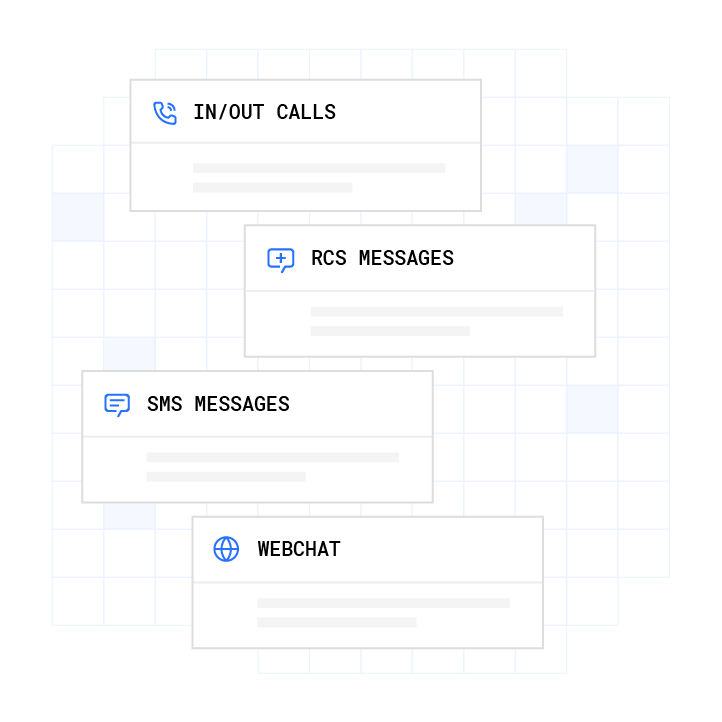
Stateful conversation memory means that every interaction a customer has with your AI agent, regardless of channel, is stored in a single database keyed to that customer’s phone number, email, or ID. When a customer receives an RCS message, taps a button, and later responds via SMS, the AI agent reads the full prior context before generating the next response. The customer does not repeat themselves, and the agent does not restart the conversation. Plura’s Stateful Conversation Database applies this logic across voice, SMS, RCS, and webchat, so a customer who moves from an RCS thread to a voice call is recognized as the same contact with the same conversation history, including offers made, objections raised, and qualification status.
Conclusion and Next Steps for RCS-First Messaging
The RCS Business Messaging vs SMS decision is not binary. SMS remains essential for universal reach and authentication. RCS Business Messaging delivers the branded, interactive, and measurable experience that drives engagement lift in marketing, support, and commerce use cases. The most effective architecture is RCS-first with automatic SMS fallback, executed on a platform that owns its carrier stack, preserves stateful conversation memory across channels, and supports compliance with SOC 2, HIPAA, ISO certification, GDPR, SHAKEN/STIR caller ID verification, TCPA compliance, and DNC compliance.
Platforms built on CPaaS resellers struggle to deliver that architecture cleanly. They introduce a compliance handoff, a cost markup, and a memory gap at every channel boundary. Plura runs the full stack on its own FCC-licensed carrier, with no third-party intermediary between the AI agent and the customer’s device.
For operators ready to move from evaluation to implementation, the next step is a live demonstration of the RCS-first plus SMS-fallback stack running on Plura’s U.S. infrastructure with stateful cross-channel memory. See the full channel architecture against your current use cases in a tailored demo.
1 Plura AI maintains SOC 2, HIPAA, ISO, and GDPR posture as part of its platform infrastructure. References to compliance frameworks in this article describe Plura’s platform capabilities and do not constitute a guarantee that any customer using Plura will themselves be compliant with applicable laws or standards. Customers remain solely responsible for their own regulatory obligations, certifications, consent management, recordkeeping, and the claims they make to their own end users. Consult qualified legal counsel for guidance specific to your use case.
2 This article describes regulatory frameworks at a general level and does not constitute legal advice. Laws and regulations vary by jurisdiction, change over time, and apply differently depending on facts and circumstances. Readers should consult qualified legal counsel before making compliance decisions.
3 Performance figures, customer outcomes, and industry statistics referenced in this article are drawn from cited third-party sources or Plura customer case studies. Individual results vary based on implementation, use case, industry, audience, and execution. Past or aggregate performance is not a guarantee of future results.
4 References to third-party products, services, companies, or research are made for informational and comparative purposes only. Plura AI is not affiliated with, endorsed by, or sponsored by any third party named in this article unless explicitly stated. Trademarks and product names referenced remain the property of their respective owners.
This article is provided for informational purposes only and reflects Plura AI’s understanding at the time of publication. Product capabilities, integrations, and specifications are subject to change. For the most current information, visit plura.ai.
This article was produced with the assistance of AI tools and reviewed by Plura AI prior to publication.