

Written by: Matt Beucler, CEO, Plura AI | Last updated: August 26, 2026
Updated August 2026
Key Takeaways for RCS Deployment in 2026
- RCS Business Messaging in 2026 follows seven production steps: provider selection, agent registration, webhook setup, rich cards, SMS fallback, stateful database integration, and compliance checks.
- Carrier-owned infrastructure removes wrapper taxes, protects branded sender identity, and delivers 80% read rates with 35% click-through rates versus industry averages.3
- Every RCS campaign must run on an approved A2P 10DLC, short code, or toll-free number, with TCPA consent records retained for four years and opt-outs honored within 10 business days.2
- Rich cards support 200-character titles, 2,000-character descriptions, and suggested actions, while Universal Profile 4.0 adds streaming video embedded directly in messages.
- Plura AI unifies RCS, voice, SMS, and webchat in one stateful inbox with TCPA and DNC compliance support; book a live demo to see live metrics.
Who This RCS Guide Serves and When RCS Pays Off
This guide serves contact center leaders and operations owners running SMS and voice at scale, often handling thousands of customer interactions every day. The strongest RCS ROI appears in order confirmations with interactive buttons, contract signing inside the thread via DocuSign or PandaDoc, in-message payments through Stripe, and personalized AI-rendered video delivered directly in the conversation.
Before implementation, operators need these preconditions in place:
- Active A2P 10DLC registration through The Campaign Registry (TCR) for SMS fallback, as every RCS campaign requires an approved SMS fallback on an A2P 10DLC, short code, or toll-free number
- SOC 2, HIPAA, and ISO certification alignment for regulated verticals1
- GDPR documentation for any European operations1
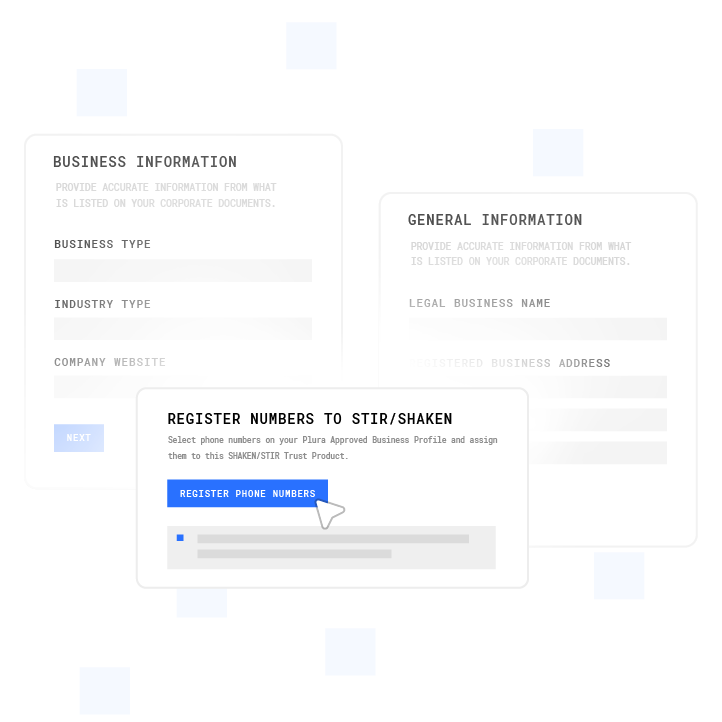
- SHAKEN/STIR caller ID verification on outbound voice1
- TCPA and DNC compliance infrastructure, including consent records with timestamps, source URLs, and IP addresses retained for at least four years per TCPA statute of limitations guidance1
- Brand assets that meet carrier specifications: a 224×224 px PNG logo under 50 KB, a 1440×448 px banner under 200 KB, and a brand color hex with at least 4.5:1 contrast against white per WCAG 2.1 Level AA
The scale of the channel is growing quickly. Juniper Research forecasts global business RCS traffic will reach 485 billion messages by 2030, up from 125 billion in 20264,5, with strong growth in U.S. traffic. Plura AI’s AI RCS messaging achieves an 80% read rate and 35% click-through rate, compared to the 10–35% click-through rates reported across the broader RCS industry by SignalMash’s 2026 State of RCS report.3
Step-by-Step Implementation Breakdown
Step 1: Choose a Provider with Carrier-Owned Infrastructure
The provider choice shapes every downstream architecture and cost decision. Three models dominate the market: direct Google RBM API integration, Twilio-style CPaaS wrappers, and carrier-owned stacks. Businesses cannot send RCS messages directly to customers and must route traffic through an approved aggregator or messaging provider. Providers that own network infrastructure and maintain direct carrier relationships avoid extra intermediary markups, which creates more predictable pricing at scale per Telnyx’s RCS pricing analysis.
Plura runs a carrier-owned stack that originates RCS traffic on its own FCC-licensed infrastructure, so carriers issue branded sender identity directly instead of through a reseller. This structure removes the wrapper tax that CPaaS-dependent platforms pass through in higher per-message rates and fragmented compliance tooling.4
Step 2: Register Your RCS Agent with Carriers
Businesses registering for RCS Business Messaging must provide a Google account, business name, website URL, contact email, and legal entity details via the business.google.com/rcs portal before creating an RBM agent. In the U.S., Aegis Mobile handles brand and asset vetting before carrier submission, per BlueReacher’s 2026 registration guide.2
The U.S. carrier approval process for new RCS business senders often takes several weeks. AT&T, Verizon, and T-Mobile each review identity, use cases, and brand assets. Agents register under one of four use cases: OTP, Transactional, Promotional, or Multi-use. Multi-use agents face stricter carrier scrutiny, and agents that send mismatched message types risk suspension.
Step 3: Configure Webhooks and Event Routing
The RCS Business Messaging API service endpoint is https://rcsbusinessmessaging.googleapis.com. Inbound messages and delivery events arrive through Google Cloud Pub/Sub using at-least-once semantics, so agents must de-duplicate incoming messages by tracking messageId strings per Google’s RBM best practices.
On AWS, RCS events can route to Amazon EventBridge, Amazon CloudWatch, or Amazon Data Firehose, while inbound messages arrive via Amazon SNS to destinations such as AWS Lambda or Amazon Bedrock AI agents. Every outgoing RCS message must include a unique messageId. Failed API calls should retry with exponential backoff using the original messageId to avoid duplicates.
Plura ingests these webhook events into a stateful conversation database and ties them to a customer token. Every RCS delivery receipt, read event, and reply updates the same unified record that voice, SMS, and webchat use.
Step 4: Design Rich Cards and Carousels for Engagement
Rich cards and carousels drive the interactive experiences that separate RCS from SMS and support the higher click-through rates cited earlier. RCS Business Messaging supports standalone rich cards with VERTICAL or HORIZONTAL orientation and suggested actions, along with carousels of multiple cards. Rich card titles cap at 200 characters, descriptions at 2,000 characters, and suggested reply text at 25 characters each, with a total payload size of 250 KB per BlueReacher’s RCS specifications.
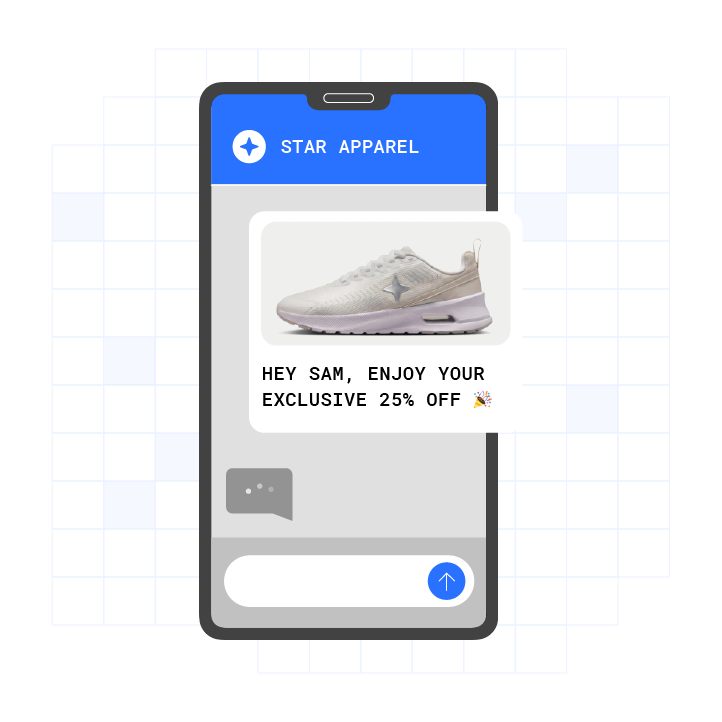
The streaming video capability mentioned in the key takeaways comes from Universal Profile 4.0, finalized on 26 March 2026. That update embeds streaming video directly in rich cards with no download required and adds finer control over how action buttons open links, along with sturdier chatbot deep-linking for RCS for Business campaigns. Suggested actions include openUrlAction, dialAction, createCalendarEventAction, view location, and share location, each tied to postbackData for webhook handling.
Step 5: Configure SMS Fallback with Capability Checks
Production RCS deployments rely on capability checks before every send. To prevent duplicate messages during SMS fallback, systems should verify delivery receipts, attempt to revoke the original RCS message first, and send fallback only if revocation fails or the message was not delivered.
AWS recommends pool-based sending for production RCS because it allows precise control over identities while AWS handles routing and SMS fallback. The SMS fallback message must be self-contained, since rich RCS elements such as carousels and quick-reply buttons do not translate into SMS per Insider One’s RCS vs. SMS architecture guide.
Step 6: Connect a Stateful Conversation Database
A shared customer profile across channels keeps routing decisions current and attribution clean. Without that profile, device-level routing relies on stale data, reporting fragments across tools, and journey logic cannot carry contact state across a channel switch. Plura AI supports voice, SMS, webchat, and RCS inside a unified stateful inbox that maintains full conversation history.
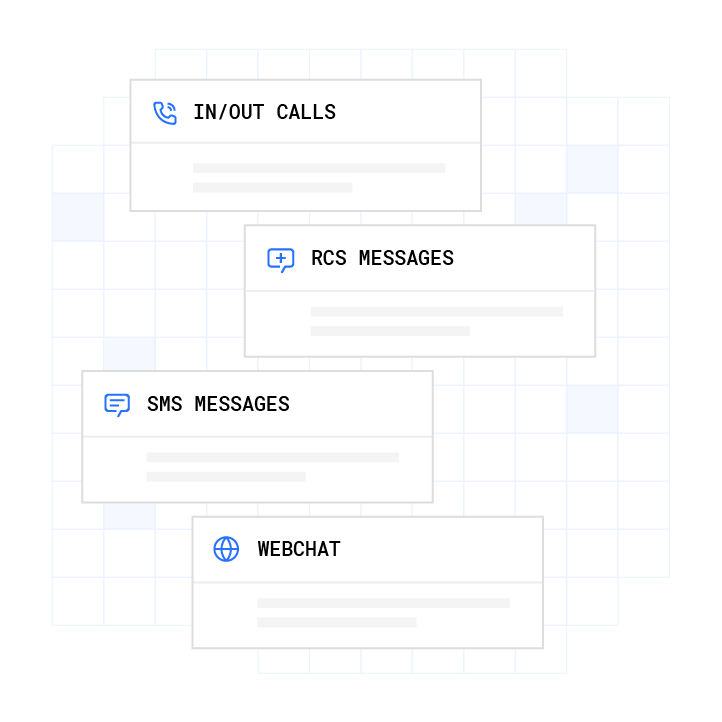
Every interaction keys to a customer token such as phone number, email, or ID and persists in one place. An AI agent that sends an RCS payment request at 9 a.m. can answer the inbound call at noon already aware that the payment completed. Siloed vendors and Twilio-style CPaaS wrappers typically need extra middleware and cost to close this architectural gap.
Step 7: Launch to Production with 2026 Compliance Checks
Before go-live, teams should verify their deployment against current regulatory frameworks. TCPA compliance applies to RCS Business Messaging in the same way it applies to SMS, per BlueReacher’s 2026 registration analysis. Marketing RCS requires prior express written consent, opt-outs must be honored within 10 business days, and quiet hours of 8 a.m. to 9 p.m. local time apply, with penalties starting at $500 per message. Teams should consult qualified legal counsel on specific obligations under TCPA (47 U.S.C. § 227) and applicable state laws, including Texas SB 140, which expressly covers RCS messages sent to Texas numbers, effective September 1, 2025.
On FCC onshoring, the FCC’s Notice of Proposed Rulemaking (CG Docket No. 26-52) proposes caps on offshore customer-service calls and restrictions on offshore handling of sensitive consumer data. Plura runs on 100% U.S. infrastructure by architecture, which means voice origination, model hosting, data storage, and call recording all sit on domestic infrastructure.
In Q2 2026, U.S. carriers began matching every message against its registered campaign use case in real time, with AI-generated copy that drifts from the declared use case able to trigger filtering or full suspension without warning or human review. Opt-in disclosure should appear on the form where the consumer first provides a phone number, and privacy policy language should clearly state that mobile numbers and SMS consent are not shared with third parties.
Run your numbers through Plura’s ROI calculator to check your RCS deployment ROI in real time before you commit to a provider architecture.
Architecture Models and Provider Comparison
Now that the seven implementation steps are clear, the next decision is how provider architecture will support each step in practice. Three implementation architectures are available for RCS Business Messaging in 2026, and the differences in compliance posture, conversation memory, and fallback handling matter for high-volume operators.
Direct Google RBM API: Operators build directly against the Google RCS Business Messaging API and manage webhook verification, Pub/Sub de-duplication, SMS fallback logic, and consent ledgers themselves. Compliance enforcement sits with the operator. Conversation memory does not persist across channels by default. This model fits engineering teams with existing telecom infrastructure that want maximum control.
Twilio-style CPaaS wrappers: Platforms built on third-party carrier infrastructure add a wrapper tax in higher per-message rates. Major U.S. carriers route RCS traffic through Google’s RCS infrastructure, so businesses cannot apply directly to individual carriers and must work through approved providers. Twilio’s Channel Fallback supports RCS-to-SMS routing through Sender Pools per Twilio’s channel fallback documentation, but conversation memory across voice, SMS, RCS, and webchat usually requires extra middleware.
Carrier-owned stacks (Plura AI): Plura AI’s FCC-licensed carrier infrastructure originates RCS traffic without a third-party CPaaS layer. Carriers issue branded sender identity directly. TCPA compliance support, DNC compliance support, and SHAKEN/STIR caller ID verification operate as core platform layers. Every RCS interaction writes to the same stateful conversation database as voice, AI SMS, and AI webchat, so context persists across every channel switch. Plura AI’s average implementation time is 2 days with no-code templates and concierge onboarding, compared with the 2–4 week timelines typical of CPaaS-dependent deployments per Plura AI’s Twilio comparison.
On pricing, U.S. operator RCS rates for authentication, utility, and media messages vary by carrier. Wrapper-tax platforms add margin on top of these carrier rates, while carrier-owned stacks pass through carrier pricing.
Common RCS Deployment Challenges and Fixes
Carrier approval delays: The U.S. approval process often takes several weeks across major carriers. Juniper Research identifies brand onboarding and verification complexity as a primary barrier to wider RCS for Business adoption. Remediation involves submitting complete brand documentation, including articles of incorporation, EIN, business license, use case descriptions, opt-in and opt-out flows, volume estimates, and TCPA or CTIA compliance attestations in the initial packet. Plura’s carrier relationships and pre-built workflows reduce back-and-forth with carrier review teams.
Capability check failures: RCS Business Messaging agents should check device capabilities via the capability check API before starting a conversation and set up SMS fallback for non-RCS-enabled devices. Remediation focuses on pool-based sending so fallback routing occurs at the platform layer instead of through custom logic on every send.
Rich card rendering issues: Content policies and review processes differ by carrier, so a template approved by one carrier may be rejected by another per Sendblue’s setup guide. Remediation includes testing rich cards against all four major U.S. carriers in sandbox mode before launch and confirming payload size stays under 250 KB and suggested reply text stays under 25 characters.
SMS fallback duplication: Pub/Sub at-least-once delivery semantics can create duplicate inbound events. Remediation involves tracking messageId strings in the stateful database and de-duplicating before processing. Teams should use DELIVERED events to cancel pending fallback timers immediately, per AWS End User Messaging RCS event documentation.
Campaign use case drift: AI-generated copy that drifts from the declared use case can trigger filtering or full suspension without warning or human review in 2026. Remediation includes locking message templates to the registered use case category and running content through Plura’s compliance engine before deployment.
Measuring RCS Performance Against SMS
Production RCS deployments should track a funnel of metrics against baseline SMS performance, starting with delivery and moving through engagement to conversion.
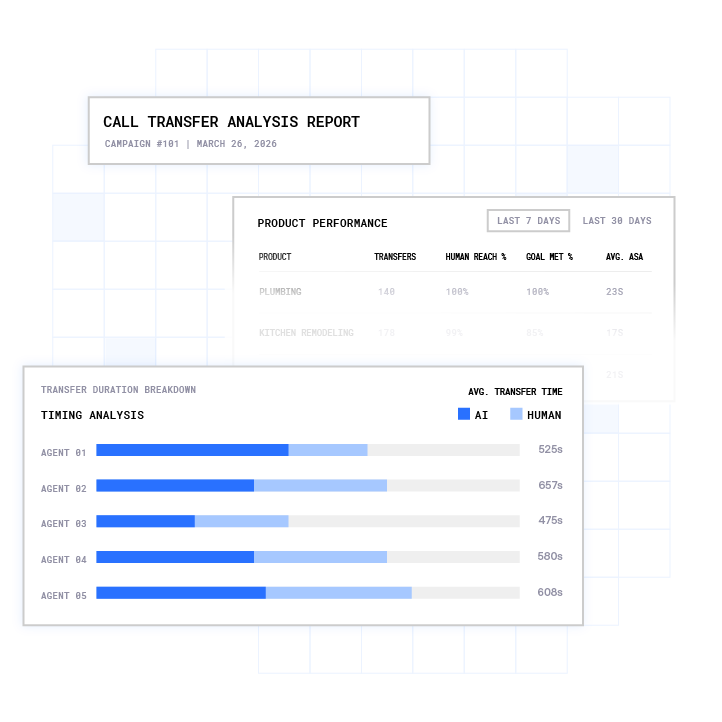
- Delivery rate: RCS delivers only on successful device capability confirmation, so teams should track RCS delivery rate separately from SMS fallback delivery rate to understand true channel reach.
- Read rate: Once messages deliver, teams should measure how many recipients open them. Plura’s platform delivers the 80% read rate cited earlier, compared to typical SMS open rates, and read receipts are a native RCS feature unavailable in standard SMS.
- Click-through rate (CTR): For messages that are read, teams should track which recipients take action. RCS click-through rates run 10–35% compared to 2–5% for SMS, and CTR should be tracked per rich card action type to identify which suggested actions drive the highest engagement.
- Conversion lift: Retail conversion rates for RCS run 3–8% compared to 1–3% for SMS.3 Teams should measure conversion against the same audience segment receiving SMS to isolate channel lift.
- Compliance audit pass rate: Teams should track opt-out honor rate within the 10-business-day window, consent record completeness, and carrier block rate. RCS agents risk throttling or suspension if block rates exceed roughly 3–5%.
Plura AI’s conversation intelligence layer surfaces these metrics across every channel in one dashboard and generates audit-ready exports in one click for compliance review or carrier requirements.
Book a live demo with Plura AI to see RCS delivery, read, and conversion lift metrics from live deployments.
Advanced 2026 RCS Considerations
2026 FCC onshoring rules: The FCC NPRM (CG Docket No. 26-52) proposes restrictions on offshore handling of sensitive consumer data, including passwords, multi-factor authentication codes, social security numbers, banking data, and card data. Companion legislation such as the Keep Call Centers in America Act (S.2495) and the Foreign Robocall Elimination Act (S.2666) extends the regulatory perimeter per Congressional Research Service analysis. As these frameworks expand, operators running RCS on platforms with foreign infrastructure dependencies face growing compliance exposure that carrier-owned U.S. infrastructure avoids by design.
Carrier-layer TCPA enforcement: The RCS carrier verification layer raises the bar for quality by creating higher barriers to entry for spammers and bad actors than exist with SMS. Plura supports real-time DNC scrubbing, TCPA compliance checks, and immutable consent logging inside the platform on every outbound contact before the message leaves the network. Teams should consult qualified legal counsel on their specific TCPA obligations.
Universal Profile 4.0 streaming video: Universal Profile 4.0, finalized on 26 March 2026, adds streaming video embedded directly in rich cards with no download required. Plura supports personalized 30-second AI-rendered video delivered inside the message thread, which enables personalized product demonstrations and appointment confirmation videos that close deals without sending customers to a webpage.
Scaling to omnichannel: RCS functions as one channel inside a broader conversation architecture. Plura AI’s AI RCS messaging supports over 2 billion devices and shares the same stateful conversation database as Plura’s AI voice agent, AI SMS, and AI webchat. Healthcare operators using Plura’s RCS for appointment confirmations see up to 40% improvement in no-shows per Plura AI’s healthcare deployment data. The no-code workflow builder connects RCS to voice escalation, SMS fallback, and webchat handoff without engineering resources.
Compare Plura AI’s RCS plans and rates side by side to select the right tier for your deployment volume.
Frequently Asked Questions
What is the difference between RCS Business Messaging and SMS for high-volume operators?
RCS Business Messaging delivers branded, interactive messages with verified sender identity, rich cards, carousels, in-message payments, and read receipts inside the native messaging app on Android and iOS devices. SMS delivers plain text with no sender verification, no read receipts, and no interactive elements. For high-volume operators, the practical difference appears in engagement metrics, where RCS click-through rates commonly run 10–35% versus 2–5% for SMS and RCS read rates run significantly higher than SMS open rates. The compliance framework for RCS mirrors SMS under TCPA, CTIA guidelines, and carrier registration requirements, with the added requirement that brands receive verification from the carrier ecosystem before sending. Operators should consult qualified legal counsel on their specific obligations under both frameworks.
How long does RCS agent registration take in the United States in 2026?
The U.S. carrier approval process for new RCS business senders often takes several weeks, reflecting identity verification, use case review, and brand asset validation by AT&T, Verizon, and T-Mobile independently. Regulated industries such as healthcare and finance typically face longer timelines. Operators working through a carrier-owned platform with established carrier relationships and pre-built registration workflows can reduce back-and-forth during review, although carriers still control the final timeline.
What does RCS Business Messaging pricing look like in 2026?
U.S. carrier pricing for RCS authentication, utility, and marketing messages varies by carrier and message type. These prices represent carrier-level rates. Platforms that wrap third-party CPaaS infrastructure add margin on top. Carrier-owned platforms with direct carrier relationships pass through rates without intermediary markup. All U.S. RCS agents are currently non-conversational and billed per message, while session-based conversational billing is available in other markets and is beginning to roll out in the U.S. RCS bills only on successful delivery, so fallback to SMS bills at the SMS rate rather than the RCS rate.
How does SMS fallback work in a production RCS deployment?
SMS fallback triggers when the recipient’s device does not support RCS, the carrier has not enabled A2P RCS, or the message cannot be delivered within the time-to-live window. The recommended production architecture uses pool-based sending, where the RCS agent and SMS numbers sit in a single pool and the platform handles automatic routing and fallback without custom application logic on each send. The SMS fallback message should be authored separately from the RCS version because rich cards, carousels, and quick-reply buttons do not translate to SMS. To prevent duplicate delivery, systems should verify RCS delivery receipts, attempt to revoke the original RCS message before sending fallback, and cancel pending fallback timers immediately upon receiving a DELIVERED event. Every RCS deployment also requires an active A2P 10DLC, short code, or toll-free number registration for the SMS fallback leg, since RCS registration sits on top of SMS registration rather than replacing it.
What compliance frameworks apply to RCS Business Messaging in 2026?
RCS Business Messaging in the U.S. operates under the same TCPA, CTIA, and carrier registration requirements as SMS, with the added requirement of verified brand agent approval. TCPA applies to commercial RCS at scale, with statutory damages of $500 to $1,500 per violation and no statutory cap on total liability. Texas Senate Bill 140, effective September 1, 2025, expressly covers RCS messages sent to Texas numbers regardless of where the business is located. The consent and opt-out requirements outlined in Step 7 are grounded in TCPA statute, which applies to commercial RCS at scale with statutory damages of $500 to $1,500 per violation. The FCC’s April 2025 consent revocation rules expanded the definition of reasonable opt-out method beyond reply-STOP to include any clear expression of revocation. Consent records should include timestamp, source URL, IP address, and the exact consent language shown, retained for at least four years. Operators in regulated industries should also evaluate HIPAA alignment for protected health information and note that business RCS messages use transit encryption rather than end-to-end encryption, which makes them unsuitable for transmitting confidential data without additional safeguards. Teams should consult qualified legal counsel on their specific obligations under each applicable framework.
Conclusion
RCS Business Messaging in 2026 follows a clear seven-step path that covers provider selection, agent registration, webhook architecture, rich card implementation, SMS fallback configuration, stateful conversation database integration, and production launch with compliance checks. The provider decision remains the most consequential step because it determines whether conversation memory persists across channels, whether compliance support operates at the carrier layer or as a bolt-on, and whether wrapper taxes compound across every message at scale.
Plura’s carrier-owned stack delivers RCS Business Messaging inside one stateful conversation database shared with voice, SMS, and webchat, with TCPA and DNC compliance support and SHAKEN/STIR caller ID verification built into the platform rather than added through third-party vendors.
1 Plura AI maintains SOC 2, HIPAA, ISO, and GDPR posture as part of its platform infrastructure. References to compliance frameworks in this article describe Plura’s platform capabilities and do not constitute a guarantee that any customer using Plura will themselves be compliant with applicable laws or standards. Customers remain solely responsible for their own regulatory obligations, certifications, consent management, recordkeeping, and the claims they make to their own end users. Consult qualified legal counsel for guidance specific to your use case.
2 This article describes regulatory frameworks at a general level and does not constitute legal advice. Laws and regulations vary by jurisdiction, change over time, and apply differently depending on facts and circumstances. Readers should consult qualified legal counsel before making compliance decisions.
3 Performance figures, customer outcomes, and industry statistics referenced in this article are drawn from cited third-party sources or Plura customer case studies. Individual results vary based on implementation, use case, industry, audience, and execution. Past or aggregate performance is not a guarantee of future results.
4 References to third-party products, services, companies, or research are made for informational and comparative purposes only. Plura AI is not affiliated with, endorsed by, or sponsored by any third party named in this article unless explicitly stated. Trademarks and product names referenced remain the property of their respective owners.
5 This article contains forward-looking statements regarding industry trends, technology adoption, and future capabilities. These statements reflect current expectations and are subject to change. Plura AI undertakes no obligation to update forward-looking statements except as required.
This article is provided for informational purposes only and reflects Plura AI’s understanding at the time of publication. Product capabilities, integrations, and specifications are subject to change. For the most current information, visit plura.ai.
This article was produced with the assistance of AI tools and reviewed by Plura AI prior to publication.