

Written by: Matt Beucler, CEO, Plura AI
Key Takeaways for After-Hours Healthcare Answering
- After-hours call answering for healthcare replaces voicemail gaps with 24/7 AI coverage that answers on the first ring and documents every interaction.
- Voicemail systems drive measurable patient churn, with 69% of consumers willing to switch providers when after-hours access fails expectations.
- HIPAA-aligned answering typically uses AES-256 encryption, role-based access controls, audit logs, and a signed BAA with any vendor handling PHI.
- AI voice agents reduce total cost of ownership versus human answering services while enabling real-time EHR integration and escalation workflows for urgent calls.
- Plura AI delivers HIPAA-aligned after-hours call answering for healthcare with U.S. infrastructure and managed workflows; book a live demo to see the workflows in action.
Why Voicemails Fail Patient Satisfaction and Revenue
Between 16.5% and 40% of patient calls occur outside business hours3, and most practices still rely on voicemail or traditional answering services that lack secure channels and audit trails. Those gaps show up directly in no-shows and lost revenue.
Research shows that reaching patients by phone before a visit can substantially reduce no-show rates compared to voicemail or no contact at all. Voicemail does not simply hold messages; it actively contributes to missed appointments and revenue leakage.
Beyond no-shows, 69% of healthcare consumers are likely to switch clinics if communications do not meet their expectations.3 Poor after-hours access drives patient churn and creates a recurring revenue drag for practices.
Plura’s after hours call answering for healthcare platform supports practices in achieving up to a 40% improvement in no-shows by ensuring every call is answered and every appointment reminder reaches the patient directly.3
What HIPAA-Compliant Call Answering Means in Practice
Answering every call matters, and healthcare practices face an added constraint that other industries do not: every patient interaction can involve protected health information that must be secured under federal law. HIPAA-compliant call answering describes a system that applies administrative, technical, and physical safeguards to protect protected health information (PHI) during inbound patient calls, as outlined under 45 CFR Parts 160, 162, and 164.2 It functions as a digital front desk rather than a clinical triage service.
Operational characteristics of a HIPAA-aligned answering system include:
- Answering calls consistently after hours and capturing call intent without collecting unnecessary PHI
- Routing messages based on urgency and staff roles with role-based permissions and access controls
- Storing call records, transcripts, and voicemails with encryption both in transit and at rest, using AES-256 as the industry standard
- Maintaining detailed audit logs to support compliance reviews and incident response
- Executing a Business Associate Agreement (BAA) with any vendor that creates, receives, maintains, or transmits PHI
As of January 28, 2026, unintentional HIPAA violations due to lack of knowledge carry fines starting at $145 per violation2, while willful neglect that goes uncorrected faces a maximum annual penalty cap of $2,190,294. Standard email and SMS are not HIPAA-compliant by default, so compliant systems typically deliver messages via encrypted channels or secure API integrations.
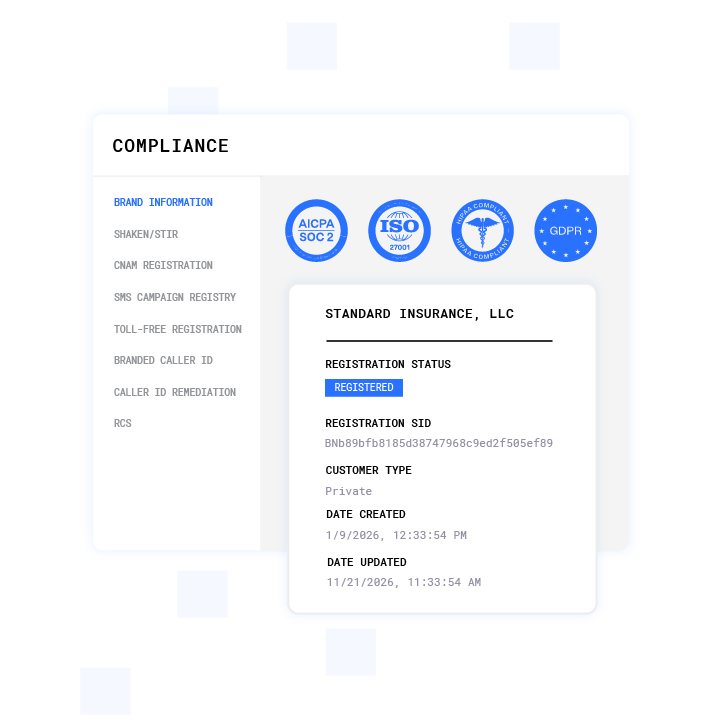
Plura AI supports compliance with HIPAA, SOC 2, and ISO certification requirements.1 Its infrastructure includes end-to-end encryption, access controls, and audit logging for PHI across voice, SMS, RCS, and webchat. Customers remain responsible for their own regulatory obligations and for executing appropriate BAAs with Plura and any subprocessors. Practices should consult qualified counsel regarding their specific HIPAA obligations.
1
Comparing After-Hours Answering Costs in Healthcare
Cost structures differ significantly across the three main models practices use today.
| Model | Typical Monthly Cost | Annual Cost (Est.) | Key Limitation |
|---|---|---|---|
| Traditional human answering service | $200 to $500 (basic message-taking) | $2,400 to $6,000 | Per-minute billing, holiday premiums of 1.5x to 2x, no EHR integration |
| Live per-minute medical answering | Varies by usage | Varies by volume | Full-minute rounding can inflate billed time by 20 to 40% |
| Plura AI voice agents | Pricing available via calculator | TCO varies by configuration | Requires workflow configuration and BAA execution |
The per-minute model carries hidden costs that compound at volume. ContactBabel’s 2025 US Contact Center Decision-Makers Guide states that the average inbound call already costs $7.16 to handle through a human channel before any answering-service markup.3 Poor after-hours access also contributes to unnecessary ER visits and lost practice revenue.
AI alternatives shift the economics from paying for human time to paying for software infrastructure. Plura’s ROI calculator helps practices estimate potential savings when switching from human agents to Plura agents at equivalent volume.
Run your numbers through Plura’s calculator to check your ROI in real time.
Escalation Workflows for Routine and Urgent After-Hours Calls
Escalation protocols for after-hours AI agents need clear separation between routine requests such as rescheduling and clinical emergencies such as chest pain. Emergency scenarios route via warm transfer to on-call providers or emergency services while the AI offers reassurance but does not make clinical decisions.
A well-structured escalation workflow separates calls into two primary tracks.
Routine requests (handled by AI without escalation):
- Appointment scheduling and rescheduling against real-time EHR availability
- Prescription refill routing with documentation written to the patient chart before the call ends
- Insurance eligibility verification and administrative questions
- Billing inquiries routed to the appropriate queue
Urgent escalations (warm transfer to on-call provider or 911):
- Red-flag symptoms such as chest pain, difficulty breathing, or altered mental status
- 988 Suicide and Crisis Lifeline routing, which compliant answering systems must support as of 2026 to prevent calls from being trapped in non-clinical loops
- Time-sensitive clinical updates that affect patient safety
Practices using AI voice and text tools can see significantly fewer calls reaching staff, with AI handling roughly 70% of routine patient calls while staff focus on the more complex 30%. Without bidirectional EHR integration, after-hours call systems function as sophisticated voicemails that queue tasks for morning staff rather than completing work in real time.
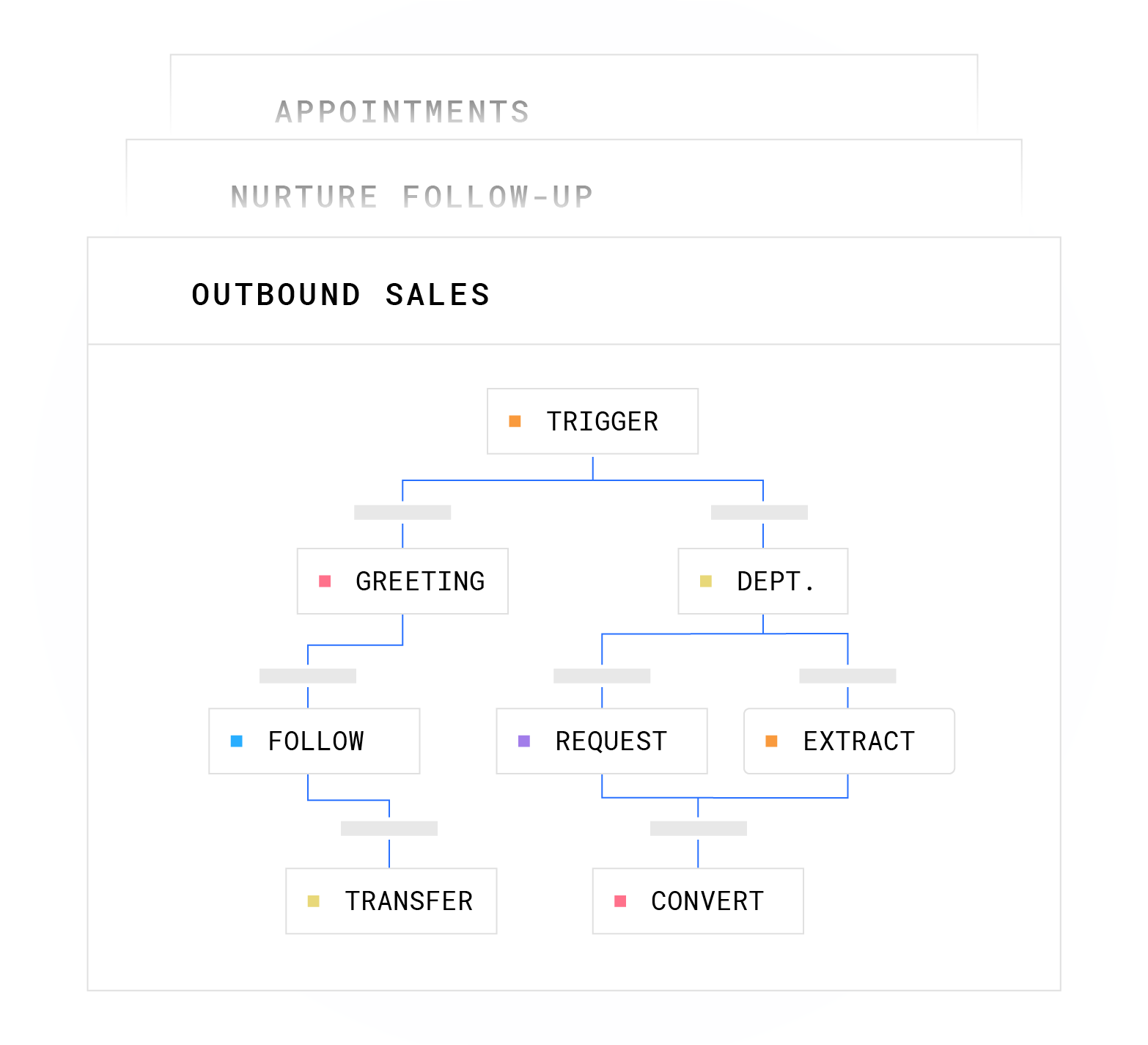
Plura’s managed workflows include explicit guardrails at every conversation node. When a patient’s response falls outside defined paths, the AI escalates via warm transfer to a U.S. agent or designated escalation queue. The AI does not improvise on outcomes that matter.
Implementation Timeline and EHR Integration Details
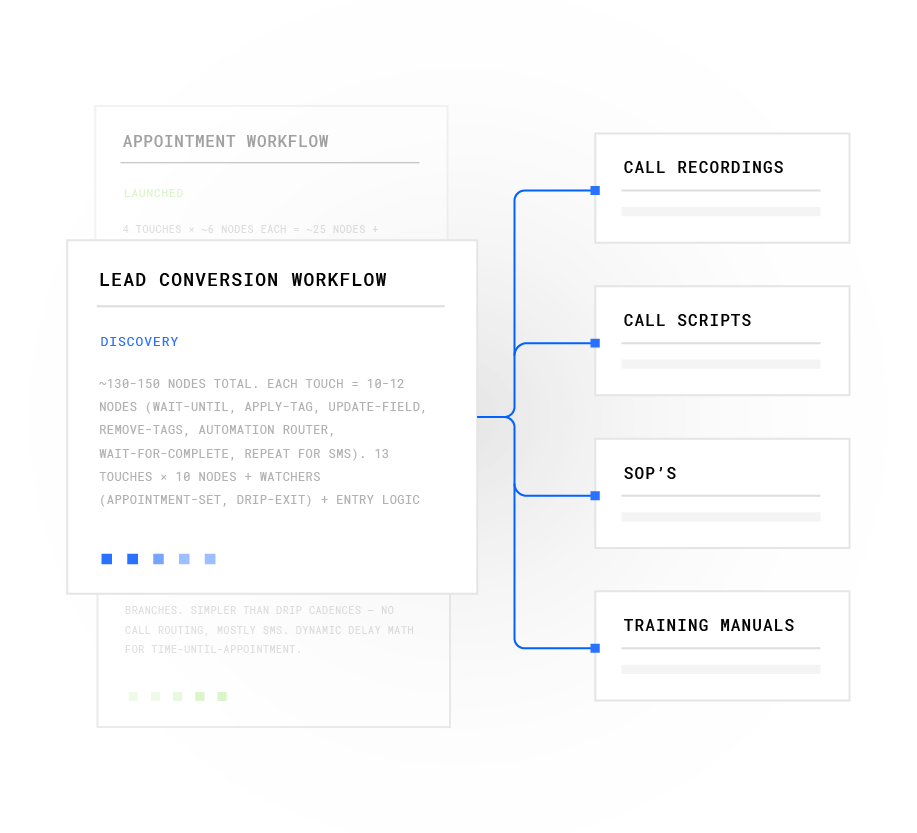
Many practices go live with after-hours AI systems quickly using expert-approved workflow templates that match each practice’s scheduling rules, provider preferences, and escalation protocols. Dedicated internal IT resources are often not required.
Plura’s onboarding sequence follows a consistent path:
- Discovery audit of the practice’s call economics and existing workflows
- Intake of sample calls, standard operating procedures, and existing scripts
- Overnight build of a dynamic conversation mockup
- Workflow review and iteration with the practice team
- Engineering build of the production workflow
- Pilot test on a subset of real calls
- Full go-live
A simple inbound qualification flow is typically built in days. A complex multi-step intake, such as a 25-question health-history survey, often runs closer to one to two months because the workflow logic requires design and validation time. All annual contracts include a 90-day opt-out window.
Plura’s integrations connect to 50+ tools across CRMs, calendars, and data platforms. EHR-specific integrations enable the AI to read scheduling rules, book appointments, verify insurance eligibility, and write data back to the patient record in real time, which removes the morning backlog that voicemail-based systems create for daytime staff.
Vendor Red Flags for After-Hours Healthcare Answering
Not every vendor marketing HIPAA-aligned after-hours call answering delivers the infrastructure that label suggests. Evaluate vendors against these criteria before signing a BAA:
- No BAA offered. Any vendor that creates, receives, maintains, or transmits PHI typically executes a BAA specifying permitted uses, breach notification timelines, subcontractor obligations, and data return or destruction upon termination. A vendor that resists or delays this step can increase compliance risk.
- Third-party CPaaS dependency. Many AI voice tools route calls through a third-party communications platform as a service (CPaaS) such as Twilio.4 This means PHI may transit infrastructure the vendor does not own or control, and branded caller ID cannot be issued at the carrier level. Plura is its own FCC-licensed audio bridging carrier, so voice originates on Plura’s domestic infrastructure.
- No audit log export. Centralized audit logs that track who changed call recording settings, modified user permissions, or enabled integrations are essential for demonstrating oversight and investigating incidents. Vendors that cannot produce one-click audit exports create manual compliance work.
- Foreign infrastructure. Forwarding after-hours patient calls or voicemails containing PHI to personal mobile devices or unsecured apps causes organizations to lose visibility and control over that information. Similar risks apply when vendors host data or process calls on foreign infrastructure. Plura runs on 100% U.S. infrastructure by architecture.
- No escalation logic for clinical emergencies. A vendor whose system cannot distinguish a medication refill request from a chest pain report and route accordingly is not appropriate for healthcare deployment.
Plura-Specific ROI Math and Calculator Use
The default scenario on Plura’s ROI calculator models a 15-agent operation paying $20 per hour with standard taxes, benefits, and commissions at 40% talk utilization, which costs $60,000 per month.3 Replacing that team with Plura at $15 per hour, 100% talk utilization, and 6 Plura agents doing the work of 15 humans drops the monthly cost to $14,400. Savings reach $45,600 in the first 30 days, $547,200 over 12 months, and $2,736,000 over 60 months.
For context on per-conversation economics, Plura AI voice agents cost $0.35 to $0.85 per completed conversation including intelligence, versus $5 to $15 fully loaded for offshore call centers, both well below the $7.16 industry average for human-handled calls. The true fully loaded cost per hour for human answering services, including turnover, training, quality assurance, management, and technology, runs $14 to $22 before holiday premiums or per-minute overages.
Practices also recover revenue that voicemail loses. The average missed call costs service businesses $1,200 in lost revenue (BIA Advisory).4 Capturing half of 40 missed monthly calls generates $24,000 in additional revenue.
Additionally, Leads contacted within 1 minute have a 391% higher conversion rate than those contacted after 30 minutes (Velocify study of 3.5M leads).3 For healthcare practices, patients who call after hours and receive an immediate response are significantly more likely to book and keep their appointments.
Use Plura’s calculator to model your specific call volume and see projected savings over 12, 24, and 60 months.
After-Hours Medical Answering Service HIPAA Q&A
What makes an after-hours medical answering service HIPAA-aligned?
A HIPAA-aligned after-hours medical answering service applies administrative, technical, and physical safeguards to PHI at every stage of the call: answering, routing, documenting, and storing. Core safeguards often include AES-256 encryption for call recordings and transcripts both in transit and at rest, role-based access controls, detailed audit logs, and a signed BAA with the vendor. Standard voicemail and consumer-grade SMS are not HIPAA-aligned by default. Practices should consult qualified counsel to evaluate whether a specific vendor’s infrastructure meets their HIPAA obligations.
Can AI voice agents handle after-hours medical calls without clinical staff?
AI voice agents handle the administrative and routing layer of after-hours calls without clinical staff, including scheduling, refill routing, insurance verification, and general inquiries. They do not provide clinical guidance, triage, or medical advice. For calls involving clinical symptoms or safety concerns, a properly configured AI agent escalates via warm transfer to an on-call provider or emergency services. The AI documents the encounter and writes relevant data to the EHR before the call ends, so daytime staff receive a clean record rather than a voicemail queue.
How does after-hours AI call answering integrate with EHR systems?
Bidirectional EHR integration allows an AI agent to read real-time scheduling availability, verify insurance eligibility, and write appointment confirmations, refill requests, and call documentation directly to the patient record during the call. Without this integration, the system functions as a sophisticated voicemail that creates a morning backlog for staff. Plura’s integrations connect to 50+ tools across CRM, calendar, and data platforms. Practices should confirm that any EHR integration keeps patient data within a compliant ecosystem and does not pass PHI through unsecured middleware or non-BAA vendors.
What is the total cost of ownership for after-hours AI call answering versus a human answering service?
Traditional live per-minute medical answering services involve per-operator-minute costs that vary by provider, with annual bills for a typical practice depending on call volume before base fees, setup, or holiday premiums. AI alternatives shift the cost structure from per-minute billing to software infrastructure. Plura’s ROI calculator projects monthly AI agent costs of $14,400 for the equivalent of 15 human agents, compared to $60,000 per month for the human model at standard utilization rates. Over 12 months, that gap produces $547,200 in savings. Practices should run their specific call volumes through Plura’s calculator to generate a scenario matched to their operation.
What escalation protocols should an after-hours healthcare AI system include?
An after-hours healthcare AI system should include defined escalation paths for at least three categories: routine administrative requests handled entirely by the AI, urgent clinical symptoms routed via warm transfer to an on-call provider, and crisis situations including mental health emergencies routed to the 988 Suicide and Crisis Lifeline or emergency services. The system must not trap clinical calls in non-clinical loops. Every escalation should be documented in the patient record in real time. Practices should work with their clinical leadership and legal counsel to define the specific thresholds and protocols appropriate for their patient population and provider coverage model.
Conclusion: Replacing Voicemail with Intelligent After-Hours Coverage
Voicemail and traditional human answering services create measurable gaps in patient access, satisfaction, and practice revenue. After hours call answering for healthcare built on HIPAA-aligned AI infrastructure closes those gaps without night-shift payroll, per-minute billing, or the compliance exposure that comes with unsecured channels and foreign infrastructure.
Plura AI’s AI voice agents answer on the first ring, route by urgency, document to the EHR, and escalate when it matters, at a total cost of ownership that replaces traditional contact-center economics. The platform supports compliance with HIPAA, SOC 2, and ISO certification requirements, runs on 100% U.S. infrastructure, and includes a 90-day opt-out window on every annual contract.
Book a live demo with Plura at plura.ai/ai-voice-demo.
Run your numbers through Plura’s calculator to check your ROI in real time.
Compare plans and rates side by side at plura.ai/pricing.
1 Plura AI maintains SOC 2, HIPAA, ISO, and GDPR posture as part of its platform infrastructure. References to compliance frameworks in this article describe Plura’s platform capabilities and do not constitute a guarantee that any customer using Plura will themselves be compliant with applicable laws or standards. Customers remain solely responsible for their own regulatory obligations, certifications, consent management, recordkeeping, and the claims they make to their own end users. Consult qualified legal counsel for guidance specific to your use case.
2 This article describes regulatory frameworks at a general level and does not constitute legal advice. Laws and regulations vary by jurisdiction, change over time, and apply differently depending on facts and circumstances. Readers should consult qualified legal counsel before making compliance decisions.
3 Performance figures, customer outcomes, and industry statistics referenced in this article are drawn from cited third-party sources or Plura customer case studies. Individual results vary based on implementation, use case, industry, audience, and execution. Past or aggregate performance is not a guarantee of future results.
4 References to third-party products, services, companies, or research are made for informational and comparative purposes only. Plura AI is not affiliated with, endorsed by, or sponsored by any third party named in this article unless explicitly stated. Trademarks and product names referenced remain the property of their respective owners.
This article is provided for informational purposes only and reflects Plura AI’s understanding at the time of publication. Product capabilities, integrations, and specifications are subject to change. For the most current information, visit plura.ai.
This article was produced with the assistance of AI tools and reviewed by Plura AI prior to publication.