

Written by: Matt Beucler, CEO, Plura AI
Key Takeaways
-
U.S. healthcare operators face rising patient volumes and tightening HIPAA, TCPA, and 2026 regulatory frameworks, while manual scheduling cannot scale.1
-
AI appointment booking tools need fast response, multi-channel engagement, strong compliance infrastructure, deep EHR integration, and predictable total cost of ownership.
-
Effective AI platforms such as Plura AI can reduce no-show rates by up to 40% through stateful, cross-channel reminders and real-time rescheduling without staff involvement.3
-
Compliance requirements often include signed BAAs, SOC 2 Type II certification, end-to-end encryption, and real-time consent management that support healthcare operators’ regulatory programs.1
-
Plura AI delivers a compliant, U.S.-based AI scheduling platform with stateful memory across voice, SMS, RCS, and webchat, and you can see it in action in a live demo.
Direct Answer: Plura AI as the Leading 2026 Healthcare Scheduling Platform
For U.S. healthcare operators focused on compliance posture, no-show reduction, and multi-channel patient engagement, Plura AI is built for this environment.
Plura runs on 100% U.S. infrastructure, holds stateful cross-channel memory across voice, SMS, RCS (Rich Communication Services), and webchat, and supports customer compliance efforts under HIPAA, SOC 2 (System and Organization Controls 2), and TCPA.1
The 2026 evaluation lens centers on speed to first contact, multi-channel coverage, compliance infrastructure, EHR (Electronic Health Record) integration depth, and total cost of ownership. See how Plura manages real patient scheduling workflows in a live demo.
Five-Pillar Evaluation Framework for AI Healthcare Scheduling
Five pillars determine whether an AI appointment booking tool is operationally viable in a regulated healthcare environment.
Speed. Contacting a lead within 5 minutes of an inbound request makes them up to 100× more likely to connect, and a 60-second response lifts conversions by 391%.3 AI systems that respond in under 5 seconds across all channels set the operational benchmark.
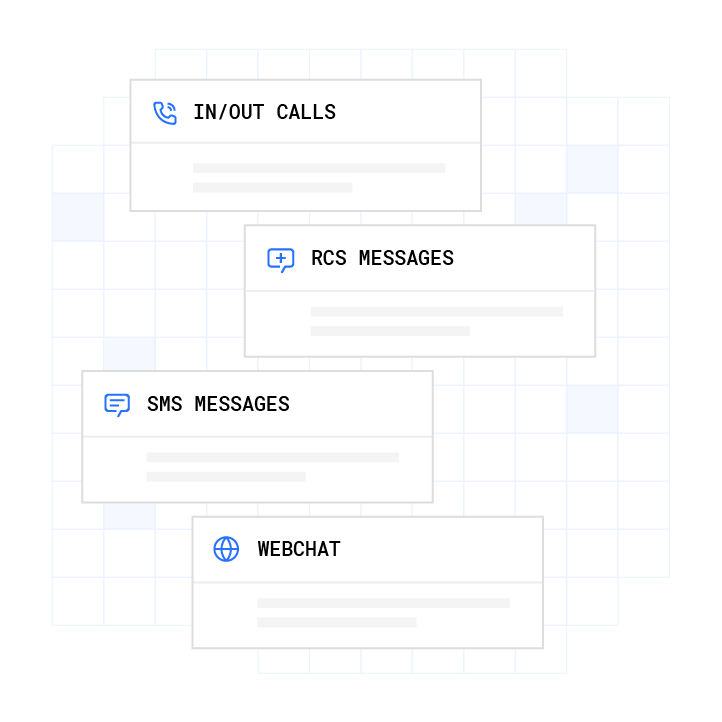
Multi-channel coverage. Effective platforms orchestrate voice, SMS, RCS, and webchat from a single stateful memory layer so patients are not asked to repeat themselves across channels.
Compliance posture. Vendors typically provide signed Business Associate Agreements (BAAs), SOC 2 Type II certification, end-to-end encryption, and TCPA consent management as baseline infrastructure, not optional add-ons.1 Operators remain responsible for their own regulatory obligations, and the platform supplies infrastructure that supports those efforts.
EHR integration depth. EHR integration is an important requirement for adopting AI tools. Native connectivity to Epic, Cerner/Oracle Health, athenahealth, and FHIR R4 (Fast Healthcare Interoperability Resources) APIs determines whether the AI can read live availability and write confirmed bookings without manual reconciliation.
Total cost of ownership. Per-minute rates, build fees, integration costs, and ongoing conversation engineering all factor into TCO. Plura’s TCO of $300,000–$700,000 per year replaces traditional contact-center economics of $4M–$7M on equivalent volume. The first pillar, speed with multi-channel coverage, directly affects the most expensive scheduling problem in healthcare: patient no-shows.
AI Medical Appointment Booking to Reduce No-Shows
Plura’s stateful AI agents, running across voice, SMS, RCS, and webchat on a single shared memory layer, deliver a 40% no-show improvement through consistent reminder cadences and real-time rescheduling conversations that do not require staff involvement.
The key differentiator is stateful follow-up: a patient who received an SMS reminder at 9 a.m. is recognized by the voice agent at noon without re-introduction. That continuity creates a single scheduling conversation instead of a disconnected series of contacts.
HIPAA-Aligned AI Appointment Scheduling for 2026
Healthcare AI scheduling platforms that handle protected health information (PHI) operate within a compliance framework that includes HIPAA (45 CFR Parts 160, 162, and 164), TCPA (47 U.S.C. § 227), and SOC 2 Type II. Operators should consult qualified legal counsel to assess their specific obligations under applicable federal and state law.1,2
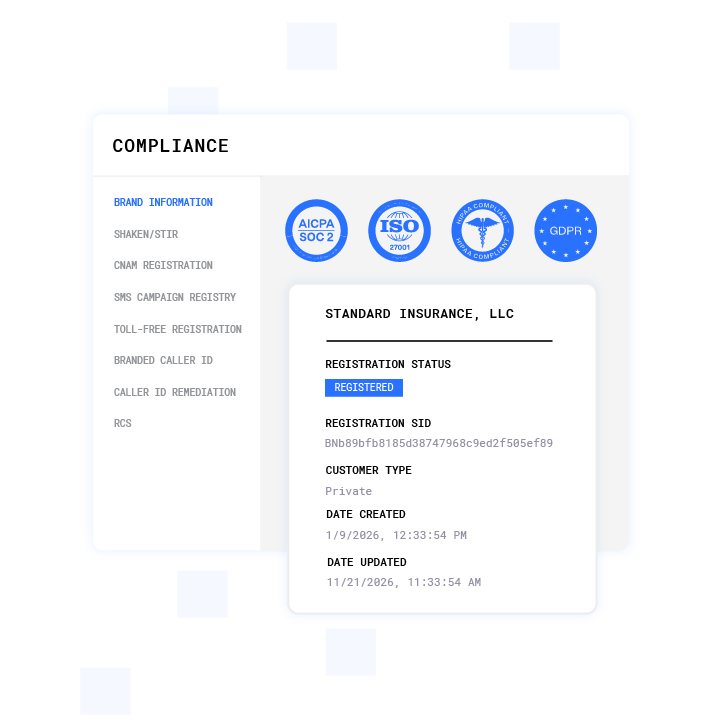
Plura’s compliance engine functions as a first-class layer of the platform. Every outbound contact is checked against federal and state DNC (Do Not Call) registries in real time before dial, and non-compliant numbers are blocked. Consent records are timestamped and immutable. Quiet-hours rules enforce automatically through time-zone detection. HIPAA-aligned encryption, access controls, and audit logging cover PHI across all four channels. SOC 2 Type II certification covers the underlying infrastructure.
Plura supports customer compliance efforts, while operators retain responsibility for their own certifications and regulatory obligations. The compliance dashboard exports audit-ready reports in one click.
Request a compliance-focused demo to review Plura’s HIPAA and SOC 2 infrastructure.
EHR Integration Requirements for AI Appointment Booking Tools
Integration depth, not just basic connectivity, determines operational value. A platform that reads availability but cannot write confirmed bookings back to the EHR still requires manual reconciliation.
Operators evaluating vendors should verify whether the integration is native or middleware-dependent, whether it supports bidirectional data flow, and whether it has been validated against the specific EHR version in production.
Plura connects to 50+ systems across 13 integration categories and supports FHIR-based workflows as part of its healthcare deployment pattern. Healthcare deployments inherit HIPAA-aligned encryption, sensitive-data redaction, and audit-ready logging by default.1
Implementation Readiness for Regulated Healthcare Schedulers
Through Plura, typical builds for AI patient scheduling agents in single-location clinics with modern EHR APIs take days to weeks from discovery to deployment. Complex multi-step intake workflows, such as a 25-question health-history survey, run closer to one to two months because the workflow logic itself requires design and validation time.
Plura’s onboarding sequence follows a consistent structure designed to minimize deployment risk. The process begins with a discovery audit and intake of sample calls and existing scripts, which inform an overnight build of a dynamic conversation mockup. The team then iterates with the operator to refine the mockup, and engineering builds the production workflow. Before full go-live, the system runs a pilot on a subset of real calls to validate performance under actual patient load.
Human-in-the-loop safeguards are built into every deployment. When a patient’s response falls outside defined workflow paths, the AI warm-transfers to a U.S. agent or flags the conversation in the Unified Inbox. Annual contracts include a 90-day opt-out window if the deployment is not delivering.
FCC NPRM and 2026 Regulatory Landscape for Healthcare Communications
The FCC’s Notice of Proposed Rulemaking (NPRM, CG Docket No. 26-52) proposes capping offshore customer-service calls at 30% and prohibiting offshore handling of sensitive consumer data, including medical information. Companion federal legislation includes the Keep Call Centers in America Act (S.2495) and the Foreign Robocall Elimination Act (S.2666) (Congress.gov). At the state level, Florida’s medical-information offshoring ban, New York’s Call Center Jobs Act with penalties up to $10,000 per day, and similar statutes in New Jersey, Connecticut, and Missouri already restrict offshore handling of medical and consumer data.2
For healthcare operators, the practical implication is that any AI scheduling vendor with foreign infrastructure dependencies across model hosting, data storage, or voice origination carries regulatory exposure that 100% U.S.-infrastructure platforms do not. Plura runs on 100% U.S. infrastructure by architecture, with voice origination, model hosting, data storage, and call recording all on domestic infrastructure. Operators should consult qualified legal counsel to assess their specific obligations under the NPRM and applicable state laws, because the rulemaking remains in proposed status and final rules may differ from the current proposal.
FAQ: Common Questions About AI Appointment Booking in Healthcare
How much can AI reduce no-show rates in healthcare?
As noted in the evaluation framework, Plura achieves up to 40% no-show reduction through stateful multi-channel reminder and rescheduling workflows.3 The mechanism is consistent outreach across voice, SMS, RCS, and webchat with shared memory, so patients are not contacted redundantly, combined with real-time rescheduling conversations that do not require staff involvement.
What compliance certifications should I require from an AI scheduling vendor?
At minimum, operators often require a signed Business Associate Agreement (BAA), SOC 2 Type II certification, end-to-end encryption for PHI at rest and in transit, role-based access controls, and immutable audit logging. TCPA compliance, including easy patient opt-out mechanisms, also functions as a baseline expectation for automated appointment communications.2
Operators remain responsible for their own regulatory obligations, and the vendor’s certifications support but do not replace the operator’s compliance posture. Organizations should consult qualified legal counsel for guidance specific to their environment.
Which EHR systems should an AI scheduling platform integrate with?
Production-ready AI scheduling platforms integrate with Epic, Cerner/Oracle Health, athenahealth, eClinicalWorks, and NextGen via FHIR R4 or proprietary APIs. Production-ready platforms must support bidirectional integration that reads live availability and writes confirmed bookings. Middleware-dependent integrations introduce reconciliation risk and latency.
How long does it take to deploy an AI appointment booking system in a healthcare practice?
Typical builds for AI patient scheduling agents in single-location clinics with modern EHR APIs take days to weeks from discovery to deployment. Complex intake workflows with multi-step qualification logic run closer to one to two months. Plura’s deployment follows a structured onboarding sequence from discovery audit through pilot to full go-live, with a 90-day opt-out window in every annual contract.
What is the FCC NPRM, and how does it affect healthcare AI scheduling vendors?
The FCC’s NPRM (CG Docket No. 26-52) proposes a 30% cap on offshore customer-service calls and a prohibition on offshore handling of sensitive consumer data, including medical information. Healthcare operators using AI scheduling vendors with foreign infrastructure dependencies across model hosting, data storage, or voice origination should assess their exposure under the proposed rule and applicable state laws. The NPRM remains in proposed status, and organizations should consult qualified legal counsel for guidance on their specific obligations.
Conclusion: Applying the Evaluation Framework to Plura
The five-pillar framework of speed, multi-channel coverage, compliance posture, EHR integration depth, and total cost of ownership provides a structured basis for evaluating AI appointment booking tools in 2026. Generic AI tools and basic reminder platforms address one or two pillars, while a platform built for regulated healthcare environments addresses all five simultaneously.
Plura’s architecture, including 100% U.S. infrastructure, stateful cross-channel memory across voice, SMS, RCS, and webchat, HIPAA-aligned and SOC 2 Type II certified infrastructure, real-time DNC scrubbing, and FCC-licensed carrier origination, aligns with the operational and regulatory reality healthcare operators face today. Healthcare deployments on Plura deliver the no-show improvements described above and replace $4M–$7M traditional contact-center economics with a TCO of $300,000–$700,000 per year.
Schedule a walkthrough of a complete healthcare deployment from discovery to go-live.
1 Plura AI maintains SOC 2, HIPAA, ISO, and GDPR posture as part of its platform infrastructure. References to compliance frameworks in this article describe Plura’s platform capabilities and do not constitute a guarantee that any customer using Plura will themselves be compliant with applicable laws or standards. Customers remain solely responsible for their own regulatory obligations, certifications, consent management, recordkeeping, and the claims they make to their own end users. Consult qualified legal counsel for guidance specific to your use case.
2 This article describes regulatory frameworks at a general level and does not constitute legal advice. Laws and regulations vary by jurisdiction, change over time, and apply differently depending on facts and circumstances. Readers should consult qualified legal counsel before making compliance decisions.
3 Performance figures, customer outcomes, and industry statistics referenced in this article are drawn from cited third-party sources or Plura customer case studies. Individual results vary based on implementation, use case, industry, audience, and execution. Past or aggregate performance is not a guarantee of future results.
4 References to third-party products, services, companies, or research are made for informational and comparative purposes only. Plura AI is not affiliated with, endorsed by, or sponsored by any third party named in this article unless explicitly stated. Trademarks and product names referenced remain the property of their respective owners.
This article is provided for informational purposes only and reflects Plura AI’s understanding at the time of publication. Product capabilities, integrations, and specifications are subject to change. For the most current information, visit plura.ai.
This article was produced with the assistance of AI tools and reviewed by Plura AI prior to publication.