

Written by: Matt Beucler, CEO, Plura AI
Key Takeaways
-
High-volume contact centers can cut monthly operating costs by replacing human agents with Plura AI, as shown in a 15-person team example, dropping costs from $60,000 to $14,400 per month.3
-
AI agents deliver 100% talk utilization versus the 40% benchmark on Plura’s calculator for human agents, so fewer agents handle the same volume while eliminating wrap time, breaks, and idle queue costs.
-
The FCC’s April 2026 NPRM introduces new compliance risks and potential caps on offshore BPO usage, which makes 100% U.S.-based AI infrastructure a lower-risk, lower-cost alternative for operators handling sensitive data.
-
Conversion rates improve sharply with AI speed: responding to leads within 60 seconds lifts conversions by 391%, and the 5-minute response window can make leads up to 100× more likely to connect.3
-
Plura’s interactive ROI calculator projects 30-day, 12-month, and 60-month savings using your operation’s specific inputs, so operators can model their own economics before deployment.
Why AI Call Center ROI Calculation Matters in 2026
Three cost pressures are converging on high-volume operators at the same time.
First, U.S. contact centers see 30-45% annual agent turnover, forcing perpetual rehiring and retraining cycles. Second, the industry standard for first contact on an inbound lead is 47+ hours, which directly destroys paid-media ROI, given that contacting a lead within 5 minutes makes them up to 100× more likely to connect.
Third, the FCC’s April 2026 NPRM (CG Docket No. 26-52) proposes limiting the percentage of customer-service calls handled at offshore call centers to a specified percentage, seeks comment on whether a 30% cap would be appropriate, and discusses restricting offshore handling of sensitive consumer data such as passwords, Social Security numbers, banking, and card data, which makes every existing offshore BPO contract a potential compliance liability.2
The offshore model that absorbed U.S. call center volume for two decades is losing its regulatory cover. Companion legislation, including the Keep Call Centers in America Act (S.2495) and state laws in New York, New Jersey, Connecticut, Missouri, and Florida, already describe restrictions on offshore handling of medical, financial, and consumer data.2 Operators who have not modeled the total cost of ownership (TCO) of their current model against a 100% U.S. AI alternative are carrying unpriced risk on their balance sheets.
Step 1: Gather Your Baseline Metrics
The ROI model requires six inputs from your current operation. These metrics establish your current cost structure and utilization baseline, which the formula then compares against AI economics to calculate savings. Operators already tracking these metrics in a CRM or workforce management platform can assemble them in under an hour.
-
Monthly agent headcount, the number of full-time equivalent (FTE) agents handling voice, SMS, or chat
-
Fully loaded hourly cost, base wage plus taxes, benefits, commissions, and management overhead. Domestic contact center agents cost $15–$25 per hour before benefits and overhead; fully loaded, the figure runs closer to $5,000 per agent per month
-
Talk utilization rate, the percentage of scheduled hours an agent spends on live calls. The human-center benchmark is 40% according to Plura’s calculator, and the remainder goes to wrap time, training, breaks, and idle queue time
-
Monthly call volume, total inbound and outbound contacts across all channels
-
Average handle time (AHT), average minutes per contact, including after-call work
-
Current cost per contact, total monthly labor cost divided by total monthly contacts
Step 2: Input AI-Specific Variables
AI agent economics differ from human agent economics on four dimensions that directly affect the model inputs.
Per-minute rate and utilization. AI agents run at 100% talk utilization, with no wrap time, no break, and no idle queue. Plura’s calculator uses $15/hour at 100% utilization, which means 6 Plura agents replace 15 human agents handling the same 2,400 monthly hours of talk time.
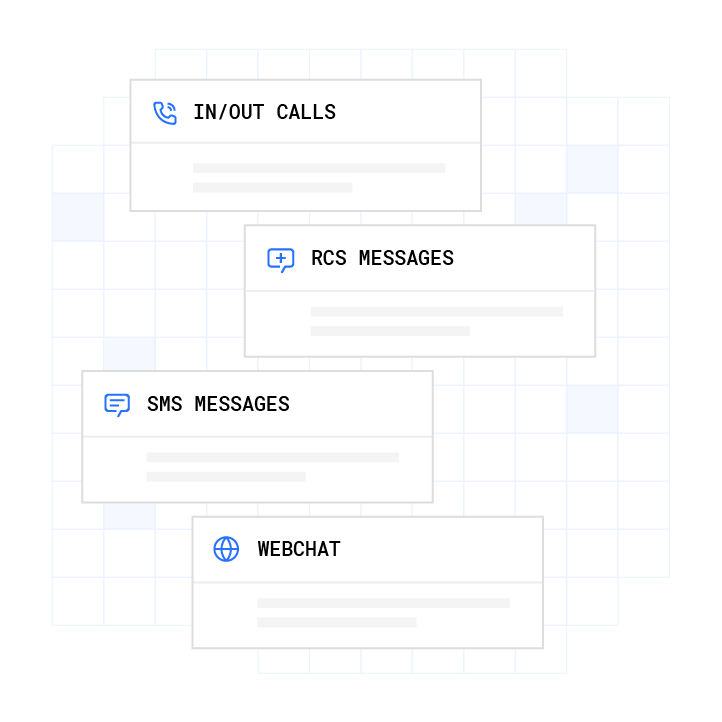
Multi-channel coverage. A single AI deployment covers voice, SMS, RCS (Rich Communication Services), and webchat simultaneously from one platform. Human agents handle one channel at a time. Model the channel coverage multiplier against your current multi-channel staffing cost.
Beyond channel coverage, the compliance infrastructure built into the platform affects both cost and risk modeling.
Compliance infrastructure. Plura’s platform includes real-time DNC (Do Not Call) scrubbing against federal and state registries before every dial, TCPA (Telephone Consumer Protection Act) consent logging, STIR/SHAKEN caller-ID authentication, and HIPAA-aligned encryption, enforced at the carrier level, not bolted on.1 These capabilities affect the cost model because no separate compliance vendor is required and affect the risk model by removing offshore data-handling exposure under the FCC NPRM.
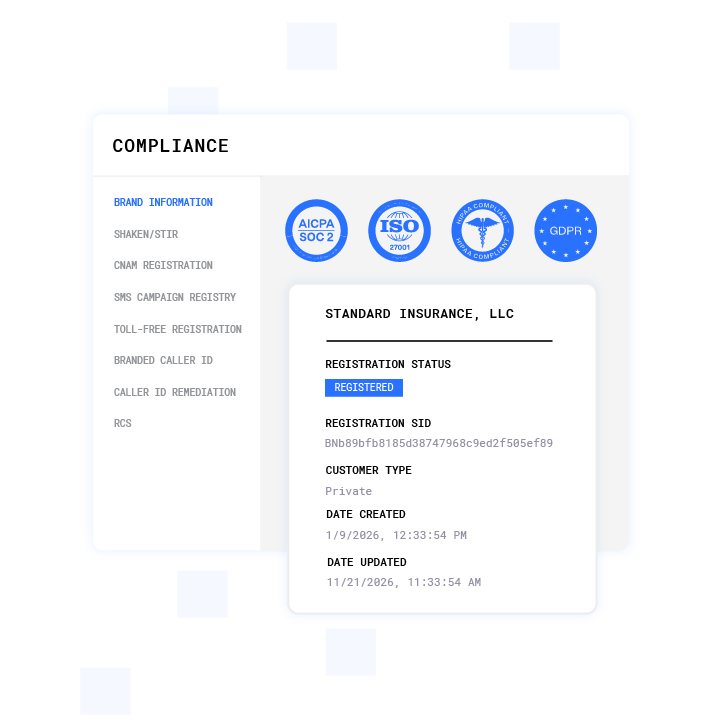
Branded caller ID. Plura issues branded caller ID directly through its FCC-licensed audio bridging carrier. Calls present with the company name and reason for the call rather than “Spam Likely”, which directly affects contact rate, a variable that feeds the revenue side of the ROI formula.
Step 3: Apply the ROI Formula to Your Operation
The core formula is: ROI = (Human Monthly Cost − AI Monthly Cost) / AI Monthly Cost × 100.
Applied to Plura’s illustrative 15-agent scenario, the following table shows how 100% talk utilization and elimination of overhead costs allow 6 AI agents to handle the same workload as 15 human agents:
|
Metric |
Human Agents |
Plura AI Agents |
Delta |
|---|---|---|---|
|
Agents required |
15 |
6 |
−9 headcount |
|
Hourly rate (fully loaded) |
— |
||
|
Talk utilization |
+60 pts |
||
|
Monthly cost |
−$45,600 |
For a 50-seat equivalent operation, traditional offshore operations cost $35,000–$50,000 monthly versus $8,000–$15,000 monthly for AI contact centers. At the enterprise scale of a 100-seat center, traditional operations cost $4M–$7M annually versus $300,000–$700,000 for Plura, which produces a TCO reduction of 83–91%.
The revenue side of the formula adds conversion lift. Responding to leads within 60 seconds lifts conversions by 391%. Multiply your current monthly lead volume by your current conversion rate, apply the lift factor to the AI-response scenario, and multiply by average deal value to quantify the revenue delta. Add that figure to the cost savings for total monthly ROI.
See how these savings scale over time by modeling your operation in Plura’s ROI calculator.
Step 4: Run 30-Day, 12-Month, and 60-Month Projections
Single-month savings understate the compounding advantage of AI deployment. The projections from Plura’s default scenario are:
-
30-day ROI: $45,600
-
12-month ROI: $547,200
-
60-month ROI: $2,736,000
Plura customers report 3× average ROI in 90 days across deployments, which means positive ROI is typically achieved within the first quarter.3
For multi-year projections, factor in three elements. First, avoided hiring costs as volume grows, because AI scales without proportional headcount. Second, compliance cost avoidance under the FCC NPRM, which would introduce new training, reporting, and routing costs for offshore BPO models. Third, the compounding advantage of Plura’s Stateful Conversation Database, which accumulates context per customer across every channel over time and improves conversion rates on subsequent contacts.
Step 5: Adjust for Vertical-Specific Factors
The base formula applies across verticals, and regulated industries carry additional variables that affect both the cost and risk sides of the model.
Healthcare. Appointment confirmation and patient intake workflows must account for HIPAA-aligned data handling, sensitive-data redaction, and audit logging. Plura’s healthcare deployments support up to 40% improvement in no-shows through automated confirmation and reminder workflows.
Insurance. Quote follow-up speed is the primary conversion variable. The first responder closes 78% of insurance deals. Model the revenue impact of sub-5-second AI response against your current average response time and connect it back to the 391% conversion lift from sub-60-second response introduced earlier.
Financial services and legal. Under the FCC NPRM, interactions involving Social Security numbers, bank account information, and password resets are discussed in the context of handling by U.S.-based representatives. Operators in these verticals can model the compliance cost avoidance of 100% U.S. infrastructure against the projected cost of rerouting sensitive calls from offshore BPO vendors.
Decision Framework: Build vs. Buy, Channel Strategy, and Location Strategy
Build vs. buy. Building a voice agent on a foundation model API covers only some of the required infrastructure. Other expenses include FCC-licensed carrier capabilities, STIR/SHAKEN authentication, branded caller ID, real-time DNC scrubbing, HIPAA-aligned encryption, SOC 2 controls, and stateful cross-channel memory, which takes years to build and license.
This explains why most vendors resell third-party infrastructure instead of owning it. Plura’s FCC carrier license alone required approximately two years to obtain, which illustrates the timeline and regulatory complexity of building rather than reselling. This infrastructure ownership translates directly to cost, as agent build fees on Plura run $2,500–$2,750 per agent versus the $10,000+ upfront build fees charged by some Twilio-based API resellers before the platform engages.
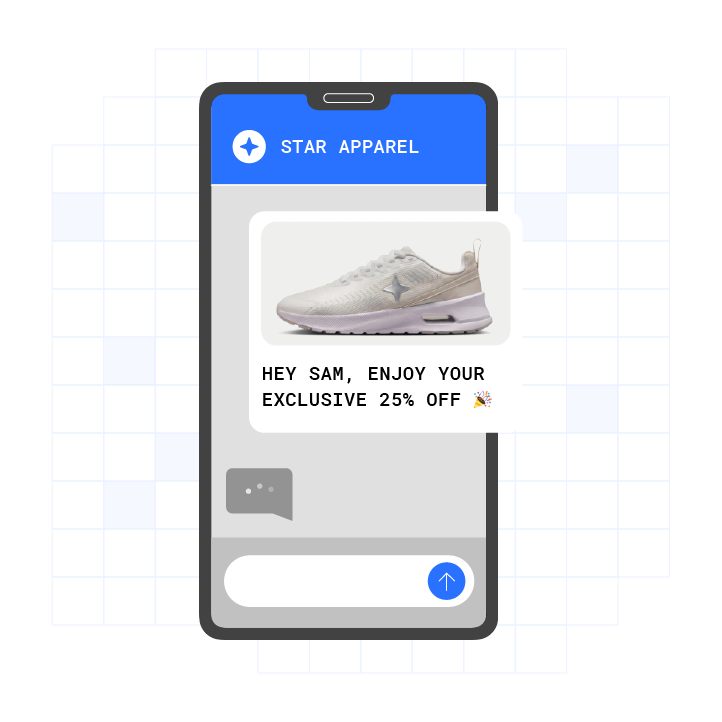
Single-channel vs. omnichannel. Modern consumers use multiple communication channels regularly, and many CX leaders prioritize unified platforms to deliver seamless omnichannel experiences without requiring customers to repeat information. Single-channel AI deployments leave conversion on the table. Plura’s voice, SMS, RCS, and webchat channels share one Stateful Conversation Database, so a customer who texted at 9 a.m. is recognized when the call comes at noon.
Offshore vs. 100% U.S. The FCC NPRM proposes a 30% cap on offshore customer-service calls, mandatory disclosure at the start of each call when handled outside the U.S., and a flat prohibition on offshore handling of certain sensitive consumer data. Plura runs on 100% U.S. infrastructure by architecture, so voice origination, model hosting, data storage, and call recording all sit on domestic infrastructure.
Troubleshooting Common ROI Modeling Challenges
Low pickup rates. If the contact rate is suppressed by spam labels, the problem sits at the carrier level, not the script level. Plura issues branded caller ID directly through its FCC-licensed carrier and remediates spam labels at origination. Calls present with the company name and reason for the call, including compatibility with Apple’s iOS 26 call-screening layer.
Compliance gaps. Plura’s compliance engine checks every outbound contact against federal and state DNC registries in real time before dial, enforces quiet-hours rules through time-zone detection, and maintains timestamped, immutable consent records. The compliance dashboard exports audit-ready reports in one click. Operators should consult qualified counsel regarding their own regulatory obligations under TCPA, HIPAA, and applicable state laws.
Fragmented channel data. If voice, SMS, and chat data live in separate systems, the Stateful Conversation Database consolidates all interactions per customer token, such as phone number, email, or ID, into a single record that every channel reads from and writes to.
How to Measure Success After Deployment
Post-deployment, track these metrics against your pre-deployment baseline to confirm that realized performance matches the ROI model.
-
Cost per contact, comparing possibilities through Plura’s Calculator
-
Speed to first contact, with a target under 5 seconds from lead submission, versus the 47+ hour industry standard
-
Contact rate, measured as pickup rate improvement from branded caller ID and spam-label remediation
-
Conversion lift, tracked as form-fill-to-close rate against the pre-AI baseline and modeled against the 391% lift benchmark established earlier
-
Pipeline growth, with Plura customers reporting 47% average pipeline growth across deployments
Advanced Considerations for Scaling AI Contact Centers
At scale, the Stateful Conversation Database becomes a compounding asset. Every conversation across voice, SMS, RCS, and webchat adds context to the customer record, including pricing offers made, objections raised, qualification status, and prior negotiation outcomes. AI agents reference this history on every subsequent contact, which improves conversion rates over time without additional cost.
For franchise networks and multi-location operators, Plura’s centralized dashboard tracks per-location metrics across the entire system, enforces identical scripts and compliance rules at every unit, and closes the 3–5× performance gap between best and worst locations that characterizes most multi-unit systems. AI deploys in days versus the 2–4 weeks of training required per new front-desk hire.
For agencies running call operations across multiple clients, account-manager capacity expands from 5–8 clients to 15–20 clients with AI handling qualification and follow-up. Agency profit margins shift from a 15–25% industry baseline to 35–50% with AI deployment.
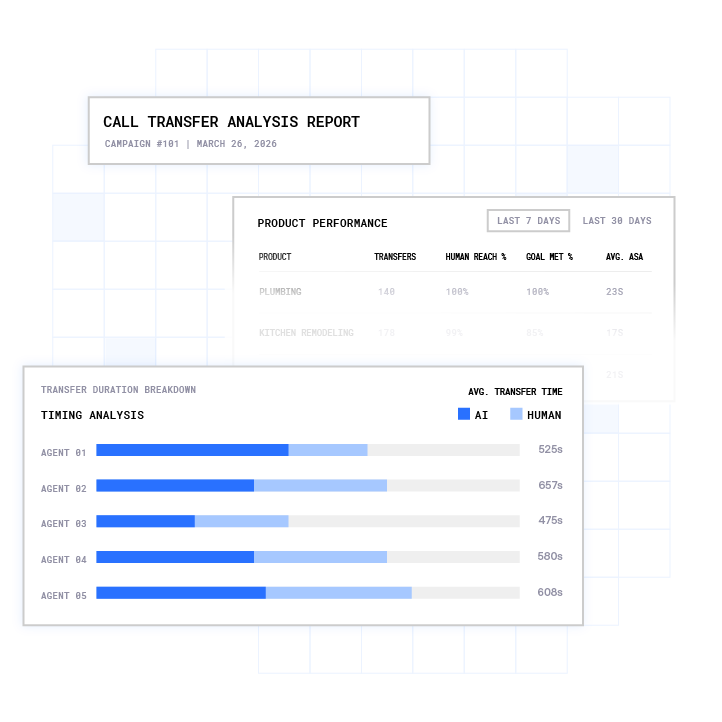
Workflow tuning operates as an iterative process, not a one-time build. Plura’s AI Conversation Intelligence analyzes every interaction to surface what scripts close, what objections recur, and what conversion paths win, then feeds findings back into the workflow on an ongoing basis. Every annual contract includes a 90-day opt-out window if the deployment is not delivering.
Frequently Asked Questions
How long does it take to see a positive ROI from an AI call center deployment?
Most Plura deployments reach positive ROI within 90 days. A simple inbound qualification flow typically goes live within days. More complex workflows, such as a 25-question healthcare intake, run closer to one to two months to design, validate, and pilot. The 90-day opt-out window in every Plura annual contract means operators are not held to the full term if the deployment is not delivering against the modeled ROI.
What inputs do I need before I can run an AI call center ROI calculation?
Six inputs drive the model: monthly agent headcount, fully loaded hourly cost (base wage plus taxes, benefits, and commissions), current talk utilization rate, monthly call volume, average handle time, and current cost per contact. Operators who track these in a CRM or workforce management platform can assemble them quickly.
How does the FCC NPRM affect the ROI calculation for operators currently using offshore BPOs?
The FCC’s April 2026 NPRM (CG Docket No. 26-52) proposes a 30% cap on offshore customer-service calls, mandatory call-start disclosures when a call is handled outside the U.S., and restrictions on offshore handling of sensitive consumer data, including Social Security numbers, bank account information, and password resets. The NPRM also contemplates foreign-traffic fees or bonding requirements.
These proposed rules, with comments due May 26, 2026, and reply comments due June 22, 2026, represent material inputs for TCO modeling because they can alter labor location, routing design, and vendor strategy. Operators should consult qualified counsel regarding their specific exposure and obligations under the proposed rules.
What is the difference between Plura and other AI voice platforms when calculating TCO?
Most AI voice platforms are API resellers built on top of third-party CPaaS (Communications Platform as a Service) providers like Twilio.4 They do not own the carrier, cannot issue branded caller ID at the carrier level, and cannot enforce real-time DNC scrubbing or STIR/SHAKEN authentication without third-party add-ons, each of which adds cost and integration risk to the TCO model.
Plura is its own FCC-licensed audio bridging carrier. Branded caller ID, DNC scrubbing, STIR/SHAKEN authentication, and HIPAA-aligned encryption are first-class layers of the platform, not separate vendor contracts. The TCO advantage follows the 83–91% reduction detailed in Step 3.
How do I account for compliance costs in an AI call center ROI model?
Compliance costs in a traditional or offshore model can include DNC registry subscriptions, TCPA consent management tools, HIPAA-aligned data handling infrastructure, state-specific rule enforcement, and legal overhead for audit preparation. In an offshore model, the FCC NPRM adds projected costs for English-proficiency testing and monitoring, call-routing disclosure logic, mandatory transfer capacity, and compliance metric reporting.
Plura’s compliance engine, which covers TCPA, DNC, HIPAA, SOC 2, STIR/SHAKEN, and 50+ state rule sets, is included in the platform, not billed separately.1 Operators are responsible for their own regulatory obligations and should consult qualified counsel, while Plura provides the infrastructure that supports compliance workflows.
Conclusion: Start Calculating Your AI Call Center ROI Today
The 5-step process, which includes gathering baseline metrics, inputting AI variables, applying the ROI formula, running multi-year projections, and adjusting for vertical factors, gives contact center leaders, marketing directors, agency owners, franchise operators, and C-suite executives the exact inputs and benchmarks to model the switch from traditional or offshore operations to 100% U.S. AI infrastructure.
The numbers are concrete. A 15-agent operation at standard inputs produces $45,600 in first-month savings and $2,736,000 over 60 months. At enterprise scale, the 83–91% TCO reduction established earlier replaces traditional $4M–$7M contact-center economics with a $300,000–$700,000 Plura footprint. The FCC NPRM adds compliance cost avoidance to the model for any operator currently running offshore volume. The conversion economics, including the 391% lift from 60-second response and the 100× contact-rate improvement from 5-minute lead response, compound on top of the labor savings.
Plura AI owns the full carrier stack, runs on 100% U.S. infrastructure by architecture, and engineers compliance and conversion as a single product surface. Every deployment includes a 90-day opt-out window.
1 Plura AI maintains SOC 2, HIPAA, ISO, and GDPR posture as part of its platform infrastructure. References to compliance frameworks in this article describe Plura’s platform capabilities and do not constitute a guarantee that any customer using Plura will themselves be compliant with applicable laws or standards. Customers remain solely responsible for their own regulatory obligations, certifications, consent management, recordkeeping, and the claims they make to their own end users. Consult qualified legal counsel for guidance specific to your use case.
2 This article describes regulatory frameworks at a general level and does not constitute legal advice. Laws and regulations vary by jurisdiction, change over time, and apply differently depending on facts and circumstances. Readers should consult qualified legal counsel before making compliance decisions.
3 Performance figures, customer outcomes, and industry statistics referenced in this article are drawn from cited third-party sources or Plura customer case studies. Individual results vary based on implementation, use case, industry, audience, and execution. Past or aggregate performance is not a guarantee of future results.
4 References to third-party products, services, companies, or research are made for informational and comparative purposes only. Plura AI is not affiliated with, endorsed by, or sponsored by any third party named in this article unless explicitly stated. Trademarks and product names referenced remain the property of their respective owners.
This article is provided for informational purposes only and reflects Plura AI’s understanding at the time of publication. Product capabilities, integrations, and specifications are subject to change. For the most current information, visit plura.ai.
This article was produced with the assistance of AI tools and reviewed by Plura AI prior to publication.