

Written by: Matt Beucler, CEO, Plura AI | Last updated: August 8, 2026
Key Takeaways: Building a Defensible AI Call Center ROI Model
- AI call center ROI calculators need seven inputs to produce defensible savings projections: call volume, AHT, blended human cost, AI agent cost, containment rate, compliance-adjusted TCO, and a 90-day opt-out window.
- Human agents average 6 to 8 minutes AHT, while AI agents average 2 to 3 minutes, which delivers 25% to 50% faster handling and lower per-interaction costs.3
- Compliance-adjusted TCO adds TCPA exposure, FCC NPRM offshore risk, and state onshoring penalties that most calculators ignore, often shifting the true cost comparison by hundreds of thousands of dollars.
- Enterprise deployments at 45% to 65% containment often break even in 60 to 90 days, and 100% U.S. infrastructure removes offshore regulatory exposure from the model.
- Plura AI’s ROI calculator is the only tool that embeds all seven inputs and U.S.-only infrastructure into a single TCO model. Talk to the team now to run your numbers.
Step 1: Use Actual Call Volume, Not Estimates
Start with monthly inbound and outbound call volume. Pull at least three months of actual data from your automatic call distributor (ACD) or CRM instead of relying on estimates. For operations handling 500 or more daily interactions, monthly volume usually falls between 10,000 and 150,000 contacts. This figure becomes the denominator for every per-interaction cost comparison in the model. A 50-seat equivalent contact center handling that range of volume pays $35,000 to $50,000 monthly under traditional offshore operations, which sets the baseline your AI model needs to beat.
Step 2: Translate Average Handle Time Into Cost
Average handle time (AHT) is the mean duration of a completed interaction, including talk time, hold time, and after-call work. Human agents typically sit at 6 to 8 minutes AHT, while AI voice agents often run 2 to 3 minutes. That 25% to 50% reduction directly compresses per-interaction cost. Enter your current AHT in minutes. The calculator uses this figure to convert hourly labor rates into per-call cost and to model how AI containment reduces total handle-minute demand.
Step 3: Capture the True Blended Human Cost
Blended human cost is the fully loaded hourly rate per agent. It includes base wage, payroll taxes, benefits, commissions, training amortization, and seat overhead. Domestic contact center agents typically cost $15 to $25 per hour before benefits and overhead. At the default inputs on plura.ai/calculator, 15 agents at $20 per hour with a 25% tax and benefits load and 40% talk utilization produce a monthly human cost of $60,000. U.S. contact center attrition averaged 27% (mean) with a 21% median in recent U.S. data, which adds replacement costs that many operators leave out of their baseline.
Run your numbers through Plura’s ROI calculator to see your ROI in real time.
Step 4: Model AI Agent Cost at 100% Utilization
AI agent cost is the per-minute or per-conversation platform rate at 100% talk utilization. Managed all-in-one AI voice platforms typically run $0.25 to $0.50 per minute in 2026. Plura AI voice agents price per completed conversation, with intelligence included. At the default calculator scenario, 6 Plura agents replace 15 human agents at $15 per hour with 100% talk utilization, producing a monthly AI cost of $14,400. AI agents do not carry benefits load, turnover replacement cost, or ramp time, which simplifies long-term cost planning.
Step 5: Treat Containment Rate as the Main Payback Lever
Containment rate is the percentage of interactions the AI resolves end-to-end without human escalation. Enterprise contact centers achieve a median Tier-1 call deflection rate of 41.2% using voice AI automation, with the top quartile reaching 58.7%. Well-configured deployments typically target 45% to 65% automated resolution on Tier-1 calls as the primary payback driver. Every percentage point of containment rate shifts cost from the human-agent column to the AI-agent column and compresses TCO. The calculator applies your containment rate to split monthly volume between AI-resolved and human-escalated interactions before computing blended cost. Once you have modeled the volume split, the next step is to account for regulatory costs that influence the true total cost of ownership and can shift your comparison by hundreds of thousands of dollars.
Step 6: Build a Compliance-Adjusted TCO
Compliance-adjusted TCO adds regulatory cost inputs that standard vendor calculators usually omit. Three categories apply to most enterprise deployments and belong in any serious model.
First, consider TCPA (Telephone Consumer Protection Act, 47 U.S.C. § 227) exposure.2 TCPA class action lawsuits can result in significant settlements. Operators running outbound AI campaigns without real-time DNC (Do Not Call) scrubbing and immutable consent records carry per-call statutory exposure of $500 to $1,500 per violation. Plura’s compliance engine performs real-time DNC scrubbing, timestamps consent records, and enforces quiet-hours rules automatically on every outbound contact, which supports operators in managing this exposure. Operators remain responsible for their own compliance obligations.
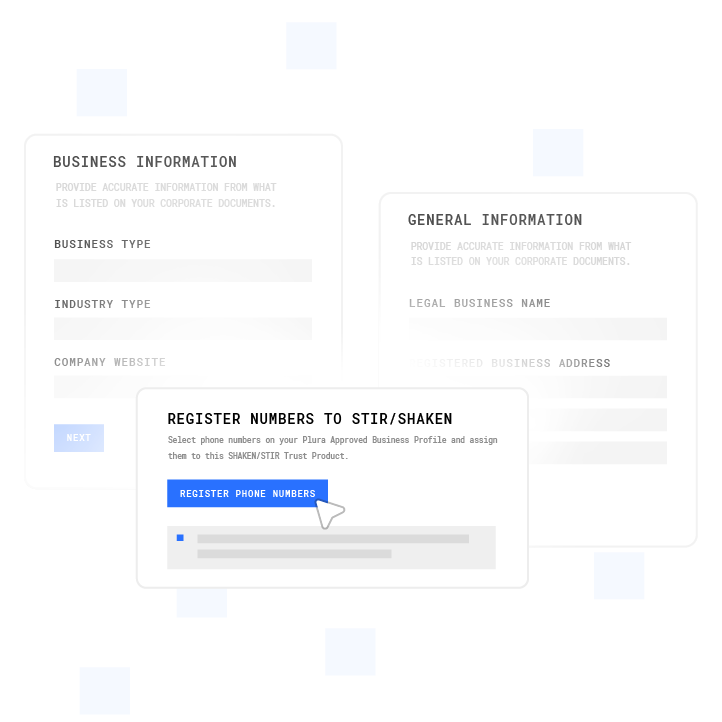
Second, account for FCC NPRM offshore exposure. The FCC voted in March 2026 to advance an NPRM (CG Docket 26-52) that proposes capping offshore customer-service calls2, which means every offshore BPO (business process outsourcing) contract a covered entity holds now carries potential compliance liability. This regulatory shift makes offshore cost comparisons incomplete if they do not factor in the risk of future restrictions. Plura runs on 100% U.S. infrastructure by architecture: voice origination, model hosting, data storage, and call recording all sit on domestic infrastructure.
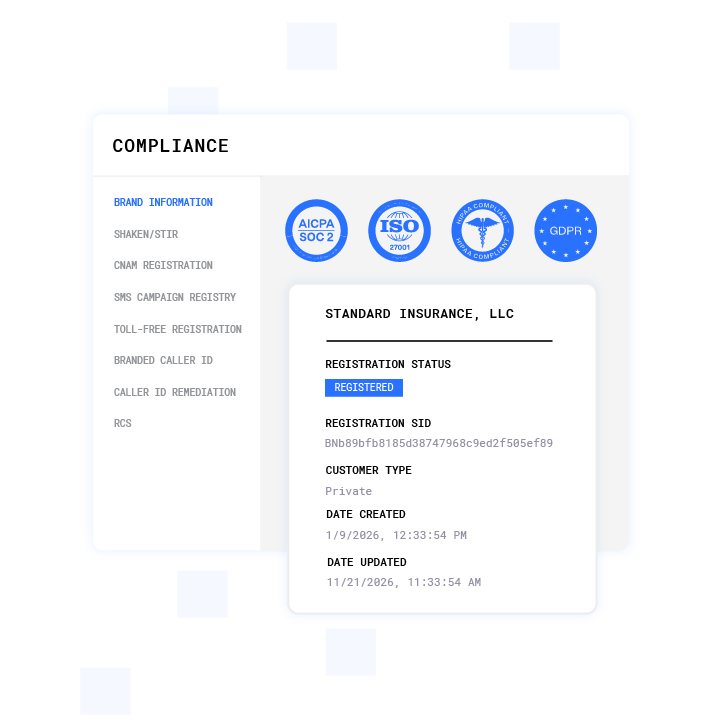
Third, include state onshoring rules. New York’s Call Center Jobs Act describes penalties up to $10,000 per day. New Jersey, Connecticut, Missouri, and Florida each describe restrictions on offshore handling of medical, financial, or consumer data. Plura’s compliance framework includes SOC 2 infrastructure, TCPA and SHAKEN/STIR enforcement, and DNC screening1 to support operators as they navigate these requirements. Consult qualified counsel for guidance on your specific obligations.
Step 7: Use the 90-Day Opt-Out Window as a Risk Input
The 90-day opt-out window functions as a deployment-risk input that is unique to Plura’s TCO model. Every Plura annual contract includes a 90-day opt-out. If the deployment is not delivering, operators are not held to the full annual term. This structure converts a fixed multi-year cost commitment into a risk-adjusted figure. Enterprise customers often report breaking even in 60 to 90 days after deploying AI voice agents. Modeling the 90-day window as a downside scenario rather than a worst case produces a more accurate NPV (net present value) for the investment.
Sensitivity Table: Containment and Regulatory Scenarios
The table below applies the default calculator inputs, which include 15 human agents at $20 per hour, a 25% benefits load, and 40% talk utilization, plus 6 Plura agents at $15 per hour and 100% utilization. These inputs are modeled across containment rate ranges and two regulatory scenarios. All human-cost figures are drawn from plura.ai/calculator, and the per-interaction AI cost range comes from Plura’s offshore comparison guide.
| Containment Rate | Monthly Blended Cost (Baseline) | FCC NPRM Offshore Exposure Added | State Onshoring Penalty Risk Added |
|---|---|---|---|
| 40% | $36,000 blended (40% AI, 60% human) | High: majority of volume still human-routed, offshore contracts remain exposed | High: offshore data-handling restrictions apply to human-escalated share |
| 60% | $25,200 blended (60% AI, 40% human) | Moderate: human-escalated share reduced, offshore exposure proportionally lower | Moderate: state restrictions apply to remaining human-handled volume |
| 75% | $18,600 blended (75% AI, 25% human) | Low: most volume on U.S. AI infrastructure, minimal offshore dependency | Low: small human-escalated share, state exposure materially reduced |
| 90% | $14,400 (near-full AI at default inputs) | Minimal: 100% U.S. infrastructure by architecture eliminates offshore exposure | Minimal: state onshoring rules do not apply to domestic AI infrastructure |
Q&A: Practical ROI Questions Contact Center Leaders Ask
How do you calculate ROI for AI agents?
The standard formula is: ROI (%) = ((Annual Net Savings – Implementation Cost) / Total Investment) x 100. Annual net savings equal monthly human agent cost minus monthly AI agent cost, multiplied by 12. At default Plura calculator inputs, that produces $45,600 in 30-day savings, $547,200 over 12 months, and $2,736,000 over 60 months. Add compliance-adjusted TCO variables such as TCPA exposure, FCC NPRM offshore risk, and state onshoring penalties to the cost side before finalizing the model. IDC’s 2025 research places the median enterprise voice AI payback at 2.8 months, with high-cost-per-lead sectors like legal and insurance often closing payback in 30 to 45 days.3
How much does an AI call center cost?
For a 100-seat equivalent operation, AI-powered communications using platforms like Plura cost $300,000 to $700,000 annually, replacing traditional contact-center economics of $4 million to $7 million. Per-interaction AI costs on Plura’s platform fall within the range discussed earlier in this article. U.S. human agents usually have higher per-minute costs than AI voice agents after accounting for utilization and overhead. Agent build fees on Plura are $2,500 to $2,750 per agent, and every annual contract includes a 90-day opt-out window.
Book a live demo with Plura to walk through your specific volume and compliance inputs. Talk to the team now.
Conclusion: Seven Inputs for a Credible AI Call Center Business Case
Accurate AI call center ROI modeling relies on seven inputs: call volume, AHT, blended human cost, AI agent cost, containment rate, compliance-adjusted TCO, and the 90-day opt-out window. Most calculators stop at step five and ignore regulatory cost. The FCC NPRM, state onshoring laws, and TCPA exposure function as line items that materially shift the cost comparison between offshore BPO contracts and a 100% U.S. infrastructure platform. AI contact centers carry a 0% turnover rate versus 30% to 45% annually for traditional operations, and a 2025 Forrester TEI study commissioned by PolyAI found that companies using its enterprise conversational AI achieved 391% three-year ROI with payback in under six months3,4. Plura’s ROI calculator is the only tool that incorporates all seven inputs, including U.S. infrastructure architecture and regulatory exposure, into a single TCO model.
Compare plans and rates side by side at plura.ai/pricing.
Frequently Asked Questions
What is the difference between gross savings and compliance-adjusted TCO for an AI call center?
Gross savings represent the raw labor cost difference between human agents and AI agents at equivalent volume. Compliance-adjusted TCO adds the regulatory cost variables that most vendor calculators omit, including TCPA statutory exposure per outbound call, FCC NPRM offshore liability for any volume handled outside U.S. infrastructure, state onshoring penalties in jurisdictions like New York and New Jersey, and the cost of consent management, DNC scrubbing, and audit-ready recordkeeping. For operators currently using offshore BPO contracts, the compliance-adjusted figure can be materially larger than the gross labor savings, because the offshore exposure sits on the balance sheet whether or not it has been priced into the current contract. Plura’s platform supports compliance by enforcing DNC scrubbing, TCPA consent logging, SHAKEN/STIR caller ID verification, and quiet-hours rules on every contact. Operators are responsible for their own regulatory obligations and should consult qualified counsel for guidance specific to their situation.
Why does containment rate have such a large effect on 90-day ROI?
Containment rate determines what percentage of monthly call volume the AI resolves end-to-end without human escalation. Because human-agent cost per interaction is often 10 to 20 times higher than AI-agent cost per interaction at equivalent volume, each percentage point of containment rate shifts a meaningful block of cost from the expensive column to the inexpensive column. At 40% containment, 60% of volume still runs at human-agent economics. At 75% containment, only 25% does. Over a 90-day window, the difference between a 40% and a 75% containment rate on a 50,000-call-per-month operation can represent hundreds of thousands of dollars in savings. Containment rate is also the variable most directly influenced by conversation engineering quality. Well-configured AI workflows that handle objections, qualify leads, and escalate appropriately consistently outperform generic deployments. Plura iterates each customer’s conversation workflow continuously after launch rather than handing off a static build.
How does 100% U.S. infrastructure affect multi-year TCO modeling?
Multi-year TCO models for AI call center deployments need to account for regulatory trajectory, not just current rules. The FCC NPRM advanced in March 2026 proposes capping offshore customer-service calls. State laws in New York, New Jersey, Connecticut, Missouri, and Florida already describe restrictions on offshore handling of medical, financial, and consumer data, with penalties reaching $10,000 per day in New York. Any TCO model that uses offshore BPO pricing as the human-agent baseline without pricing in this regulatory exposure understates the true cost of the status quo. As discussed in Step 6, Plura’s U.S.-only infrastructure eliminates offshore regulatory exposure entirely. Operators using Plura report 100% U.S.-handled volume in their broadband consumer label disclosures. For multi-year models, this removes a category of regulatory risk that compounds as federal and state onshoring rules continue to develop.
What inputs does Plura’s ROI calculator use that other calculators typically omit?
Most AI call center calculators capture labor cost, agent count, and a basic cost-per-call comparison. Plura’s calculator incorporates seven inputs: monthly call volume, average handle time, blended human cost that includes taxes, benefits, commissions, and turnover replacement, AI agent cost at 100% talk utilization, containment rate, compliance-adjusted TCO variables such as TCPA exposure, FCC NPRM offshore risk, and state onshoring penalties, plus the 90-day opt-out window as a deployment-risk input. The compliance-adjusted TCO section is the primary differentiator. It surfaces the per-call statutory exposure from TCPA violations, the offshore liability under the FCC NPRM, and the state-level penalty risk that operators with offshore BPO contracts carry today. The 90-day opt-out window converts the annual contract from a fixed commitment into a risk-adjusted NPV figure, which is the framing finance teams expect for capital approval.
What is a realistic payback period for an AI call center deployment at 500 or more daily interactions?
At 500 or more daily interactions, the volume is usually sufficient to generate meaningful savings in the first billing cycle. IDC’s 2025 research places the median enterprise voice AI payback at 2.8 months, with mid-market businesses averaging 3.2 months. In high-cost-per-lead verticals like legal and insurance, payback can close in 30 to 45 days because a single recovered lead can cover weeks of platform runtime cost. The primary variables that determine payback speed are containment rate, blended human cost, and whether compliance-adjusted TCO inputs are included. Operators who model only gross labor savings and exclude TCPA exposure, offshore regulatory risk, and turnover replacement costs typically understate both the current cost of the status quo and the speed of payback after deployment. Plura’s 90-day opt-out window in every annual contract means operators are not locked into a multi-year commitment before the deployment has proven its economics.
1 Plura AI maintains SOC 2, HIPAA, ISO, and GDPR posture as part of its platform infrastructure. References to compliance frameworks in this article describe Plura’s platform capabilities and do not constitute a guarantee that any customer using Plura will themselves be compliant with applicable laws or standards. Customers remain solely responsible for their own regulatory obligations, certifications, consent management, recordkeeping, and the claims they make to their own end users. Consult qualified legal counsel for guidance specific to your use case.
2 This article describes regulatory frameworks at a general level and does not constitute legal advice. Laws and regulations vary by jurisdiction, change over time, and apply differently depending on facts and circumstances. Readers should consult qualified legal counsel before making compliance decisions.
3 Performance figures, customer outcomes, and industry statistics referenced in this article are drawn from cited third-party sources or Plura customer case studies. Individual results vary based on implementation, use case, industry, audience, and execution. Past or aggregate performance is not a guarantee of future results.
4 References to third-party products, services, companies, or research are made for informational and comparative purposes only. Plura AI is not affiliated with, endorsed by, or sponsored by any third party named in this article unless explicitly stated. Trademarks and product names referenced remain the property of their respective owners.
This article is provided for informational purposes only and reflects Plura AI’s understanding at the time of publication. Product capabilities, integrations, and specifications are subject to change. For the most current information, visit plura.ai.
This article was produced with the assistance of AI tools and reviewed by Plura AI prior to publication.