

Written by: Matt Beucler, CEO, Plura AI | Last updated: August 26, 2026
Key Takeaways on AI Call Center ROI
- AI call center ROI uses the formula (Annual Benefits – Annual Costs) / Annual Costs x 100, with six core metrics driving verified results.
- The six essential metrics are cost-per-resolved-contact, realized labor savings, first-contact resolution, repeat-contact rate, agent-retention impact, and compliance-cost avoidance.
- Plura AI owns its FCC-licensed carrier stack and enforces compliance inside the measurement layer, delivering 3x average ROI in 90 days for high-volume U.S. operators.
- Realized labor savings focus on costs that actually left the P&L, with AI voice agents at $0.35 to $0.85 per conversation versus $5 to $15 for offshore call centers.
- Book a live demo with Plura to see how the baseline protocol connects directly into Plura’s measurement layer.
1. Calculating Cost-per-Resolved-Contact
Cost-per-resolved-contact (CPRC) is the core unit of contact center economics. The formula is:
CPRC = Total Contact Center Cost / Total Resolved Contacts
Total contact center cost includes agent wages adjusted for occupancy, shrinkage overhead (breaks, training, idle time), telephony and tooling costs, management overhead, and quality assurance expenses. “Resolved” means the customer’s issue was closed without a follow-up contact within the defined window, typically 24 to 72 hours.
Data sources include payroll records, ACD (automatic call distributor) logs, CRM (customer relationship management) closure tags, and your telephony platform’s per-minute billing.
Gartner’s customer service benchmarks report a median CPRC of $1.84 for self-service channels and $13.50 for assisted channels.4 That seven-to-one gap is the core economic argument for AI deployment.
Worked example: A center handling 10,000 monthly contacts at a fully loaded cost of $80,000 has a CPRC of $8.00. After AI deployment resolves 60% of contacts at $0.50 each, blended CPRC drops to $3.50, a 56% reduction. That reduction is driven primarily by labor cost displacement, which is the single largest component of contact center economics.
Use Plura’s calculator to model your cost-per-contact reduction.
2. Isolating Realized Labor Savings
Realized labor savings measure only the labor costs that actually left the P&L, not theoretical headcount reductions. This distinction keeps ROI claims grounded in finance-approved numbers.
Realized Labor Savings = (Human Cost per Contact – AI Cost per Contact) x AI-Handled Volume
Human cost per contact must be fully loaded: wages, taxes, benefits, commissions, and a pro-rata share of management and real estate. Contact centers allocate 60-70% of operating costs to agent labor, which makes labor the dominant variable in any TCO (total cost of ownership) model.
Plura AI voice agents cost $0.35 to $0.85 per completed conversation including intelligence, versus $5 to $15 fully loaded for offshore call centers. Domestic contact center agents cost $15-25 per hour before benefits and overhead. To see how these unit costs translate into monthly savings, consider the following worked example.
Worked example: Plura’s ROI calculator estimates monthly human agent costs at $60,000 for 15 agents at $20/hour with 25% taxes and benefits at 40% talk utilization, versus $14,400 for equivalent volume handled by Plura AI at 100% utilization. Realized monthly savings total $45,600. Annualized, that figure reaches $547,200.3
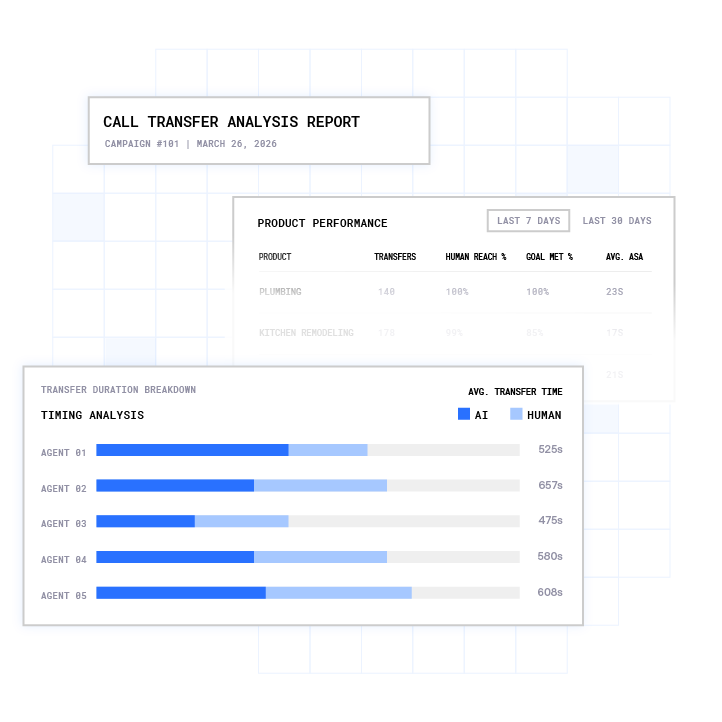
Mature AI deployments can deliver substantial cost reduction versus the manual baseline in Year 1.
3. Separating Containment from True Resolution
Containment rate tracks whether a caller stayed in automation without transferring to a live agent, but it does not confirm that the issue was solved. High containment can coexist with high frustration; the numbers look right while customers feel wrong.
True Resolution Rate = (AI-Resolved Contacts with No Follow-Up Within 72 hrs / Total AI-Handled Contacts) x 100
Deloitte’s 2026 State of AI report does not publish a cross-industry average AI containment rate, and it finds only 21% of enterprises have mature governance for agentic AI.4 Containment must always be paired with repeat-contact rate to separate genuine resolution from deflection.
First-contact resolution rates in contact centers average 70-75% globally and vary by industry from roughly 52-58% in telecom to 85%+ for top performers. An AI agent that cannot reach your CRM, billing system, or order management platform will contain calls without resolving them.
Worked example: A center with 70% containment and 35% true resolution rate has a 35-point gap. Each gap point represents contacts that will re-enter the queue, typically escalating to a human agent at full CPRC. Closing that gap from 35% to 55% true resolution on 10,000 monthly contacts eliminates 2,000 repeat contacts per month. To prove that improvement in a way finance teams will accept, you need an auditable baseline captured before deployment.
4. Running the Pre-Deployment 30-Day Baseline Protocol
A verifiable ROI claim starts with an auditable baseline. Without that baseline, post-deployment savings remain estimates instead of proof. The following protocol produces a baseline finance teams can sign off on.
- Define the eligible call population. Identify the specific call types, queues, and channels the AI will handle. Exclude call types outside scope to prevent attribution errors. This scoping step ensures that the metrics you capture in step 2 reflect only the volume the AI will actually handle, which prevents false comparisons.
- Capture six core metrics for 30 consecutive days. Record CPRC, FCR rate, average handle time (AHT) including after-call work, agent attrition rate, repeat-contact rate (within 72 hours), and escalation rate from any existing self-service channels.
- Document seasonality and exceptions. Flag promotional periods, staffing anomalies, or system outages that could distort the baseline. An auditable baseline must describe the same call population, workflow, period, and outcome definitions used after launch.
- Lock the definitions. Agree in writing on what counts as “resolved,” which repeat-contact window applies, and how AHT is measured. Changing definitions post-deployment invalidates the comparison.
- Pull data from three sources. Use ACD logs for volume and handle time, CRM records for resolution and repeat-contact tagging, and payroll or finance data for fully loaded cost per agent hour.
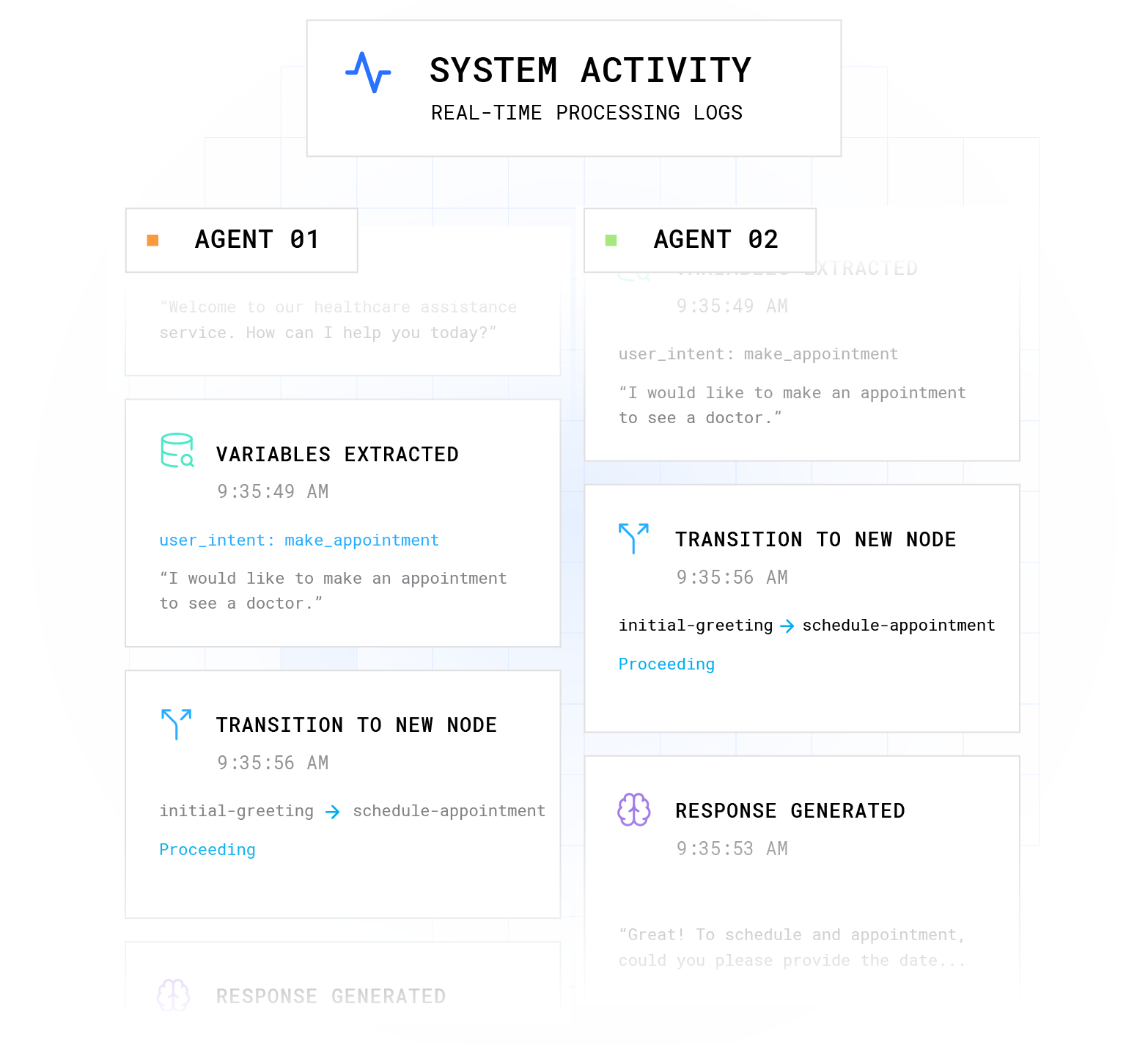
Worked example: A 50-seat center runs the protocol and establishes CPRC of $8.00, FCR of 68%, AHT of 6.2 minutes, agent attrition of 38% annually, and repeat-contact rate of 22% within 72 hours. These six numbers become the denominator for every post-deployment ROI claim.
5. Building the FCR and Repeat-Contact Hierarchy
FCR and repeat-contact rate form a paired view of resolution quality. FCR measures success, and repeat-contact rate measures failure.
FCR = (Contacts Resolved on First Touch / Total Contacts) x 100
Repeat-Contact Rate = (Contacts Returning Within 72 hrs / Total Contacts) x 100
Data sources include CRM closure tags, ACD logs filtered by caller ID within the repeat window, and post-interaction surveys for caller-reported resolution.
Gartner predicts that by 2029, agentic AI will autonomously resolve 80 percent of common customer service issues without human intervention.5 Industry benchmarking studies report average FCR rates around 70%, with top-performing contact centers reaching 80% or higher.
Improving FCR can increase customer satisfaction, and repeat contacts typically cost more than the initial contact.
Worked example: A center with 8,000 monthly contacts at $3.20 CPRC and 68% FCR generates 2,560 repeat contacts monthly. Improving FCR to 82% eliminates 1,120 repeat contacts, saving $3,584 per month or $43,008 annually.
6. Quantifying Agent Retention and Compliance Upside
Agent-Retention Savings = Annual Turnover Rate x Headcount x Replacement Cost per Departure x Retention Improvement %
Industry average annual agent turnover in contact centers is 30-45%. Retention improvements can generate annual savings by reducing agent replacement costs.
AI reduces the repetitive, low-complexity work that drives agent burnout, which is a primary driver of voluntary attrition in contact centers. AI contact centers carry a 0% turnover rate compared to 30-45% annually for traditional operations.
Regulatory-Risk Reduction and Compliance-Cost Avoidance
Compliance-cost avoidance belongs in every AI call center ROI model, particularly for operators subject to the Telephone Consumer Protection Act (TCPA), the Health Insurance Portability and Accountability Act (HIPAA), and state-level regulations.2 This section describes the regulatory landscape, and operators should consult qualified legal counsel regarding their specific obligations.
The FCC’s Notice of Proposed Rulemaking (NPRM, CG Docket No. 26-52) proposes capping offshore customer-service calls at 30% and prohibiting offshore handling of sensitive consumer data. Five U.S. states have active call-center onshoring or sensitive-data restriction laws: New York, New Jersey, Connecticut, Missouri, and Florida. Every offshore contract a covered entity holds represents a potential compliance liability under this evolving framework.
TCPA violations carry fines of $500–$1,500 per violation with no aggregate cap, and HIPAA per-violation penalties reach up to approximately $2.13 million with annual caps near that amount.2 HIPAA violations carry penalties from $127 to $250,000 per violation, while PCI DSS fines range from $5,000 to $100,000 per month based on severity and duration.
Compliance-Cost Avoidance Formula = Expected Annual Violation Count x Average Fine per Violation x Probability Reduction from AI Controls
Plura supports compliance with TCPA, DNC (Do Not Call), HIPAA, SOC 2, GDPR, and STIR/SHAKEN caller ID verification.1 Every outbound contact is checked against federal and state DNC registries in real time before dial. Consent records are timestamped and immutable. Quiet-hours rules enforce automatically through time-zone detection. Plura runs on 100% U.S. infrastructure by architecture, which removes foreign-infrastructure exposure under the FCC NPRM for operators using the platform. Customers remain responsible for their own regulatory obligations and certifications.
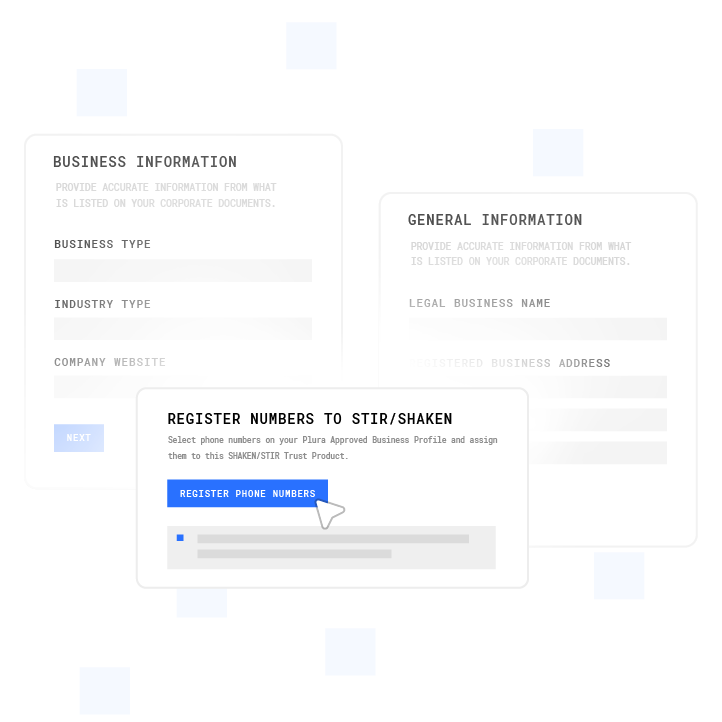
For a detailed view of Plura’s compliance infrastructure, see plura.ai/products/compliance.
Audience Mapping for Finance and Operations Leaders
| Metric | CFO Priority | Ops Priority |
|---|---|---|
| Cost-per-resolved-contact | Unit economics, P&L impact | Queue efficiency, routing logic |
| Realized labor savings | Headcount reduction, TCO | Talk utilization, staffing model |
| First-contact resolution | Cost avoidance from repeat contacts | Script quality, AI workflow design |
| Repeat-contact rate | Avoidable spend quantification | Resolution quality, escalation triggers |
| Agent-retention impact | Replacement cost savings | Workload distribution, burnout reduction |
| Compliance-cost avoidance | Fine exposure, audit liability | Script adherence, disclosure enforcement |
Calculate your realized savings using Plura’s ROI tool.
Frequently Asked Questions
How long does it take to see measurable ROI from an AI call center deployment?
Most operators see measurable cost-per-resolved-contact improvement within the first 30 days of full deployment, once the AI is handling live volume against the pre-deployment baseline. Realized labor savings become visible in the first billing cycle where headcount or overtime is reduced. FCR and repeat-contact rate improvements typically stabilize by the end of Month 2 as the AI’s conversation workflows are tuned against real call patterns. Plura’s default scenario projects $45,600 in realized savings in the first 30 days for a 15-agent operation, rising to $547,200 over 12 months.3 Every Plura annual contract includes a 90-day opt-out window if the deployment is not delivering against the agreed baseline.
What baseline data do I need before deploying AI in my contact center?
The minimum viable baseline requires six metrics captured over 30 consecutive days on the specific call population the AI will handle: cost-per-resolved-contact, FCR rate, average handle time (including after-call work), agent attrition rate, repeat-contact rate within a defined window (typically 72 hours), and escalation rate from any existing self-service channels. These six numbers must be pulled from three sources: your ACD logs, your CRM closure records, and your payroll or finance system for fully loaded agent cost. Definitions for “resolved” and the repeat-contact window must be locked before deployment so the post-deployment comparison uses identical criteria.
Does Plura integrate with my existing CRM and telephony stack?
Plura integrates with 50+ tools across CRM, calendar, attribution, document, payment, and data enrichment categories, including HubSpot, Salesforce, Zoho, Google Calendar, Calendly, DocuSign, Stripe, and Shopify. The platform’s AI Voice, AI SMS, AI RCS, and AI Webchat all share a Stateful Conversation Database, so every channel reads from and writes to the same customer record. Integration with your existing telephony stack is handled during onboarding. The full integration directory is at plura.ai/integrations.
How often should I review AI call center ROI metrics after deployment?
The recommended cadence is daily reviews during the first 30-day ramp period, focused on critical errors and rollback triggers. After ramp, monthly reviews of all six core metrics against the pre-deployment baseline are standard practice, with finance, operations, and product owners reviewing value lines, cost, volume, and attribution together. Baselines should be retested after any material change to the AI’s models, prompts, knowledge sources, integrations, or telephony configuration. Full rebaselining is warranted only when the underlying business process or call population changes materially, such as after a product launch, acquisition, or channel migration.
How does Plura’s FCC-licensed carrier stack affect ROI calculations?
Most AI voice platforms route calls through a third-party CPaaS (Communications Platform as a Service) like Twilio, which adds a per-minute wrapper cost and limits branded caller ID issuance. Plura is its own FCC-licensed audio bridging carrier. Voice originates on Plura’s domestic infrastructure, which yields lower per-minute economics, direct issuance of branded caller ID, and compliance enforcement at the carrier level before the call leaves the network. In ROI terms, this affects three variables: per-minute telephony cost, pickup rate (because calls present with the company’s name rather than “Spam Likely”), and compliance-cost avoidance (because DNC scrubbing and TCPA-litigator filtering run inside the platform on every outbound contact). Operators on 100% U.S. infrastructure also remove foreign-infrastructure exposure under the FCC NPRM, which is a balance-sheet risk consideration that belongs in any comprehensive ROI model. Customers remain responsible for their own regulatory obligations.
Model your full AI call center ROI with Plura’s calculator.
1 Plura AI maintains SOC 2, HIPAA, ISO, and GDPR posture as part of its platform infrastructure. References to compliance frameworks in this article describe Plura’s platform capabilities and do not constitute a guarantee that any customer using Plura will themselves be compliant with applicable laws or standards. Customers remain solely responsible for their own regulatory obligations, certifications, consent management, recordkeeping, and the claims they make to their own end users. Consult qualified legal counsel for guidance specific to your use case.
2 This article describes regulatory frameworks at a general level and does not constitute legal advice. Laws and regulations vary by jurisdiction, change over time, and apply differently depending on facts and circumstances. Readers should consult qualified legal counsel before making compliance decisions.
3 Performance figures, customer outcomes, and industry statistics referenced in this article are drawn from cited third-party sources or Plura customer case studies. Individual results vary based on implementation, use case, industry, audience, and execution. Past or aggregate performance is not a guarantee of future results.
4 References to third-party products, services, companies, or research are made for informational and comparative purposes only. Plura AI is not affiliated with, endorsed by, or sponsored by any third party named in this article unless explicitly stated. Trademarks and product names referenced remain the property of their respective owners.
5 This article contains forward-looking statements regarding industry trends, technology adoption, and future capabilities. These statements reflect current expectations and are subject to change. Plura AI undertakes no obligation to update forward-looking statements except as required.
This article is provided for informational purposes only and reflects Plura AI’s understanding at the time of publication. Product capabilities, integrations, and specifications are subject to change. For the most current information, visit plura.ai.
This article was produced with the assistance of AI tools and reviewed by Plura AI prior to publication.