

Written by: Matt Beucler, CEO, Plura AI | Last updated: August 26, 2026
Key Cost and Performance Outcomes
- Plura AI delivers a $700K annual TCO versus the $7M benchmark for traditional call centers handling equivalent volume.3
- AI voice agents run at 100% talk utilization with no benefits, turnover, or ramp time, which drives 30–70% labor cost reduction.3
- Production deployments show 41–88% tier-1 call deflection, with median containment rates around 78% across voice AI workloads.3
- Real-time TCPA, DNC, and SHAKEN/STIR controls inside the platform reduce the manual compliance work that sits on every offshore BPO contract.1
- Start cutting your contact-center costs today with Plura AI’s AI voice, SMS, and webchat agents and see the ROI in your first 30 days.
Human vs. AI Per-Call Cost Comparison
The per-call cost gap between human agents and AI voice agents anchors every TCO model. The table below compares fully loaded costs using current industry benchmarks.
| Agent Type | Cost Per Call | Cost Per Minute | Source |
|---|---|---|---|
| U.S. human agent (fully loaded) | $8–$16 | $0.47–$0.92 | United States Call Center Outsourcing Costs (2026) |
| Offshore human agent (fully loaded) | Varies by handle time | N/A | Industry benchmarks, early 2026 |
| AI voice agent (production, 2026) | $0.10–$1.20 | roughly $0.004 to $0.25 depending on stack, model choice, and whether self-hosted or platform-based | 2026 contact center benchmarking data |
The fully loaded cost of a U.S.-based human agent is typically $28–$55 per hour or $0.47–$0.92 per minute after adding benefits, management, QA, real estate, and training. These per-call savings only materialize at scale when AI deflects a meaningful share of your total volume, which makes deflection benchmarks the next key input.
Routine-Work Deflection Benchmarks That Drive Savings
Cost reduction at scale depends on deflection rate, which is the share of inbound volume AI handles without human escalation. Current production data sets the range below.
| Deflection Metric | Range | Source |
|---|---|---|
| Median tier-1 call deflection (enterprise, 2026) | 41.2% median; 58.7% top quartile4 | Zendesk CX Trends 2026, Salesforce State of Service 2026 |
| Containment rate across 12 production AI voice deployments | 62%–88%, median 78% | Destilabs 2026 benchmark |
| Routine inbound volume automated by voice AI | 60%–80% | Edysor AI 2026 playbook |
| L1 query containment (balance checks, FAQs, scheduling) | 40%–70% | Exotel AI contact center analysis |
Gartner forecasts that conversational AI will reduce global contact center labor costs by $80 billion in 2026.3 Organizations implementing voice AI report operational cost reductions of 30–50% within three months of deployment, driven by lower labor cost per call, reduced average handle time, and decreased turnover expenses.3
15-Agent Scenario: From $60K Monthly to $14,400
The default scenario on Plura AI’s ROI calculator uses a 15-agent operation paying $20 per hour with 25% taxes, benefits, and commissions, and a 40% talk-utilization rate typical of human contact center work. That configuration costs $60,000 per month to operate.
Replacing that team with Plura at $15 per hour equivalent, 100% talk utilization, and 6 Plura agents doing the work of 15 humans drops the monthly cost to $14,400. The savings stack as follows.
- 30-day savings: $45,600
- 12-month savings: $547,200
- 60-month savings: $2,736,000
The core driver is utilization. Human agents in a standard contact center talk roughly 40% of their scheduled hours, while the remaining 60% sits in idle time, after-call work, breaks, and administrative overhead. AI agents resolve customer service tickets in 1.9 minutes on average versus 11.4 minutes for human agents, based on 2026 Forrester and McKinsey benchmarks.4
Run your numbers through Plura AI’s ROI calculator to check your exact savings in real time.
Mapping Current Cost per Contact and Talk-Time Utilization
Step 1 is establishing a baseline. Without accurate current-state numbers, any AI ROI projection becomes an estimate built on assumptions.
To build that baseline, gather at least three to six months of historical data across these dimensions.
- Total monthly interaction volume by channel (voice, SMS, chat)
- Average handle time (AHT) per interaction, including after-call work
- Fully loaded agent cost per hour (base wage plus benefits, taxes, commissions, management overhead, real estate, and training)
- Talk-time utilization rate (actual talk minutes divided by scheduled hours)
- Monthly attrition and replacement costs
- Current technology costs (dialer licenses, CRM seats, QA tooling)
Labor typically accounts for 60–75% of total contact center costs, which ties directly to the $28–$55 per hour range noted earlier and makes agent efficiency the dominant factor in any TCO comparison. With labor representing that share of your budget, even a 40% deflection rate produces a material cost reduction in the first month.
The standard ROI formula for AI contact center investments is: ROI (%) = [(Revenue Gains + Cost Savings – AI Investment Cost) / AI Investment Cost] x 100. Revenue gains include both cost reductions and conversion improvements from faster response times.
Selecting High-Volume, Low-Complexity Flows for AI Voice and SMS
Step 2 is flow selection. Not every interaction is an equal candidate for AI deflection, so the highest-ROI deployments start with tier-1, high-volume, well-documented contact types.
Categorize your inbound volume into three tiers.
- Tier 1 (AI-ready): FAQs, order status, appointment confirmations, balance checks, eligibility queries, and intake qualification. These often represent a substantial portion of total volume and are usually the fastest to deflect.
- Tier 2 (AI-assist): Complaints requiring human review, complex account changes, and escalations. AI handles the intake and context-gathering, and a human closes the interaction.
- Tier 3 (human-only): High-stakes negotiations, sensitive disclosures, and regulatory-sensitive interactions requiring licensed personnel.
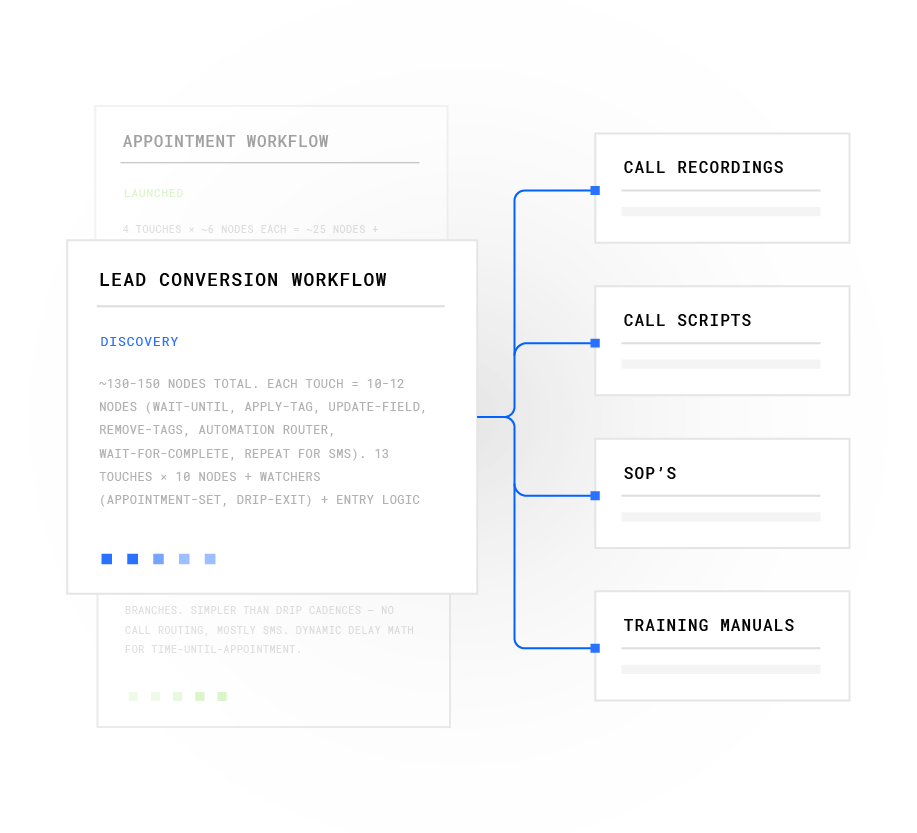
Plura AI’s AI voice agent and AI SMS are designed for tier-1 and tier-2 flows. These agents operate within a no-code workflow builder that maps each flow visually and lets you define explicit escalation gates. When a conversation reaches tier-3 complexity, those gates route it to a U.S. human agent with full conversation context already loaded.
Configuring Real-Time DNC/TCPA and Quiet-Hours Rules
Step 3 is compliance configuration. The FCC’s February 2024 Declaratory Ruling (FCC-24-17) classifies AI-generated voices as “artificial or prerecorded voices” under the TCPA (47 U.S.C. § 227), which places outbound commercial AI voice calls within the same framework as robocalls.2 TCPA statutory damages range from $500 per negligent call to $1,500 per willful call with no aggregate cap.2 Consult qualified counsel to understand how these frameworks apply to your specific operations.
Plura AI’s compliance engine supports this configuration at the platform level on every outbound contact through a connected set of controls.
- Real-time DNC scrubbing checks every number against federal and state DNC registries before dial.
- TCPA consent records are timestamped and immutable, with express written consent tracked per contact.
- Quiet-hours rules apply automatically through time-zone detection, aligning with state and federal calling-window restrictions.
- SHAKEN/STIR caller ID verification runs on every outbound voice call.
- The compliance dashboard exports audit-ready reports in one click for internal and external review.
Plura supports customer compliance, and customers remain responsible for their own regulatory obligations and the claims they make to their end users. Plura AI automatically enforces TCPA rules, DNC list checks, calling window restrictions, and consent requirements on every interaction, which reduces the manual compliance overhead that adds cost and latency to every outbound campaign.
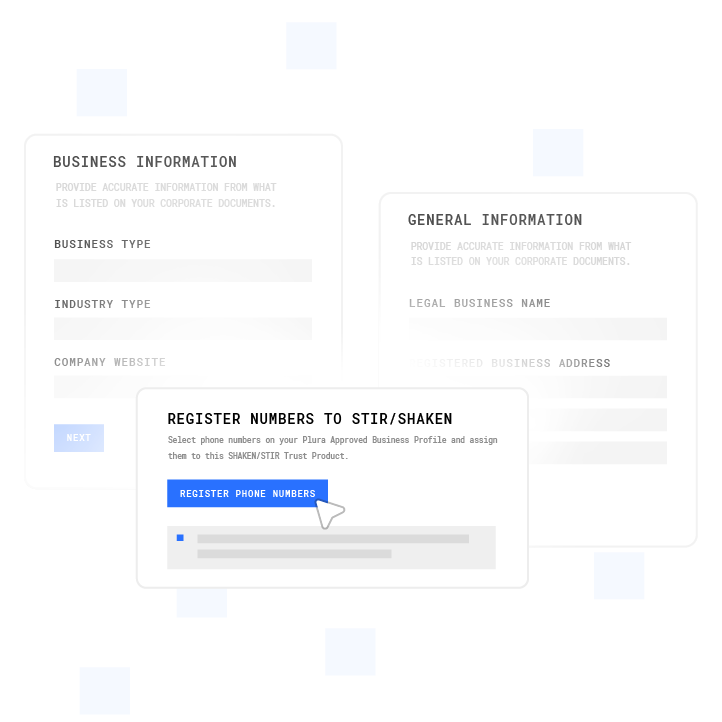
Beyond the per-call compliance layer, Plura runs on 100% U.S. infrastructure by architecture. Voice origination, model hosting, data storage, and call recording all sit on domestic infrastructure, which addresses the offshore exposure created by FCC NPRM CG Docket No. 26-52 and state onshoring laws in New York, New Jersey, Connecticut, Missouri, and Florida.
Review Plura AI’s plans and rates to see which tier includes the compliance configuration your operation requires.
Deploying Stateful Memory Across Voice, SMS, and Webchat
Step 4 is cross-channel memory deployment. Repeat contacts are one of the largest hidden cost drivers in contact center operations, because a customer who texts at 9 a.m. and calls at noon to re-explain their issue effectively doubles the cost of that problem.
Plura AI’s Stateful Conversation Database keys every interaction to a customer token such as phone number, email, or ID and persists it across all four channels. The AI voice agent, AI SMS, and AI webchat all read from and write to the same database. A qualification status established in an SMS thread is visible when the voice call comes in, and a pricing offer made on a prior call anchors the next outreach.
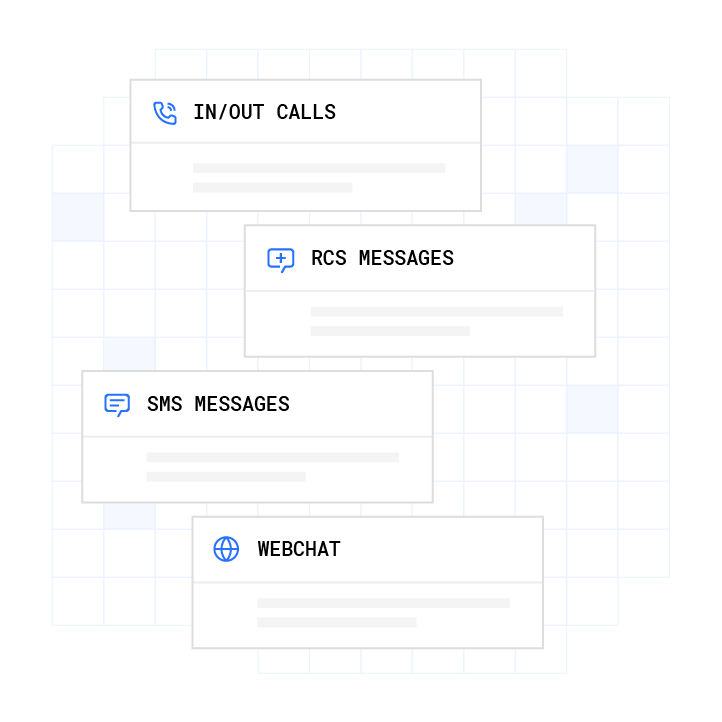
This architecture produces two measurable cost reductions.
- Fewer repeat contacts: Customers do not re-explain themselves, which reduces handle time and removes duplicate interactions from the volume count.
- Higher first-contact resolution: Production AI voice deployments can show improvements in first-contact resolution when full interaction history is surfaced at the point of contact.
The conversation intelligence layer analyzes every interaction across channels to surface what scripts close, what objections recur, and what conversion paths win, then feeds findings back into the workflow tuning loop week over week.
Structuring the First 90-Day Pilot with Embedded ROI Tracking
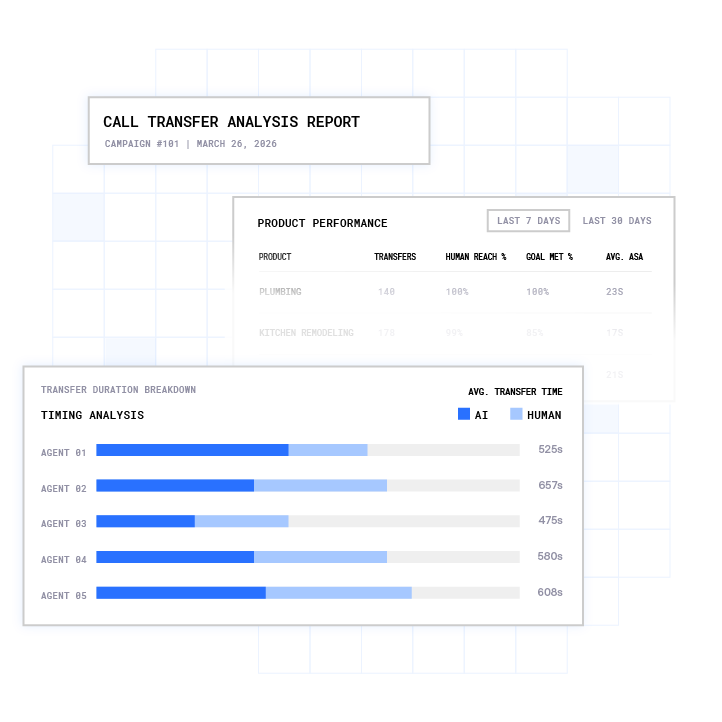
Step 5 is the pilot structure. A 90-day pilot on a defined slice of live volume produces the actual containment rate, cost-per-contact, and conversion data needed to justify full deployment.
A structured 90-day pilot follows this sequence.
- Select one tier-1 flow representing at least 20% of monthly volume, such as appointment confirmations, order status, or intake qualification.
- Run the AI agent on that flow for 30 days and measure containment rate, AHT, and cost per handled contact against the human baseline established in Step 1.
- At day 30, use the actual containment rate to update the ROI projection in Plura AI’s ROI calculator.
- Expand to a second flow at day 31 and iterate the workflow based on conversation intelligence data from the first 30 days.
- At day 90, compare actual 90-day savings against the original projection and model the full-deployment TCO.
As the deflection data above shows, most organizations see 30–50% cost reductions within the first 90 days, which is why a structured pilot over that timeframe produces the validation needed for full deployment. Every Plura annual contract includes a 90-day opt-out window, so if the deployment is not delivering, customers are not held to the annual term.
Before you begin the pilot, use Plura AI’s ROI calculator to establish your baseline projection, then update it with actual containment data at day 30.
How AI Changes Call Center Roles
The data from production deployments points to role transition rather than elimination. Organizations implementing AI for inbound calls have scaled down their routine agent headcount while generating substantial annual savings, and the remaining agents handle complex interactions that AI escalates instead of the full inbound queue.
The pattern across deployments is consistent. AI absorbs tier-1 and tier-2 volume, and human agents shift to tier-3 interactions that require judgment, empathy, or licensed expertise. Industry studies show virtual agents reducing live agent contacts by 20–40%, not removing the agent role entirely.
NICE CXone’s 2025 workforce report states that contact center attrition remains high without providing a specific average annual turnover percentage. AI deployment reduces the volume of repetitive, high-attrition work that drives that turnover rate, which means the agents who remain are handling more complex, higher-value interactions with lower burnout risk.
Frequently Asked Questions
How long does it take to go live with Plura AI?
Deployment timelines depend on conversation complexity. A simple inbound qualification flow or appointment confirmation workflow typically goes live in days. A complex multi-step intake, such as a 25-question health-history survey, runs closer to one to two months because the workflow logic requires design and validation.
Plura’s onboarding sequence includes a discovery audit, intake of sample calls and existing scripts, an overnight build of a dynamic conversation mockup, a review meeting, engineering build of the production workflow, a pilot test on a subset of real calls, and full go-live. Every annual contract includes a 90-day opt-out window.
What compliance standards does Plura support?
Plura supports customer compliance across SOC 2, HIPAA, ISO certification, GDPR, SHAKEN/STIR caller ID verification, TCPA compliance, and DNC compliance.1 Every outbound contact is checked against federal and state DNC registries in real time before dial. Consent records are timestamped and immutable, and quiet-hours rules apply automatically through time-zone detection.
The compliance dashboard exports audit-ready reports in one click. Customers remain responsible for their own regulatory obligations and the claims they make to their end users. Consult qualified counsel for guidance on how specific regulations apply to your operations.
How much integration work is required to connect Plura to an existing CRM or dialer?
Plura connects to 50+ tools across CRM, calendar, attribution, payment, and data enrichment categories, including HubSpot, Salesforce, Zoho, Calendly, Google Calendar, Stripe, and Zapier. The platform is built to plug into systems operators already run, not replace them, and most standard CRM integrations are configured during onboarding without custom engineering.
The full integration directory is available at Plura AI’s integrations page. For operators replacing a legacy dialer, Plura AI’s AI Predictive Dialer is a direct replacement for systems including Vici Dial, running on Plura AI’s own FCC-licensed carrier rather than a third-party CPaaS.
How does Plura handle calls that get flagged as spam?
Spam labels sit at the carrier level and require a carrier-level solution. Plura is its own FCC-licensed audio bridging carrier, which means it issues branded caller ID directly at the carrier level rather than through a third-party reseller.
SHAKEN/STIR caller ID verification runs on every outbound call, and the destination carrier uses that signal to verify legitimate origination. Calls present with the company’s name and the reason for the call instead of “Spam Likely” or an unfamiliar number. Many AI voice platforms cannot do this because they route voice through a third-party CPaaS and inherit that provider’s caller ID reputation instead of their own.
How is ROI measured after deployment?
Plura measures ROI against four outcome categories: cost savings from reduced agent labor and infrastructure, productivity gains from higher talk-time utilization and shorter handle times, revenue uplift from faster lead response and improved conversion rates, and risk reduction from automated compliance enforcement.
The conversation intelligence layer generates client-ready reports automatically, surfacing cost per handled contact, containment rate, first-contact resolution, and conversion lift week over week. The ROI calculator at plura.ai/calculator accepts actual pilot data to update projections in real time as the deployment matures.
Calculate Your Exact Savings Today
The $700K vs. $7M TCO gap reflects a straightforward utilization model, not a best-case projection. AI agents run at 100% talk utilization with no benefits overhead, no turnover replacement costs, and no ramp time, while the compliance engine enforces TCPA, DNC, and SHAKEN/STIR rules on every contact before dial.
The 15-agent scenario above shows $45,600 in first-month savings and $547,200 over 12 months at default inputs, and your numbers will differ based on agent count, hourly rate, and call volume.
Calculate your exact savings using Plura AI’s ROI calculator, then book a live demo with Plura AI to walk through the deployment model for your specific operation.
1 Plura AI maintains SOC 2, HIPAA, ISO, and GDPR posture as part of its platform infrastructure. References to compliance frameworks in this article describe Plura’s platform capabilities and do not constitute a guarantee that any customer using Plura will themselves be compliant with applicable laws or standards. Customers remain solely responsible for their own regulatory obligations, certifications, consent management, recordkeeping, and the claims they make to their own end users. Consult qualified legal counsel for guidance specific to your use case.
2 This article describes regulatory frameworks at a general level and does not constitute legal advice. Laws and regulations vary by jurisdiction, change over time, and apply differently depending on facts and circumstances. Readers should consult qualified legal counsel before making compliance decisions.
3 Performance figures, customer outcomes, and industry statistics referenced in this article are drawn from cited third-party sources or Plura customer case studies. Individual results vary based on implementation, use case, industry, audience, and execution. Past or aggregate performance is not a guarantee of future results.
4 References to third-party products, services, companies, or research are made for informational and comparative purposes only. Plura AI is not affiliated with, endorsed by, or sponsored by any third party named in this article unless explicitly stated. Trademarks and product names referenced remain the property of their respective owners.
5 This article contains forward-looking statements regarding industry trends, technology adoption, and future capabilities. These statements reflect current expectations and are subject to change. Plura AI undertakes no obligation to update forward-looking statements except as required.
This article is provided for informational purposes only and reflects Plura AI’s understanding at the time of publication. Product capabilities, integrations, and specifications are subject to change. For the most current information, visit plura.ai.
This article was produced with the assistance of AI tools and reviewed by Plura AI prior to publication.