
Written by: Matt Beucler, CEO, Plura AI
Key ROI Takeaways for Contact Center Leaders
- Contact center AI often delivers a 3:1 ROI with payback in 5–12 months when AI agents replace human seats.3
- Traditional 100-seat contact centers cost $4M–$7M annually, while AI platforms like Plura AI reduce TCO to $300K–$700K.3
- Four KPIs drive real ROI: cost per contact, average handle time, first-contact resolution, and talk utilization.
- Hidden leaks from spam labels, after-call work, turnover, and FCC onshoring exposure shrink when you use 100% U.S. infrastructure and stateful AI agents.
- Start modeling your own payback period with Plura AI’s free ROI calculator.
ROI Formula for Contact Center AI Investments
The industry-standard formula for contact center AI ROI (return on investment) is:
ROI = (Net Savings / Total AI Investment) x 100
Where:
- Net Savings = Current Human Agent Cost minus AI Platform Cost
- Total AI Investment = Platform fees + agent build fees + integration costs
- Payback Period = Total AI Investment / Monthly Net Savings
Human agent cost extends beyond base wage. The fully loaded figure includes payroll taxes, benefits, commissions, and the productivity loss from talk utilization (TU), which is the percentage of paid hours an agent spends in live conversation. Industry-standard TU for human agents runs at 40%. A full-time agent paid for 160 hours per month typically delivers roughly 64 hours of actual conversation. AI agents run at 100% TU by design.
TCO (total cost of ownership) stretches the calculation across multiple years and adds infrastructure, compliance tooling, and turnover replacement costs. For a 100-seat contact center, traditional operations cost $4M–$7M annually, while AI-powered platforms like Plura cost $300K–$700K.3
Plura’s 15-Agent ROI Scenario
This scenario uses default inputs from Plura’s ROI calculator:
- Human baseline: 15 agents at $20/hour, 25% taxes/benefits/commissions, 40% TU = $60,000/month
- Plura cost: 6 AI agents handling the same 2,400 hours at 100% TU at $15/hour = $14,400/month
- 30-day net savings: $45,600
- 12-month net savings: $547,200
- 60-month net savings: $2,736,000
At $14,400 per month in platform cost against $45,600 in monthly savings, the payback period is roughly 5 months. The $3.50 to $1 return ratio holds across the 12-month horizon when agent build fees ($2,500–$2,750 per agent, per Plura’s pricing) sit in the investment denominator.
Calculate your exact payback period using your current agent count and hourly rates.
Four KPIs That Prove AI ROI
Four KPIs (key performance indicators) show whether the ROI formula matches day-to-day operations:
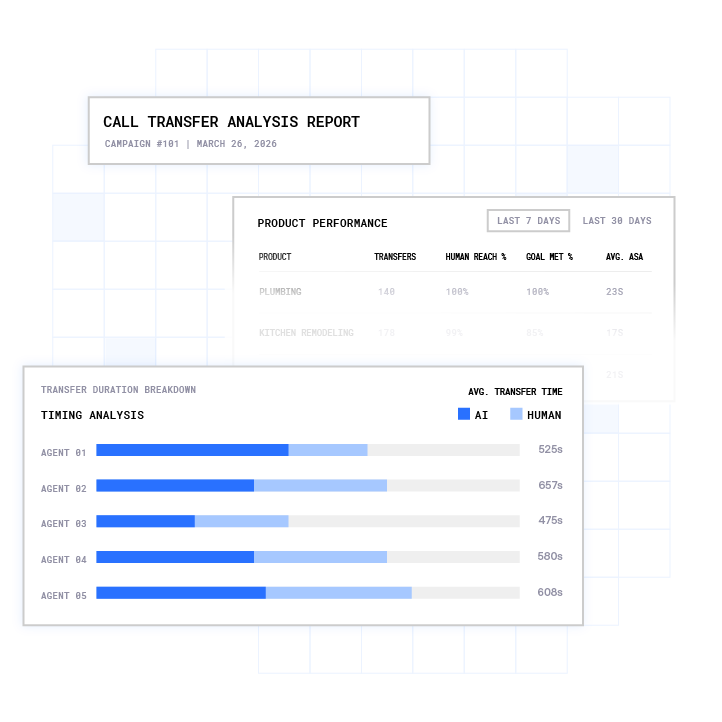
- Cost per contact (CPC): Total operating cost divided by total contacts handled. Plura voice agents cost $0.35–$0.85 per completed conversation, compared with $5–$15 fully loaded for offshore call centers.
- Average handle time (AHT): Average duration of a single customer interaction from start to finish, including after-call work (ACW). AI agents remove ACW by logging outcomes to the stateful database in real time.
- First-contact resolution (FCR): Percentage of contacts resolved without a callback or escalation. Higher FCR lowers CPC and reduces repeat-contact volume.
- Talk utilization (TU): Paid hours in live conversation divided by total paid hours. Human agents average 40% TU. Plura agents run at 100% TU, which drives the cost gap in the 15-agent model above.
Hidden ROI Leaks in Contact Center Budgets
Even with strong KPI tracking, your ROI model can miss several silent cost drivers. Four categories routinely go unpriced in contact center budgets:
- Spam labels: Outbound calls flagged as “Spam Likely” by carrier networks never reach the prospect, so you pay for attempts without conversations. Many AI voice platforms cannot address this because they route calls through third-party carriers they do not control. Plura issues branded caller ID through its FCC-licensed audio bridging carrier, which allows spam labels to be remediated at the carrier level before they reach the recipient’s phone and turns screened calls into live pickups.
- After-call work: Human agents often spend 6–10 minutes per contact on ACW, including notes, CRM updates, and follow-ups. At 40% TU, ACW consumes a large share of paid hours. Plura’s conversation intelligence layer logs outcomes automatically and removes ACW as a cost line.
- Turnover: U.S. contact centers frequently see 35–45% annual agent turnover, which forces constant rehiring and retraining. Each replacement hire carries recruiting, onboarding, and ramp costs that rarely appear in the per-seat budget. AI agents do not turn over, so those replacement cycles disappear.
- FCC onshoring exposure: The FCC NPRM (CG Docket No. 26-52) proposes capping offshore customer-service calls at 30% and limiting offshore handling of sensitive consumer data.2 Every offshore vendor contract a covered entity holds can represent potential compliance exposure. Plura runs on 100% U.S. infrastructure by architecture, not by promise, which removes that offshore exposure line from the model.
Year-One TCO Comparison and Payback
The table below compares traditional contact center TCO with Plura’s AI platform on equivalent volume, using figures from Plura’s executive communications strategy guide and Plura’s ROI calculator.
| Cost Category | Traditional Contact Center | Plura AI Platform | Year-One Delta |
|---|---|---|---|
| Annual labor (15-agent baseline) | $720,000 | $172,800 | -$547,200 |
| Taxes, benefits, commissions (25%) | Included above | $0 | – |
| Turnover replacement (35–45% annually) | $50,000–$100,000 est. | $0 | -$50,000–$100,000 |
| Platform / infrastructure TCO (100-seat scale) | $4M–$7M | $300K–$700K | -$3.3M–$6.3M |
| Compliance tooling (TCPA, DNC, SOC 2) | Separate vendor cost | Included in platform | Consolidated |
At the 15-agent scenario, payback on the AI investment occurs inside 5 months.3 At 100-seat scale, the TCO gap identified earlier becomes a structural cost advantage that compounds year over year.
Model your TCO savings at 100-seat scale.
Compliance-Adjusted ROI in the 2026 Landscape
Regulatory exposure now functions as a separate line item in any serious ROI model. In 2026, that factor is material for operators with offshore vendor relationships or foreign infrastructure dependencies.
The FCC NPRM (CG Docket No. 26-52) proposes a 30% cap on offshore customer-service calls and a flat prohibition on offshore handling of sensitive consumer data including passwords, multi-factor authentication codes, Social Security numbers, and banking and card data.2 Companion federal legislation includes the Keep Call Centers in America Act (S.2495) and the Foreign Robocall Elimination Act (S.2666), both tracked on the official congressional legislative database.2
State-level exposure already exists. New York’s Call Center Jobs Act includes penalties up to $10,000 per day.2 New Jersey, Connecticut, Missouri, and Florida have enacted or proposed companion restrictions on offshore handling of medical, financial, and consumer data. Operators working with qualified counsel on these frameworks can treat potential penalty exposure as a distinct TCO line item.
Plura’s owned telecom infrastructure and FCC carrier license keep voice origination, model hosting, data storage, and call recording on domestic infrastructure.4 That architecture removes offshore exposure from the compliance-adjusted ROI calculation.
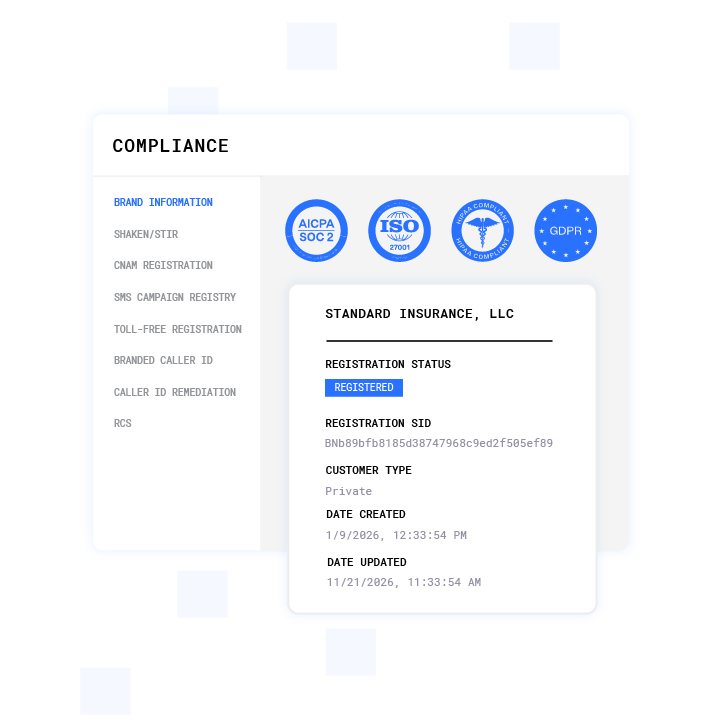
Plura supports compliance with TCPA, DNC, HIPAA, SOC 2, and STIR/SHAKEN caller ID verification.1 Real-time DNC scrubbing and integration with The Blacklist Alliance’s TCPA Litigation Firewall are built into the platform rather than bolted on.4 Customers remain responsible for their own regulatory obligations and certifications.
Risk Management: 90-Day Opt-Out and Iterative Launch
Every Plura annual contract includes a 90-day opt-out window. If the deployment is not delivering measurable ROI within the first quarter, the customer is not held to the annual term.
Plura treats each deployment as a continuous conversion rate optimization (CRO) program. Real calls are monitored for objection patterns and conversion gaps. The no-code workflow builder allows conversation logic to be updated without redeploying the underlying AI. Iteration cycles are measured in days, not long development sprints.
Frequently Asked Questions
How long does it take to see positive ROI from a contact center AI deployment?
At the 15-agent scenario modeled earlier, payback occurs in roughly 5 months when agent build costs are included in the investment denominator. Simpler deployments with higher agent counts or higher hourly labor costs reach payback faster. Complex multi-step intake workflows may require 1–2 months to build and validate before savings start, which extends the payback period slightly. The 90-day opt-out window in every Plura annual contract keeps operators from being locked in before they can confirm the trajectory.
What is the difference between contact center AI ROI and TCO?
ROI measures the return on a specific investment over a defined period, expressed as a ratio or percentage. TCO measures the total cost of operating a system over its full lifecycle, including infrastructure, labor, compliance tooling, turnover replacement, and integration costs. ROI shows whether the investment pays off. TCO shows what you actually spend. Both metrics are necessary for a complete budget justification. The $300K–$700K versus $4M–$7M comparison in this article is a TCO comparison at 100-seat scale, not a per-seat ROI figure.
Which KPIs should contact center leaders track to measure AI performance?
The four most operationally significant KPIs are cost per contact, average handle time, first-contact resolution, and talk utilization. Cost per contact captures the fully loaded cost of each interaction and provides the most direct measure of AI efficiency. Average handle time tracks conversation duration including after-call work, which AI removes by logging outcomes automatically. First-contact resolution measures how often issues are resolved without a callback, which directly reduces repeat-contact volume and cost. Talk utilization is the ratio of live conversation time to total paid time. Human agents average 40%, while AI agents run at 100%, which drives the cost gap in the 15-agent model.
How does the 2026 FCC NPRM affect contact center ROI calculations?
The FCC NPRM (CG Docket No. 26-52) proposes capping offshore customer-service calls at 30% and limiting offshore handling of sensitive consumer data. Operators with offshore vendor contracts or AI tools that depend on foreign infrastructure should consult qualified counsel to assess their exposure under the proposed rule and companion state laws in New York, New Jersey, Connecticut, Missouri, and Florida. That exposure, including potential penalties and contract restructuring costs, belongs in the compliance-adjusted TCO model as a separate line item. Operators running on 100% U.S. infrastructure by architecture remove that line item from the calculation.
What prerequisites does a contact center need before deploying AI agents?
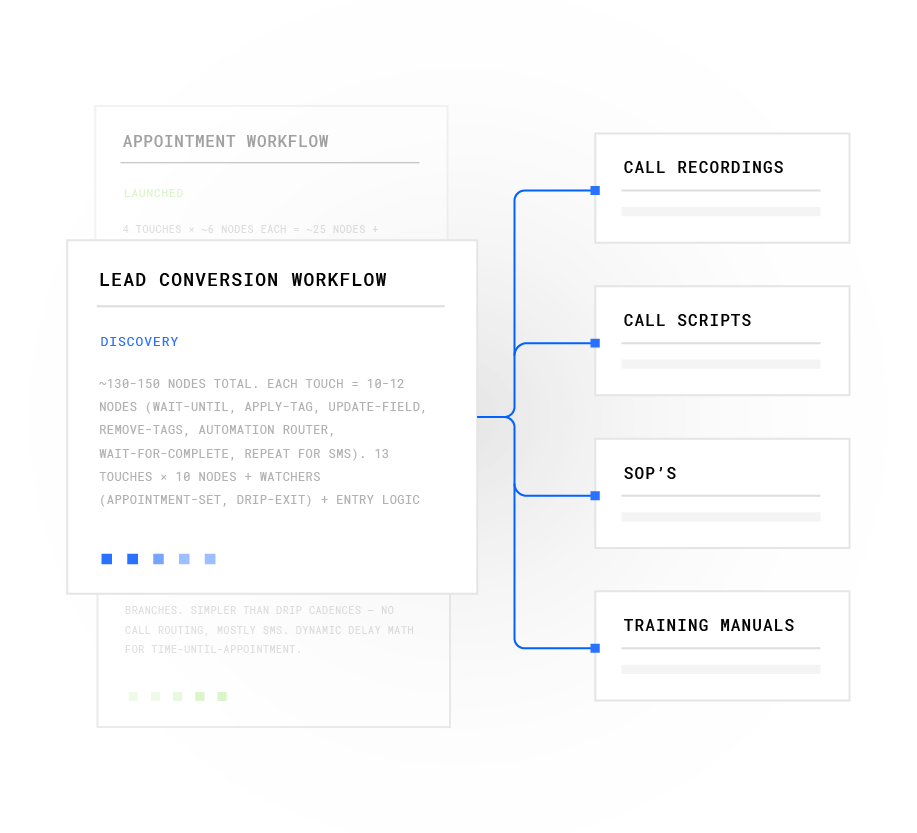
The practical floor for AI agent deployment to generate meaningful ROI is at least 500 daily customer interactions or $5,000 per month in paid-media spend. Below that volume, the platform depth often does not generate enough return to justify the build. Beyond volume, operators need existing call recordings, standard operating procedures, and scripts to support onboarding. Plura’s onboarding sequence runs a discovery audit, ingests sample calls and SOPs, builds a dynamic conversation mockup, iterates with the customer, and then moves to a pilot on a subset of real calls before full go-live. CRM integration through Plura’s 50+ integrations directory connects the AI to existing customer records from day one.
1 Plura AI maintains SOC 2, HIPAA, ISO, and GDPR posture as part of its platform infrastructure. References to compliance frameworks in this article describe Plura’s platform capabilities and do not constitute a guarantee that any customer using Plura will themselves be compliant with applicable laws or standards. Customers remain solely responsible for their own regulatory obligations, certifications, consent management, recordkeeping, and the claims they make to their own end users. Consult qualified legal counsel for guidance specific to your use case.
2 This article describes regulatory frameworks at a general level and does not constitute legal advice. Laws and regulations vary by jurisdiction, change over time, and apply differently depending on facts and circumstances. Readers should consult qualified legal counsel before making compliance decisions.
3 Performance figures, customer outcomes, and industry statistics referenced in this article are drawn from cited third-party sources or Plura customer case studies. Individual results vary based on implementation, use case, industry, audience, and execution. Past or aggregate performance is not a guarantee of future results.
4 References to third-party products, services, companies, or research are made for informational and comparative purposes only. Plura AI is not affiliated with, endorsed by, or sponsored by any third party named in this article unless explicitly stated. Trademarks and product names referenced remain the property of their respective owners.
This article is provided for informational purposes only and reflects Plura AI’s understanding at the time of publication. Product capabilities, integrations, and specifications are subject to change. For the most current information, visit plura.ai.
This article was produced with the assistance of AI tools and reviewed by Plura AI prior to publication.