
Written by: Matt Beucler, CEO, Plura AI | Last updated: August 28, 2026
Key Takeaways for High-Volume Phone Booking Teams
- Enterprise operators handling 500+ daily calls need AI phone appointment booking that scales without compliance gaps or memory loss across channels.
- Plura AI is the only platform that owns its FCC-licensed carrier, supports real-time TCPA/DNC/HIPAA controls at the carrier level, and maintains stateful memory across voice and SMS follow-up.1,2
- The 90-day playbook below shows how to deploy AI phone appointment booking that reliably handles 10,000+ calls per month.
- AI phone appointment booking uses conversational AI voice agents to answer inbound calls, check real-time calendar availability, and schedule, reschedule, or cancel appointments through natural spoken conversation while logging every detail into connected CRMs and sending confirmations.
- See Plura AI in a live demo and review how carrier-grade AI phone appointment booking performs at enterprise scale.
The Problem: Revenue Lost in High-Volume Phone Booking
At 500+ daily calls, gaps in legacy booking systems compound quickly. Missed calls after hours send prospects to the next name on Google. Double-bookings erode trust. Calls labeled “Spam Likely” go unanswered before they ring through. Inbound AI voice agents now account for 52.1% of AI voice agent revenue in 2025, which shows how central phone booking has become to enterprise operations.3
The cost structure of human-staffed booking magnifies these issues. Each human agent handles one call at a time, so demand spikes during Medicare AEP, tax season, or a product launch require headcount hired months in advance. This planning burden is compounded by contact center turnover reaching 35–45% annually, which forces leaders to maintain a constant recruiting pipeline even in stable periods.
Regulatory exposure adds another layer of risk. The FCC’s Notice of Proposed Rulemaking (NPRM, CG Docket No. 26-52) proposes capping offshore customer-service calls at 30% and prohibiting offshore handling of sensitive consumer data. Any operator running AI phone appointment booking through a platform that relies on foreign infrastructure now carries potential compliance liability on the balance sheet. Operators should consult qualified counsel to assess their specific obligations under applicable federal and state rules.
Developer-first tools like Vapi and Twilio-based API resellers address only part of this picture.4 Vapi is developer-focused, primarily voice-only, stateless, and API-led with limited compliance and community support. None of these platforms own their carrier stack, so branded caller ID, real-time DNC scrubbing, and TCPA-litigator filtering often sit as bolt-on features or shift entirely to the operator.
See how Plura closes compliance gaps and memory gaps in a live demo.
How Plura Handles Real-Time Calendar Sync and Carrier-Level Controls
Enterprise AI phone appointment booking relies on reliable two-way calendar synchronization with Google Calendar, Outlook, and EHR/EMR systems. Enterprise scheduling systems use webhook retry policies with exponential backoff and low-latency free/busy sync to prevent double-bookings at volume. Plura integrates with Google Calendar, Calendly, and Cal.com through its 50+ integrations directory, and completes CRM writes to HubSpot, Salesforce, and Zoho after every booked appointment.
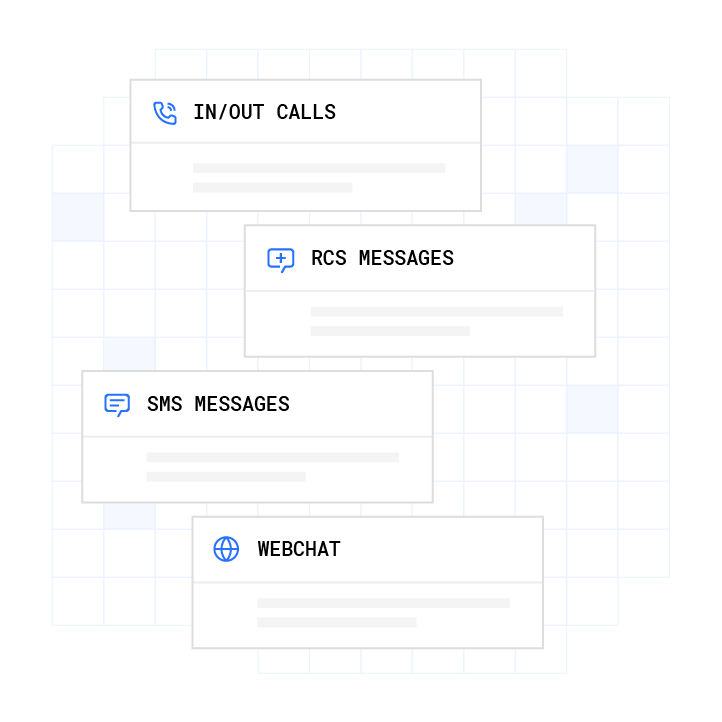
Stateful memory is the architectural differentiator that separates Plura from developer tools. Plura offers omnichannel support for voice, SMS, webchat, and RCS within a unified stateful inbox that maintains full conversation history.4 A patient who texts at 9 a.m. to reschedule is treated as the same person when the confirmation call comes at noon. The AI already knows what was said, what was offered, and what remains open.
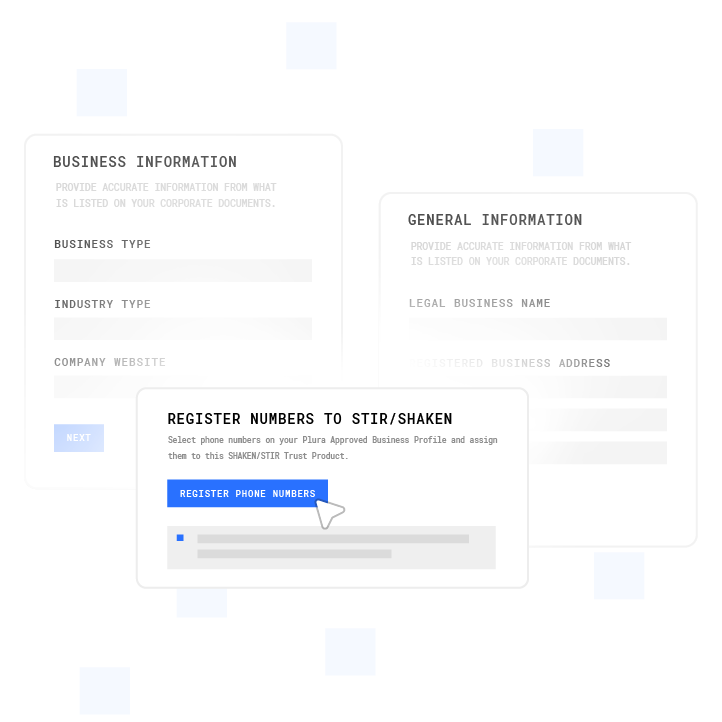
On the carrier side, Plura owns its FCC-licensed audio bridging carrier. Plura owns its telecom infrastructure and holds an FCC carrier license, while platforms like Synthflow depend on Twilio and operate as a software layer without a carrier license.1 Branded caller ID is issued at the carrier level, not through a reseller. SHAKEN/STIR caller ID verification authenticates every outbound call. Real-time DNC scrubbing checks every number before dial. Outbound AI appointment scheduling calls benefit from accurate caller ID with STIR/SHAKEN attestation, since calls without proper attestation can be labeled “Spam Likely” and see lower answer rates.
Plura also communicates with Apple’s iOS 26 call-screening layer, so calls present with the company name and the reason for the call instead of an unfamiliar number. This improved caller ID presentation, combined with Plura’s AI agents handling voice, SMS, and chat reminders with stateful memory, supports reduced no-shows, although Plura does not publish a specific improvement percentage. For context, Kura’s WhatsApp-based reminder system reports a 20–40% drop in no-shows.
90-Day Rollout Timeline for Regulated Phone Booking Teams
A structured 90-day deployment keeps enterprise rollouts on track across healthcare, finance, legal, and franchise networks. The sequence below reflects how Plura deploys for operators running 500+ daily calls.
- Days 1-14: Discovery and audit. Map current call volume by type, classify interactions by decision complexity, and identify the 60-80% of inbound volume that qualifies for AI resolution. Collect sample calls, SOPs, and existing scripts. Define escalation triggers, consent language, and CRM field mapping.
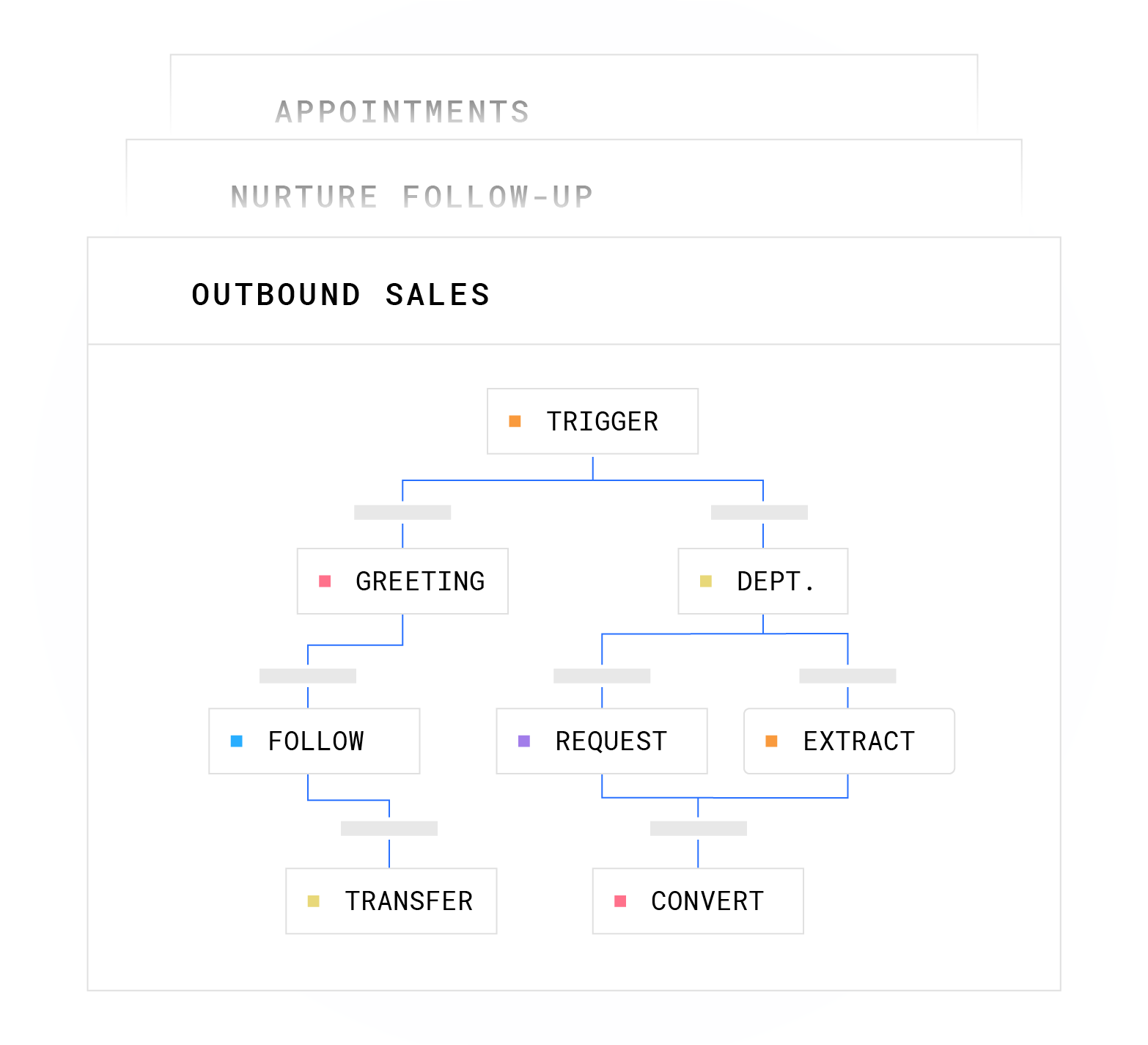
- Days 15-30: Workflow build. Build conversation logic on Plura’s no-code workflow builder. Configure greeting nodes, qualification gates, and calendar sync rules to handle the booking flow itself. Then layer in compliance controls such as DNC scrubbing, quiet-hours enforcement by time zone, and warm-transfer routing to U.S. agents. For healthcare operators, load HIPAA-aligned encryption and audit logging for any workflow touching protected health information.
- Days 31-45: Integration and pilot. Connect to existing CRMs (HubSpot, Salesforce, Zoho), calendars (Google Calendar, Calendly, Cal.com), and EHR/EMR systems. Run a controlled pilot on a subset of real calls. Monitor end-to-end latency, escalation rate, and calendar sync accuracy. Validate webhook delivery and CRM write confirmation after every booking.
- Days 46-60: Go-live. Expand to full call volume. Keep branded caller ID active on all outbound calls. Run SHAKEN/STIR authentication on every call. Turn on stateful memory across voice and AI SMS follow-up. Use the unified inbox to consolidate all channel transcripts for CX team review.
- Days 61-90: Optimization. Use conversation intelligence to surface objection patterns, conversion gaps, and script drift. Tune workflow nodes against actual outcomes. Track containment rate, escalation rate by call type, and first-contact resolution rate week over week.
Integration checklist:
- CRM: HubSpot, Salesforce, or Zoho connected with two-way field sync
- Calendar: Google Calendar, Calendly, or Cal.com with low-latency free/busy sync
- EHR/EMR: API connection with HIPAA-aligned encryption and BAA in place
- DNC: Federal and state registry scrubbing configured before first dial
- Consent: Timestamped, immutable consent records per contact
- Escalation: Warm-transfer routing to U.S. agent queue with full transcript handoff
AI Bots and Appointment Scheduling at Enterprise Scale
Many consumers are comfortable with AI agents booking appointments for them, and the appointment scheduling application within AI voice agents is growing due to demand from healthcare, professional services, and retail sectors for automated real-time booking, rescheduling, and integration with CRM platforms.
The practical question for high-volume operators focuses on whether the platform running AI booking owns the infrastructure to handle scale without compliance exposure. At 10,000 calls per month, the TCO math is direct. Plura’s illustrative scenario from the ROI calculator shows a 15-agent operation at $20/hour with standard overhead costing $60,000 per month at 40% talk utilization.3 Six Plura agents replacing those 15 humans, running at 100% talk utilization, cost $14,400 per month. That produces $45,600 in savings in the first 30 days and $547,200 over 12 months on a single operation. For higher-volume deployments, Plura’s TCO of $700,000 replaces a traditional $7 million contact-center cost structure on equivalent volume.
Cost Comparison: Human Receptionists vs AI Receptionist
The cost of an AI receptionist depends on the operating model. The table below compares three approaches at 10,000 calls per month. All figures are illustrative based on published industry benchmarks and Plura’s calculator inputs.
| Model | Estimated Monthly Cost | Key Limitation | Compliance Posture |
|---|---|---|---|
| Onshore human contact center | ~$60,000 (15 agents at $20/hr, 40% utilization) | Linear cost scaling, 35–45% annual turnover | Manual QA, 1-2 calls reviewed per agent per week |
| Twilio-based API reseller tools | Variable, engineering overhead adds to per-minute cost | No owned carrier, branded caller ID not available at carrier level | Compliance bolted on, customer bears full responsibility |
| Plura AI (carrier-grade platform) | ~$14,400 (6 agents at $15/hr, 100% utilization) | Annual contract, 90-day opt-out window | TCPA, DNC, HIPAA, SOC 2, ISO certification, and GDPR supported at the carrier and platform level1 |
Review your own TCO scenario with Plura in a working session.
Compliance Checklist for Enterprise AI Phone Appointment Booking
The table below covers the compliance frameworks relevant to enterprise AI phone appointment booking in regulated U.S. verticals. Operators should consult qualified legal counsel to assess their specific obligations under each framework.

| Framework | Scope | Plura Platform Support | Operator Responsibility |
|---|---|---|---|
| TCPA compliance | FCC 24-17 classifies AI-generated voices as artificial or prerecorded under TCPA | Real-time DNC scrubbing, quiet-hours enforcement by time zone, immutable consent ledger | Obtaining and documenting prior express consent, consult counsel |
| DNC compliance | Telemarketers must access the National DNC Registry no more than 31 days before calling any consumer. | Pre-dial scrubbing against federal and state DNC registries, TCPA-litigator filtering | Maintaining internal DNC lists, honoring opt-outs immediately |
| HIPAA | A voice AI vendor that records, transcribes, or stores conversations for healthcare providers is a HIPAA Business Associate under 45 CFR § 160.103 | End-to-end encryption, access controls, audit logging, BAA available | Executing BAA, conducting HIPAA risk analysis, workforce training |
| SOC 2 | AICPA Trust Services Criteria, continuous monitoring and third-party audits | SOC 2 Type II certified infrastructure | Verifying vendor certification scope, own SOC 2 program if applicable |
| ISO certification | International standards for information security management | ISO certified | Own certification obligations per contract and vertical |
| GDPR | Regulation (EU) 2016/679, applies to European operations | GDPR coverage for European operations | Data subject rights, lawful basis for processing, DPA obligations |
| SHAKEN/STIR caller ID verification | FCC orders implementing the TRACED Act, A-attestation required for legitimate origination | SHAKEN/STIR authentication on every outbound call via FCC-licensed carrier | Ensuring accurate caller ID transmission, consult counsel on attestation levels |
2026 FCC NPRM impact: The FCC’s NPRM (CG Docket No. 26-52) proposes a 30% cap on offshore customer-service calls and a flat prohibition on offshore handling of sensitive consumer data including passwords, multi-factor authentication codes, Social Security numbers, banking data, and card data.2 Companion legislation includes the Keep Call Centers in America Act (S.2495) and the Foreign Robocall Elimination Act (S.2666). State laws in New York, New Jersey, Connecticut, Missouri, and Florida already restrict offshore handling of medical, financial, and consumer data. Plura runs on 100% U.S. infrastructure by architecture, with voice origination, model hosting, data storage, and call recording all on domestic infrastructure. Operators should consult qualified counsel regarding their specific obligations under these rules.
Integration Checklist with Existing CRMs and Calendars
- Audit existing systems. Identify which CRM (HubSpot, Salesforce, Zoho), calendar (Google Calendar, Calendly, Cal.com), and EHR/EMR systems are in use. Document current field mapping for appointment type, provider, location, and patient or customer ID.
- Configure two-way calendar sync. Enable webhook-based sync with low-latency free/busy sync. Verify that create, reschedule, and cancel events reflect in the AI booking workflow within one sync cycle.
- Map CRM write events. Define which fields the AI writes after each booking, including contact record update, appointment date and time, call transcript link, and next-action flag. Confirm CRM writes complete before the call ends.
- Set up consent and DNC infrastructure. Load internal DNC lists. Configure federal and state DNC scrubbing to run before every outbound dial. Set quiet-hours rules by state time zone. Store consent records with timestamp and source.
- Configure escalation routing. Define warm-transfer rules such as sentiment threshold, low-confidence intent, explicit human request, or sensitive-data disclosure. Map escalation destinations to U.S. agent queues. Confirm full transcript and extracted entities pass to the receiving agent before the bridge completes.
- Test end-to-end across 1,000 booking cycles. Verify create, reschedule, and cancel flows. Confirm no double-bookings. Validate CRM field writes, DNC suppression, and escalation handoffs under load.
- Enable conversation intelligence reporting. Connect business intelligence to surface containment rate, escalation rate by call type, and first-contact resolution rate from day one.
Plura’s full integrations directory covers 50+ tools across CRM, calendar, data enrichment, documents, payments, and team management categories.
Frequently Asked Questions
What makes Plura AI different from other AI phone appointment booking platforms?
Plura owns its FCC-licensed audio bridging carrier, while many AI voice platforms route calls through third-party CPaaS providers like Twilio. This architectural difference, described in detail above, enables branded caller ID, real-time DNC scrubbing, and SHAKEN/STIR authentication at the carrier level instead of as bolt-on features. Plura’s AI Voice, AI SMS, AI RCS, and AI Webchat all share a single Stateful Conversation Database, so every channel inherits the full memory of every prior touchpoint. A patient who texted to reschedule at 9 a.m. does not need to re-explain themselves when the confirmation call comes at noon. Developer-first tools and Twilio-based API resellers typically do not preserve that context across channels by default.
How does Plura AI handle HIPAA for healthcare appointment booking?
Plura supports HIPAA-aligned deployment for healthcare operators. The platform provides end-to-end encryption for voice and SMS, role-based access controls, audit logging for all call transcripts and data exports, and a Business Associate Agreement for covered entities. Plura’s compliance engine supports field-level redaction of sensitive data and routes PHI through HIPAA-aligned channels. Operators are responsible for conducting their own HIPAA risk analysis, workforce training, and breach notification procedures, and should consult qualified counsel to assess their specific obligations.
What does a 90-day Plura AI deployment look like for a 500+ daily call operation?
The deployment follows five stages. Discovery and call audit run during Days 1-14. Workflow build on Plura’s no-code workflow builder runs during Days 15-30. Integration and pilot on a subset of real calls take place during Days 31-45. Full go-live with branded caller ID and stateful memory active across all channels occurs during Days 46-60. Continuous optimization using conversation intelligence runs during Days 61-90. Simple inbound qualification flows are typically built in days, while complex multi-step intakes such as a 25-question health-history survey run closer to one to two months because the workflow logic requires design and validation time. Every annual contract includes a 90-day opt-out window if the deployment is not delivering.
How does Plura AI prevent calls from being labeled as spam?
Spam labels originate at the carrier level, so they require a carrier-level solution. Because Plura owns its FCC-licensed carrier, it issues branded caller ID directly under its own carrier identity instead of inheriting a third-party reseller’s number reputation. SHAKEN/STIR authentication runs on every outbound call and provides the destination carrier with verified origination data. Plura’s AI also communicates with Apple’s iOS 26 call-screening layer, so calls that might otherwise be intercepted before ringing through can present a recognizable company name and call reason to the recipient. Platforms that rent from Twilio cannot match this behavior because they do not control the carrier identity layer.
What is the TCO difference between Plura AI and a traditional contact center at 10,000 calls per month?
The cost comparison section above details an illustrative scenario where Plura delivers $45,600 in monthly savings and $547,200 in annual savings when six Plura agents replace a 15-agent human operation at equivalent call volume. For higher-volume operations, Plura’s total cost of ownership of $700,000 per year replaces a traditional $7 million contact-center cost structure on similar volume. Run your specific numbers through Plura’s ROI calculator to model your operation.
Conclusion: Launch Enterprise AI Phone Appointment Booking in 90 Days
High-volume operators running 500+ daily calls face three compounding gaps in legacy booking systems. Compliance exposure arises from platforms that do not own their carrier stack. Memory gaps force customers to repeat themselves across channels. Linear cost scaling makes growth expensive. Plura AI addresses all three areas.
Plura owns its FCC-licensed carrier, supports TCPA, DNC, HIPAA, SOC 2, ISO certification, GDPR, and SHAKEN/STIR caller ID verification at the carrier and platform level, and maintains stateful memory across voice, SMS, RCS, and webchat on a single conversation database. The 90-day rollout playbook above gives contact center leaders, agency owners, and C-suite executives a concrete path from discovery to full go-live, with integration checkpoints, compliance infrastructure, and optimization loops built in from day one.
Start your 90-day deployment with a platform walkthrough.
Then run your specific call volume and staffing numbers through Plura’s ROI calculator to check your 30-day, 12-month, and 60-month savings in real time.
1 Plura AI maintains SOC 2, HIPAA, ISO, and GDPR posture as part of its platform infrastructure. References to compliance frameworks in this article describe Plura’s platform capabilities and do not constitute a guarantee that any customer using Plura will themselves be compliant with applicable laws or standards. Customers remain solely responsible for their own regulatory obligations, certifications, consent management, recordkeeping, and the claims they make to their own end users. Consult qualified legal counsel for guidance specific to your use case.
2 This article describes regulatory frameworks at a general level and does not constitute legal advice. Laws and regulations vary by jurisdiction, change over time, and apply differently depending on facts and circumstances. Readers should consult qualified legal counsel before making compliance decisions.
3 Performance figures, customer outcomes, and industry statistics referenced in this article are drawn from cited third-party sources or Plura customer case studies. Individual results vary based on implementation, use case, industry, audience, and execution. Past or aggregate performance is not a guarantee of future results.
4 References to third-party products, services, companies, or research are made for informational and comparative purposes only. Plura AI is not affiliated with, endorsed by, or sponsored by any third party named in this article unless explicitly stated. Trademarks and product names referenced remain the property of their respective owners.
This article is provided for informational purposes only and reflects Plura AI’s understanding at the time of publication. Product capabilities, integrations, and specifications are subject to change. For the most current information, visit plura.ai.
This article was produced with the assistance of AI tools and reviewed by Plura AI prior to publication.