

Written by: Matt Beucler, CEO, Plura AI
Key Takeaways
-
AI predictive dialers use machine learning to dial multiple numbers at once and connect only live answers, which raises connect rates far beyond manual dialing.
-
Plura AI’s FCC-licensed carrier infrastructure, branded caller ID, and real-time DNC enforcement can deliver up to 10× higher connect rates while supporting strong regulatory compliance.
-
Plura’s Stateful Conversation Database unifies voice, SMS, RCS, and webchat so every interaction carries full context across channels.
-
Replacing traditional contact-center workflows with Plura can cut monthly operating costs by more than 75% while eliminating script drift and quality cliffs.
-
Operators ready to modernize their outbound strategy can see the carrier-grade platform in action in a live demo.
The Problem: Low Connect Rates and Rising Compliance Exposure
The industry standard for first contact on an inbound lead is 47+ hours. Contacting a lead within five minutes makes them up to 100× more likely to connect, and a 60-second response lifts conversions by 391%, according to industry research published in Plura’s lead response calculator. Yet 88% of outbound effort goes unanswered, often because calls are flagged as spam before they reach the prospect.
Manual dialing limits sales representatives to 40 to 60 calls per day. Human agents in a typical contact center operate at roughly 40% talk utilization, or about 40 minutes of productive talk time per hour. The remaining time disappears into dialing, waiting, and logging. Labor costs scale linearly with volume, so more calls require proportional headcount. U.S. contact-center agent turnover runs 35–45% annually, which forces perpetual rehiring and retraining cycles.
Compliance exposure compounds the productivity problem. The TCPA (Telephone Consumer Protection Act, 47 CFR § 64.1200), the National DNC Registry, STIR/SHAKEN (Secure Telephone Identity Revisited/Signature-based Handling of Asserted information using toKENs) caller-ID authentication, and a growing set of state-level rules create a compliance surface that many dialer platforms address only partially.2 The FCC’s (Federal Communications Commission) NPRM (Notice of Proposed Rulemaking) under CG Docket No. 26-52 adds a new layer with proposed caps on offshore customer-service calls and restrictions on offshore handling of sensitive consumer data.
What Is an AI Predictive Dialer?
Given these structural challenges, leaders need a clear view of how AI predictive dialers address them. A predictive dialer is an automated outbound calling system that dials multiple numbers simultaneously and routes only live-answered calls to available agents or AI agents.
Traditional predictive dialers use static pacing algorithms based on historical averages. AI predictive dialers replace those static models with machine-learning systems that continuously analyze real-time agent availability, historical answer rates, time-of-day patterns, and campaign performance, then adjust call pacing dynamically. They also integrate compliance controls such as DNC scrubbing, calling-hour enforcement, and consent management directly into real-time decisioning rather than as a post-dial audit layer.
Plura’s AI Predictive Dialer operates on Plura’s own FCC-licensed audio bridging carrier. Calls originate with a branded caller ID and authenticate through STIR/SHAKEN at the carrier level. The dialer reads from Plura’s Stateful Conversation Database, so every outbound call carries the full context of prior voice, SMS, RCS, and webchat interactions with that contact.
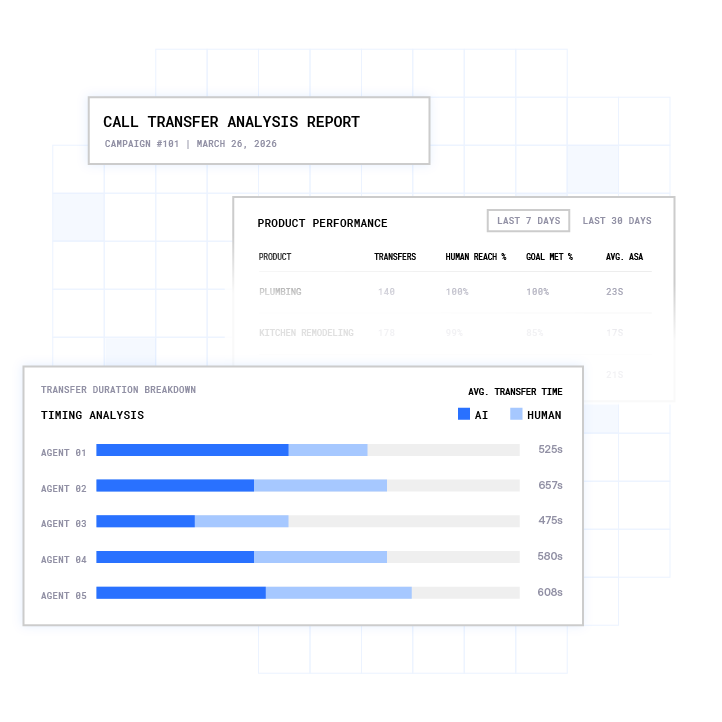
How Plura Targets Core Contact Center Pain Points
Slow response and low contact rates. Manual SDR (Sales Development Representative) queues and time-zone gaps produce the multi-day delays described earlier. Plura’s AI agents respond in under five seconds across voice, SMS, RCS, and webchat, around the clock, on every channel, in parallel. The dialer uses stateful conversion signals such as historical answer rates and prior negotiation outcomes to prioritize contacts most likely to convert on each dial cycle.
Fragmented channels. Most AI voice and SMS tools are separate products from separate vendors with separate memories. A contact who texted at 9 a.m. often has to re-explain themselves when the call comes at noon. Plura’s AI Voice, AI SMS, AI RCS, and AI Webchat all share a single Stateful Conversation Database. Every interaction is keyed to the customer by phone, email, or ID, and every channel inherits the full memory of every prior touchpoint.
Rising labor costs. A 15-agent operation paying $20 per hour with standard taxes, benefits, and commissions at 40% talk utilization costs approximately $60,000 per month to operate, per the illustrative scenario at Plura’s cost calculator. Replacing that team with Plura at $15 per hour, 100% talk utilization, and six Plura agents doing the work of 15 humans drops the monthly cost to $14,400.3 That shift creates a 30-day saving of $45,600, which stacks to $547,200 over 12 months. The total cost of ownership with Plura runs $300,000–$700,000 per year, replacing the $4M–$7M traditional contact-center cost structure on equivalent volume. Leaders can walk through the cost model for their own operation in a personalized demo session.
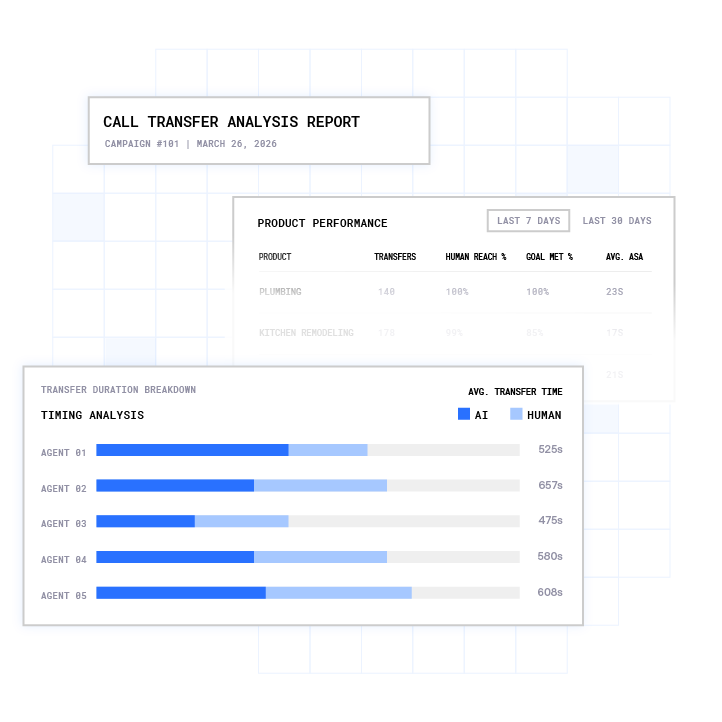
Inconsistent quality. Human agents drift from scripts over time, and this drift compounds. Day-one quality rarely matches day-ninety quality as agents develop their own shortcuts and interpretations. Plura’s AI follows approved conversation workflows exactly, with no script drift, no freelancing, and no quality cliff. Every call is logged to the Stateful Conversation Database and analyzed by Plura’s AI Conversation Intelligence layer, which surfaces objection patterns and conversion gaps for continuous workflow tuning.
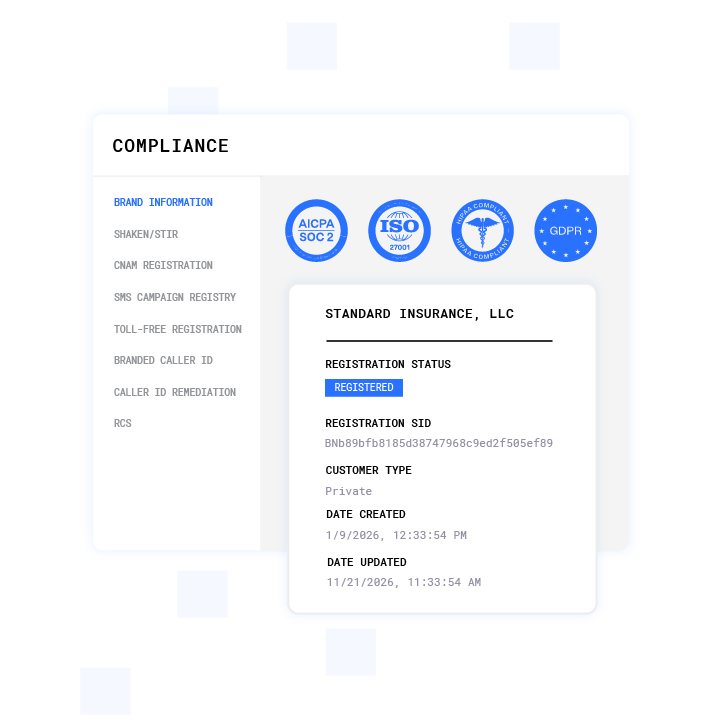
Compliance complexity. TCPA, DNC, HIPAA (Health Insurance Portability and Accountability Act), SOC 2 (System and Organization Controls 2), CAN-SPAM (Controlling the Assault of Non-Solicited Pornography And Marketing Act), and 50+ state rule sets create a compliance surface that many platforms treat as a bolt-on. Plura’s compliance engine runs as a first-class platform layer. Every outbound contact is checked against federal and state DNC registries in real time before dial, consent records are timestamped and immutable, and quiet-hours rules are enforced automatically through time-zone detection. Customers are responsible for their own regulatory obligations, and Plura supports compliance efforts. Operators should consult qualified counsel on their specific obligations under applicable law.
Regulatory and Compliance Realities in 2026
Three regulatory frameworks define much of the compliance surface for high-volume outbound dialing in 2026.
The TCPA (47 CFR § 64.1200) governs automated outbound calling to wireless and residential numbers. Under FCC rules implementing the TCPA, AI-generated voice calls are described as prohibited unless the consumer has provided prior agreement to receive them or the caller qualifies for an exemption. Operators should consult qualified counsel on their specific TCPA obligations.
The FCC NPRM under CG Docket No. 26-52 proposes capping offshore customer-service calls at 30% and restricting offshore handling of sensitive consumer data such as passwords, multi-factor authentication codes, Social Security numbers, banking data, and card data. Companion legislation includes the Keep Call Centers in America Act (S.2495) and the Foreign Robocall Elimination Act (S.2666).
State onshoring laws add a parallel compliance layer. New York’s Call Center Jobs Act carries penalties up to $10,000 per day. New Jersey, Connecticut, Missouri, and Florida have enacted or proposed statutes that restrict offshore handling of medical, financial, and consumer data. Every offshore contract a covered entity holds now represents a potential compliance liability within this framework.
Plura runs on 100% U.S. infrastructure by architecture, so voice origination, model hosting, data storage, and call recording all sit on domestic infrastructure. This structure reflects the design of the platform rather than a contractual promise. Plura supports customer compliance efforts across TCPA, DNC, HIPAA, SOC 2, ISO certification, GDPR (General Data Protection Regulation), STIR/SHAKEN caller-ID verification, and 50+ state rule sets. Customers remain responsible for their own certifications and regulatory obligations.
Comparing Dialer and Outsourcing Models for 2026
Traditional predictive dialers use static pacing algorithms and route calls through third-party CPaaS (Communications Platform as a Service) providers. Because they do not own the carrier, they cannot issue branded caller ID at the carrier level and must address compliance as a configuration layer rather than a platform-native control. This architectural dependency also creates predictable limitations, so these dialers remain constrained by dropped calls, compliance gaps, and limited ability to personalize at scale.
Power dialers dial one number per available agent sequentially. Power dialers avoid dropped-call scenarios because they only connect calls when an agent is available, which keeps abandoned call rates near zero. The trade-off is throughput, so power dialers fit smaller teams and high-value B2B outreach where compliance risk tolerance is low and personalization matters more than raw volume. They do not support the multi-line pacing that high-volume outbound operations require.
Twilio-based AI tools are API resellers that wrap third-party telecom infrastructure. Building a production-ready AI voice agent on Twilio APIs typically takes 6 to 12 months and costs $300,000 to $500,000+ in first-year engineering and infrastructure. These tools do not own the carrier, cannot issue branded caller ID at the carrier level, and inherit Twilio’s caller-ID reputation rather than their own. Synthflow, for example, depends on Twilio and operates as a software layer without a carrier license, and it does not include an AI predictive dialer.4 Vapi is developer-first, ships API documentation rather than a managed onboarding, and leaves the customer responsible for telecom integration, compliance configuration, and conversation design.4
Offshore BPOs (Business Process Outsourcers) solved the cost problem for two decades through wage arbitrage. That model now faces pressure from the FCC NPRM, companion federal legislation, and state onshoring laws described above. The $400 billion offshore BPO industry, concentrated in the Philippines, India, and Latin America, now carries regulatory exposure that sits on the balance sheet of every covered entity that holds an offshore contract.
Unlike API resellers, Plura’s carrier ownership described earlier means voice never routes through third-party CPaaS providers. Plura’s built-in predictive dialer includes list management, dynamic pacing, timezone logic, answer rate optimization, and compliance controls, features that Vapi and Synthflow do not offer natively. Integration with the Number Verifier layer improves outbound call connection rates by up to 45% through built-in spam prevention. Leaders can see the carrier stack handle real calls in a live demonstration.
Frequently Asked Questions
How does Plura’s AI Predictive Dialer differ from a traditional predictive dialer?
Traditional predictive dialers use static pacing algorithms and route calls through third-party telecom providers. Plura’s AI Predictive Dialer runs on Plura’s own FCC-licensed audio bridging carrier, issues branded caller ID at the carrier level, and uses machine-learning pacing that adjusts in real time based on historical answer rates, prior conversation outcomes, and current campaign performance. Every dial also inherits the full context of prior voice, SMS, RCS, and webchat interactions from Plura’s Stateful Conversation Database, so the AI agent that calls a lead at noon already knows what was said in the text thread at 9 a.m. Traditional dialers have no equivalent cross-channel memory layer.
What compliance frameworks does Plura support for outbound dialing?
Plura supports compliance efforts across TCPA, DNC, HIPAA, SOC 2, ISO certification, GDPR, STIR/SHAKEN caller-ID verification, and 50+ state rule sets.1 The compliance engine described earlier operates across these frameworks with real-time enforcement and audit-ready reporting. The compliance dashboard exports audit-ready reports in one click. Customers remain responsible for their own regulatory obligations and should consult qualified counsel on their specific requirements under applicable law. Plura provides the infrastructure, and compliance posture downstream of that remains the customer’s responsibility.
What channels does Plura’s AI Predictive Dialer coordinate with?
The AI Predictive Dialer is one of four channels, alongside AI SMS, AI RCS, and AI Webchat, that all share Plura’s Stateful Conversation Database. A contact who received an SMS qualification flow, replied via webchat, and is now being called by the predictive dialer is treated as a single continuous conversation. The dialer reads prior offer history, objection records, and qualification status before initiating each call. This cross-channel stateful memory is a platform-native capability, not an integration between separate products.
How does Plura handle spam labeling and caller ID reputation?
Spam labels sit at the carrier level and require a carrier-level solution. Because Plura is its own FCC-licensed carrier, it issues branded caller ID directly, so calls present with the company’s name and the reason for the call rather than “Spam Likely” or an unfamiliar number. STIR/SHAKEN authentication runs on every outbound call. Plura’s AI also communicates with Apple’s iOS 26 call-screening layer, so calls that would otherwise be intercepted before ringing through can present a recognizable identity to the recipient. Twilio-based competitors inherit Twilio’s caller-ID reputation rather than their own, which limits their ability to address spam labels at the carrier level.
What does deployment look like, and what is the contract structure?
Deployment typically runs days to weeks depending on conversation complexity. A simple inbound qualification flow is built in days, while a complex multi-step intake runs closer to one to two months. Plura’s onboarding sequence covers a discovery audit, intake of sample calls and existing scripts, an overnight conversation mockup build, a review and iteration session, engineering build of the production workflow, a pilot test on a subset of real calls, and full go-live. Pricing runs across three tiers, Multi ($5,000/month), Agency ($7,500/month), and Enterprise (custom), all on annual contracts billed monthly, with a 90-day opt-out window if the deployment is not delivering, per plura.ai/pricing.
Conclusion: Deciding Whether Plura Fits Your Operation
The core problem for high-volume operators in 2026 is structural. Low connect rates driven by spam labeling and manual dialing limits, rising labor costs that scale linearly with volume, fragmented channels that force contacts to repeat themselves, and an expanding compliance surface all strain traditional models. Traditional predictive dialers address throughput but not compliance or cross-channel context. Power dialers address compliance but not throughput. Twilio-based AI tools do not address these issues at the carrier level. Offshore BPOs address cost but now carry regulatory exposure under the FCC NPRM and state onshoring laws.
The evaluation criteria that matter for a 2026 deployment are clear. Leaders should examine carrier ownership, real-time compliance controls, stateful cross-channel memory, and U.S. infrastructure. Carrier ownership asks whether the platform holds its own FCC license or rents from a CPaaS. Real-time compliance controls asks whether DNC scrubbing and consent logging are enforced before each dial or audited after. Stateful cross-channel memory asks whether the dialer knows what happened on SMS and webchat before it calls. U.S. infrastructure asks whether voice origination, model hosting, and data storage are domestic by architecture rather than by promise.
Plura is built to meet all four criteria. Every annual contract includes a 90-day opt-out window. Operators can request a demo to see the carrier stack, the stateful dialer, and the compliance engine running on a live call flow built for their vertical.
1 Plura AI maintains SOC 2, HIPAA, ISO, and GDPR posture as part of its platform infrastructure. References to compliance frameworks in this article describe Plura’s platform capabilities and do not constitute a guarantee that any customer using Plura will themselves be compliant with applicable laws or standards. Customers remain solely responsible for their own regulatory obligations, certifications, consent management, recordkeeping, and the claims they make to their own end users. Consult qualified legal counsel for guidance specific to your use case.
2 This article describes regulatory frameworks at a general level and does not constitute legal advice. Laws and regulations vary by jurisdiction, change over time, and apply differently depending on facts and circumstances. Readers should consult qualified legal counsel before making compliance decisions.
3 Performance figures, customer outcomes, and industry statistics referenced in this article are drawn from cited third-party sources or Plura customer case studies. Individual results vary based on implementation, use case, industry, audience, and execution. Past or aggregate performance is not a guarantee of future results.
4 References to third-party products, services, companies, or research are made for informational and comparative purposes only. Plura AI is not affiliated with, endorsed by, or sponsored by any third party named in this article unless explicitly stated. Trademarks and product names referenced remain the property of their respective owners.
This article is provided for informational purposes only and reflects Plura AI’s understanding at the time of publication. Product capabilities, integrations, and specifications are subject to change. For the most current information, visit plura.ai.
This article was produced with the assistance of AI tools and reviewed by Plura AI prior to publication.