
Written by: Matt Beucler, CEO, Plura AI
Key Takeaways for AI Receptionist Compliance
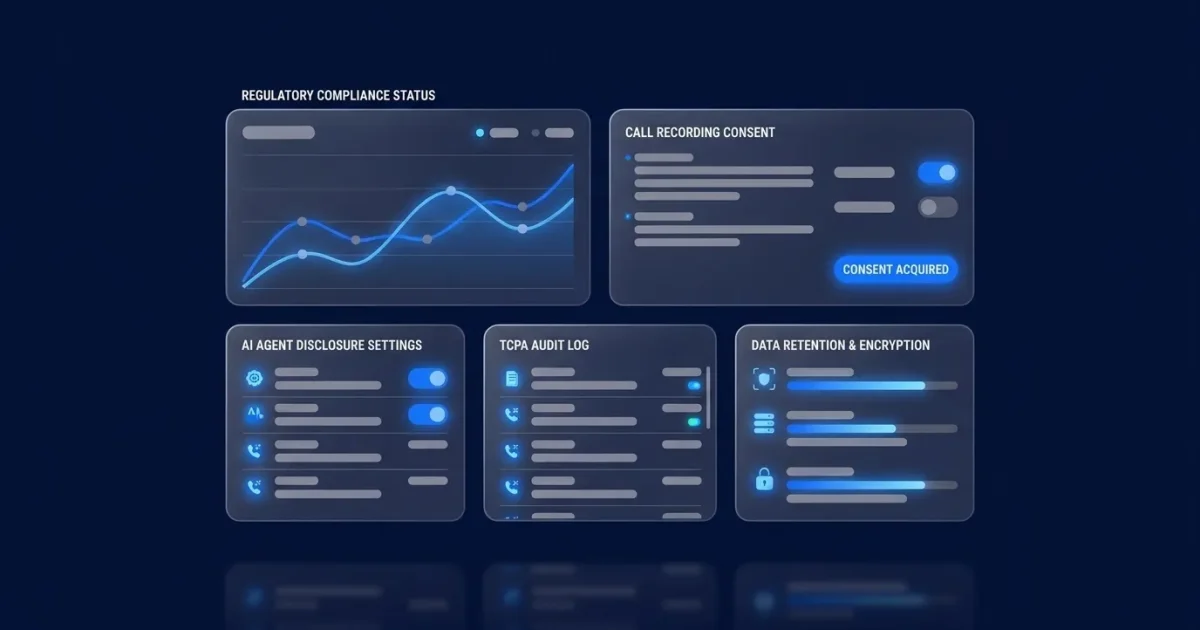
- AI receptionist compliance in 2026 depends on upfront disclosure, TCPA consent management, HIPAA safeguards, state call-recording consent, and SHAKEN/STIR caller ID verification.
- High-volume operators should evaluate platforms on speed, channel coverage, compliance posture, integration depth, and operational fit before deployment.
- End-to-end AI platforms that own the carrier stack enforce compliance at origination, while CPaaS-wrapper platforms inherit third-party carrier risks.
- Effective practices include shared consent across channels, real-time DNC scrubbing, auditable consent ledgers, human-in-the-loop escalation, and honoring opt-outs within regulatory windows.
- Plura AI delivers carrier-grade controls on 100% U.S. infrastructure; see it in a live environment.
Executive Summary and Compliance Framework
Voice AI handled 19% of inbound contact-center volume in 2026, up from 6% in 2024, according to aggregated data from Zendesk, Gartner, and Salesforce.3,4 That growth intersects with a tightening regulatory perimeter that includes the FCC’s February 2024 Declaratory Ruling, which classifies AI-generated voices as “artificial” under the TCPA, a proposed federal AI-disclosure NPRM still unfinalized as of August 2026, and a 50-state mosaic of call-recording, data-privacy, and onshoring obligations.2
High-volume operators evaluating an AI receptionist platform should apply a five-criteria lens before deployment:
- Speed: Time from inbound trigger to first AI response, and from lead submission to outbound contact.
- Channel coverage: Whether voice, SMS, RCS, and webchat share a single consent and memory layer.
- Compliance posture: Whether TCPA, DNC, HIPAA, SHAKEN/STIR, and state rules are enforced at the carrier layer or bolted on as a third-party add-on.
- Integration depth: Whether the platform connects to existing CRM, calendar, and archiving systems without creating data-residency gaps.
- Operational fit: Whether the vendor provides continuous conversation engineering or hands off the build and exits.
Industry Landscape for High-Volume AI Reception
Four categories compete for high-volume operator business, and each carries a distinct compliance profile.
Human-only onshore contact centers carry the highest labor cost and the most predictable compliance posture, but linear cost scaling makes them economically unsustainable at peak volume. Plura’s total cost of ownership of $300,000 to $700,000 per year replaces the traditional $4 million to $7 million contact-center cost structure on equivalent volume, per Plura’s executive communications strategy guide.3
While onshore centers face cost challenges, offshore BPOs face compounding regulatory pressure. The FCC’s Notice of Proposed Rulemaking (CG Docket No. 26-52) proposes capping offshore customer-service calls at 30% and prohibiting offshore handling of sensitive consumer data. Companion legislation including the Keep Call Centers in America Act (S.2495) and the Foreign Robocall Elimination Act (S.2666) extends the federal perimeter. State laws in New York, New Jersey, Connecticut, Missouri, and Florida already restrict offshore handling of medical, financial, and consumer data.
CPaaS-wrapper AI platforms route voice through third-party carriers such as Twilio, inheriting that carrier’s caller ID reputation and compliance posture rather than enforcing controls at origination.4 Most cannot issue branded caller ID, enforce real-time DNC scrubbing, or withstand the FCC’s proposed foreign-infrastructure prohibitions.
End-to-end AI platforms that own the carrier stack now represent the emerging standard for regulated operators. Plura operates as an FCC-licensed audio bridging carrier, so SHAKEN/STIR authentication, branded caller ID, and real-time DNC scrubbing are enforced before a call originates rather than applied as downstream filters.
Strategic Compliance Trade-offs for AI Reception
Inbound and outbound compliance exposure differ materially. Inbound AI receptionist deployments carry lower TCPA exposure because the called party initiated contact. The TCPA does not apply its strictest consent tier to calls the consumer places, though state bot-disclosure laws such as California’s may still apply. Outbound AI voice calls to cell phones fall under FCC 24-17, the February 2024 ruling described earlier, which treats AI-generated voices as “artificial” and requires prior express consent for informational calls and prior express written consent for telemarketing.2
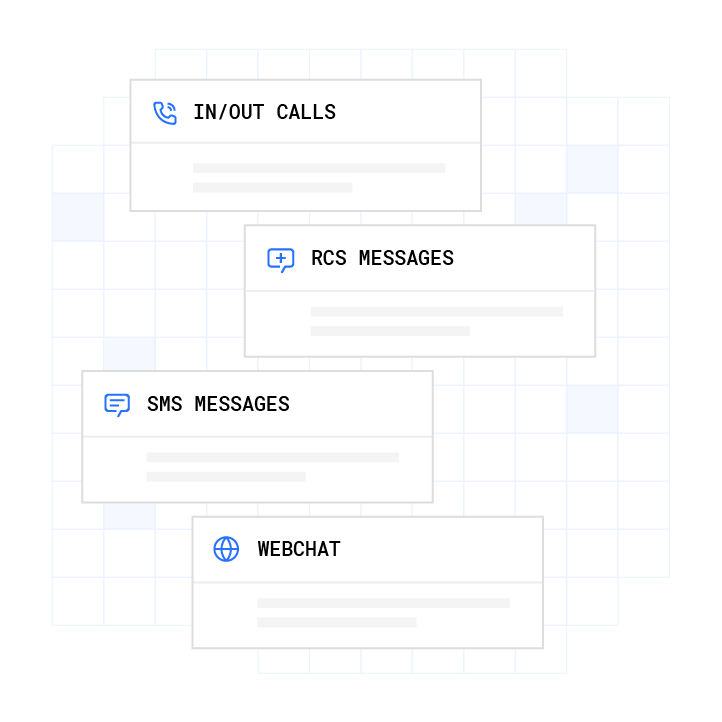
Channel orchestration increases consent-ledger complexity. When a single customer interaction spans voice, SMS, and webchat, consent records must be queryable in real time at each contact initiation. Real-time DNC scrubbing of the National Registry and state lists must occur at each call initiation rather than via nightly batch jobs, because numbers are added daily. Platforms that silo consent records by channel create audit gaps that surface during litigation discovery.
Auditability functions as a procurement requirement. FINRA’s 2026 Annual Regulatory Oversight Report states that firms remain responsible for communications regardless of whether they are generated by humans or AI. Financial services, healthcare, and legal operators must confirm that every AI-generated interaction produces a tamper-evident audit log retained for the period required by applicable regulations.
Book a live demo with Plura to see how carrier-layer compliance enforcement works in a high-volume environment.
Current Best Practices in AI-Powered Customer Communications
These practices reflect the 2026 state of enterprise AI receptionist deployments across regulated verticals. Operators should review each with qualified counsel before implementation.
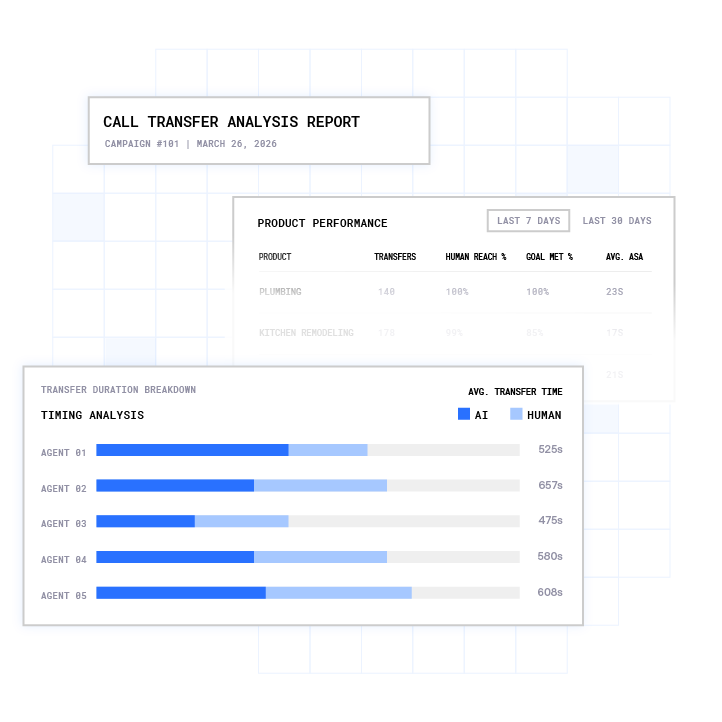
- Shared context across channels: A consent record obtained on a web form should be readable by the voice agent, the SMS agent, and the webchat agent at the moment of contact. Plura’s Stateful Conversation Database keys every interaction to a customer token so consent status, prior offers, and opt-out flags are available on every channel without re-querying a separate system.
- Consent management at the contact level: A defensible TCPA proof-of-consent record requires the disclosure language as rendered, seller identification, consumer affirmative action, an immutable timestamp, and chain of custody tying the record to the phone number. Consent records should be retained for five years to cover the federal TCPA statute of limitations plus a buffer.
- Escalation paths with human-in-the-loop design: Lower-risk conversational AI architectures are consent-first and human-finished. The AI qualifies leads and confirms intent, logs the full interaction, and transfers to a briefed human agent for regulated decisions rather than operating as an unsupervised autodialer.
- Performance monitoring with compliance metrics: Track the percentage of calls resolved without collecting sensitive details, number of transcript views and exports by user, misrouted calls, and average time to human escalation for sensitive calls. Plura’s conversation intelligence layer surfaces these metrics automatically.
- Opt-out honoring within regulatory windows: Effective April 4, 2024, FCC amendments allow consumers to revoke consent in any reasonable manner, including words such as “stop,” “quit,” “cancel,” or “unsubscribe,” and require callers to honor revocation requests within 10 business days.
Implementation Readiness for AI Reception
Before deploying an AI receptionist, operators should assess readiness across six dimensions.
- Interaction volume: A practical floor of at least 500 daily customer interactions or $5,000 per month in paid-media spend is needed to generate ROI that justifies the platform depth.
- Process maturity: Existing call scripts, SOPs, and escalation paths should be documented before AI workflow design begins. The AI enforces the process; it does not create one.
- Data quality: Consent records, DNC flags, and customer tokens must be clean and queryable before the first outbound contact. Flawed consent data does not just create operational friction; it creates per-contact TCPA exposure that persists even when lists are scrubbed downstream.
- Compliance requirements: Identify every regulated vertical the deployment touches, every state from which callers may originate, and whether PHI will flow through the system. Each answer changes the vendor evaluation criteria.
- Internal ownership: Designate a single executive owner with authority to approve or block AI tool deployments based on a published data classification schema, per AILD’s 2026 AI Data Privacy Checklist.
- Integration needs: Map every system the AI must read from or write to, including CRM, calendar, EHR, archiving platform, and payment processor. Plura supports 50+ integrations across these categories.
AI Receptionist Regulatory Compliance Checklist
This eight-step checklist describes the compliance architecture operators should confirm before and after deployment. Consult qualified counsel to apply these steps to your specific regulatory context.
- Classify the call type and consent tier required. Determine whether each use case is inbound or outbound, informational or telemarketing, and whether PHI will be processed. FCC 24-17, the February 2024 ruling referenced earlier, treats AI-generated voices as “artificial” under the TCPA and triggers the strictest consent tier described in the strategic considerations section for outbound marketing calls to cell phones.
- Build an auditable consent ledger. Capture prior express written consent with the six elements described in the best practices section, per 47 CFR §64.1200(a)(2) and §64.1200(f)(9). Plura’s compliance engine stores consent records as timestamped, immutable entries that are exportable in one click.
- Implement real-time DNC scrubbing at dial initiation. Scrub outbound lists against the National Do Not Call Registry and applicable state DNC lists at each call initiation, not via nightly batch jobs. Plura integrates with The Blacklist Alliance’s TCPA Litigation Firewall for real-time scrubbing and litigation protection. Maintain an internal do-not-call list and honor all opt-out requests immediately.
- Enforce calling-window restrictions by recipient time zone. Federal TCPA rules restrict telemarketing calls to 8:00 AM to 9:00 PM in the called party’s local time zone, and some states impose stricter windows. Plura enforces quiet-hours rules automatically through time-zone detection on the contact record.
- Configure SHAKEN/STIR authentication and branded caller ID. A-level STIR/SHAKEN attestation, where the carrier verifies the number is assigned to the caller, improves call completion rates compared to B-level attestation typically provided by CPaaS platforms using shared number pools. Plura issues branded caller ID directly through its FCC-licensed carrier, not through a third-party reseller.
- Apply state call-recording consent disclosures before recording starts. Nine states require all-party consent for every call and conversation, while five states split the rule by medium. Configure the AI to deliver a recording disclosure within the first seconds of every call, triggered automatically by the recipient’s state. See the state-by-state table below for specific statutes and penalties.
- Execute a Business Associate Agreement for any PHI-touching deployment. Under 45 CFR Part 164, a signed BAA is typically used before any PHI is processed by an AI vendor. The BAA usually defines permitted uses and disclosures, safeguards, breach notification timelines, subcontractor obligations, and return or destruction of PHI upon contract termination. Plura supports HIPAA-aligned encryption, access controls, and audit logging for PHI-touching deployments.
- Register A2P 10DLC for SMS channels and review vendor indemnification terms. Unregistered 10-digit numbers are filtered or blocked at the network level by AT&T, T-Mobile, and Verizon regardless of TCPA posture, per the Sledgehammer Intelligence AI receptionist compliance guide. Confirm A2P 10DLC brand and campaign registration through The Campaign Registry, and review vendor terms for TCPA indemnification language that may shift liability to the customer.
State Call-Recording Consent Requirements
The table below describes the consent framework and key statutory references for call recording across U.S. states as of August 2026. Cross-state calls generally follow the stricter state’s law. Consult qualified counsel for state-specific application to your deployment.
| State | Consent Standard | Key Statute | Notable Penalty |
|---|---|---|---|
| California | All-party | Cal. Penal Code § 632 | Up to $5,000 civil damages per violation |
| Florida | All-party | Fla. Stat. § 934.03 | Third-degree felony; up to $5,000 fine |
| Illinois | All-party | 720 ILCS 5/14 | Civil and criminal exposure; BIPA adds $1,000 to $5,000 per voiceprint |
| Pennsylvania | All-party | 18 Pa.C.S. § 5703 | Private right of action for unauthorized recordings |
| Washington | All-party | RCW 9.73.030 | Civil and criminal liability; broad “private conversation” definition |
| Maryland | All-party | Md. Code, Cts. & Jud. Proc. § 10-402 | Civil damages; criminal felony exposure |
| Massachusetts | All-party | Mass. Gen. Laws ch. 272, § 99 | Civil and criminal penalties |
| Connecticut | All-party (phone) | Conn. Gen. Stat. § 52-570d | Civil damages |
| Montana | All-party | Mont. Code Ann. § 45-8-213 | Criminal misdemeanor |
| Nevada | All-party (phone) | Nev. Rev. Stat. § 200.620 | Civil and criminal exposure |
| New Hampshire | All-party | N.H. Rev. Stat. § 570-A:2 | Criminal misdemeanor |
| Delaware | All-party | Del. Code tit. 11, § 1335 | Criminal and civil exposure |
| Oregon | All-party (electronic) | Or. Rev. Stat. § 165.540 | Civil and criminal penalties |
| All other states | One-party | 18 U.S.C. § 2511 (federal floor) | Federal Wiretap Act penalties apply |
Compliance Architecture for Carrier-Layer Enforcement
Carrier-layer compliance enforcement differs structurally from compliance bolted on after the fact. The architecture Plura operates follows a layered model.
At the origination layer, every outbound call authenticates through SHAKEN/STIR before leaving the network. Plura’s FCC-licensed carrier issues A-level attestation, confirming the number is assigned to the calling entity. Branded caller ID is applied at origination, not through a third-party overlay.
At the consent layer, a real-time consent ledger is queried before each contact attempt. The ledger validates consent purpose against call purpose, checks consent freshness, applies state-specific consent and calling-window requirements, and scrubs against federal and state DNC registries. Non-compliant contacts are blocked before the first dial attempt. Plura’s compliance framework includes integration with Blacklist Alliance for DNC screening and Number Verifier for caller ID reputation.
At the recording layer, state-specific disclosure scripts trigger automatically based on the recipient’s state and default to all-party consent language for cross-state calls. Call audio, transcripts, and metadata are encrypted at rest and in transit, with role-based access controls and audit logging of every PHI interaction.
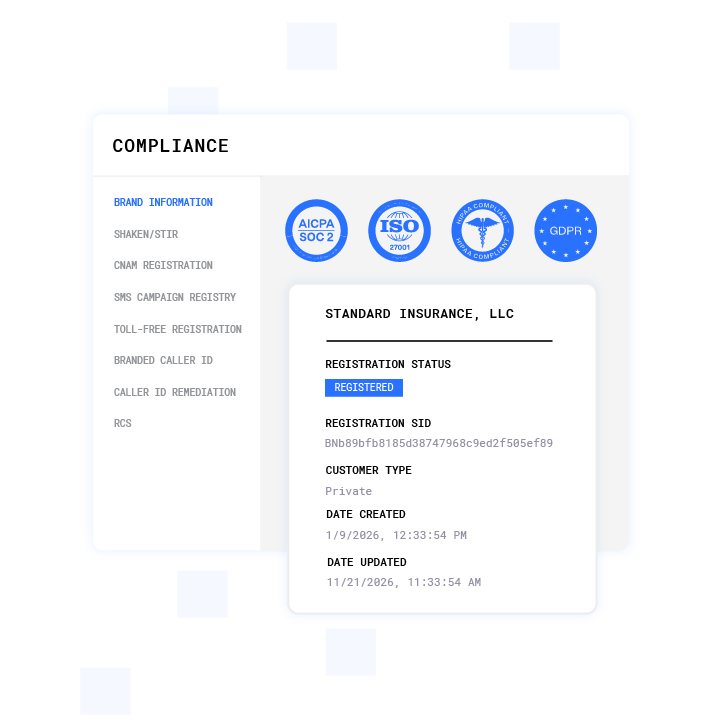
At the audit layer, every interaction generates a tamper-evident log retained for the period required by applicable regulations. The compliance dashboard exports audit-ready reports in one click for legal review, carrier requirements, or regulatory inquiries. Plura holds SOC 2 and ISO certification and supports HIPAA-aligned deployments.1
Common Compliance Pitfalls in AI Reception
- Assuming inbound-only deployments carry no TCPA exposure. State bot-disclosure laws, call-recording consent requirements, and HIPAA obligations can apply to inbound AI receptionist deployments regardless of who initiated the call. Teams should review state-specific requirements with counsel before go-live.
- Using batch DNC scrubbing instead of real-time scrubbing. Numbers are added to the National DNC Registry daily. Batch processes miss recent registrations and create per-call exposure. Real-time scrubbing at dial initiation now functions as the operational standard for high-volume environments.
- Deploying SMS without A2P 10DLC registration. Unregistered campaigns are filtered at the carrier level before TCPA posture is even considered. Register brand and campaign through The Campaign Registry before the first outbound SMS.
- Treating a BAA as optional for healthcare deployments. Under 45 CFR § 164.308, BAAs are commonly used when PHI flows through a vendor system. Without a BAA, calls involving PHI can create HIPAA enforcement risk with the HHS Office for Civil Rights.
- Selecting a CPaaS-wrapper platform for regulated deployments. Platforms that route voice through third-party carriers inherit that carrier’s compliance posture. Branded caller ID, real-time DNC scrubbing, and SHAKEN/STIR attestation cannot be enforced at the origination layer by a platform that does not own the carrier.
- Failing to configure opt-out honoring across all channels. An opt-out received on SMS must suppress outbound voice and RCS contacts to the same number. Siloed channel architectures create opt-out gaps that generate per-contact exposure.
Book a live demo to walk through how carrier-layer enforcement closes these gaps before the first call goes out.
Frequently Asked Questions
Does an AI receptionist need to disclose that it is an AI at the start of every call?
As of August 2026, federal law does not impose a universal disclosure requirement for every AI voice call. The FCC’s September 2024 Notice of Proposed Rulemaking (FCC 24-84) proposed mandatory AI-use disclosure at the time of consent and at the start of each call, but that NPRM had not been finalized into a binding rule as of this writing. Several states impose their own disclosure obligations for AI or automated systems in specific contexts, including California for sales calls and Colorado under its 2026 AI Act for high-risk systems. Many enterprise compliance programs use a brief disclosure within the first ten seconds of the call that identifies the entity and notes that the interaction is automated. Operators should confirm the specific disclosure obligations applicable to their states and use cases with qualified counsel.
What is the difference between one-party and two-party consent for call recording, and how does it affect AI receptionist deployments?
Federal law under the Wiretap Act (18 U.S.C. § 2511) establishes a one-party consent baseline, meaning any participant in a call may record it without notifying the other parties. Thirteen states impose stricter all-party consent requirements, meaning every person on the call must be informed and must consent before recording begins. For AI receptionist deployments, this means the recording disclosure should trigger automatically based on the recipient’s state, not the caller’s location. For cross-state calls, courts generally apply the stricter state’s law. Many high-volume operators default to all-party consent disclosure on every call, regardless of the recipient’s state, to reduce multistate risk. Teams should consult qualified counsel to confirm the specific statutes applicable to their deployment.
When is a Business Associate Agreement required for an AI receptionist in healthcare?
A BAA is typically used under HIPAA when an AI receptionist vendor creates, receives, maintains, or transmits protected health information on behalf of a covered entity such as a medical practice, dental office, or mental health provider. PHI includes clinical data and also combinations of identifying information with health-related facts, such as a caller’s name combined with the reason for their appointment. If the AI receptionist workflow is configured to handle only administrative tasks such as hours, directions, and scheduling confirmations without capturing clinical details, the PHI exposure may be more limited, but the configuration should be verified against actual call flows rather than assumed. The BAA usually defines permitted uses and disclosures, safeguards, breach notification timelines, and subcontractor obligations. Operators should confirm BAA requirements with qualified HIPAA counsel before any patient-facing deployment goes live.
How does Plura support compliance for high-volume outbound AI voice campaigns?
Plura supports compliance through several infrastructure-level controls rather than post-deployment overlays. Every outbound contact is checked against federal and state DNC registries in real time before dial, with non-compliant numbers blocked before the first attempt. Consent records are stored as timestamped, immutable entries that include the exact disclosure language, timestamp, consumer response, and device information used for TCPA defensibility. Quiet-hours rules enforce automatically through time-zone detection on the contact record, applying state and federal calling-window restrictions to every campaign. SHAKEN/STIR authentication runs on every outbound call through Plura’s FCC-licensed carrier, providing A-level attestation rather than the B-level attestation typical of CPaaS-wrapper platforms. The compliance dashboard exports audit-ready reports in one click. Plura holds SOC 2 and ISO certification and supports HIPAA-aligned deployments. Operators remain responsible for their own regulatory obligations and should confirm their specific compliance posture with qualified counsel.
What TCPA consent records must operators retain, and for how long?
A defensible TCPA proof-of-consent record requires the disclosure language as rendered, seller identification, consumer affirmative action, an immutable timestamp, and chain of custody tying the record to the phone number. Consent records should be retained for five years to cover the federal TCPA statute of limitations plus a buffer, and must be producible in response to a subpoena or regulatory inquiry. For SMS campaigns, A2P 10DLC registration through The Campaign Registry functions as a prerequisite to delivery, and consent records must be queryable in real time at each contact initiation. Operators should confirm state-specific retention requirements with qualified counsel, as some states impose longer retention periods or additional documentation obligations.
Conclusion and Next Steps for AI Reception Compliance
AI receptionist regulatory compliance in 2026 functions as a multi-layer engineering problem, not a paperwork exercise. The February 2024 FCC ruling that treats AI-generated voices as “artificial” under the TCPA, the proposed AI-disclosure NPRM, 13 all-party consent states, HIPAA’s BAA expectations for PHI-touching deployments, and the FCC’s proposed offshore restrictions collectively define a compliance architecture that works best when enforced at the carrier layer for high-volume operations.
The eight-step checklist in this guide covers the primary compliance dimensions: consent classification, auditable consent ledger construction, real-time DNC scrubbing, calling-window enforcement, SHAKEN/STIR authentication, state call-recording disclosure, BAA execution for healthcare, and A2P 10DLC registration for SMS. Each step requires qualified counsel to tailor it to your specific regulatory context, vertical, and deployment geography.
Plura’s carrier-grade infrastructure enforces these controls at origination rather than as downstream filters. 100% U.S. infrastructure by architecture reduces exposure under the FCC’s offshore NPRM. SOC 2, HIPAA-aligned, and ISO-certified infrastructure supports regulated-industry deployments.1 The AI receptionist and AI voice agent platform runs on Plura’s own FCC-licensed carrier, not a third-party CPaaS, which means branded caller ID, real-time DNC scrubbing, and SHAKEN/STIR operate as part of the platform, not as add-ons.
Run your numbers through Plura’s ROI calculator to compare projected savings against your current contact-center economics.
Review plans and rates side by side to find the tier that fits your interaction volume and compliance requirements.
Book a live demo to see the compliance architecture in a live environment before your next deployment decision.
1 Plura AI maintains SOC 2, HIPAA, ISO, and GDPR posture as part of its platform infrastructure. References to compliance frameworks in this article describe Plura’s platform capabilities and do not constitute a guarantee that any customer using Plura will themselves be compliant with applicable laws or standards. Customers remain solely responsible for their own regulatory obligations, certifications, consent management, recordkeeping, and the claims they make to their own end users. Consult qualified legal counsel for guidance specific to your use case.
2 This article describes regulatory frameworks at a general level and does not constitute legal advice. Laws and regulations vary by jurisdiction, change over time, and apply differently depending on facts and circumstances. Readers should consult qualified legal counsel before making compliance decisions.
3 Performance figures, customer outcomes, and industry statistics referenced in this article are drawn from cited third-party sources or Plura customer case studies. Individual results vary based on implementation, use case, industry, audience, and execution. Past or aggregate performance is not a guarantee of future results.
4 References to third-party products, services, companies, or research are made for informational and comparative purposes only. Plura AI is not affiliated with, endorsed by, or sponsored by any third party named in this article unless explicitly stated. Trademarks and product names referenced remain the property of their respective owners.
This article is provided for informational purposes only and reflects Plura AI’s understanding at the time of publication. Product capabilities, integrations, and specifications are subject to change. For the most current information, visit plura.ai.
This article was produced with the assistance of AI tools and reviewed by Plura AI prior to publication.