

Written by: Matt Beucler, CEO, Plura AI | Last updated: August 26, 2026
Key Takeaways for High-Volume Teams
- AI lead follow-up reaches new prospects in under 5 seconds, while human teams average 42 to 47 hours, which reshapes conversion outcomes.3
- Plura AI’s Stateful Conversation Database keeps full context during AI-to-human handoffs, so customers avoid repeating themselves and fewer leads drop.
- Plura operates its own FCC-licensed carrier and checks every outbound contact against DNC, TCPA, and 50+ state rule sets in real time before it leaves the network.1
- Replacing a 15-agent team with Plura reduces five-year total cost of ownership from $7 million to $700,000 while holding talk utilization at 100%.3
- Teams ready to combine sub-5-second AI speed with human empathy can start a conversation with Plura AI today.
Speed vs. Empathy in Lead Response
AI lead follow-up creates a structural speed advantage that human teams cannot match. Contacting a lead within 5 minutes makes them up to 100x more likely to connect than waiting 30 minutes, and responding within 60 seconds lifts conversions by 391%.3 Against those benchmarks, the average B2B company takes 42 to 47 hours to respond to a new lead, and only 23% of companies reach out within 5 minutes.
Human teams operate inside fixed shifts, queues, and fatigue. Contact centers allocate 60 to 70% of operating costs to agent labor, and annual agent turnover runs 35 to 45%, which creates ongoing gaps in coverage and consistency.
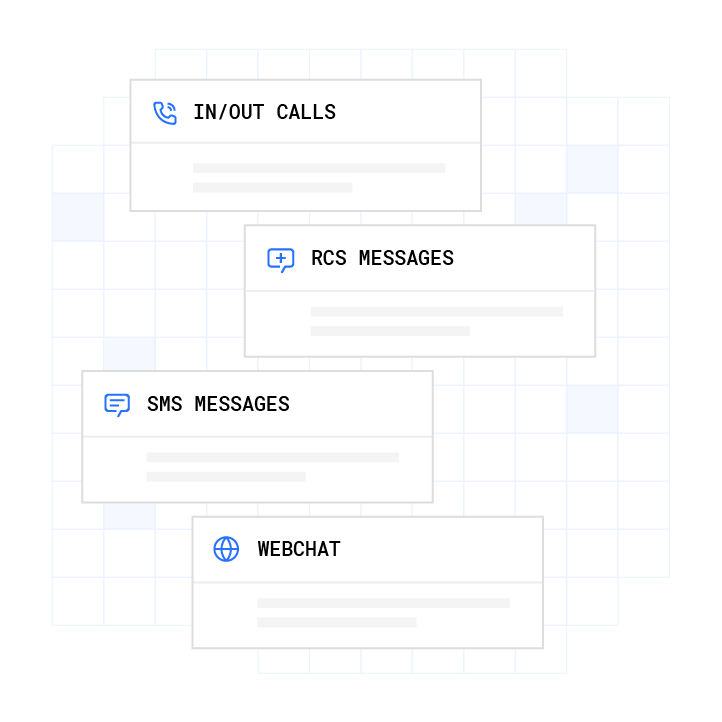
Plura’s AI voice agent and AI SMS platform contact leads in under 5 seconds across voice, SMS, RCS, and webchat, 24 hours a day. 78% of prospects buy from the first responder. Speed functions as the margin, not a secondary feature.
Human agents still hold the advantage in complex negotiation, emotional de-escalation, and high-stakes relationship conversations. The practical decision framework assigns AI to speed and volume, and assigns humans to judgment and empathy.
Stateful Handoffs That Protect Every Lead
Most hybrid AI systems lose leads at the handoff. When a conversation moves from AI to a human, context often disappears, the customer repeats details, and the conversion window closes. Plura addresses this with its Stateful Conversation Database, which ties every interaction to a customer token across voice, SMS, RCS, and AI webchat. A lead who texts at 9 a.m. appears as the same customer when the call happens at noon, and the human agent sees full prior context.
Effective handoffs transfer working state, not just a raw transcript. A structured briefing tells the agent what to do next, while a transcript only recounts what was said. Plura’s handoff workflow follows six clear steps:
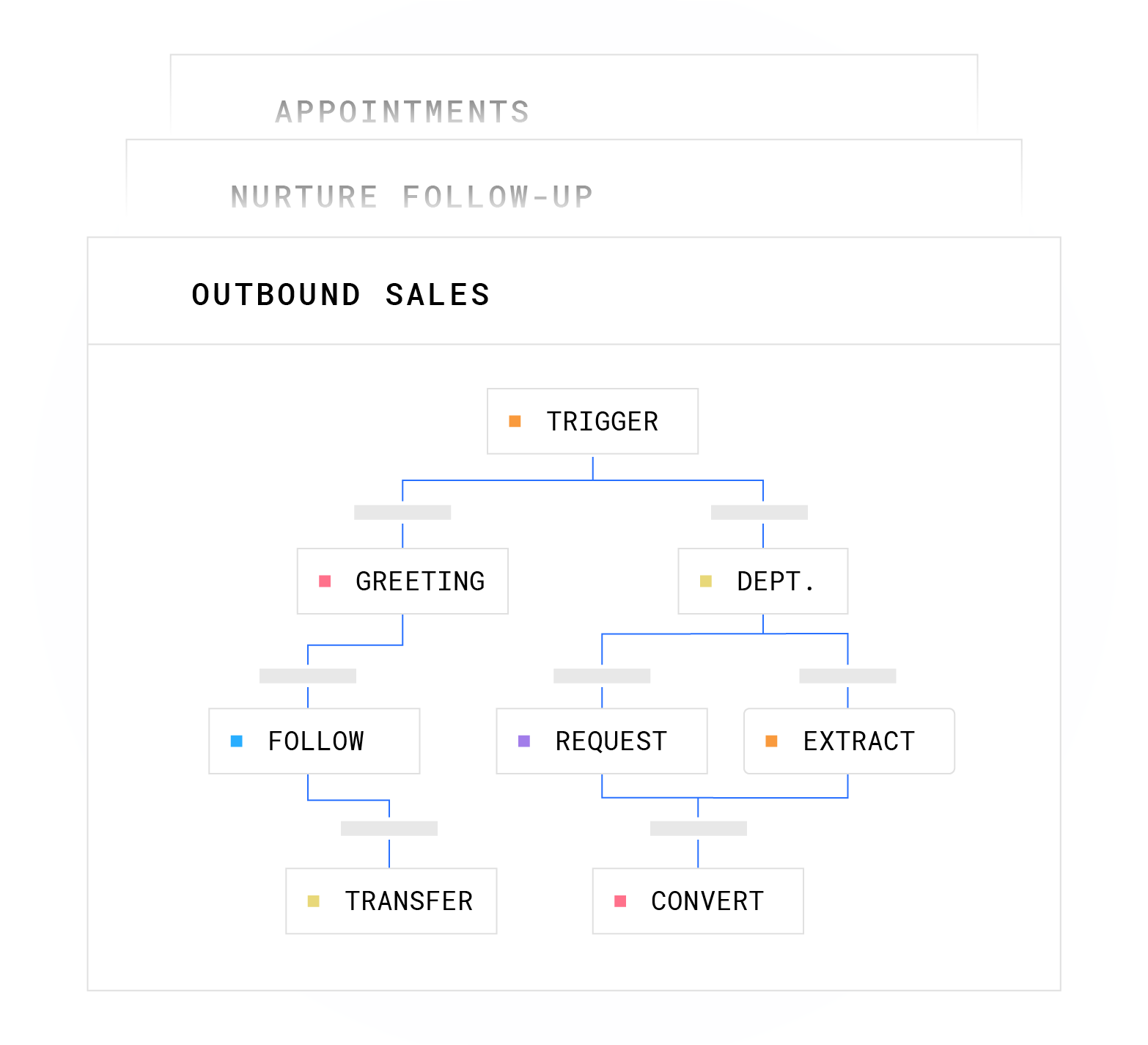
- AI detects an escalation trigger such as an explicit human request, a pricing or financing question, a sentiment threshold crossed, or a negotiation variable outside the defined BATNA floor and ceiling.
- AI pauses all active automated sequences for that contact immediately.
- The Stateful Conversation Database compiles a structured context card that includes conversation history, intent score, sentiment markers, offers made, objections raised, and qualification status.
- AI initiates a warm transfer and delivers a whisper message to the human agent before the customer connects, ensuring the agent never starts from scratch.
- The human agent receives the pre-populated context card in the Unified Inbox and picks up the conversation mid-thread instead of restarting discovery.
- Post-handoff outcome is logged back to the Stateful Conversation Database, which feeds future AI interactions with updated context and improves routing accuracy over time.
Five elements should transfer during any handoff: complete conversation transcripts with summaries, real-time CRM data, AI-generated intent and sentiment metadata, actions already attempted by the AI, and collected authentication data. Plura’s workflow delivers all five by default.
This stateful handoff structure prevents the context loss that often erodes 20 to 30% of qualified leads, which directly affects revenue and cost per acquisition. Run your numbers through Plura’s ROI calculator to quantify those savings in real time.
Carrier-Level Controls for High-Volume Compliance
Compliance in AI lead follow-up scales in complexity as volume grows. TCPA class action filings surged 95% year-over-year to 1,052 cases through mid-2025. At high volume, a single misconfigured campaign can create material exposure.
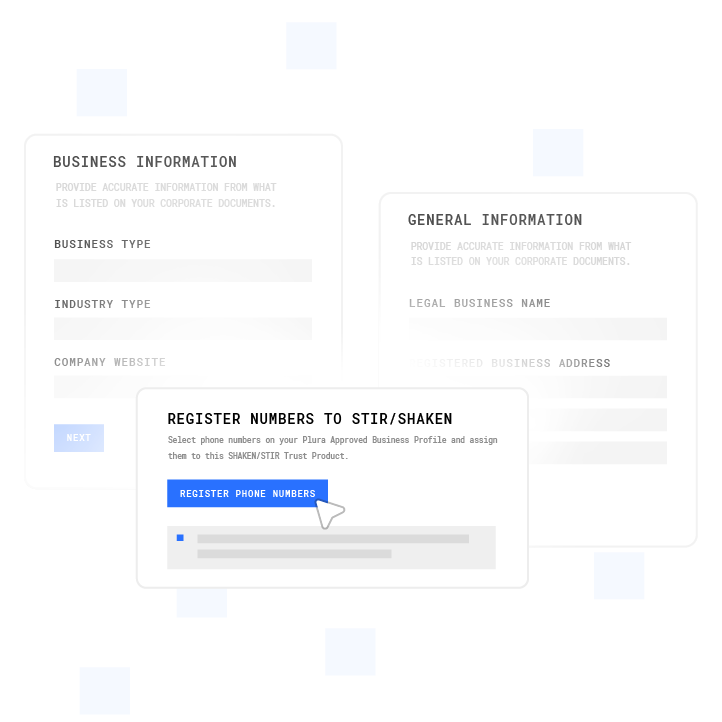
Many AI voice platforms bolt compliance on after the fact because they do not own the carrier stack. They route voice through a third-party CPaaS provider and inherit that vendor’s controls. Plura operates as its own FCC-licensed audio bridging carrier. Every outbound contact is checked against federal and state DNC registries in real time before dialing. Consent records are timestamped, immutable, and audit-ready. Quiet-hours rules apply automatically through time-zone detection, and STIR/SHAKEN caller-ID authentication runs on every outbound call.
Plura supports compliance with TCPA, DNC, HIPAA, SOC 2, and ISO standards, and applies 50+ state rule sets on every outbound contact.2 Customers remain responsible for their own regulatory obligations and certifications, while Plura provides infrastructure that supports those obligations. Full details are at plura.ai/products/compliance.
Economics for 15-Agent Teams and 100-Seat Centers
AI lead follow-up changes the cost structure of contact operations. Plura’s ROI calculator estimates monthly human agent costs at $60,000 for 15 agents working 2,400 total hours at $20 per hour, including 25% taxes, benefits, and commissions, at 40% talk utilization. The same 2,400 hours of talk time delivered by Plura costs $14,400 per month at 100% talk utilization using 6 AI agents.
| Metric | Human-Only Team | Plura AI Hybrid |
|---|---|---|
| Monthly cost (15-agent equivalent) | $60,000 | $14,400 |
| First-contact speed | 42 to 47 hours average | Under 5 seconds |
| Talk utilization rate | 40% (human average) | 100% |
| Annual agent turnover | 35 to 45% | None |
| 12-month savings | Baseline | $547,200 |
| 60-month savings | Baseline | $2,736,000 |
For a 100-seat contact center, traditional operations cost $4 million to $7 million annually, while AI-powered communications using platforms like Plura cost $300,000 to $700,000, which represents an 85 to 90% reduction. Even at the 15-agent scale in the table above, the 30-day savings of $45,600 typically exceed deployment costs, so the payback period often occurs within the first month.
Run your numbers through Plura’s ROI calculator to see your projected ROI in real time.
Deployment Patterns in Healthcare, Agencies, and Franchises
Deployment patterns vary by vertical, while the underlying economics stay consistent.
In healthcare, the conversational AI market is projected to grow substantially by 2026, driven by triage automation, appointment intake, and patient engagement.4 Plura’s healthcare deployments handle intake surveys, appointment confirmations, and eligibility routing, with HIPAA-aligned encryption and audit logging by default. Plura supports up to 40% improvement in no-shows through automated reminders across voice, SMS, and RCS.
For agencies, Plura enables lead contact within 60 seconds for every lead, compared to 1 to 4 hours in manual operations. Account manager capacity often expands from 5 to 8 clients to 15 to 20, and agency profit margins frequently move from a 15 to 25% baseline to 35 to 50%.
For franchise networks, Plura standardizes greeting, qualification, and SLA across every location, which closes the 3 to 5x performance gap between best and worst units. AI answers 100% of calls within two rings, and centralized dashboards track per-location metrics across the entire system.
Where Pure AI Struggles in Complex Negotiation
AI lead follow-up excels at volume, speed, and consistency, yet it does not handle every scenario equally well. AI cold calling often underperforms on rapport-led enterprise deals above $50K ARR, novel consultative discovery that requires unique question generation, and legally regulated calls where disclosure adds friction.
Plura’s workflow architecture accounts for these limits directly. Each conversation node carries BATNA guardrails, which define a floor and ceiling within which the AI can negotiate. When a customer response falls outside those parameters, the AI escalates. The warm-transfer mechanic passes full context to a U.S. human agent before the customer connects, so the agent enters with the negotiation history already in hand.
Companies augmenting human SDRs with AI often see more pipeline than those attempting full AI replacement, along with lower cost-per-meeting while maintaining pre-AI meeting-to-opportunity conversion rates. The hybrid model typically becomes the higher-performing configuration, with AI handling scale and humans handling nuance.
90-Day Opt-Out and Continuous Improvement
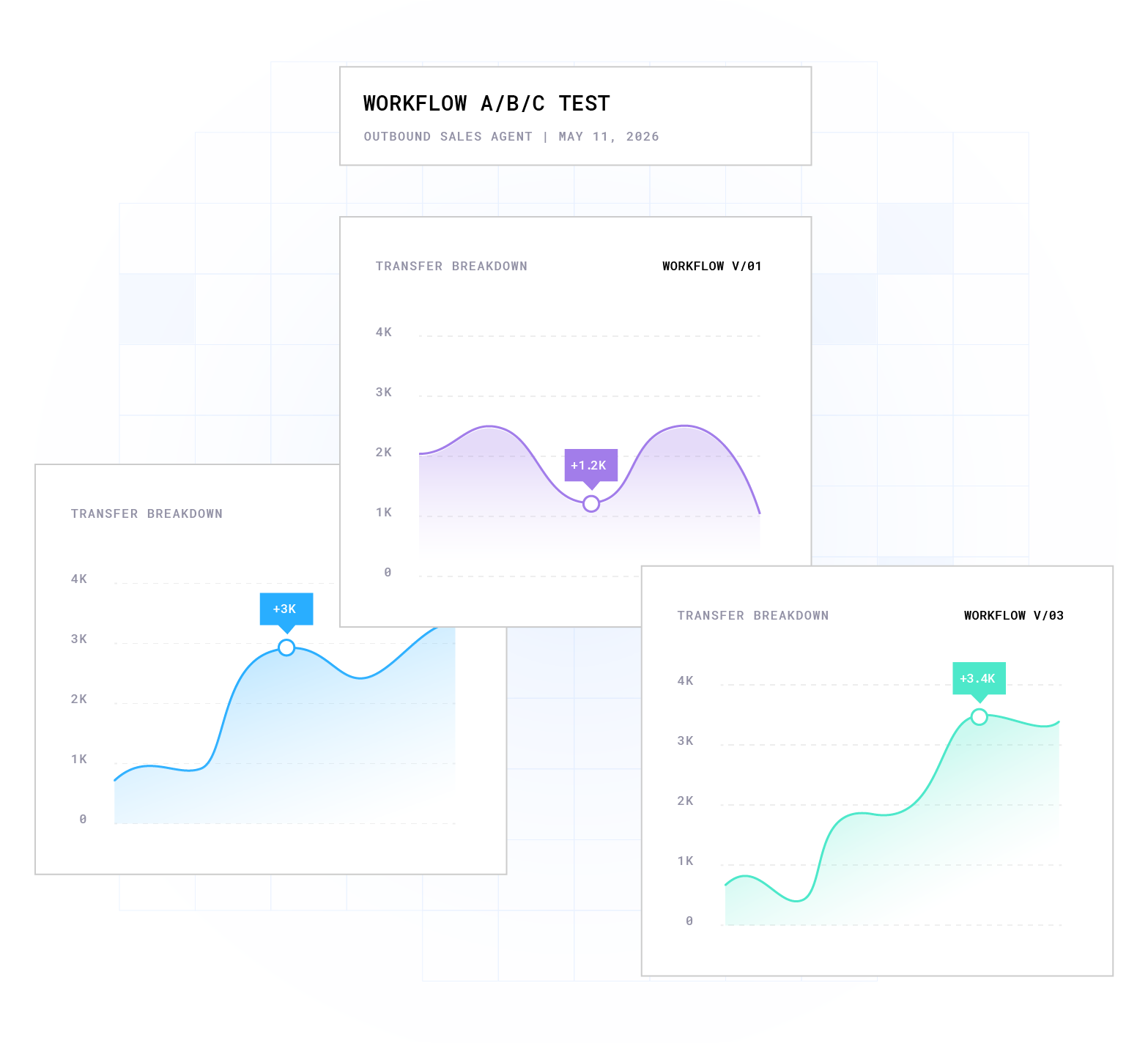
Many AI vendors deliver a build, hand over access, and step away. Conversation quality drifts, compliance discipline weakens, and conversion rates flatten. Plura runs every deployment as a continuous improvement cycle that includes real-call monitoring, objection-pattern analysis, and workflow tuning week over week.
Every annual contract includes a 90-day opt-out window, so customers are not locked into the annual term if the deployment underperforms. The platform’s track record across customers includes 3x average ROI in 90 days, 47% pipeline growth, and 90% faster lead-response time.3
Plura enables 7 to 12 follow-up touches per lead across voice, SMS, RCS, and webchat, with full conversation transcripts feeding the conversation intelligence layer for ongoing optimization. The AI improves as the stateful database accumulates context instead of plateauing after the first month.
Compare plans and rates side by side at plura.ai/pricing.
Frequently Asked Questions
What is the actual speed difference between AI and human lead follow-up?
The average B2B company takes 42 to 47 hours to respond to a new lead, while Plura contacts leads in under 5 seconds across voice, SMS, RCS, and webchat, 24 hours a day. That gap changes the conversion math for every campaign. As noted earlier, the 5-minute contact window creates up to a 100x connection advantage, and sub-60-second response lifts conversions by 391%. Human teams working in shifts with queue-based workflows cannot consistently achieve sub-5-second response at scale, while AI can, and Plura’s platform is designed to deliver that standard on every inbound lead, regardless of time of day or volume spike.
How does Plura handle the transition from AI to a human agent without losing context?
Plura’s Stateful Conversation Database ties every interaction to a customer token across voice, SMS, RCS, and webchat. When an escalation trigger fires, the AI compiles a structured context card that covers conversation history, intent score, sentiment markers, offers made, objections raised, and qualification status. It then initiates a warm transfer that briefs the human agent before the customer connects. The agent receives a pre-populated context card in the Unified Inbox and picks up the conversation mid-thread. The customer avoids repeating details, and the agent avoids restarting discovery, which protects conversion rates at the handoff point.
What compliance infrastructure does Plura provide for AI lead follow-up?
Plura operates as its own FCC-licensed audio bridging carrier, so compliance controls apply at the carrier level before a call or message leaves the network. Every outbound contact is checked against federal and state DNC registries in real time before dialing. Consent records are timestamped and immutable. Quiet-hours rules apply automatically through time-zone detection, and STIR/SHAKEN caller-ID authentication runs on every outbound voice call. Plura supports compliance with TCPA, DNC, HIPAA, SOC 2, ISO certification, and 50+ state rule sets.2 Customers remain responsible for their own regulatory obligations and certifications, while Plura provides infrastructure that supports those obligations. Full details are available at plura.ai/products/compliance.
When does pure AI lead follow-up fall short, and how does the hybrid model address that?
AI lead follow-up performs strongly on volume, speed, consistency, and initial qualification, yet it is less effective on rapport-led enterprise deals with high contract values, novel consultative discovery that requires unique question generation, and emotionally complex conversations that demand empathy and judgment. Plura’s workflow architecture addresses this with BATNA guardrails on every negotiation node and a warm-transfer mechanic that passes full context to a U.S. human agent when the conversation exceeds the AI’s defined parameters. AI handles the scale work, and humans handle relationship and negotiation work, each operating where they perform best.
What does the total cost of ownership look like for a 15-agent team switching to Plura?
Using the 15-agent scenario detailed in the Economics section, Plura reduces monthly costs from $60,000 to $14,400, which produces immediate savings that compound to about $2.7 million over five years. For larger operations, the same model often produces a total cost of ownership of roughly $700,000 per year against a traditional contact-center benchmark of $7 million. These figures reflect 100% talk utilization, no taxes or benefits overhead, no rehiring cycle, and no training ramp on each new hire. The full calculation is available at plura.ai/calculator.
1 Plura AI maintains SOC 2, HIPAA, ISO, and GDPR posture as part of its platform infrastructure. References to compliance frameworks in this article describe Plura’s platform capabilities and do not constitute a guarantee that any customer using Plura will themselves be compliant with applicable laws or standards. Customers remain solely responsible for their own regulatory obligations, certifications, consent management, recordkeeping, and the claims they make to their own end users. Consult qualified legal counsel for guidance specific to your use case.
2 This article describes regulatory frameworks at a general level and does not constitute legal advice. Laws and regulations vary by jurisdiction, change over time, and apply differently depending on facts and circumstances. Readers should consult qualified legal counsel before making compliance decisions.
3 Performance figures, customer outcomes, and industry statistics referenced in this article are drawn from cited third-party sources or Plura customer case studies. Individual results vary based on implementation, use case, industry, audience, and execution. Past or aggregate performance is not a guarantee of future results.
4 This article contains forward-looking statements regarding industry trends, technology adoption, and future capabilities. These statements reflect current expectations and are subject to change. Plura AI undertakes no obligation to update forward-looking statements except as required.
This article is provided for informational purposes only and reflects Plura AI’s understanding at the time of publication. Product capabilities, integrations, and specifications are subject to change. For the most current information, visit plura.ai.
This article was produced with the assistance of AI tools and reviewed by Plura AI prior to publication.