

Written by: Matt Beucler, CEO, Plura AI
Updated September 2026
Key Takeaways
- AI SDR alternatives in 2026 fall into three categories: autonomous agents, high-volume sequencers, and DIY stacks. Each category trades off cost, control, and performance.
- Autonomous agents like 11x and Artisan handle full top-of-funnel work but carry high costs ($1,500–$10,000+ per month) and 40–60% pilot failure rates within 90 days.
- High-volume sequencers (Reply.io, Apollo, Instantly) and DIY stacks (Clay plus Smartlead) give teams more control but shift deliverability and infrastructure ownership to the buyer, which often increases real costs beyond list prices.
- Plura AI stands out for high-volume, multichannel outbound across voice, SMS, RCS, and webchat with carrier-grade compliance support, stateful conversation memory, and per-conversation pricing that scales with volume instead of headcount.
- Teams evaluating AI SDR alternatives can see Plura in a live demo and compare a purpose-built, FCC-licensed platform across use cases and budgets.
What An AI SDR Does In Your Funnel
An AI SDR is software that automates outbound sales tasks using artificial intelligence. Typical workflows include lead research, personalized outreach, follow-up sequencing, and meeting booking. Many teams use AI SDRs to replace or augment human SDRs for high-volume, repetitive top-of-funnel work so human reps can focus on discovery, negotiation, and closing.
The Three Categories Of AI SDR Tools
Autonomous AI Sales Agents For Full SDR Replacement
Tools like 11x (Alice) and Artisan (Ava) attempt to replace the full SDR function.4 They cover prospecting, research, outreach, qualification, and meeting booking without human intervention. Enterprise teams with full top-of-funnel replacement goals and the budget and runway to train the system see the best fit.
Trade-offs are significant. 11x typically costs $5,000 to $10,000+ per month on annual contracts. Artisan starts at approximately $1,500 per month. Between 40% and 60% of AI SDR pilots are paused or shut down within 90 days because of poor results, deliverability issues, or compliance concerns. Hybrid human-plus-AI models deliver the lowest cost per qualified opportunity at $847. Fully autonomous AI-only deployments reach $2,214 per qualified opportunity.
If full autonomy feels too costly or risky, the next category gives you more control with less automation.
High-Volume Sequencers For Structured Outbound
Platforms like Reply.io, Apollo, and Instantly coordinate multichannel outreach sequences across email, LinkedIn, calls, and SMS with branching logic.4 Teams use these tools when they want structured outbound with control over timing and channel mix. These platforms require human ownership of targeting and messaging strategy.
The main trade-off is that deliverability infrastructure becomes the buyer’s responsibility. That responsibility shows up in real costs. Reply.io’s effective real cost is approximately $139 per user per month. Apollo lists at $49 to $79 per user, but real cost is higher after credit caps and add-ons. Instantly lists at $37 per month, yet typical real cost ranges from $97 to $199 per month once add-ons are active.
Teams that want even more control over data and personalization often move to DIY stacks.
DIY Stacks For Maximum Control And Personalization
DIY stacks combine enrichment and research tools like Clay with sending infrastructure like Smartlead or Instantly. These setups work best for teams with dedicated RevOps or GTM engineering resources that want maximum control and personalization quality.
The trade-off is a significant setup and ongoing management burden. Clay starts at $149 per month, but most teams pay roughly three times the headline price once real prospecting volume kicks in. Clay-based stacks achieve the highest median reply rates at 4.2%.3 These stacks require GTM engineering expertise to operate.
See Plura’s carrier-grade multichannel platform in a live walkthrough and compare it to these three categories in practice.
Top AI SDR Alternatives Compared
The table below summarizes each tool’s best use case, pricing, and key features. Notice that autonomous agents sit at the high end of the price range, while sequencers and DIY stacks shift infrastructure and deliverability costs to your team.
| Tool | Best For | Pricing | Key Features |
|---|---|---|---|
| 11x (Alice) | Enterprise full replacement | Custom; ~$5,000–$10,000+/month | Autonomous prospecting, voice qualification |
| Artisan (Ava) | Mid-market autonomous BDR | Custom; ~$1,500–$3,000/month | 300M+ contact database, autonomy dial |
| Reply.io (Jason AI) | Multichannel sequencing | $49–$139/user/month | Email, LinkedIn, calls, SMS, WhatsApp |
| Apollo | All-in-one for startups | $49–$79/user/month (real cost higher) | Contact database, sequencing, AI assistance |
| Instantly | Cold email volume | $37–$199/month | Multi-inbox rotation, deliverability control |
| Clay | Enrichment and personalization | $149+/month (real cost ~3x) | 50+ data sources, AI-generated fields |
| Smartlead | Sending infrastructure | $39–$700/month | Unlimited mailboxes, warmup, rotation |
| Plura AI | High-volume multichannel outbound | Custom; per-conversation pricing | FCC-licensed carrier, voice + SMS + RCS + webchat, stateful memory, TCPA and DNC compliance support |
11x (Alice): 11x is the most heavily funded autonomous AI SDR vendor with $74M raised. Reported customer churn is high. Enterprise teams with a high-volume, low-ACV motion and a dedicated RevOps engineer see the strongest fit. Annual contracts are standard.
Artisan (Ava): Artisan ships with a 300M+ contact database and an autonomy dial that lets teams adjust how much the agent operates without human review. Artisan achieves a median positive reply rate of 2.8% in benchmark deployments.3 LinkedIn automation restrictions create an ongoing operational challenge.
Reply.io (Jason AI): Reply.io holds a 4.6/5 G2 score based on 1,500+ reviews. It offers multichannel sequencing across email, LinkedIn, calls, SMS, and WhatsApp. Jason AI is included in the Agency plan at $139 per user per month. Deliverability infrastructure remains the buyer’s responsibility.
Apollo: Apollo provides an all-in-one option for startups that combines a contact database, sequencing, and AI assistance. Apollo AI achieves a median positive reply rate of 1.9% in benchmark deployments. Credit caps mean the headline price understates real cost.
Instantly: Instantly focuses on cold email volume with multi-inbox rotation and deliverability controls. This tool requires human ownership of targeting and messaging. Add-ons push the real monthly cost well above the $37 entry price.
Clay: Clay often serves as the enrichment backbone for high-performing DIY stacks. It pulls from more than 50 data sources and generates AI-personalized fields at scale. Teams pair Clay with a sending layer such as Smartlead or Instantly and rely on GTM engineering to operate it effectively.
Smartlead: Smartlead functions as sending infrastructure with unlimited mailboxes, automated warmup, and mailbox rotation. It serves as the delivery layer in a DIY stack rather than a complete AI SDR.
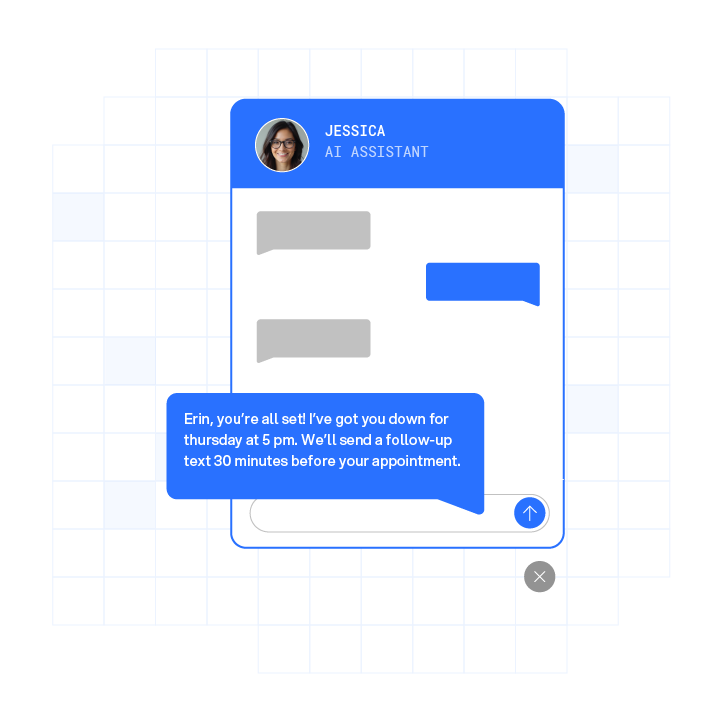
Plura AI: Plura operates as an FCC-licensed carrier with its own infrastructure. Its AI voice agent, AI SMS, AI RCS, and AI webchat all share a Stateful Conversation Database. That design means a lead texted at 9 a.m. is recognized when the call comes at noon. Plura issues branded caller ID at the carrier level and supports TCPA compliance, DNC compliance, HIPAA, and SOC 2.1 The AI predictive dialer runs on the same owned infrastructure. Per-conversation pricing scales with volume instead of headcount.
AI SDR Vs. Human SDR: Cost, Performance, And Fit
Human SDRs spend just 36.2% of their week actually selling. The remaining 63.8% goes to manual research, list-scrubbing, CRM data entry, and cadence maintenance. A fully loaded human SDR costs $8,000 to $10,000 per month. AI SDR platforms range from $500 to $5,000 per month depending on category and volume.
Plura’s ROI calculator illustrates the difference. A 15-agent operation costs $60,000 per month: $20 per hour, plus standard taxes and benefits, with a 40% talk utilization rate. Replacing that team with 6 Plura agents at $15 per hour and 100% talk utilization drops the monthly cost to $14,400. That shift saves $45,600 in 30 days and $547,200 over 12 months.3
Human SDRs remain the better fit for complex, high-touch enterprise sales that involve multiple stakeholders, long RFP cycles, and relationship-driven deals above $150,000 ACV. AI SDRs fit high-volume, repetitive outreach where speed-to-lead drives conversion. Leads contacted within 60 seconds are 391% more likely to convert (per industry research cited by Plura). The cited evidence does not specify the comparison baseline.
Walk through your own cost model with a Plura specialist in a live session.
How To Choose An AI SDR By Budget, Channel, And Automation Level
The right AI SDR alternative depends on four variables: monthly outbound volume, channels required, compliance requirements, and total budget including data and infrastructure costs. Use the framework below as a starting point, then validate it against your ICP and pipeline targets.
- Startup, email-only, budget under $500/month: Reply.io or Instantly for sequencing. Expect to own deliverability and targeting. Jason AI is available on Reply.io’s Agency plan at $139 per user per month.
- Mid-market, multichannel, budget $1,000 to $5,000/month: Consider autonomous agents like Artisan or AiSDR. Verify data quality and meeting qualification before scaling volume.
- Enterprise, high-volume, multichannel, compliance-sensitive: Plura for voice, SMS, RCS, and webchat with carrier-grade compliance support and stateful conversation memory across every channel.
- Teams with RevOps engineering: DIY stacks built on Clay plus Smartlead for maximum control, provided the team can manage deliverability, enrichment, and sending infrastructure independently.
Before signing any contract, confirm answers to these points.
- Monthly outbound volume and projected growth
- Channels required: email, LinkedIn, voice, SMS, RCS, webchat
- Compliance requirements: TCPA, DNC, HIPAA, SOC 2
- CRM integration needs and existing tech stack
- Total budget including data, enrichment, and infrastructure costs
- Human oversight capacity for review, tuning, and escalation handling
Run your numbers through Plura’s ROI calculator to check projected cost savings in real time. Compare plans and rates for your volume and channel mix.
Do AI SDRs Actually Work? Real-World Results And Limits
A 2026 AiSDR analysis of 75 deployments across SaaS, fintech, and IT services found that median reply rates rose from a 2.4% baseline to 6.8% by month 3 (up 181%) and meetings per month from 12 to 31 (up 158%). A DevCommX benchmark study of 75 B2B tech deployments found median positive reply rates of 2.3% for email and 3.1% for LinkedIn, with top-quartile deployments reaching 4.7% and 6.2% respectively.
Teams with a working outreach motion see consistent 2 to 3x gains after adding an AI SDR. Teams without solid fundamentals, including a clear ICP, clean lists, strong sequences, and a resonant offer, do not see the same lift.
Across r/sales and r/salesdevelopment, Reddit users consistently report that AI SDRs work well as assistants for research, drafting, and list-building, and often struggle as fully autonomous senders. Common complaints include unqualified meetings booked on ICP fit alone, deliverability damage from unattended volume sending, and templated copy. One r/SaaSMarketing user stated: “AI SDRs mostly just scale bad targeting faster.”
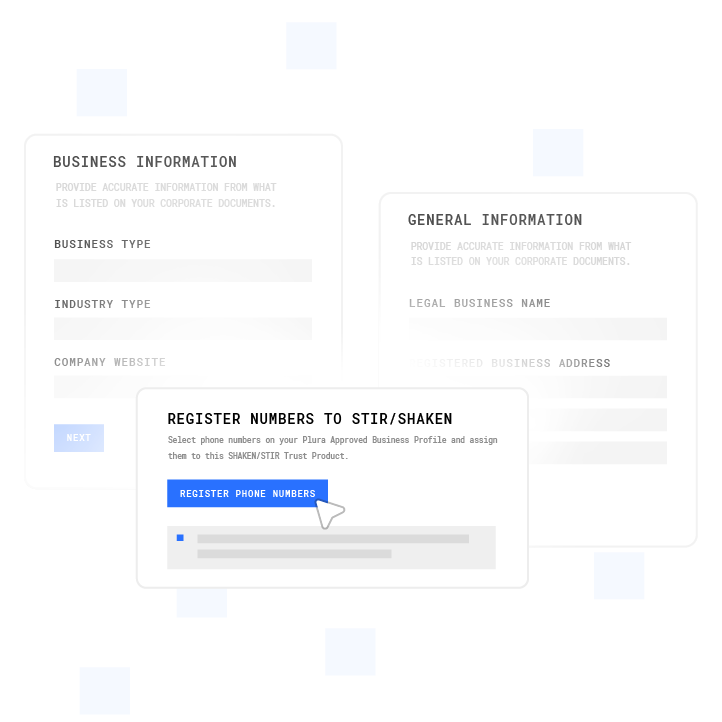
Deliverability requirements continue to tighten. Google and Yahoo made email authentication (SPF, DKIM, and DMARC) mandatory for bulk senders in February 2024. The same source notes that Microsoft followed on May 5, 2025, for anyone sending more than 5,000 messages a day to consumer Outlook domains. Spam complaint rates above 0.3% trigger blocks from Gmail and Yahoo. Plura addresses voice deliverability through branded caller ID issued at the carrier level and STIR/SHAKEN authentication on every outbound call. The platform supports TCPA compliance and DNC compliance through real-time scrubbing.2 Customers remain responsible for their own compliance obligations.
Frequently Asked Questions
Can AI Replace SDRs?
AI can handle high-volume, repetitive outbound tasks such as research, list building, sequencing, and follow-up. Human oversight still matters for complex deals, multi-stakeholder enterprise sales, and nuanced objection handling. The strongest results come from deployments that pair AI for volume execution with humans for strategy and qualification. Hybrid models also tend to achieve lower cost per qualified opportunity than fully autonomous deployments.
How Much Does An AI SDR Cost?
Pricing varies widely by category. Sequencers often land under $500 per month per user at headline rates, while autonomous agents can exceed $10,000 per month on enterprise contracts. DIY stacks add enrichment and infrastructure costs on top of tool licenses. Plura uses per-conversation pricing that scales with outbound volume. See current plans at plura.ai/pricing.
Do AI SDRs Work?
AI SDRs work best for high-volume outreach with a validated ICP and clean data. As noted earlier, a 2026 analysis of 75 deployments found reply rates rose 181% by month 3. Effectiveness depends on data quality, deliverability infrastructure, and human oversight. Teams without a proven outreach motion before deploying AI typically do not see meaningful lift.
What Is An AI SDR Agent?
An AI SDR agent is software that automates outbound sales tasks using artificial intelligence. Core capabilities include lead research, personalized outreach, follow-up sequencing, and meeting booking. Many teams use agents to replace or augment human SDRs for high-volume, repetitive top-of-funnel work. The most capable agents combine research, decisioning, and outbound execution across multiple channels from a single workflow.
AI SDR Vs. Human SDR: What Is The Real Difference?
Human SDRs cost $8,000 to $10,000 per month fully loaded and spend only 36.2% of their week actually selling. AI SDRs cost $500 to $5,000 per month depending on category, operate around the clock, and scale without hiring or ramp time. Human SDRs hold a clear advantage in complex, relationship-driven deals that require multi-stakeholder navigation and adaptive objection handling. AI SDRs outperform on speed-to-lead, volume consistency, and cost per contact at scale.
Conclusion: Match Your AI SDR Choice To Volume And Risk
The right AI SDR alternative in 2026 depends on volume, channels, and compliance requirements. Startups running email-only outreach under $500 per month usually fit sequencers like Reply.io or Instantly. Mid-market teams with multichannel budgets of $1,000 to $5,000 per month can evaluate autonomous agents like Artisan, with close attention to data quality and meeting qualification. Teams with RevOps engineering resources and a need for maximum personalization control often evaluate DIY stacks built on Clay.
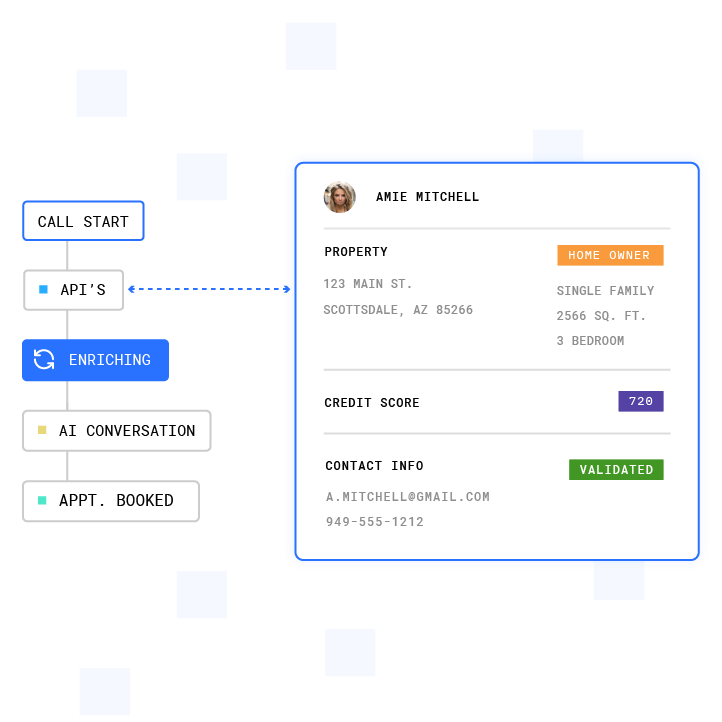
High-volume operators running voice, SMS, RCS, and webchat with carrier-grade compliance support and stateful conversation memory fit Plura particularly well. Plura owns its FCC-licensed carrier stack, issues branded caller ID at the carrier level, and shares conversation context across every channel through a single Stateful Conversation Database. The full comparison library covers Plura against specific platforms in detail.
- Run your numbers through Plura’s ROI calculator to check projected savings.
- Compare plans and rates side by side at plura.ai/pricing.
- Get a personalized Plura demo tailored to your volume and channels.
1 Plura AI maintains SOC 2, HIPAA, ISO, and GDPR posture as part of its platform infrastructure. References to compliance frameworks in this article describe Plura’s platform capabilities and do not constitute a guarantee that any customer using Plura will themselves be compliant with applicable laws or standards. Customers remain solely responsible for their own regulatory obligations, certifications, consent management, recordkeeping, and the claims they make to their own end users. Consult qualified legal counsel for guidance specific to your use case.
2 This article describes regulatory frameworks at a general level and does not constitute legal advice. Laws and regulations vary by jurisdiction, change over time, and apply differently depending on facts and circumstances. Readers should consult qualified legal counsel before making compliance decisions.
3 Performance figures, customer outcomes, and industry statistics referenced in this article are drawn from cited third-party sources or Plura customer case studies. Individual results vary based on implementation, use case, industry, audience, and execution. Past or aggregate performance is not a guarantee of future results.
4 References to third-party products, services, companies, or research are made for informational and comparative purposes only. Plura AI is not affiliated with, endorsed by, or sponsored by any third party named in this article unless explicitly stated. Trademarks and product names referenced remain the property of their respective owners.
This article is provided for informational purposes only and reflects Plura AI’s understanding at the time of publication. Product capabilities, integrations, and specifications are subject to change. For the most current information, visit plura.ai.
This article was produced with the assistance of AI tools and reviewed by Plura AI prior to publication.