
Written by: Matt Beucler, CEO, Plura AI
Updated September 2026
Key Takeaways
- Branded caller ID replaces unknown or “Spam Likely” labels with a verified business name, logo, and call reason, which lifts answer rates for high-volume operations.
- The technology uses STIR/SHAKEN authentication plus Rich Call Data (RCD) to deliver carrier-verified branding on supported Android and iOS devices.
- Answer rates can triple, from roughly 20% to 62%, when calls display verified brand information instead of an anonymous number.3
- Choosing a provider that owns its carrier infrastructure removes many per-call surcharges, closes compliance gaps, and improves branding reach.
- Plura AI delivers carrier-level branded caller ID with built-in compliance support. Talk to an expert to see how it can lift your connect rates.
How Branded Caller ID Works in Practice
Branded caller ID uses a five-step carrier authentication flow based on STIR/SHAKEN (Secure Telephone Identity Revisited / Signature-based Handling of Asserted information using toKENs) and RCD (Rich Call Data), as documented in Infobip’s branded calling technical specifications.
- Call origination: Your dialer or platform places a call through an OSP (Originating Service Provider), the carrier that connects the call.
- STIR/SHAKEN authentication: The OSP signs the call with a cryptographic token that verifies the caller is authorized to use the number. Attestation levels range from A (full confidence) to C (gateway), as defined in the STIR/SHAKEN origination framework.
- Rich Call Data attachment: The signing provider attaches RCD, which contains the display name, logo, and call reason, to the STIR/SHAKEN token, as defined by IETF RFC 9795.
- Carrier verification: The TSP (Terminating Service Provider), the recipient’s carrier, verifies the signature and extracts the brand data before the call reaches the handset.
- Display rendering: Supported devices show the verified business name, logo, and call reason on the screen while the call rings.
Display behavior depends on carrier and device. Apple introduced Business Call Identification support in iOS 18.2.1 and later. iOS shows caller name and logo only, not call reason, due to an Apple platform limitation. Android support, especially on Samsung and Motorola devices running Android 14 or later, covers the full RCD element set. The FCC has proposed requiring terminating providers to transmit verified caller identity information whenever a call receives A-level attestation, which would expand branded display across more carrier paths.2
Key Benefits for Contact Centers and High-Volume Teams
Contact centers, agencies, and enterprises that run thousands of outbound calls per month see measurable gains from branded caller ID.
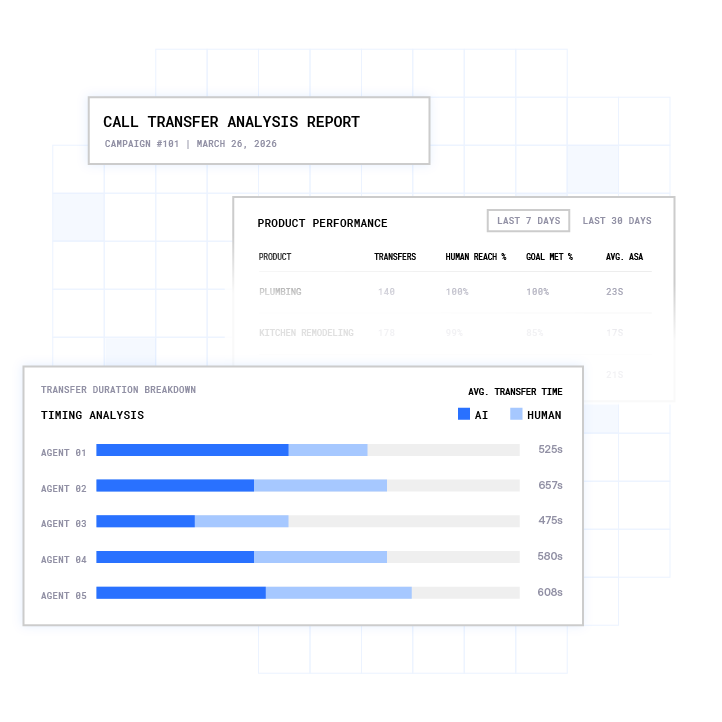
- Higher answer rates: A Twilio study across roughly 720,000 calls found branded calls were answered 62% of the time versus 20% for unbranded calls.3 The only variable was the presence of a verified brand.
- Reduced spam labeling: Branded calls present a vetted identity that carrier analytics engines score as legitimate, which reduces “Spam Likely” flags. Carrier analytics engines that apply “Scam Likely” labels include T-Mobile/First Orion, AT&T/Hiya, and Verizon/TNS, each with its own reputation file.
- Improved brand trust: Two-thirds of adults trust branded calls more than unknown numbers, and 76% would answer calls displaying a name and logo.
- Call reason display: Showing why you are calling, such as “Appointment Reminder,” helps calls pass iOS 26 call screening, which prompts unknown callers to state their purpose before the phone rings.
- Lower cost per contact: Higher connect rates and fewer repeat dials keep agents in live conversations instead of chasing callbacks.
- Stronger downstream conversion: TransUnion states that customers are up to 105% more likely to answer a branded call. Recognized identity helps surface engaged prospects before the conversation starts.
These benefits compound at scale. A 10% lift in answer rates can translate into thousands of additional conversations per month. For a contact center making 50,000 outbound calls monthly, moving from a 20% to a 30% answer rate adds 5,000 live conversations without any additional dials.
Top Branded Caller ID Providers Compared
Hiya is a global voice-protection company.4 Its Hiya Connect solution reaches more than 550 million users through carrier partnerships across over 40 countries and nearly 20 mobile operators. That carrier-level distribution is Hiya’s core strength, and its 2026 State of the Call report is widely cited as a primary source for consumer call-trust data.
Twilio launched Branded Calling in general availability in August 2026.4 It uses Rich Call Data in the STIR/SHAKEN signing flow and can reach more than 265 million mobile devices in the US. Twilio’s strength lies in its developer-friendly API and self-service Console, which fits engineering-led teams already on Twilio.
TransUnion (Neustar) provides enterprise branded calling through its communications solutions division, with carrier relationships across major US networks.4 Its strength is data intelligence and enterprise-scale reputation management.
First Orion offers INFORM Branded Calling, which displays a business name of up to 32 characters and reaches nearly 400 million phones in the US across major carriers. First Orion focuses on carrier partnerships and large contact-center deployments.
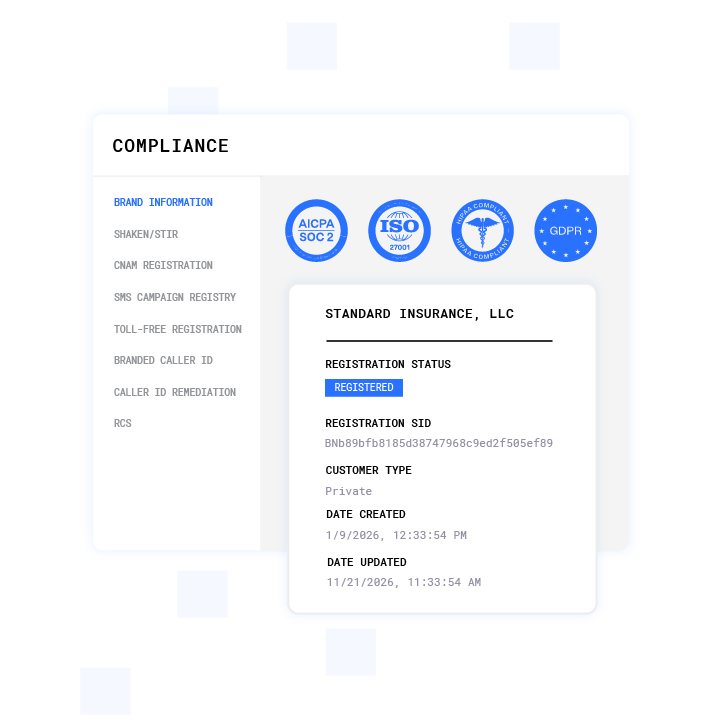
Plura AI is an FCC-licensed carrier that issues branded caller ID directly at the carrier level, rather than renting infrastructure from a third-party CPaaS (Communications Platform as a Service). This structure means Plura controls the entire origination path. STIR/SHAKEN authentication, branded display, and compliance enforcement all happen inside the platform before the call leaves the network. That enforcement includes DNC (Do Not Call) scrubbing, TCPA (Telephone Consumer Protection Act) litigator screening, and quiet-hours controls. For high-volume communicators running AI voice agents or an AI Predictive Dialer, Plura’s carrier ownership removes the wrapper tax and many compliance gaps that come with resold infrastructure. Carrier-provisioned branded caller ID is not available on platforms like Synthflow that rely on third-party telecom infrastructure.
Branded Caller ID Pricing and Cost Drivers
Branded caller ID pricing depends on volume, carrier reach, and whether the provider owns its carrier infrastructure. Most deployments involve three main cost components.
Per-call pricing is usually the largest driver. Telnyx charges $0.075 per call for Branded Call Display on a pay-as-you-go basis. CloudTalk prices branded caller ID at $0.07 per call for US and UK numbers. At 1,000 calls per day, those rates create roughly $1,400 to $2,200 per month in branding fees before platform or registration costs.
Registration fees are typically one-time charges per brand. For example, Telnyx charges $50 one-time plus $50 monthly per brand.
Platform fees vary by provider. CloudTalk’s plans start at $25 per user per month, with branded caller ID sold as a per-call add-on.
Carrier fees sit underneath all of this. Because branding data travels through the carrier’s display infrastructure, the carrier sets and collects the fee, and enterprises using that path cannot negotiate around it. At enterprise volume, the math compounds quickly. An operation making 1 million outbound calls per month can pay roughly $50,000 to $100,000 per month in carrier branding fees alone, depending on the per-call rate.
Plura offers transparent pricing where carrier-level branded caller ID is included as a platform capability instead of a pure per-call add-on. That structure changes the total cost profile for high-volume operations. Schedule a live demo to walk through the cost comparison for your specific call volume.
How to Choose a Branded Caller ID Service
The right provider depends on call volume, existing systems, and compliance needs. Five criteria usually separate adequate options from the right fit for high-volume teams.
- Carrier reach: Confirm whether the provider has direct carrier relationships or resells through a third party. AT&T, Verizon, and T-Mobile support branded calling on both Android and iOS with no app required, and coverage is strongest for subscribers on these three major carriers. Map this against your audience.
- Compliance enforcement: Check whether the provider supports STIR/SHAKEN, DNC scrubbing, and TCPA-related workflows inside the platform. This distinction matters for regulated industries. Plura supports TCPA compliance, DNC compliance, and SHAKEN/STIR caller ID verification on every outbound contact.1,2
- Integration depth: Confirm that the service connects with your dialer, CRM, and workflow tools. Plura integrates with HubSpot, Salesforce, Zoho, and 30+ other tools through its integrations directory.
- iOS 26 readiness: iOS 26’s “Screen Unknown Callers” feature with “Ask Reason for Calling” silently answers calls from unsaved numbers and asks the caller to state their name and reason before the recipient’s phone rings. Providers that can present a recognized identity and call reason through this layer convert more screened calls into pickups. Plura’s AI voice agents are designed to communicate with iOS 26’s screening layer and present a clear, contextual reason.
- Total cost: Model total monthly cost across per-call charges, registration fees, and platform fees. Do not rely only on the headline per-call rate. Use Plura’s ROI calculator to compare carrier-reseller pricing with carrier-owned pricing at your volume.
Small businesses that make a few hundred calls per day usually see gains with any major provider that reaches AT&T, Verizon, and T-Mobile. High-volume communicators making tens of thousands of calls per day face a different equation. Carrier ownership and in-platform compliance enforcement become decisive. Resellers that pass through carrier fees and treat compliance as a bolt-on create two cost centers and a compliance gap. A carrier that enforces compliance before dial and bundles branded display into the platform simplifies both cost and risk.
Why iOS 26 and Carrier Support Matter for Your Choice
An estimated 150 million U.S. iPhone users represent more than half the smartphone market, so iOS 26 call screening will affect outbound calling immediately. The feature is opt-in and off by default, yet the users who enable it often represent high-value prospects who already screen calls aggressively.
Branded caller ID supports this environment by presenting a recognized identity and call reason before the phone rings. iOS accounts for roughly 60% of U.S. mobile OS market share, so iOS 26 readiness now sits near the top of outbound planning for many teams.
Carrier strategy also matters. Juniper Research projects that branded calling will verify 90 billion calls globally by 2029, driven by unified verification frameworks and subscriber demand for authenticated identity.5 The CTIA’s Branded Calling ID (BCID) initiative is standardizing vetting and data exchange across carriers. The FCC’s proposed rules would require terminating providers to surface verified caller identity on A-level attested calls, which would expand branded display without extra enrollment steps.
Android is tightening its trust layer as well. Google announced a fake-call detection feature in the Google Dialer that uses RCS (Rich Communication Services) to verify calls between Android users and flag potential spoofed calls with a pop-up warning. Across both major mobile platforms, unverified, unbranded calls face more friction, while verified, branded calls move more smoothly.
Frequently Asked Questions
What Is Branded Caller ID?
Branded caller ID is a service that displays a business’s verified name, logo, and reason for calling on a recipient’s phone screen before they answer. It replaces anonymous numbers or “Spam Likely” labels with a recognized identity that is authenticated through STIR/SHAKEN and Rich Call Data. Carriers and providers offer the service, and it requires brand registration plus carrier-level vetting before display begins.
How Does Branded Caller ID Work?
Branded caller ID relies on carrier-level authentication. The originating carrier signs the call with a STIR/SHAKEN token, attaches Rich Call Data containing the display name, logo, and call reason, and the terminating carrier verifies and renders the display on supported devices. A-level attestation is required for the display to render reliably. Display behavior varies by device and carrier. Android devices running Android 14 or later on major carriers support the full RCD element set. iOS shows caller name and logo but not call reason because of an Apple platform limitation.
How Much Does Branded Caller ID Cost?
Pricing depends on provider and volume. Per-call fees typically range from $0.005 to $0.12 per call, plus one-time registration fees and monthly platform charges. At high volume, these per-call fees compound quickly. As covered in the cost section, high-volume operations can face carrier fees in the six-figure range monthly. Providers that own carrier infrastructure can bundle branded display into the platform instead of relying only on per-call surcharges, which changes the cost profile for heavy outbound programs.
Who Offers Branded Caller ID?
Major providers include Hiya, Twilio, TransUnion (Neustar), First Orion, and Plura AI. Hiya focuses on global carrier partnerships and mobile security distribution. Twilio emphasizes developer-friendly APIs and a self-service Console. First Orion concentrates on enterprise contact-center reach across major US carriers. Plura focuses on high-volume communicators that need carrier-level ownership and compliance support inside the platform before dial.
What Is the Difference Between Branded Caller ID and STIR/SHAKEN?
STIR/SHAKEN is an authentication framework that verifies a caller is authorized to use a phone number. It assigns attestation levels from A (full confidence) to C (gateway) and signs the call with a cryptographic token. Branded caller ID uses STIR/SHAKEN as the foundation and then adds Rich Call Data, including display name, logo, and call reason, so the recipient sees verified brand information instead of only a verified number. STIR/SHAKEN without RCD produces an authenticated call with no visual brand identity. RCD without A-level STIR/SHAKEN attestation typically does not render the branded display on the recipient’s device.
Does Branded Caller ID Work with iOS 26?
Branded caller ID works with iOS 26, with some limitations. iOS 26 call screening prompts unknown callers to state their purpose before the phone rings. Branded calls that display a recognized name are more likely to pass this screen because the recipient sees a verified identity before deciding whether to engage. iOS shows caller name and logo but not call reason due to an Apple platform limitation. Plura’s AI voice agents are designed to communicate with iOS 26’s screening layer and present a clear, contextual reason that turns more screened calls into live conversations.
Is Branded Caller ID Worth It for Call Centers?
High-volume call centers usually see strong returns from branded caller ID. As noted earlier, the Twilio study showed branded calls roughly tripled answer rates. Even modest gains translate into thousands of additional conversations per month at scale. The per-call cost of branded display is often offset within the first few weeks by fewer repeat dials and more live conversations per agent hour. The ROI case is strongest for operations making more than a few hundred calls per day, where higher connect rates compound quickly.
Conclusion: Turning Branded Caller ID into a Scalable Advantage
Branded caller ID services lift answer rates, reduce spam labeling, and build trust before anyone picks up. The technology runs on STIR/SHAKEN authentication and Rich Call Data, and the terminating carrier renders the display on supported devices. Provider selection determines whether branding consistently reaches recipients or simply adds a fee while many calls still appear as unknown.
High-volume communicators gain the most when the provider owns carrier infrastructure and supports compliance inside the platform. A reseller that routes calls through a third-party CPaaS cannot issue branded caller ID under its own carrier identity, cannot enforce DNC scrubbing before dial, and cannot remediate spam labels at the carrier level. Plura AI owns its FCC-licensed carrier, issues branded caller ID directly, and supports STIR/SHAKEN, TCPA-related workflows, and DNC compliance before the call leaves the network. The platform also supports HIPAA, SOC 2, and ISO certification standards for regulated industries.1
Teams running AI voice agents, an AI Predictive Dialer, or large outbound campaigns benefit from this combination of carrier-owned branded display and platform-level compliance support. See carrier-level branded caller ID in a live demo, then review plans and pricing to compare options for your operation.
1 Plura AI maintains SOC 2, HIPAA, ISO, and GDPR posture as part of its platform infrastructure. References to compliance frameworks in this article describe Plura’s platform capabilities and do not constitute a guarantee that any customer using Plura will themselves be compliant with applicable laws or standards. Customers remain solely responsible for their own regulatory obligations, certifications, consent management, recordkeeping, and the claims they make to their own end users. Consult qualified legal counsel for guidance specific to your use case.
2 This article describes regulatory frameworks at a general level and does not constitute legal advice. Laws and regulations vary by jurisdiction, change over time, and apply differently depending on facts and circumstances. Readers should consult qualified legal counsel before making compliance decisions.
3 Performance figures, customer outcomes, and industry statistics referenced in this article are drawn from cited third-party sources or Plura customer case studies. Individual results vary based on implementation, use case, industry, audience, and execution. Past or aggregate performance is not a guarantee of future results.
4 References to third-party products, services, companies, or research are made for informational and comparative purposes only. Plura AI is not affiliated with, endorsed by, or sponsored by any third party named in this article unless explicitly stated. Trademarks and product names referenced remain the property of their respective owners.
5 This article contains forward-looking statements regarding industry trends, technology adoption, and future capabilities. These statements reflect current expectations and are subject to change. Plura AI undertakes no obligation to update forward-looking statements except as required.
This article is provided for informational purposes only and reflects Plura AI’s understanding at the time of publication. Product capabilities, integrations, and specifications are subject to change. For the most current information, visit plura.ai.
This article was produced with the assistance of AI tools and reviewed by Plura AI prior to publication.