

Written by: Matt Beucler, CEO, Plura AI
Key Takeaways
- The eight efficiency KPIs that matter most for US call centers in 2026 are AHT, FCR, Agent Utilization Rate, Speed to Answer, Call Abandonment Rate, Cost per Contact, Schedule Adherence, and Occupancy Rate.
- These KPIs show where labor spend is wasted, where compliance exposure grows, and where AI infrastructure can replace linear headcount growth with logarithmic cost scaling.
- Meeting the 80/20 service-level target without overstaffing requires accurate volume forecasting, skills-based routing, and AI-powered tools that minimize after-call work.
- AI infrastructure improves every KPI by handling repetitive contacts at 100% utilization, removing queue wait times, and maintaining full conversation context across channels.
- See how Plura moves these KPIs in a live contact-center demo.
Improving Call Center Efficiency with the 80/20 Rule
Call center efficiency starts with the 80/20 rule: answering 80% of inbound calls within 20 seconds. That service-level target, calculated as (calls answered within threshold / total offered calls) x 100, drives workforce planning through Erlang C modeling. Erlang C uses forecasted call volume, AHT, shrinkage, and target answer time to estimate required headcount and probability of delay.
Meeting the 80/20 target without overstaffing depends on accurate volume forecasting, skills-based routing, and minimizing after-call work (ACW) through CRM automation. AI-powered tools that handle repetitive tasks and reduce cognitive load enable higher occupancy and utilization rates without additional headcount growth. The measurable impact includes lower AHT, lower abandonment, and a utilization rate that stays inside the 75-85% optimal band without burning out agents.
The table below shows which single tactic delivers the fastest improvement for each KPI. Use it to prioritize where you invest first when multiple metrics need attention.
| Tactic | Primary KPI Impact | Secondary KPI Impact |
|---|---|---|
| Erlang C-based workforce planning | Speed to Answer | Abandonment Rate, Utilization |
| Skills-based and predictive routing | FCR | AHT, Utilization |
| CRM automation for ACW | AHT | Occupancy, Cost per Contact |
| AI agents for repetitive contacts | Cost per Contact | Utilization, Schedule Adherence |
| Real-time coaching and QA | FCR | AHT, Agent Utilization |
See how Plura moves these KPIs in a live contact-center demo.
Essential KPIs for BPO Operations in 2026
Business process outsourcing (BPO) operations traditionally tracked five core KPIs: FCR, AHT, Cost per Contact, Agent Utilization, and Speed to Answer. In 2026, three additional KPIs have moved from optional to essential for US operators: Call Abandonment Rate, Schedule Adherence, and Occupancy Rate. The shift comes from regulatory and economic pressure. US contact-center spend runs $25-50 billion annually, with 60-70% of operating costs locked into agent labor and 35-45% annual agent turnover forcing perpetual training and replacement3. Tracking only five KPIs leaves the labor-cost and compliance levers unmeasured.
The FCC’s Notice of Proposed Rulemaking (NPRM, CG Docket No. 26-52) describes a framework that would cap offshore customer-service calls at 30% and limit offshore handling of sensitive consumer data.2 State laws in New York, New Jersey, Connecticut, Missouri, and Florida already restrict offshore handling of medical, financial, and consumer data.2 Operators running offshore BPO contracts should consult qualified counsel on their exposure under these frameworks before the next contract renewal.
Average Handle Time
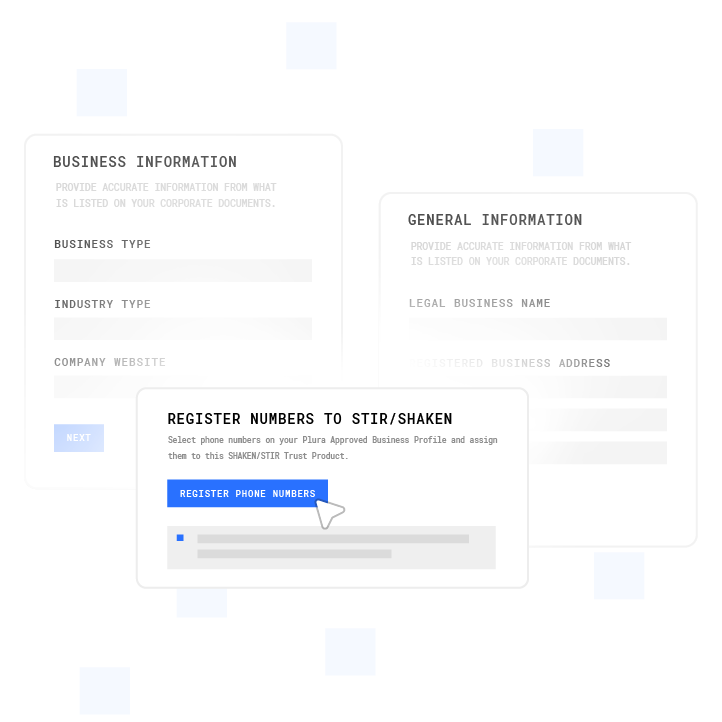
AHT equals (total talk time + total hold time + total wrap-up time) divided by total number of calls. It is the most-watched efficiency metric in high-volume operations because it directly sets staffing requirements. Lower AHT means more contacts per agent-hour at the same headcount.
Reductions in AHT have a linear impact on staffing requirements and available agent capacity in high-volume operations. The 2026 industry average AHT for inbound customer service is approximately 6 minutes 10 seconds, varying by sector from under 3 minutes (retail) to over 10 minutes (tech support)3. AHT should never be tracked alone because agents can game it by rushing calls or skipping steps. It must be paired with CSAT and FCR.
AI infrastructure reduces AHT through two mechanisms. Automated ACW via CRM integration shortens wrap-up time. Real-time knowledge retrieval removes hold time while agents search for answers. Plura AI’s Stateful Conversation Database means every agent, human or AI, enters the call already knowing the customer’s prior touchpoints. That context removes the re-qualification time that inflates AHT on repeat contacts.
First Call Resolution
FCR measures the percentage of customer issues resolved on the first interaction without the customer needing to follow up or be transferred. Salesforce identifies it as often the most important contact center metric because high FCR reduces costs and improves customer satisfaction at the same time.4
The business impact is compounding because every unresolved contact generates a repeat call, which consumes agent time, raises AHT averages, and increases Cost per Contact. That is why FCR rates above 70% are considered standard, and rates above 80% are exceptional, directly cutting repeat contacts and agent workload before they inflate your cost structure.
AI infrastructure improves FCR by routing contacts to the most qualified agent or AI agent on the first attempt and by surfacing the full conversation history before the interaction begins. Plura’s skills-based routing and stateful memory layer remove the transfer chains that suppress FCR in traditional multi-queue environments.
Agent Utilization Rate
Agent utilization measures the percentage of logged-in time agents spend on productive work, including calls, hold, and ACW, versus time spent waiting for contacts. Occupancy measures only talk time plus hold time plus ACW divided by total logged-in time, whereas utilization includes all work-related activities such as training, meetings, and administrative tasks.
An optimal agent utilization rate of 75-85% balances engagement with avoiding overwork, as sustained rates above this range lead to burnout and decreased effectiveness. Below 75%, labor spend is wasted on idle time. Above 85%, quality degrades and turnover accelerates.
The challenge is that traditional contact centers struggle to stay within this range because of structural inefficiencies in how human agents are scheduled and deployed. Agent labor consumes the majority of operating costs, yet human agents in a typical operation run at roughly 40% talk utilization due to queue gaps, shift overlaps, and ACW. Plura’s AI agents run at 100% talk utilization with no idle time, no shift gaps, and no ACW overhead. That utilization profile is a primary driver of the cost differential between AI and human-staffed operations.
Speed to Answer
The 2026 US benchmark for service level (SLA) is 80% of calls answered within 20 seconds, while average speed of answer (ASA) is benchmarked at approximately 30 seconds. Speed to answer on inbound is only half the picture. Speed-to-lead on outbound, the time between a prospect’s expression of interest and first meaningful contact, is where conversion economics diverge most sharply. Industry research published on plura.ai/calculator3 found that contacting a lead within the first 5 minutes makes them up to 100× more likely to connect, and a 60-second response lifts conversions by 391%.
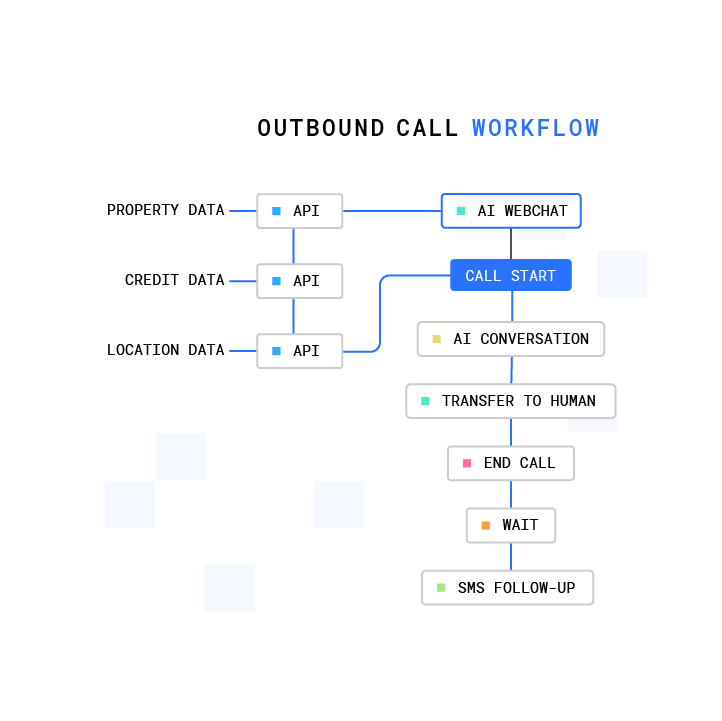
Plura’s AI agents contact inbound leads in under 5 seconds across voice, SMS, RCS (Rich Communication Services), and webchat, 24 hours a day, 7 days a week. The average B2B response time remains over 40 hours, so the speed gap between AI-first and human-first operations is measured in orders of magnitude, not percentage points.
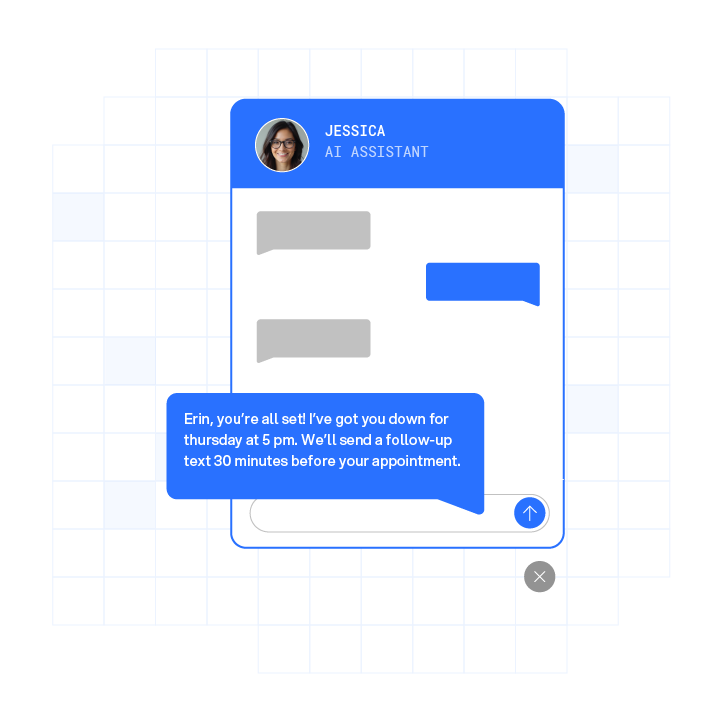
Watch Plura’s sub-5-second lead response in action on 100% US infrastructure.
Call Abandonment Rate
Abandonment is a direct revenue leak. Every abandoned call is a customer who reached out and left without resolution. In regulated verticals, it also creates compliance exposure because a patient who abandons a healthcare intake call may seek care elsewhere, which can generate a gap in the care record. Increasing line capacity or adding staffing during peak hours based on historical call arrival rate data reduces call abandonment rates while maintaining service levels.
AI infrastructure addresses abandonment at the root cause. Plura’s AI agents answer 100% of inbound contacts within two rings, removing queue wait entirely for the contacts the AI handles. Human agents are reserved for escalations and complex interactions, which keeps their queue shorter and their ASA lower.
Cost per Contact
Cost per Contact (CPC) equals total operating costs divided by total number of contacts handled, including agent wages, technology, and overhead. The median cost per contact is $1.84 for self-service channels and $13.50 for assisted channels, per Gartner’s customer service benchmarks published February 20243,4.
The gap between self-service and assisted CPC is the economic argument for AI. For a 50-seat equivalent contact center, traditional offshore operations cost $35,000-$50,000 monthly, while AI contact centers cost $8,000-$15,000 monthly. At scale, for a 100-seat contact center, traditional operations cost $4 million to $7 million annually, while AI-powered communications using platforms like Plura cost $300,000 to $700,000.
That cost gap widens further when you account for turnover, which traditional CPC calculations often understate. The turnover problem mentioned earlier, 30-45% annually, adds recruiting and training cost to the CPC denominator without adding contacts to the numerator, since new agents spend 6-8 weeks in training before handling live calls.
Schedule Adherence
Schedule adherence measures the percentage of time agents follow their assigned schedule, including being logged in, available, and on break at the correct times. Targets vary by operation to balance accountability with the reality of necessary breaks and unexpected events. Below target levels, workforce management (WFM) forecasts break down. The Erlang C model that set staffing levels assumed agents would be present when scheduled, and gaps in adherence translate directly into ASA spikes and abandonment rate increases.
Schedule adherence is a leading indicator for both efficiency and agent health. Chronic low adherence signals disengagement, which precedes turnover. Business leaders often report a correlation between employee enablement and business growth, and adherence data is one of the earliest signals that enablement is breaking down.
AI infrastructure does not replace schedule adherence tracking for human agents, but it reduces the operational consequence of adherence gaps. When an AI agent handles the baseline contact volume, a human agent who is five minutes late to their shift does not create a queue spike. The AI absorbs the gap.
Occupancy Rate
Occupancy differs from utilization in scope. Utilization includes training, meetings, and administrative tasks. Occupancy measures only the contact-handling portion of logged-in time. Both matter. A center with 90% occupancy and 65% utilization has agents spending significant time in non-contact activities, which may indicate over-investment in training or administrative overhead relative to contact volume.
Inbound US call centers apply the same 75-85% target to occupancy specifically, balancing productivity with the flexibility needed for unexpected volume spikes. Outbound US call centers generally target around 75% occupancy.
Plura’s AI Predictive Dialer uses stateful conversion signals, including historical answer rates and prior negotiation outcomes, to maximize talk time per dial. AI agents run at 100% occupancy by design, with no idle time between contacts. That structural advantage drives the CPC differential cited above.
The 80/20 Rule in Call Centers
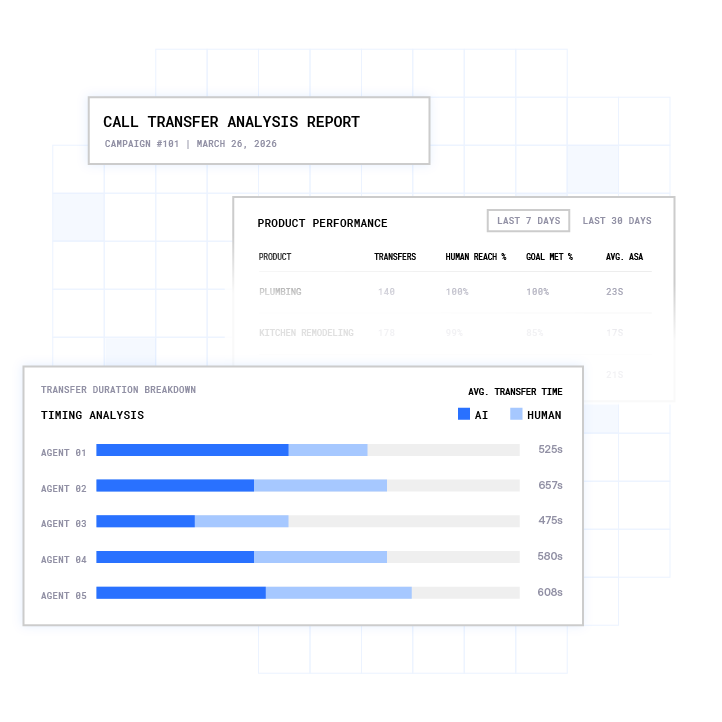
The 80/20 rule introduced earlier has been the default service-level benchmark for over five decades, but it has a structural limitation that leaders often overlook. It remains the primary input for Erlang C workforce planning models across US contact centers.
The limitation comes from how the metric treats the tail of the wait-time distribution. A center can meet an 80/20 target while 20% of callers wait three minutes or longer, because the metric measures only the percentage answered within threshold and ignores the full wait-time distribution. Compliance rate, which tracks the percentage of 15- or 30-minute intervals that meet the service level target, provides a more accurate view of consistency than a single daily average.
For forecasting, the 80/20 rule feeds directly into Erlang C calculations. Inputs include forecasted call volume, AHT, shrinkage (the percentage of scheduled time agents are unavailable due to breaks, training, or absence), and the target answer time. The output is required headcount and probability of delay. Any change to AHT, shrinkage, or volume forecast changes the staffing requirement, which means AHT and schedule adherence function as inputs to the same workforce planning model.
Under the FCC NPRM (CG Docket No. 26-52), operators handling sensitive consumer data offshore face proposed restrictions that could force rapid onshoring of contact volume. A sudden shift in contact routing, from offshore to domestic, changes the cost inputs to the Erlang C model and may require re-forecasting staffing requirements under a materially different cost structure. Operators should consult qualified counsel and their workforce planning teams on the implications of any regulatory-driven routing changes.
See how Plura absorbs volume shifts without re-staffing in a live demo.
Frequently Asked Questions
What is a good AHT for a US call center in 2026?
A good Average Handle Time for inbound customer service in a US call center is approximately 6 minutes 10 seconds on average, varying by sector from under 3 minutes (retail) to over 10 minutes (tech support)3. Financial services centers typically target closer to 9 minutes due to compliance disclosures and verification steps. Retail and e-commerce centers target closer to 5 minutes. AHT should always be tracked alongside FCR and customer satisfaction scores. An AHT that drops because agents are rushing calls, rather than because processes improved, will show up as a decline in FCR and CSAT within the same reporting period.
What is the difference between agent utilization rate and occupancy rate?
Occupancy rate measures the percentage of logged-in time agents spend on contact-handling activities: talk time, hold time, and after-call work. Utilization rate is broader and includes all work-related activities, such as training, team meetings, and administrative tasks. A center can have 80% occupancy and 65% utilization if agents spend 15% of their logged-in time in non-contact work. Both metrics matter for workforce planning. Occupancy tells you how hard agents are working on contacts. Utilization tells you how much of their total paid time is productive.
How does the FCC NPRM affect call center KPI targets for 2026?
The FCC’s Notice of Proposed Rulemaking (NPRM, CG Docket No. 26-52) describes a framework that would cap offshore customer-service calls at 30% of total volume and limit offshore handling of sensitive consumer data, including passwords, multi-factor authentication codes, Social Security numbers, and banking and card data. If finalized, operators currently routing more than 30% of contacts offshore would need to shift that volume to domestic infrastructure. That shift changes the cost inputs to every efficiency KPI. Cost per Contact rises when domestic labor replaces offshore labor, and Agent Utilization targets may need recalibration under a different staffing model. Operators should consult qualified counsel on their specific exposure and review the Federal Register filing for CG Docket No. 26-52 directly.
What is a realistic speed-to-lead target for outbound contact centers?
The research-backed target is under 5 minutes from lead submission to first contact. Industry research published on plura.ai/calculator3 found that contacting a lead within the first 5 minutes makes them up to 100× more likely to connect, and a 60-second response lifts conversions by 391%. The industry average B2B response time remains over 40 hours, which means most contact centers operate at a fraction of their potential conversion rate on outbound lead follow-up. AI voice and SMS agents that respond in under 5 seconds close the gap that human-staffed outbound teams cannot close at scale.
How do you calculate Cost per Contact and what drives it down?
Cost per Contact equals total operating costs for a period divided by total contacts handled in that period. Operating costs include agent wages, benefits, technology licensing, facilities, and management overhead. The primary drivers of high CPC are agent labor, high turnover, and low agent utilization. Reducing CPC requires either increasing contacts per agent-hour, reducing labor cost per hour, or both. AI infrastructure addresses both at the same time. AI agents run at 100% talk utilization with no benefits, no turnover, and no training ramp.
Conclusion
The eight KPIs covered here, AHT, FCR, Agent Utilization, Speed to Answer, Call Abandonment Rate, Cost per Contact, Schedule Adherence, and Occupancy Rate, function as a single system rather than isolated metrics. AHT feeds Erlang C staffing models. Staffing accuracy drives Speed to Answer and Abandonment Rate. Utilization and Occupancy determine whether labor spend generates contacts or idle time. FCR determines whether each contact generates one cost event or two. Cost per Contact is the output of all of them combined.
In 2026, that system operates under cost pressure from $25-50 billion in annual US contact-center labor spend, regulatory pressure from the FCC NPRM and state onshoring laws, and competitive pressure from response-time expectations measured in seconds rather than hours. Traditional contact-center economics, built on linear headcount scaling and offshore wage arbitrage, struggle to meet all three pressures at once.
Plura AI is an FCC-licensed platform running AI agents on 100% US infrastructure, with built-in support for TCPA compliance, DNC compliance, HIPAA, SOC 2, and STIR/SHAKEN caller ID verification across voice, SMS, RCS, and webchat.1 Every contact runs through a Stateful Conversation Database that holds context across every channel, so AHT stays low, FCR stays high, and Cost per Contact stays at the AI-infrastructure level rather than the human-staffing level.
Book a demo to see how the KPI math changes with AI infrastructure.
1 Plura AI maintains SOC 2, HIPAA, ISO, and GDPR posture as part of its platform infrastructure. References to compliance frameworks in this article describe Plura’s platform capabilities and do not constitute a guarantee that any customer using Plura will themselves be compliant with applicable laws or standards. Customers remain solely responsible for their own regulatory obligations, certifications, consent management, recordkeeping, and the claims they make to their own end users. Consult qualified legal counsel for guidance specific to your use case.
2 This article describes regulatory frameworks at a general level and does not constitute legal advice. Laws and regulations vary by jurisdiction, change over time, and apply differently depending on facts and circumstances. Readers should consult qualified legal counsel before making compliance decisions.
3 Performance figures, customer outcomes, and industry statistics referenced in this article are drawn from cited third-party sources or Plura customer case studies. Individual results vary based on implementation, use case, industry, audience, and execution. Past or aggregate performance is not a guarantee of future results.
4 References to third-party products, services, companies, or research are made for informational and comparative purposes only. Plura AI is not affiliated with, endorsed by, or sponsored by any third party named in this article unless explicitly stated. Trademarks and product names referenced remain the property of their respective owners.
This article is provided for informational purposes only and reflects Plura AI’s understanding at the time of publication. Product capabilities, integrations, and specifications are subject to change. For the most current information, visit plura.ai.
This article was produced with the assistance of AI tools and reviewed by Plura AI prior to publication.