

Written by: Matt Beucler, CEO, Plura AI | Last updated: August 7, 2026
Updated August 2026
Key Takeaways for High-Volume RCS Buyers
- RCS business messaging providers fall into two groups: API resellers and FCC-licensed carriers. Only carriers provide carrier-level compliance controls, branded sender ID, and stable economics for high-volume U.S. operations.
- Real-time DNC and TCPA enforcement at carrier origination, fully U.S.-based infrastructure, and native cross-channel conversation memory are rare and create clear separation between providers.
- Plura AI is one of only two FCC Form 499 filers in this comparison, which gives it carrier ownership and direct control over compliance tooling, sender reputation, and data residency.
- Operators handling 500 or more daily customer interactions face growing scrutiny from the FCC NPRM and state onshoring laws, so offshore routing now introduces meaningful regulatory and operational risk.
- Book a live demo with Plura AI to see how high-volume RCS programs run on FCC-licensed U.S. carrier infrastructure with AI agents across channels.
Provider Comparison at a Glance
The table below compares each provider on four criteria that matter most to high-volume U.S. operators. Every data point comes from publicly available documentation or the research sources cited throughout this guide.
| Provider | Carrier Ownership / Infrastructure | Real-Time DNC/TCPA Enforcement | Stateful Cross-Channel Memory |
|---|---|---|---|
| Twilio | CPaaS reseller, no owned U.S. carrier license | Platform-level, not enforced at carrier origination | Not native, requires custom integration |
| Sinch | Global tier-1 telecom network with direct operator connections, operates through U.S. subsidiaries that hold and disclose FCC carrier authorizations via Form 499 filings and published tariffs | Platform-level compliance tooling1 | Not native across voice, SMS, RCS, and webchat |
| Telnyx | Owns its telephony network with direct carrier relationships, received FCC Section 214 authorization (ITC-214-20110228-00052) in 2011 for international facilities-based and resale services | Platform-level, direct carrier relationships reduce markup layers | Not native across all channels |
| Bandwidth | U.S. carrier with owned network, RCS pricing cited as reference for RBM cost benchmarks | Carrier-level for voice, RCS compliance tooling varies | Not native across all channels |
| Infobip | 800+ direct telco connections across 190+ countries, no FCC carrier license disclosed | Platform-level, ISO 27001 and GDPR certified | Conversational platform with session context, not stateful across voice/SMS/RCS/webchat natively |
| MessageBird (Bird) | CPaaS aggregator, no owned U.S. carrier license disclosed | Platform-level compliance tooling | Omnichannel inbox, cross-channel memory depth varies |
| Vonage | CPaaS layer, messaging API combining RCS, SMS, WhatsApp, and other channels, discloses an FCC Form 499 registration as an interconnected VoIP provider and Universal Service Fund contributor | Platform-level, unified analytics and compliance management | Unified API, cross-channel stateful memory not native |
| Plura AI | FCC-licensed U.S. carrier, 100% U.S. infrastructure by architecture | Real-time DNC scrubbing and TCPA-litigator filtering at carrier origination before every dial | Stateful Conversation Database shared across voice, SMS, RCS, and webchat natively |
The following sections examine each provider in more detail, moving from widely used CPaaS platforms to carrier-owned infrastructure.
1. Twilio: CPaaS RCS at Global Scale
Twilio is the most frequently referenced CPaaS provider in the RCS business messaging category.4 Its Programmable Messaging product defaults to RCS as the first-attempt channel when an RCS sender is in a Messaging Service’s Sender Pool and automatically falls back to SMS or MMS when RCS delivery fails. Twilio supports rich content types such as Rich Cards, Chip Lists, Basic Text, Media, Rich Card Carousels, and Webviews through Content Templates.
Twilio operates as an API reseller rather than an FCC-licensed carrier, so branded caller ID is not issued at the carrier level. For high-volume operators, compliance enforcement sits outside the carrier origination layer. DNC scrubbing and TCPA-litigator filtering remain configuration tasks for the operator and must be maintained over time. AI platforms that run on Twilio infrastructure inherit Twilio’s caller ID reputation instead of establishing their own carrier-level identity.
2. Sinch: Global Tier-1 Telecom Network
Sinch positions its RCS offering on a global tier-1 telecom network with strong direct operator connections and carrier-grade infrastructure. The platform targets enterprise-scale messaging for marketing, notifications, and customer service. Sinch supports verified sender profiles, rich media, and SMS fallback across its messaging stack.
Sinch operates through U.S. subsidiaries that hold and disclose FCC carrier authorizations via Form 499 filings and published tariffs. Its infrastructure spans global markets, which introduces offshore data routing considerations for operators reviewing exposure under the FCC NPRM (CG Docket No. 26-52) and state onshoring laws. Cross-channel memory that persists context across voice, SMS, RCS, and webchat is not a native feature of the Sinch platform.
3. Telnyx: Owned Network with RCS Fallback
Telnyx operates its own telephony network and holds direct carrier relationships, which removes reseller markup layers. This structure supports more predictable pricing at scale compared with providers that resell connectivity from aggregators. Telnyx supports smart fallback from RCS to SMS within the same platform and bills only the SMS rate for fallback traffic.
Telnyx, LLC received FCC Section 214 authorization (ITC-214-20110228-00052) in 2011 for international facilities-based and resale services. Its RCS pricing documentation notes that RCS Business Messaging requires a verified sender agent through Google, brand vetting, and ongoing alignment with carrier acceptable use policies and TCPA rules for U.S. traffic. These verification and compliance activities contribute to total cost of ownership. Native stateful memory across all four channels is not part of the core product.
4. Bandwidth: U.S. Carrier Infrastructure
Bandwidth operates as a U.S. carrier with an owned network, which sets it apart from pure CPaaS resellers. Its infrastructure appears in industry benchmarks, where richer RBM message types typically price 30 to 40 percent above basic SMS and MMS, per Bandwidth’s 2026 pricing data. Bandwidth supports A2P messaging and SMS fallback across its carrier network.
Bandwidth’s RCS business messaging capabilities sit primarily at the infrastructure layer. Operators usually access Bandwidth through reseller or developer integrations instead of a managed AI agent platform. Real-time DNC scrubbing, TCPA-litigator filtering, and unified conversation memory across voice, SMS, RCS, and webchat are not native features of the Bandwidth product surface.
5. Infobip: Global CPaaS with RCS Growth
Infobip appears in IDC’s CPaaS MarketScape as a leader4, supporting rich interactive messaging and chatbot or AI integration for enterprises that manage conversations at global scale. Infobip maintains 800+ direct telco connections across 190+ countries, ISO 27001 and ISO 27701 certifications, GDPR alignment, and local data residency routing. The platform supports automatic fallback to SMS or WhatsApp when a recipient’s device does not support RCS.
Infobip reported 169.3% growth in RCS for Business traffic between H1 2025 and H1 20263, with U.S. RCS interactions increasing 1,298.8% year on year. Infobip does not disclose an FCC carrier license for U.S. operations. Its global infrastructure introduces offshore data routing considerations for operators that fall under U.S. onshoring requirements.
6. MessageBird (Bird): Omnichannel CPaaS
MessageBird, now operating as Bird, functions as a CPaaS aggregator that offers omnichannel messaging across RCS, SMS, WhatsApp, and email. Bird’s RCS platform supports verified sender profiles with brand name, logo, and verification mark, interactive elements such as suggested replies and action buttons, and automatic fallback to SMS or MMS when a customer’s device or network does not support RCS.
Bird does not disclose an FCC carrier license for U.S. operations. Its omnichannel inbox provides cross-channel visibility, although the depth of persistent memory across voice, SMS, RCS, and webchat within a single conversation record varies by integration. Compliance enforcement operates at the platform layer instead of at carrier origination.
7. Vonage: RCS Within a Unified Messaging API
Vonage, now part of Ericsson, offers a messaging API that combines RCS, SMS, WhatsApp, and other channels in one campaign with automatic device detection and fallback, plus unified analytics and compliance management. Vonage RCS supports high-resolution images, videos, GIFs, carousels, documents up to 100MB, verified sender profiles, interactive buttons, and read receipts.
Vonage discloses an FCC Form 499 registration as an interconnected VoIP provider and Universal Service Fund contributor. Its compliance management operates at the platform level. Persistent cross-channel memory that keeps conversation context aligned across voice, SMS, RCS, and webchat within a single customer record is not a native capability.
The providers covered so far operate primarily as CPaaS layers or API resellers. The final provider in this comparison uses a different architectural model.
8. Plura AI: FCC-Licensed AI Carrier Platform
Plura AI is an FCC-licensed platform that runs AI agents across voice, SMS, RCS, and webchat on 100% U.S. infrastructure. Plura owns its carrier stack instead of reselling access from a third-party CPaaS, which creates direct control over origination, routing, and compliance tooling for high-volume operators.
Plura’s AI RCS messaging delivers branded, interactive messages with rich media, in-message documents via DocuSign and PandaDoc, in-message payments via Stripe, and personalized AI-rendered video inside the message thread. Plura reports 3x higher engagement versus SMS, an 80% read rate, and a 35% click-through rate3 across its RCS deployments, reaching more than 2 billion devices.
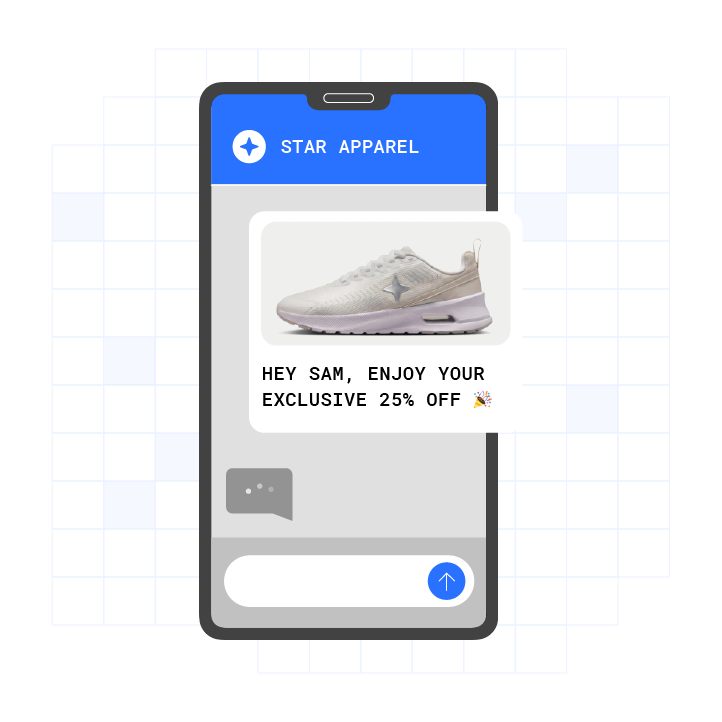
Four capabilities separate Plura from the rest of this list.
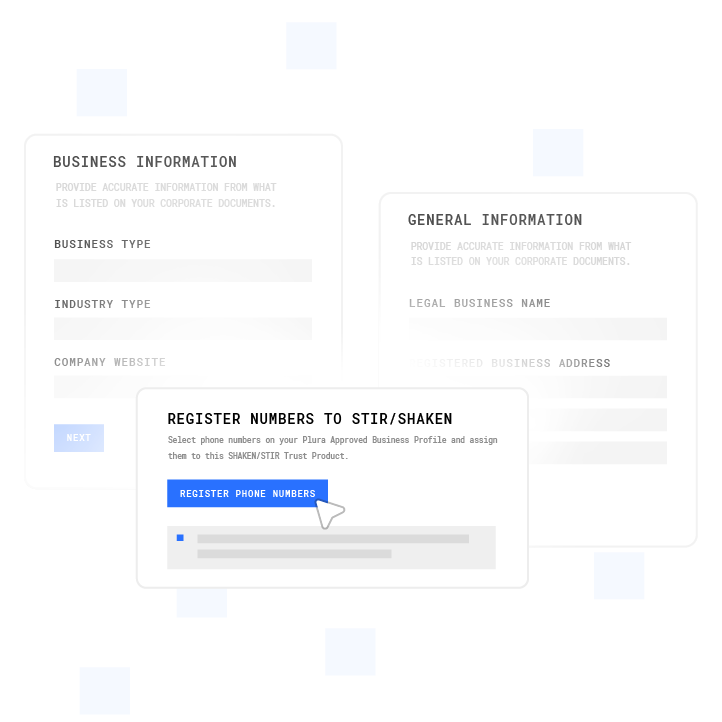
- Carrier-level compliance: Real-time DNC scrubbing and TCPA-litigator filtering run at carrier origination before every outbound contact, not as a platform-layer add-on. Consent records are timestamped, immutable, and audit-ready. Plura supports compliance with TCPA, DNC, HIPAA, SOC 2, and more than 50 state rule sets, while customers remain responsible for their own obligations.1
- Cross-channel conversation memory: Plura’s Stateful Conversation Database is shared across AI voice, AI SMS, AI RCS, and AI webchat. A customer who receives an RCS message at 9 a.m. is recognized by name, qualification status, and prior offer history when the voice call reaches them at noon.
- Branded sender ID at the carrier level: Plura issues branded caller ID directly through its FCC-licensed carrier. Calls and messages present with the company’s name instead of an unfamiliar number or a “Spam Likely” label.
- 100% U.S. infrastructure by architecture: Voice origination, model hosting, data storage, and call recording all sit on domestic infrastructure, which avoids offshore routing exposure under the FCC NPRM and state onshoring laws.
Plura’s pricing runs across three tiers: Multi at $5,000 per month, Agency at $7,500 per month, and Enterprise with custom terms. All plans use annual contracts billed monthly and include a 90-day opt-out window.
RCS vs. RCS Business Messaging: Practical Differences
RCS (Rich Communication Services) is a carrier-backed messaging standard that replaces SMS with IP-based delivery and supports high-resolution media, read receipts, typing indicators, and group chats. The GSMA Universal Profile 3.0, published in February 2025, added end-to-end encryption using the MLS (Messaging Layer Security) protocol for person-to-person (P2P) messaging. Universal Profile 4.0, released in March 2026, added Messaging-Initiated Video Calls, rich text formatting, and streaming video in Rich Cards.
RCS Business Messaging (RBM) is the application-to-person (A2P) tier of RCS that brands use for customer communication. RBM does not inherit end-to-end encryption from the consumer P2P standard. Instead, the trust model for RBM relies on verified brand agents or sender profiles that must be authenticated by the mobile carrier or an approved third-party verification authority. Verification checks legal identity, documentation, and compliance posture. Once verified, businesses gain access to branded sender IDs, logos, and trust indicators that are not available in standard consumer RCS.
Several additional distinctions separate consumer RCS from RCS Business Messaging.
- RBM requires A2P 10DLC registration, a Google-verified brand profile, and carrier approval, so businesses follow the same registration workflow used for SMS instead of bypassing it.
- RCS Business Messaging adds branded sender identity, verified badges, carousels, suggested replies, chatbot flows, and analytics that do not appear in standard consumer RCS.
- Richer RBM message types typically price 30 to 40 percent above basic SMS and MMS, according to Bandwidth’s 2026 pricing data.
- RCS Business Messaging adds a carrier-ecosystem verification layer that requires brands to be verified before sending messages, which raises the barrier to entry for spammers compared with standard SMS.
Do Businesses Use RCS Messaging Today?
Business use of RCS is growing quickly across industries. Google reported in May 2025 that more than 1 billion RCS messages were being sent daily in the U.S. Infobip reported 169.3% growth in RCS for Business traffic between H1 2025 and H1 2026, with U.S. RCS interactions increasing 1,298.8% year on year and more than 1.5 billion RCS messages delivered in the U.S. during the period.
Juniper Research forecasts global RCS for Business mobile operator revenue at over $7 billion in 20303. Juniper Research also projects global RCS business messaging traffic will grow from 70 billion messages in 2025 to more than 200 billion by 2027.5
Application-to-Person traffic led the rich communication services market with 53.2% of market share in 2025. Enterprise demand for A2P RCS business messaging is the largest growth driver and contributes an estimated 6.2% uplift to the CAGR forecast.
For contact center operators, Google RCS for Business conversational messages allow unlimited exchanges within a typical six-hour session window under a single session charge. That pricing structure changes the economics of customer service, support automation, and AI-driven flows at volumes of 500 or more daily interactions.
Which Companies Use RCS Messaging Most Heavily?
RCS business messaging adoption concentrates in verticals where higher engagement and conversion rates justify the premium over SMS.
Financial services leads RCS adoption with 49% current adoption and 45% planning adoption in the next 12 months, primarily for fraud alerts, OTP delivery, and product offers. The verified sender profile and transport-layer security of RBM support use cases where sender impersonation risk is material.
Retail and e-commerce captured 26.08% of rich communication services revenue in 2025 and is projected for a 31.1% CAGR through 2031, driven by conversational commerce using product carousels and in-thread checkout. Retail and e-commerce generates approximately 30% of all RCS business messaging revenue.
Healthcare operators use RCS for appointment confirmations, patient intake, and prescription reminders. Plura’s healthcare deployments support up to a 40% improvement in no-shows through RCS-powered reminders with read receipts and interactive confirmation buttons.
Contact centers that run high-volume outbound and inbound flows use RCS for lead qualification, live transfer handoffs, and post-call follow-up. RCS delivers 3 to 7 times higher click-through rates (10 to 35% versus 2 to 5% for SMS) and 2 to 3 times higher conversion rates in retail, which makes it a meaningful upgrade over SMS for operators who measure cost per outcome instead of cost per message.
2026 Regulatory Update: FCC NPRM and State Onshoring Laws
The regulatory environment for high-volume business messaging shifted significantly in 2026. Operators evaluating RCS business messaging providers should understand the current landscape. This section describes the framework and directs readers to primary sources. It is not legal advice, and operators should consult qualified counsel regarding their specific obligations.
The FCC’s Notice of Proposed Rulemaking (NPRM, CG Docket No. 26-52) proposes capping offshore customer-service calls at 30% and limiting offshore handling of sensitive consumer data, including passwords, multi-factor authentication codes, Social Security numbers, banking data, and card data. Companion federal legislation includes the Keep Call Centers in America Act (S.2495) and the Foreign Robocall Elimination Act (S.2666).
At the state level, five statutes already address offshore handling of consumer, medical, or financial data.
- New York’s Call Center Jobs Act, with penalties up to $10,000 per day
- New Jersey’s mirror statute
- Connecticut’s state-contract bans on offshore data handling
- Missouri’s offshore-disclosure executive order
- Florida’s medical-information offshoring ban
For RCS business messaging providers, the infrastructure question is straightforward. Each operator should ask whether the provider routes traffic, stores data, or hosts models on offshore infrastructure. Every provider in this comparison except Plura routes through global infrastructure with offshore components. Plura runs on 100% U.S. infrastructure by architecture, with voice origination, model hosting, data storage, and call recording all on domestic infrastructure.
Additionally, A2P 10DLC registration became fully mandatory on February 1, 2025, with AT&T, T-Mobile, and Verizon rejecting or blocking unregistered A2P traffic2. TCPA violations carry statutory damages of $500 to $1,500 per message with no aggregate cap2, which enables class actions. Operators should review each provider’s consent management and DNC enforcement architecture before scaling RCS volume.
How to Choose an RCS Business Messaging Provider
High-volume operators can simplify provider selection by focusing on four criteria before signing a contract.
Speed-to-lead and throughput. Global RCS message volume grew 550% across 2024, and session-based pricing models now support unlimited exchanges within a six-hour window under a single charge. Providers must sustain throughput at 500 or more daily interactions without rate limits or delivery degradation. Plura’s AI SMS and AI RCS agents respond in under 5 seconds, and contacting a lead within 5 minutes can make them up to 100 times more likely to connect.
Compliance posture. Providers that enforce DNC scrubbing and TCPA-litigator filtering only at the platform layer leave operators exposed when enforcement logic fails or lags. Plura enforces these controls at carrier origination before every outbound contact. Consent records are timestamped, immutable, and exportable for audit. Plura supports compliance with TCPA, DNC, HIPAA, SOC 2, and more than 50 state rule sets, while customers remain responsible for their own compliance programs.1 Operators should request documentation that shows where in the stack enforcement occurs.
Integration depth and cross-channel memory. RCS business messaging that runs separately from voice, SMS, and webchat creates fragmented customer records. Plura’s Stateful Conversation Database is shared across all four channels, so every agent on every channel reads the same customer history. Plura connects to more than 50 tools across CRM, calendar, payment, and data enrichment categories through its integrations directory.
Total cost of ownership. Higher monthly volume unlocks tiered discounts with most providers, and buyers should request tier thresholds in writing to model costs as volume grows. Plura’s total cost of ownership of $300,000 to $700,000 per year replaces traditional contact-center economics of $4 million to $7 million on equivalent volume. The ROI calculator at plura.ai/calculator lets operators model their own scenarios before committing.
A decision checklist for high-volume operators should start with infrastructure ownership, then layer in compliance posture, and finish with operational economics.
- Does the provider own an FCC carrier license, or is it reselling CPaaS access? Carrier ownership determines whether compliance, sender ID, and data residency are controlled directly or inherited from a third party.
- Is compliance enforced at carrier origination or at the platform layer? Platform-layer enforcement introduces lag and failure risk that carrier-level enforcement can avoid.
- Does the provider run on 100% U.S. infrastructure, or does traffic route through offshore nodes? Offshore routing creates exposure under the FCC NPRM and state onshoring laws.
- Is cross-channel memory native across voice, SMS, RCS, and webchat? Without native memory, customer context fragments across channels and requires custom integration to rebuild.
- Does the provider issue branded sender ID directly, or through a third-party reseller? Direct issuance gives you control over sender reputation, while reseller issuance means you inherit theirs.
- Is SMS fallback automatic and billed only on successful delivery? Fallback billing models vary, so confirm you are not charged twice when RCS fails and SMS succeeds.
- Are pricing tiers and volume thresholds documented in writing? Written tier structures in the MSA support accurate cost modeling during growth.
Plura’s RCS capabilities are documented at plura.ai/products/rcs. Plan structures and rates appear at plura.ai/pricing.
Conclusion and Next Steps for RCS Evaluation
Most RCS business messaging providers in this comparison operate as API resellers on third-party infrastructure. They support verified sender IDs, rich media, and SMS fallback, but compliance enforcement sits at the platform layer, branded caller ID routes through resellers, and unified conversation memory across channels requires custom integration. For operators running 500 or more daily interactions under U.S. regulatory requirements, those gaps create operational risk rather than simple feature tradeoffs.
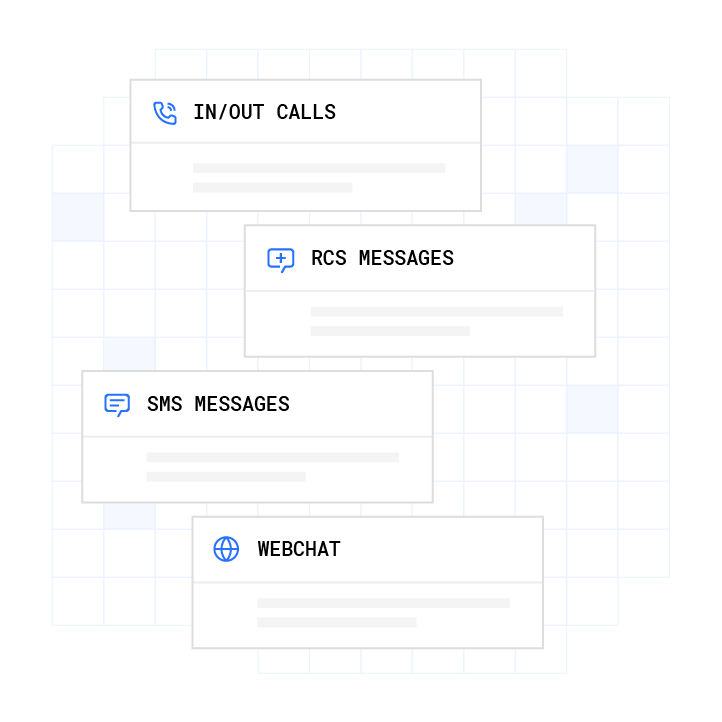
Plura AI is the only provider in this comparison that owns an FCC carrier license, enforces DNC and TCPA compliance at carrier origination, maintains full U.S. infrastructure, and delivers native cross-channel conversation memory across voice, SMS, RCS, and webchat. The AI Predictive Dialer, AI RCS, AI SMS, and AI voice agents all share one Stateful Conversation Database, so every customer interaction builds on the last regardless of channel.
Cost-focused operators can run their numbers through Plura’s ROI calculator at plura.ai/calculator to evaluate potential savings.
Capability-focused operators can compare plans and rates side by side at plura.ai/pricing.
Frequently Asked Questions
What makes Plura AI different from other RCS business messaging providers?
Plura AI owns an FCC-licensed U.S. carrier rather than reselling access from a third-party CPaaS like Twilio. That carrier ownership has three direct consequences for high-volume operators. First, branded sender ID is issued at the carrier level, so calls and messages present with the company’s name rather than an unfamiliar number. Second, DNC scrubbing and TCPA-litigator filtering run at carrier origination before every outbound contact, not as a platform-layer add-on that can lag or fail independently. Third, all voice origination, model hosting, data storage, and call recording run on 100% U.S. infrastructure by architecture, which avoids offshore exposure under the FCC NPRM and state onshoring laws. No other provider in this comparison combines all three of those properties.
How does RCS business messaging pricing work at high volume?
RCS business messaging uses two primary billing models. Conversational RCS is charged per 24-hour conversation window regardless of message count. Non-conversational RCS is charged per individual one-way message such as OTPs or alerts. Rich media messages typically run 20 to 30% higher than basic text-only RCS. Most providers offer tiered volume discounts, with thresholds often starting around 100,000 messages per month and scaling to enterprise tiers above 1 million messages per month. Operators should request tier structures in writing during contract negotiations so they can model costs as volume grows.
1 Plura AI maintains SOC 2, HIPAA, ISO, and GDPR posture as part of its platform infrastructure. References to compliance frameworks in this article describe Plura’s platform capabilities and do not constitute a guarantee that any customer using Plura will themselves be compliant with applicable laws or standards. Customers remain solely responsible for their own regulatory obligations, certifications, consent management, recordkeeping, and the claims they make to their own end users. Consult qualified legal counsel for guidance specific to your use case.
2 This article describes regulatory frameworks at a general level and does not constitute legal advice. Laws and regulations vary by jurisdiction, change over time, and apply differently depending on facts and circumstances. Readers should consult qualified legal counsel before making compliance decisions.
3 Performance figures, customer outcomes, and industry statistics referenced in this article are drawn from cited third-party sources or Plura customer case studies. Individual results vary based on implementation, use case, industry, audience, and execution. Past or aggregate performance is not a guarantee of future results.
4 References to third-party products, services, companies, or research are made for informational and comparative purposes only. Plura AI is not affiliated with, endorsed by, or sponsored by any third party named in this article unless explicitly stated. Trademarks and product names referenced remain the property of their respective owners.
5 This article contains forward-looking statements regarding industry trends, technology adoption, and future capabilities. These statements reflect current expectations and are subject to change. Plura AI undertakes no obligation to update forward-looking statements except as required.
This article is provided for informational purposes only and reflects Plura AI’s understanding at the time of publication. Product capabilities, integrations, and specifications are subject to change. For the most current information, visit plura.ai.
This article was produced with the assistance of AI tools and reviewed by Plura AI prior to publication.