

Written by: Matt Beucler, CEO, Plura AI | Last updated: August 26, 2026
Key Takeaways for Branded Caller ID Leaders
- Branded caller ID API integration displays a verified company name, logo, and call reason on recipient devices, which drives materially higher answer rates than unbranded calls.
- Carrier-direct issuance through an FCC-licensed carrier like Plura AI provides faster activation, full API automation, and A-level STIR/SHAKEN attestation that reseller platforms cannot guarantee.
- Production-ready integration must meet five criteria: activation speed measured in hours, coverage across major mobile networks, a documented compliance posture including STIR/SHAKEN and DNC enforcement, deep API integration, and carrier-level operational fit.
- Real-time DNC enforcement, carrier-level number reputation management, and U.S.-based infrastructure reduce spam labeling and regulatory exposure in ways reseller integrations cannot address at the origination layer.
- Plura AI is currently the only FCC-licensed carrier that issues branded caller ID directly. Talk to our team to see the 5-step workflow running on a carrier-direct stack.
Executive Summary and Evaluation Framework
High-volume outbound operations face a structural performance gap between branded and unbranded calls. Industry data for 2026 shows answered rates for branded, authenticated calls near 62% against roughly 20% for plain unbranded calls3. Hiya’s 2026 State of the Call report found that 86% of consumers do not answer unknown phone numbers.3 Closing that 40-point answer rate gap requires more than a display name. It requires a carrier-grade integration that passes five criteria:
- Speed: Brand registration and activation measured in hours, not weeks.
- Channel coverage: Display on T-Mobile, Verizon, and AT&T mobile networks across iOS and Android.
- Compliance posture: A-level STIR/SHAKEN attestation (explained in Step 2), TCPA considerations for consent and caller ID disclosure, and DNC scrubbing against federal and state registries before each dial.2
- Integration depth: Production-ready API payloads instead of portal-only configuration.
- Operational fit: A carrier stack that enforces compliance at origination rather than as a bolt-on layer.
Plura’s FCC-licensed carrier stack is built to satisfy all five criteria. CPaaS-based resellers typically satisfy only two or three, and the gaps show up in pickup rates, verification delays, and exposure under FCC rulemaking.
Current Delivery Models for Branded Caller ID
Four delivery models exist for branded caller ID in the U.S. market today:
- In-house carrier registration: The operator registers directly with each terminating carrier program. This model covers the broadest network footprint but requires separate relationships with T-Mobile, Verizon, and AT&T, along with ongoing Robocall Mitigation Database (RMD) filings.
- CPaaS-based tools (Twilio, Infobip, and similar): Twilio’s Branded Calling involves a Trust Hub review and activation process.4 Infobip’s Branded Calling ID setup and management of Display Identities can only be performed through the web interface; API-based automation for BCID configuration is not available. Both platforms operate as resellers, not originating carriers.
- Middleware identity platforms: Providers like Numeracle offer identity verification that can scale across networks.4 Numeracle’s Verified Identity framework supports one-time onboarding and scaling across networks. This approach reduces re-verification overhead but still depends on upstream carrier relationships.
- FCC-licensed carrier with direct issuance: The originating carrier holds its own Operating Company Number (OCN), files its own STIR/SHAKEN certificates, and issues branded caller ID under its own carrier identity. Plura operates this model, so branded caller ID is issued at the carrier level instead of being bolted on through a reseller account.
U.S.-specific regulatory factors compound this choice. The FCC’s Notice of Proposed Rulemaking (CG Docket No. 26-52) proposes capping offshore customer-service calls and restricting offshore handling of sensitive consumer data. State onshoring laws in New York, New Jersey, Connecticut, Missouri, and Florida extend that perimeter. Any branded caller ID integration that routes through foreign infrastructure inherits that exposure. Plura runs on 100% U.S. infrastructure by architecture.
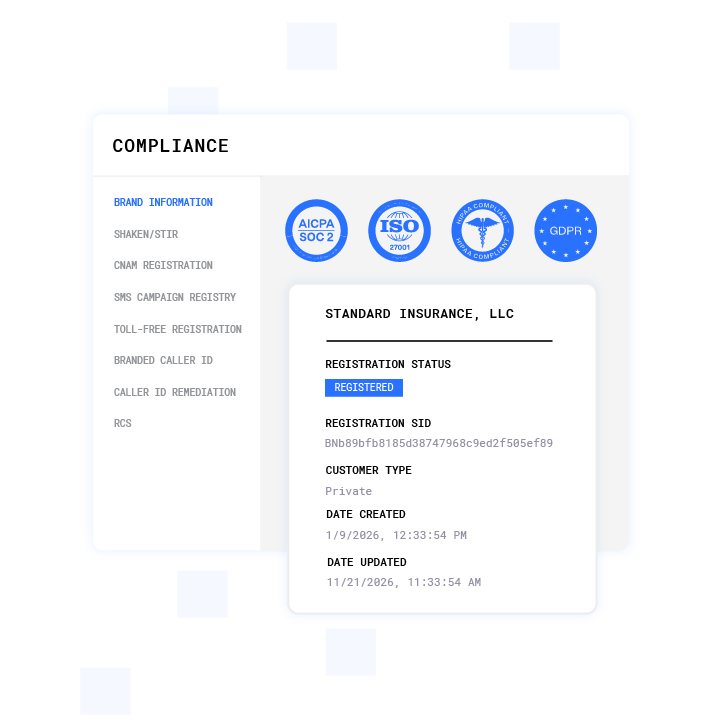
1
Strategic Trade-offs for Contact Center Leaders
With these delivery models and regulatory factors in mind, contact center leaders and CTOs face three core trade-offs when selecting a branded caller ID integration.
Automation versus human oversight. A carrier-direct integration automates brand registration, STIR/SHAKEN signing, and DNC enforcement at the platform level. A CPaaS reseller integration pushes those responsibilities to the operator’s engineering team, which must maintain separate compliance layers and monitor carrier-level reputation signals independently.
Speed versus personalization. A measured deployment across 22,934 branded calls on 59 active numbers over a 2.5-month period produced a 70.7% connection rate on branded calls versus 55.9% on unbranded calls by the same agents using the same numbers and lead lists.3 That 14.8-point lift depends on the underlying number reputation being clean before branding is applied. Branded calling without first securing numbers can amplify whatever reputation the numbers already carry.
Channel mix impacts. Branded caller ID applies to mobile voice calls only. Twilio Branded Calling currently works only for calls to mobile devices on T-Mobile and Verizon networks in the United States and does not display on landlines. Operations with significant landline volume need a parallel strategy. Plura’s AI SMS and AI Predictive Dialer run on the same carrier stack, so branded voice and SMS share a unified compliance posture instead of requiring separate vendor management.
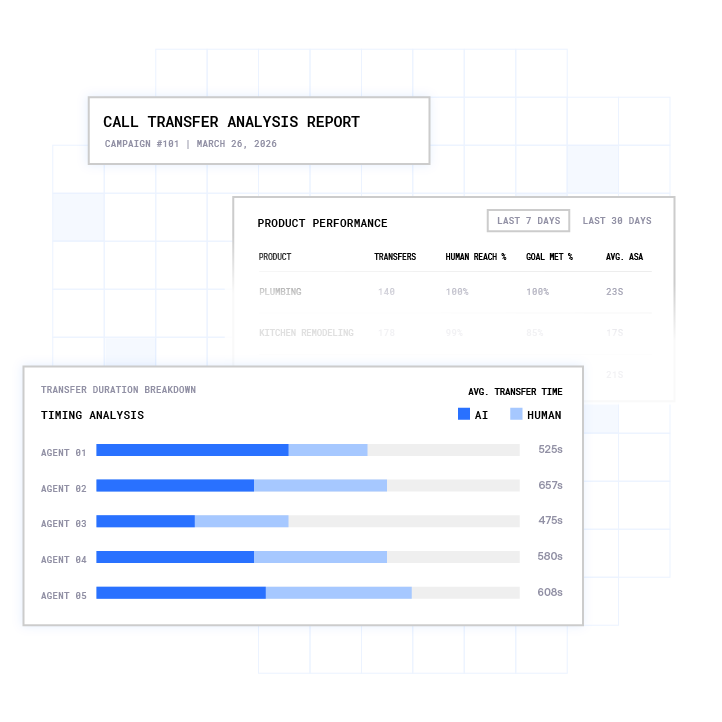
5-Step Branded Caller ID API Integration Workflow
This workflow reflects production requirements for a carrier-direct integration. Steps 1 through 3 are prerequisites. Steps 4 and 5 are operational.
Step 1: Brand Registration Payloads
Brand registration binds a legal entity to a set of phone numbers and display assets. The minimum required elements are a verified business name, a U.S. business address, a logo (256×256 BMP for enhanced display), and a call reason string. Each Display Identity associates one call reason with its authorized phone numbers. High-volume operations with multiple call programs register separate Display Identities per program type.
A production registration payload submitted to a carrier-direct API looks like this:
{ "brand": { "legal_name": "Acme Insurance Group", "display_name": "Acme Insurance", "logo_url": "https://cdn.acme.com/logo_256x256.bmp", "call_reason": "Policy Renewal", "business_address": { "street": "123 Main St", "city": "Dallas", "state": "TX", "zip": "75201", "country": "US" } }, "phone_numbers": [ "+12145550100", "+12145550101" ], "attestation_target": "A" }Step 2: STIR/SHAKEN Authentication and Attestation
STIR/SHAKEN (Secure Telephone Identity Revisited / Signature-based Handling of Asserted information using toKENs) is the FCC-described framework that cryptographically signs outbound calls. The FCC’s Third-Party Authentication Order states that all voice service providers with a STIR/SHAKEN implementation obligation must obtain and use their own STIR/SHAKEN certificate(s).2
Attestation level influences deliverability. A-level (Full) Attestation requires that the originating provider authenticated the caller and verified their authority to use the calling number, while B-level and C-level (Gateway Attestation) carry increased risk. For branded caller ID to display reliably, A-level attestation functions as the operational floor.
A Python snippet for signing a call with A-level attestation via a carrier-direct API:
import requests def originate_branded_call(from_number, to_number, brand_id, api_key): payload = { "from": from_number, "to": to_number, "brand_id": brand_id, "attestation": "A", "stir_shaken": True, "call_reason": "Policy Renewal" } headers = { "Authorization": f"Bearer {api_key}", "Content-Type": "application/json" } response = requests.post( "https://api.plura.ai/v1/calls/originate", json=payload, headers=headers ) return response.json()Reseller integrations cannot guarantee A-level attestation on every call because the reseller does not control the originating carrier’s certificate chain. Plura signs every outbound call under its own STIR/SHAKEN certificate as the originating carrier.
Step 3: Real-Time DNC Enforcement at Origination
DNC enforcement needs to occur before the call leaves the network, not as a post-dial audit. Plura’s compliance engine checks every outbound number against federal and state DNC registries in real time before dial. Organizations conducting telemarketing must maintain an internal DNC list (47 C.F.R. Section 64.1200)2. Plura’s platform enforces quiet-hours rules automatically through time-zone detection on the contact record and applies state and federal calling-window restrictions to every campaign. Operators should consult qualified counsel regarding their specific DNC and TCPA obligations.
Step 4: Production Call Origination Payloads
The following example shows a complete production call origination payload with branded caller ID, STIR/SHAKEN, and DNC pre-check:
{ "call": { "from": "+12145550100", "to": "+19175550200", "brand_id": "brand_acme_policy_renewal", "attestation": "A", "stir_shaken_enabled": true, "dnc_pre_check": true, "quiet_hours_enforce": true, "call_reason": "Policy Renewal", "display_name": "Acme Insurance", "logo_url": "https://cdn.acme.com/logo_256x256.bmp", "webhook_url": "https://ops.acme.com/webhooks/call-events" } }The dnc_pre_check: true flag triggers Plura’s real-time registry lookup before the call is originated. If the number appears on a federal or state DNC list, the call is blocked and a dnc_blocked event fires to the webhook URL. This enforcement occurs at the carrier level, not in application code.
Step 5: Carrier-Level Verification and Monitoring
Beginning in 2026, Robocall Mitigation Database filers must complete annual recertification, with the first 2026 deadline on March 1. Providers who miss recertification have their filing removed from the database. Removal from the RMD results in calls being blocked at the gateway by terminating carriers including T-Mobile, AT&T, and Verizon. Plura maintains its own RMD filing as the originating carrier. Operators using CPaaS resellers inherit the reseller’s RMD status, which sits outside their direct control.
Monitoring should track three signals. First, attestation level per call, to confirm that A-level is being assigned. Second, brand display confirmation rate, using webhook events from terminating carriers. Third, number reputation flags from carrier analytics labeling. Plura’s business intelligence layer surfaces these signals in a unified dashboard.
Book a live demo with Plura to see the 5-step workflow running on a carrier-direct stack.
Pricing and Provider Comparison for Branded Caller ID
The table below compares documented characteristics of reseller-based branded caller ID delivery and carrier-owned direct issuance. Every figure is drawn from published sources.
| Characteristic | CPaaS Reseller (e.g., Twilio-mediated) | Carrier-Direct (Plura) |
|---|---|---|
| Activation timeline (Enhanced) | 24-48 hours after Trust Hub review (up to 7 business days) | Issued under Plura’s own carrier identity, with no upstream Trust Hub dependency |
| STIR/SHAKEN certificate ownership | Resellers rely on upstream carrier certificates and cannot sign calls under their own identity | Plura holds its own STIR/SHAKEN certificate and OCN and signs every call at origination |
| API-based brand configuration | Infobip BCID: portal-only, with no API automation available | Full API access for brand registration, call origination, and monitoring |
| DNC enforcement point | Application layer, as an operator responsibility | Carrier layer, before the call originates |
Pricing for CPaaS-mediated branded calling varies by carrier program and reseller margin. Aloware’s Twilio-mediated branded caller ID involves ordering in-app, CSM submission via the Twilio Console, and separate verification paths depending on tier. Plura’s pricing is structured by volume tier, with branded caller ID included as a carrier-level capability instead of a separate add-on. Leaders can compare plans and rates side by side at plura.ai/pricing.
Why Many Branded Integrations Still Show “Spam Likely”
Branded caller ID and spam labeling operate as independent carrier systems. A number can display a verified brand while still receiving a “Spam Likely” flag if its reputation is poor. Three root causes account for most persistent spam labels in high-volume outbound operations.
1. Reseller attestation gaps. Smaller carriers and CLECs lag in STIR/SHAKEN adoption, with only about 17.5% of inter-carrier traffic between smaller providers being signed. When a CPaaS reseller routes calls through a carrier with incomplete STIR/SHAKEN coverage, calls arrive at the terminating carrier without A-level attestation and are flagged accordingly.
2. Number reputation damage before branding. Call labels such as “Scam Risk” and “Spam Likely” can override branded call displays, so consumers may still see a spam warning instead of the business logo and call reason. Branding amplifies the existing reputation of a number. Numbers with prior spam complaints carry that reputation into the branded display.
3. Dialing behavior triggering carrier analytics. Aggressive call retries, heavy use of caller-side cancels, and high calling rates during quiet hours can still negatively affect number reputation even when branded calling is enabled. Carrier analytics engines score behavioral patterns independently of brand registration status.
Plura addresses all three at the carrier level. STIR/SHAKEN signing happens under Plura’s own certificate on every call. Number reputation is managed through carrier-level remediation instead of application-layer workarounds. DNC enforcement and quiet-hours rules block the dialing behaviors that trigger carrier analytics flags before they occur.
Compliance Checklist for Outbound Leaders
The following checklist describes the compliance infrastructure Plura’s platform provides to support operators in managing their outbound calling programs. Operators remain responsible for their own regulatory obligations and should consult qualified counsel regarding TCPA, DNC, STIR/SHAKEN, and FCC NPRM requirements specific to their operations.
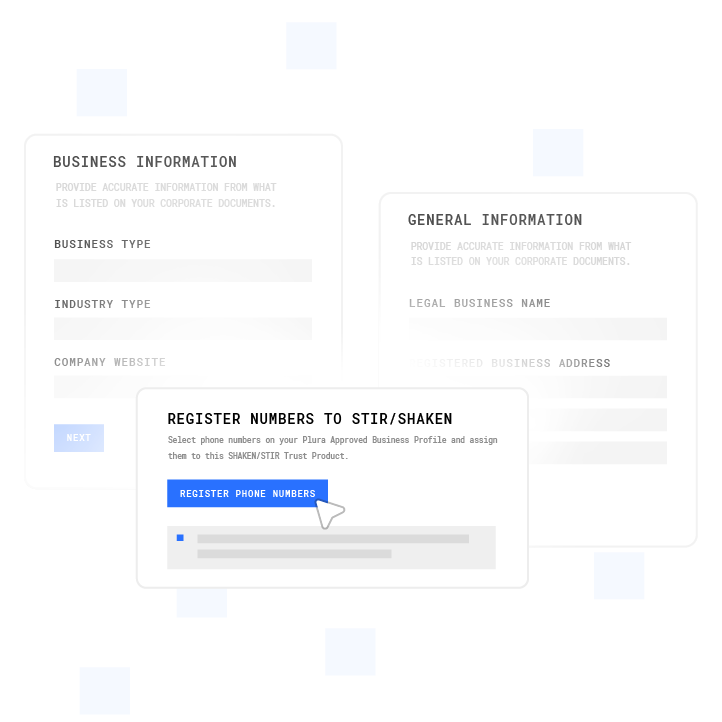
- TCPA compliance support: Outbound telemarketing calls must disclose the caller’s name, the company the call is made for, and contact information according to 47 U.S.C. § 227 and FTC rules. Plura’s platform logs timestamped, immutable consent records and exports audit-ready reports on demand.
- DNC compliance support: Real-time scrubbing against federal and state DNC registries before every dial. Non-compliant numbers are blocked at the carrier level before origination.
- STIR/SHAKEN caller ID verification: A-level attestation signed under Plura’s own STIR/SHAKEN certificate on every outbound call. The FCC proposes to require terminating providers to transmit verified caller name or other caller identity information for presentation on a consumer’s handset whenever they transmit an indication that a call has received an A-level attestation.
- FCC NPRM exposure: Plura’s domestic infrastructure supports operators in addressing FCC NPRM (CG Docket No. 26-52) disclosure requirements for data handling and call routing.
- Quiet-hours enforcement: Automatic time-zone detection applies state and federal calling-window restrictions to every campaign. Telemarketing calls may only be made between 8:00 AM and 9:00 PM in the called party’s local time zone (47 C.F.R. Section 64.1200).
- Caller ID accuracy: Under the Truth in Caller ID Act (47 U.S.C. § 227(e)), transmitting caller ID information that does not accurately reflect the originating entity or is designed to mislead can trigger civil penalties up to $10,000 per violation. Plura’s brand registration process binds display names to verified legal entities.
- RMD filing maintenance: Plura maintains its own active Robocall Mitigation Database filing as the originating carrier. The FCC raised base forfeiture amounts to $10,000 for filing false or inaccurate RMD information and $1,000 for failing to update within the required timeframe.
Frequently Asked Questions
What is the difference between branded caller ID and CNAM?
CNAM (Caller Name) is a legacy database lookup system that displays a name associated with a phone number on the terminating device. It is a best-effort system with no cryptographic verification, a 15-character limit, and frequently outdated records. Branded caller ID is a carrier-registered display that includes a verified business name, logo, and call reason, delivered through STIR/SHAKEN-authenticated channels. CNAM operates independently of STIR/SHAKEN and does not carry attestation level information. For high-volume outbound operations, branded caller ID provides materially higher display reliability and answer rate lift than CNAM alone.
What attestation level is required for branded caller ID to display reliably?
A-level attestation is the operational floor for reliable branded caller ID display in 2026. As detailed in the implementation workflow, A-level reflects that the originating provider has authenticated the caller and verified their authority to use the calling number. B- and C-level calls are increasingly blocked or labeled “Spam Likely” by terminating carriers’ analytics engines. Achieving A-level attestation requires that the platform originating the call owns or controls the calling number on a registered carrier with an active Robocall Mitigation Database filing. CPaaS resellers that do not own their originating carrier cannot guarantee A-level attestation on every call.
How long does branded caller ID registration take, and what delays should operations expect?
Timeline depends on the delivery model. Through a CPaaS reseller, the Trust Hub review process alone can take up to 7 business days, with Enhanced Branded Calling (name, logo, and call reason) activating 24-48 hours after approval. End-to-end deployment through a reseller typically runs about four weeks from order submission to activation. Through a carrier-direct integration like Plura, brand registration is issued under the carrier’s own identity without an upstream Trust Hub dependency, which shortens the activation path. For high-volume operations running time-sensitive campaigns, the reseller timeline represents a material operational constraint.
Can branded caller ID be configured via API, or does it require portal-based setup?
This varies by provider. Some CPaaS platforms restrict brand configuration to their web portals with no API automation available for Display Identity setup. Plura’s carrier-direct integration exposes brand registration, call origination with branded parameters, and monitoring events through a full API surface. For contact centers and agencies managing multiple client accounts or multiple call programs, API-based configuration is necessary for scalable operations. Portal-only setup creates a manual bottleneck that does not fit high-volume deployment patterns.
Does branded caller ID eliminate spam labels entirely?
Branded caller ID does not eliminate spam labels. Branded caller ID and spam labeling operate as independent carrier systems. A number can display a verified brand while still receiving a “Spam Likely” flag if its underlying reputation is compromised. Spam labels from consumer-reported flags or carrier analytics can override branded display on the recipient device. Effective spam label remediation requires carrier-level number reputation management, A-level STIR/SHAKEN attestation, and dialing behavior that does not trigger carrier analytics thresholds. Plura addresses all three at the carrier level. Operators should also review their dialing cadence, retry logic, and quiet-hours enforcement as behavioral inputs to carrier reputation scoring.
Conclusion and Next Steps for Branded Caller ID
Branded caller ID API integration functions as a carrier-infrastructure decision, not a cosmetic display feature. That decision determines whether outbound calls reach recipients, carry verified identity, and pass carrier-level spam filters and regulatory scrutiny. The five-criteria framework above, covering speed, channel coverage, compliance posture, integration depth, and operational fit, gives leaders a structured basis for evaluating any integration path.
The production workflow above, which includes brand registration, STIR/SHAKEN authentication, real-time DNC enforcement, production payload structure, and carrier-level monitoring, reflects what a carrier-direct integration requires. CPaaS resellers can satisfy parts of this workflow. They cannot issue branded caller ID under their own carrier identity, cannot guarantee A-level attestation on every call, and cannot enforce DNC controls at the origination layer.
Plura is currently the only FCC-licensed carrier that issues branded caller ID directly, signs every call under its own STIR/SHAKEN certificate, enforces real-time DNC checks before dial, and runs the full stack on U.S.-based infrastructure. The AI Predictive Dialer, AI voice agent, and AI SMS channels all inherit the same carrier-grade compliance posture from a single platform.
Leaders can compare plans and rates side by side at plura.ai/pricing.
1 Plura AI maintains SOC 2, HIPAA, ISO, and GDPR posture as part of its platform infrastructure. References to compliance frameworks in this article describe Plura’s platform capabilities and do not constitute a guarantee that any customer using Plura will themselves be compliant with applicable laws or standards. Customers remain solely responsible for their own regulatory obligations, certifications, consent management, recordkeeping, and the claims they make to their own end users. Consult qualified legal counsel for guidance specific to your use case.
2 This article describes regulatory frameworks at a general level and does not constitute legal advice. Laws and regulations vary by jurisdiction, change over time, and apply differently depending on facts and circumstances. Readers should consult qualified legal counsel before making compliance decisions.
3 Performance figures, customer outcomes, and industry statistics referenced in this article are drawn from cited third-party sources or Plura customer case studies. Individual results vary based on implementation, use case, industry, audience, and execution. Past or aggregate performance is not a guarantee of future results.
4 References to third-party products, services, companies, or research are made for informational and comparative purposes only. Plura AI is not affiliated with, endorsed by, or sponsored by any third party named in this article unless explicitly stated. Trademarks and product names referenced remain the property of their respective owners.
This article is provided for informational purposes only and reflects Plura AI’s understanding at the time of publication. Product capabilities, integrations, and specifications are subject to change. For the most current information, visit plura.ai.
This article was produced with the assistance of AI tools and reviewed by Plura AI prior to publication.