

Written by: Matt Beucler, CEO, Plura AI
Key Takeaways for High-Volume Dialing in 20265
- A TCPA-focused predictive dialer must enforce real-time DNC scrubbing, reassigned-number checks, consent logging, and caller-ID authentication at the carrier level to reduce settlement risk in 2026.
- High-volume operators should confirm that prior express written consent controls, 3% abandonment caps, and SHAKEN/STIR attestation are built into the platform rather than added through separate tools.
- Real-time API checks and carrier-owned infrastructure reduce stale list exposure and support Safe Harbor protection under the FCC’s Reassigned Numbers Database framework.
- Platforms running on 100% U.S. servers help operators address new FCC onshoring proposals and state-level restrictions without renegotiating vendor contracts.
- Schedule a working session with Plura AI to review carrier-level compliance enforcement for your current and planned campaigns.
Core TCPA Requirements for Predictive Dialers
The Telephone Consumer Protection Act (TCPA) sets specific operating rules for predictive dialers used in high-volume outbound campaigns.2 TCPA class actions have been filed at a record pace in 2026 with a year-over-year increase, and class action settlements can be significant. Operators evaluating dialers in 2026 should confirm that each of the following elements is enforced inside the platform. Legal counsel should advise on specific obligations.
- Prior express written consent. Consent must come from a signed written agreement, including electronic signatures, that clearly authorizes a specific caller to contact a consumer at a specific number.
- 3% abandonment cap. Federal rules cap abandoned calls at 3% of answered calls per campaign over any 30-day period, where an abandoned call occurs when no agent connects within two seconds of the recipient answering.
- Internal DNC list maintenance. Companies maintain an internal DNC list, honor opt-out requests within 10 business days, and retain list membership records for at least five years.
- Reassigned Numbers Database (RND) queries. The FCC’s RND API lets businesses query a phone number plus the last date of consent, then returns whether the number was reassigned after that date, and querying it supports Safe Harbor protection under the TCPA.
- Quiet-hours enforcement. Marketing calls using predictive dialers are permitted only between 8:00 AM and 9:00 PM in the recipient’s local time zone under TCPA rules.
- Audit trails. Dialers automatically maintain detailed audit trails for every call, including call date and time, number dialed, agent assigned, call result, consent source, and call recording or transcript where applicable.
- SHAKEN/STIR attestation. STIR/SHAKEN is the carrier authentication framework that signs outbound calls with attestation levels, and calls with low attestation increasingly get spam-labeled on the recipient’s screen, causing answer rates 30% to 50% below signed numbers on the same lists.3
- One-to-one consent documentation. Organizations using purchased lead lists verify per-seller consent documentation, since blanket consent covering multiple sellers does not align with the FCC’s one-to-one consent framework.
Talk with Plura about how these requirements map to carrier-level enforcement in your environment.
Carrier-Level DNC and Reassigned-Number Controls
Static list downloads create risk because the data becomes stale as soon as it leaves the registry. Free DNC scrubbing tools typically function as one-time list uploads without real-time validation at the point of contact or automatic re-scrubbing as registries update, which creates TCPA and TSR compliance gaps for high-volume or multi-state dialing operations. A number added to the DNC registry after the last download will not appear in a static list check.
Real-time API checks at origination address this exposure. Enterprise DNC solutions provide real-time validation via QuickCheck APIs, continuous auto re-scrubbing, federal, state, and internal registry coverage, integrated Reassigned Numbers Database screening, and timestamped audit logs to support TCPA safe harbor protections.
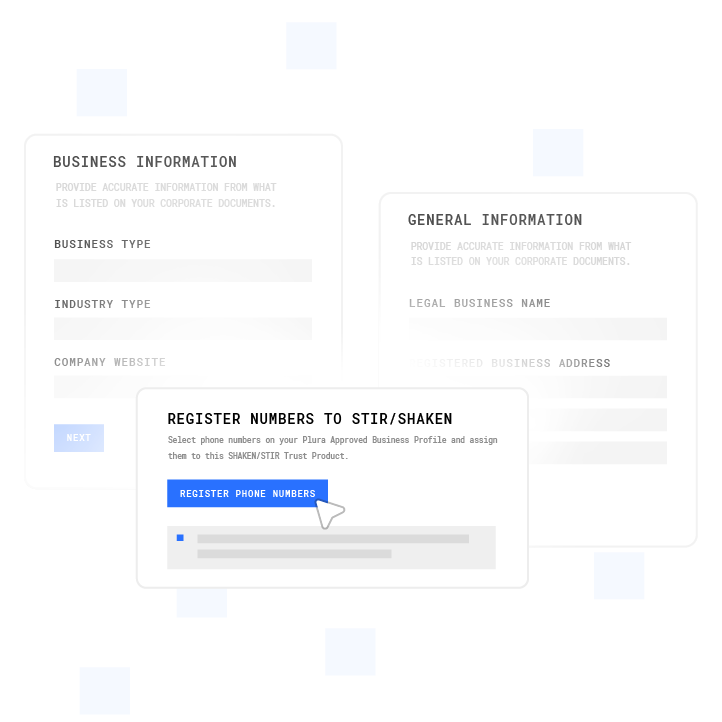
Plura AI implements this enterprise approach through its compliance engine, which integrates with the Blacklist Alliance for DNC screening and Number Verifier for caller-ID reputation, and queries the FCC’s Reassigned Numbers Database before each outbound contact. Plura also integrates with The Blacklist Alliance’s TCPA Litigation Firewall for real-time Do Not Call scrubbing and litigation protection. Because Plura owns its FCC-licensed carrier, these checks run at origination, not in a downstream software layer that a misconfigured integration could bypass.
Reassigned numbers can create significant statutory exposure at $500 per call under the TCPA. At scale, even a small percentage of reassigned numbers can drive substantial liability.
Consent Records and Audit-Ready Logging
Strong consent documentation forms the core defense in TCPA disputes. Organizations maintain detailed records of consent, DNC scrub dates, campaign parameters, and dialer settings as a primary defense in TCPA litigation.
Plura’s compliance engine maintains a timestamped, immutable consent ledger across every outbound contact. This ledger is stored on 100% U.S. infrastructure and can be exported in one click when legal teams, carriers, or regulators request documentation. Retention spans the required five years for DNC list membership records.
Plura’s compliance dashboard surfaces per-campaign consent status, scrub timestamps, and opt-out logs in a single view. Compliance teams configure rule sets at the campaign level and set state-specific overrides for jurisdictions like Florida, California, and Oklahoma, which maintain mini-TCPA statutes with requirements exceeding federal law, including different calling hours and stricter consent rules.
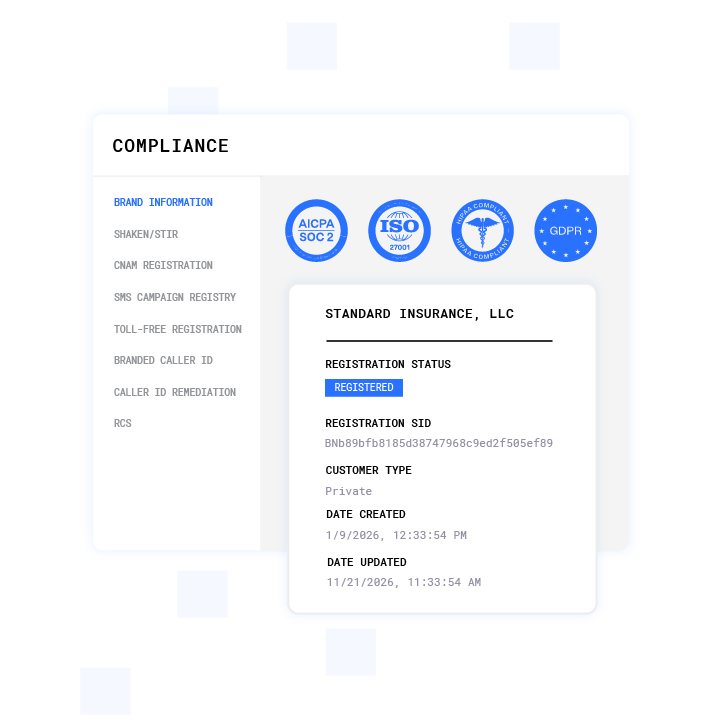
Plura supports compliance efforts related to TCPA, DNC, SOC 2, HIPAA, ISO certification, GDPR, and SHAKEN/STIR caller ID verification.1 Customers remain responsible for their own regulatory obligations and for the claims they make to their end users.
Onshoring Rules and Their Impact on Dialer Strategy
Outbound dialing rules shifted meaningfully in 2026.5 On March 27, 2026, the FCC released an NPRM proposing measures to encourage onshoring of foreign call centers and deter illegal robocalls. The full docket appears as CG Docket No. 26-52.
The FCC’s March 27, 2026 Call Center Onshoring NPRM seeks comment on English proficiency requirements for offshore staff and on restricting sensitive data to U.S.-only agents.2 Companion federal proposals include the Keep Call Centers in America Act (S.2495) and the Foreign Robocall Elimination Act (S.2666).
State rules add further pressure. New York’s Call Center Jobs Act carries penalties up to $10,000 per day, New Jersey has a similar statute, Connecticut restricts offshore handling on state contracts, Missouri issued an offshore-disclosure executive order, and Florida restricts offshore handling of medical information. AI voice and dialing platforms with foreign infrastructure dependencies now face regulatory exposure under this combined framework.
Plura runs on 100% U.S. infrastructure by design. Voice origination, model hosting, data storage, and call recording all sit on domestic infrastructure. This architecture avoids the offshore exposure these rules target and reduces the need to restructure vendor contracts.
Carrier-Owned AI Compared to Twilio-Wrapper Dialers
Most AI voice platforms operate as API resellers on top of Twilio or another CPaaS, with compliance features layered on later. Plura AI owns its telecom infrastructure and holds an FCC carrier license, while platforms that depend on Twilio operate as a software layer without a carrier license.4
This difference shapes how compliance works day to day. When enforcement runs at the carrier level, DNC checks and SHAKEN/STIR authentication occur at origination, before the call leaves the platform. When compliance sits in a software layer above a third-party CPaaS, it depends on integrations that can be misconfigured, and branded caller ID must route through another reseller.
Mobile answer rates for unknown numbers in the U.S. have dropped to around 3% in 2026 according to Hiya’s State of the Call Report.3 Plura issues branded caller ID directly through its FCC-licensed carrier and addresses spam labels at the carrier level, which tackles the answer-rate problem that Twilio-wrapper dialers cannot address without additional intermediaries.
Plura’s built-in predictive dialer includes list management, dynamic pacing, timezone logic, answer rate improvement tools, and compliance controls, all running on the same carrier stack that handles SHAKEN/STIR authentication and branded caller ID.
Vendor Checklist for TCPA-Focused Predictive Dialers in 2026
Operators reviewing predictive dialers for high-volume U.S. campaigns can use five direct questions before signing a contract:
- Does the vendor hold an FCC carrier license? Carrier-level enforcement of DNC, SHAKEN/STIR, and branded caller ID requires control of the origination layer rather than renting it from a CPaaS.
- Does the platform query the Reassigned Numbers Database in real time? Effective RND integration automates queries in real time or in batches before each call or text and logs the query date, number, and result for auditing and compliance records.
- Can the platform export audit-ready consent and scrub records on demand? One-click export with timestamped, immutable records now serves as a practical standard for TCPA litigation defense.
- Does the vendor provide a 99.9% uptime SLA with automatic failover? Compliance enforcement remains only as reliable as the infrastructure that runs it.
- Does the contract include a 90-day opt-out window? Vendors confident in deployment performance accept a defined iteration period. Plura includes a 90-day opt-out in every annual contract.
Use a live review with Plura to benchmark these criteria against your current dialer stack.
Operators seeking a TCPA-focused predictive dialer in 2026 should prioritize platforms that own the carrier stack. Legacy software and Twilio-wrapper solutions struggle to deliver real-time DNC, reassigned-number checks, consent logging, and SHAKEN/STIR authentication without introducing new exposure. Plura provides that infrastructure today on 100% U.S. servers with carrier-level enforcement on every outbound contact.
Run your numbers through Plura’s calculator to check your ROI in real time using Plura’s ROI calculator.3
Frequently Asked Questions
What makes a predictive dialer TCPA-focused in 2026?
A predictive dialer aligned with TCPA requirements in 2026 enforces prior express written consent before each outbound contact, maintains an abandonment rate at or below 3% of answered calls per campaign over any 30-day period, scrubs numbers against federal and state DNC registries in real time, queries the FCC’s Reassigned Numbers Database before each dial, enforces quiet-hours rules by the recipient’s local time zone, and maintains timestamped, immutable records of every consent, scrub, and opt-out event. SHAKEN/STIR caller-ID authentication has become a practical requirement because calls without full attestation face significantly lower answer rates due to spam labeling. Operators should consult qualified legal counsel to assess their specific obligations under federal and applicable state law.
Why does carrier ownership matter for TCPA enforcement in a predictive dialer?
When a dialer platform owns its FCC-licensed carrier, compliance enforcement runs at origination. DNC checks, Reassigned Numbers Database queries, SHAKEN/STIR authentication, and branded caller-ID issuance all occur before the call leaves the platform. When compliance sits in a software layer above a third-party CPaaS like Twilio, those checks depend on integrations that can be misconfigured, and branded caller ID cannot be issued directly at the carrier level. In practice, carrier-owned platforms enforce controls on every dial by architecture, while wrapper-based platforms rely on configuration, which introduces operational risk at scale.
What is the Reassigned Numbers Database and why does it matter for high-volume dialers?
The FCC’s Reassigned Numbers Database (RND) tracks phone numbers that carriers have reported as permanently disconnected and made available for reassignment. Operators can query a number plus the date of last consent and receive a response indicating whether the number was reassigned after that date. Querying the RND before each outbound contact supports Safe Harbor protection under the TCPA for calls to reassigned numbers. For high-volume operations, exposure from skipping RND checks compounds quickly because even a small percentage of reassigned numbers in a large list can generate substantial statutory damages per call. Plura integrates RND queries into its compliance engine and logs each query date, number, and result for audit purposes.
How does the FCC’s 2026 offshore NPRM affect predictive dialer operators?
The FCC’s March 2026 NPRM (CG Docket No. 26-52) proposes capping the percentage of customer service calls handled by foreign call centers at roughly 30% of total volume, requiring start-of-call disclosures for offshore routing, and restricting sensitive consumer data to U.S.-only agents. Companion federal proposals and state laws in New York, New Jersey, Connecticut, Missouri, and Florida extend similar restrictions. For predictive dialer operators, any platform with foreign infrastructure dependencies, including AI voice tools hosted outside the U.S., now carries regulatory exposure under this framework. Operators using platforms built on 100% U.S. infrastructure avoid the offshore disclosure and volume-cap requirements these rules target.
What should compliance officers review when auditing a predictive dialer vendor?
Compliance officers auditing a predictive dialer vendor can verify six items: that the vendor holds an FCC carrier license and does not route calls through a third-party CPaaS; that DNC scrubbing runs in real time against federal, state, and internal registries at origination; that the platform queries the Reassigned Numbers Database before each dial and logs the results; that consent records are timestamped, immutable, and exportable on demand; that quiet-hours enforcement is automatic and tied to the recipient’s local time zone rather than the campaign’s originating time zone; and that the platform’s infrastructure is 100% U.S.-based, covering voice origination, model hosting, data storage, and call recording. Plura’s compliance dashboard surfaces these controls in a single view and generates one-click audit exports for legal review or regulatory inquiries.
1 Plura AI maintains SOC 2, HIPAA, ISO, and GDPR posture as part of its platform infrastructure. References to compliance frameworks in this article describe Plura’s platform capabilities and do not constitute a guarantee that any customer using Plura will themselves be compliant with applicable laws or standards. Customers remain solely responsible for their own regulatory obligations, certifications, consent management, recordkeeping, and the claims they make to their own end users. Consult qualified legal counsel for guidance specific to your use case.
2 This article describes regulatory frameworks at a general level and does not constitute legal advice. Laws and regulations vary by jurisdiction, change over time, and apply differently depending on facts and circumstances. Readers should consult qualified legal counsel before making compliance decisions.
3 Performance figures, customer outcomes, and industry statistics referenced in this article are drawn from cited third-party sources or Plura customer case studies. Individual results vary based on implementation, use case, industry, audience, and execution. Past or aggregate performance is not a guarantee of future results.
4 References to third-party products, services, companies, or research are made for informational and comparative purposes only. Plura AI is not affiliated with, endorsed by, or sponsored by any third party named in this article unless explicitly stated. Trademarks and product names referenced remain the property of their respective owners.
5 This article contains forward-looking statements regarding industry trends, technology adoption, and future capabilities. These statements reflect current expectations and are subject to change. Plura AI undertakes no obligation to update forward-looking statements except as required.
This article is provided for informational purposes only and reflects Plura AI’s understanding at the time of publication. Product capabilities, integrations, and specifications are subject to change. For the most current information, visit plura.ai.
This article was produced with the assistance of AI tools and reviewed by Plura AI prior to publication.