

Written by: Matt Beucler, CEO, Plura AI
Key Takeaways
- Store SMS consent directly in the CRM with timestamp, method, IP, and disclosure version fields to support TCPA-aligned, audit-ready records.
- Route inbound SMS replies by CRM contact owner instead of sending number, and update suppression fields in real time on STOP keywords.
- Use closed-loop revenue attribution with UTM parameters, webhook events, and pipeline mapping to track SMS-driven pipeline and ROI in HubSpot, Salesforce, or Zoho.
- Prefer native CRM sync over middleware tools like Zapier to avoid shadow databases, reduce latency, and keep data consistent for compliance-critical workflows.
- Plura AI delivers these capabilities through native CRM integrations that write consent, routing, and attribution data directly to HubSpot, Salesforce, or Zoho while enforcing real-time DNC and TCPA guardrails; get started with Plura AI.
Designing CRM Fields For SMS Consent Storage
Consent storage inside the CRM is the foundation of every compliant SMS program. The Telephone Consumer Protection Act (TCPA) describes a framework for prior express written consent for marketing messages, and The FCC’s one-to-one consent rule, which would have required consent to be collected directly between the consumer and the specific brand, was scheduled to become effective January 27, 2025, but was vacated by the Eleventh Circuit on January 24, 2025, and never took effect.2 Consult qualified counsel to understand how these frameworks apply to your specific programs.
A double opt-in workflow that writes directly to the CRM contact record follows this sequence:
- Contact submits a web form with an unchecked, clearly labeled SMS consent checkbox above the submit button, including message frequency, opt-out instructions, and a link to terms.
- A confirmation SMS fires immediately and asks the contact to reply YES to confirm.
- On YES reply, the CRM contact record updates with all consent fields in real time via webhook.
- A suppression check runs against the DNC registry before any subsequent send.
- Consent records are retained in a tamper-proof format. Best practice is to retain records for a minimum of five years with SHA-256 hashing, including timestamp, IP address, user agent, geolocation, exact disclosure version, and session replay.
Every CRM contact record should carry the following consent fields as native custom properties. The table below shows the exact field names, formats, and example values that support TCPA-aligned audit documentation.
| Field Name | Format | Example Value |
|---|---|---|
| Consent_Timestamp | ISO 8601 with timezone | 2026-07-16T09:14:22-05:00 |
| Consent_Method | Enumerated string | web-form-double-opt-in |
| Disclosure_Version | String | v2.3-july2026 |
| IP_Address | IPv4/IPv6 | 203.0.113.42 |
| Timezone | IANA timezone string | America/Chicago |
When preparing for a TCPA audit, you will need to export these consent fields in a standardized format. The template below shows the exact field list to include in your CRM documentation so every data point from the consent fields table above is ready for review.
- Contact phone number in E.164 format
- Consent_Timestamp (ISO 8601 with timezone offset)
- Consent_Method (web-form, keyword-opt-in, paper, verbal-upgrade)
- Disclosure_Version (maps to a versioned disclosure text document)
- IP_Address at time of opt-in
- Timezone (IANA string derived from IP or form field)
- Opt-out timestamp and method if applicable
- Suppression propagation timestamp across all sending systems
Plura’s CRM integration writes consent records directly to the native contact object in HubSpot, Salesforce, or Zoho, with no intermediate database. Plura provides integration with The Blacklist Alliance’s TCPA Litigation Firewall for real-time DNC scrubbing and litigation protection.4 This design keeps consent and suppression data in one system of record instead of scattering it across a shadow database and a separate compliance tool.
Routing SMS Replies By CRM Owner
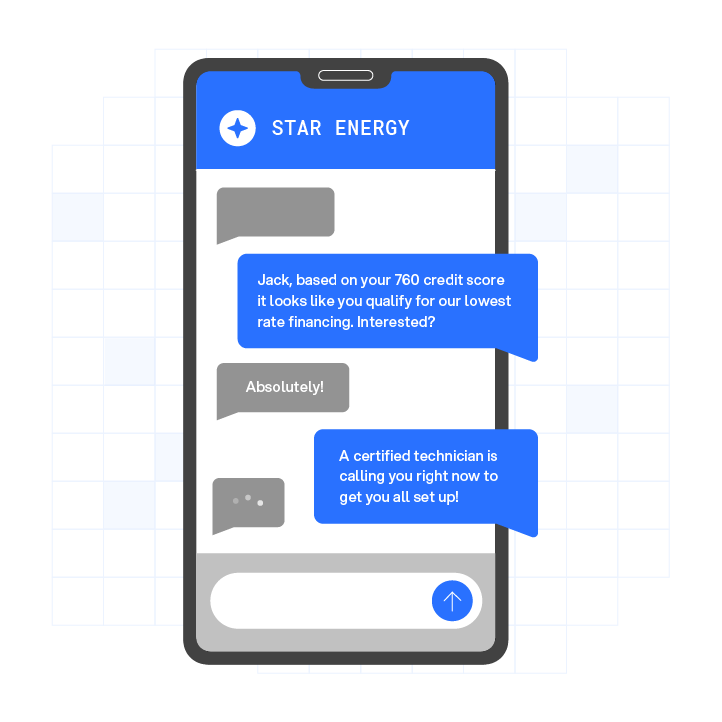
Two-way routing failures create missed revenue and poor customer experience in high-volume SMS operations. A contact replies to a campaign text, the reply lands in a shared inbox with no ownership rule, and it sits unread for hours. Routing logic anchored to CRM ownership fields, not to the sending phone number, prevents this failure pattern.
A reliable two-way routing workflow operates as follows:
- Inbound SMS reply arrives at the platform’s webhook endpoint.
- The platform looks up the contact record by phone number in the CRM.
- If a CRM owner field is populated, the reply routes to that rep’s queue.
- If no owner exists, the reply routes to a round-robin assignment pool based on territory or product line.
- If the reply contains an opt-out keyword (STOP, QUIT, CANCEL, UNSUBSCRIBE, END), the suppression field updates immediately and no further sends are triggered.
- The full reply thread is logged to the CRM contact timeline within seconds.
The single source of truth for this routing logic is a Stateful Conversation Database. Plura uses stateful AI architecture that remembers previous interactions, preferences, and outcomes across channels for better personalization and follow-ups. A contact who texts at 9 a.m. and calls at noon is recognized as the same conversation, with full context available to the routing engine and the rep who picks up.
The recurring “STOP not updating” problem in operator forums usually reflects a routing and data architecture gap, not a carrier issue. When opt-out keywords are processed by a middleware layer that does not write back to the CRM in real time, the suppression field lags. Plura’s native CRM sync writes opt-out status to the contact record immediately on receipt, before any subsequent send can be triggered.
Building SMS Revenue Attribution In Your CRM
Only 36% of businesses trigger SMS messages directly from CRM workflows, and only 28% are testing or using AI for SMS, according to Salesmsg’s 2026 State of SMS Benchmark Report analyzing activity across 250+ businesses.3 Many high-volume SMS programs still handle attribution manually or not at all.
Closed-loop SMS revenue attribution inside a CRM requires three components working together: UTM parameters on every SMS link, webhook-based event capture, and pipeline field mapping.
Use the following UTM and webhook pattern:
- Every SMS link carries utm_source=sms, utm_medium=text, and a descriptive utm_campaign value such as renewal-july2026.
- Hidden form fields populated via JavaScript capture UTM data at lead submission and write the originating SMS campaign name into a CRM lead-source field.
- Server-side event tracking captures SMS touchpoints when contacts switch devices between the initial click and conversion.
- Webhook events from the SMS platform (delivered, replied, clicked, opted-out) write to the CRM contact timeline in real time.
Attribution window guidance from Cometly’s SMS attribution framework suggests 24 to 48 hours for e-commerce and impulse purchases, 7 to 14 days for considered purchases, and 30 or more days for B2B or long sales cycles.3 Apply a consistent model across channels so SMS is not penalized by a shorter window than email.
Key pipeline metrics to surface in your CRM dashboard include:
- MQL to SQL conversion rate segmented by SMS-touched versus non-SMS-touched contacts
- Pipeline velocity for SMS-enrolled sequences versus control groups
- Revenue per message (total attributed revenue divided by messages sent)
- Cost per conversion (total SMS costs divided by attributed conversions)
- Customer lifetime value lift for SMS-engaged contacts
Plura’s conversation intelligence surfaces these metrics natively inside HubSpot, Salesforce, and Zoho without a separate analytics tool. Every SMS interaction is logged to the contact record, and attribution reports pull from the same data layer the AI reads during live conversations.
Run your numbers through Plura’s calculator to check your ROI in real time.
Managing 10DLC And Quiet Hours From The CRM
A2P 10DLC (Application-to-Person 10-Digit Long Code) registration through The Campaign Registry is the carrier-level requirement for high-volume business SMS in the United States.2 U.S. carriers filter or block texts from unregistered business numbers, making 10DLC registration mandatory to maintain operational continuity for high-volume SMS. Delivery rates for 10DLC-registered brands are high, with Tier 1 carriers delivering strong performance for vetted senders, while unregistered traffic generally sees lower rates.
Use the following 10DLC registration steps for CRM-connected SMS programs:
- Register your brand with The Campaign Registry, providing EIN, business name, and vertical.
- Create a campaign use case such as marketing, customer care, or 2FA and submit for carrier vetting.
- Assign registered long-code numbers to the campaign and configure them inside your SMS platform.
- Map registered numbers to CRM sending profiles so outbound messages always originate from a vetted number.
- Monitor throughput limits per use case and scale number pools as volume grows.
Quiet-hours enforcement operates as a separate layer that should run at the CRM level, not only at the campaign level. The TCPA describes a framework around calling and texting hours in the recipient’s local time zone. Consult qualified counsel for guidance on how these rules apply to your programs. Plura enforces quiet-hours rules automatically through time-zone detection on the contact record, applying state and federal window considerations before any send is triggered. The Timezone field in the consent schema above feeds directly into this enforcement layer.
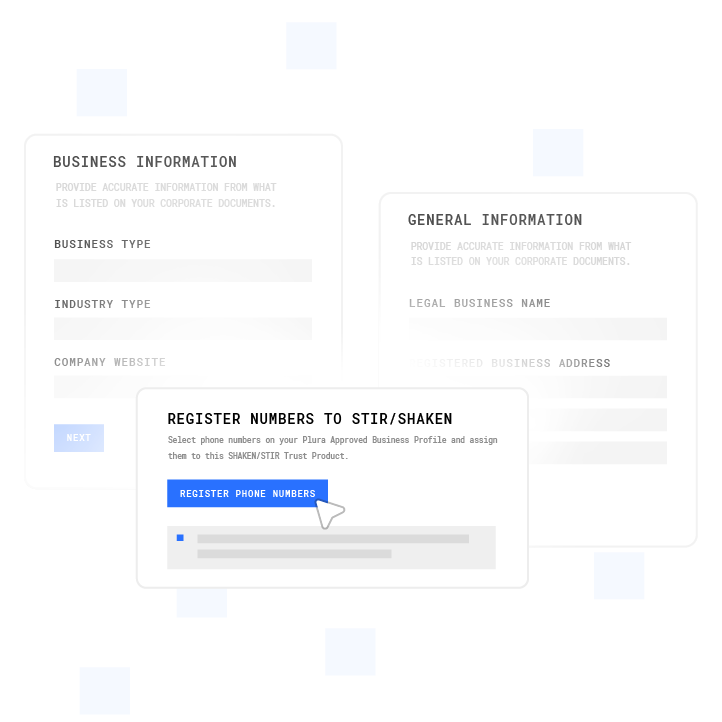
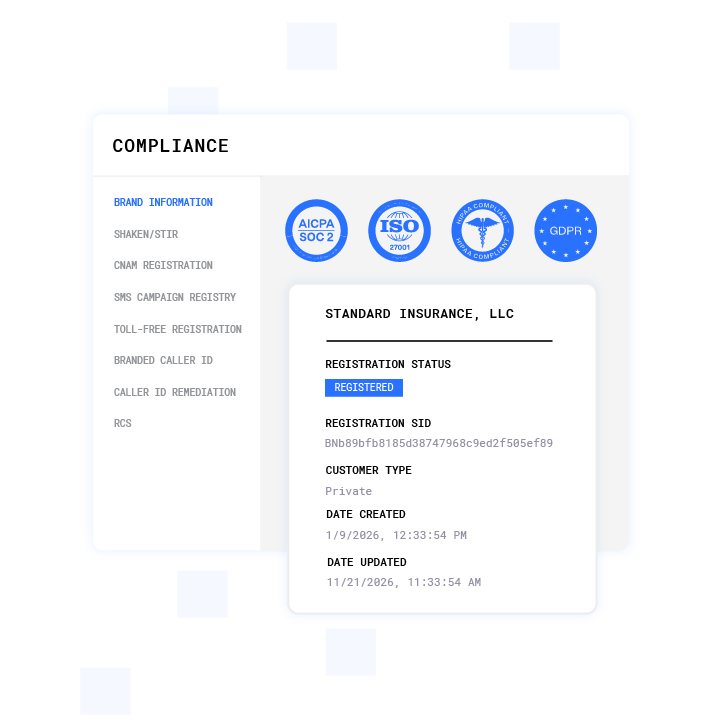
Plura’s compliance framework includes SOC 2 compliant infrastructure, TCPA and STIR/SHAKEN enforcement, integration with Blacklist Alliance for DNC screening, and Number Verifier for caller ID reputation.1 These layers run before every outbound contact, not as a post-send audit.
Native CRM Sync Compared To Zapier
The choice between native CRM sync and third-party automation tools like Zapier has direct consequences for data consistency, audit readiness, and cost at scale. The table below compares the two approaches across four dimensions relevant to high-volume SMS operations and shows how native sync avoids latency, cost scaling, and data fragmentation that can undermine compliance-critical workflows.
The “shadow database” problem that operators describe in forums often results from third-party automation tools logging to their own dashboards instead of writing back to the CRM contact record. When consent, opt-out status, and conversation history live outside the system of record, every audit becomes a manual reconciliation exercise. Plura provides built-in data enrichment from over 30 sources, while Twilio-based approaches often require Segment or custom integrations, which adds another layer of potential fragmentation.4
Zapier connections work well for patching a single workflow gap when no native option exists. They are not suited as the primary sync mechanism for consent records, opt-out propagation, or revenue attribution in a high-volume SMS program.
Troubleshooting CRM SMS Integration Failures
The following issues appear consistently in operator forums and support queues for high-volume SMS programs. Each one reflects a gap between how the SMS platform and the CRM write and share data.
Shadow database: Consent and conversation history exist in the SMS platform’s own database but are not written to the CRM contact record. The fix is replacing any middleware sync with a direct webhook-to-CRM write on every event such as send, delivery, reply, opt-out, and click. Every event must write to the native contact object, not to a connected app’s sidebar.
STOP not updating: An opt-out keyword arrives at the SMS platform but the CRM suppression field does not update, and the contact receives another message. This pattern usually reflects a webhook configuration failure or a polling delay in a middleware tool. The fix is a dedicated inbound webhook endpoint that writes opt-out status to the CRM contact record in real time, before any send queue can process the next message. As of April 11, 2025, consumers may revoke consent at any time by any reasonable means, and businesses must honor and process all reasonable revocation requests within 10 business days. Consult qualified counsel for guidance on how this framework applies to your programs.
Broken Zapier connections: A Zap fails silently, messages stop logging to the CRM, and the team does not notice until a compliance audit or a rep complains about missing context. The fix is moving high-volume, compliance-critical sync paths off Zapier entirely and onto native CRM connectors or direct API webhooks with monitoring and retry logic. Zapier’s per-task billing also becomes a material cost issue at scale. Zapier offers a free plan at $0/month for 100 tasks per month, and paid plans start at $19.99/month (billed annually) for 750 tasks.4
Reply routing to the wrong rep: Inbound replies route by sending number rather than by CRM contact ownership. The fix is configuring the SMS platform to look up the contact by phone number in the CRM and apply the owner field as the primary routing rule, with a fallback queue for unowned contacts.
Attribution gaps: SMS-driven pipeline appears as “direct” or “unknown” in CRM reports because UTM parameters were not included in message links or were stripped during redirect. The fix is enforcing UTM parameters on every SMS link at the template level and using server-side event tracking to capture conversions when contacts switch devices.
Conclusion And Next Steps
High-volume SMS inside a CRM fails when consent, routing, and attribution live outside the system of record. The five failure modes described in this guide, shadow databases, STOP not updating, wrong-rep routing, manual attribution, and Zapier fragility, share a common root cause. The SMS layer and the CRM layer operate as separate systems instead of a single architecture.
Plura AI addresses this at the infrastructure level. Plura supports omnichannel engagement across voice, SMS, webchat, and RCS within a unified stateful inbox that maintains full conversation history. The CRM integration writes consent records, opt-out status, conversation transcripts, and attribution events directly to the native contact object in HubSpot, Salesforce, or Zoho. Real-time DNC scrubbing, quiet-hours enforcement, and TCPA compliance support run before every send, not as a post-send audit. The Stateful Conversation Database means a contact who texted yesterday is recognized in full context when they call today.
TCPA violations can cost $500 to $1,500 per text or call. The cost of getting consent storage, opt-out propagation, and DNC guardrails wrong is not theoretical. The cost of getting them right comes from a single architecture decision that keeps SMS and CRM on the same data layer.
Run your numbers through Plura’s calculator to check your ROI in real time.
Compare plans and rates side by side at Plura pricing.
Frequently Asked Questions
What fields should every CRM contact record include for SMS consent compliance?
Every CRM contact record used in a high-volume SMS program should carry at minimum five native custom fields. These fields include a consent timestamp in ISO 8601 format with timezone offset, a consent method field indicating how the opt-in was captured such as web form, keyword, paper, or verbal upgrade, a disclosure version field that maps to a versioned copy of the exact language shown at opt-in, the IP address recorded at the time of opt-in for web-based captures, and an IANA timezone string derived from the contact’s IP or form submission. Opt-out timestamp and suppression propagation timestamp should be added as separate fields so audit exports can show the time elapsed between an opt-out request and suppression across all sending systems. These fields should be native CRM properties, not fields in a connected app’s sidebar, so they are available to all CRM workflows, reports, and audit exports without a middleware query.
How does Plura handle two-way SMS routing inside HubSpot, Salesforce, and Zoho?
Plura’s native CRM integration routes inbound SMS replies by looking up the contact record by phone number in the CRM and applying the contact owner field as the primary routing rule. If a CRM owner is assigned, the reply routes to that rep’s queue. If no owner exists, the reply routes to a configurable fallback pool based on territory, product line, or round-robin assignment. Opt-out keywords such as STOP, QUIT, CANCEL, UNSUBSCRIBE, and END trigger an immediate suppression field update on the CRM contact record before any subsequent send can be queued. The full reply thread is logged to the CRM contact timeline in real time via webhook, not via a polling loop, so conversation history is available to reps and to the Stateful Conversation Database that Plura reads during subsequent interactions across voice, SMS, RCS, and webchat.
What is the difference between native CRM sync and Zapier for high-volume SMS programs?
Native CRM sync writes SMS events directly to the CRM contact object via event-driven webhooks, typically delivering context in under one second with no per-task billing and no intermediate database. Zapier and similar middleware tools use polling-based architectures that introduce 15 to 30 seconds or more of latency, charge per task at rates that scale with volume, and frequently log to their own dashboards rather than writing delivery receipts back to the CRM contact record. For compliance-critical data such as consent timestamps, opt-out status, and conversation transcripts, the latency and data fragmentation introduced by middleware tools create audit readiness gaps that are difficult to close retroactively. Native sync is the appropriate architecture for any program where consent records, suppression fields, and attribution data must be available in real time inside the CRM. Zapier is appropriate for patching a single non-critical workflow gap when no native option exists.
How should SMS revenue attribution be set up inside a CRM like HubSpot or Salesforce?
Closed-loop SMS revenue attribution requires three components working together. First, every SMS link must carry UTM parameters such as utm_source=sms, utm_medium=text, and a descriptive utm_campaign value. Second, hidden form fields populated via JavaScript capture UTM data at lead submission and write the originating SMS campaign name into a structured CRM lead-source field. Third, server-side event tracking captures SMS touchpoints when contacts switch devices between the initial click and conversion, which prevents those conversions from appearing as direct traffic. Attribution windows should be calibrated to the sales cycle, with 24 to 48 hours for e-commerce, 7 to 14 days for considered purchases, and 30 or more days for B2B programs. Key pipeline metrics to surface in the CRM dashboard include MQL-to-SQL conversion rate segmented by SMS-touched contacts, pipeline velocity for SMS-enrolled sequences, revenue per message, cost per conversion, and customer lifetime value lift for SMS-engaged contacts versus a control group.
What does 10DLC registration involve and how does it connect to CRM-based SMS programs?
A2P 10DLC registration is the carrier-level process for registering a business brand and its SMS use cases with The Campaign Registry, which U.S. carriers use to vet high-volume senders and maintain deliverability standards. Registration involves submitting the business EIN and name, selecting a campaign use case such as marketing or customer care, and assigning registered long-code numbers to the approved campaign. Inside a CRM-connected SMS program, registered numbers must be mapped to CRM sending profiles so every outbound message originates from a vetted number. Throughput limits vary by use case and carrier, so number pools need to scale with volume. Plura handles 10DLC registration as part of its platform setup and maps registered numbers to CRM sending profiles natively, so operators do not manage carrier vetting separately from their CRM configuration. Quiet-hours enforcement runs automatically through time-zone detection on the CRM contact record, applying the timezone field captured at consent to every outbound send decision.
1 Plura AI maintains SOC 2, HIPAA, ISO, and GDPR posture as part of its platform infrastructure. References to compliance frameworks in this article describe Plura’s platform capabilities and do not constitute a guarantee that any customer using Plura will themselves be compliant with applicable laws or standards. Customers remain solely responsible for their own regulatory obligations, certifications, consent management, recordkeeping, and the claims they make to their own end users. Consult qualified legal counsel for guidance specific to your use case.
2 This article describes regulatory frameworks at a general level and does not constitute legal advice. Laws and regulations vary by jurisdiction, change over time, and apply differently depending on facts and circumstances. Readers should consult qualified legal counsel before making compliance decisions.
3 Performance figures, customer outcomes, and industry statistics referenced in this article are drawn from cited third-party sources or Plura customer case studies. Individual results vary based on implementation, use case, industry, audience, and execution. Past or aggregate performance is not a guarantee of future results.
4 References to third-party products, services, companies, or research are made for informational and comparative purposes only. Plura AI is not affiliated with, endorsed by, or sponsored by any third party named in this article unless explicitly stated. Trademarks and product names referenced remain the property of their respective owners.
This article is provided for informational purposes only and reflects Plura AI’s understanding at the time of publication. Product capabilities, integrations, and specifications are subject to change. For the most current information, visit plura.ai.
This article was produced with the assistance of AI tools and reviewed by Plura AI prior to publication.