

Written by: Matt Beucler, CEO, Plura AI | Last updated: August 29, 2026
Key Takeaways for Contact Center and CX Leaders
- The Foreign Robocall Elimination Act (S.2666) passed the Senate by unanimous consent on August 3, 2026, and extends traceback consortium renewal from annual to once every three years.
- S.2666 creates a 10-member interagency task force with a 360-day mandate to recommend strategies against foreign-origin robocalls and authorizes public listing of non-compliant providers.
- Companion FCC proceedings propose expanding the definition of voice service providers, capping offshore call-center routing at 30%, and requiring domestic handling of sensitive data.
- Operators should audit call-routing paths, verify RMD filings, confirm STIR/SHAKEN authentication, and confirm that critical infrastructure is 100% U.S.-based by architecture rather than contract.
- Plura AI’s 100% U.S.-infrastructure FCC-licensed carrier aligns with the enforcement direction of S.2666; see how Plura’s architecture maps to each requirement in a live demo.
What the August 2026 Senate Passage Signals for Operators
S.2666, the Foreign Robocall Elimination Act, was introduced by Senator Ted Budd (R-N.C.) with Senator Peter Welch (D-Vt.) as a co-sponsor and passed the Senate floor by unanimous consent on August 3, 2026, in the 119th Congress, 2nd Session.2 The official title of S.2666 as introduced is “A bill to direct the Federal Communications Commission to establish a taskforce on unlawful robocalls, and for other purposes.”
The bill’s core goal is reducing foreign-origin unlawful robocalls through three mechanisms. It strengthens the traceback framework, creates a new interagency task force, and adds a provider bond requirement tied to the Robocall Mitigation Database (RMD). Following Senate engrossment, the bill now awaits House consideration before it can be sent to the President.
For high-volume operators, the passage signals a regulatory environment tightening around offshore call routing and provider accountability. The bill does not change core TCPA (Telephone Consumer Protection Act) or TSR (Telemarketing Sales Rule) obligations such as prior express written consent, Do-Not-Call scrubbing, or accurate caller ID requirements.2 It raises enforcement risk through faster public traceback and a stricter posture on foreign-origin traffic. Operators should consult qualified counsel to assess their specific obligations under the bill’s direction.
Traceback Consortium Renewal and Public Listing Authority
The TRACED Act (Public Law 116-105), signed December 30, 2019, established the foundational framework for caller ID authentication and designated the Industry Traceback Group (ITG), established by USTelecom in 2015, as the private consortium authorized to coordinate traceback investigations tracing illegal robocall campaigns to originating providers. Under the TRACED Act, the FCC was required to issue annual notices related to the traceback consortium’s renewal and standing.
S.2666 modifies that cadence. The bill reduces the recurring FCC notice requirement from annual to once every three years, which reduces administrative friction for the consortium while preserving its core enforcement authority. S.2666 provides liability protections for covered entities sharing ransomware notifications (referencing Section 106 of the Cybersecurity Information Sharing Act), but contains no provisions regarding the ITG or information about suspected unlawful calls and authorizes publication of a list of providers that refuse to participate in traceback or that originate or carry high volumes of unlawful robocall traffic. That public list creates direct reputational and commercial pressure on noncooperating operators.
Interagency Task Force Membership and 360-Day Mandate
Beyond the traceback framework, S.2666 establishes a second enforcement mechanism that will shape future policy. S.2666 directs the FCC, in consultation with the FTC and U.S. Attorney General, to create a limited-time interagency task force focused on unlawful robocalls originating outside the United States. The task force includes federal representatives from the FCC, FTC, and DOJ, plus seven private-sector appointees drawn from the following categories:
- Three experts in voice service, analytics, or telecommunications technology
- One representative from the registered traceback consortium
- One representative from a telemarketing business
- One representative from a consumer-calling business or nonprofit
- One consumer advocate
The task force has 360 days to report to Congress on the most effective strategies to combat foreign-origin robocalls. Its scope includes foreign call origination points, promoting STIR/SHAKEN (Secure Telephone Identity Revisited/Signature-based Handling of Asserted information using toKENs) adoption abroad, creating a dedicated DOJ enforcement body, and potential criminal penalties. The task force sunsets 90 days after delivering its report.
FCC NPRMs and State Onshoring Laws Shaping Routing Decisions
S.2666 operates alongside a broader regulatory push that affects operators running offshore or mixed-infrastructure call routing. Operators should consult qualified counsel regarding their specific obligations under each proceeding.
The FCC’s July 23, 2026 Further Notice of Proposed Rulemaking on improving the Robocall Mitigation Database, involving WC Docket No. 24-213, WC Docket No. 17-97, and CG Docket No. 17-59, proposes expanding the definition of “voice service provider” to include call centers, PBX (Private Branch Exchange) systems, dialing platforms, cloud service providers, and over-the-top providers, even if they do not provide service directly to end users. It also proposes defining a “foreign voice service provider” as any provider created, incorporated, or organized outside the United States, regardless of whether it maintains offices or facilities domestically.
Separately, FCC 26-16, adopted March 26, 2026, proposes a cap on the percentage of customer-service calls that covered providers may route to foreign call centers, with 30% floated as a reference point, plus a consumer right to transfer to a U.S.-based representative and mandatory disclosure at the start of offshore-handled calls. The same proceeding proposes that transactions involving passwords, multi-factor authentication, Social Security numbers, bank account numbers, or credit card information be handled exclusively by U.S.-based call centers.
State-level pressure compounds the federal picture. New York’s Call Center Jobs Act, New Jersey’s mirror statute, Connecticut’s state-contract restrictions, Missouri’s offshore-disclosure executive order, and Florida’s medical-information offshoring restrictions each add jurisdiction-specific considerations for operators handling sensitive consumer data across state lines.
Operator Action Checklist for Infrastructure and Routing Ownership
The following checklist translates the enforcement direction of S.2666 and the companion FCC proceedings into specific infrastructure and compliance verification steps. Because each operator’s obligations depend on their call routing, data handling, and provider relationships, this checklist is not legal advice. Operators should consult qualified counsel to assess how these requirements apply to their operations.
- Audit your call routing path. Identify every upstream provider in your voice traffic chain. The FCC’s July 2026 FNPRM proposes requiring providers to verify whether upstream providers’ operations, IP addresses, or leadership indicate foreign location or control inconsistent with claimed domestic status.
- Confirm your RMD filing status. The July 2026 FNPRM proposes requiring all RMD filers to certify that they will respond to traceback requests within 24 hours and cooperate with traceback investigations. Verify that your current filing is complete, current, and accurate.
- Assess your traceback cooperation posture. S.2666 authorizes publication of a list of providers that refuse to participate in traceback or originate high volumes of unlawful traffic. Confirm that your organization’s traceback response process is documented, staffed, and operational.
- Review sensitive-data handling flows. FCC 26-16 proposes that transactions involving passwords, MFA (multi-factor authentication), SSNs, bank account numbers, and card data be handled exclusively by U.S.-based centers. Map which call flows touch these data types and where those calls are handled.
- Verify your infrastructure’s domestic status by architecture, not by contract. A contractual claim of U.S. handling differs from infrastructure that originates, routes, and stores voice traffic on domestic soil. Confirm where your voice origination, model hosting, data storage, and call recording physically reside.
- Check for foreign adversary exposure. FCC 26-16 proposes prohibiting covered providers from using call centers located in countries designated as foreign adversaries under the Export Control Reform Act (15 CFR § 791.4). Confirm that your vendor relationships do not include entities in designated countries.
- Confirm STIR/SHAKEN authentication on every outbound call. The FCC’s May 2026 FNPRM proposes enhanced STIR/SHAKEN oversight and raised attestation standards. Verify that every outbound call originates with authenticated caller ID.
Plura AI’s platform runs on 100% U.S. infrastructure by architecture. Voice origination, model hosting, data storage, and call recording all sit on domestic infrastructure. Plura is its own FCC-licensed audio bridging carrier, issuing branded caller ID at the carrier level and running STIR/SHAKEN authentication on every outbound call.1 Real-time DNC (Do-Not-Call) scrubbing, TCPA-litigator screening, and immutable consent logging are enforced inside the platform before each contact, not bolted on after the fact.1
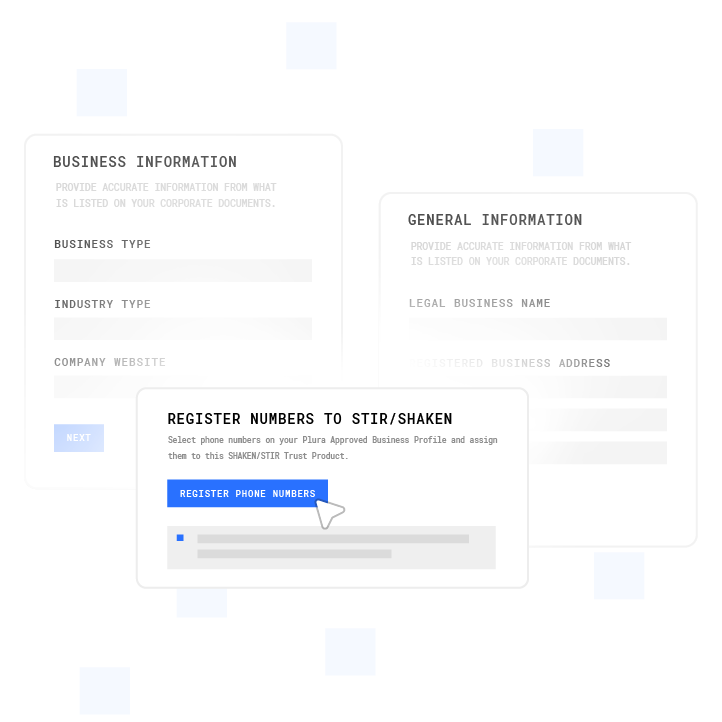
Schedule a compliance walkthrough to map your infrastructure against these seven requirements.
Senate and House Versions: What Operators Should Track
| Dimension | Senate Version (S.2666) | House Version (H.R. 6152) | Status as of August 29, 2026 |
|---|---|---|---|
| Floor action | Passed by unanimous consent, August 3, 2026 | Companion bill introduced; no floor vote as of publication | Senate engrossed; awaiting House action |
The Senate version passed with bipartisan support and unanimous consent. The House companion bill, H.R. 6152, has been introduced but has not received a floor vote as of August 29, 2026. Senators Budd and Welch have publicly urged the House to act quickly. Operators planning infrastructure decisions around the bill’s direction should monitor House scheduling and consult qualified counsel on timing implications.
Compare Plura’s plans and rates to understand how a 100% U.S.-infrastructure FCC-licensed carrier fits your current cost structure, alongside the enforcement direction S.2666 establishes.
Frequently Asked Questions
What is the current status of the Foreign Robocall Elimination Act as of August 2026?
As detailed in the opening section, S.2666 passed the Senate on August 3, 2026, and now awaits House consideration. A companion bill, H.R. 6152, has been introduced in the House but has not received a floor vote as of August 29, 2026. Senators Budd and Welch have publicly called on the House to pass the bill and send it to the President. The bill does not take effect until it is enacted into law.
What does the three-year traceback extension in S.2666 actually change?
Under the TRACED Act (Public Law 116-105), the FCC was required to issue annual notices related to the traceback consortium’s renewal and standing. S.2666 reduces that recurring notice requirement from annual to once every three years. The practical effect is reduced administrative overhead for the Industry Traceback Group, which continues to operate as the FCC-designated private consortium coordinating traceback investigations. The bill also immunizes the ITG from liability for sharing or publishing information about suspected unlawful calls and authorizes it to publish a list of providers that refuse to participate in traceback or that originate high volumes of unlawful traffic. That public list is the enforcement mechanism operators should pay closest attention to, since appearing on it creates direct reputational and commercial consequences.
Who sits on the interagency task force created by S.2666, and what will it produce?
The task force is composed of federal representatives from the FCC, FTC, and DOJ, plus seven private-sector appointees. These appointees include three experts in voice service, analytics, or telecommunications technology, one traceback consortium representative, one telemarketing business representative, one consumer-calling business or nonprofit representative, and one consumer advocate. The task force has 360 days from formation to deliver a report to Congress covering the most effective strategies to combat foreign-origin robocalls, including foreign call origination points, promoting STIR/SHAKEN adoption internationally, creating a dedicated DOJ enforcement body, and potential criminal penalties. The task force sunsets 90 days after delivering its report. The report’s recommendations could inform future FCC rulemaking or legislation, so operators should monitor its publication.
How does S.2666 increase enforcement pressure on operators using offshore routing?
S.2666 does not directly prohibit offshore routing, but it increases enforcement pressure through several mechanisms. The ITG’s authorization to publish a list of providers that originate or carry high volumes of unlawful robocall traffic creates a public accountability mechanism that can affect carrier relationships and commercial standing. The bill’s bond requirement, which directs the FCC to require certain providers to post a bond of up to $100,000 before certifying in the Robocall Mitigation Database, adds a financial accountability layer for providers whose traffic patterns draw scrutiny. The interagency task force’s mandate to evaluate foreign call origination points and recommend criminal penalties signals that enforcement posture on foreign-origin traffic is expected to intensify. Operators should also monitor the FCC’s companion proceedings, including the July 2026 FNPRM proposing to expand the definition of “voice service provider” to include call centers and dialing platforms, and the March 2026 NPRM proposing a 30% cap on offshore customer-service call routing. Consult qualified counsel to assess how these proceedings apply to your specific operations.
What infrastructure requirements should operators prioritize in response to S.2666 and the companion FCC proceedings?
The enforcement direction of S.2666 and the companion FCC proceedings points toward several infrastructure priorities. First, operators should confirm that their voice traffic originates on domestic infrastructure, not through foreign voice service providers or upstream providers with foreign ownership or control. The FCC’s July 2026 FNPRM proposes defining a foreign voice service provider as any provider created, incorporated, or organized outside the United States, regardless of domestic office presence.
Second, operators should verify that their platform runs STIR/SHAKEN authentication on every outbound call and maintains a current, accurate Robocall Mitigation Database filing. Third, operators handling sensitive consumer data, including passwords, MFA codes, Social Security numbers, bank account numbers, and card data, should assess whether their current call routing satisfies the domestic-handling proposals in FCC 26-16. Plura’s platform runs on 100% U.S. infrastructure by architecture, is its own FCC-licensed audio bridging carrier, and runs STIR/SHAKEN authentication on every outbound call. These are platform-level architectural facts, not contractual representations. Operators should consult qualified counsel to assess their specific obligations under each proceeding.
1
Conclusion: Preparing Infrastructure for S.2666 and FCC Enforcement
The Foreign Robocall Elimination Act (S.2666) passed the U.S. Senate by unanimous consent on August 3, 2026, and now awaits House action. The bill extends the traceback consortium renewal notice from annual to once every three years, establishes a 10-member interagency task force with a 360-day reporting mandate to Congress, immunizes the Industry Traceback Group from liability for publishing information on suspected unlawful calls, and directs the FCC to require certain providers to post a bond of up to $100,000 before certifying in the Robocall Mitigation Database.
For high-volume operators, the bill’s passage is one data point in a broader regulatory shift. The FCC’s companion proceedings, including the March 2026 NPRM proposing a 30% cap on offshore customer-service call routing and the July 2026 FNPRM proposing to expand the definition of “voice service provider” to include call centers and dialing platforms, are moving on parallel tracks. State onshoring laws in New York, New Jersey, Connecticut, Missouri, and Florida add jurisdiction-specific considerations on top of the federal picture.
Plura AI’s architecture was built for this regulatory environment. Plura is its own FCC-licensed audio bridging carrier. Voice origination, model hosting, data storage, and call recording all sit on 100% U.S. infrastructure by architecture, not by contract. STIR/SHAKEN authentication runs on every outbound call. Real-time DNC scrubbing, TCPA-litigator screening, and immutable consent logging are enforced inside the platform before each contact. Operators running Plura’s AI Predictive Dialer or AI voice agent report their infrastructure as 100% U.S.-handled and move on.
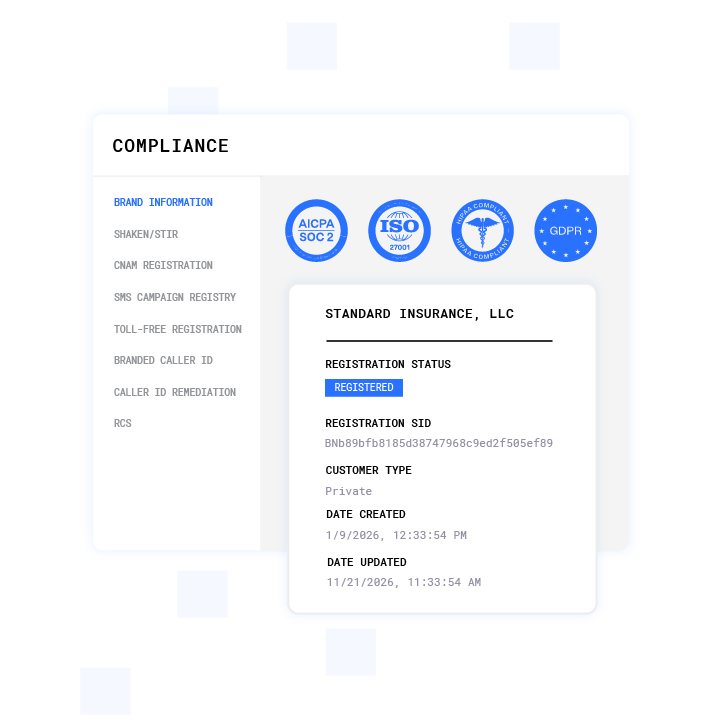
1 Plura AI maintains SOC 2, HIPAA, ISO, and GDPR posture as part of its platform infrastructure. References to compliance frameworks in this article describe Plura’s platform capabilities and do not constitute a guarantee that any customer using Plura will themselves be compliant with applicable laws or standards. Customers remain solely responsible for their own regulatory obligations, certifications, consent management, recordkeeping, and the claims they make to their own end users. Consult qualified legal counsel for guidance specific to your use case.
2 This article describes regulatory frameworks at a general level and does not constitute legal advice. Laws and regulations vary by jurisdiction, change over time, and apply differently depending on facts and circumstances. Readers should consult qualified legal counsel before making compliance decisions.
This article is provided for informational purposes only and reflects Plura AI’s understanding at the time of publication. Product capabilities, integrations, and specifications are subject to change. For the most current information, visit plura.ai.
This article was produced with the assistance of AI tools and reviewed by Plura AI prior to publication.