

Written by: Matt Beucler, CEO, Plura AI
Key Takeaways for Healthcare Scheduling Leaders
-
HIPAA-compliant AI scheduling requires a signed BAA, strong encryption, immutable audit logs, role-based access controls, and U.S. data residency.
-
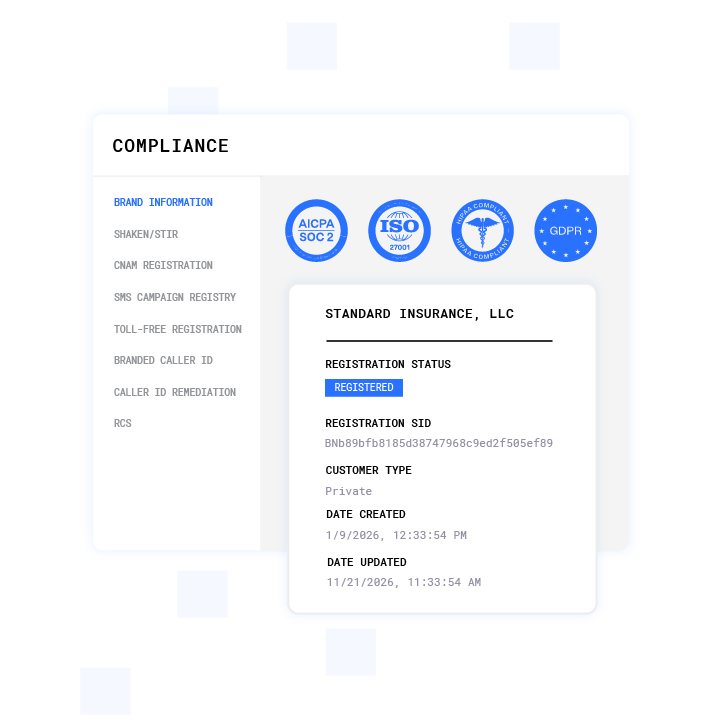
Plura AI meets these needs with HIPAA-aligned architecture, SOC 2 Type II certification, FCC-licensed U.S. carrier infrastructure, and stateful memory across voice, SMS, RCS, and webchat.1
-
Voice-based AI scheduling adds requirements around transcript and recording governance, TCPA controls, and unified memory that avoids re-identification across channels.
-
General-purpose LLMs lack stateful memory, carrier ownership, and deterministic workflows needed for PHI handling in healthcare scheduling.
-
Plura AI delivers purpose-built HIPAA support for healthcare scheduling; schedule a live walkthrough to see the workflows in action.
Five Core Requirements for HIPAA-Compliant AI Scheduling Tools
Any AI scheduling platform that handles PHI for a covered entity must meet specific contractual and technical requirements.2 Consult qualified legal counsel to understand how these requirements apply to your organization and workflows.
1
-
Business Associate Agreement (BAA). A strong BAA must establish permitted and prohibited uses of PHI, security obligations including risk analysis and encryption, incident reporting timelines, subcontractor flow-down requirements, and return or destruction of PHI upon termination. Every component of the AI pipeline, including third-party model providers, should operate under a signed BAA. HIPAA-compliant hosting does not automatically extend to the AI processing layer.
-
Encryption standards. A compliant AI scheduling system typically implements AES-256 encryption at rest and TLS 1.2 or higher in transit, combined with zero-data retention policies that process data without storing raw inputs for model training. Plura’s HIPAA-aligned encryption covers voice, SMS, RCS, and webchat channels.
-
Audit logging. Compliant AI scheduling tools maintain immutable audit logs of all interactions to support explainability, post-incident forensics, and regulatory audits. Plura’s platform generates audit-ready exports in one click across all channels.
-
Role-based access controls (RBAC). Technical safeguards include role-based access control with least privilege, strong authentication such as multi-factor authentication (MFA) and single sign-on (SSO), and data minimization so the system collects only data required for scheduling, confirming, or rescheduling appointments.
-
U.S. data residency. Voice origination, model hosting, data storage, and call recording often need to sit on domestic infrastructure to align with HIPAA and with state-level medical data offshoring restrictions, including Florida’s medical-information offshoring ban. Meeting this requirement in practice means selecting a vendor whose entire stack, including processing and origination, operates on U.S. soil. Plura runs on 100% U.S. infrastructure by architecture, with zero offshore exposure.
Voice AI Scheduling Agents and PHI Handling
Voice-based AI scheduling agents introduce compliance considerations that extend beyond text channels. For voice-based AI, compliance also depends on call-specific rules such as transcript and recording governance, audit-log granularity, retention controls, and potential data residency review. Voice tools that place outbound calls also need controls for TCPA topics such as consent documentation, opt-out handling, calling-time restrictions, and do-not-call scrubbing.2
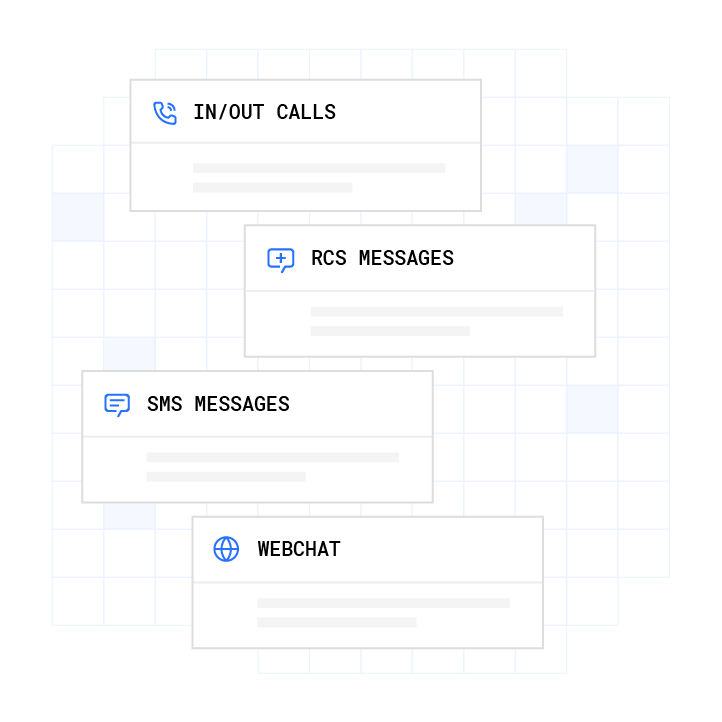
Plura AI operates as an FCC-licensed audio bridging carrier, so voice traffic does not route through a third-party Communications Platform as a Service provider like Twilio.4 Plura supports voice, SMS, RCS, and webchat natively in a unified platform with FCC-licensed carrier status, while many competing AI voice tools resell APIs and inherit their carrier’s compliance posture instead of enforcing controls at the origination layer.
This carrier-ownership distinction matters operationally for healthcare practices. A voice agent booking appointments or conducting pre-visit intake must handle PHI in the call audio, the transcript, and any structured data written back to the electronic health record (EHR). Voice-specific data handling practices include determining storage location and retention periods for call audio recordings, restricting access to transcripts, limiting use of PHI for AI model training, and enabling data deletion on request.
Plura’s voice agents share a Stateful Conversation Database with SMS, RCS, and webchat. A patient who confirmed an appointment by text receives a voice reminder that already reflects that confirmation. The agent does not need to re-identify the patient mid-call. Sensitive data fields are redacted at the field level and routed through HIPAA-aligned channels.
Healthcare deployments on Plura have achieved up to 40% improvement in patient no-show rates through automated voice and SMS reminder workflows that maintain full PHI handling controls.3
AI Appointment Reminders and Staff Workload
Automated appointment reminders represent one of the highest-volume PHI touchpoints in a medical practice. HIPAA requirements for patient communication extend beyond text messages to cover calls, scheduling, reminders, and internal coordination, so voice-based and text-based AI tools share similar obligations for Business Associate Agreements, role-based access controls, and audit trails when handling protected health information.
Plura’s AI SMS and AI RCS channels handle outbound appointment reminders with 10DLC-registered phone numbers, real-time Do Not Call scrubbing, and per-state quiet-hours enforcement. The same stateful memory that powers voice scheduling ensures a reminder sent by SMS reflects the patient’s current appointment status, not a stale record from a disconnected system.
McKinsey analysis shows that AI scheduling, billing automation, and patient communication tools can recover 12 or more hours per week for smaller healthcare practices.3 For practices running manual reminder workflows, that time typically comes from reducing staff hours spent on outbound calls and follow-up texts.
Why General-Purpose Models Fall Short for Healthcare Scheduling
Tools built on general-purpose large language models such as ChatGPT are not designed for regulated healthcare workflows. Healthcare organizations must distinguish between HIPAA-eligible AI platforms, which offer security features and a willingness to sign a BAA, and HIPAA-aligned deployments, which depend on proper configuration and ongoing management by the covered entity and its partners.
General-purpose models present three specific gaps for healthcare scheduling.
First, they lack stateful memory across channels. A patient who texted at 9 a.m. must re-identify themselves when the call comes at noon, which creates friction and potential PHI exposure.
Second, they lack carrier ownership. Branded caller ID, real-time DNC scrubbing, and TCPA consent logging are not enforced at origination and instead depend on the underlying CPaaS provider’s implementation.
Third, they lack deterministic workflows. Agentic AI systems are better suited than standard generative AI for HIPAA-compliant appointment scheduling because they use deterministic, policy-driven workflows with separation of action and generation, full auditability of every step, and strict guardrails that limit improvisation or hallucinations.
Compare Plura’s architecture in a live demo against the general-purpose tools your team is currently reviewing.
EHR Integration Best Practices and Timelines
EHR integration is where many AI scheduling deployments stall. The real bottleneck in many conversational AI deployments is the integration architecture underneath the conversational interface, not the interface itself. Integration depth matters more than simply claiming EHR compatibility. Conversational outputs need to become structured, usable data inside clinical workflows or staff still intervene manually.
A practical integration sequence follows five steps:
-
Cross-functional workshop. Convene clinical, operations, IT, and compliance leaders to map call types against EHR touchpoints before any technical work begins.
-
Workflow selection. Start with one or two high-volume, lower-risk flows such as appointment scheduling and reminders. Defer complex clinical intake until the simpler flows are validated.
-
Data mapping. Define precise EHR read and write operations and field mappings upfront. A vendor should read and write structured scheduling data in both directions. Free-text handoffs create a workflow disconnect that requires manual cleanup and increases error risk.
-
Pilot deployment. Test the integration with a limited patient cohort and a narrow set of visit types. Validate data accuracy, staff workload impact, and patient experience before expanding scope.
-
Production monitoring. Track metrics such as data accuracy, workflow completion rates, staff intervention frequency, and patient satisfaction. Use these metrics to refine prompts, routing logic, and EHR mappings over time.
Vendor Comparison Framework for Healthcare Operations Teams
Healthcare operations teams evaluating HIPAA-compliant AI scheduling vendors can assess four dimensions: channel coverage, stateful memory, real-time compliance enforcement, and infrastructure ownership.
On channel coverage, a vendor that handles only voice or only SMS creates a fragmented patient experience. Plura covers voice, SMS, RCS, and webchat on a single platform with a shared stateful database. A patient interaction that begins on webchat carries full context into a follow-up voice call without re-identification.
On stateful memory, many Twilio-based API resellers treat each channel as a separate product with separate memory.4 Plura uses stateful AI architecture that remembers previous interactions, preferences, and outcomes across channels for better personalization and follow-ups. For healthcare scheduling, this means a reminder workflow knows whether the patient confirmed, rescheduled, or did not respond and adjusts the next outreach accordingly.
On real-time compliance enforcement, the distinction between compliance bolted on after the fact and compliance enforced at origination is material in regulated environments. Bolted-on compliance means the vendor relies on a third-party provider’s controls and can only react to violations after they occur. Origination-level enforcement means the vendor controls the infrastructure and can block non-compliant actions before they happen. Plura provides HIPAA support, SOC 2 compliance, and integration with The Blacklist Alliance’s TCPA Litigation Firewall for real-time Do Not Call scrubbing and litigation protection, enforced at the carrier level.
On infrastructure ownership, Plura’s FCC-licensed carrier status means the entire voice stack, including origination, hosting, storage, and recording, runs on controlled U.S. infrastructure. This matters for healthcare practices subject to state-level medical data offshoring restrictions and for covered entities that must document U.S.-only data handling in vendor agreements.
Schedule a vendor evaluation session to walk through this comparison checklist with a Plura solutions engineer.
Frequently Asked Questions
Is any AI tool automatically HIPAA compliant?
No AI tool is automatically HIPAA compliant. HIPAA compliance involves technical, administrative, and physical safeguards that must be configured, maintained, and audited by the covered entity and its business associates. A vendor can provide HIPAA-aligned infrastructure, including encryption, access controls, audit logging, and a signed BAA, but the covered entity remains responsible for its own compliance posture, staff training, risk analysis, and downstream obligations. Plura provides the infrastructure layer; compliance posture downstream of that remains the customer’s responsibility. Consult qualified legal counsel to evaluate your organization’s specific obligations.
Why should healthcare practices avoid ChatGPT for appointment scheduling?
ChatGPT and similar general-purpose LLMs are not designed for regulated healthcare workflows. They lack stateful cross-channel memory, do not operate as FCC-licensed carriers, and are not built with deterministic policy-driven workflows that limit improvisation when handling PHI. A general-purpose model may not sign a BAA that covers all components of the AI pipeline, including the model processing layer itself. For appointment scheduling involving PHI, healthcare practices typically need a purpose-built platform with HIPAA-aligned architecture, immutable audit logging, role-based access controls, and a BAA that covers every component in the data path. General-purpose tools are not designed to meet these requirements out of the box.
What does HIPAA-compliant scheduling software need to include?
A HIPAA-aligned scheduling platform needs several core capabilities working together. It should include a BAA that covers all subprocessors and downstream vendors. It should encrypt PHI at rest and in transit using current encryption standards. It should enforce role-based access controls so staff and AI agents access only the minimum PHI necessary for their specific task. It should maintain immutable audit logs of every interaction for post-incident forensics and regulatory review.
The platform should store data on U.S. infrastructure with documented data residency controls. It should support bidirectional EHR integration so scheduling data flows as structured records, not free-text handoffs. It should also handle outbound communications, including reminders and follow-ups, with TCPA consent management, DNC scrubbing, and quiet-hours enforcement. Plura’s platform is built to support each of these requirements across voice, SMS, RCS, and webchat on a single stateful architecture.
How long does it take to deploy an AI scheduling agent in a healthcare practice?
Deployment timelines depend on workflow complexity and EHR integration depth. Simple scheduling and reminder flows can often go live relatively quickly. Full EHR-integrated production deployments typically require several months for configuration, integration, testing, and go-live activities. More complex workflows, such as multi-step patient intake surveys, can take one to two months because the workflow logic itself requires design, validation, and compliance review before PHI is in scope.
Plura’s onboarding sequence includes a discovery audit, workflow mockup, non-production testing, and a pilot phase before full go-live. Every annual contract includes a 90-day opt-out window if the deployment is not delivering.
What is the difference between a BAA and actual HIPAA compliance for AI scheduling?
A BAA is a contractual agreement between a covered entity and a business associate that defines permitted uses of PHI, security obligations, breach notification timelines, and subcontractor requirements. It is a necessary component of a HIPAA-aligned deployment, but it is not sufficient on its own. Actual compliance requires that the technical safeguards described in the BAA, including encryption, access controls, and audit logging, are properly configured and continuously maintained.
Compliance also depends on administrative safeguards such as staff training, risk analysis, and incident response procedures. A vendor that signs a BAA but routes PHI through unvetted subprocessors, stores data offshore, or lacks immutable audit logging is not providing a HIPAA-aligned deployment regardless of what the BAA states. Healthcare practices should review both the BAA terms and the vendor’s technical architecture, certifications such as SOC 2 Type II, and infrastructure documentation before deployment.
Next Steps for Healthcare Operations Teams
Healthcare practice managers, compliance officers, and operations directors evaluating AI scheduling platforms in 2026 face a narrower set of viable options than the market suggests. Many AI voice and SMS tools are API resellers running on third-party CPaaS infrastructure, without native BAA coverage across the full AI pipeline, without stateful cross-channel memory, and without U.S.-only data residency by architecture.
Plura AI is built for this environment. HIPAA-aligned encryption, access controls, and audit logging function as first-class layers of the platform. SOC 2 Type II certification covers the underlying infrastructure with continuous monitoring and third-party audits. The FCC-licensed carrier stack means voice origination, branded caller ID, and real-time DNC scrubbing are enforced at the carrier level, not bolted on. The Stateful Conversation Database ensures every patient interaction, across every channel, carries full context into the next touchpoint.
These deployments have reduced patient no-shows by up to 40% while maintaining full HIPAA alignment across reminder and follow-up workflows.
See Plura’s healthcare scheduling workflows in a live demo to review BAA terms and watch the stateful cross-channel architecture in action.
1 Plura AI maintains SOC 2, HIPAA, ISO, and GDPR posture as part of its platform infrastructure. References to compliance frameworks in this article describe Plura’s platform capabilities and do not constitute a guarantee that any customer using Plura will themselves be compliant with applicable laws or standards. Customers remain solely responsible for their own regulatory obligations, certifications, consent management, recordkeeping, and the claims they make to their own end users. Consult qualified legal counsel for guidance specific to your use case.
2 This article describes regulatory frameworks at a general level and does not constitute legal advice. Laws and regulations vary by jurisdiction, change over time, and apply differently depending on facts and circumstances. Readers should consult qualified legal counsel before making compliance decisions.
3 Performance figures, customer outcomes, and industry statistics referenced in this article are drawn from cited third-party sources or Plura customer case studies. Individual results vary based on implementation, use case, industry, audience, and execution. Past or aggregate performance is not a guarantee of future results.
4 References to third-party products, services, companies, or research are made for informational and comparative purposes only. Plura AI is not affiliated with, endorsed by, or sponsored by any third party named in this article unless explicitly stated. Trademarks and product names referenced remain the property of their respective owners.
This article is provided for informational purposes only and reflects Plura AI’s understanding at the time of publication. Product capabilities, integrations, and specifications are subject to change. For the most current information, visit plura.ai.
This article was produced with the assistance of AI tools and reviewed by Plura AI prior to publication.