
Written by: Matt Beucler, CEO, Plura AI
Key Takeaways for HIPAA SMS Decisions in 2026
- A HIPAA-compliant SMS CRM requires a signed BAA, encryption in transit and at rest, and comprehensive audit logs. Standard SMS fails these requirements because messages travel in plaintext without controls.
- Healthcare operators in 2026 face a binary choice: replace existing CRMs with standalone healthcare platforms or add a carrier-grade SMS layer that integrates with the CRM already in place.
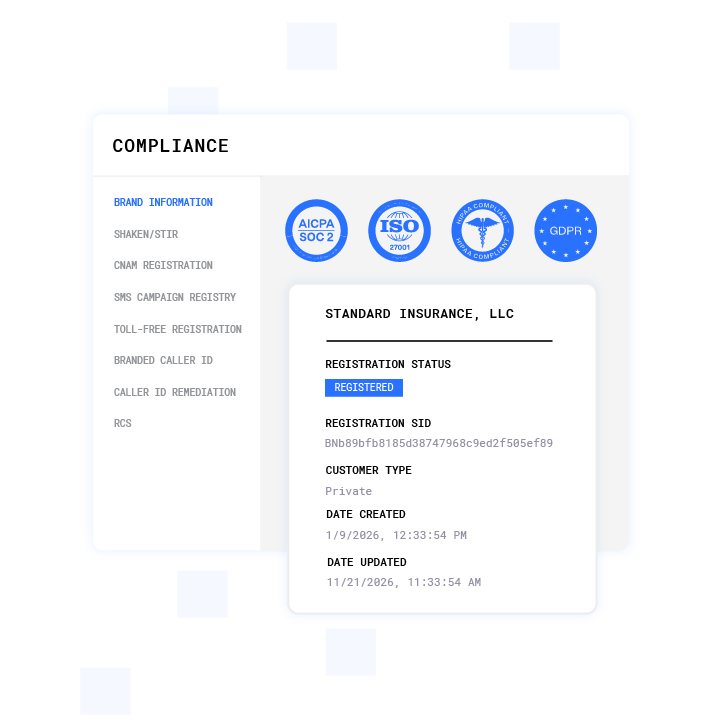
- Plura AI operates as an FCC-licensed carrier, not an API reseller, and supports SOC 2, HIPAA, ISO, GDPR, SHAKEN/STIR, TCPA, and DNC compliance without rip-and-replace migrations.1
- Key 2026 regulatory updates include proposed mandatory encryption and MFA under the Security Rule, new Substance Use Disorder disclosures effective February 2026, and strengthened patient access rights planned for August 2026.
- Plura AI delivers carrier-grade SMS add-on capabilities with native integrations for Salesforce, HubSpot, and Zoho. Book a live demo to see how it supports compliance and engagement without disrupting existing workflows.
Executive Summary: How to Evaluate HIPAA SMS Options
Healthcare operators, contact center leaders, and marketing directors searching for a HIPAA-compliant SMS CRM in 2026 face a binary choice. They can replace their existing Salesforce, HubSpot, or Zoho CRM with a standalone healthcare platform. They can also add a carrier-grade SMS layer that integrates with the CRM already in place. This guide evaluates both paths across five dimensions: speed, channel coverage, compliance posture, integration depth, and operational fit.
Plura AI is the add-on solution evaluated here. It operates as an FCC-licensed audio bridging carrier, not an API reseller wrapping a third-party CPaaS (Communications Platform as a Service). That distinction affects BAA coverage, branded caller ID, real-time DNC scrubbing, and the ability to enforce controls at the carrier level instead of bolting them on later.
Book a live demo to see the SMS add-on layer in action.
Industry Landscape: Patient Demand for SMS in Healthcare
Patient communication has shifted from phone-only and portal-based models toward SMS-first engagement. A Sinch Engage survey of 1,000 U.S. patients conducted December 2025 found that 93% have opted in to receive texts from healthcare providers, with texting surpassing email and patient portals as the preferred channel.4 Ninety percent of patients in that survey prefer healthcare communications by text.
Most healthcare operators still run fragmented tooling despite that demand.4 Wheelhouse DMG’s December 2025 guide found that many healthcare organizations rely on non-compliant or fragmented tools, including generic CRMs not built for HIPAA. These environments create outreach gaps, compliance exposure, and missed engagement opportunities. The gap between what patients expect and what operators can deliver without rip-and-replace costs is where the SMS add-on model becomes operationally relevant. However, patient demand alone does not determine platform selection. Regulatory requirements shape what is technically and operationally acceptable.
2026 Regulatory Update: HIPAA Changes That Affect Texting
The regulatory picture for HIPAA-compliant SMS shifted in several ways heading into 2026.2 The most significant proposed change, the HIPAA Security Rule Notice of Proposed Rulemaking (NPRM) published January 6, 2025 (90 Fed. Reg. 898), is now projected for final publication in July 2027 per the U.S. Office of Management and Budget’s federal regulatory agenda. The current Security Rule remains in force.
That proposed rule would eliminate the distinction between “required” and “addressable” implementation specifications. Once finalized, it would make encryption of ePHI at rest and in transit, multifactor authentication, segmentation, and vulnerability scanning mandatory. Operators evaluating SMS platforms in 2026 can assess vendors against those proposed standards now, even though the final rule has not been issued.
Two updates did take effect. By February 16, 2026, HIPAA covered entities that create, receive, maintain, or transmit substance use disorder records subject to 42 CFR Part 2 were required to update their Notices of Privacy Practices to incorporate new disclosures concerning Substance Use Disorder treatment information and redisclosure risks, per the 2024 regulatory revisions aligning Part 2 with HIPAA. In addition, HHS OCR plans to issue a final rule in August 2026 modifying the HIPAA Privacy Rule to strengthen patients’ rights to access their PHI and improve information sharing for care coordination.
Operators should consult qualified counsel to understand how these updates relate to their specific SMS workflows and vendor agreements.2
Strategic Choice: Add-On SMS Layer vs. Standalone HIPAA CRM
Standalone HIPAA CRM platforms such as Salesforce Health Cloud provide purpose-built data models, native EHR integration, and BAA-backed environments. A healthcare-grade CRM typically includes database-level data isolation, attribute-based access control, immutable audit logging, field-level encryption, HL7/FHIR support, and native EHR integration. For operators whose primary problem is clinical data management, a standalone platform may be the right fit.
For high-volume operators whose primary problem is patient engagement at scale, the rip-and-replace cost and implementation complexity of a full CRM migration often exceed the perceived benefit. Practices using purpose-built healthcare CRMs often spend less time on compliance-related tasks than those using generic CRMs. That comparison, however, does not account for the 6-to-12-month migration timelines and integration rebuild costs that accompany a full platform replacement.
The SMS add-on model addresses a different problem. It adds carrier-grade, BAA-backed texting to a CRM already in production. Dedicated SMS integrations connect a separate business-grade messaging platform to an existing CRM via webhooks or APIs, keeping the CRM as the system of record for contacts while routing all SMS conversations through a shared inbox with role-based access and automated assignment. The trade-off is integration maintenance complexity compared with the operational continuity of keeping existing CRM workflows intact. Regardless of which path operators choose, both standalone platforms and SMS add-ons must meet the same operational standards.
Current Best Practices for AI-Enabled HIPAA SMS Programs
Operators running compliant, high-volume SMS programs in 2026 follow a consistent set of practices. A well-designed SMS patient engagement program that includes consent capture, pre-approved message templates, personalization logic, cadence rules, two-way AI handling with human escalation, multilingual support, and analytics can significantly reduce appointment no-show rates and improve response rates. Bulk-blast campaigns without that structure tend to have higher no-show rates and lower response rates.
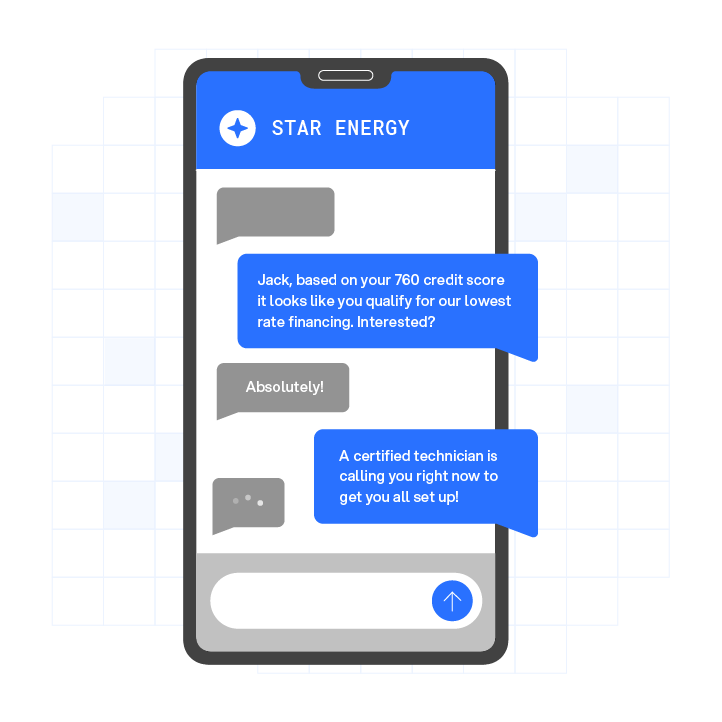
Plura supports operators in building these programs through its AI customer service texting layer, which connects to existing CRMs via integrations with HubSpot, Salesforce, and Zoho. The platform’s managed workflows handle routing logic, escalation paths, and consent management without engineering resources. Plura also supports up to a 40% improvement in no-shows for healthcare operators, per Plura’s healthcare industry page.3
Best practices for any HIPAA-compliant SMS deployment include:
- Executing a signed BAA with every vendor that creates, receives, maintains, or transmits ePHI, per 45 CFR 164.502(e)(1)(i).
- Encrypting messages in transit using TLS 1.2 or higher and at rest using AES-256, per 45 CFR §164.312(e)(1) and §164.312(a)(2)(iv).
- Maintaining tamper-evident audit logs that capture sender, recipient, timestamp, delivery status, edits, and deletions, retained for six years per 45 CFR §164.316(b)(2)(i).
- Completing A2P 10DLC brand and campaign registration to reduce carrier filtering of high-volume outbound messages.
- Capturing and documenting patient consent at intake, with opt-out handling that stops messages within the same day after a STOP request.
- Applying the minimum necessary standard to message content and limiting PHI in message bodies to what is essential for the task.
- Implementing role-based access controls and unique user identification across the messaging platform.
- Establishing clear human escalation paths for sensitive topics, with AI handling routine reminders and routing clinical conversations to staff.
Structured Features: Required Capabilities for a HIPAA SMS Add-On
| Capability | Requirement | Plura AI |
|---|---|---|
| Business Associate Agreement | Signed BAA required before any PHI is shared, per 45 CFR 164.502(e)(1)(i). | BAA available; customers are responsible for executing and maintaining their own BAA obligations. |
| Encryption in transit | TLS 1.2 or higher is commonly recommended, with TLS 1.3 preferred in current Security Rule guidance. | End-to-end encryption supported, with built-in SOC 2 certification.1 |
| Encryption at rest | 256-bit AES encryption at rest is a common standard for ePHI storage. | Supported on 100% U.S. infrastructure. |
| Audit logs | Comprehensive logs capturing sender, recipient, timestamp, delivery or read status, edits, and deletions, with long-term retention. | Audit-ready exports available via the compliance dashboard. |
| Real-time DNC scrubbing | TCPA frameworks focus on documented opt-in consent and blocking non-consented numbers before contact. | Real-time DNC scrubbing on every outbound contact, with integration into The Blacklist Alliance’s TCPA Litigation Firewall for real-time scrubbing and litigation risk reduction. |
| 10DLC registration | A2P 10DLC registration is required by U.S. carriers for high-volume messaging; unregistered numbers are often filtered or blocked. | 10DLC-registered numbers with A2P messaging registry support. |
| CRM integration | Delivery assurance and automated audit trails are typically not standard in native CRM texting; dedicated SMS platforms provide these for regulated, high-volume use. | Native integrations with HubSpot, Salesforce, and Zoho, so no rip-and-replace is required. |
Compare plans and rates side by side.
Implementation Readiness: Six Factors to Review Before You Buy
Before selecting an SMS add-on or standalone platform, operators should evaluate readiness across six dimensions:
- Interaction volume: High-volume operators sending thousands of messages per month need carrier-grade deliverability through 10DLC registration and registered A2P routing. U.S. carriers prioritize registered A2P traffic over unregistered traffic per CTIA messaging principles (2024).
- Process maturity: Operators with documented consent workflows, pre-approved message templates, and escalation rules are ready to deploy an SMS add-on. Those without these foundations need to build them before any platform goes live.
- Data quality: Consent records must be timestamped, immutable, and tied to individual contacts. Remote and hybrid work arrangements increase HIPAA texting risks because staff using personal devices on home networks create visibility gaps that standard facility controls do not cover.
- Compliance requirements: Operators handling ePHI need a signed BAA with every vendor in the message path. A business associate typically must establish a BAA with its subcontractor before disclosing PHI to the subcontractor, and downstream subcontractors are also business associates contractually responsible for complying with the terms of their BAAs.
- Internal ownership: Compliance, IT, and operations each need a defined role in vendor selection, configuration, and ongoing audit. Unclear ownership is one of the most common causes of HIPAA gaps in SMS deployments.
- Integration needs: Operators running Salesforce, HubSpot, or Zoho should confirm that any SMS add-on supports bidirectional data sync, not just outbound webhooks. Two-way EHR or PMS integration with automatic appointment-status write-back is common for texting tools used by the roughly 90% of office-based physicians already running certified EHR systems (HIMSS 2024), because lack of write-back forces manual double-entry.
Common Pitfalls in HIPAA SMS Programs
The following mistakes appear consistently across HIPAA SMS deployments at scale:
- Consent gaps at intake: Common high-volume SMS pitfalls include consent gaps at intake and opt-out leakage across platforms. Consent should be captured, documented, and tied to the contact record before any message is sent.
- Over-disclosure in message bodies: A practical HIPAA-aligned pattern is to send low-detail SMS notifications that include only the minimum necessary PHI and direct recipients to a secure portal for any clinical content.
- Treating channels as separate systems: SMS, voice, and webchat conversations that do not share context force patients to repeat themselves and create audit trail gaps across platforms. Plura’s Stateful Conversation Database holds context across all four channels, so an AI SMS thread and a voice call share the same patient record.
- Missing BAAs with subcontractors: Failing to obtain a signed BAA before a generic CRM syncs patient data to a third-party vendor can increase exposure to OCR investigations and settlements.
- Measuring activity instead of outcomes: Message volume and delivery rates are not compliance metrics. Audit log completeness, opt-out response time, and consent record integrity are the operational signals that matter for HIPAA posture.
- Insufficient testing before go-live: Florida Orthopaedic Institute reached a $4 million class-action settlement after a 2020 ransomware attack exposed the data of 640,000 individuals. Pre-launch testing of message content, routing logic, and PHI field mapping reduces similar risks.
- Underestimating 10DLC registration timelines: Healthcare organizations sending high-volume A2P messaging must complete 10DLC brand and campaign registration; without it, carriers may filter or block outbound messages, directly affecting patient deliverability.
- No escalation rules for sensitive topics: The 90% patient preference for texting mentioned earlier shows strong demand, but many patients distinguish between use cases. They are comfortable with AI or automation for simple reminders or routine updates but prefer a real person for sensitive topics such as test results or mental health discussions. Escalation paths should be defined in the workflow before deployment.
Schedule a live demo to walk through implementation requirements for your operation.
Frequently Asked Questions
Can SMS be HIPAA compliant in 2026?
Standard SMS transmitted over carrier networks in plaintext cannot meet HIPAA Security Rule expectations for encryption, access controls, or audit logging. A HIPAA-aligned SMS program uses a purpose-built messaging platform that signs a Business Associate Agreement, encrypts messages in transit and at rest, maintains tamper-evident audit logs, and implements role-based access controls. The platform also typically supports 10DLC registration for high-volume A2P messaging. Operators should consult qualified counsel to assess whether their specific SMS workflows and vendor agreements align with applicable HIPAA requirements under 45 CFR Parts 160, 162, and 164.
What is the difference between a HIPAA-compliant SMS add-on and a standalone HIPAA CRM?
A standalone HIPAA CRM is a full platform replacement that provides purpose-built healthcare data models, native EHR integration, and BAA-backed environments for managing patient records, care coordination, and communications in one system. A HIPAA-compliant SMS add-on is a messaging layer that connects to an existing CRM via API or webhook, adding carrier-grade texting, consent management, audit logging, and BAA coverage without requiring operators to migrate their existing CRM data or workflows. The add-on model fits operators whose primary problem is patient engagement volume and speed, not clinical data management. The standalone model fits operators whose primary problem is the CRM itself. Many high-volume operators running Salesforce, HubSpot, or Zoho find the add-on path faster to deploy and lower in total cost of ownership.
What is the best HIPAA SMS solution for Salesforce in 2026?
The most effective HIPAA SMS solution for Salesforce signs a BAA, encrypts messages in transit and at rest, maintains exportable audit logs, supports 10DLC registration, and integrates bidirectionally with Salesforce contact records without requiring a CRM migration. Plura connects to Salesforce via its native integrations directory, adding AI SMS, real-time DNC scrubbing, TCPA support, and SHAKEN/STIR caller ID verification as a layer on top of the existing CRM. Operators should evaluate any SMS vendor against their specific Salesforce data model, consent workflow, and audit requirements before signing a BAA.
How do new HIPAA rules in 2026 affect SMS texting programs?
The Security Rule NPRM discussed earlier is now projected for final publication in July 2027. The current Security Rule remains in force. Two updates did take effect: all HIPAA covered entities were required to update their Notices of Privacy Practices by February 16, 2026, to incorporate new Substance Use Disorder disclosures per 89 Fed. Reg. 33064. HHS OCR also plans to issue a final rule in August 2026 modifying the HIPAA Privacy Rule on patient access rights. Operators running SMS programs should review their BAAs, consent workflows, and audit log configurations against both current requirements and the proposed Security Rule standards, and consult qualified counsel for guidance specific to their organization.
What does HIPAA require for SMS audit logs?
Under 45 CFR §164.312(b), covered entities must implement hardware, software, and procedural mechanisms that record and examine activity in information systems containing or using ePHI. For SMS, this typically means audit logs capture sender, recipient, timestamp, delivery and read status, edits, and deletions for any message involving PHI. Logs are generally retained for six years per 45 CFR §164.316(b)(2)(i) and must be accessible for compliance audits. Tamper-evident logging, such as hash chaining, provides additional assurance that records have not been altered. Operators should confirm that any SMS vendor’s audit log format is exportable and compatible with their compliance review process before deployment.
Conclusion and Next Steps for HIPAA SMS CRM
HIPAA-compliant SMS CRM in 2026 is not a single product category. It is a decision between replacing an existing CRM with a purpose-built healthcare platform or adding a carrier-grade SMS layer that integrates with the CRM already in production. For high-volume operators running Salesforce, HubSpot, or Zoho, the add-on path preserves existing workflows while adding BAA coverage, encryption, audit logging, 10DLC registration, real-time DNC scrubbing, and TCPA support at the messaging layer.
Practical next steps for operators evaluating this decision:
- Audit existing CRM data flows to identify every vendor that touches patient data and confirm BAA status for each.
- Map current SMS workflows against the minimum necessary standard and identify any message content that over-discloses PHI.
- Confirm 10DLC registration status for all outbound messaging numbers.
- Define escalation rules for sensitive topics before any AI SMS layer goes live.
- Align compliance, IT, and operations on audit log retention requirements and export formats.
- Evaluate SMS add-on vendors by carrier ownership, integration depth with your existing CRM, and BAA terms, not by feature lists alone.
As the FCC-licensed carrier described earlier, Plura provides native integrations into Salesforce, HubSpot, and Zoho and supports compliance through SOC 2, HIPAA, ISO certification, GDPR, SHAKEN/STIR caller ID verification, TCPA, and DNC controls. The platform’s conversation intelligence layer surfaces audit-ready reporting across every SMS interaction without requiring a CRM replacement.
View detailed pricing and plan options.
1 Plura AI maintains SOC 2, HIPAA, ISO, and GDPR posture as part of its platform infrastructure. References to compliance frameworks in this article describe Plura’s platform capabilities and do not constitute a guarantee that any customer using Plura will themselves be compliant with applicable laws or standards. Customers remain solely responsible for their own regulatory obligations, certifications, consent management, recordkeeping, and the claims they make to their own end users. Consult qualified legal counsel for guidance specific to your use case.
2 This article describes regulatory frameworks at a general level and does not constitute legal advice. Laws and regulations vary by jurisdiction, change over time, and apply differently depending on facts and circumstances. Readers should consult qualified legal counsel before making compliance decisions.
3 Performance figures, customer outcomes, and industry statistics referenced in this article are drawn from cited third-party sources or Plura customer case studies. Individual results vary based on implementation, use case, industry, audience, and execution. Past or aggregate performance is not a guarantee of future results.
4 References to third-party products, services, companies, or research are made for informational and comparative purposes only. Plura AI is not affiliated with, endorsed by, or sponsored by any third party named in this article unless explicitly stated. Trademarks and product names referenced remain the property of their respective owners.
This article is provided for informational purposes only and reflects Plura AI’s understanding at the time of publication. Product capabilities, integrations, and specifications are subject to change. For the most current information, visit plura.ai.
This article was produced with the assistance of AI tools and reviewed by Plura AI prior to publication.