

Written by: Matt Beucler, CEO, Plura AI
Key Takeaways for Contact Center and CX Leaders
- The Keep Call Centers in America Act would require covered employers to give the Department of Labor 120 days’ advance notice before relocating or outsourcing call-center work overseas.
- Companies must disclose the physical location of agents handling customer-service calls, and the Department of Labor would publish a public list of employers that offshore operations.
- Placement on the public list triggers a five-year bar on federal grants and loans, along with potential civil penalties for non-compliance.
- The bill operates alongside the FCC’s proposed rules and existing state statutes in New York, New Jersey, Connecticut, Missouri, and Florida, creating a multi-layered regulatory environment.
- Plura AI uses 100% U.S.-based infrastructure, which helps operators avoid the Act’s notice, disclosure, and public-list requirements, and leaders can discuss domestic call-center architecture with Plura.
Scope and Intent of the Keep Call Centers in America Act
The Keep Call Centers in America Act is federal legislation introduced in both chambers of Congress as S.2495 in the Senate and H.R.4954 in the House.2 The bill targets U.S. employers that move or contract call-center operations to foreign countries and creates a federal notice-and-disclosure framework administered by the Department of Labor (DOL).
The bill applies to U.S. employers that relocate or outsource call-center operations to a foreign country.2 Coverage extends to employers that contract with a third-party vendor to perform the work offshore, so indirect offshore arrangements still fall within the bill’s reach. Operators relying on offshore business-process outsourcing (BPO) vendors should review the bill text directly and consult qualified counsel to assess applicability.
The regulatory context around this bill has intensified in 2026. The Federal Communications Commission (FCC) estimates that nearly 7 in 10 U.S. companies outsource at least one department to offshore contact centers, which gives the bill’s provisions broad potential impact across industries.
Employer Notice and Call-Location Disclosure Rules
The proposed Act would impose two distinct disclosure obligations on covered employers. The first is a pre-relocation notice requirement. Before transferring call-center work offshore, a covered employer must notify the DOL at least 120 days in advance. The notice must identify the employer, describe the nature of the work being relocated, specify the destination country, and estimate the number of U.S. workers affected.
The second obligation is a real-time call disclosure. The proposed Keep Call Centers in America Act of 2025 would require companies to disclose the physical location of business agents during customer-service communications. This disclosure applies to inbound and outbound calls covered by the bill and is designed to give consumers immediate awareness of where their call is being serviced.
The table below summarizes the bill’s primary provisions as written in the bill text available on Congress.gov.
| Provision | Requirement | Trigger | Citation |
|---|---|---|---|
| Pre-relocation notice | 120-day advance written notice to DOL before offshoring call-center work | Relocation or outsourcing of covered call-center work to a foreign country | S.2495, Congress.gov |
| Call location disclosure | Companies to disclose the physical location of business agents during customer-service communications | Any customer service call handled from an offshore location | S.2495, GovTrack.us |
| Public list placement | DOL publishes a list of employers that offshore call-center operations | Failure to provide 120-day notice or confirmed offshore relocation | S.2495, Congress.gov |
| Federal funding ineligibility | Five-year bar on federal grants and loans for listed employers | Placement on the DOL public list | S.2495, Congress.gov |
Penalty Structure and Public-List Exposure
The Act establishes two penalty mechanisms for covered employers that fail to comply.
The first is civil monetary penalties. Employers that fail to provide the required 120-day notice to the DOL before offshoring call-center work face civil penalties assessed per violation. The bill structures these amounts to create a meaningful financial deterrent for large-volume operators, although the penalty schedule alone does not capture the full compliance risk. Operators should review the current bill text on Congress.gov and consult qualified counsel for the specific penalty schedule applicable to their operations.
The second mechanism is public-list placement and the downstream funding bar. An employer placed on the DOL’s public list of offshore call-center operators becomes ineligible for federal grants and loans for five years from the date of placement. For enterprises that depend on federal contracts, Small Business Administration (SBA) financing, or sector-specific federal funding programs, this consequence can materially exceed the cost of any direct civil penalty.
The combination of public-list exposure and federal funding ineligibility most directly affects C-suite risk calculations. Compliance officers and general counsel at covered entities should map existing offshore vendor relationships against the bill’s definitions before any relocation or outsourcing decision is finalized.
Legislative Status and Regulatory Momentum in 2026
As of June 2026, both versions of the bill remain under consideration in their respective chambers and have not been enacted into law. Readers should check the current status directly on Congress.gov, because legislative activity can change between publication and the date of review.
The bill’s legislative trajectory reflects a broader regulatory environment that has shifted significantly in 2026. The FCC’s Notice of Proposed Rulemaking (NPRM), CG Docket No. 26-52, proposes capping offshore customer-service call volume and prohibiting offshore handling of sensitive consumer data.2 FCC Chairman Brendan Carr announced the proposed rules on March 4, 2026, citing privacy, data protection, and national security concerns tied to foreign-based call centers. The Keep Call Centers in America Act and the FCC NPRM move on parallel tracks that address the same underlying policy concern, and movement on one tends to accelerate attention on the other.
Interaction with FCC NPRM and State Onshoring Rules
The Keep Call Centers in America Act and the FCC NPRM (CG Docket No. 26-52) address offshore call-center operations from different regulatory angles. The Act is a labor and commerce statute focused on employer notice obligations, public-list consequences, and federal funding eligibility. The FCC NPRM is a communications regulation that would require communications providers to disclose agent location, limit offshore call volume, and allow consumers to request transfer to a U.S.-based agent. The FCC’s jurisdiction covers fixed and mobile wireless services, broadcast, and satellite industries, so operators in those sectors may face potential obligations under both frameworks at the same time.
State laws add a third layer. Five states have enacted or are enforcing call-center onshoring or sensitive-data restriction statutes:
- New York: The Call Center Jobs Act imposes penalties up to $10,000 per day for covered employers that offshore operations without proper notice.
- New Jersey: A mirror statute applies similar notice and penalty requirements to NJ-based employers.
- Connecticut: The Connecticut General Assembly has enacted state-contract restrictions on offshore call-center use.
- Missouri: An executive order from the Missouri Office of Administration requires offshore location disclosure for state-contracted call-center work.
- Florida: Florida Statutes restrict offshore handling of medical information.
Operators with multi-state footprints or federal contracts should map their offshore vendor relationships against all three regulatory layers, including the Act, the FCC NPRM, and applicable state statutes. Legal guidance can help leaders align infrastructure and vendor decisions with this combined framework.
How Domestic Infrastructure Reduces Exposure to the Act
The Act’s public-list and federal funding-ineligibility provisions apply specifically to employers that relocate or outsource call-center work to foreign countries. Operators whose call-center infrastructure is entirely domestic by architecture do not trigger the notice requirement, because there is no offshore relocation to report.
This connection between infrastructure location and regulatory exposure is central for contact-center leaders and C-suite executives evaluating vendor options in 2026. Analysts note that simply relocating offshore agents onshore without changing the operating model increases costs. AI-driven domestic infrastructure has therefore become a structurally different option from a like-for-like onshore replacement.
Plura AI operates on 100% U.S. infrastructure by architecture, meaning voice origination, model hosting, data storage, and call recording all run on domestic infrastructure. Because Plura is its own FCC-licensed audio bridging carrier rather than a wrapper on a third-party Communications Platform as a Service (CPaaS), voice does not route through an offshore or foreign-infrastructure layer at any point in the call path. This architectural control is the characteristic that determines whether the Act’s notice requirements apply to a given call path.
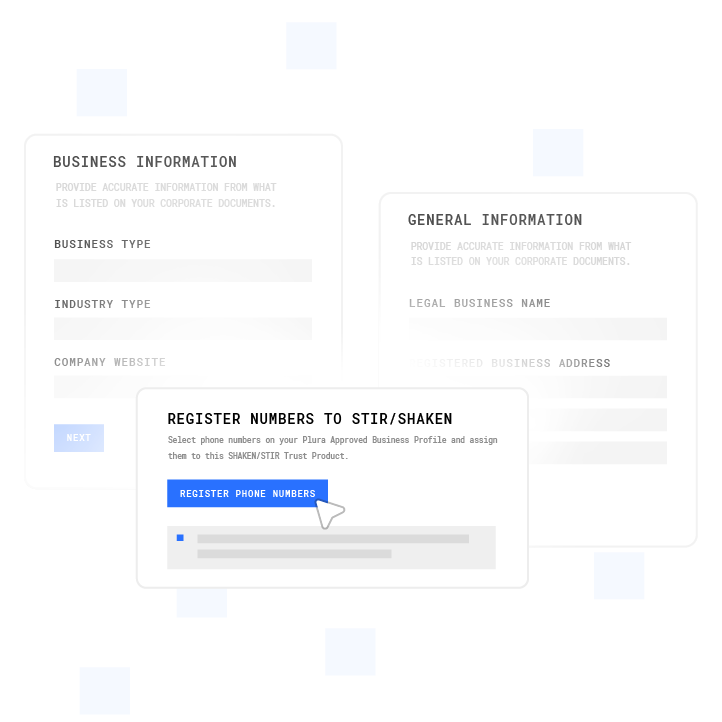
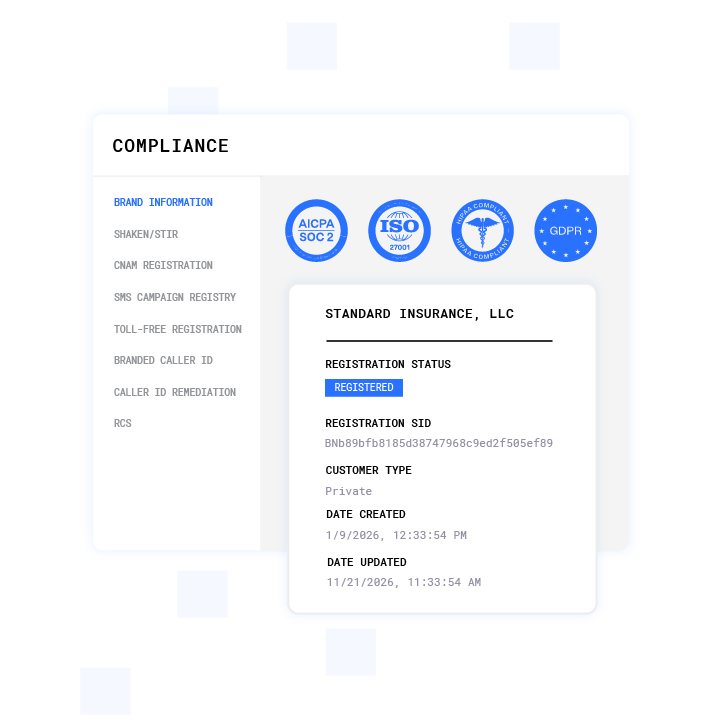
For operators evaluating the Act’s provisions, this architecture means Plura’s platform does not introduce the offshore infrastructure dependency that the Act’s notice, disclosure, and public-list mechanisms are designed to address. Plura supports customer compliance efforts through its infrastructure design, TCPA compliance, DNC compliance, HIPAA alignment, SOC 2 certification, STIR/SHAKEN caller-ID verification, and ISO certification.1 Customers remain responsible for their own regulatory obligations and should consult qualified counsel on how the Act applies to their specific operations.
The economics of domestic AI infrastructure also compare favorably to the offshore BPO model on cost. Plura’s total cost of ownership runs $300,000 to $700,000 per year, replacing a traditional contact-center cost structure of $4 million to $7 million on equivalent volume.3 Plura agents run at 100% talk utilization with no taxes, benefits, or commissions overhead, and they scale instantly into peak periods without advance hiring.
Plura achieves up to 40% improvement in no-shows in healthcare operations.3
Conclusion: Planning Infrastructure Around a Moving Target
The Keep Call Centers in America Act imposes a 120-day pre-relocation notice requirement, a real-time call location disclosure obligation, and a public-list mechanism that triggers five-year federal funding ineligibility for covered employers that offshore call-center operations. The bill operates alongside the FCC NPRM (CG Docket No. 26-52) and state-level statutes in New York, New Jersey, Connecticut, Missouri, and Florida, creating a multi-layer regulatory environment for contact-center operators with offshore vendor relationships.
Operators should review the bill text directly on Congress.gov and engage qualified counsel to assess applicability to their specific operations. Infrastructure decisions made today, including vendor selection and call-routing architecture, will determine whether an operator’s exposure to the Act’s notice and penalty provisions is structural or incidental.
Plura’s 100% U.S. infrastructure by architecture, FCC-licensed carrier stack, and stateful AI conversation platform give high-volume operators a domestic alternative that avoids offshore infrastructure dependencies targeted by the Act.
Run your numbers through Plura’s calculator to check your ROI in real time. Use Plura’s ROI calculator to model the cost impact of domestic infrastructure.
Compare plans and rates side by side. Review Plura’s pricing tiers to align cost, volume, and regulatory strategy.
Frequently Asked Questions
Who is covered by the Keep Call Centers in America Act?
The Act covers U.S. employers that relocate or outsource call-center operations to a foreign country. Coverage extends to indirect arrangements where a third-party vendor performs the work offshore on the employer’s behalf. Operators should review the bill text on Congress.gov and consult qualified counsel to determine whether their specific operations and vendor relationships fall within the bill’s definitions.
What triggers placement on the DOL public list?
Placement on the Department of Labor’s public list of offshore call-center operators is triggered by a covered employer’s failure to provide the required 120-day advance notice before relocating or outsourcing call-center work to a foreign country, or by a confirmed offshore relocation. Once placed on the list, an employer faces five-year ineligibility for federal grants and loans. The public-list mechanism is designed to create reputational and financial consequences that extend beyond direct civil penalties.
Does the Act apply to AI-powered call-center platforms?
The Act’s applicability to any specific platform depends on where that platform’s infrastructure is located and whether the operator’s use of the platform constitutes a relocation or outsourcing of call-center work to a foreign country. Operators using AI platforms that route voice, data, or call-handling functions through foreign infrastructure should review the bill’s definitions carefully with qualified counsel. Platforms that operate entirely on U.S. domestic infrastructure by architecture do not introduce the offshore dependency that the Act’s notice and disclosure provisions are designed to address.
How does the Keep Call Centers in America Act differ from the FCC NPRM?
The Act is a labor and commerce statute administered by the Department of Labor, focused on employer notice obligations, public-list consequences, and federal funding eligibility for employers that offshore call-center work. The FCC NPRM (CG Docket No. 26-52) is a communications regulation that would require FCC-regulated communications providers to disclose agent location, limit offshore call volume, and allow consumers to request transfer to a U.S.-based agent. The two frameworks have different jurisdictional bases, different administering agencies, and different covered-entity definitions, but both address offshore call-center operations and can apply simultaneously to operators in FCC-regulated industries.
What should contact-center leaders do now to prepare?
Contact-center leaders should take three practical steps. First, map all existing offshore vendor relationships against the Act’s definitions of covered employer and covered call-center work, with legal guidance. Second, assess whether current infrastructure, including third-party AI voice and SMS platforms, routes any call-handling functions through foreign infrastructure. Third, review the current bill status on Congress.gov and monitor the FCC NPRM docket (CG Docket No. 26-52) for rulemaking updates, since both tracks are active in 2026 and regulatory timelines can shift. Infrastructure and vendor decisions made before enactment will shape the scope of any compliance obligations that arise if the Act is signed into law.
1 Plura AI maintains SOC 2, HIPAA, ISO, and GDPR posture as part of its platform infrastructure. References to compliance frameworks in this article describe Plura’s platform capabilities and do not constitute a guarantee that any customer using Plura will themselves be compliant with applicable laws or standards. Customers remain solely responsible for their own regulatory obligations, certifications, consent management, recordkeeping, and the claims they make to their own end users. Consult qualified legal counsel for guidance specific to your use case.
2 This article describes regulatory frameworks at a general level and does not constitute legal advice. Laws and regulations vary by jurisdiction, change over time, and apply differently depending on facts and circumstances. Readers should consult qualified legal counsel before making compliance decisions.
3 Performance figures, customer outcomes, and industry statistics referenced in this article are drawn from cited third-party sources or Plura customer case studies. Individual results vary based on implementation, use case, industry, audience, and execution. Past or aggregate performance is not a guarantee of future results.
This article is provided for informational purposes only and reflects Plura AI’s understanding at the time of publication. Product capabilities, integrations, and specifications are subject to change. For the most current information, visit plura.ai.
This article was produced with the assistance of AI tools and reviewed by Plura AI prior to publication.