

Written by: Matt Beucler, CEO, Plura AI | Last updated: August 28, 2026
Key Takeaways for S.2495 Readiness
- S.2495 targets organizations with 50 or more FTEs that relocate or contract at least 30 percent of call-center operations offshore, which can trigger DOL-list placement and funding restrictions.2
- Operators need to map federal-grant and SBA-loan exposure, audit offshore-vendor contracts, and prepare 120-day DOL notice templates before any enactment date.
- Every customer-service interaction, whether handled by offshore agents or AI, will require location or AI-use disclosure plus immediate U.S.-agent transfer capability.
- Non-compliance can create monthly penalties, grant or loan cancellation after one year on the DOL list, and up to five years of federal-funding ineligibility.
- Plura AI runs on 100% U.S. infrastructure, which removes offshore exposure from your contact-center stack; book a live demo to map your current compliance gap.
Step 1: Decide Whether S.2495 Covers Your Call Center
Your first task in any Keep Call Centers in America Act review is to decide whether the bill covers your organization. S.2495 targets companies with 50 or more employees that move at least 30 percent of their customer support or call-center operations offshore. Both conditions must be present: the employee threshold and the offshore-relocation or offshore-contracting activity.
Use this decision tree before you move to later steps:
- Does your organization employ more than 50 individuals in call-center or customer-service functions?
- Has your organization relocated a call center outside the United States, or does it contract call-center work to an overseas vendor?
- Does that offshore activity represent 30 percent or more of your total customer-support or call-center operations?
- Does your organization receive, or is it eligible to receive, federal grants, federally guaranteed loans, or SBA-backed financing?
If you answer yes to items 1 through 3, your organization sits within the bill’s proposed scope. If you also answer yes to item 4, the funding-ineligibility provisions in Step 6 apply directly. Work with qualified counsel to confirm your classification under the bill’s definitions before you take any formal compliance action.
Step 2: Map Federal Grants, Loans, and Offshore Exposure
Organizations that meet the criteria in Step 1 face direct exposure under S.2495’s funding-ineligibility provisions, which apply to federal grants and federally guaranteed loans. That exposure can extend to SBA 7(a) loans, SBA 504 loans, USDA business loans, federal research grants, and any other federal financial assistance program that uses a grant or loan instrument.
Map your exposure by pulling three sets of documents:
- A current list of all active federal grants, federally guaranteed loans, and SBA-backed financing your organization holds or has applied for.
- Your organization’s federal contract register, including any prime contracts or subcontracts with federal agencies.
- Your accounts-payable records for any offshore call-center vendor payments made in the past 24 months.
Cross-reference these three lists. Any entity that appears on both the federal-funding list and the offshore-vendor-payment list carries direct exposure under the bill’s proposed funding-ineligibility provisions.
Book a live demo with Plura to see how 100% U.S. infrastructure removes offshore exposure from your federal-funding risk map.
Step 3: Audit Offshore Call-Center Vendor Contracts
The bill’s proposed DOL list covers organizations that directly relocate call centers and those that contract call-center work overseas. A vendor relationship, not just a direct relocation, can therefore trigger list placement.
For each offshore call-center vendor contract, document the following details:
- Vendor name, country of operation, and percentage of your total call-center volume handled by that vendor.
- Contract term, renewal dates, and termination-for-convenience provisions.
- Data-handling clauses, including what consumer data flows offshore and whether that data includes sensitive categories such as financial account numbers, health information, or government-issued identifiers.
- Disclosure obligations in the contract, including whether the vendor currently discloses agent location to consumers at the start of each call.
- Transfer-capability clauses, including whether the vendor can route a consumer to a U.S.-based agent on request and the timeframe for that transfer.
Any vendor that handles 30 percent or more of your call volume from outside the United States, without a contractual path to location disclosure and U.S.-transfer capability, represents a gap that you should address before enactment. Your legal team should review contract modification timelines against the bill’s proposed effective date.
Step 4: Build a 120-Day DOL Notice Preparation Process
S.2495 would require businesses to notify the Department of Labor before relocating call-center work overseas. The bill has not been enacted, and the specific notice period and form requirements remain subject to DOL rulemaking. Operators with offshore exposure can still build a notice-preparation workflow now so the documentation infrastructure exists at enactment.
A pre-enactment notice-preparation workflow includes these elements:
- Designate a compliance owner responsible for monitoring S.2495 status on Congress.gov and any DOL rulemaking published in the Federal Register.
- Draft a notice template that captures the organization’s legal name and EIN, the call-center location being relocated or contracted, the number of FTEs affected, the effective date of the relocation or contract, and the offshore destination country.
- Identify the internal approval chain required to execute and submit a DOL notice within the bill’s proposed timeframe.
- Set a calendar trigger so that if S.2495 advances to committee markup, the notice-preparation workflow activates within 30 days.
Step 5: Design Agent-Location and AI Disclosure Workflows
S.2495 would create two disclosure categories at the start of every customer-service communication. First, agents must disclose their location and, if located outside the United States, inform the consumer that they may request an immediate transfer to a U.S.-based agent. Second, businesses using artificial intelligence for customer-service communications must disclose that a nonhuman AI or machine is being used and that the consumer may request immediate transfer to a U.S.-based, human agent.
Build disclosure workflows for both scenarios before enactment:
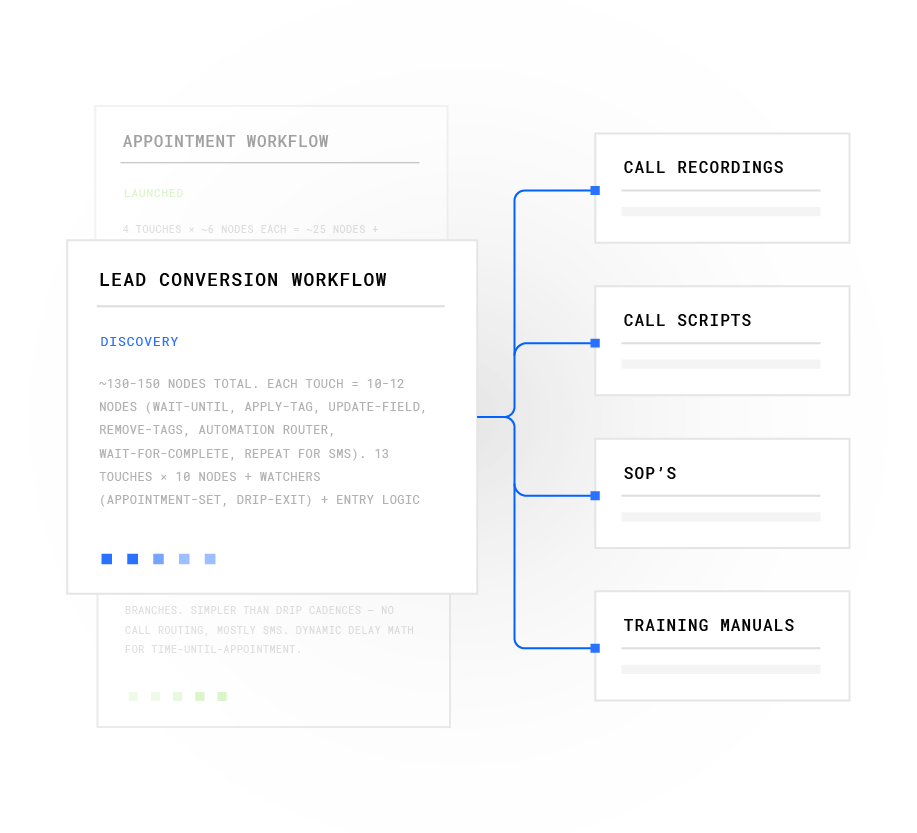
- Offshore-agent disclosure script: Draft a greeting that states the agent’s location country and the consumer’s right to request a U.S.-based transfer. Route this script through legal review.
- AI-agent disclosure script: Draft a greeting that identifies the interaction as AI-handled and states the consumer’s right to request a U.S.-based human agent. Apply this to any AI voice, AI SMS, or AI webchat deployment used for customer service.
- Transfer routing infrastructure: Confirm that your telephony platform can execute an immediate transfer to a U.S.-based agent on consumer request, with hold times that your legal team approves.
- Logging and audit trail: Ensure every disclosure event is timestamped and stored in a retrievable format for potential DOL audit.
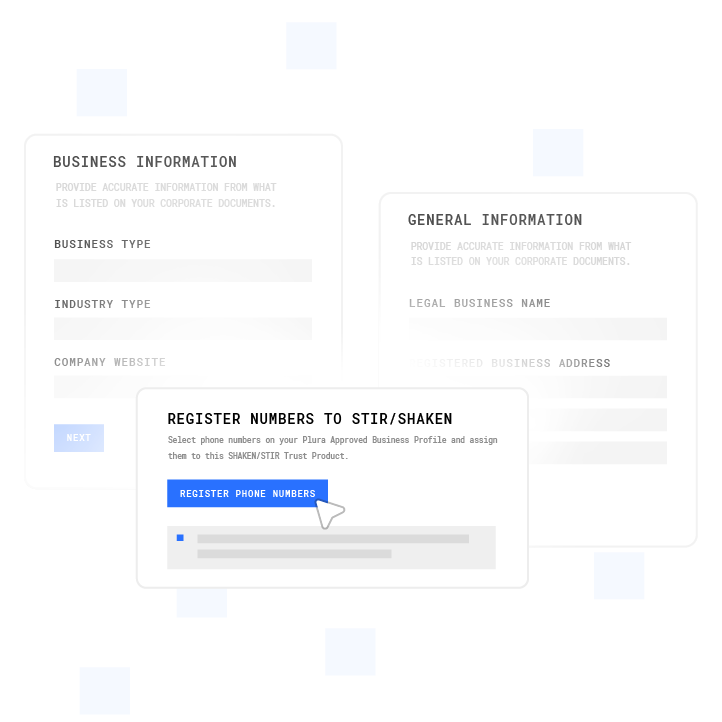
Plura AI’s AI voice agent runs on 100% U.S. infrastructure by architecture, with SHAKEN/STIR caller ID verification on every outbound call.1 Operators using Plura for customer-service communications can configure the disclosure workflows detailed in Step 5, including both agent-location and AI-use disclosures, directly in the no-code workflow builder and log every interaction to an immutable, audit-ready record. Legal counsel can help determine the specific disclosure language your organization should use.
Step 6: Quantify Federal-Funding Ineligibility Risk
The funding consequences in S.2495 create the most significant financial exposure. Under the proposed text, businesses on the DOL list are generally ineligible for federal grants or federally guaranteed loans for a specified period, and those with existing grants or loans face monthly penalties, ineligibility for further disbursement, and cancellation of the grant or loan if they remain on the list after one year. Businesses generally remain on the list for up to five years.
Quantify your organization’s funding-ineligibility exposure with this assessment:
- Total value of active federal grants: $_____
- Outstanding balance of federally guaranteed loans, including SBA: $_____
- Projected federal grant applications in the next 24 months: $_____
- Estimated monthly penalty exposure if listed (work with counsel on calculation methodology under the bill’s proposed penalty structure): $_____
- Estimated cost of transitioning offshore call-center volume to U.S.-based or U.S.-infrastructure AI alternatives: $_____
Compare line 5 against lines 1 through 4. For many operators with meaningful federal-funding exposure, the transition cost will be lower than the five-year funding-ineligibility risk. Run your numbers through Plura’s ROI calculator to check projected cost savings in real time.
Step 7: Use a Board-Ready Memo Structure
Compliance officers and CX executives need board-level documentation that frames S.2495 exposure in financial and operational terms. Use this memo structure:
- Executive summary: S.2495 status (introduced, no markup as of August 28, 2026), proposed effective date pending enactment, and the organization’s preliminary scope determination.
- Exposure summary: Offshore vendor volume as a percentage of total call-center operations, federal funding at risk, and estimated monthly penalty if listed.
- Disclosure gap analysis: Current agent-location and AI-disclosure practices compared with proposed S.2495 requirements.
- Recommended actions: Vendor contract review timeline, disclosure workflow build, DOL notice preparation, and infrastructure transition options.
- Infrastructure transition option: Summary of U.S.-based AI platform alternatives, including cost comparison versus offshore vendor spend. Reference Plura’s plans and rates as one benchmark for U.S.-infrastructure AI contact-center economics.
- Counsel sign-off line: Space for outside counsel attestation on scope determination and disclosure language.
Current Obligations Compared with Proposed S.2495 Rules
| Obligation Area | Current Requirement (Pre-Enactment) | Proposed S.2495 Requirement | Gap Action |
|---|---|---|---|
| Agent location disclosure | No federal mandate for most industries | Disclose agent location at start of every customer-service communication | Draft and test disclosure scripts, then route them through legal review |
| AI-use disclosure | No federal mandate for most industries outside FTC guidance | Disclose AI or machine handling and inform consumer of right to U.S. human agent | Update AI-agent greeting scripts and confirm transfer routing |
| Consumer transfer right | No federal mandate for most industries | Immediate transfer to U.S.-based human agent on consumer request | Audit telephony platform for transfer capability and latency |
| DOL notice before offshoring | No federal mandate | Notify DOL before relocating call-center work overseas | Build a notice template and internal approval chain now |
| Federal funding eligibility | No call-center-specific restriction | DOL-listed businesses ineligible for federal grants and federally guaranteed loans, with existing grants and loans subject to monthly penalties and cancellation after one year on the list | Complete the funding-ineligibility risk assessment in Step 6 |
| DOL public list placement | No equivalent mechanism | Businesses remain on the DOL list for up to five years, and removal requires meeting specified criteria | Assess offshore vendor volume against the 30 percent threshold and document a remediation plan |
Book a live demo with Plura to walk through how U.S.-infrastructure AI contact-center architecture maps to each row in this table.
Where Plura AI Fits in a Pre-Enactment Readiness Plan
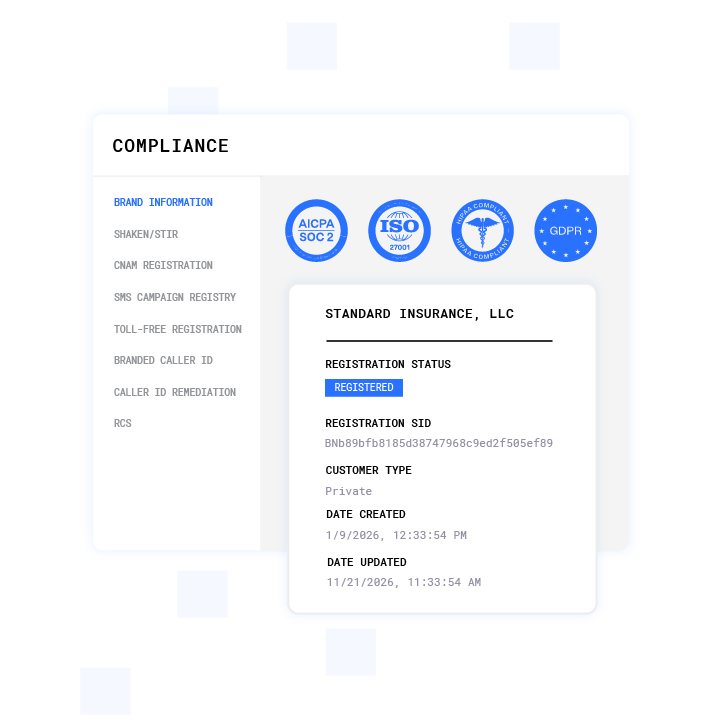
Plura AI is an FCC-licensed enterprise communications platform that runs voice, AI SMS, RCS, and AI webchat on 100% U.S. infrastructure by architecture. Voice origination, model hosting, data storage, and call recording all sit on domestic infrastructure. Operators using Plura report “100% U.S.-handled” in their broadband consumer-label disclosures without rebuilding their existing stacks.
For operators evaluating S.2495 exposure, three Plura platform characteristics connect directly to the audit steps above:
- Disclosure workflow support: The disclosure workflows detailed in Step 5, including both agent-location and AI-use disclosures, are configurable in Plura’s no-code workflow builder. Every disclosure event is logged to an immutable, timestamped record.
- U.S.-infrastructure architecture: Plura operates as its own FCC-licensed audio bridging carrier. No third-party CPaaS (Communications Platform as a Service) sits in the voice path, and SHAKEN/STIR caller ID verification runs on every outbound call at the carrier level.
- Compliance engine: TCPA support, DNC support, SOC 2 controls, HIPAA-related safeguards, and 50-plus state rule sets are enforced inside the platform on every outbound contact.1,2 Your legal team can review how Plura’s infrastructure supports your organization’s specific regulatory obligations.
Compare Plura’s plans and rates side by side against your current offshore vendor spend to build the cost-comparison section of your board memo.
Frequently Asked Questions
Does the Keep Call Centers in America Act apply to AI-based customer service?
Yes. S.2495 includes a specific provision covering AI-handled customer-service communications. Under the proposed bill, businesses using artificial intelligence for customer service must disclose that a nonhuman AI or machine is handling the interaction and inform the consumer of their right to request an immediate transfer to a U.S.-based human agent. This applies whether the AI system itself operates onshore or offshore. Operators deploying AI voice agents, AI SMS, or AI webchat for customer-service functions should review their current greeting scripts and transfer-routing infrastructure against this proposed requirement. Seek legal guidance for a determination specific to your deployment.
How should operators think about the 30 percent threshold?
S.2495 targets companies that move at least 30 percent of their customer-support or call-center operations offshore. The bill does not yet specify the exact calculation methodology, since DOL rulemaking would define measurement units, time periods, and whether the threshold applies to call volume, FTE count, or another metric. Operators can document their current offshore call-center volume as a percentage of total call-center operations using multiple measurement approaches, so they can apply the correct methodology once DOL publishes implementing rules. Legal counsel can help structure this documentation.
What happens to existing federal grants and SBA loans if a company is placed on the DOL list?
Under S.2495’s proposed text, a business with an existing federal grant or federally guaranteed loan that is added to the DOL list must pay a monthly penalty and becomes ineligible for further disbursements while listed. As detailed in Step 6, if the business remains on the list for one year, the grant or loan must be cancelled. The five-year maximum list duration and removal criteria appear in that section. The financial exposure from existing grants and loans is therefore distinct from, and potentially larger than, the exposure from future funding ineligibility. Operators should quantify both categories separately in their risk assessment and work with counsel on remediation timelines.
Can a company be removed from the DOL list before the five-year period ends?
S.2495 provides that the DOL must remove a business from the list if it meets certain requirements, though the specific removal criteria are subject to DOL rulemaking. The bill does not specify a minimum time on the list before removal eligibility. Operators that want to understand removal pathways should monitor DOL rulemaking activity in the Federal Register and seek legal guidance on what operational changes could satisfy the bill’s proposed removal criteria.
Does S.2495 apply to companies that use offshore vendors but have not directly relocated a call center?
Yes. The bill covers both direct relocation of a call center outside the United States and contracting call-center work to an overseas vendor. An organization that has never moved its own call center offshore but contracts 30 percent or more of its call-center volume to an offshore business-process outsourcing provider falls within the bill’s proposed scope if it also employs more than 50 individuals in call-center functions. This makes the offshore-vendor contract audit in Step 3 of this guide a priority action for any operator with BPO relationships, not only those that have directly relocated operations. Legal counsel can help confirm your organization’s classification.
1 Plura AI maintains SOC 2, HIPAA, ISO, and GDPR posture as part of its platform infrastructure. References to compliance frameworks in this article describe Plura’s platform capabilities and do not constitute a guarantee that any customer using Plura will themselves be compliant with applicable laws or standards. Customers remain solely responsible for their own regulatory obligations, certifications, consent management, recordkeeping, and the claims they make to their own end users. Consult qualified legal counsel for guidance specific to your use case.
2 This article describes regulatory frameworks at a general level and does not constitute legal advice. Laws and regulations vary by jurisdiction, change over time, and apply differently depending on facts and circumstances. Readers should consult qualified legal counsel before making compliance decisions.
This article is provided for informational purposes only and reflects Plura AI’s understanding at the time of publication. Product capabilities, integrations, and specifications are subject to change. For the most current information, visit plura.ai.
This article was produced with the assistance of AI tools and reviewed by Plura AI prior to publication.