

Written by: Matt Beucler, CEO, Plura AI | Last updated: August 27, 2026
Key Takeaways for AI Contact Center Compliance
- The Keep Call Centers in America Act sets a 30% offshore volume cap, a 120-day DOL notice window, a 5-year federal funding ban, and consumer transfer rights that affect AI voice, SMS, RCS, and webchat workflows.
- AI agents hosted on U.S. infrastructure do not count against the 30% offshore threshold, while offshore-hosted AI platforms may count toward the cap and require remediation planning.
- Operators need location disclosures, AI disclosures, and instant U.S. human transfer logic at the greeting node of every interaction to align with S.2495 and the FCC’s proposed NPRM.
- Subcontractor and vendor infrastructure attestations, including FCC licenses, should sit in immutable audit logs to show domestic handling and reduce DOL list risk.
- Plura AI’s FCC-licensed carrier stack runs entirely on domestic infrastructure, which removes offshore exposure across all channels. Verify your compliance posture in a live walkthrough.
Applying the 30% Offshore Volume Threshold to AI Agents
S.2495, the Keep Call Centers in America Act of 2025, covers employers that relocate a call center or contract call center work overseas.2 Those companies appear on a public DOL registry and lose eligibility for federal grants and federally guaranteed loans. The FCC’s March 26, 2026 NPRM in CG Docket No. 26-52 proposes a 30% cap on offshore inbound customer-service calls, with the proposal focused mainly on inbound traffic.2
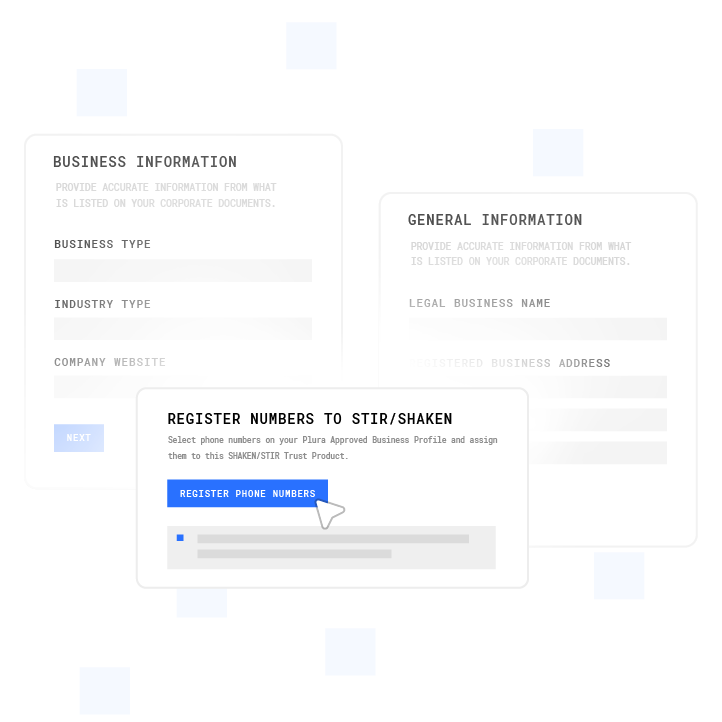
For AI workflows, the key metric is the share of interactions routed to offshore human agents compared with those handled domestically. AI does not receive a separate offshore classification unless the AI infrastructure operates from outside the United States. That distinction drives planning, because a domestically hosted AI agent does not count toward the 30% cap, while an offshore-hosted AI platform may count.
Use this checklist to map your current volume against the threshold:
- Pull your trailing 90-day interaction log across voice, SMS, RCS, and webchat channels.
- Classify each interaction by handling location, using three buckets: U.S.-hosted AI, U.S. human agent, and offshore human agent.
- Calculate offshore human interactions as a percentage of total interactions, then record that figure in your compliance workbook.
- If that percentage approaches or exceeds 30%, flag the workflow for remediation planning before the DOL notice window becomes relevant.
- With that exposure identified, confirm that every AI agent in your stack runs on U.S.-hosted infrastructure, not on offshore-hosted platforms.
- Document the infrastructure location for every vendor in your AI stack and store that documentation in an immutable audit log for future review.
Plura AI’s AI voice agent, AI SMS, AI RCS, and AI webchat all run on 100% U.S. infrastructure by architecture. Voice origination, model hosting, data storage, and call recording sit on domestic infrastructure, so interactions handled by Plura do not contribute to the offshore volume calculation.
Run your numbers through Plura’s ROI calculator to check your cost savings in real time.3 Once you have your offshore percentage, you can align that figure with your notice and remediation plans.
Planning 120-Day DOL Notices for AI Workflows
S.2495 directs the DOL to maintain a list of businesses that operate call centers of a specified size and either relocate a call center overseas or contract call center work overseas. Operators that sit near the 30% threshold need to treat notice preparation as part of their AI deployment calendar rather than a response after a breach of the cap.
For AI predictive dialer and AI SMS campaigns, follow this connected sequence:
- Identify the date on which any offshore vendor contract was signed or expanded. The notice clock may begin at contract execution, not at the point of volume breach, so this date sets your potential compliance timeline.
- With that timeline in view, audit every AI platform vendor for infrastructure location. A vendor that routes calls or stores data offshore may trigger the notice requirement even when the vendor is U.S.-incorporated.
- Once you understand which vendors introduce offshore exposure, draft a DOL notice that identifies the business entity, the volume of interactions being moved or contracted offshore, and the projected timeline.
- After drafting, retain a copy of the notice and all supporting volume documentation in an immutable audit log so you can show your calculation trail.
- If your AI predictive dialer or AI SMS campaigns already run on domestic infrastructure, record that posture explicitly so it is available for any DOL inquiry.
- Work with your legal team to verify the notice timeline that applies to your specific contract structure and volume profile.
Plura’s AI Predictive Dialer originates calls over Plura’s own FCC-licensed audio bridging carrier. Every outbound contact runs through real-time DNC scrubbing, TCPA tooling, and STIR/SHAKEN authentication at the carrier level.1 That infrastructure posture supports the documentation operators use to describe domestic handling to the DOL.
Configuring Consumer Location and AI Disclosures
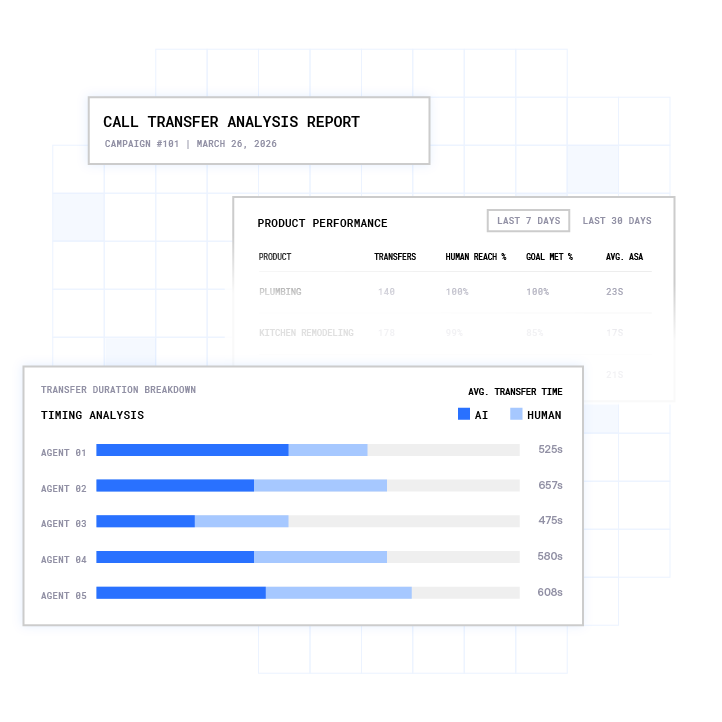
S.2495 states that at the beginning of any customer service communication, agents disclose their physical location. Under the proposed Keep Call Centers in America Act of 2025, at the start of a call, offshore agents disclose their location and inform the consumer that they may request an immediate transfer to a U.S.-based agent. When AI participates in the interaction, the bill describes a disclosure that a nonhuman AI or machine is in use and that the consumer may request immediate transfer to a U.S.-based human agent.
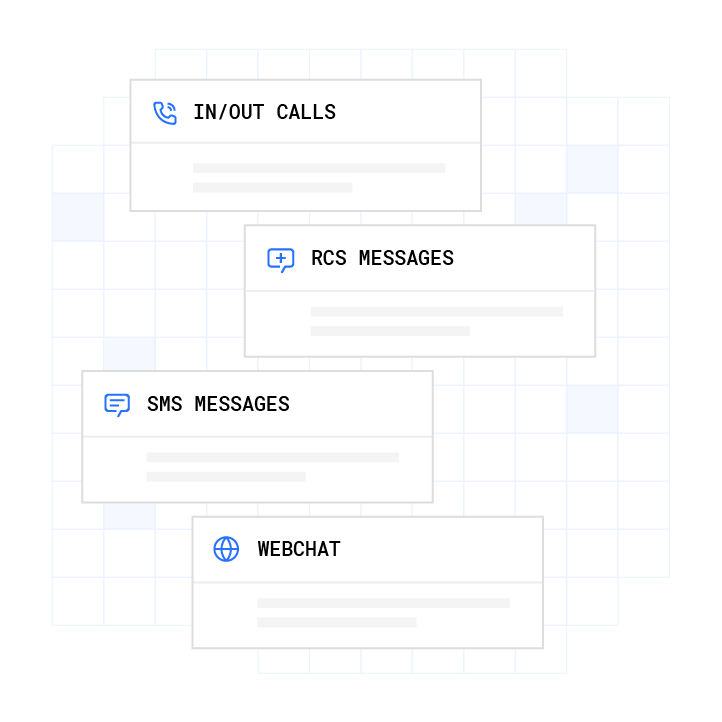
Plura’s Unified Inbox brings voice transcripts, SMS threads, RCS exchanges, and webchat sessions for each customer into a single screen. When a consumer asks for a U.S. human agent, the Stateful Conversation Database passes full interaction context to the receiving agent, so the consumer does not repeat themselves. Teams configure the disclosure script and transfer logic inside Plura’s no-code workflow builder at the greeting node level.
Assessing Federal Funding Ban Risk
Businesses that appear on the DOL list under S.2495 are generally ineligible for federal grants or federally guaranteed loans for a specified period. Businesses with existing federal grants or loans that are added to the list pay a monthly penalty and become ineligible for further disbursement. If a business remains on the list after one year, any associated federal grant or loan is subject to cancellation.
Use this checklist to assess your exposure:
- Identify every active federal grant, federally guaranteed loan, or federal contract your organization holds, then record each item in a central register.
- Calculate the total value of those instruments, since that figure represents your maximum funding-ban exposure.
- Map each instrument to the business unit that operates the call center or AI platform in scope, so you know which teams carry the risk.
- Determine whether any AI platform vendor in your stack operates infrastructure outside the United States, because offshore-hosted AI may qualify as contracted offshore call center work under the bill’s definitions.
- If any offshore exposure exists, compare your remediation timeline with the DOL notice window and the one-year cancellation trigger to understand timing pressure.
- Your legal team can confirm which federal instruments fall under S.2495’s funding-ban provisions for your organization’s structure.
Because Plura’s infrastructure is domestic by architecture, as described earlier, operators report 100% U.S.-handled interactions in their broadband consumer label disclosures. That posture means there is no offshore vendor dependency to unwind if the funding-ban risk becomes material.
Run your numbers through Plura’s ROI calculator to quantify the cost of moving to domestic AI infrastructure before a funding ban materializes. This helps finance and operations teams weigh risk against spend.
Subcontractor and Vendor Compliance Checklist
Under S.2495, the entity captured by the statute is the one that offshores the operations, not necessarily the downstream contractor or BPO subcontractor that performs the work. An upstream customer or client may be the covered entity even when a subcontractor handles day-to-day operations. Liability analysis depends on the contractual chain and operational control.
For BPO subcontractors and AI platform workflows, apply this checklist:
- Identify every subcontractor or AI platform vendor in your customer service chain, then create a single inventory.
- For each vendor, obtain written confirmation of infrastructure location that covers where calls originate, where data is stored, and where AI models are hosted.
- Using that information, determine whether your organization, as the contracting entity, is the party making the offshore move under the bill’s definitions, even when the subcontractor performs the work.
- Review all BPO subcontractor agreements for indemnification language that addresses DOL list placement and federal funding-ban exposure.
- Confirm whether any AI platform vendor you use holds its own FCC license and operates its own carrier infrastructure, since vendors that route through third-party CPaaS providers may introduce offshore infrastructure dependencies that do not appear in the vendor contract.
- Retain infrastructure attestations from every vendor in an immutable audit log and refresh those records at each contract renewal.
Plura is its own FCC-licensed audio bridging carrier, so voice traffic does not route through a third-party CPaaS. That structure means the infrastructure attestation Plura provides reflects a carrier-level fact rather than a contractual representation that depends on a downstream vendor’s posture. Operators can reference Plura’s FCC license directly in their subcontractor compliance documentation. Your counsel can confirm how subcontractor documentation should be structured for your specific regulatory exposure under S.2495 and CG Docket No. 26-52.
Handling Consumer Transfer Rights in a Unified Inbox
S.2495 states that when a consumer requests transfer to a U.S.-based human agent, that transfer should occur immediately. For AI voice and webchat workflows, teams need transfer logic at the greeting node rather than surfacing it only after a complaint or escalation.
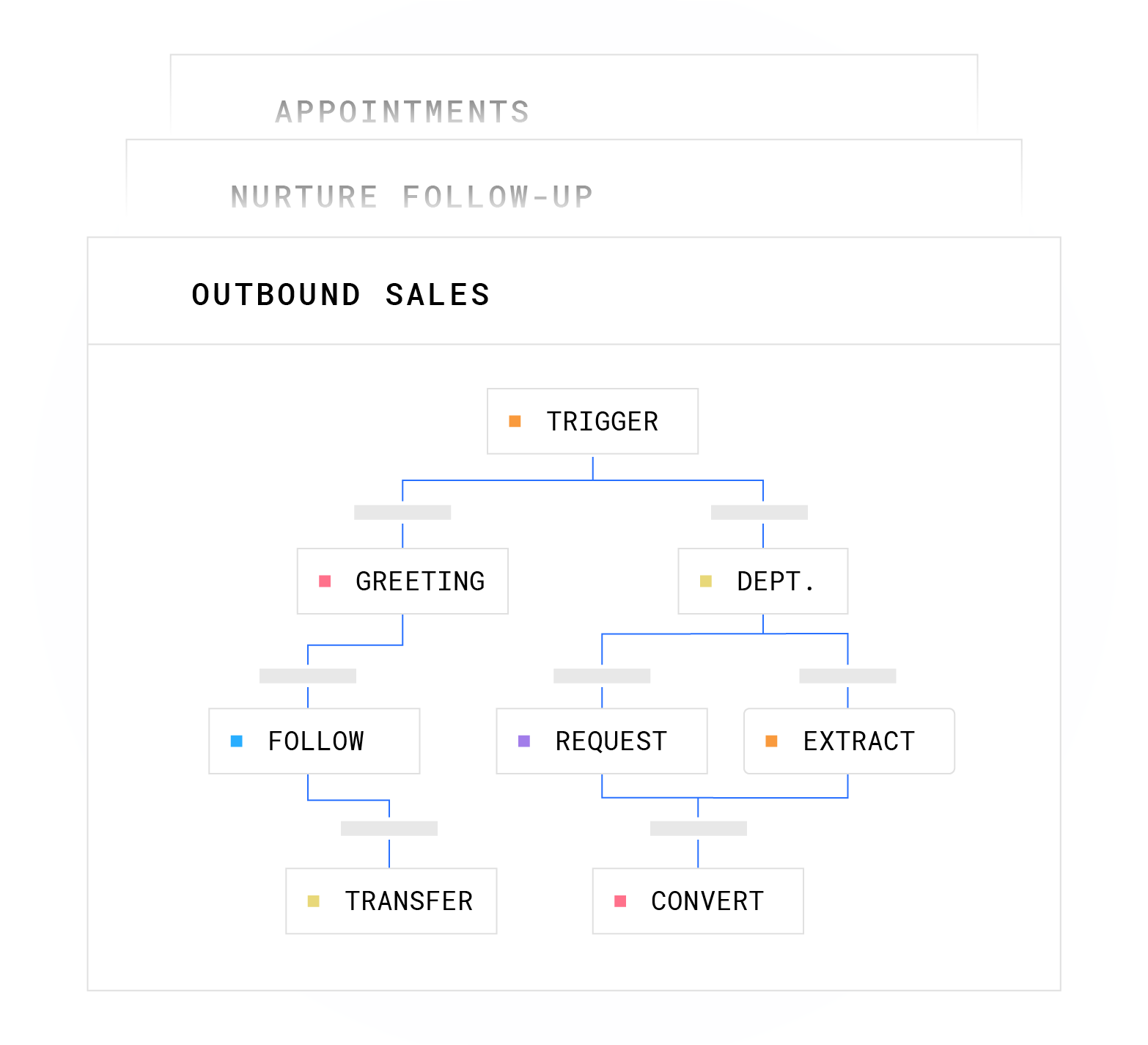
Use this decision tree to configure transfer handling in your AI workflows:
- At the start of every AI voice or webchat interaction, configure the AI to disclose that a nonhuman AI is handling the conversation and that the consumer may request a U.S. human agent at any time.
- If the consumer requests a U.S. human agent, instruct the AI to initiate a warm transfer to a U.S.-based agent queue immediately and to pass full conversation context from the Stateful Conversation Database.
- If no U.S. human agent is available, have the AI inform the consumer of the expected wait time and offer a callback or alternative channel.
- Log every transfer event in the Unified Inbox with a timestamp, the interaction context at the point of transfer, and the receiving agent’s identity.
- Audit the transfer log monthly to confirm that no transfer request resulted in delay or routing to an offshore agent.
- Work with your legal team to confirm that your transfer workflow aligns with the “immediate” standard under S.2495 for your interaction volume and channel mix.
Plura’s AI webchat and AI voice workflows support configurable transfer nodes inside the no-code workflow builder. The Unified Inbox gives the receiving U.S. agent the full conversation history from the moment the consumer first contacted the AI, across every channel, so no context is lost at the point of transfer.
See how Plura’s transfer logic satisfies the immediate-transfer standard in a live session.
2026 Regulatory Status Snapshot
As of August 2026, S.2495 and its House companion H.R.4954 remain active in the 119th Congress. The FCC’s NPRM (CG Docket No. 26-52), voted on March 26, 2026, proposes a 30% cap on offshore customer-service call volume and describes consumer transfer rights and location disclosures. The FCC voted to adopt a Notice of Proposed Rulemaking that would introduce English proficiency standards, volume caps on overseas centers, and a consumer right to transfer to a U.S.-based representative if the rules are finalized. The proposed 30% threshold and the bill’s DOL-list mechanism remain the main compliance targets for operators planning AI deployments in 2026 and 2027.
Operators should monitor the Federal Register and Congress.gov for final rulemaking dates and any changes to the volume threshold or notice timeline. Nothing in this article constitutes legal advice, and organizations should consult qualified counsel for guidance tailored to their own operations.
Frequently Asked Questions
How does the 30% offshore volume threshold apply to AI agents specifically?
As explained in the threshold section above, U.S.-hosted AI does not count toward the 30% cap, and only offshore human agent volume counts. If an AI platform’s infrastructure runs outside the United States, that platform may be treated as offshore contracted call center work under the bill’s definitions. The key step is verifying where your AI platform’s infrastructure actually runs, not just where the vendor is incorporated.
Does the Keep Call Centers in America Act apply to SMS, RCS, and webchat, or only to voice calls?
S.2495 describes customer service communications broadly and includes specific disclosure language for AI and offshore agents. The FCC’s NPRM focuses on inbound and outbound customer-service calls handled by telecom carriers. Non-voice digital workflows such as webchat, SMS, and RCS may sit outside the direct scope of the FCC’s proposed call-volume cap, while the bill’s AI disclosure concepts and consumer transfer rights apply to customer service communications across channels. Operators should treat telephony workflows and non-voice digital workflows as separate categories when calculating offshore volume exposure and should work with legal counsel to confirm channel-specific applicability for their interaction mix.
What documentation does an operator need to demonstrate domestic infrastructure posture?
Operators should maintain written attestations from every AI platform vendor confirming the infrastructure location for voice origination, model hosting, data storage, and call recording. For vendors that hold their own FCC carrier license, the FCC license itself serves as primary documentation. For vendors that route through third-party CPaaS providers, operators should also obtain the CPaaS provider’s infrastructure location documentation, since offshore exposure may exist at the CPaaS layer rather than the AI vendor layer. All attestations should sit in an immutable audit log and be updated at each contract renewal, along with the DOL notice and any supporting volume calculations.
How should BPO subcontractors structure their compliance documentation under S.2495?
Under S.2495, the entity that offshores the operations is the covered entity, not necessarily the subcontractor that performs the work. BPO subcontractors should document their own infrastructure location and provide that documentation to their upstream clients. Upstream clients should treat subcontractor infrastructure attestations as part of their own compliance record, since DOL list placement risk sits with the contracting entity. Subcontractor agreements should describe infrastructure location and include indemnification language that addresses DOL list placement and federal funding-ban exposure. Work with your legal team to structure subcontractor agreements for your specific contractual chain and volume profile.
Conclusion: Turning AI Compliance into an Operational Routine
The Keep Call Centers in America Act offshoring rules create four concrete obligations for high-volume operators. Teams need to stay below the 30% offshore-volume trigger, prepare DOL notices before the window closes, satisfy consumer location and AI disclosures at the start of every interaction, and build immediate U.S. human transfer logic into every AI voice and webchat workflow. The 5-year federal funding ban converts non-compliance into a balance-sheet risk, not just a regulatory concern.
Plura’s domestic infrastructure posture, described throughout this article, means there is no offshore vendor dependency to unwind. Plura’s AI voice agent, AI predictive dialer, AI SMS, and AI webchat do not route through third-party CPaaS providers. Every outbound contact runs through real-time DNC scrubbing, TCPA tooling, and STIR/SHAKEN authentication at the carrier level.1 The Unified Inbox passes full conversation context to U.S. human agents on every transfer, which supports the immediate-transfer standard while sparing the consumer from repeating details.
Operators who want to compare their current plans and rates with the requirements in this playbook can review options at plura.ai/pricing.
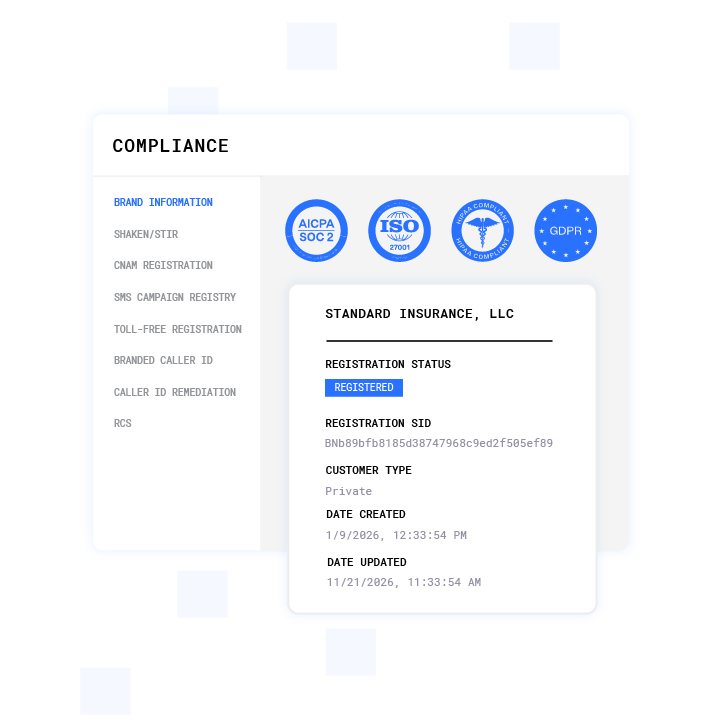
1 Plura AI maintains SOC 2, HIPAA, ISO, and GDPR posture as part of its platform infrastructure. References to compliance frameworks in this article describe Plura’s platform capabilities and do not constitute a guarantee that any customer using Plura will themselves be compliant with applicable laws or standards. Customers remain solely responsible for their own regulatory obligations, certifications, consent management, recordkeeping, and the claims they make to their own end users. Consult qualified legal counsel for guidance specific to your use case.
2 This article describes regulatory frameworks at a general level and does not constitute legal advice. Laws and regulations vary by jurisdiction, change over time, and apply differently depending on facts and circumstances. Readers should consult qualified legal counsel before making compliance decisions.
3 Performance figures, customer outcomes, and industry statistics referenced in this article are drawn from cited third-party sources or Plura customer case studies. Individual results vary based on implementation, use case, industry, audience, and execution. Past or aggregate performance is not a guarantee of future results.
This article is provided for informational purposes only and reflects Plura AI’s understanding at the time of publication. Product capabilities, integrations, and specifications are subject to change. For the most current information, visit plura.ai.
This article was produced with the assistance of AI tools and reviewed by Plura AI prior to publication.