
Written by: Matt Beucler, CEO, Plura AI
Key Takeaways for Missed-Call Recovery
- Automated text-back, AI voice agents, and live receptionists handle missed calls differently, and AI voice delivers sub-five-second speed-to-lead.
- High-volume operators lose substantial revenue from missed calls, with 57-62% of calls occurring after hours and annual losses often above $126,000 for small businesses.
- Carrier ownership, real-time DNC scrubbing, and SHAKEN/STIR authentication at origination are critical compliance factors that reduce TCPA exposure risk.1
- AI voice agents that answer every call live, book during the conversation, and maintain context across SMS and webchat outperform text-back systems that rely on caller follow-up.
- Plura AI delivers 24/7 missed-call recovery on 100% U.S. infrastructure with full compliance support, see how it works for your business.
How Missed-Call Booking Actually Works
Operators need a clear view of how each model handles a missed call before they compare vendors. The workflows below outline what happens from the moment a prospect dials to the moment a booking hits the calendar.
How a missed call happens:
- A prospect calls a business phone number.
- No agent or system answers within the caller’s patience window, typically under 90 seconds.
- Eighty-five percent of callers who reach voicemail do not leave a message and instead call a competitor.
- The business loses the lead, the ad spend that generated it, and the downstream revenue.
How a missed-call booking service works:
- A trigger fires the moment a call goes unanswered for text-back, or the moment the call arrives for AI voice.
- The service contacts the caller via SMS, voice callback, or live answer.
- The caller is qualified and receives a booking link or books directly during the interaction.
- The appointment is written to the business calendar and a confirmation is sent.
- The interaction is logged to the CRM for follow-up and reporting.
The critical variable is time. Leads contacted within one minute are 391% more likely to convert than those contacted after 24 hours3, and even a five-minute response window produces dramatically better outcomes than a 30-minute delay. Every minute of delay after a missed call compounds the revenue loss. Understanding how different service types handle this time-critical window is essential for selecting the right solution.
Comparing Text-Back, AI Voice, and Live Receptionists
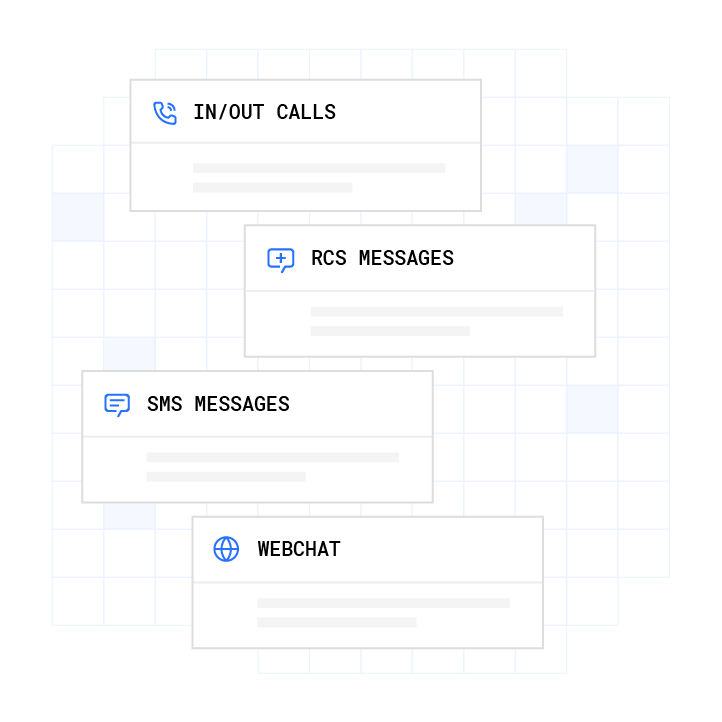
The three service types differ substantially on the dimensions that matter most to high-volume operators. The table below compares them across speed-to-lead, channel coverage, compliance posture, carrier ownership, and U.S. infrastructure.
| Dimension | Automated Text-Back | AI Voice Agent | Live Receptionist |
|---|---|---|---|
| Speed-to-lead | Under 2 minutes (automated SMS dispatch) | Under 5 seconds (answers on first ring) | Varies, with hold times possible during peak volume |
| Channel coverage | SMS only | Voice, SMS, RCS, webchat (unified) | Voice only (single concurrent call) |
| Compliance posture | TCPA consent required for outbound SMS, with DNC scrubbing that varies by vendor | TCPA, DNC, HIPAA, and SOC 2 support that varies by vendor, with carrier-level enforcement available on owned-carrier platforms1 | Dependent on operator procedures, with no automated enforcement |
| Carrier ownership | Typically routes through third-party CPaaS (Communications Platform as a Service) | Varies, with most vendors wrapping Twilio or another CPaaS and few owning their carrier stack4 | Not applicable |
| U.S. infrastructure | Varies by vendor | Varies, with offshore model hosting common among API-reseller class vendors | Depends on staffing model, with offshore answering services available |
Benchmarks show AI receptionists achieve higher same-session appointment booking rates than missed-call text-back alone. Text-back works well as a backup channel, but it does not function as a primary booking engine.
Book a live demo with Plura to see how AI voice handles missed-call recovery end to end: plura.ai/ai-voice-demo.
While the comparison table shows what vendors promise, real-world operator feedback reveals where these systems break down in practice.
Common User Complaints from Reddit and Trustpilot
Real-operator complaints about missed-call booking tools cluster into four recurring patterns.
- Text-back reply rates drop fast. Personalized and timely SMS messages often achieve higher reply rates than generic or delayed ones. Operators report that out-of-the-box text-back templates underperform because they do not reflect the caller’s context.
- AI voice agents go off-script. Operators using API-reseller class AI voice tools report agents that improvise responses outside defined workflows, which creates compliance exposure and customer confusion. The root cause is usually a lack of guardrails in the conversation design layer.
- Voicemail rates remain high. Callers pushed to voicemail often do not leave a message. Operators who deploy text-back without a live-answer layer still lose the majority of after-hours callers.
- Compliance gaps surface at audit time. Operators report discovering that their vendor’s TCPA consent records were incomplete or that DNC scrubbing was not running in real time, which creates retroactive liability. TCPA violations carry statutory damages of $500 to $1,500 per unsolicited call or text, with class action settlements averaging $6.6 million in 2023.
Speed-to-Lead and After-Hours Revenue Impact
Studies show that 7% to 23% of businesses respond to leads within five minutes, with 55% taking more than five business days for first contact. That gap is where revenue disappears.
After-hours exposure compounds the problem. Many local business searches occur outside standard business hours. Data from home services businesses shows that 57-62% of calls occur outside standard business hours.3 A business that closes at 5 PM becomes invisible to the majority of its inbound demand.
The revenue math is direct. The average small business loses approximately $126,000 per year in revenue from missed calls.3 For home services specifically, 100 missed calls per month can put $15,000 to $60,000 in revenue at risk depending on average job value.
Franchises average a 67% missed call rate during peak hours. A multi-unit franchise owner in home services reported: “We went from missing 40% of our calls across 12 locations to answering 100% of them. Our booking rate doubled and we did it without adding a single receptionist.”
Capturing every call solves the revenue problem, but operators who deploy missed-call systems without evaluating compliance posture create a different kind of risk.
Compliance and Carrier-Ownership Risks to Watch
Compliance posture separates platforms that support operators from platforms that expose them. The following frameworks are relevant to missed-call booking deployments. Operators should consult qualified counsel regarding their specific obligations under each.
Regulatory frameworks to evaluate:
- TCPA compliance: The FCC’s February 8, 2024 Declaratory Ruling (FCC 24-17) classified AI-generated voices as “artificial” under the TCPA (47 U.S.C. § 227), which subjects outbound AI voice calls to robocall consent rules.1 Operators should evaluate whether their vendor’s consent records are timestamped, immutable, and audit-ready.
- DNC compliance: Telemarketers must scrub call lists against the National DNC Registry every 31 days. Real-time scrubbing at the carrier level is typically more reliable than batch scrubbing bolted on after the fact.
- HIPAA: Healthcare deployments require end-to-end encryption, access controls, audit logging, and a signed Business Associate Agreement from every vendor touching protected health information.1
- SOC 2: SOC 2 Type II certification covers underlying infrastructure with continuous monitoring and third-party audits.1
- SHAKEN/STIR caller ID verification: Calls without proper STIR/SHAKEN attestation are often tagged “Spam Likely” and answered at lower rates. Vendors that do not own their carrier cannot issue SHAKEN/STIR authentication at the origination level.
- ISO certification and GDPR: These frameworks are relevant for operators with international operations or enterprise procurement requirements.1
Carrier-ownership red flags to ask about:
- Does the vendor own its carrier stack or route through a third-party CPaaS like Twilio? Ownership determines whether the vendor can enforce compliance at origination or must rely on third-party controls.
- Is branded caller ID issued at the carrier level or bolted on through a reseller? Carrier-level issuance typically produces higher pickup rates and stronger spam-filter resistance.
- Where are voice origination, model hosting, data storage, and call recordings physically located? U.S. infrastructure can support HIPAA-aligned deployments and reduce certain regulatory exposures.
- Can the vendor produce a current FCC license number? This helps confirm carrier ownership and regulatory standing.
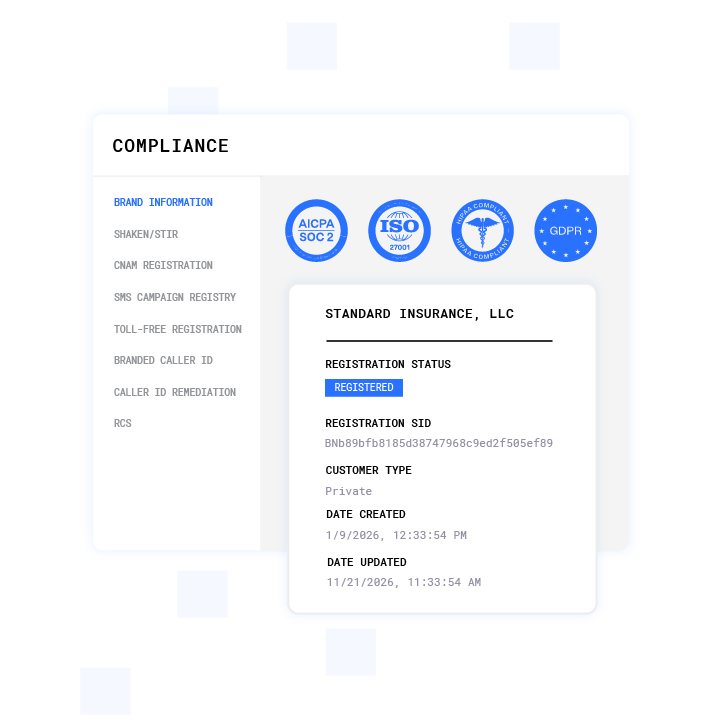
Plura AI supports customer compliance through SOC 2, HIPAA, ISO certification, GDPR, SHAKEN/STIR caller ID verification, TCPA compliance, and DNC compliance infrastructure. Customers remain responsible for their own regulatory obligations and the claims they make to their end users.
Plura AI Voice Agent for Missed-Call Recovery
Plura is an FCC-licensed platform. Voice originates on Plura’s own domestic carrier infrastructure, not a third-party CPaaS. That distinction drives three operational outcomes that Twilio-based API resellers cannot easily match: branded caller ID issued at the carrier level, SHAKEN/STIR authentication at origination, and DNC scrubbing enforced before each dial rather than bolted on afterward.
The AI voice agent answers every inbound call within two rings, 24/7, in English or Spanish. It qualifies the caller, books the appointment live on the call, and logs the interaction to the Stateful Conversation Database so that any follow-up via AI SMS or AI webchat picks up with full context. Callers avoid re-introducing themselves, repeating qualification, or navigating channel gaps.
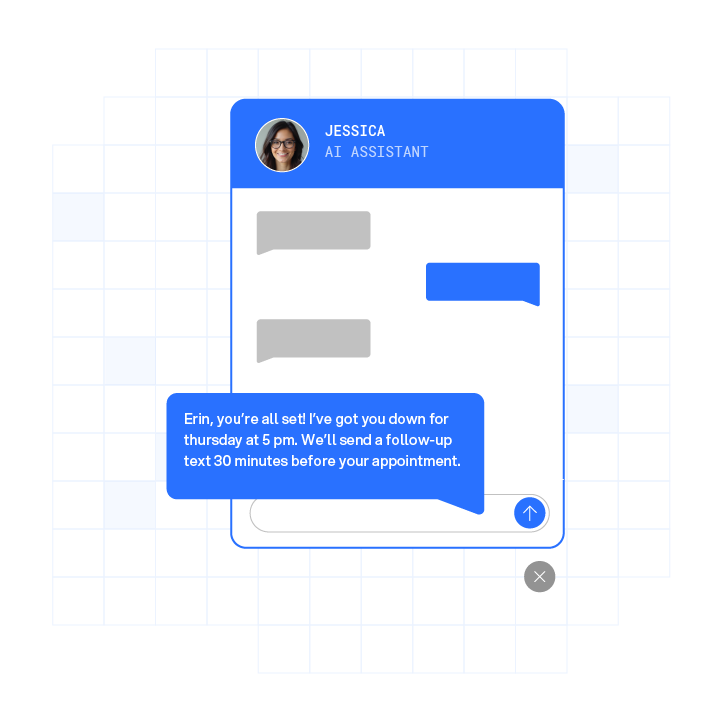
The platform’s missed-call recovery and 24/7 call answering run on 100% U.S. infrastructure by architecture. Voice origination, model hosting, data storage, and call recordings all sit on domestic infrastructure. As noted earlier, Plura’s sub-five-second answer time applies across all franchise locations, ensuring consistent first-ring pickup regardless of volume.
Book a live demo with Plura to see the AI receptionist in action: plura.ai/ai-voice-demo.
Best-Fit Models by Business Type
Home services (HVAC, plumbing, electrical, roofing): Home-service contractors without dedicated front-desk staff miss above 50% of inbound calls. Technicians are on job sites. The only model that captures nearly every call without adding headcount is an AI answering service for home services with live booking capability. Text-back alone recovers some callers but loses the majority who will not wait for an SMS exchange when a competitor answers live.
Med-spas and wellness: Appointment-driven businesses with high no-show rates benefit from AI voice combined with automated SMS reminders. Plura supports up to 40% improvement in no-shows through automated follow-up workflows. HIPAA-aligned infrastructure is a non-negotiable requirement for any vendor handling patient contact data.
Real estate: Real estate agents take many hours on average to follow up on new leads, yet 78% of buyers work with the first agent to respond. AI voice with speed-to-lead SMS follow-up captures buyers before they reach the next listing on their search results.
Agencies: Agencies running call operations across multiple clients need multi-tenant compliance, per-client reporting, and consistent SLAs. AI receptionist deployments allow account managers to expand from 5-8 clients to 15-20 without proportional headcount increases, based on Plura customer outcomes.
Questions High-Volume Operators Should Ask Vendors
Does the vendor own its carrier, or does it route through Twilio or another CPaaS? Carrier ownership determines whether branded caller ID, SHAKEN/STIR authentication, and DNC scrubbing are enforced at origination or bolted on. Most AI voice platforms in the market are API resellers. Plura is its own FCC-licensed audio bridging carrier.
Where is the infrastructure physically located? Voice origination, model hosting, data storage, and call recordings should all sit on domestic U.S. infrastructure for operators subject to HIPAA, state onshoring laws, or FCC NPRM exposure.
How are TCPA consent records stored and retrieved? Consent records should be timestamped, immutable, and exportable for audit. Operators should ask for a demonstration of the compliance dashboard before signing.
What happens when the AI does not know the answer? Platforms without defined escalation guardrails will improvise. Plura’s workflows include hard limits on negotiation floors and ceilings, with warm transfer to a U.S. agent when a call falls outside the defined workflow paths.
What is the build fee and what does iteration cost? High upfront build fees combined with no post-launch iteration create risk, because if the initial deployment does not perform, operators are locked into a system that will not improve. Some vendors charge $10,000 or more to build a single conversation and do not iterate after launch. Plura’s agent build fee is $2,500-$2,750 per agent, and every annual contract includes a 90-day opt-out window if the deployment is not delivering.
Conclusion: Turning Missed Calls into Booked Revenue
Missed calls are not a minor operational gap. Owner-operated small businesses miss or abandon an estimated 12% to 50% of inbound calls, and earlier franchise data shows that missed-call rates during demand surges can exceed 50%. Automated text-back recovers a fraction of those callers. Live receptionists cannot scale to 24/7 coverage without proportional cost increases. AI voice agents that own their carrier stack, enforce compliance at origination, and run on 100% U.S. infrastructure are the only model that addresses speed-to-lead, after-hours coverage, and regulatory posture in a single deployment.
Plura’s AI voice agent answers every call within two rings, books appointments live on the call, and logs every interaction to a shared Stateful Conversation Database so that SMS, RCS, and webchat follow-ups carry full context. The platform delivers the compliance infrastructure described earlier on 100% U.S. infrastructure.
Run your numbers through Plura’s calculator to check your ROI in real time: plura.ai/calculator.
Frequently Asked Questions
What is the difference between automated text-back and an AI voice agent for missed-call recovery?
Automated text-back is a reactive system. When a call goes unanswered, it sends a pre-written SMS with a booking link. The caller must read the message, click the link, and complete the booking themselves. Conversion depends entirely on whether the caller engages with the text.
AI voice agents are proactive. They answer the call live, conduct a real conversation, qualify the caller, and book the appointment during the interaction. The caller never reaches voicemail, and the booking happens in the same session as the original call. For high-volume operators where each missed call represents hundreds to thousands of dollars in potential revenue, the difference in same-session booking rates between the two models is significant. Text-back works well as a fallback layer, but it does not replace live-answer capability.
What compliance frameworks apply to AI voice agents used for appointment booking in the U.S.?
Several federal and state frameworks are relevant to AI voice and SMS systems used for appointment booking. The Telephone Consumer Protection Act (TCPA), codified at 47 U.S.C. § 227, governs automated calls and texts, including AI-generated voice calls following the FCC’s February 2024 Declaratory Ruling. The Do Not Call (DNC) Registry requires list scrubbing before outbound campaigns. HIPAA applies to any system handling protected health information in healthcare contexts. SOC 2 Type II certification covers infrastructure security controls. SHAKEN/STIR caller ID verification is enforced at the carrier level and affects call pickup rates. State-level frameworks in Florida, Texas, California, and others introduce additional requirements around calling hours, consent, and AI disclosure. Operators should consult qualified legal counsel regarding their specific obligations under each framework. Plura supports customer compliance through infrastructure that addresses these frameworks, and customers remain responsible for their own regulatory posture.
Why does carrier ownership matter when evaluating AI voice platforms?
Most AI voice platforms in the market are API resellers. They build a software layer on top of a third-party Communications Platform as a Service such as Twilio and rent the underlying telecom infrastructure. That architecture creates three operational limitations.
First, branded caller ID cannot be issued at the carrier level, so calls present as unfamiliar numbers and are more likely to be flagged as spam or screened by iOS call-filtering. Second, SHAKEN/STIR authentication runs through the third-party carrier’s reputation, not the operator’s own. Third, DNC scrubbing and TCPA consent enforcement are bolted on after the fact rather than enforced at origination.
Platforms that own their FCC-licensed carrier stack can issue branded caller ID directly, authenticate calls at origination, and enforce compliance before each dial. For high-volume operators, the difference appears first in pickup rates, then in compliance posture, and finally in conversion.
Which business types benefit most from AI voice agents for missed-call booking?
Any business where inbound calls represent high-value leads and staff cannot answer every call benefits from AI voice. Home services businesses such as HVAC, plumbing, electrical, and roofing miss above 50% of inbound calls because technicians are on job sites, and each missed call can represent hundreds to over a thousand dollars in lost work.
Med-spas and wellness businesses face high no-show rates that automated follow-up workflows can reduce. Real estate agents miss roughly 40% of incoming calls, and the majority of buyers work with the first agent to respond. Agencies running call operations across multiple clients need consistent SLAs and per-client compliance without proportional headcount increases. Franchise networks face a 67% average missed call rate during peak hours across locations, and AI voice enforces identical greeting and qualification at every unit without adding front-desk staff.
What should operators ask before signing a contract with a missed-call booking vendor?
Five questions cover the most common failure points. First, does the vendor own its carrier or route through a third-party CPaaS? This determines branded caller ID, SHAKEN/STIR authentication, and DNC enforcement capability. Second, where is the infrastructure physically located? U.S. infrastructure is relevant for HIPAA, state onshoring laws, and FCC regulatory exposure.
Third, how are TCPA consent records stored and retrieved? Records should be timestamped, immutable, and exportable. Fourth, what happens when the AI encounters a call outside its defined workflow? Platforms without escalation guardrails will improvise, which creates compliance and customer experience risk. Fifth, what is the build fee and what does ongoing iteration cost? Some vendors charge significant upfront fees and do not iterate after launch. Operators should ask for a 90-day performance window before committing to an annual term.
1 Plura AI maintains SOC 2, HIPAA, ISO, and GDPR posture as part of its platform infrastructure. References to compliance frameworks in this article describe Plura’s platform capabilities and do not constitute a guarantee that any customer using Plura will themselves be compliant with applicable laws or standards. Customers remain solely responsible for their own regulatory obligations, certifications, consent management, recordkeeping, and the claims they make to their own end users. Consult qualified legal counsel for guidance specific to your use case.
2 This article describes regulatory frameworks at a general level and does not constitute legal advice. Laws and regulations vary by jurisdiction, change over time, and apply differently depending on facts and circumstances. Readers should consult qualified legal counsel before making compliance decisions.
3 Performance figures, customer outcomes, and industry statistics referenced in this article are drawn from cited third-party sources or Plura customer case studies. Individual results vary based on implementation, use case, industry, audience, and execution. Past or aggregate performance is not a guarantee of future results.
4 References to third-party products, services, companies, or research are made for informational and comparative purposes only. Plura AI is not affiliated with, endorsed by, or sponsored by any third party named in this article unless explicitly stated. Trademarks and product names referenced remain the property of their respective owners.
This article is provided for informational purposes only and reflects Plura AI’s understanding at the time of publication. Product capabilities, integrations, and specifications are subject to change. For the most current information, visit plura.ai.
This article was produced with the assistance of AI tools and reviewed by Plura AI prior to publication.