
Written by: Matt Beucler, CEO, Plura AI
Updated September 2026
Key Takeaways
- A multi-line dialer for regulated industries must enforce consent capture, real-time DNC suppression, local-time quiet hours, abandonment controls, and immutable audit logs before any call leaves the network.
- Five dialing modes carry different abandonment exposure profiles and consent requirements, and the right mode depends on your vertical and campaign goals.
- Parallel and predictive dialing trigger specific FTC TSR and FCC TCPA obligations, including a 3% abandoned-call cap per campaign per 30-day period and mandatory prerecorded identification messages.2
- Defensible compliance requires persistent consent records with immutable timestamps, exact disclosure versions, revocation history, and campaign identifiers that can withstand litigation or regulatory audits.
- Plura AI owns its FCC-licensed carrier and enforces TCPA and DNC compliance inside the platform before dial; see a live configuration walkthrough to understand how controls work before a single call leaves the network.
Dialer Modes and Abandonment Risk in Regulated Industries
A multi line dialer for regulated industries comes in five distinct configurations. Each mode carries a different abandonment exposure profile and consent threshold. The table below maps each mode to its abandonment risk, consent level, and typical regulated use case so you can align mode selection with your vertical before the first campaign runs.
| Dialing Mode | How It Works | Abandonment Exposure | Consent Requirement | Best-Fit Regulated Vertical |
|---|---|---|---|---|
| Preview | Agent reviews contact details and compliance status before initiating each call | None, agent initiates manually | Prior express consent per campaign type | Legal, healthcare intake |
| Progressive | System dials one number per available agent | None, one-to-one dialing | Prior express consent per campaign type | Insurance, financial services |
| Power | System dials one number at a time sequentially from a pre-approved list | None, one-to-one dialing | Prior express consent per campaign type | Collections, franchise networks |
| Predictive | Algorithm predicts agent availability and dials multiple numbers | Moderate, requires abandon-rate monitoring | Prior express written consent for autodialed calls | High-volume outbound with compliance controls |
| Multi-Line/Parallel | Multiple lines dial simultaneously per agent | Higher, simultaneous answering creates abandoned calls | Prior express written consent; abandonment message required | High-volume campaigns with carrier-grade controls |
Parallel Dialers and Abandonment Obligations
Parallel dialing creates abandoned calls when more people answer than agents can handle, which triggers specific obligations under the FTC’s Telemarketing Sales Rule and the FCC’s TCPA framework. When a person answers and the caller fails to connect to a live representative within 2 seconds of the completed greeting, the call is classified as abandoned under the FTC’s TSR. The FCC’s abandoned-call framework, codified at 47 C.F.R. 64.1200(a)(7), limits abandoned calls to 3% of calls answered by a live person, measured per 30-day period per campaign.2 It also requires a prerecorded message with caller identity and callback number to play within 2 seconds of the completed greeting. Consult qualified counsel for your specific configuration and vertical.
How TCPA Autodialer Rules Affect Dialer Configuration
The TCPA’s autodialer framework, codified at 47 U.S.C. § 227 and FCC implementing regulations, attaches obligations to how the equipment is used and to the consent status of the called party.2 The Supreme Court’s 2021 decision in Facebook, Inc. v. Duguid narrowed the definition of an automatic telephone dialing system (ATDS), holding that a device must use a random or sequential number generator to qualify. Lower courts continue to interpret that boundary. Obligations under the TCPA vary by call type, technology used, and whether the called party has provided the applicable level of consent. Consult qualified counsel for your specific configuration.
Abandonment Mechanics and Platform Controls
Simultaneous answering in multi-line and predictive dialing creates abandoned calls when more live answers arrive than agents are available to handle. The FTC’s TSR abandoned-call provisions at 16 C.F.R. Part 310 impose a parallel 3% abandoned-call cap alongside the FCC’s TCPA rules.2 Without the safe harbor, an abandoned call can be treated as a standard TCPA violation carrying $500 per call for a standard violation and $1,500 per call for a willful or knowing one under 47 U.S.C. 227(b)(3).
Defensible configuration treats abandonment controls as platform-enforced settings that operate automatically at dial time. Core controls include:
- Configurable concurrency per campaign, set before dial
- Abandon-rate monitoring with the 3% TSR safe harbor threshold enforced in real time
- Agent-availability gating before dial, so lines only open when an agent is ready
Plura enforces these abandonment controls inside the platform before dial through its AI Predictive Dialer, which includes built-in list management, dynamic pacing, and compliance controls configured at the campaign level.
Consent-Aware Dialing Data Model
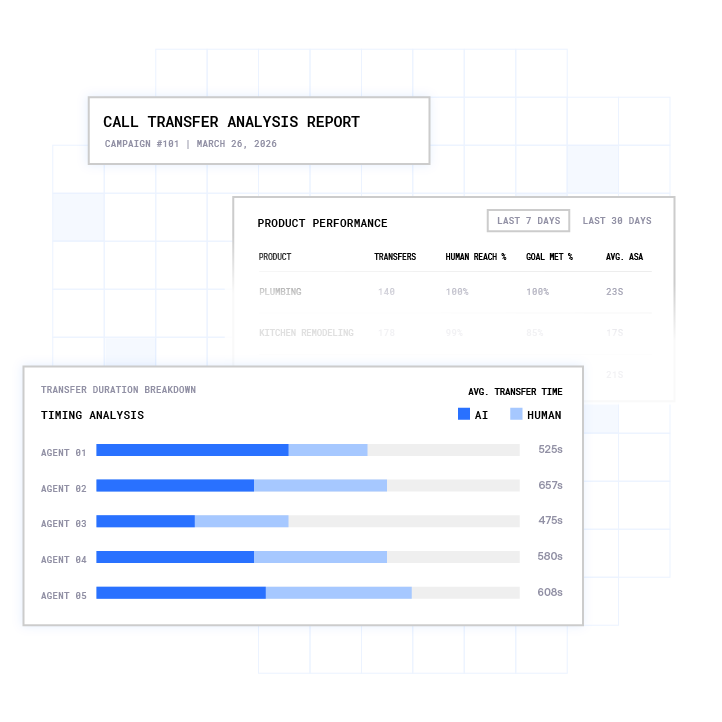
A regulated dialer must persist a specific set of consent record fields to produce defensible evidence in litigation or a regulatory audit. A defensible proof-of-consent record must preserve five things: the disclosure language as rendered on the consumer’s device at submission, the seller identified in the disclosure, the consumer’s affirmative action captured as an interaction event, an immutable timestamp tied to a trusted clock, and a chain of custody linking the rendered form to the phone number ultimately called.
The following fields constitute a minimum consent record for regulated outbound operations:
- Consent source: web form, inbound call, SMS reply, paper signature
- Timestamp of consent capture: immutable, tied to a trusted clock with cryptographic integrity
- Phone number: normalized format
- Disclosure version: exact language shown at capture, including the source URL
- Revocation history: date, time, channel, and processing timestamp for every opt-out event
- Campaign identifier: links consent to the specific outreach purpose
The FCC’s revocation rules, effective April 11, 2025, describe how callers must handle a consumer’s revocation request and recognize revocation through any reasonable means the consumer chooses.2 Plura’s consent ledger is timestamped, immutable, and audit-ready. Revocation is enforced in one click across all outbound systems. Plura supports customer compliance; customers remain responsible for their own obligations under applicable law.
DNC Suppression and Refresh Cadence
Regulated outbound operations maintain two suppression layers: an internal entity DNC list and National DNC Registry scrubbing. The FTC’s guidance requires entities to access and update the National DNC Registry no more than 31 days before any call is placed. A registry file downloaded more than 31 days before a call falls outside the FTC’s safe harbor, so every call to a registered number after that window becomes a potential per-call violation. As of FY 2027, the FTC charges $85 per area code annually for National DNC Registry access, with a maximum fee of $23,425 for all area codes nationwide.
Internal opt-out requests carry a separate obligation. Under 47 CFR 64.1200(d)(3), a company-specific do-not-call request must be honored within 30 days of the request and maintained for five years.2 Several states, including Florida, Texas, Indiana, and Pennsylvania, maintain their own DNC registries with separate registration and scrub requirements that layer on top of the federal standard.
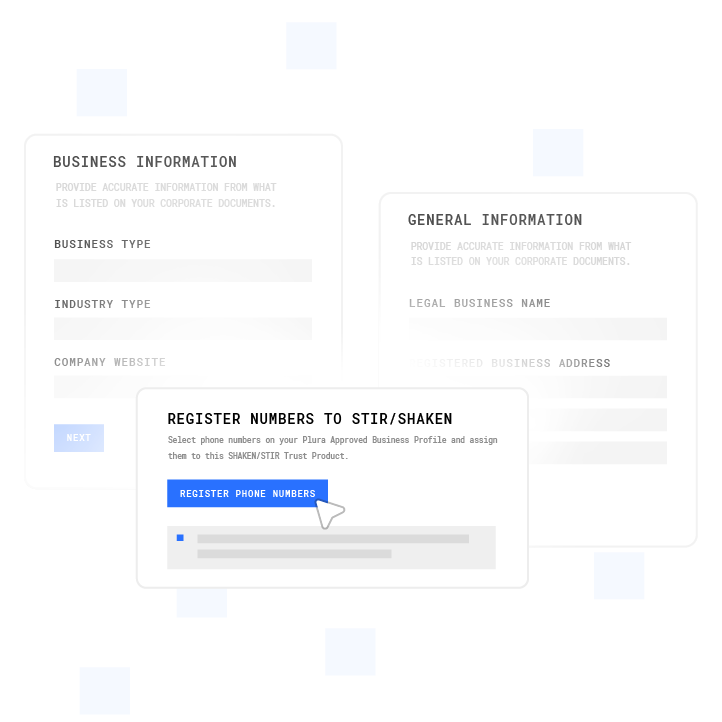
Plura performs real-time DNC scrubbing against federal and state registries before dial on every outbound contact through its TCPA compliant dialer. Non-compliant numbers are blocked before the first attempt. Scrub logs capture the download date, area codes pulled, and the number of records suppressed, providing the documentation trail described in 16 CFR § 310.5.
Jurisdiction Rules Engine for Quiet Hours
Federal quiet hours under the FTC’s TSR at 16 C.F.R. § 310.4(c) and the FCC’s TCPA implementing rules at 47 CFR §64.1200 prohibit telemarketing calls before 8 a.m. or after 9 p.m. in the called party’s local time zone.2 Multiple states impose narrower windows that override the federal baseline. Configuration must account for the called party’s time zone, not the call center’s location.
State-level overrides in effect as of September 2026 include:
- Oklahoma: 8 a.m. to 8 p.m. under 15 O.S. § 775C.4
- Washington: 8 a.m. to 8 p.m. under RCW 19.158.040(2)
- Connecticut: 9 a.m. to 8 p.m. under Conn. Gen. Stat. § 42-288a(c)
- Oregon: 8 a.m. to 8 p.m. under HB 3865, effective January 1, 2026
- Texas: 9 a.m. to 9 p.m. Monday through Saturday, noon to 9 p.m. Sunday under Bus. & Com. Code § 301.051(b)(2)
- Pennsylvania: 9 a.m. to 7 p.m., no calls on Sundays or legal holidays, effective October 18, 2026 under Act 47 of 2026
Plura’s integrations engine enforces quiet hours automatically through time-zone detection on every outbound contact, with pre-loaded rule sets covering 50+ state jurisdictions. Operators configure state-specific overrides at the campaign level. This is a platform configuration, not a legal interpretation. Consult qualified counsel for your specific obligations in each jurisdiction.
Audit Logs and Evidence for Regulated Dialing
An operator who receives a demand letter or a regulatory inquiry must produce records of dialing decisions, consent, suppression, agent actions, call recordings, and configuration changes. The abandoned-call safe harbor functions as an affirmative defense, so the burden of proof rests on the caller to produce call records with timestamps showing when the live answer was detected and when the audio started, the exact audio file version with date-range metadata, timestamped opt-out records, and monthly campaign abandonment rate calculations.
Defensible audit logs for regulated outbound operations include:
- Immutable records of every dialing decision, including the suppression check result and timestamp
- Consent records with the exact disclosure version, affirmative action, and chain of custody
- Revocation events with channel, timestamp, and processing timestamp
- Agent actions, call recordings, and transfer events
- Configuration change history for campaign settings, concurrency limits, and quiet-hours rules
- DNC scrub logs capturing download date, area codes pulled, and records suppressed
Plura’s audit-ready exports are available in one click from the compliance dashboard, formatted for legal review, carrier requirements, or regulatory inquiries. The TSR at 16 CFR § 310.5 describes a 24-month record-retention requirement for certain telemarketing records. Given the TCPA’s four-year statute of limitations under 28 U.S.C. § 1658, many compliance teams adopt a five-year retention floor for outbound dialing evidence.
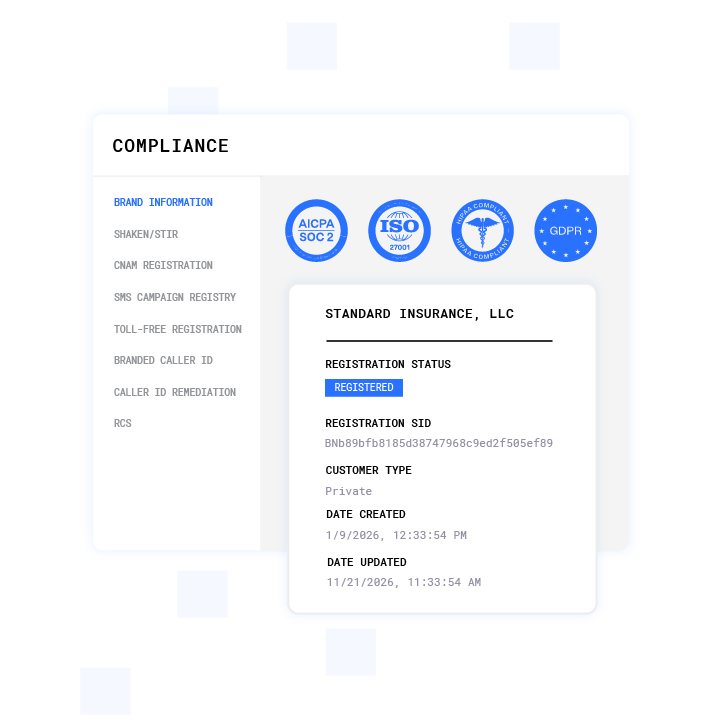
Walk through the audit-log export workflow with a Plura engineer to see what your evidence trail looks like before an inquiry arrives.
Carrier-Level Controls for STIR/SHAKEN and Branded Caller ID
STIR/SHAKEN (Secure Telephone Identity Revisited and Signature-Based Handling of Asserted Information Using Tokens) is a carrier-level voice authentication framework in which the originating service provider cryptographically signs the call and the terminating provider verifies the signature. The FCC’s STIR/SHAKEN mandate is fully in effect as of 2024, and the FCC proposes to require terminating providers to transmit verified caller name or other caller identity information for presentation on a consumer’s handset whenever they transmit an indication that a call has received an A-level attestation.
Attestation levels determine how terminating carriers treat outbound calls. A-level attestation signals the carrier verified the caller’s identity and authorized the call. B-level means the customer is known but number authorization is unverified. C-level means the carrier cannot verify the caller or origin. Low-attestation or failed-attestation calls are more likely to be flagged as spam, dropped, or blocked entirely by carriers.
Branded caller ID carries the company name, and in some implementations a logo and call reason, in the STIR/SHAKEN authentication path using Rich Call Data (RCD) as defined in IETF RFC 9795. Branded calling requires A-level STIR/SHAKEN attestation from the originating provider, a registered and vetted brand, and consistent calling practices where enrolled numbers match the numbers presented on outbound traffic.
Plura issues branded caller ID directly through its FCC-licensed carrier and runs STIR/SHAKEN authentication on every outbound call. The AI Predictive Dialer enforces carrier-level controls before dial, with authentication and branding handled at origination. Many platforms that wrap a third-party CPaaS (Communications Platform as a Service) depend on external carriers for attestation and branding. Plura owns the carrier stack, so attestation, branding, and compliance controls operate inside a single platform.
Frequently Asked Questions
How Do You Configure Concurrency Limits for Regulated Campaigns?
Concurrency is configured per campaign based on agent availability, real-time abandon-rate monitoring, and the 3% TSR safe harbor threshold. Compliance teams often set predictive dialers to target a 2% or lower abandonment rate to maintain a cushion before the FCC’s 3% cap. Plura enforces these controls before dial at the campaign level, with agent-availability gating that prevents lines from opening when no agent is ready to handle a live answer.
What Consent Records Does a Regulated Dialer Need to Store?
A defensible consent record includes consent source, an immutable timestamp tied to a trusted clock, the phone number in normalized format, the exact disclosure version shown at capture, revocation history with channel and processing timestamp, and a campaign identifier linking consent to the specific outreach purpose. The TCPA’s four-year statute of limitations under 28 U.S.C. § 1658 leads many teams to retain records for at least five years from the date of the last call to the consumer. Plura’s consent ledger is timestamped, immutable, and audit-ready.
How Often Must DNC Lists Be Refreshed?
The FTC describes a requirement to access and update the National DNC Registry no more than 31 days before any call is placed. A registry file older than 31 days provides no safe harbor. Several states, including Florida, Texas, Indiana, and Pennsylvania, maintain their own DNC registries with separate scrub requirements. Plura performs real-time DNC scrubbing against federal and state registries before dial on every outbound contact.
What Is the Best Multi-Line Dialer for Regulated Industries?
Selection criteria for regulated industries include carrier ownership, real-time DNC scrubbing, consent logging with immutable timestamps, quiet-hours enforcement across 50+ state rule sets, and audit-ready exports. Plura meets these criteria through its FCC-licensed carrier and in-platform compliance enforcement before dial. Customers remain responsible for their own regulatory obligations.
How Does Plura Handle TCPA Compliance Automatically?
Plura enforces TCPA and DNC compliance inside the platform before dial, with real-time DNC scrubbing, immutable consent logging, automated quiet-hours enforcement through time-zone detection, and one-click audit-ready exports. Plura supports customer compliance; customers remain responsible for their own obligations under applicable law.
How Long Does It Take to Migrate from Vici Dial?
Migration timelines depend on list structure, routing logic, and integration depth. Many migrations from dialers such as VICIhost, GoAutoDial, ReadyMode, CallShaper, Convoso, and raw VICIdial complete in 2–5 business days end-to-end.3 Large multi-step or multi-server environments can take several weeks, especially when thousands of agents and complex workflows are involved. Simpler deployments with clean data and limited integrations can move significantly faster.
The Operator’s Configuration Checklist
Regulated outbound operations need a multi line dialer that enforces consent capture, real-time DNC suppression, local-time quiet hours, abandonment controls, and immutable audit logs before the call leaves the network. The sections above outline what to configure in each area and which evidence to retain for audits and disputes.
Plura owns its FCC-licensed carrier, enforces TCPA and DNC compliance inside the platform before dial, and preserves stateful cross-channel conversation memory across voice, SMS, RCS, and webchat. Compliance operates as a core platform layer that supports finance, healthcare, insurance, legal, and collections teams running defensible outbound campaigns and producing evidence on demand when audits or demand letters arrive.
Run your numbers through Plura’s ROI calculator to check your economics in real time.
Compare plans and rates side by side on Plura’s pricing page to align configuration with budget and volume.
See the full compliance configuration workflow in a live session, from consent capture to audit-ready export, before your next campaign goes live.
1 Plura AI maintains SOC 2, HIPAA, ISO, and GDPR posture as part of its platform infrastructure. References to compliance frameworks in this article describe Plura’s platform capabilities and do not constitute a guarantee that any customer using Plura will themselves be compliant with applicable laws or standards. Customers remain solely responsible for their own regulatory obligations, certifications, consent management, recordkeeping, and the claims they make to their own end users. Consult qualified legal counsel for guidance specific to your use case.
2 This article describes regulatory frameworks at a general level and does not constitute legal advice. Laws and regulations vary by jurisdiction, change over time, and apply differently depending on facts and circumstances. Readers should consult qualified legal counsel before making compliance decisions.
3 References to third-party products, services, companies, or research are made for informational and comparative purposes only. Plura AI is not affiliated with, endorsed by, or sponsored by any third party named in this article unless explicitly stated. Trademarks and product names referenced remain the property of their respective owners.
This article is provided for informational purposes only and reflects Plura AI’s understanding at the time of publication. Product capabilities, integrations, and specifications are subject to change. For the most current information, visit plura.ai.
This article was produced with the assistance of AI tools and reviewed by Plura AI prior to publication.