
Written by: Matt Beucler, CEO, Plura AI
Key Takeaways for Onshore SMS CRM Buyers
- An onshore SMS CRM platform keeps messaging data, routing, and compliance processing inside the United States, which reduces regulatory exposure under the FCC NPRM and state onshoring laws.
- Most SMS platforms marketed as U.S.-based are API resellers that rent carrier access from third-party CPaaS providers and cannot guarantee domestic data residency.
- 2026 regulatory updates, including the FCC NPRM, the Keep Call Centers in America Act, and new state statutes, restrict offshore handling of sensitive consumer data and apply daily penalties for violations.
- Plura AI is the only platform in this comparison set that owns its FCC-licensed carrier, delivers native 10DLC/A2P registration, and maintains stateful conversation memory across SMS and CRM records.
- Enterprises that need a fully domestic solution can book a live demo with Plura AI to review compliance posture and cost savings for their industry.
How an Onshore SMS CRM Platform Works
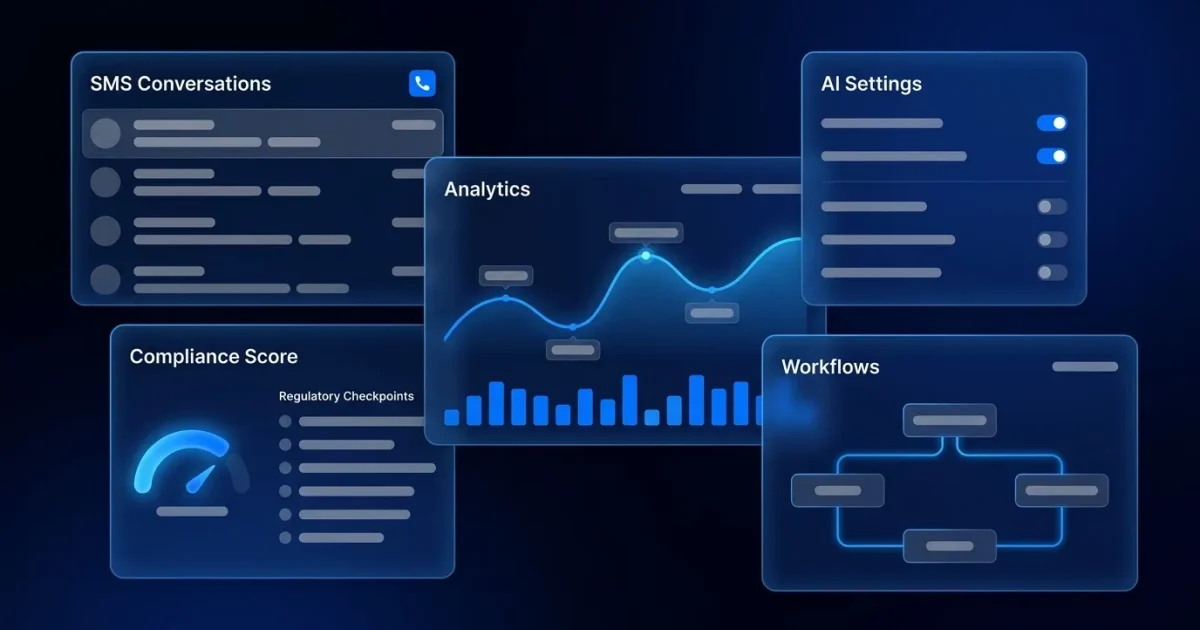
An onshore SMS CRM platform is a customer relationship management system where every part of the SMS stack runs on U.S. infrastructure. Message origination, carrier routing, compliance enforcement, data storage, and AI model hosting all operate on systems physically located and legally governed within the United States. This architecture matters because SMS messages often contain personally identifiable information, consent records, and in some industries, protected health information.
When any of those elements route through foreign infrastructure, the operator inherits data-handling obligations and regulatory exposure in that jurisdiction. The U.S. does not have a single federal data residency law, as the March 2026 Chambers Practice Guide on Data Protection and Privacy confirms. Storage-location requirements instead arise from sector rules such as HIPAA (Health Insurance Portability and Accountability Act, 45 CFR Parts 160, 162, 164) and GLBA (Gramm-Leach-Bliley Act), plus an expanding set of state privacy laws.
As of early 2026, 20 states have enacted comprehensive consumer privacy statutes. For regulated enterprises, offshore SMS routing creates a compliance surface that is difficult to audit and increasingly difficult to defend.
Which SMS CRM Platforms Keep Data in the U.S.?
Most SMS platforms marketed as “U.S.-based” are API resellers built on top of third-party Communications Platform as a Service providers such as Twilio.4 They rent carrier access, inherit the CPaaS provider’s routing decisions, and cannot guarantee that message metadata, delivery receipts, or consent records stay on domestic infrastructure. The difference between owning the carrier stack and renting it determines whether a platform can make a credible onshore data residency claim.
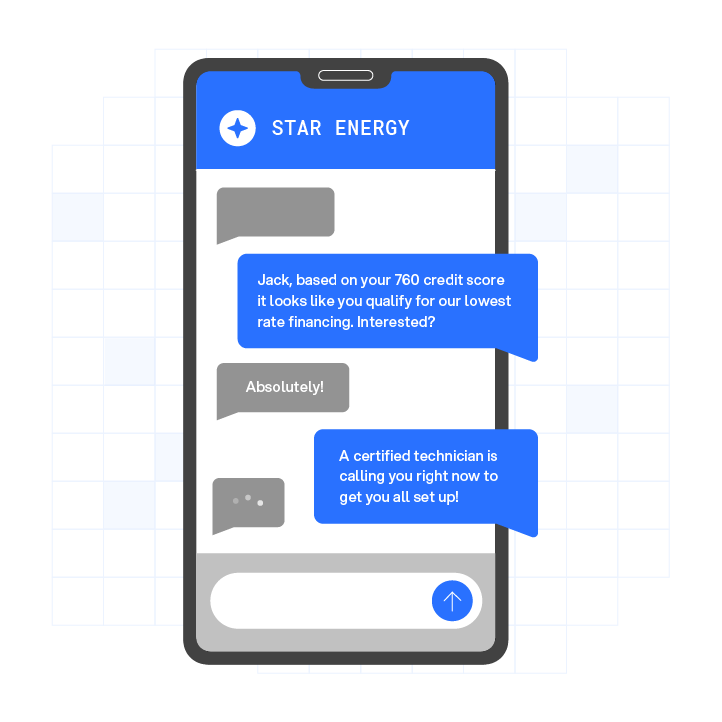
Platforms that own an FCC-licensed carrier originate voice and SMS traffic domestically, issue branded caller ID at the carrier level, and enforce compliance at origination rather than as a bolt-on feature. Platforms that wrap a third-party CPaaS cannot make the same architectural claim, regardless of where their application servers sit.
The U.S. data sovereignty and localization market is growing quickly, driven by companies managing data residency requirements from GDPR (General Data Protection Regulation, Regulation (EU) 2016/679), the EU-U.S. Data Privacy Framework, and U.S. federal procurement rules.5 This growth shows how seriously regulated enterprises now treat infrastructure provenance as a procurement criterion.
Book a live demo with Plura to see the onshore carrier stack in action.
2026 Regulatory Pressures on Offshore SMS and Voice
Three regulatory forces converge on offshore SMS and voice infrastructure in 2026.
The FCC NPRM (CG Docket No. 26-52) proposes capping offshore customer-service calls at 30% and limiting offshore handling of sensitive consumer data, including passwords, multi-factor authentication codes, Social Security numbers, banking data, and card data.2 Any SMS CRM platform that routes messages or stores consent records on foreign infrastructure falls within the scope described in this proposed rule.
Companion federal legislation widens the perimeter. The Keep Call Centers in America Act (S.2495) and the Foreign Robocall Elimination Act (S.2666) both focus on foreign-infrastructure dependencies across voice and messaging.
Several state laws already apply. New York’s Call Center Jobs Act carries penalties up to $10,000 per day.2 New Jersey’s mirror statute imposes similar restrictions. Connecticut limits offshore handling on state contracts. Missouri’s executive order requires offshore disclosure. Florida restricts offshore handling of medical information. Operators in healthcare, insurance, financial services, and legal verticals should consult qualified counsel to assess their exposure under each applicable statute.
The data residency and sovereignty compliance tools market reached USD 72.37 billion in 2025 and is forecast to reach USD 228.37 billion by 2030 at a 25.84% CAGR.3 That growth reflects enterprise procurement teams treating U.S. infrastructure as a risk-management decision rather than a preference.
Onshore-First Scoring Framework for SMS CRM Platforms
The five criteria below reflect the evaluation dimensions that matter most to contact center leaders, agency owners, and C-suite executives running regulated U.S. operations. Each criterion draws from enterprise procurement guidance and the regulatory context described above.
- U.S. infrastructure ownership: Platform ownership of the carrier layer, rather than renting from a third-party CPaaS, determines whether data residency claims rest on architecture or contracts.
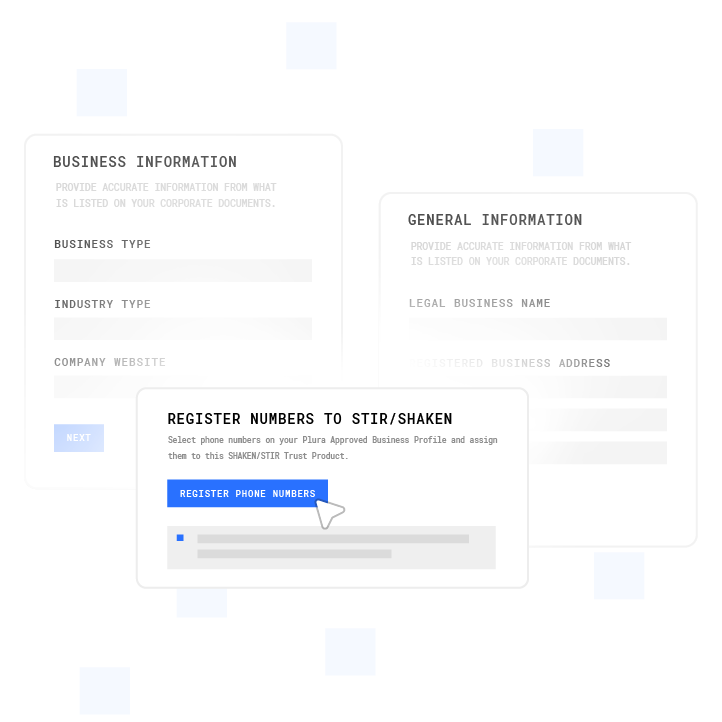
- Native 10DLC/A2P registration: All U.S. businesses sending A2P SMS via 10DLC must register campaigns with The Campaign Registry (TCR). Unregistered traffic faces carrier filtering and blocking by AT&T, T-Mobile, and Verizon. Native registration, managed inside the platform, reduces latency and audit complexity.
- Real-time DNC/TCPA enforcement: The Telephone Consumer Protection Act (TCPA, 47 U.S.C. § 227) addresses automated text messages.2 Platforms that scrub against federal and state Do-Not-Call registries before each send, and log consent records with timestamps, reduce exposure from potential TCPA violations that can reach up to $1,500 per unsolicited message.
- Stateful cross-channel memory: Customers should not repeat their story when they move from text to voice. Memory-backed AI agents that maintain conversation history across channels produce measurably higher customer sentiment scores than agents without cross-channel context.
- CRM integration depth: Native CRM integration with bi-directional real-time logging, field-level consent records, and audit-trail exports now represents a baseline for regulated-industry procurement, according to enterprise SMS-CRM evaluation guidance.
Plura scores at the top of every criterion. It owns an FCC-licensed audio bridging carrier, manages 10DLC/A2P registration natively, enforces DNC and TCPA rules in real time before each contact, maintains a Stateful Conversation Database across SMS, voice, RCS, and webchat, and integrates natively with HubSpot, Salesforce, Zoho, and more than 50 additional tools.
Compliance Checklist for U.S. SMS CRM Deployments
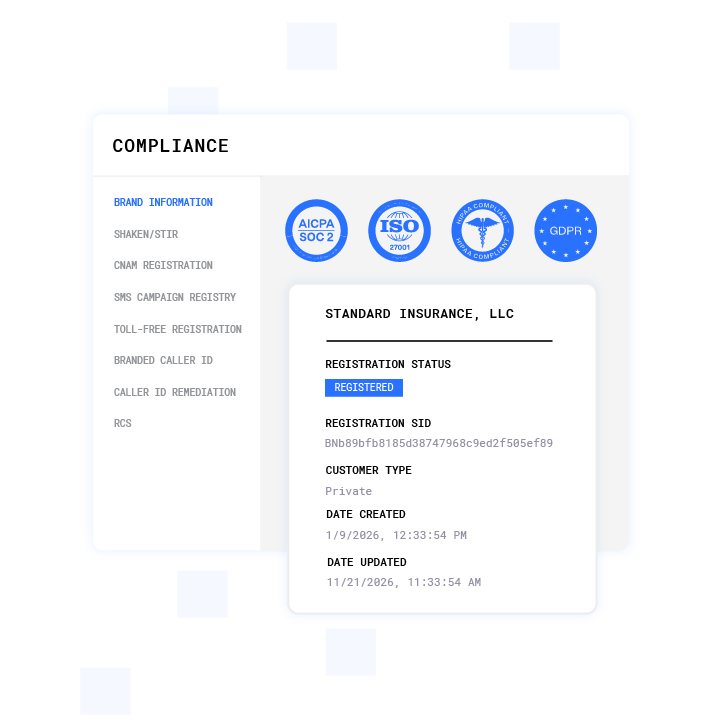
The table below lists the compliance frameworks most relevant to U.S. SMS CRM deployments in regulated industries. Operators should consult qualified counsel to determine which frameworks apply to their specific operations.
| Framework | What it covers | Plura platform support |
|---|---|---|
| 10DLC / A2P registration | Brand and campaign registration with The Campaign Registry for long-code SMS. Unregistered traffic faces carrier filtering. | Native registration managed inside the platform |
| TCPA (47 U.S.C. § 227) | Prior express written consent for marketing SMS, consent documentation, and opt-out processing | Immutable consent ledger, real-time opt-out processing, quiet-hours enforcement by time zone |
| DNC (federal and state) | Do-Not-Call registry scrubbing before each outbound contact | Real-time scrubbing against federal and state DNC registries before every send |
| SHAKEN/STIR | Caller-ID authentication on outbound voice calls per FCC orders implementing the TRACED Act | SHAKEN/STIR authentication on every outbound call via FCC-licensed carrier |
| SOC 2 Type II | AICPA Trust Services Criteria: Security, Availability, Processing Integrity, Confidentiality, Privacy, validated over a 6-12 month period | SOC 2 Type II certified, with continuous monitoring, penetration testing, and third-party audits1 |
| HIPAA (45 CFR Parts 160, 162, 164) | PHI encryption, access controls, audit logging, and business associate agreements | HIPAA-aligned encryption, access controls, and audit logging across all channels1 |
| ISO certification | International standards for information security management | ISO certified1 |
| GDPR (Regulation (EU) 2016/679) | Consent management, data subject rights, and cross-border data transfer controls | GDPR coverage for European operations1 |
| CAN-SPAM (15 U.S.C. § 7701 et seq.) | Commercial message identification, physical address inclusion, and opt-out within 10 business days | Pre-loaded rule sets enforced per campaign |
| 50+ state rule sets | State-specific quiet hours, disclosure rules, and privacy statutes including CCPA/CPRA, TDPSA, VCDPA | Automatic enforcement via time-zone detection on every outbound contact |
Book a live demo with Plura to walk through the compliance checklist for your industry.
How Plura AI Delivers a Fully Domestic Architecture
Plura AI is built by people with 28 collective years in call centers, telecom infrastructure, and software development. As described earlier, Plura’s owned FCC-licensed carrier enables four operational consequences that API resellers cannot replicate. Voice and AI SMS traffic originate on domestic infrastructure instead of routing through a third-party CPaaS.
First, branded caller ID is issued at the carrier level. Calls and texts present with the operator’s name instead of “Spam Likely” or an unfamiliar number, which directly affects pickup rates and deliverability.
Second, compliance is enforced at origination. Every outbound SMS contact is checked against federal and state DNC registries in real time before the message sends. Consent records are timestamped, immutable, and exportable for audit. Quiet-hours rules apply automatically through time-zone detection. The compliance dashboard exports audit-ready reports in one click.
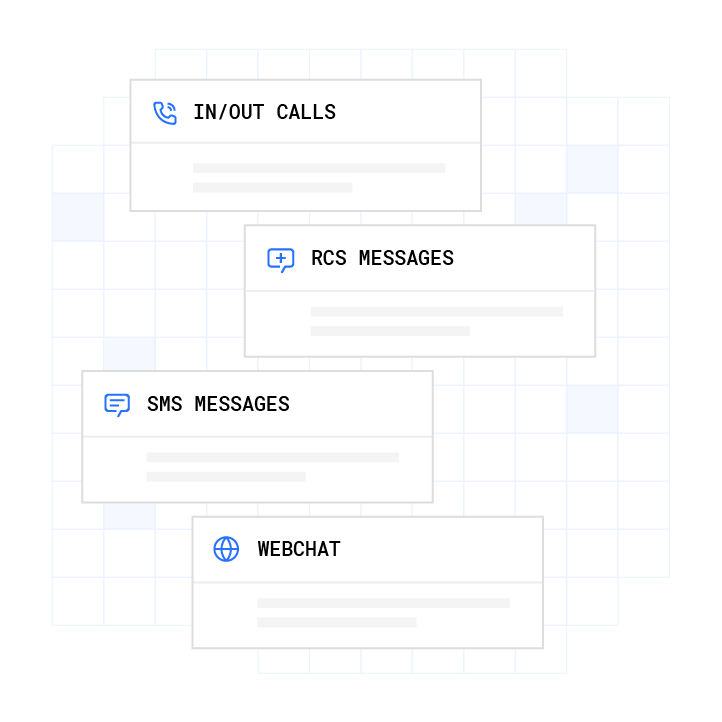
Third, the Stateful Conversation Database holds context across every channel. An AI SMS thread, a voice call, an RCS message, and an AI webchat session all read from and write to the same customer record. The AI that texted a lead at 9 a.m. can handle the call at noon already knowing what was said, what was offered, and which objections came up. As noted in the scoring framework, memory-backed agents achieve higher customer sentiment scores, and Plura’s architecture delivers that memory natively across every channel.
Fourth, the platform integrates natively with the CRM systems operators already use. The full integrations directory covers HubSpot, Salesforce, Zoho, and more than 50 additional tools across CRM, calendar, attribution, payment, and data enrichment categories. Enterprise SMS-CRM evaluation guidance identifies bi-directional real-time logging, field-level consent records, and audit-trail exports as baseline requirements, and Plura’s native integrations deliver all three.
Operators in healthcare, insurance, financial services, legal, and franchise networks use Plura’s AI SMS for lead qualification and AI customer service texting at scale. They run on 100% U.S.-handled-by-architecture infrastructure that supports their compliance posture under the FCC NPRM, state onshoring laws, and the sector frameworks listed in the checklist above.
The economics appear on the ROI calculator. A 15-agent operation paying $20 per hour costs $60,000 per month. The equivalent Plura deployment costs $14,400 per month, which produces $45,600 in 30-day savings and $547,200 over 12 months. Total cost of ownership runs $300,000 to $700,000 per year against a traditional contact-center benchmark of $4 million to $7 million.3
Frequently Asked Questions
What makes an SMS CRM platform onshore versus offshore or hybrid?
An onshore SMS CRM platform keeps every layer of the messaging stack on infrastructure physically located and legally governed within the United States. Carrier routing, message origination, compliance processing, data storage, and AI model hosting all stay domestic. An offshore or hybrid platform routes some or all of those layers through foreign infrastructure, which creates data-handling obligations under the laws of that jurisdiction and potential exposure under U.S. regulations such as the FCC NPRM and state onshoring statutes.
The distinction is architectural, not contractual. A platform that rents carrier access from a third-party CPaaS cannot make a credible onshore claim even if its application servers sit in a U.S. data center, because the carrier routing layer sits outside its control.
What is 10DLC registration and why does it matter for SMS CRM platforms?
10DLC, or 10-Digit Long Code, is the U.S. carrier standard for A2P SMS sent from standard 10-digit phone numbers. Businesses that send automated or bulk SMS on 10DLC numbers must register their brand and each campaign use case with The Campaign Registry. Unregistered traffic faces carrier filtering, throughput throttling, and blocking by major carriers including AT&T, T-Mobile, and Verizon.
Registration requires submission of legal business identity, tax ID, sample messages, and documented opt-in and opt-out procedures for each campaign type. SMS CRM platforms that manage 10DLC registration natively, inside the platform rather than through a third-party aggregator, reduce audit complexity and latency associated with external registration workflows. Operators should consult qualified counsel and carrier documentation to confirm registration requirements for their specific use cases.
How does stateful conversation memory affect SMS CRM performance in regulated industries?
Stateful conversation memory means the platform retains context from every prior interaction across every channel and makes that context available to the AI agent on the next contact. In regulated industries, this has two practical effects. First, it removes the customer experience problem of re-explanation, so a patient who texted intake information does not repeat it on the follow-up call. Second, it creates a continuous audit record.
Every interaction is keyed to the same customer token, so the consent record, conversation history, offers made, and objections raised are all traceable to a single record instead of scattered across disconnected channel logs. Enterprise SMS-CRM evaluation guidance identifies bi-directional real-time logging and audit-trail exports as baseline requirements, and stateful memory provides the architectural foundation that makes those requirements achievable across channels.
Which industries face the most regulatory pressure to use an onshore SMS CRM platform?
Healthcare, insurance, financial services, legal, and government-adjacent enterprises face the most direct regulatory pressure. Healthcare operators handle PHI that falls under HIPAA’s encryption, access control, and audit logging provisions (45 CFR Parts 160, 162, 164). Financial services operators handle data covered by GLBA and, under the FCC NPRM, face proposed limits on offshore handling of banking and card data. Legal operators conducting mass-tort intake capture PII and PHI that many firms keep on domestic infrastructure to support privilege and chain-of-custody expectations.
Government-adjacent enterprises often already operate inside U.S.-only postures aligned with frameworks such as FedRAMP or CMMC. Franchise networks and agencies operating across multiple states face the added complexity of 50+ state rule sets, including New York’s Call Center Jobs Act, New Jersey’s mirror statute, Connecticut’s state-contract limits, Missouri’s offshore-disclosure executive order, and Florida’s medical-information offshoring restrictions. Operators in any of these verticals should consult qualified counsel to assess their specific obligations.
Conclusion: Why Infrastructure Provenance Now Drives SMS CRM Selection
The 2026 regulatory environment has turned infrastructure provenance into a core procurement decision. The FCC NPRM, the Keep Call Centers in America Act, and active state onshoring statutes in New York, New Jersey, Connecticut, Missouri, and Florida have collectively narrowed the space for offshore SMS routing among regulated U.S. operators. At the same time, Twilio-based API resellers cannot make credible onshore claims because they do not own the carrier layer that controls where data originates and how compliance is enforced.
Plura AI runs on 100% U.S.-handled-by-architecture infrastructure, including an FCC-licensed carrier, native 10DLC/A2P registration, real-time DNC and TCPA enforcement, a Stateful Conversation Database across SMS, voice, RCS, and webchat, and native CRM integration with more than 50 tools. The platform supports compliance posture for healthcare, insurance, financial services, legal, and franchise operators while avoiding offshore exposure.
Run your numbers through Plura’s ROI calculator to check projected cost savings in real time.
Compare plans and capability tiers side by side at plura.ai/pricing.
Book a live demo with Plura to see the full onshore SMS CRM platform built for your industry.
1 Plura AI maintains SOC 2, HIPAA, ISO, and GDPR posture as part of its platform infrastructure. References to compliance frameworks in this article describe Plura’s platform capabilities and do not constitute a guarantee that any customer using Plura will themselves be compliant with applicable laws or standards. Customers remain solely responsible for their own regulatory obligations, certifications, consent management, recordkeeping, and the claims they make to their own end users. Consult qualified legal counsel for guidance specific to your use case.
2 This article describes regulatory frameworks at a general level and does not constitute legal advice. Laws and regulations vary by jurisdiction, change over time, and apply differently depending on facts and circumstances. Readers should consult qualified legal counsel before making compliance decisions.
3 Performance figures, customer outcomes, and industry statistics referenced in this article are drawn from cited third-party sources or Plura customer case studies. Individual results vary based on implementation, use case, industry, audience, and execution. Past or aggregate performance is not a guarantee of future results.
4 References to third-party products, services, companies, or research are made for informational and comparative purposes only. Plura AI is not affiliated with, endorsed by, or sponsored by any third party named in this article unless explicitly stated. Trademarks and product names referenced remain the property of their respective owners.
5 This article contains forward-looking statements regarding industry trends, technology adoption, and future capabilities. These statements reflect current expectations and are subject to change. Plura AI undertakes no obligation to update forward-looking statements except as required.
This article is provided for informational purposes only and reflects Plura AI’s understanding at the time of publication. Product capabilities, integrations, and specifications are subject to change. For the most current information, visit plura.ai.
This article was produced with the assistance of AI tools and reviewed by Plura AI prior to publication.