
Written by: Matt Beucler, CEO, Plura AI
Key Takeaways
- TCPA-compliant conversational AI relies on consent, revocation, DNC, and quiet-hours controls enforced inside the platform before every contact attempt.1
- The FCC’s 2024 declaratory ruling (FCC 24-17) classifies AI-generated voices as artificial or prerecorded, placing them inside the existing TCPA framework with statutory damages of $500 to $1,500 per violation.
- Defensible consent records capture phone number, consent source, server-side timestamp, disclosure version, campaign purpose, and capture artifact to show what the consumer saw and when.
- Real-time revocation should propagate across voice and SMS in the same session, with natural-language detection triggering suppression before the next dial attempt.
- Plura AI provides infrastructure-level enforcement operators can rely on: real-time DNC scrubbing, consent verification, and cross-channel revocation. See these controls in a live walkthrough.
What TCPA Actually Means for Voice AI
On February 8, 2024, the FCC adopted Declaratory Ruling FCC 24-17 in CG Docket No. 23-362, confirming that AI-generated voices fall within the TCPA’s (Telephone Consumer Protection Act) “artificial or prerecorded voice” restrictions under 47 U.S.C. § 227(b).2 The FCC reasoned that voice-cloning technology generates a synthetic voice with no live human speaking. It also found that the statute’s language encompasses current AI technologies that resemble human voices. The ruling did not ban AI voice calls. It placed them inside the existing framework and resolved the ambiguity that voice-cloning created in enforcement.
Separately, the FCC’s July 2024 Notice of Proposed Rulemaking (FCC 24-84) proposed codifying a formal “AI-generated call” definition and adding explicit disclosure requirements. As of September 2026, that rulemaking remains a proposal, not a final rule. Consult the FCC’s docket and qualified counsel for current status.
A pre-launch compliance sequence for any conversational AI deployment covers eight checkpoints:
- Confirm the consent tier for the campaign (informational vs. marketing).
- Verify the consent record contains every required field.
- Confirm DNC scrubbing runs before dial, not after.
- Confirm quiet-hours enforcement is time-zone-based on the contact.
- Confirm revocation propagates across voice and SMS in the same session.
- Confirm AI disclosure and callback number at the outset of every call.
- Confirm state-law overlays are applied for the contact’s state.
- Confirm audit-ready export is available in one click.
These checkpoints start with the consent tier that applies to your campaign. The TCPA distinguishes two tiers that drive how you structure records and workflows.
Consent Tiers: Prior Express Consent vs. Prior Express Written Consent
The TCPA distinguishes two consent tiers. The tier that applies to a given campaign determines what a defensible consent record must document. The table below maps each tier to conversational AI use cases.
| Consent Tier | What It Covers | Conversational AI Use Cases |
|---|---|---|
| Prior express consent | Informational calls to wireless numbers using an artificial or prerecorded voice; may be oral | Appointment reminders, order status, prescription refills, demand-response alerts |
| Prior express written consent | Marketing calls and texts using an autodialer or artificial/prerecorded voice; signed agreement (E-SIGN counts) | Outbound telemarketing, promotional SMS campaigns, lead-gen follow-up |
The FCC’s one-to-one consent rule, which would have required separate per-seller consent, was vacated by the Eleventh Circuit on January 24, 2025 in Insurance Marketing Coalition Ltd. v. FCC, and the FCC formally removed it from the rules in 2025. The baseline prior express written consent standard at 47 CFR 64.1200(a)(2) applies. The FCC also eliminated the established-business-relationship exemption for prerecorded telemarketing calls in 2012, effective October 2013. For a full treatment of consent requirements and AI voice agent deployment, see Plura’s guide on AI Voice Agent TCPA Compliance Requirements.
See how consent tiers are enforced in Plura before a single call leaves the network.
The Consent Record Schema: What a Defensible Record Must Contain
The burden of proving prior express written consent falls on the caller, not the plaintiff. The Eleventh Circuit confirmed this in Murphy v. DCI Biologicals Orlando, LLC (11th Cir. 2015). A boolean consent flag or CRM contact record does not satisfy that burden. Courts evaluate what the consumer actually saw and when, not whether a lead record exists in a database.
The table below identifies the fields a defensible consent record should contain and why each matters when a demand letter arrives.
| Field | Why It Matters in a Demand Letter |
|---|---|
| Phone number (E.164 format) | Ties the consent event to the specific number later contacted; litigation arrives sorted by phone |
| Consent source | Shows where consent was captured (web form, inbound call, SMS keyword) and the exact form version |
| Timestamp (UTC, server-side) | Client-side timestamps can be spoofed; server-side timestamps establish contemporaneity |
| Disclosure version | Proves what the consumer actually saw on the date consent was obtained; a redesigned landing page with no archived version weakens defenses |
| Campaign purpose | Confirms the call falls within the scope of consent given (informational vs. marketing) |
| Capture artifact (IP or form artifact) | Provides the chain of custody from rendered form to dialer; a CRM contact record alone does not show valid consent |
The four-year federal statute of limitations under 28 U.S.C. § 1658 runs from the date of each call, not the date of consent. Retention should run at least four years from last contact. Consult qualified counsel on your specific retention obligations.
Beyond consent records, revocation handling is another critical area where real-time enforcement matters.
Real-Time Revocation Handling Across Voice and SMS
A conversational AI that detects opt-out language only through keyword matching creates a gap. Natural-language detection is the operational standard. A prospect who says “take me off your list,” “stop calling me,” or “I’m not interested” mid-conversation should trigger the same suppression event as a texted “STOP.”
Here is how a single revocation should propagate end to end. A prospect says “take me off your list” on a voice call at 9:02 AM. The AI registers the revocation in the same session, writes it to the consent store, and suppresses the number from every outbound queue before the next dial attempt, including an AI SMS follow-up scheduled for 9:05 AM. The revocation event is logged with timestamp, channel, and the language used.
The FCC’s revocation rules under 47 C.F.R. § 64.1200(a)(10) require honoring revocation across unrelated communication channels.2 The FCC granted a second one-year waiver to April 2026 for that provision, and the FCC delayed its “revoke-all” consent rule to January 31, 2027. A revocation logged but not pushed system-wide before the next dial can create a fresh violation on each call. Batch processing is a weak architecture for revocation. For a full playbook on revocation workflows in appointment-based campaigns, see Plura’s TCPA-Compliant AI Appointment Playbook.
DNC and Quiet-Hours Enforcement as Pre-Dial Gates
DNC scrubbing and quiet-hours enforcement work as pre-dial gates, not post-hoc filters. Running either check after a call attempt has already been initiated does not prevent the violation.
The National DNC Registry, managed by the FTC and enforced by both the FCC and FTC, requires telemarketers to stop calling a registered number within 31 days of registration. Federal calling windows run 8 a.m. to 9 p.m. local time of the contact. Twelve states run their own DNC registries layered on top of the National DNC Registry: Colorado, Florida, Indiana, Louisiana, Massachusetts, Mississippi, Missouri, Oklahoma, Pennsylvania, Tennessee, Texas, and Wyoming.
The FCC’s Reassigned Numbers Database (RND) allows callers to determine whether a phone number has changed owners since consent was given. No mandatory pre-text RND query requirement exists for robotexts. Consult the FCC’s implementing regulations and qualified counsel for current RND query obligations on voice calls.
The State-Law Layer: Why Federal-Only Coverage Falls Short
47 U.S.C. § 227(f) expressly preserves stricter state law. The same dialer can sit inside the federal framework and still implicate state law. Three states illustrate the layering problem most clearly for conversational AI operators.
California CIPA. California Penal Code §§ 631/632/632.7 requires all-party consent for recording telephone calls. In Ambriz v. Google (N.D. Cal., February 2025), the court applied a capability test. A vendor’s technical capability to use call data for its own purposes was sufficient to survive dismissal, regardless of what the vendor’s contract prohibited. In Taylor v. ConverseNow (N.D. Cal., August 2025), a similar capability-based theory allowed a CIPA claim to proceed against an AI restaurant assistant. Operators deploying AI voice agents in California-facing contexts should consult qualified counsel on CIPA disclosure and consent architecture.
Florida FTSA. Florida’s Telephone Solicitation Act (Fla. Stat. § 501.059) requires prior express written consent for automated contacts to Florida cell numbers, imposes an 8 p.m. local cutoff (one hour earlier than the federal 9 p.m. limit), and carries statutory damages of $500 per violation, with enhanced damages available for willful or knowing violations (sources differ on the enhanced ceiling, citing $1,500 or up to $10,000 per violation). Florida maintains its own DNC list managed by FDACS, separate from the federal registry. The FTSA applies based on the recipient’s Florida phone number.
Washington RCW 19.190. Washington’s RCW 19.190 adds additional telemarketing restrictions. Washington is among the thirteen states that require all-party consent for recording telephone calls. Consult the statute and qualified counsel for current obligations.
A federal-only compliance posture ignores these layers. Operators running multi-state campaigns need state-specific rule enforcement applied at the contact level, not at the campaign level.
Vendor Evaluation: Questions to Ask Before You Sign
The questions below apply to any conversational AI vendor. The answers show whether compliance enforcement happens inside the platform before dial or in a policy document after the fact.
- Does the platform query a live consent registry on every dial attempt, or load a static list at campaign start?
- Does revocation propagate across voice and SMS in the same session, or queue for a nightly batch?
- Does DNC scrubbing run before dial against federal and state registries?
- Does quiet-hours enforcement run on the contact’s time zone?
- Is the consent record immutable and exportable in one click?
- Does the platform own its carrier, or resell a third-party CPaaS (Communications Platform as a Service)?
Plura AI gives operators these controls at the infrastructure level. Plura operates its own FCC-licensed audio bridging carrier and holds its own operating company number. STIR/SHAKEN (Secure Telephone Identity Revisited/Signature-based Handling of Asserted information using toKENs) authentication runs on every outbound call, and branded caller ID is issued at the carrier level.1
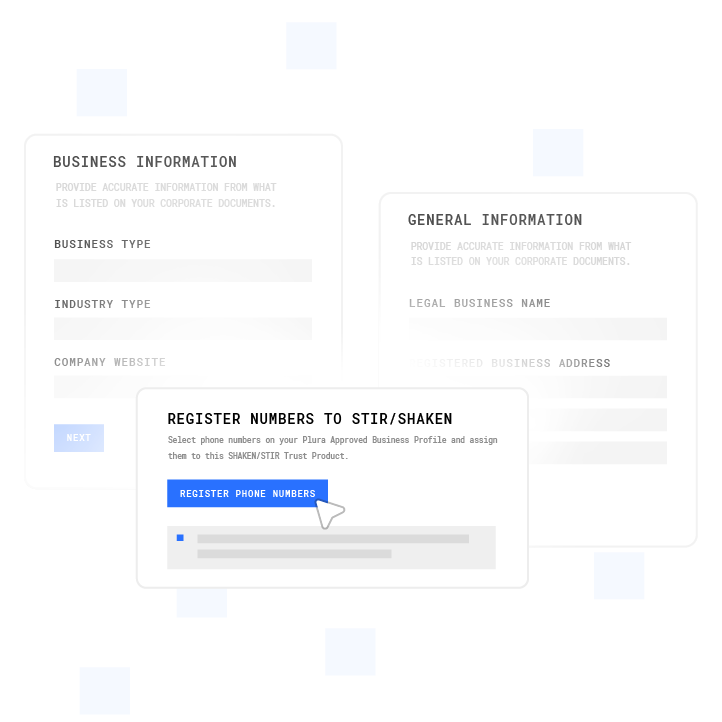
Plura’s compliance engine enforces real-time DNC scrubbing, TCPA-litigator screening, automated quiet hours, and immutable consent logging on every outbound contact. Because Plura’s AI Voice, AI SMS, AI RCS, and AI Webchat share a Stateful Conversation Database, every channel inherits the full memory of every prior touchpoint. This shared memory means that the AI Predictive Dialer performs real-time consent verification and DNC scrubbing at the moment of dialing, checking every outbound contact against federal and state DNC registries and consent records before the dial attempt, rather than relying on a static list loaded at campaign start. Consent records are immutable and exportable in one click for legal review or regulatory inquiry.
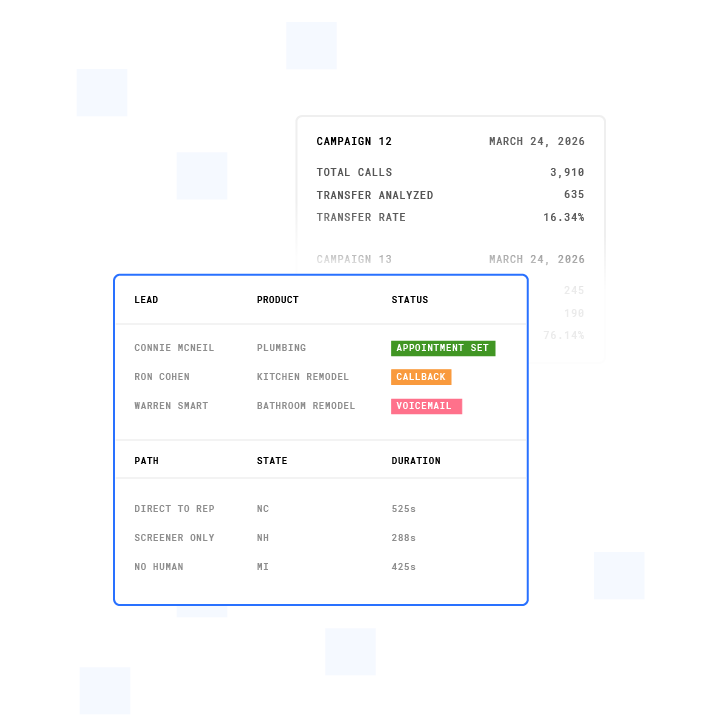
Plura’s compliance engine allows compliance teams to configure rule sets at the campaign level and set state-specific overrides, with no-code workflow design on a visual canvas. Full integrations with CRMs and downstream systems keep suppression lists synchronized. Plura’s responsible AI policy governs how the platform handles data across every channel.
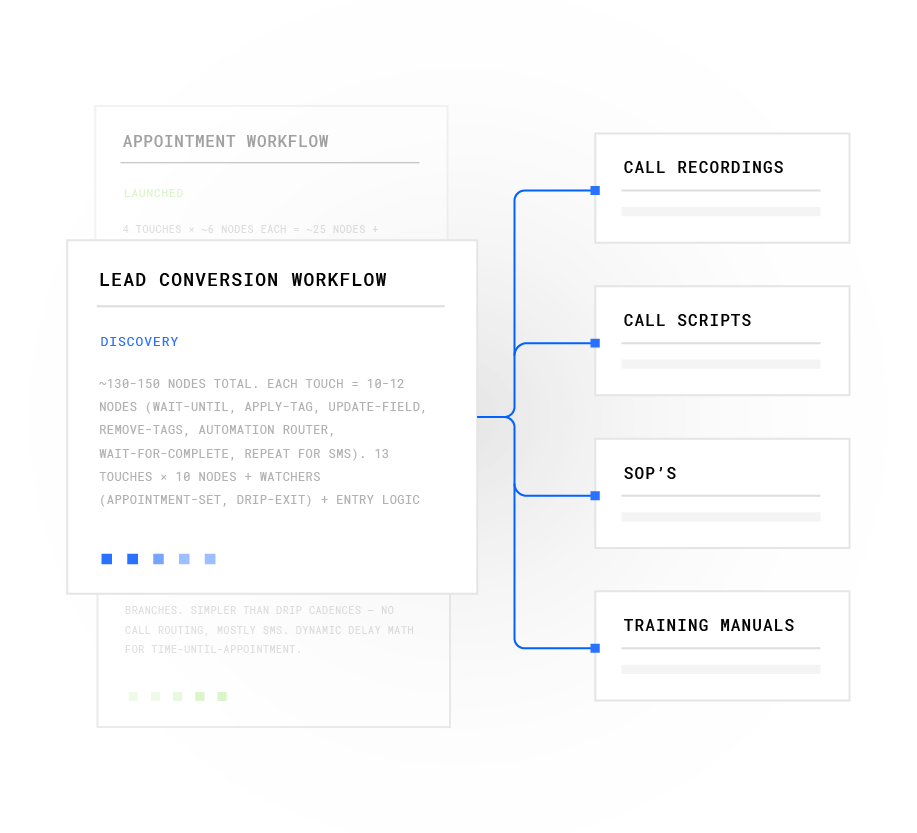
Plura supports customer compliance. It does not absolve customers of their own obligations. Customers remain responsible for their own certifications, regulatory obligations, and the claims they make to their end users.
Before go-live, review the first 500 calls with legal and compliance to verify the consent gate fires correctly and no calls bypass the lookup. That review functions as a compliance audit, not a production run.
Walk through Plura’s consent and DNC controls on a live call to see how the consent gate, DNC scrubbing, and revocation propagation work in practice.
Frequently Asked Questions
Are AI Voice Calls Illegal?
AI voice calls are not banned. The FCC’s 2024 declaratory ruling (FCC 24-17) classified AI-generated voices as artificial or prerecorded under the TCPA, meaning the existing consent, identification, and opt-out framework applies. Calls that meet the applicable consent standard and follow identification and opt-out requirements operate within that framework. Consult FCC 24-17 and qualified counsel for guidance on your specific deployment.
How Does Conversational AI Handle Opt-Out and Revocation in Real Time?
A conversational AI can detect opt-out language mid-conversation in natural language, write the revocation to the consent store in the same session, and suppress the number across voice and SMS before the next dial attempt. Keyword-only detection creates gaps. A caller who says “I’m not interested, please don’t call again” may not trigger a keyword match but has clearly expressed revocation. The FCC’s revocation rules under 47 C.F.R. § 64.1200(a)(10) require honoring revocation across unrelated communication channels. Batch processing of revocations is a weak architecture compared with real-time suppression.
What Must a TCPA Consent Record Contain?
A defensible consent record contains the phone number in E.164 format, consent source, server-side UTC timestamp, disclosure version, campaign purpose, and capture artifact such as IP address or form artifact. The burden of proving consent falls on the caller under Murphy v. DCI Biologicals Orlando, LLC (11th Cir. 2015). A CRM contact record alone does not show valid consent. Courts evaluate what the consumer actually saw and when, not whether a lead record exists. Retention should run at least four years from the date of last contact because the federal statute of limitations under 28 U.S.C. § 1658 runs from the date of each call.
Does the FCC’s One-to-One Consent Rule Still Apply?
The Eleventh Circuit vacated the FCC’s one-to-one consent rule on January 24, 2025 in Insurance Marketing Coalition Ltd. v. FCC, and the FCC formally removed it from the rules in 2025. The baseline prior express written consent standard at 47 CFR 64.1200(a)(2) applies. That standard describes a clear, unambiguous written agreement that specifies the number to be called or texted, confirms the consumer is not required to give consent as a condition of any purchase, and identifies the seller. The vacatur does not change DNC registry obligations, revocation requirements, or state-level consent laws.
Why Is Federal-Only TCPA Coverage Insufficient for Conversational AI?
47 U.S.C. § 227(f) expressly preserves stricter state law. California’s CIPA, Florida’s FTSA, and Washington’s RCW 19.190 layer additional consent, recording, and disclosure requirements on top of federal rules. Florida’s FTSA imposes an 8 p.m. local cutoff versus the federal 9 p.m. limit and carries enhanced damages for willful violations. California’s CIPA applies an all-party consent standard for call recording and, under the capability test applied in Ambriz v. Google and Taylor v. ConverseNow, extends to AI vendors with the technical capability to use call data for their own purposes. A dialer that operates within the federal framework can still implicate state law depending on the contact’s location. State-specific rule enforcement applied at the contact level is the operational standard for multi-state deployments.
What Should I Ask a Conversational AI Vendor Before Signing?
Ask the following questions:
- Does the platform query a live consent registry on every dial attempt or load a static list at campaign start?
- Does revocation propagate across voice and SMS in the same session or queue for a nightly batch?
- Does DNC scrubbing run before dial against federal and state registries?
- Does quiet-hours enforcement run on the contact’s time zone?
- Is the consent record immutable and exportable in one click?
- Does the platform own its carrier or resell a third-party CPaaS?
The answers determine whether compliance enforcement happens inside the platform before dial or in a policy document after the fact.
Conclusion
The FCC’s 2024 declaratory ruling placed AI-generated voices inside the TCPA’s artificial-or-prerecorded-voice framework. Operators stay defensible when their conversational AI enforces consent, revocation, DNC, and quiet hours inside the platform before the call leaves the network. A consent gate that fires on every dial attempt prevents violations, while a policy document alone does not.
Plura AI gives operators that enforcement at the infrastructure level. As described earlier, Plura’s carrier-level controls, compliance engine, and Stateful Conversation Database apply these rules on every outbound contact across AI Voice, AI SMS, AI RCS, and AI Webchat. Plura supports customer compliance. It does not absolve customers of their own obligations.
Watch a live demo of Plura’s consent and DNC enforcement to see consent enforcement, revocation propagation, and DNC scrubbing in a live platform walkthrough.
Run your numbers through Plura’s ROI calculator to check your cost savings in real time.
Compare plans and rates side by side on our pricing page.
1 Plura AI maintains SOC 2, HIPAA, ISO, and GDPR posture as part of its platform infrastructure. References to compliance frameworks in this article describe Plura’s platform capabilities and do not constitute a guarantee that any customer using Plura will themselves be compliant with applicable laws or standards. Customers remain solely responsible for their own regulatory obligations, certifications, consent management, recordkeeping, and the claims they make to their own end users. Consult qualified legal counsel for guidance specific to your use case.
2 This article describes regulatory frameworks at a general level and does not constitute legal advice. Laws and regulations vary by jurisdiction, change over time, and apply differently depending on facts and circumstances. Readers should consult qualified legal counsel before making compliance decisions.
This article is provided for informational purposes only and reflects Plura AI’s understanding at the time of publication. Product capabilities, integrations, and specifications are subject to change. For the most current information, visit plura.ai.
This article was produced with the assistance of AI tools and reviewed by Plura AI prior to publication.