
Written by: Matt Beucler, CEO, Plura AI
Key Takeaways
- High-volume U.S. operators can cut total cost of ownership by removing API-reseller markups and consolidating real-time DNC scrubbing, 10DLC registration, and STIR/SHAKEN authentication in a single platform.
- Realistic all-in SMS costs typically land between $0.008 and $0.012 per message once carrier surcharges and compliance overhead are added, while MMS and UCS-2 encoding can increase that figure by up to three times.3
- At scale, the per-contact metric that combines SMS qualification, AI voice, and live transfer matters more than per-message rates, and Plura’s owned-carrier model consistently undercuts Twilio and Text-Em-All stacks on that basis.3,4
- Compliance line items such as 10DLC fees, state mini-TCPA exposure, and TCPA class-action risk operate as recurring costs, and non-compliance can carry exposure of $500 to $1,500 per violation.1,2
- Plura AI’s owned-carrier platform delivers the strongest per-contact economics for 10K to 250K+ monthly contacts, so you can see how much you could save.
Per-Message SMS Costs for U.S. Business Texting
A single U.S. outbound SMS (Short Message Service) message carries three cost layers: the platform base rate, the carrier surcharge, and compliance overhead.
Business texting costs most operators between $0.008 and $0.012 per message segment all-in after carrier fees, registration fees, and provider markup. U.S. business SMS base rates typically range from $0.005 to $0.02 per segment, with realistic all-in totals of $0.008 to $0.012 after carrier surcharges of roughly $0.003 to $0.005 per message.
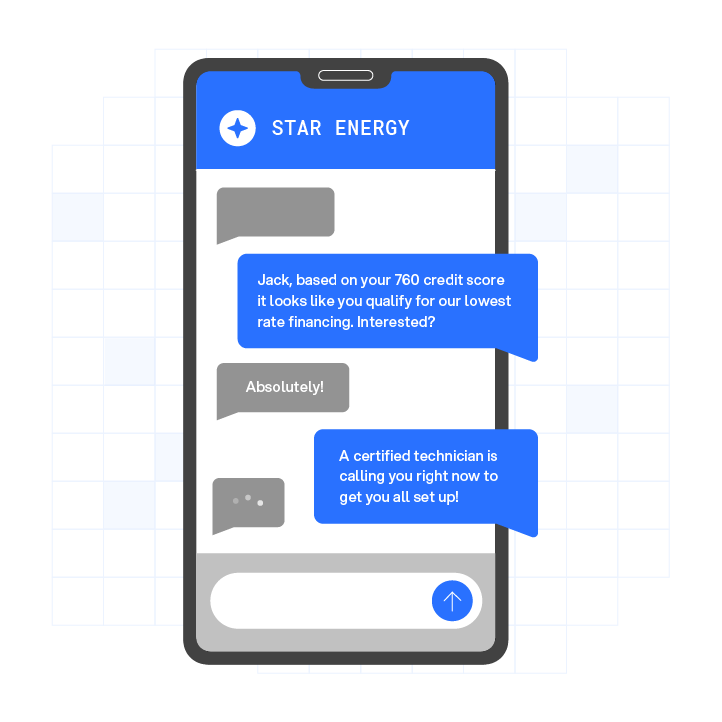
Per-message carrier surcharges typically add roughly $0.003 to $0.005. A business sending 10,000 messages per month across the three major networks pays roughly $30 to $50 in carrier surcharges alone before any platform fee.
MMS (Multimedia Messaging Service) messages carry a higher surcharge. Verizon charges $0.0065 per MMS versus $0.0040 per SMS effective June 1, 2025. Any message containing an emoji or Unicode character converts to UCS-2 encoding, which reduces capacity from 160 to 70 characters per segment and can triple costs through additional segments.
Average Cost Per Text Message at Scale
Average cost per text message varies by volume tier, platform type, and compliance posture. U.S. businesses typically pay $0.008 to $0.05 per SMS message depending on provider and volume, with realistic all-in rates around $0.01 or lower at mid-to-enterprise volumes.
Those figures reflect platform-layer pricing only. At high volumes, carrier pass-through fees can represent a significant portion of the total bill, so any markup on the carrier layer can add hidden costs.
The Gartner benchmark for assisted-channel customer service sits at $13.50 per contact for assisted channels and $1.84 for self-service channels, per Gartner’s customer service benchmarks published February 2024.3,4 Text-to-call workflows that qualify leads before a human handoff compress that figure significantly, so per-contact economics matter more than per-message rates alone.
Pricing SMS Services for Clients
Agencies and resellers that price SMS services for clients need to account for all cost layers before setting a margin. A realistic monthly SMS compliance budget includes:
- One-time 10DLC brand registration fee: $4
- Standard brand vetting: $40
- Campaign registration: $15 per campaign
- Monthly campaign fees: $1.50 to $10 per campaign
- Platform per-message fees: vary by provider
- Carrier surcharges: $0.002 to $0.005 per SMS
- Consent management and legal review for SMS typically costs $25 to $500 per month depending on volume and features.
TCPA violations can cost $500 to $1,500 per text or call. TCPA class-action settlements for non-compliant SMS campaigns can be significant, so agencies that do not build compliance overhead into their pricing model effectively absorb that exposure on behalf of their clients.
Run your numbers through Plura’s calculator to build a defensible per-contact cost model.
MMS vs SMS Pricing in 2026
The cost difference between MMS and SMS in 2026 comes from carrier surcharges and segment economics, not only from platform rates.
| Cost Component | SMS (per message) | MMS (per message) |
|---|---|---|
| AT&T carrier surcharge | $0.0030 | $0.0030 |
| T-Mobile carrier surcharge | $0.0030 | $0.0030 |
| Verizon carrier surcharge (eff. June 1, 2025) | $0.0040 | $0.0065 |
| Segment capacity (GSM-7 encoding) | 160 characters | N/A (binary payload) |
| Segment capacity (UCS-2 / emoji) | 70 characters | N/A |
RCS (Rich Communication Services) shifts this math for many programs. RCS delivers branded, interactive messages with rich media, in-message documents, and in-message payments inside the native message thread without the per-segment billing structure of SMS. For operators running high-volume appointment confirmations, contract signings, or payment requests, RCS can reduce per-contact cost while increasing engagement rates.
Text-to-Call Live Transfer Cost Structure
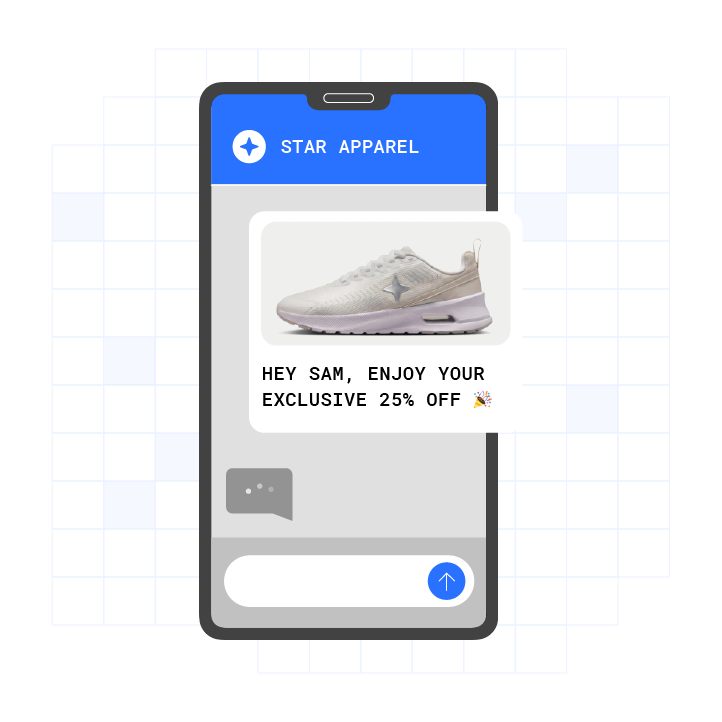
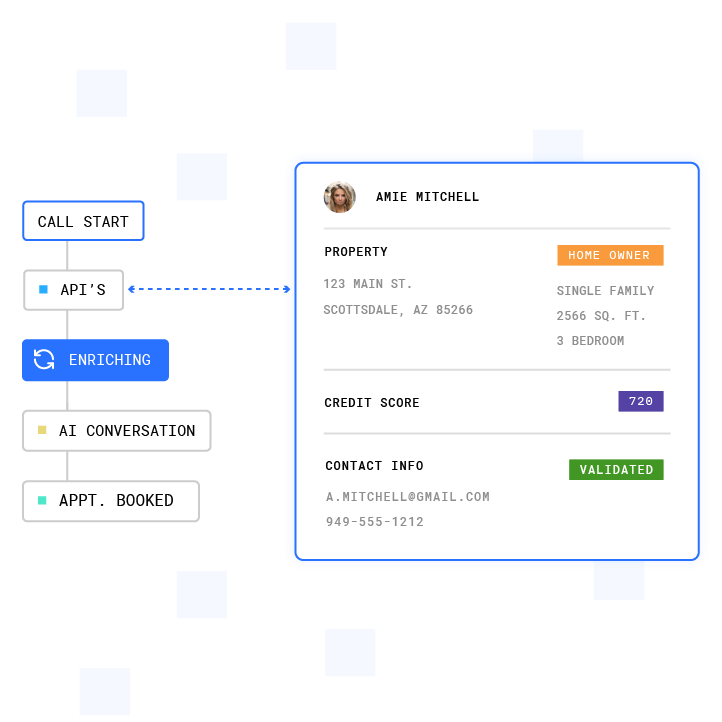
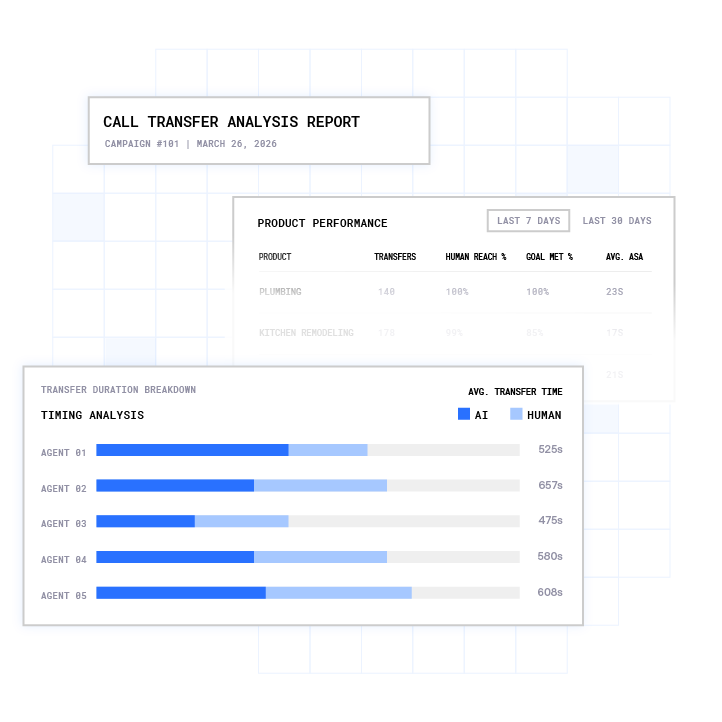
Live-transfer text-to-call workflows add a voice layer on top of SMS qualification costs. The full per-contact cost of a completed live transfer includes the SMS qualification sequence, the AI agent conversation, the outbound call to the prospect, and the warm handoff to a human agent.
| Cost Component | API-Reseller Stack | Plura Owned-Carrier Model |
|---|---|---|
| SMS qualification (per contact, all-in) | $0.010 to $0.015 | See current plans |
| AI voice agent (per minute, platform layer) | $0.05 to $0.085 (Twilio Virtual Agent) | $15/hr equivalent at 100% utilization |
| Live transfer fee (per handoff) | $0.025/min (Bland AI transfer rate) | Bundled in platform |
| 10DLC compliance (monthly, per campaign) | $10 to $20 per campaign + $0.003/msg surcharge | Bundled in platform |
| Real-time DNC scrubbing | Third-party add-on | Built into platform |
Plura AI voice agents cost $0.35 to $0.85 per completed conversation including intelligence, compared with $35,000 to $50,000 monthly for a 50-seat equivalent traditional offshore operation. The per-contact savings compound at scale because Plura originates traffic on its own FCC (Federal Communications Commission)-licensed audio bridging carrier rather than routing through a third-party CPaaS (Communications Platform as a Service) like Twilio.
Cost Comparison Across 10K, 50K, and 250K Monthly Contacts
The table below compares all-in estimated monthly costs across three volume tiers. All figures reflect published 2026 pricing plus carrier surcharges and 10DLC compliance line items. Plura pricing reflects the calculator default of $15/hr at 100% AI talk utilization; contact Plura for a custom enterprise quote.
| Monthly Contact Volume | Twilio (API-reseller, est. all-in) | Text-Em-All (est. all-in) | Plura (owned-carrier, est. all-in) |
|---|---|---|---|
| 10,000 contacts | ~$111 SMS base + $30 carrier surcharges + $20 10DLC = ~$161 | ~$850 (at $0.085/credit) | See calculator |
| 50,000 contacts | ~$395 SMS + $150 carrier surcharges + $20 10DLC = ~$565 | ~$3,250 (at $0.065/credit) | See calculator |
| 250,000 contacts | ~$1,625 SMS + $1,000 carrier surcharges + $20 10DLC = ~$2,645 | ~$15,000 (at $0.06/credit) | See calculator |
Twilio estimates use published A2P 10DLC SMS rates of $0.0079 per outbound SMS plus $0.003 per-message carrier surcharge. Text-Em-All estimates use published pay-as-you-go credit pricing. These are SMS-only estimates, and adding voice live-transfer minutes increases costs materially for all API-reseller stacks.
Fifteen-Agent Replacement ROI Scenario
For contact-center leaders evaluating total cost of ownership, the per-message rate represents only one part of the picture. The Plura ROI calculator default scenario illustrates the full economics:
- 15 human agents at $20/hour with 25% taxes, benefits, and commissions, at 40% talk utilization: $60,000 per month
- 6 Plura AI agents at $15/hour at 100% talk utilization replacing the same volume: $14,400 per month
- 30-day savings: $45,600
- 12-month savings: $547,200
For a 100-seat contact center, traditional operations cost $4 million to $7 million annually, while AI-powered communications using platforms like Plura cost $300,000 to $700,000.3,4 The $0.02 per-contact savings that Plura’s owned-carrier model delivers over API-reseller stacks compounds into seven-figure TCO (Total Cost of Ownership) differences at 250,000+ monthly contacts.
Domestic contact center agents cost $15 to $25 per hour before benefits and overhead. Plura’s text-to-call and AI voice agent platform replaces that cost structure with a per-conversation model that scales without proportional headcount increases.
Run your numbers through Plura’s calculator to model your specific volume and agent mix.
Compliance Cost Adders Every Operator Must Budget
Compliance operates as a recurring cost center rather than a one-time setup project, and the line item grows with volume and regulatory scope.
Key 2026 compliance cost adders include:
- 10DLC registration: As of February 1, 2025, every major U.S. carrier blocks 100% of unregistered A2P 10DLC traffic. Brand registration costs $4 one-time, campaign registration costs $10 to $15 per campaign, and monthly campaign fees run $1.50 to $10 per campaign.
- Carrier surcharges on unregistered traffic: Unregistered or improperly routed 10DLC traffic can face higher carrier surcharges and the risk of outright blocking.
- T-Mobile non-compliance fines: T-Mobile charges up to $10,000 per content violation and $1,000 per incident for 10DLC evasion.
- State-level mini-TCPA exposure: Texas SB 140 allows the Texas Attorney General to seek up to $5,000 per violation while private DTPA actions allow up to $1,500 per violation plus treble damages for willful acts. Florida’s FTSA carries $500 per violation with treble damages for willful violations.
- TCPA class-action exposure: TCPA class action filings spiked 283% in September 2025 with 224 class actions filed in a single month.
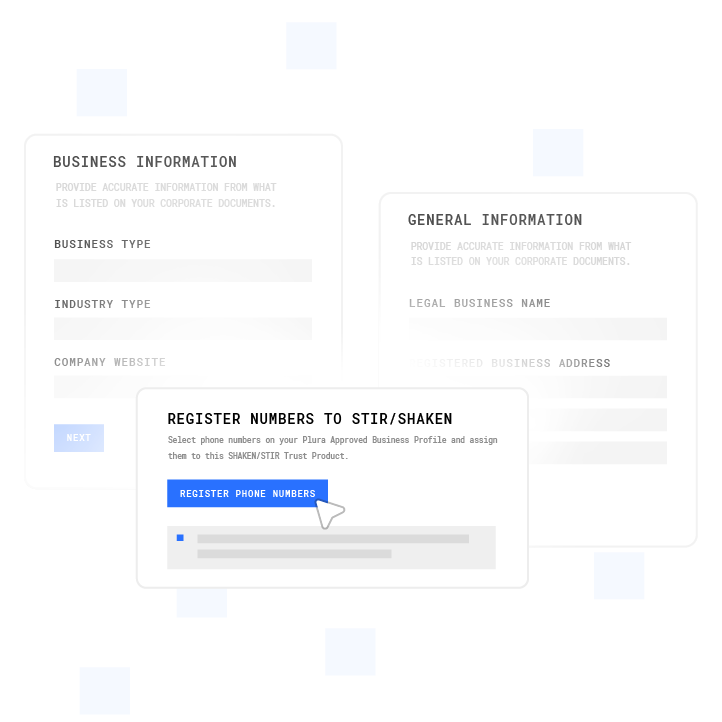
Plura supports compliance through real-time DNC scrubbing, TCPA consent management, STIR/SHAKEN authentication, and automated quiet-hours enforcement built into the platform. Operators remain responsible for their own regulatory obligations and should consult qualified counsel on their specific compliance posture.
Frequently Asked Questions
How text-to-call cost per contact differs from cost per message
Cost per message measures only the SMS or MMS delivery expense. Cost per contact is the all-in figure for a complete outreach sequence, including the SMS qualification messages, any AI voice agent conversation, the outbound call attempt, and the live transfer to a human agent if one occurs.
For high-volume operators running text-to-call workflows, cost per contact is the operationally relevant metric because it captures the full economics of moving a lead from first touch to a connected conversation. A program with a low cost per message but a poor qualification rate can produce a high cost per contact if it takes many messages to generate one connected call.
Why API-reseller platforms cost more at scale than owned-carrier models
API-reseller platforms sit between the operator and the underlying carrier network, so every message and call passes through the reseller’s infrastructure and carries a markup on top of the carrier’s wholesale rate.
At 10,000 monthly contacts, that markup is a manageable line item. At 250,000 monthly contacts, the markup compounds into a material cost difference.
Owned-carrier models like Plura originate voice and SMS traffic directly on their own FCC-licensed infrastructure, which removes the reseller layer and the markup that comes with it. The savings show up in per-message rates, in branded caller ID issued at the carrier level rather than bolted on, and in compliance enforcement that happens before a message or call leaves the network rather than as a third-party add-on.
Compliance costs high-volume operators should budget for in 2026
High-volume U.S. operators running SMS and voice programs should budget for 10DLC brand registration, campaign registration fees, monthly campaign maintenance fees, carrier surcharges on every message, consent management infrastructure, and legal review.
State-level mini-TCPA laws in Texas, Florida, Oklahoma, and Virginia have added new per-violation exposure that operators in those markets need to account for. TCPA class-action filings increased significantly in 2025, which makes consent record management a material cost center rather than a back-office function.
Operators should consult qualified legal counsel to assess their specific exposure under federal and state frameworks.
How Plura’s text-to-call pricing compares to building on Twilio
Building a production-ready AI voice agent on Twilio APIs typically takes 6 to 12 months and costs $300,000 to $500,000 or more in first-year engineering and infrastructure.
Plura’s platform deploys in days to weeks with an agent build fee of $2,750 per agent, and every annual contract includes a 90-day opt-out window. On a per-contact basis, Plura’s owned-carrier model removes the Twilio CPaaS markup from every message and call, bundles 10DLC compliance support and real-time DNC scrubbing into the platform, and issues branded caller ID at the carrier level rather than through a reseller.
The build-versus-buy comparison at scale consistently favors Plura’s all-in model for operators who need revenue-generating AI conversations rather than raw API access.
Per-contact cost for a live transfer through Plura’s AI SMS platform
Plura’s AI SMS platform qualifies leads through a text conversation, then initiates an outbound call and warm-transfers a connected prospect to a human agent.
The all-in per-contact cost depends on the number of SMS touches required to qualify the lead, the average call duration, and the volume tier. Plura’s calculator at plura.ai/calculator models this scenario using your specific agent count, hourly rate, and talk utilization inputs.
At the default 15-agent scenario, Plura AI agents at $15/hour with 100% talk utilization replace 15 human agents at $60,000 per month with a $14,400 monthly cost, which produces a $45,600 monthly savings. For a custom live-transfer cost estimate at your volume, the calculator provides the most accurate starting point.
Conclusion: Making Text-to-Call Economics Work at Scale
Text-to-call cost per contact in 2026 varies even for the messaging layer alone. Once you add carrier surcharges, 10DLC compliance fees, AI voice agent minutes, live-transfer costs, and the compliance overhead from TCPA and state mini-TCPA laws, the all-in per-contact figure for API-reseller stacks climbs materially at scale.
Plura’s owned FCC-licensed carrier model removes the reseller markup, bundles compliance infrastructure support into the platform, and delivers the per-contact economics that make text-to-call programs defensible at 10,000 to 250,000+ monthly contacts. The AI SMS and AI voice agent platform shares a Stateful Conversation Database across every channel, so a lead qualified by text at 9 a.m. is the same lead when the call comes at noon.
Run your numbers through Plura’s calculator to model your per-contact cost at your volume.
Compare plans and rates side by side at Plura’s pricing page.
1 Plura AI maintains SOC 2, HIPAA, ISO, and GDPR posture as part of its platform infrastructure. References to compliance frameworks in this article describe Plura’s platform capabilities and do not constitute a guarantee that any customer using Plura will themselves be compliant with applicable laws or standards. Customers remain solely responsible for their own regulatory obligations, certifications, consent management, recordkeeping, and the claims they make to their own end users. Consult qualified legal counsel for guidance specific to your use case.
2 This article describes regulatory frameworks at a general level and does not constitute legal advice. Laws and regulations vary by jurisdiction, change over time, and apply differently depending on facts and circumstances. Readers should consult qualified legal counsel before making compliance decisions.
3 Performance figures, customer outcomes, and industry statistics referenced in this article are drawn from cited third-party sources or Plura customer case studies. Individual results vary based on implementation, use case, industry, audience, and execution. Past or aggregate performance is not a guarantee of future results.
4 References to third-party products, services, companies, or research are made for informational and comparative purposes only. Plura AI is not affiliated with, endorsed by, or sponsored by any third party named in this article unless explicitly stated. Trademarks and product names referenced remain the property of their respective owners.
This article is provided for informational purposes only and reflects Plura AI’s understanding at the time of publication. Product capabilities, integrations, and specifications are subject to change. For the most current information, visit plura.ai.
This article was produced with the assistance of AI tools and reviewed by Plura AI prior to publication.