
Written by: Matt Beucler, CEO, Plura AI
Key Takeaways
- Text-to-call compliance rules belong in the dialing and application layer, not inside AI prompts, to prevent silent TCPA exposure.
- Consent tiers, opt-out revocation, DNC scrubbing, quiet hours, and AI voice disclosure each require platform-level enforcement with immutable, timestamped records.
- The April 11, 2025 revocation rule requires honoring any reasonable opt-out method within 10 business days, with STOP events propagating across SMS and dialer systems.
- AI-generated voices fall under TCPA restrictions on artificial or prerecorded voice and require appropriate consent and caller identification at the start of every call.
- Plura AI enforces consent logging, real-time DNC scrubbing, and quiet-hours rules inside its platform before every outbound contact, and Plura can help your stack keep these controls in the carrier layer.
The AI Prompt Is Not A Compliance Mechanism
The most expensive mistake in a text-to-call stack is treating the AI prompt as a compliance layer. A prompt is an instruction set for a language model. It lacks the ability to query a DNC registry, propagate a STOP text to a dialer queue, enforce a state-specific quiet-hours override, or produce an immutable, timestamped consent log that holds up in discovery.
When a rule lives only in a prompt, the failure mode is silent. The AI may behave correctly on a test call and fail on the 10,000th production call when a user’s phrasing does not match the prompt’s expected pattern. This inconsistency compounds: a texted opt-out that never reaches the dialer results in a queued call going out anyway, and a quiet-hours rule written in natural language inside a prompt does not block a 7:58 a.m. dial. These failures do not generate error messages. They create TCPA exposure.
Plura AI owns its FCC-licensed carrier stack and enforces compliance inside the platform before the AI is connected. Consent state, DNC suppression, quiet-hours windows, and opt-out propagation are enforced at the dialing and application layer, not delegated to a prompt.
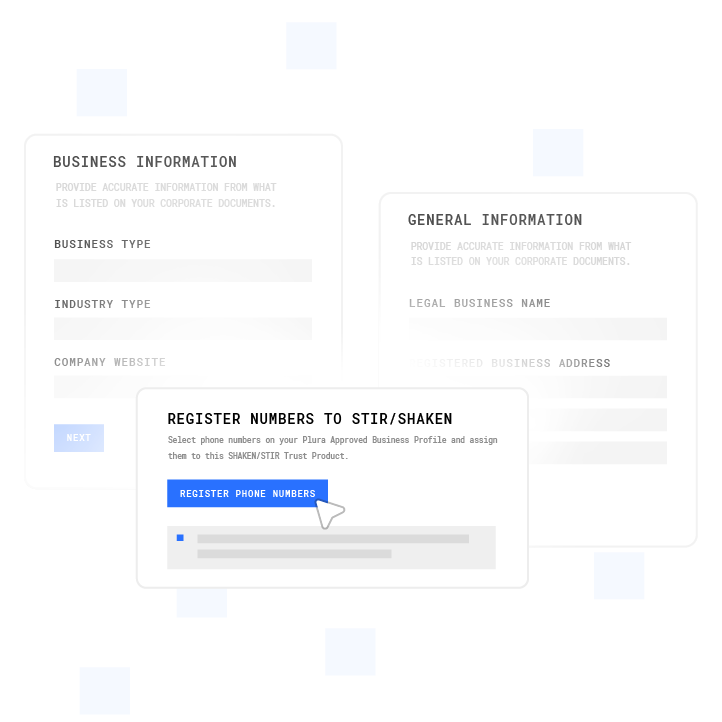
See how Plura’s carrier-layer enforcement works in a live text-to-call workflow.
Consent Tiers For A Text-To-Call Flow
The TCPA, codified at 47 U.S.C. § 227 and implemented by the FCC at 47 CFR § 64.1200, recognizes two distinct consent tiers for automated or prerecorded calls and texts.2
Prior express consent covers informational or transactional contacts such as appointment reminders, account alerts, and delivery updates. It can often be established through the context of a relationship, such as a consumer voluntarily providing a phone number during intake.
Prior express written consent is defined at 47 CFR § 64.1200(f)(9) as a written agreement bearing the consumer’s signature, including electronic signature under the E-SIGN Act, that clearly authorizes the seller to deliver advertisements or telemarketing messages using an automatic telephone dialing system (ATDS) or prerecorded voice and that includes the specific telephone number to which messages may be sent. The agreement must disclose that consent is not a condition of purchase.
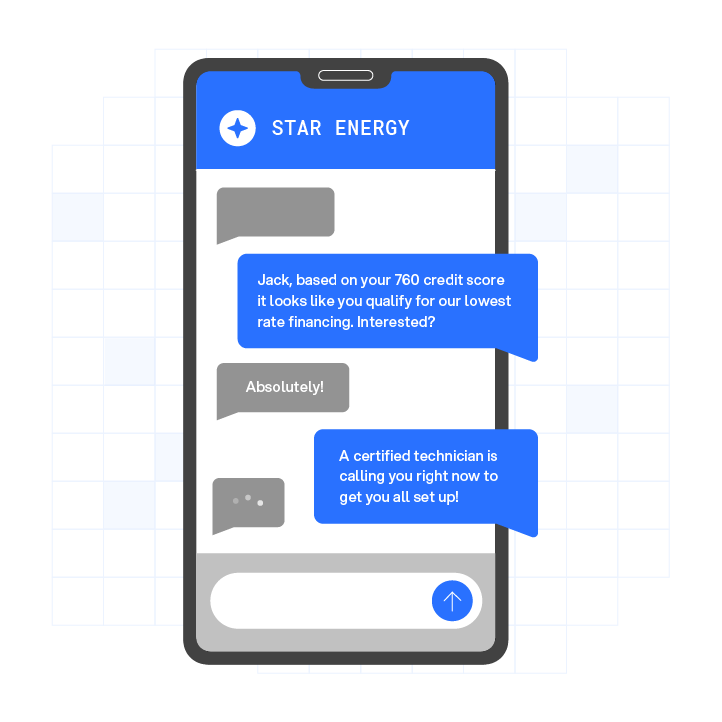
In a text-to-call workflow, the consent tier required for the initiating SMS may differ from the tier required for the call that follows. A marketing text and a subsequent AI voice agent call each carry their own consent analysis under the statute. Consent language that covers “phone calls” without referencing “artificial or prerecorded voice” may not satisfy the written consent standard for an AI-generated outbound call. Operators should consult qualified counsel to evaluate whether existing consent forms cover both legs of a text-to-call sequence.
Consent records must be timestamped, tied to the specific phone number, and preserved with the exact disclosure language the consumer saw. Courts and the FCC place the burden of proving consent on the caller. A CRM entry without supporting metadata such as IP address, form version, and server-side timestamp does not meet that burden.
The April 11, 2025 Revocation Rule In Operational Terms
The FCC’s consent revocation order was adopted February 15, 2024 and took effect April 11, 2025. It amended 47 CFR § 64.1200 to require callers to honor a consumer’s withdrawal of prior express consent made by any reasonable method. Callers may not restrict revocation to a single designated channel.
47 CFR § 64.1200(a)(10) designates seven keywords as per se reasonable revocation triggers: STOP, QUIT, END, REVOKE, OPT OUT, CANCEL, and UNSUBSCRIBE. Natural-language expressions such as “stop texting me” or “take me off your list” are evaluated under a totality-of-circumstances standard. As noted in the Key Takeaways, callers must process revocations within 10 business days from receipt.
This framework creates a specific operational gap in a text-to-call stack. A STOP reply received by an SMS platform must propagate to the dialer before the next call attempt is queued. If the SMS opt-out lives only in the texting platform and the dialer reads from a separate suppression list that has not synced, the queued call still goes out. That call falls outside the revocation window.
A separate “revoke-all” provision, which would treat a single opt-out as applying across all message types from the same sender, has been delayed three times. The FCC’s January 6, 2026 order extended its effective date to January 31, 2027, while the Commission reviews whether to modify the requirement. The any-reasonable-means standard and the 10-business-day honoring window remain in force.
Plura’s Stateful Conversation Database addresses this propagation gap directly. A texted opt-out updates the contact’s suppression state across the platform before the next call attempt is placed. The opt-out lives in the data layer the dialer reads from, not in a prompt.
AI Voice Under TCPA
On February 8, 2024, the FCC issued a Declaratory Ruling in CG Docket No. 23-362 (FCC 24-17), holding that AI-generated voices fall within the TCPA’s restriction on “artificial or prerecorded voice.” The ruling was framed as a clarification of existing law rather than new rulemaking, and the FCC concluded that the TCPA, enacted in 1991, already covered AI-generated and voice-cloned speech.
The ruling applies regardless of how natural the voice sounds. A conversational AI voice agent generating novel speech in real time falls into the same regulatory category as a static prerecorded message under the FCC’s analysis.
Under 47 CFR § 64.1200(b)(1), all artificial or prerecorded voice messages must state clearly at the beginning of the message the identity of the business responsible for initiating the call. The FCC’s September 2024 Notice of Proposed Rulemaking (FCC 24-84) proposed an additional requirement that callers disclose AI use at the start of the call, but as of September 2026 that NPRM has not been finalized into a binding rule. Several states have enacted their own AI disclosure requirements independent of federal action, including California’s AB 2905, effective January 1, 2025, which requires disclosure when a call uses an AI-generated voice.
Operators deploying AI voice agents in outbound workflows should consult qualified counsel to evaluate consent language, identification obligations, and applicable state disclosure requirements for each jurisdiction they contact.
Calling Windows And State Quiet-Hours Overrides
The federal TCPA, at 47 CFR § 64.1200(c)(1), prohibits telephone solicitations to residential numbers before 8:00 a.m. or after 9:00 p.m. in the called party’s local time zone. Multiple states impose narrower windows. The table below identifies states with end times or start times stricter than the federal standard, based on primary statutory sources.
Quiet-hours enforcement must be based on the called party’s local time zone, not the caller’s server clock. Area codes are an unreliable proxy for time zone due to number portability. Plura enforces quiet-hours rules automatically through time-zone detection on the contact record and applies state and federal calling-window restrictions to every outbound contact before dial.
DNC And Litigator-List Scrubbing Before Dial
DNC scrubbing functions as a pre-dial gate, not a reporting feature. Under 47 CFR § 64.1200(c)(2), telephone solicitations are barred to residential subscribers who have registered their numbers on the National Do Not Call Registry. The FTC’s Telemarketing Sales Rule at 16 CFR § 310.4(b) requires scrubbing against a list no older than 31 days at the time of the call.
An AI prompt cannot perform this scrub. A prompt has no access to a live registry. It cannot query the FCC’s Reassigned Numbers Database (RND). It cannot check an internal suppression list in real time. If DNC logic lives only in a prompt, the dialer will call numbers it should never reach.
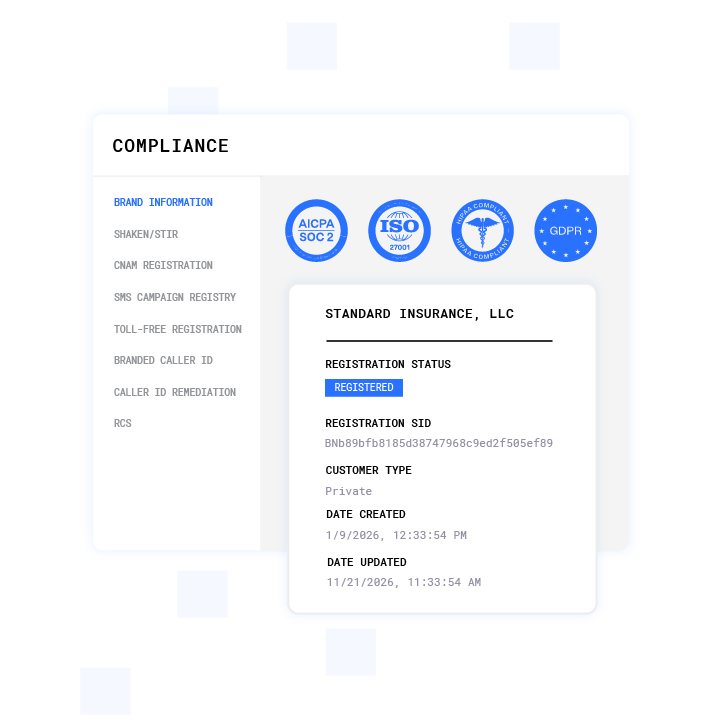
Plura performs real-time DNC scrubbing and TCPA-litigator screening inside the platform on every outbound contact before dial, blocking non-compliant numbers before the first attempt. Plura integrates with real-time TCPA litigator and DNC screening on outbound contacts across client accounts. The compliance dashboard exports audit-ready reports in one click.
 1
1SMS Opt-In Compliance Requirements
SMS opt-in compliance under the TCPA and CTIA (Cellular Telecommunications Industry Association) guidelines involves several documented elements. The following describes the framework operators and their counsel typically evaluate. This content is descriptive and not legal advice; consult qualified counsel for your specific program.
- Written consent for marketing messages. Under 47 CFR § 64.1200(f)(9), prior express written consent for marketing texts requires a signed agreement (electronic signature qualifies under the E-SIGN Act) that names the sender, references autodialed or prerecorded messages, includes the specific phone number, and discloses that consent is not a condition of purchase.
- Clear and conspicuous disclosure. The consent language must be presented so a reasonable consumer understands what they are agreeing to before taking the action that creates consent. Pre-checked boxes do not satisfy this standard.
- Program-specific identification. The consent must identify the specific company sending the messages, not a generic category of “marketing partners.”
- Opt-out instructions. CTIA guidelines require every marketing SMS program to include opt-out instructions (reply STOP) and a HELP response path. Carriers enforce these requirements through short code and 10DLC campaign policies.
- Message frequency disclosure. Disclosing approximate message frequency (for example, “up to 4 msgs/month”) and a “Msg & data rates may apply” notice are standard CTIA requirements.
- Timestamped, immutable records. Consent records should capture the phone number, exact disclosure language, timestamp, IP address, and form version. Courts place the burden of proving consent on the caller.
- Opt-out propagation across channels. A STOP reply to an SMS program should suppress future texts and any related dialer contacts, depending on the scope of the original consent and the applicable revocation rules.
For employee programs, the TCPA’s consent framework applies to the phone number, not the employment relationship. A business texting employees on their personal cell phones using an ATDS or prerecorded voice falls under the same consent analysis as any other outbound contact. Operators should consult counsel on whether internal communications programs require separate consent documentation.
Plura’s AI SMS platform runs on 10DLC-registered phone numbers with TCPA consent management, real-time DNC scrubbing, and per-state quiet-hours enforcement built into the platform layer. See Plura’s SMS guidelines for additional detail on how the platform approaches messaging compliance infrastructure.
Penalties And Recordkeeping
The TCPA’s private right of action at 47 U.S.C. § 227(b)(3) provides statutory damages of $500 per violation, with willful or knowing violations subject to up to $1,500 per violation. Each individual call or text counts as a separate violation. There is no statutory cap on aggregate exposure in a class action. According to an August 2023 Insurance Business report, the average TCPA class action settlement was estimated to cost $6.6 million.3
Counsel will typically request specific documentation when a demand letter arrives.
- Outbound call detail records (CDRs) for the named number, including timestamps, campaign ID, and call disposition
- The consent record with exact disclosure language, timestamp, IP address, and form version
- DNC scrub history showing the registry version used and the date of the scrub
- Opt-out records showing the date, channel, and suppression action for any revocation request
- Internal do-not-call list entries and the date each was entered
The TCPA itself sets no explicit retention period, but the practical floor is four years from each contact event, matching the federal statute of limitations under 28 U.S.C. § 1658. The FTC’s Telemarketing Sales Rule at 16 CFR § 310.5 separately requires sellers and telemarketers to retain consent and related records for 24 months. Many compliance programs default to five years to cover state-law claims that run longer. Internal do-not-call lists must be honored for at least five years under 47 CFR § 64.1200(d)(6).
Plura’s consent records are timestamped and immutable. The compliance dashboard exports audit-ready reports in one click for legal review, carrier requirements, or regulatory inquiries.
See how Plura’s recordkeeping infrastructure supports a defensible compliance posture.
The Central Enforcement Table: Rule, Enforcement Layer, Failure Mode
The table below maps each compliance rule to the layer of the stack where it must be enforced and the failure mode that occurs when it is left to the AI prompt.
| Rule | Where It Must Be Enforced in the Stack | Failure Mode If It Lives Only in the AI Prompt |
|---|---|---|
| Consent capture and verification (47 CFR § 64.1200(f)(9)) | Dialing and application layer, with an immutable consent ledger that stores timestamped records, IP address, and exact disclosure language | Prompt cannot produce a court-admissible consent record, so there is no server-side timestamp or form-version archive and consent cannot be proven in discovery |
| Opt-out and revocation propagation (FCC 24-24, effective April 11, 2025) | SMS platform and dialer share a unified suppression state, and an opt-out received on any channel updates the dialer suppression list before the next call attempt | STOP text updates the SMS platform but not the dialer, so a queued call goes out after opt-out and each post-opt-out call becomes a separate violation as detailed in the Penalties section |
| DNC and litigator-list scrubbing (16 CFR § 310.4(b); 47 CFR § 64.1200(c)(2)) | Pre-dial gate in the dialing layer, with real-time queries against federal and state DNC registries and the internal suppression list before each call attempt | Prompt has no access to live registries, so DNC numbers are dialed and exposure follows the civil penalty structure described earlier for TSR and TCPA violations |
| Quiet-hours enforcement (47 CFR § 64.1200(c)(1); state statutes) | Dialing layer with time-zone detection on the contact record, and state-specific overrides applied per number rather than per campaign | Prompt cannot enforce a time-zone-aware block, so a natural-language quiet-hours instruction does not prevent a 7:58 a.m. dial and each out-of-window call becomes a separate event |
| AI voice disclosure and caller identification (FCC 24-17; 47 CFR § 64.1200(b)(1)) | Application layer, with disclosure delivered in the first seconds of every call through a fixed, version-controlled script node generated outside the model | Model may paraphrase or omit the disclosure under adversarial prompting or unexpected caller phrasing, and there is no audit trail proving disclosure was delivered on each call |
| Recordkeeping and consent audit trail (28 U.S.C. § 1658; 16 CFR § 310.5) | Immutable data layer where every contact event is logged with timestamp, campaign ID, consent record ID, and call disposition, and is exportable on demand | Prompt produces no logs, so there is no CDR, no consent record link, and no suppression history when a demand letter arrives |
1 Plura AI maintains SOC 2, HIPAA, ISO, and GDPR posture as part of its platform infrastructure. References to compliance frameworks in this article describe Plura’s platform capabilities and do not constitute a guarantee that any customer using Plura will themselves be compliant with applicable laws or standards. Customers remain solely responsible for their own regulatory obligations, certifications, consent management, recordkeeping, and the claims they make to their own end users. Consult qualified legal counsel for guidance specific to your use case.
2 This article describes regulatory frameworks at a general level and does not constitute legal advice. Laws and regulations vary by jurisdiction, change over time, and apply differently depending on facts and circumstances. Readers should consult qualified legal counsel before making compliance decisions.
3 Performance figures, customer outcomes, and industry statistics referenced in this article are drawn from cited third-party sources or Plura customer case studies. Individual results vary based on implementation, use case, industry, audience, and execution. Past or aggregate performance is not a guarantee of future results.
This article is provided for informational purposes only and reflects Plura AI’s understanding at the time of publication. Product capabilities, integrations, and specifications are subject to change. For the most current information, visit plura.ai.
This article was produced with the assistance of AI tools and reviewed by Plura AI prior to publication.