

Written by: Matt Beucler, CEO, Plura AI | Last updated: August 29, 2026
Key Takeaways
- Most lead response apps miss sub-5-second contact at scale because they rent third-party carriers and lack cross-channel conversation memory.
- High-volume operators lose pipeline when leads sit in CRMs for hours or days, and contacting prospects within five minutes can increase conversion likelihood by up to 100x.3
- Plura AI owns its FCC-licensed carrier, which enables branded caller ID, real-time DNC enforcement, and SHAKEN/STIR verification across voice, SMS, RCS, and webchat from a single stateful database.
- Teams using Plura replace traditional $7M contact-center costs with a $700K TCO while achieving 3x average ROI in 90 days and 90% faster lead response times.3
- Book a live demo with Plura AI to see stateful cross-channel architecture deliver sub-5-second lead contact in action.
Lead Response Gaps in Today’s B2B Market
The median first response time for B2B inbound leads in 2026 is roughly 42 hours according to one major benchmark. A separate sample shows an average of 47 hours, and approximately 35% of leads wait more than 24 hours for any reply. Only 7% of B2B teams respond within five minutes. The cost of that gap is quantified: 78% of deals in insurance close with the first responder, and leads contacted within one minute convert at an 87% contact rate versus 31% for responses delayed 30 to 60 minutes.
For high-volume operators running thousands of calls and texts monthly, those numbers translate directly to pipeline. Lead conversion rates drop 10x after the first five minutes of a form submission, which explains why contacting a lead within five minutes can make them up to 100x more likely to connect. The platform a team uses to close that window often determines whether the lead converts or goes to a competitor.
How Lead Response Tools Evolved
Lead response tools started as single-channel routing systems. A form submission triggered an email notification, a rep picked up the phone, and the lead waited. By 2023, standalone SMS platforms and basic auto-dialers added a second channel, but each operated independently with no shared memory. A prospect who texted at 9 a.m. had to re-explain themselves when the call came at noon.
By 2026, the category has split into two distinct tiers. The first tier includes legacy contact-center tools, standalone messaging platforms, and outsourced service models that route contacts but do not hold conversation context across channels. The second tier includes AI-orchestrated platforms that manage voice, SMS, RCS (Rich Communication Services, the next-generation messaging standard supported across modern Apple and Android devices), and webchat from a single stateful memory layer. McKinsey reports that nearly 88% of organizations use AI regularly, while 23% are scaling agentic AI systems and 39% have begun experimenting with agents4, and speed-to-lead has become the primary SDR (Sales Development Representative) metric in 2026.
Why Architecture Determines Sub-5-Second Contact
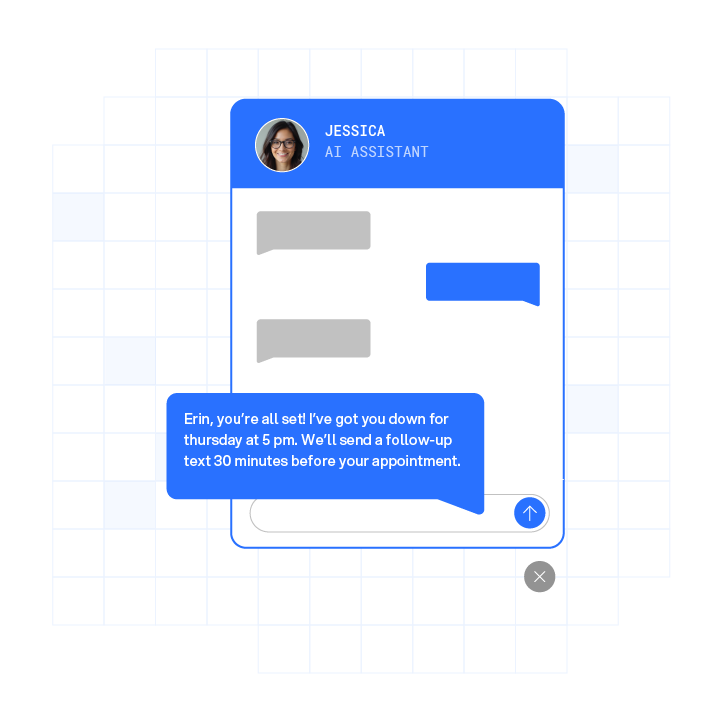
The architectural difference between a tool that achieves sub-5-second contact and one that does not comes down to three layers: carrier ownership, compliance enforcement, and conversation memory.
Most AI voice and SMS platforms are API (Application Programming Interface) resellers built on top of a CPaaS (Communications Platform as a Service) provider such as Twilio. They rent the carrier layer, which means branded caller ID cannot be issued under the operator’s own identity, real-time DNC (Do Not Call) scrubbing is bolted on after the fact, and compliance lives outside the platform. When a call leaves the network flagged as “Spam Likely”, the reseller has no carrier-level mechanism to remediate it.
Plura AI is its own FCC-licensed audio bridging carrier. Voice originates on Plura’s domestic infrastructure, not a third-party CPaaS. Branded caller ID is issued at the carrier level. SHAKEN/STIR (Secure Handling of Asserted information using toKENs / Signature-based Handling of Asserted information using toKENs) caller ID verification authenticates every outbound call. Real-time DNC scrubbing and TCPA (Telephone Consumer Protection Act, 47 U.S.C. § 227) litigator list filtering run before dial, not after. All four channels, including the AI voice agent, AI SMS, AI RCS, and AI webchat, share a single Stateful Conversation Database.
Onboarding, Workflows, and Rollout Timing
Plura’s onboarding sequence moves from discovery audit to production workflow in days to weeks, depending on conversation complexity. At the fast end, a simple inbound qualification flow deploys in days. At the other extreme, a multi-step intake, such as a 25-question health-history survey, runs closer to one to two months because the workflow logic itself requires design and validation. Every annual contract includes a 90-day opt-out window, so if the deployment is not delivering, operators are not held to the annual term.
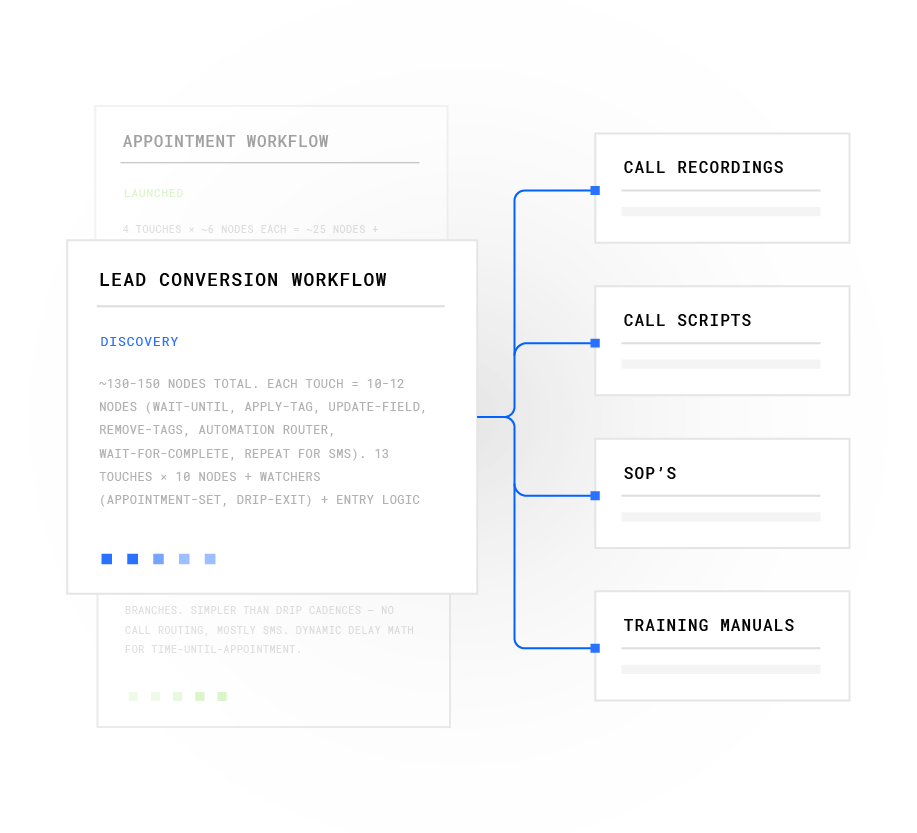
The no-code workflow builder lets operators design memory-driven conversation pathways on a visual canvas without engineering. Each node references the Stateful Conversation Database, supports BATNA (Best Alternative to a Negotiated Agreement) guardrails, and branches on real-time enrichment results from 30+ data sources.
Book a live demo with Plura to see the stateful cross-channel architecture in action.
Who Uses Plura and How They Apply It
Plura serves five buyer personas across high-volume operations:
- Contact Center Leaders use Plura to replace linear cost scaling with logarithmic economics. A TCO (Total Cost of Ownership) of $700,000 replaces traditional $7M contact-center cost structures on equivalent volume, per Plura’s AI communications strategy guide.
- Marketing Directors use Plura to close the gap between lead capture and lead contact. Cost per qualified lead drops from 200 (traditional) to 60 with AI-orchestrated outreach, per Plura’s AI marketing automation guide.
- Agency Owners use Plura to expand account-manager capacity from 5 to 8 clients to 15 to 20 clients, shifting agency margins from a 15 to 25% industry baseline to 35 to 50%.
- Franchise Owners use Plura to enforce identical greeting, qualification, and SLA across every location, closing the 3 to 5x performance gap between best and worst units in a multi-location system.
- C-Suite Executives use Plura to consolidate vendor sprawl across CRM (Customer Relationship Management), dialer, SMS platform, compliance bolt-on, and analytics into a single platform with a single audit trail.
Volume Thresholds and Vertical Fit
Plura’s practical floor is at least 500 daily customer interactions or at least $5,000 per month in paid-media spend. Below that volume, an AI agent platform of this depth often does not generate enough ROI to justify the build. Above that threshold, the math changes quickly. A 15-agent operation at $20 per hour with standard taxes, benefits, and commissions costs $60,000 per month at 40% talk utilization. Replacing that team with Plura at $15 per hour and 100% talk utilization drops the monthly cost to $14,400, per the Plura ROI calculator.
Verticals with the strongest fit include healthcare, insurance, financial services, legal, real estate, e-commerce, automotive, wellness, franchise networks, and government-adjacent enterprises. Volume is the qualifier, and industry is secondary.
How Plura Compares to Other Options
Legacy Contact-Center Tools
Traditional U.S.-based contact-center platforms carry the cost structure that made the math difficult in the first place. Payroll, taxes, benefits, commissions, real estate, and 30 to 50% annual front-desk turnover all compound. These platforms cannot scale into peak season without burning through hiring budgets months in advance, and response times are measured in hours rather than seconds.
Standalone Messaging Platforms
Standalone SMS and dialer tools operate on a single channel with no shared memory. A prospect who replied to a text campaign is a stranger when the voice call arrives. These platforms typically ride on third-party CPaaS infrastructure, which means they cannot issue branded caller ID at the carrier level or enforce DNC compliance before dial.
Outsourced Service Models
Offshore BPO (Business Process Outsourcing) vendors absorbed the bulk of U.S. high-volume outbound work for two decades through wage arbitrage. That model faces compounding regulatory pressure. The FCC NPRM (Notice of Proposed Rulemaking, CG Docket No. 26-52) proposes capping offshore customer-service calls at 30% and describing limits on offshore handling of sensitive consumer data. State laws in New York, New Jersey, Connecticut, Missouri, and Florida already describe restrictions on offshore handling of medical, financial, and consumer data. Plura runs on 100% U.S. infrastructure by architecture, not by promise.
Newer AI Automation Vendors
The wave of AI voice and SMS tools that arrived over the last two years includes developer-first API platforms such as Vapi, which ships API documentation rather than managed onboarding, and Synthflow, which depends on Twilio infrastructure and operates as a software layer without a carrier license4. Bland AI charges roughly $10,000 upfront to build a single conversation before the platform engages. Regal AI has vertical fit in healthcare conversational AI but does not own the carrier stack. Go High Level is primarily a CRM shell.4 None of these platforms own an FCC-licensed carrier, issue branded caller ID at the carrier level, or maintain stateful memory across voice, SMS, RCS, and webchat by default.
The table below compares the three attributes that determine whether a lead response app can deliver sub-5-second contact at scale. Competitor data reflects only verifiable, publicly documented claims.
| Attribute | Twilio-Based API Resellers | Offshore BPOs | Plura AI |
|---|---|---|---|
| FCC-Licensed Carrier Infrastructure | No (rents from third-party CPaaS) | No (uses local carrier in country of operation) | Yes (owns FCC-licensed audio bridging carrier) |
| Real-Time DNC Enforcement Before Dial | Varies, typically bolted on post-routing | Varies by vendor, not carrier-level | Yes (enforced at carrier level before every outbound contact) |
| TCO Replacement of Human Teams | Partial (reduces some labor, adds per-minute API costs) | Partial (wage arbitrage only, regulatory exposure rising) | Replaces $7M traditional economics with $700K TCO, per Plura’s executive guide |
Best App Criteria for Sub-5-Second Leads
The best app for leads under 5 seconds owns its carrier stack, enforces compliance before dial, and holds conversation context across every channel. Organizations deploying AI for speed to lead see response times drop from hours to seconds and connection rates increase by 3x to 5x. Plura’s AI agents respond within that sub-5-second SLA across voice, SMS, RCS, and webchat, 24/7, on every channel, in parallel. As noted earlier, the conversion lift from sub-60-second response can reach 391%, and Plura’s platform is built to hit that window on every inbound contact, not just during business hours.
The failure mode for most listed tools is architectural. They route the contact but cannot enforce branded caller ID, cannot scrub DNC lists at the carrier level, and cannot carry conversation context from a prior SMS thread into a live voice call. The result is a platform that looks fast in a demo and fails at scale.
Lead Response Apps for High-Volume Teams
High-volume teams, defined here as operators running at least 500 daily customer interactions, require a different evaluation framework than SMB (Small and Medium-sized Business) buyers. The relevant metrics are cost per connected conversation, talk utilization rate, compliance posture across 50+ state rule sets, and whether the platform can scale into peak season without a hiring cycle.
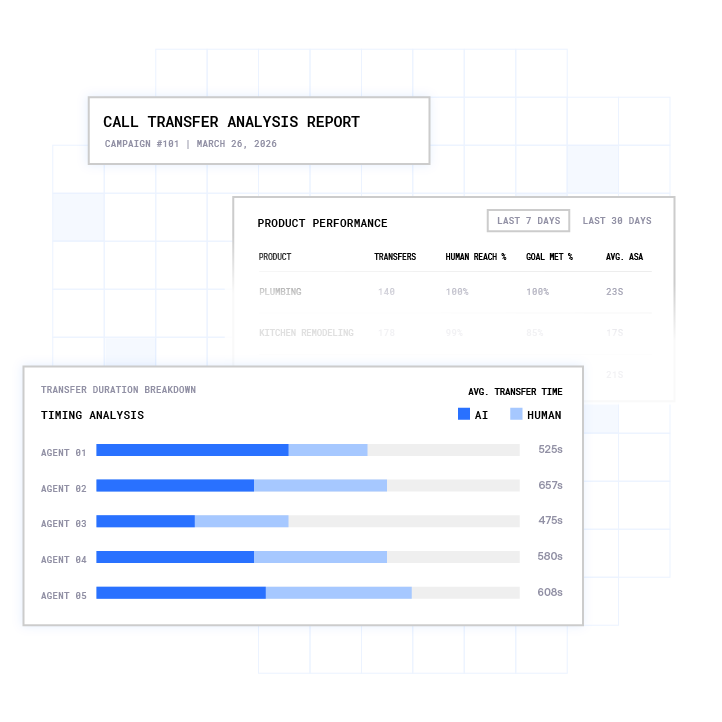
Plura’s AI Predictive Dialer uses stateful conversion signals, including historical answer rates and prior negotiation outcomes, to decide who to call next. Calls flow over Plura’s FCC-licensed carrier with branded caller ID and SHAKEN/STIR authentication. High-volume outbound teams replace legacy systems, including Vici Dial alternatives, with Plura’s dialer to maximize talk time per dial. The conversation intelligence layer analyzes every interaction across voice, SMS, RCS, and webchat to surface what scripts close, what objections recur, and what conversion paths win.
AI SMS Lead Follow-Up Tools
AI SMS lead follow-up tools vary significantly in how they handle compliance, channel memory, and carrier routing. The TCPA (47 U.S.C. § 227) classifies SMS messages sent through automated platforms as calls, describing a consent framework, calling-hours restrictions, and DNC scrubbing requirements that apply to texts and voice outreach. The FCC’s one-to-one consent rule, effective April 11, 2026, describes consent that must be obtained separately for each seller, which ends the practice of lead generators obtaining blanket consent sold to multiple companies.
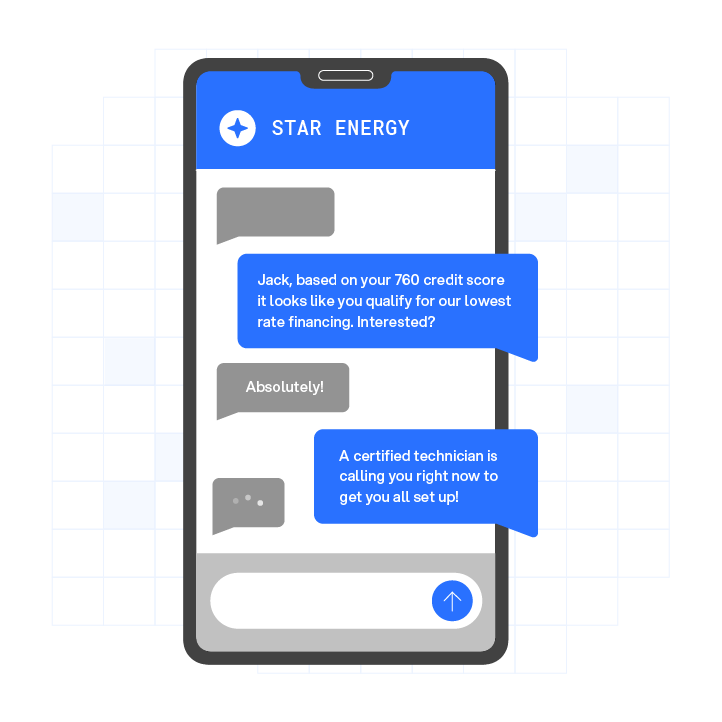
Plura’s AI SMS runs on 10DLC (10-Digit Long Code, the A2P (Application-to-Person) messaging registry for SMS campaigns)-registered phone numbers with TCPA compliance support, real-time DNC scrubbing, and per-state quiet-hours enforcement. The SMS agent reads from the same Stateful Conversation Database as the voice agent, so a lead qualification conversation that started by text continues seamlessly on a voice call without the prospect repeating themselves. Plura also supports AI customer service texting for post-sale support flows and CRM-connected SMS support across HubSpot, Salesforce, Zoho, and 50+ other integrations.
Evidence and Evaluation Signals
Operators evaluating lead response apps should look for quantified proof points, not dashboard screenshots. Plura’s published numbers include a sub-5-second SLA to first AI-powered contact versus an industry standard of 47+ hours, 3x average ROI in 90 days, 47% average pipeline growth, 90% faster lead-response time than baseline, and a 99.9% uptime SLA with automatic failover, per Plura’s AI communications strategy guide.
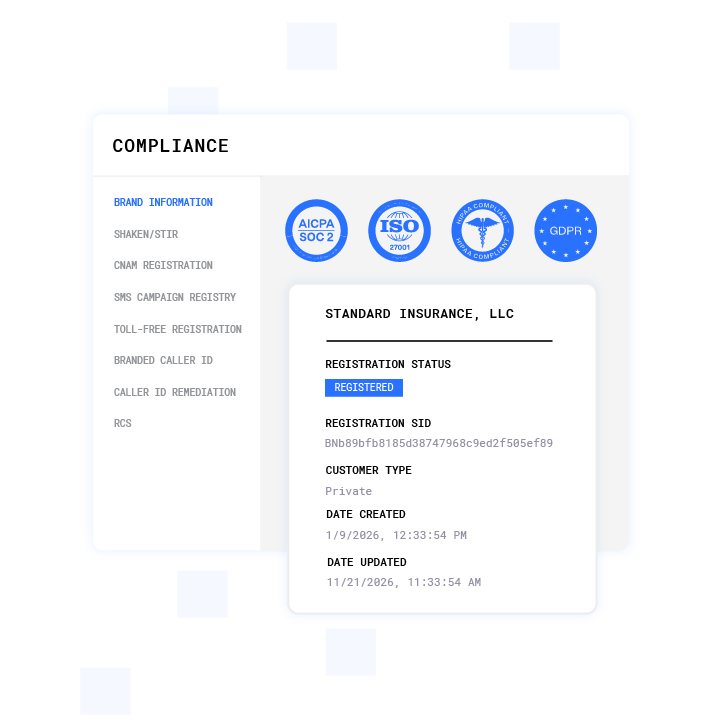
On compliance, Plura supports SOC 2, HIPAA, ISO certification, GDPR, SHAKEN/STIR caller ID verification, TCPA compliance, and DNC compliance.1 The compliance dashboard exports audit-ready reports in one click. Every annual contract includes a 90-day opt-out window if the deployment is not delivering.
Practical Evaluation Factors for Buyers
Before selecting a lead response app, high-volume operators should evaluate the following:
- Carrier ownership: Determine whether the platform owns an FCC-licensed carrier or rents from a third-party CPaaS. Carrier ownership influences whether branded caller ID, real-time DNC enforcement, and SHAKEN/STIR authentication function as platform capabilities or third-party dependencies.
- Stateful cross-channel memory: Confirm whether the platform maintains conversation context across voice, SMS, RCS, and webchat. A prospect who texted at 9 a.m. should not have to re-explain themselves when the call comes at noon.
- Compliance posture: Review whether DNC scrubbing is enforced before dial at the carrier level or bolted on after routing. Check whether consent records are timestamped, immutable, and audit-ready, and whether the platform enforces quiet-hours rules automatically through time-zone detection.
- TCO over 36 months: Enterprise buyers should model total cost of ownership over a full three-year horizon, incorporating license fees, implementation, integrations, and projected usage overages, rather than focusing solely on first-year contract value.
- U.S. infrastructure posture: Confirm whether the platform runs on 100% U.S. infrastructure by architecture. Under the FCC NPRM (CG Docket No. 26-52), offshore handling of sensitive consumer data faces proposed restrictions that affect any platform with foreign infrastructure dependencies.
- Iteration model: Clarify whether the vendor iterates the conversation workflow after launch or hands off the keys and disengages. Plura runs every deployment like a CRO (Conversion Rate Optimization) test, with real-call monitoring and continuous workflow tuning.
FAQ
What is the best CRM for speed to lead?
The best CRM for speed to lead is one that does not rely on a human rep to initiate first contact. Traditional CRMs such as HubSpot, Salesforce, and Zoho store lead data and trigger notifications, but the actual outreach still depends on a rep picking up the phone or sending a text. That model produces the 42 to 47-hour median response time the industry benchmarks document. The platforms that close the speed-to-lead gap are AI agent systems that connect to the CRM, read the lead record in real time, and initiate voice or SMS contact within that sub-5-second window without human intervention. Plura integrates with HubSpot, Salesforce, Zoho, and 50+ other tools, so the AI agent reads the right customer record, qualifies the lead, and fires the post-conversation event back into the CRM automatically. The CRM is the system of record, and Plura is the system of contact.
What is AI lead response?
AI lead response uses AI agents to initiate and conduct the first contact with an inbound or outbound lead across voice, SMS, RCS, or webchat without requiring a human rep to be available. The AI agent reads the lead record, enriches it with real-time data from 30+ sources, conducts a qualification conversation, and either books a meeting, live-transfers a warm buyer to a human rep, or continues the nurture sequence, all within seconds of the lead’s initial inquiry. The distinction between AI lead response platforms is not whether they use AI, but whether they own the carrier infrastructure to deliver that contact reliably at scale. Platforms built on third-party CPaaS providers cannot issue branded caller ID, cannot enforce DNC compliance before dial, and cannot maintain conversation context across channels. Plura’s AI lead response runs on its own FCC-licensed carrier with stateful memory across every channel.
How does Plura handle TCPA and DNC compliance for outbound lead response?
Plura’s compliance engine functions as a first-class layer of the platform, not a checkbox. Every outbound contact is checked against federal and state DNC registries in real time before dial. Consent records are timestamped, immutable, and audit-ready. Quiet-hours rules enforce automatically through time-zone detection on the contact, applying state and federal calling-window restrictions to every campaign. The platform supports TCPA compliance, DNC compliance, SOC 2, HIPAA, ISO certification, GDPR, and SHAKEN/STIR caller ID verification.2 The compliance dashboard exports audit-ready reports in one click. Customers are responsible for their own regulatory obligations and the claims they make to their end users, and Plura provides the infrastructure and supports compliance posture at the platform level. Operators with specific legal questions about TCPA or DNC obligations should consult qualified counsel.
Why do most lead response apps fail at sub-5-second contact at scale?
Most lead response apps fail at sub-5-second contact at scale for three architectural reasons. First, they ride on third-party CPaaS infrastructure, which adds latency, limits branded caller ID issuance, and prevents carrier-level DNC enforcement. Second, they operate on a single channel with no shared memory, so a lead who texted is a stranger when the voice call arrives. Third, they rely on human reps to complete the contact, and humans cannot maintain a sub-5-second SLA across thousands of simultaneous inbound leads. AI agent architectures that own the carrier stack, enforce compliance before dial, and hold stateful memory across channels eliminate all three failure modes. Plura is the only lead response platform built on an FCC-licensed carrier with stateful cross-channel memory across voice, SMS, RCS, and webchat.
What does a 90-day opt-out window mean in Plura’s contracts?
Every Plura annual contract includes a 90-day opt-out window. If the deployment is not delivering within the first 90 days, operators are not held to the annual term. This structure puts the iteration commitment on the line. Plura runs every customer build like a CRO test, with real-call monitoring, objection-pattern analysis, and continuous workflow tuning. The 90-day window is the mechanism that aligns Plura’s incentives with the operator’s outcomes rather than with contract lock-in.
Conclusion
The top lead response apps for high-volume operators in 2026 are not distinguished by which AI model they use. They are distinguished by whether they own the carrier stack, enforce compliance before dial, and maintain stateful memory across every channel a prospect might use to engage. Most listed platforms fail on at least two of those three criteria because they are API resellers built on third-party CPaaS infrastructure with no cross-channel memory.
Plura AI is the only lead response platform built on an FCC-licensed carrier with stateful cross-channel memory across voice, SMS, RCS, and webchat. It contacts leads within that sub-5-second SLA, supports TCPA compliance, DNC compliance, SOC 2, HIPAA, ISO certification, GDPR, and SHAKEN/STIR caller ID verification at the platform level, and delivers 3x average ROI in 90 days for high-volume operators. Every annual contract includes a 90-day opt-out window.
Compare plans and rates: review Plura’s pricing tiers side by side at plura.ai/pricing.
Book a live demo with Plura to see sub-5-second lead contact on a live call.
1 Plura AI maintains SOC 2, HIPAA, ISO, and GDPR posture as part of its platform infrastructure. References to compliance frameworks in this article describe Plura’s platform capabilities and do not constitute a guarantee that any customer using Plura will themselves be compliant with applicable laws or standards. Customers remain solely responsible for their own regulatory obligations, certifications, consent management, recordkeeping, and the claims they make to their own end users. Consult qualified legal counsel for guidance specific to your use case.
2 This article describes regulatory frameworks at a general level and does not constitute legal advice. Laws and regulations vary by jurisdiction, change over time, and apply differently depending on facts and circumstances. Readers should consult qualified legal counsel before making compliance decisions.
3 Performance figures, customer outcomes, and industry statistics referenced in this article are drawn from cited third-party sources or Plura customer case studies. Individual results vary based on implementation, use case, industry, audience, and execution. Past or aggregate performance is not a guarantee of future results.
4 References to third-party products, services, companies, or research are made for informational and comparative purposes only. Plura AI is not affiliated with, endorsed by, or sponsored by any third party named in this article unless explicitly stated. Trademarks and product names referenced remain the property of their respective owners.
This article is provided for informational purposes only and reflects Plura AI’s understanding at the time of publication. Product capabilities, integrations, and specifications are subject to change. For the most current information, visit plura.ai.
This article was produced with the assistance of AI tools and reviewed by Plura AI prior to publication.