
Written by: Matt Beucler, CEO, Plura AI
Key Takeaways on VICIdial TCO for 20 Agents
- VICIdial software is free, but five recurring cost buckets drive the real monthly TCO for a 20-agent team in 2026: server infrastructure, managed hosting labor, telecom and DIDs, compliance tooling, and spam remediation.
- Self-hosted labor is usually the largest hidden expense. Even part-time Linux administration can cost hundreds of dollars per month, and full-time roles often reach tens of thousands of dollars per year.
- Compliance and spam-label remediation add fixed or near-fixed costs. DNC registry access, scrubbing services, STIR/SHAKEN attestation, and caller-ID reputation management do not scale down with smaller teams.
- At 20 agents, the combined monthly spend across all five buckets often exceeds what a modern, all-in-one platform charges for comparable capacity and compliance support.
- Teams ready to eliminate these separate line items can consolidate to Plura AI’s unified platform, which bundles infrastructure, compliance support, and branded caller ID into a single monthly cost.
VICIdial Managed Hosting Costs for 20 Agents in 2026
For a 20-agent operation, server and cloud infrastructure typically costs $30–$150 per month. Official VICIhost provides managed hosting, and third-party providers offer additional options at different price points. The gap between the cheapest bare-metal option and a fully managed plan is wide. Most teams discover that the lowest-cost infrastructure option still requires significant internal labor to operate, which becomes a major part of the total cost.
That internal labor burden is often the largest line item in the true TCO calculation.
Hidden Labor Costs of Self-Hosted VICIdial
Labor usually drives more cost than the VICIdial infrastructure itself. A part-time Linux contractor for a 20-agent operation can cost hundreds of dollars per month, while a full-time in-house VICIdial and Linux administrator often costs tens of thousands of dollars per year depending on experience and location. That spend reflects the ongoing workload. System administration for a deployment of this size requires several hours per week for monitoring, patching, and troubleshooting.
Teams that fold VICIdial into an existing IT role often underestimate that workload. Monitoring carrier performance, handling outages, and preparing for compliance audits can consume more hours than planned, especially when issues surface during peak calling windows.
Calculate your actual labor burden using Plura AI’s ROI calculator. It accounts for admin time most teams underestimate.
Telecom and DID Charges in the VICIdial Cost Stack
A 20-agent VICIdial operation that runs 8 hours per day across 20 business days at 50% talk time generates substantial carrier usage each month. SIP termination for VICIdial is usually billed at $0.004–$0.012 per minute for domestic US calls, with some carriers offering better answer rates and stronger STIR/SHAKEN support.
DID numbers for caller ID add another recurring expense that depends on quantity and provider. Teams that rotate DIDs to manage spam labeling maintain a larger DID inventory. That larger pool increases the monthly line item for numbers and makes telecom spend less predictable.
Compliance-related telecom choices, such as higher-attestation routes or branded caller ID, can further influence per-minute and per-number costs.
Compliance and Spam Remediation Costs for VICIdial Operators
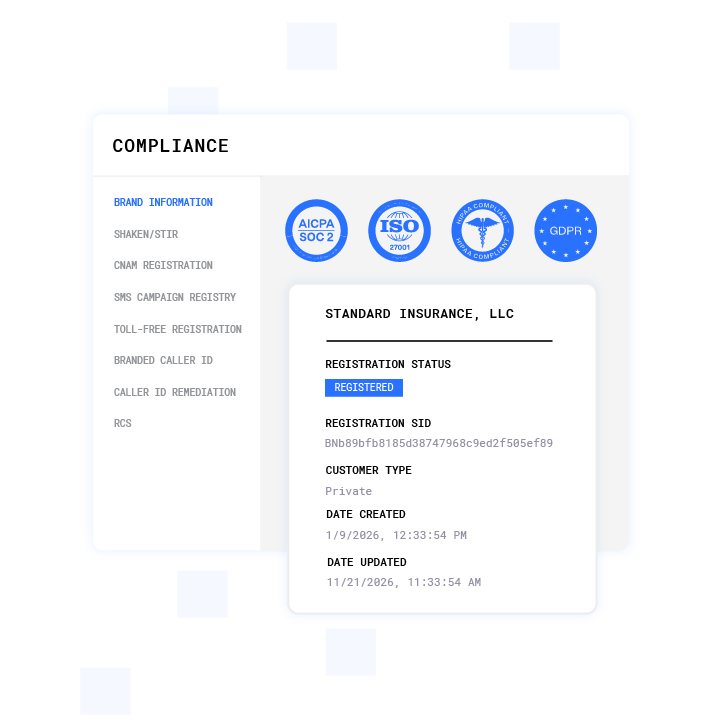
Compliance tooling for a self-hosted VICIdial deployment in 2026 typically spans several distinct line items. Federal DNC Registry access costs $82 per area code per year beyond the first five free codes for FY 2026, and commercial DNC scrubbing services offer flat-rate monthly plans starting as low as $25. Consent management remains a key consideration under current FCC rules, so many teams add separate systems to track and store consent records.
1
STIR/SHAKEN attestation services are available from carriers and third-party providers. Call recording storage for a 20-agent operation can generate substantial data each month, which creates separate costs for active storage and long-term archiving. TCPA litigation filings reached 2,628 cases in 2025, up 60% year over year, with early 2026 filings running 26.8% ahead of that pace.3 Operators should consult qualified legal counsel to assess their specific exposure and obligations under TCPA (47 U.S.C. § 227) and applicable state regulations.2
Spam label remediation adds its own recurring cost layer. Maintaining caller ID reputation requires rotating DID pools, monitoring attestation levels, and in some cases purchasing premium Level A STIR/SHAKEN services. These activities translate into real monthly spend. A documented 50-agent self-hosted cost model shows $300 per month for caller ID reputation management and $500 per month for DNC scrubbing as separate line items, which illustrates that these costs are material even at moderate scale.
Once you account for all five cost buckets, the key question becomes whether self-hosting still delivers a cost advantage over an all-in-one platform.
20-Agent TCO Comparison: VICIdial vs. Plura AI in 2026
The table below compares documented monthly cost ranges for a self-hosted VICIdial deployment against Plura AI’s platform cost for a comparable 20-agent outbound operation. Consult Plura AI’s calculator to model your specific volume and talk-time assumptions.
| Cost Category | VICIdial Self-Hosted | Plura AI |
|---|---|---|
| Infrastructure / hosting | $30–$150/mo | Included in platform |
| Sysadmin / managed hosting labor | Varies by contractor rates and internal salaries | Included in platform |
| Telecom and DID charges | Usage-based, plus DID inventory and rotation strategy | Carrier-grade, FCC-licensed |
| Compliance tooling (DNC, consent, STIR/SHAKEN) | Separate subscriptions and registry fees | Built into platform |
| Spam remediation / caller ID reputation | Additional tooling and DID pool costs | Carrier-level branded caller ID |
| Estimated Monthly Total | Depends on five-bucket configuration | See your modeled total |
A self-hosted VICIdial deployment for 20 agents has a monthly TCO that depends on infrastructure choices, labor arrangements, telecom providers, and compliance measures. That figure usually excludes compliance consulting, legal review, and disaster recovery planning, which can add additional overhead.
See your total five-bucket cost compared to Plura’s all-in pricing at plura.ai/calculator.
When an AI Predictive Dialer Becomes the Better Fit
Self-hosted VICIdial reflects an earlier era of outbound operations. The platform assumes a Linux-literate administrator, a separate compliance stack, a third-party DID management layer, and ongoing spam remediation work that lives outside the dialer. As TCPA litigation volume rises and carrier spam-labeling tightens, the operational surface area of a self-hosted deployment expands faster than the team managing it.
Modern AI predictive dialer platforms consolidate those layers into a single product surface. Plura AI operates as its own FCC-licensed audio bridging carrier, so branded caller ID is issued at the carrier level instead of through a third-party reseller. STIR/SHAKEN authentication runs on every outbound call. Real-time DNC scrubbing checks every number against federal and state registries before dial. Consent records are timestamped, immutable, and exportable for audit. These capabilities function as core layers of the platform rather than separate add-on subscriptions.
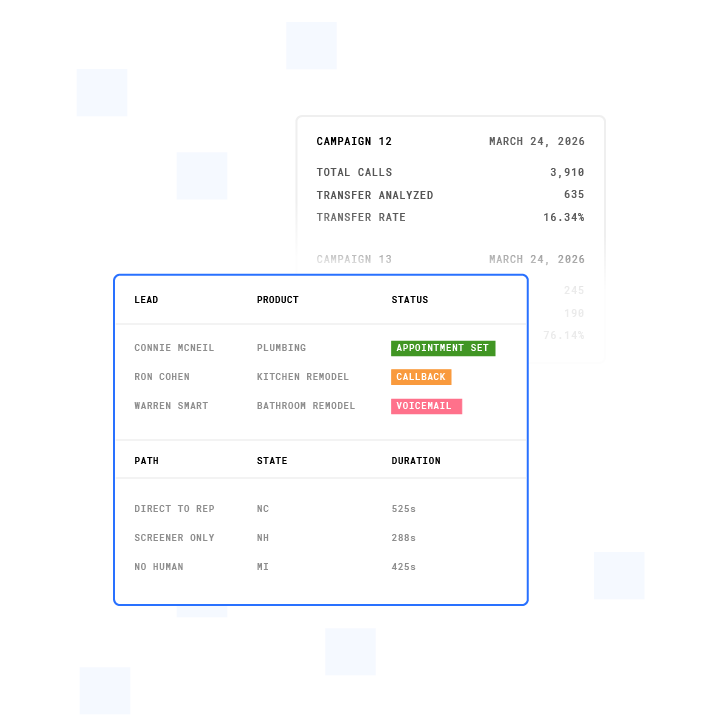
This structural difference affects operations in three practical ways. First, the admin burden drops sharply. There is no Linux server to patch, no Asterisk version to manage, and no disaster recovery replica to maintain. Second, compliance tooling becomes part of the platform contract instead of a separate procurement. The consent management, DNC scrubbing, and STIR/SHAKEN layers that VICIdial operators source from third parties are built into Plura’s platform to support compliance. Third, the dialer itself is stateful. Plura’s AI Predictive Dialer uses conversion signals from prior interactions to prioritize who to call next, and every conversation is logged to a shared database that the AI SMS and voice channels read from. A contact who texted at 9 a.m. is treated as the same contact when the outbound call runs at noon.
Plura runs on 100% U.S. infrastructure by architecture. Voice origination, model hosting, data storage, and call recording all sit on domestic infrastructure, which addresses exposure described in the FCC’s Notice of Proposed Rulemaking (CG Docket No. 26-52) and companion state onshoring laws in New York, New Jersey, Connecticut, Missouri, and Florida. Operators should consult qualified legal counsel regarding their specific obligations under those frameworks.2
Compare Plura’s plans and rates side by side at plura.ai/pricing.
Frequently Asked Questions
What is the total cost of running VICIdial for 20 agents in 2026?
A 20-agent self-hosted VICIdial operation in 2026 carries a monthly TCO that depends on infrastructure, telecom usage, labor, and compliance tooling. The “free software” framing of VICIdial is accurate for the license only. The five operational cost buckets described above determine the actual monthly spend.
Why does VICIdial cost more than expected for small teams?
VICIdial’s cost structure has a high fixed floor driven by labor and compliance-related expenses. System administration costs appear regardless of team size. DNC scrubbing, STIR/SHAKEN attestation, and caller ID reputation management behave as fixed or near-fixed costs that do not scale down proportionally with agent count. At smaller scales, those fixed costs represent a larger share of per-agent spend than they do at larger scales. Teams below 35–40 agents often find that the self-hosted cost floor exceeds what a hosted or cloud-native platform would charge for the same capacity.
What compliance costs should a VICIdial operator budget for in 2026?
Compliance costs for a self-hosted VICIdial operation in 2026 span several categories, including DNC registry access, commercial scrubbing services, consent management, STIR/SHAKEN attestation, and call recording storage. TCPA litigation volume has accelerated sharply in 2025–2026, which increases compliance risk for operators without appropriate tooling. See the compliance section above for specific filing trends and current 2026 rate examples. Operators should consult qualified legal counsel to assess their specific obligations under TCPA (47 U.S.C. § 227), applicable state regulations, and the FCC’s current consent framework.
What is the difference between self-hosted VICIdial and a managed VICIdial hosting provider?
Self-hosted VICIdial means the operator owns and manages the server infrastructure, handles all patching and updates, and remains responsible for monitoring, disaster recovery, and compliance tooling. The monthly infrastructure cost is lower, but the model requires internal or contracted Linux and Asterisk administration. Managed VICIdial hosting providers handle server provisioning, ViciBox setup, security patching, updates, backups, and day-to-day configuration changes. The trade-off is a higher recurring fee in exchange for reduced internal admin burden. Custom development and complex troubleshooting are typically billed separately at $100–$200 per hour under most managed plans.
When does it make financial sense to replace VICIdial with a modern AI dialer platform?
The financial case for switching depends on where hidden costs are accumulating. Teams that spend heavily on Linux administration, compliance tooling, and spam remediation are already paying for the operational overhead that a modern platform bundles into its base price. At 20 agents, the self-hosted VICIdial TCO depends on the specific setup and usually excludes compliance consulting, legal review, and the opportunity cost of IT time spent on maintenance instead of revenue-generating work.
A modern AI predictive dialer platform that includes carrier-grade infrastructure, built-in compliance support, branded caller ID, and stateful conversation memory removes many of those separate procurement lines. The break-even analysis depends on the platform’s pricing relative to the operator’s current five-bucket spend. Plura AI’s ROI calculator at plura.ai/calculator is designed to run that comparison against your actual agent count, talk time, and current cost structure.
1 Plura AI maintains SOC 2, HIPAA, ISO, and GDPR posture as part of its platform infrastructure. References to compliance frameworks in this article describe Plura’s platform capabilities and do not constitute a guarantee that any customer using Plura will themselves be compliant with applicable laws or standards. Customers remain solely responsible for their own regulatory obligations, certifications, consent management, recordkeeping, and the claims they make to their own end users. Consult qualified legal counsel for guidance specific to your use case.
2 This article describes regulatory frameworks at a general level and does not constitute legal advice. Laws and regulations vary by jurisdiction, change over time, and apply differently depending on facts and circumstances. Readers should consult qualified legal counsel before making compliance decisions.
3 Performance figures, customer outcomes, and industry statistics referenced in this article are drawn from cited third-party sources or Plura customer case studies. Individual results vary based on implementation, use case, industry, audience, and execution. Past or aggregate performance is not a guarantee of future results.
This article is provided for informational purposes only and reflects Plura AI’s understanding at the time of publication. Product capabilities, integrations, and specifications are subject to change. For the most current information, visit plura.ai.
This article was produced with the assistance of AI tools and reviewed by Plura AI prior to publication.