
Written by: Matt Beucler, CEO, Plura AI
Key Takeaways
- VICIdial’s zero license fee represents about 2% of total cost. Infrastructure, telecom, compliance, and Linux/Asterisk administration make up the remaining 98%.
- Self-hosted VICIdial becomes cost-effective at floors of 30 or more agents with in-house Linux expertise. Below that threshold, per-seat cloud dialers usually deliver a lower total cost.
- Native AI conversation handling, unified omnichannel routing, and pre-certified compliance require significant custom development work on VICIdial.
- AI-native dialers like Plura AI combine managed infrastructure, native AI, omnichannel coverage, and U.S.-carrier compliance support without requiring you to rebuild the stack.
- Evaluate your floor size, compliance exposure, and AI requirements, then talk to Plura AI to model the right path for your operation.
VICIdial vs Modern Dialer: The Decision Framework
This five-part framework helps you decide whether to stay on VICIdial or move to a hosted or AI-native platform. Treat each criterion as a gate. Clearing all five makes staying on VICIdial defensible. Failing one signals that you should review the matching section before deciding.
- Agent floor size. VICIdial becomes clearly cost-effective at 30 or more agents with competent technical management. The reason is that the infrastructure floor does not scale down. A 10-agent floor still needs servers, administration, and telecom setup sized for a larger operation. That fixed overhead, spread across fewer agents, erodes most of the savings versus a per-seat hosted dialer.
- In-house Linux/Asterisk capability. If you have no Linux admin on staff and no contractor on retainer, you still pay for that expertise through outages and workarounds. A dedicated VICIdial administrator costs $60,000 to $150,000 or more annually in the U.S., which equates to $5,000 to $12,500 per month.
- Omnichannel requirement. Base VICIdial is voice-first. VICIdial natively supports voice, email, and chat. SMS and social channels require third-party integration or custom development.
- AI requirement. Native VICIdial relies on third-party integration or custom development for AI conversation handling. VICIdial’s built-in intelligence is limited to answering machine detection (AMD). The AMD algorithm classifies calls based on silence patterns. VICIdial does not include native speech analytics, agent assist, or sentiment analysis.
- Compliance posture. If your operation touches the 2026 regulatory environment, including the FCC (Federal Communications Commission) NPRM (Notice of Proposed Rulemaking) under CG Docket No. 26-52, the Keep Call Centers in America Act (S.2495), or state onshoring laws, review whether your stack enforces compliance controls before dial or relies on bolt-on tooling.2
What VICIdial Actually Costs to Run
VICIdial’s license is free under open source, but the license is a small fraction of total production spend. Four categories make up the rest: hosting, Linux/Asterisk administration, telecom, and add-ons.
Hosting. Server costs are sized by agent concurrency, not lead volume. Cloud hosting for VICIdial ranges from roughly $25 to $250 per month depending on concurrent agent count, and a 50-agent operation typically requires two servers. That sizing matters because shared-CPU cloud instances work for small floors but become risky above about 50 agents, where CPU contention shows up as choppy audio at peak concurrency.
Linux/Asterisk administration. This is a staffing cost, not a software cost, and it is the line item that makes “free” misleading. VICIdial engineering time typically requires 12 to 20 hours for the initial build and 2 to 5 hours per month ongoing. That work covers OS patching, Asterisk and VICIdial upgrades, TLS certificate renewal, firewall changes, backup verification, and unplanned incidents. At a blended internal rate of $80 per hour, 3 hours per month of VICIdial operations work costs $240 per month, which is several times the server cost itself. A full-time in-house Linux/VICIdial admin runs $55,000 to $85,000 per year. A part-time contractor at 10 to 20 hours per month runs $1,500 to $4,000 per month.
Telecom. SIP trunking, DIDs, and minutes usually form the single largest controllable recurring line item. U.S. outbound termination runs roughly $0.005 to $0.015 per minute at published wholesale rates. A 20-agent floor doing four hours of connected talk time per agent per day over 21 working days generates roughly 100,800 connected minutes per month. At $0.007 per minute, that costs $706 per month. At $0.014 per minute, it costs $1,411. Either figure dwarfs the $48 server. Predictive dialers bill for ringing and answering-machine detection, so billable minutes commonly run 30 to 60% above connected minutes depending on list quality and dial ratio. DID numbers cost $1.00 to $1.15 per number per month, so a 500-number caller-ID rotation costs $500 to $575 per month.
Add-ons. DNC (Do Not Call) scrubbing, caller ID reputation management, recording storage, and compliance tooling sit outside the core software. DNC scrubbing runs $500 to $2,000 per month depending on volume. Recording storage compounds monthly based on the retention window your compliance regime demands. A 20-agent floor generates roughly 40 to 50 GB of call recording audio per month in standard WAV format.
One published example puts real numbers on this picture. A 50-agent VICIdial scenario totals $9,512 per month, broken down as $800 for two managed servers, $6,600 for SIP trunking, $112 for 75 DIDs, $1,000 for DNC scrubbing, and $1,000 for maintenance. The license cost in that scenario is $0. The expertise and infrastructure cost is $9,512.
Who Should Stay on VICIdial
Some operations match VICIdial’s strengths closely enough that migration does not pencil out. The operator profile that makes staying on VICIdial the right decision looks like this:
- Agent floor at or above the 30-agent threshold established above, with enough volume to spread self-managed infrastructure costs across seats.
- In-house Linux/Asterisk capability, or a contractor already on retainer whose cost already sits in the budget.
- Voice-only or voice-plus-basic-email requirement, with no need for unified omnichannel routing across SMS, chat, and social in a single queue.
- Tolerance for self-managed hosting and no vendor SLA. A 2-hour outage with 50 agents costs $1,500 to $2,500 in idle labor alone, and that risk sits entirely with the operator.
- Need for deep dialing control, including direct access to predictive dialer ratios, hopper sizes, call timing, and retry intervals that hosted platforms expose only through dropdown menus.
- Full data ownership requirement. VICIdial is the only platform in that comparison that answers “yes” to whether a customer can get a full database dump on contract termination, with recordings, leads, and analytics stored on servers the operator owns.
At 100 or more agents, VICIdial is almost always the cheapest option by a wide margin, saving $5,000 to $15,000 per month versus cloud alternatives for outbound-heavy operations that have the technical staff to run it.3
When Migrating to a Modern Dialer Pays for Itself
Cloud per-seat models beat self-hosted total cost at specific floor sizes and capability thresholds. Hosted dialers win for operations under 30 agents without Linux expertise on staff, where a managed per-seat platform beats hiring a sysadmin. Beyond floor size, these qualitative signals indicate that migration often pays for itself within 12 months:
- No Linux admin on staff and no contractor on retainer. In that scenario, you already pay for expertise through downtime, workarounds, and opportunity cost.
- Omnichannel requirement. If you need SMS, chat, email, or social in a single queue, base VICIdial requires significant custom development to reach that standard.
- AI conversation handling requirement. Native VICIdial AMD runs approximately 70% accuracy out of the box and often needs tuning or third-party AI-based AMD solutions to reach 95% or higher accuracy. Full AI conversation handling requires third-party integration or custom development.
- Compliance requirement with pre-certified infrastructure. Operations that need SOC 2, HIPAA, or similar certifications out of the box, rather than building controls manually on top of an open-source stack, tend to align better with platforms that hold those certifications natively.
- Unpredictable scaling needs. VICIdial scales linearly, one server per 25 additional predictive agents, which is predictable but not elastic. Cloud platforms scale on demand without infrastructure planning cycles.
Migration typically takes two to six weeks, with number porting and integration complexity as the biggest drivers. Direct migration costs run $10,000 to $50,000 for a mid-size operation. If annual savings do not exceed total migration costs within 12 months, switching may not be justified.
Model your migration math with a live demo to map your specific floor size and capability requirements against these cost ranges before you commit.
What VICIdial Cannot Do Without Rebuilding the Stack
Native AI conversation handling. Base VICIdial has no native AI conversation layer. VICIdial supports three integration paths for AI capabilities: AEAP (Asterisk External Application Protocol) for speech recognition via WebSocket, AudioSocket for raw audio streaming, and ARI ExternalMedia for streaming RTP from active calls to AI engines. These paths work, but they require engineering resources to build and maintain. Operators who need AI conversation handling out of the box must build that layer on VICIdial.
True omnichannel beyond voice. True omnichannel routing means unified routing across voice, chat, email, social, and SMS through a single queue with a unified agent desktop, a capability that only enterprise CCaaS (Contact Center as a Service) platforms provide natively. VICIdial’s web-based agent screen supports calls, inbound email, and website chat. SMS and social channels require third-party integration.
Compliance posture under the 2026 regulatory environment. Three regulatory frameworks are relevant to operators evaluating their stack in 2026. The FCC’s NPRM under CG Docket No. 26-52 describes proposals that cap offshore customer-service calls at 30% and limit offshore handling of sensitive consumer data. The Keep Call Centers in America Act (S.2495) extends the federal regulatory perimeter on onshoring. At the state level, five states have active onshoring or sensitive-data restriction laws. These include New York’s Call Center Jobs Act, New Jersey’s mirror statute, Connecticut’s state-contract bans, Missouri’s offshore-disclosure executive order, and Florida’s medical-information offshoring ban. A May 2026 Congressional Research Service report (R48941) also notes that the FCC’s 2024 Declaratory Ruling treats AI-generated voices as “artificial or prerecorded voices” under the TCPA (Telephone Consumer Protection Act).2 That treatment means outbound AI voice calls fall within the same robocall framework as prerecorded calls. VICIdial does not enforce these frameworks natively. Operators typically build compliance tooling on top of the open-source stack or purchase third-party add-ons. Consult the relevant regulations and qualified counsel to assess your specific obligations.
The Third Option: AI-Native Dialers
VICIdial and traditional cloud dialers represent two ends of a spectrum. A third category now exists at scale: AI-native dialers built on owned carrier infrastructure.
Traditional cloud dialers, including enterprise CCaaS platforms, provide managed infrastructure with AI features added as modules or add-ons. They solve the Linux administration problem and add vendor SLAs. Most route voice through third-party CPaaS (Communications Platform as a Service) providers and price AI capabilities as consumption-based add-ons that can add $20 to $40 per agent per month on top of base seat fees.
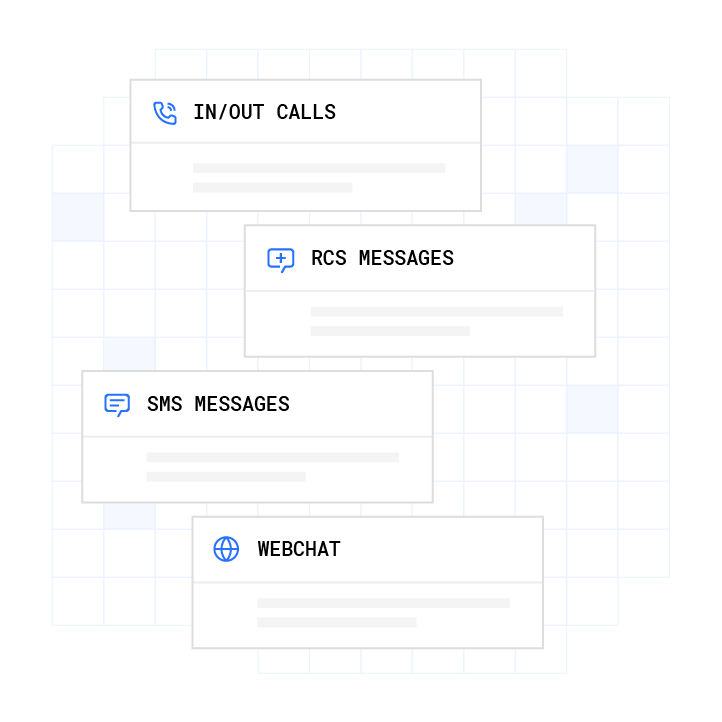
AI-native dialers follow a different architecture. Plura AI is an FCC-licensed carrier that originates voice on its own domestic infrastructure. Branded caller ID is issued at the carrier level. STIR/SHAKEN (Secure Telephone Identity Revisited and Signature-Based Handling of Asserted Information Using Tokens) authentication runs on every outbound call. Real-time DNC scrubbing happens before dial instead of as a separate add-on workflow. The AI Predictive Dialer uses stateful conversion signals to decide who to call next. Every conversation across voice, SMS, RCS (Rich Communication Services), and webchat shares a single Stateful Conversation Database. An agent who texted a lead at 9 a.m. can pick up the call at noon already knowing what was said.
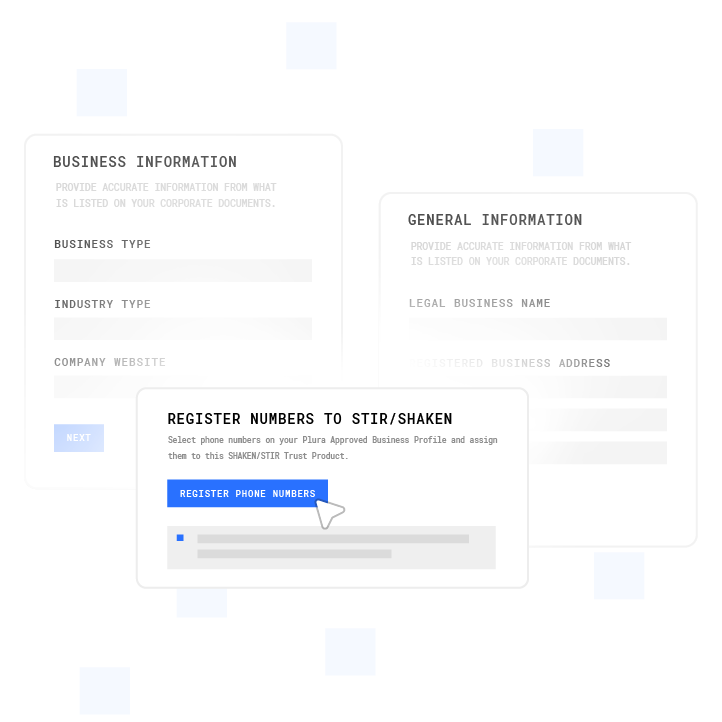
High-volume operators that need AI conversation handling, omnichannel coverage, and U.S.-infrastructure compliance support can use Plura as a VICIdial alternative without trading cost control for capability. The platform runs on 100% U.S. infrastructure by architecture and supports TCPA compliance, DNC compliance, HIPAA, SOC 2, and ISO certification.1 It also delivers 3x average ROI in 90 days for qualifying high-volume operators.3
See the AI-native dialer in production to understand how this model behaves on real traffic.
Comparison: VICIdial vs. Modern Cloud Dialer vs. AI-Native Dialer
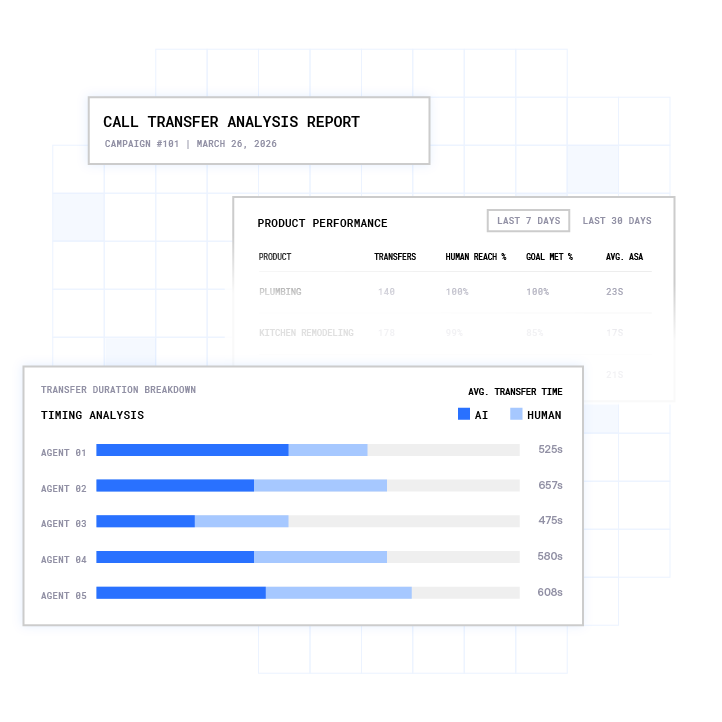
The table below compares the three models across the attributes that drive total cost and capability. Review cost model, setup, dialing control, predictive dialing, native AI, omnichannel, compliance support, maintenance, data ownership, and best-fit profile as a summary of the thresholds and tradeoffs covered above.
| Attribute | VICIdial (Self-Hosted) | Modern Cloud Dialer (CCaaS) | AI-Native Dialer (Plura) |
|---|---|---|---|
| Cost Model | $0 license; $15 to $55 per agent per month all-in at scale with in-house admin | $130 to $250 per seat per month for SaaS alternatives; telecom often billed separately | Per-conversation pricing on owned carrier infrastructure; see plans and rates |
| Setup | 12 to 20 hours initial build; operator owns upgrades, backups, and troubleshooting | Vendor-managed; enterprise implementations run 3 to 6 months with $50,000 to $150,000 in professional services | Days to weeks depending on conversation complexity; Plura manages the build and iterates post-launch |
| Dialing Control | Full access to predictive dialer ratios, hopper sizes, call timing, retry intervals, and AGI scripts; direct MySQL access to 300+ database tables | Managed parameters within vendor-provided guardrails; cannot modify the dialing algorithm or write custom AGI scripts | AI-driven call prioritization using stateful conversion signals; operator configures workflow logic via no-code canvas |
| Predictive Dialing | Adaptive algorithm adjusts dial levels per agent using real-time empirical data; proven at 1,600+ agents handling 6 million calls per day on a single cluster | Vendor-managed predictive dialing; algorithm not operator-configurable on most platforms | AI Predictive Dialer uses historical answer rates and prior negotiation outcomes to prioritize contacts most likely to convert |
| Native AI | AMD only; see the accuracy figure above; full AI requires third-party integration | AI features available as add-ons or consumption-based modules; can add $20 to $40 per agent per month | Native AI conversation handling across voice, SMS, RCS, and webchat on a shared Stateful Conversation Database |
| Omnichannel | Voice, email, and chat natively; SMS and social require third-party integration | Enterprise CCaaS platforms offer true omnichannel routing across voice, chat, email, SMS, and social in a single queue | Voice, SMS, RCS, and webchat on one stateful database; unified inbox for human agents |
| Compliance Support | Operator builds and maintains TCPA, DNC, and STIR/SHAKEN tooling; TCPA violations carry fines of $500 to $1,500 per call | Varies by platform; enterprise CCaaS platforms typically include built-in compliance tooling and pre-certified infrastructure | Plura supports TCPA compliance, DNC compliance, HIPAA, SOC 2, and ISO certification; real-time DNC scrubbing before dial on every outbound contact1 |
| Maintenance | Operator owns all upgrades, patching, backups, and incident response; a 2-hour outage with 50 agents costs $1,500 to $2,500 in idle labor | Vendor-managed; Genesys Cloud CX guarantees 99.99% uptime backed by AWS multi-region infrastructure4 | Plura-managed on U.S. infrastructure; 99.9% uptime SLA with automatic failover |
| Data Ownership | Full data ownership; recordings, leads, and analytics on operator-owned servers; full database dump available on contract termination | Data stored on vendor-managed cloud infrastructure; extraction via API with rate limits and field restrictions | All conversation data on U.S. infrastructure; full conversation transcripts and intent signals accessible via dashboard |
| Best For | 30 to 300+ agents, outbound-heavy, with in-house Linux/Asterisk capability and voice-only or voice-plus-basic-email requirements | 500+ agents, primarily inbound or truly omnichannel, with budget for $130 to $250 per seat per month and no infrastructure management capability | High-volume operators who need AI conversation handling, omnichannel coverage, and U.S.-infrastructure compliance support without building the stack themselves |
Frequently Asked Questions
How Much Does VICIdial Cost?
The software license is $0 under the AGPLv2 open-source license. Total production cost depends on four variables: hosting (sized by agent concurrency, roughly $25 to $250 per month for cloud instances), Linux/Asterisk administration (a staffing cost ranging from $1,500 per month for a part-time contractor to $7,000 or more per month for a full-time in-house admin), telecom (SIP trunking, DIDs, and minutes, typically the single largest recurring line item), and add-ons (DNC scrubbing, caller ID reputation management, recording storage, and compliance tooling). The 50-agent scenario cited above totals approximately $9,512 per month. A 25-agent self-hosted operation runs approximately $3,300 to $6,500 per month all-in. The license is free. The expertise and infrastructure to run it in production are not.
Who Uses VICIdial?
VICIdial fits contact centers from 5 to 500 or more seats running outbound sales, collections, lead generation, political and survey campaigns, and BPO (Business Process Outsourcing) client campaigns. The platform has more than 14,000 installations across 100 countries. The common thread is technical ownership. Every VICIdial deployment requires someone to administer Linux, Asterisk, and the dialer itself, or the operator must rent that expertise from a managed hosting provider. Operators who stay on VICIdial long-term typically sit at or above the 30-agent threshold, have an in-house admin or a contractor on retainer, and run a voice-first workload where deep dialing control and data ownership outweigh the cost of managed infrastructure.
Is VICIdial a Dialer?
VICIdial is an open-source contact center suite that includes a predictive dialer as its core outbound capability. It also includes inbound ACD (Automatic Call Distribution) with skills-based routing, blended campaign functionality, call recording, real-time floor monitoring, agent scripting, and a non-agent API for integrations. The predictive dialer uses an adaptive algorithm that adjusts dial levels per agent using real-time empirical data. It supports true predictive, progressive, ratio, power, and manual dialing modes. The platform runs on Asterisk, an open-source PBX (Private Branch Exchange) engine, on Linux, with MySQL or MariaDB as the database.
What Is VICIdial Used For?
VICIdial is used for high-volume outbound calling operations where cost-per-contact and dialing control are the primary business drivers. Common use cases include outbound sales, debt collections, lead generation, political and survey calling, and BPO operations running client campaigns. It is also used for inbound call handling, including ACD routing, IVR (Interactive Voice Response) call menus, and queue management. The platform was designed outbound-first and has a more utilitarian inbound interface than purpose-built inbound platforms. Operators choose VICIdial for its zero license cost, full data ownership, direct database access, and the ability to configure every dialing parameter without vendor guardrails.
When Does Migrating to a Modern Dialer Pay for Itself?
Migration pays for itself within 12 months when annual savings exceed total migration costs, which typically run $10,000 to $50,000 for a mid-size operation plus two to six weeks of productivity disruption. The clearest signals that migration pencils out include: no Linux admin on staff and no contractor on retainer; an omnichannel requirement that base VICIdial cannot meet without significant custom development; an AI conversation handling requirement; a compliance requirement for pre-certified infrastructure such as SOC 2 or HIPAA; or unpredictable scaling needs that require elastic capacity without infrastructure planning cycles. Below the 30-agent threshold without in-house Linux capability, a managed per-seat platform almost always beats the total cost of self-hosted VICIdial. Above 100 agents with a competent admin on staff and a voice-first workload, VICIdial is typically the cheapest option by a wide margin.
What Cannot VICIdial Do Without Rebuilding the Stack?
Three capabilities require significant engineering work to add to VICIdial. The first is native AI conversation handling, because base VICIdial has no AI conversation layer and operators must integrate third-party speech recognition, language model, and voice synthesis components via AEAP, AudioSocket, or ARI ExternalMedia. The second is true omnichannel routing across voice, chat, email, SMS, and social in a single queue with a unified agent desktop. The third is pre-certified compliance infrastructure for frameworks like SOC 2, HIPAA, or the 2026 regulatory environment covering the FCC NPRM under CG Docket No. 26-52 and state onshoring laws. Each of these capabilities is buildable on VICIdial’s open architecture, but each requires engineering resources and ongoing maintenance that operators must budget for explicitly.
Conclusion: Match Your Dialer to Your Operation
VICIdial fits operators with 30 or more agents, in-house Linux/Asterisk capability, a voice-first workload, and a need for deep dialing control and full data ownership. The license is free, the dialing control is extensive, and at 100 or more agents with a competent admin, the total cost of ownership often beats cloud alternatives by a wide margin.
Migration to a modern cloud dialer pays for itself when you have no Linux admin on staff, need omnichannel or AI conversation handling, require pre-certified compliance infrastructure, or run below the 30-agent threshold where self-managed infrastructure erodes the savings.
High-volume operators who need AI conversation handling, omnichannel coverage, and U.S.-infrastructure compliance support without building the stack themselves can treat Plura AI as the AI-native third option. It is an AI-native dialer built on owned carrier infrastructure, distinct from both VICIdial and traditional CCaaS platforms. Plura is an FCC-licensed carrier running AI voice, SMS, RCS, and webchat on 100% U.S. infrastructure. TCPA compliance, DNC compliance, HIPAA, SOC 2, and ISO certification support are built into the platform’s design.
Run your numbers through Plura’s ROI calculator to check your projected ROI in real time.
Compare Plura’s plans and rates side by side.
Talk to Plura about your operation
1 Plura AI maintains SOC 2, HIPAA, ISO, and GDPR posture as part of its platform infrastructure. References to compliance frameworks in this article describe Plura’s platform capabilities and do not constitute a guarantee that any customer using Plura will themselves be compliant with applicable laws or standards. Customers remain solely responsible for their own regulatory obligations, certifications, consent management, recordkeeping, and the claims they make to their own end users. Consult qualified legal counsel for guidance specific to your use case.
2 This article describes regulatory frameworks at a general level and does not constitute legal advice. Laws and regulations vary by jurisdiction, change over time, and apply differently depending on facts and circumstances. Readers should consult qualified legal counsel before making compliance decisions.
3 Performance figures, customer outcomes, and industry statistics referenced in this article are drawn from cited third-party sources or Plura customer case studies. Individual results vary based on implementation, use case, industry, audience, and execution. Past or aggregate performance is not a guarantee of future results.
4 References to third-party products, services, companies, or research are made for informational and comparative purposes only. Plura AI is not affiliated with, endorsed by, or sponsored by any third party named in this article unless explicitly stated. Trademarks and product names referenced remain the property of their respective owners.
This article is provided for informational purposes only and reflects Plura AI’s understanding at the time of publication. Product capabilities, integrations, and specifications are subject to change. For the most current information, visit plura.ai.
This article was produced with the assistance of AI tools and reviewed by Plura AI prior to publication.