

Written by: Matt Beucler, CEO, Plura AI
Key Takeaways on AI Call Concurrency
- A 24/7 AI phone answering service can handle hundreds or thousands of simultaneous calls when it runs on scalable SIP trunk infrastructure.
- The AI model itself is rarely the bottleneck. Carrier channel capacity, virtual number caps, and speech or LLM provider quotas usually set the ceiling.
- Platforms that rent from third-party CPaaS providers inherit those providers’ concurrency caps. FCC-licensed carriers like Plura AI provision capacity directly.
- Enterprise deployments benefit from owning the carrier stack to reduce busy signals during peak hours and to support consistent FCC and TCPA compliance postures.1,2
Ready to scale without inherited limits? See how Plura AI can handle your call volume.
How Many Calls an AI Receptionist Can Handle at Once
An AI receptionist handles multiple calls simultaneously because each inbound call spins up its own independent cloud instance. Each caller receives a dedicated conversational thread and compute resources with no shared queue or hold line. Response quality stays consistent as volume increases. A human receptionist is physically limited to one call at a time, while an AI receptionist scales with infrastructure.
Platforms including Trillet, Dialzara, and Phonely state unlimited concurrent call handling through cloud-native auto-scaling with no per-line cap.3 This unlimited concurrency means that for typical small-business volumes, the binding constraint shifts from simultaneous capacity to the plan’s monthly minute allowance. Concurrency becomes the operative limit again only at thousands of genuinely simultaneous calls, which moves into contact-center territory.
The practical ceiling usually is not the AI model. Voice AI pilots often run smoothly at 10 concurrent calls but start to fail between 500 and 2,000 concurrent calls. Telephony limits, speech provider rate caps, data sync queues, or compliance rules typically break first, not the language model. The AI is rarely what fails first.
How AI Answering Service Plans Set Concurrency Limits
Published concurrency limits across AI answering service plans usually reflect pricing tiers more than hard technical ceilings. Vendors often advertise tiered limits such as 5, 25, or 100 concurrent calls, even when the underlying infrastructure can support more. Understanding these advertised limits requires examining what actually constrains call capacity in production environments.
What Actually Limits AI Call Handling Capacity
The real constraint on simultaneous calls is the telephony stack underneath the AI, not the AI itself. Every AI phone call moves through three layers. The carrier layer provides the phone number and routing through a SIP trunk. The SIP media layer terminates the call on a media server or Session Border Controller. The AI processing layer handles speech-to-text, large language model processing, and text-to-speech. The carrier layer requires elastic concurrency to handle many simultaneous calls without throttling during AI campaign spikes.
A SIP trunk is the virtual connection between a phone system and a SIP provider’s network. One SIP trunk can carry multiple simultaneous calls, with the exact number depending on the channel capacity purchased from the SIP provider and the available bandwidth on the internet connection. When those channels are consumed, new inbound calls receive a busy signal or drop silently.
Virtual numbers carry their own per-number concurrency caps as anti-fraud measures. A single number placing 200 simultaneous calls can trigger carrier abuse systems, even when the overall SIP trunk has high capacity.
Beyond telephony, provider-side concurrency caps on speech-to-text, text-to-speech, and LLM accounts are often the real ceiling for voice AI scaling, not server capacity. LLM and voice providers commonly impose default concurrency limits of 2 to 60 WebSocket or generation sessions per account or plan tier. When that limit is reached, calls can connect but deliver silence to the caller.
Trunk exhaustion is the most common hard failure trigger in production voice AI. When available SIP trunk channels are consumed, inbound calls receive busy signals or drop silently. Most Twilio-based API resellers inherit Twilio’s channel provisioning and rate limits instead of owning capacity at the carrier level.3
Enterprise Call Capacity When You Own the Carrier Stack
Enterprise-grade AI call answering benefits from owning the carrier stack instead of renting it. Many AI voice platforms operate as wrappers on top of a third-party Communications Platform as a Service, or CPaaS. CPaaS providers such as Twilio supply the API-only telecom layer to AI vendors that do not own their own carrier. Those platforms then inherit the CPaaS provider’s channel caps, rate limits, and compliance posture.
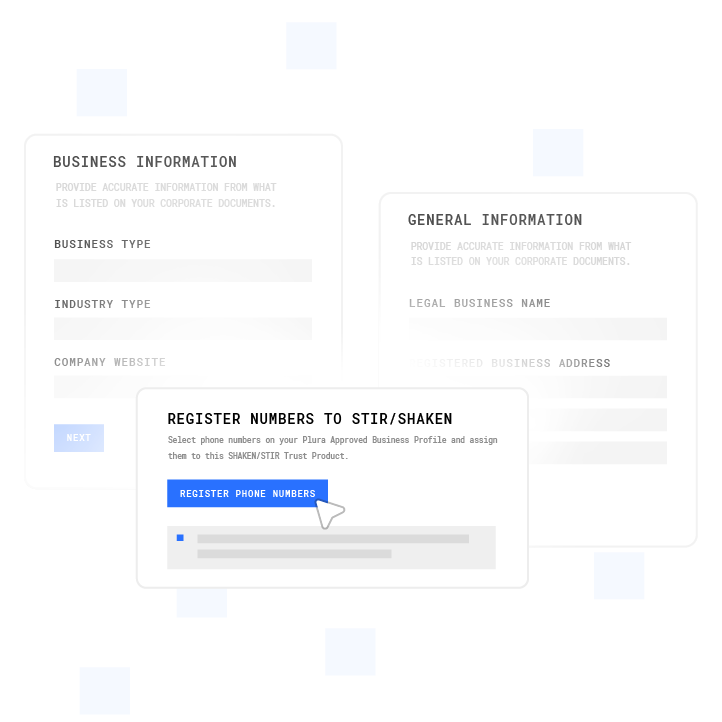
Plura AI operates as an FCC-licensed audio bridging carrier. Voice originates on Plura’s own domestic infrastructure. Plura provisions its own SIP trunk capacity, issues branded caller ID at the carrier level, and enforces STIR/SHAKEN, the FCC caller ID authentication framework under the TRACED Act, on every outbound call without routing through a third-party reseller. There are no inherited channel caps from an upstream CPaaS vendor.
Plura’s infrastructure is 100% U.S.-based by architecture. This design also addresses the FCC’s Notice of Proposed Rulemaking, CG Docket No. 26-52, which proposes restrictions on offshore handling of sensitive consumer data. Voice origination, model hosting, data storage, and call recording all sit on domestic infrastructure.
For high-volume operators running thousands of calls per month, the difference between owning the carrier and renting it appears first in pickup rates. It then appears in compliance posture and in the ability to scale into burst peaks without pre-negotiating capacity weeks in advance.
5-Step Process to Size Your Required Concurrency
This process applies whether you are replacing a human agent team or scaling an existing AI voice agent deployment.
- Assess current volume. Pull inbound call data for the past 90 days. Identify your peak hour, peak day, and any seasonal spikes. Calculate steady-state concurrent calls by dividing average calls per hour by 60 and multiplying by average call duration in minutes. Apply a 3 to 5 times multiplier for service businesses or a 5 to 10 times multiplier for campaign-driven businesses to estimate peak demand.
- Map your telephony channels. Identify every SIP trunk and virtual number in your current stack. Confirm the channel cap on each trunk with your provider. SIP trunk capacity should include at least 30% headroom above measured peak concurrent calls to accommodate seasonal spikes, marketing campaigns, or organic growth without quality degradation. A SIP 503 Service Unavailable response directly indicates that a trunk has reached its channel limit.
- Configure workflows. Build your conversation logic using a no-code workflow builder that supports branching, escalation rules, and TCPA, Telephone Consumer Protection Act, 47 U.S.C. § 227, compliance guardrails. STIR/SHAKEN authentication and TCPA consent logging should run at the platform level, not as a separate add-on.1,2 Confirm that your CRM and webhook endpoints can sustain concurrent API calls at your target volume, because integration throughput frequently becomes the primary bottleneck at high volumes.
- Test concurrency. Plan a voice AI scaling roadmap that progresses through stages.5 Start with 10 to 25 concurrent calls for a pilot. Move to 100 to 250 for early production, then 500 to 1,000 for scaling. Run 2,000 to 5,000 for peak load tests and 10,000 or more for enterprise scale with multi-region redundancy. Run load tests at 1.5 times your expected peak before going live. Monitor for SIP 503 responses, LLM WebSocket errors, and CRM write latency under load.
- Monitor performance. Track abandonment rates, end-to-end latency, and concurrent session counts in real time. The industry benchmark for production voicebot systems is around 680 ms median end-to-end voice-to-voice latency.4 Above 800 ms, conversations start to feel unnatural to callers. Set alerts before abandonment rates approach the 3% abandoned-call rate cap per campaign over a rolling 30-day period under the FCC’s TCPA rules.4
Run your numbers through Plura’s calculator to check your required concurrency and ROI in real time.
Where Concurrency Actually Breaks in Production
The AI model is rarely the failure point. The actual limits come from whichever layer in the stack is weakest. SIP trunk channel caps, per-number virtual number limits, speech provider rate limits, LLM WebSocket session quotas, or CRM API throughput can each set the ceiling. The true concurrency limit equals the lowest cap in the stack, regardless of how high the other limits are.
Platforms built on third-party CPaaS providers inherit that provider’s caps. Thin reseller wrappers built on top of major voice AI vendors often cap concurrent lines at 30 or fewer, even on their highest tier. For contact-center-scale operators running thousands of calls per month, those caps create busy signals during peak hours, which translates directly to missed revenue.
Regulatory constraints also impose hard limits independent of infrastructure.2 The TCPA’s 3% abandonment cap mentioned earlier limits concurrency regardless of available infrastructure capacity. Operators should consult qualified counsel regarding applicable regulatory obligations for their specific use case.
Plura’s FCC-licensed carrier infrastructure removes the third-party CPaaS bottleneck. Channel capacity scales with traffic instead of with a pricing tier negotiated months in advance.
See how Plura’s capacity model compares to your current stack. Run your numbers through Plura’s calculator.
Frequently Asked Questions
Does the AI itself limit how many calls can be handled simultaneously?
The AI model processes each call as an independent session, so the model rarely sets the limit. The constraints that cause busy signals in production usually sit in the telephony layer. SIP trunk channel caps, per-number virtual number limits, and speech provider rate limits on speech-to-text, text-to-speech, and LLM accounts often bind first. Application-layer bottlenecks such as CRM webhook throughput and database connection pools can also become the binding constraint at high volumes. Platforms that own their carrier infrastructure can provision their own channel capacity, while platforms that rent from a third-party CPaaS inherit that provider’s caps.
How many concurrent calls does a typical contact center need to provision?
Required concurrency depends on peak simultaneous calls, not average daily volume. A company handling 500 calls per day with a 3-minute average duration typically requires only 10 to 15 simultaneous SIP channels because most calls spread across the day. A 50-agent call center generating 35 to 45 Erlangs of traffic during the busy hour usually requires 40 to 50 SIP channels to maintain a 1% blocking probability. For AI deployments, apply a 3 to 5 times multiplier to steady-state concurrent call estimates for service businesses, or a 5 to 10 times multiplier for campaign-driven businesses, then add the headroom discussed in the sizing process. Agencies managing 10 to 20 SMB clients typically require effective capacity for 50 to 100 concurrent calls during peak periods.
What is the difference between SIP trunk capacity and platform concurrency limits?
A SIP trunk is the virtual connection between a phone system and a carrier’s network. It carries a defined number of simultaneous calls based on the channel capacity purchased from the SIP provider and the available internet bandwidth. Platform concurrency limits are separate caps imposed by the AI voice platform itself, often tied to pricing tiers. Both limits apply independently. A platform may advertise 100 concurrent calls, but if the underlying SIP trunk only supports 20 channels, the trunk fails first. Operators need to confirm both limits with their provider before scaling.
How does Plura AI handle concurrency at enterprise scale?
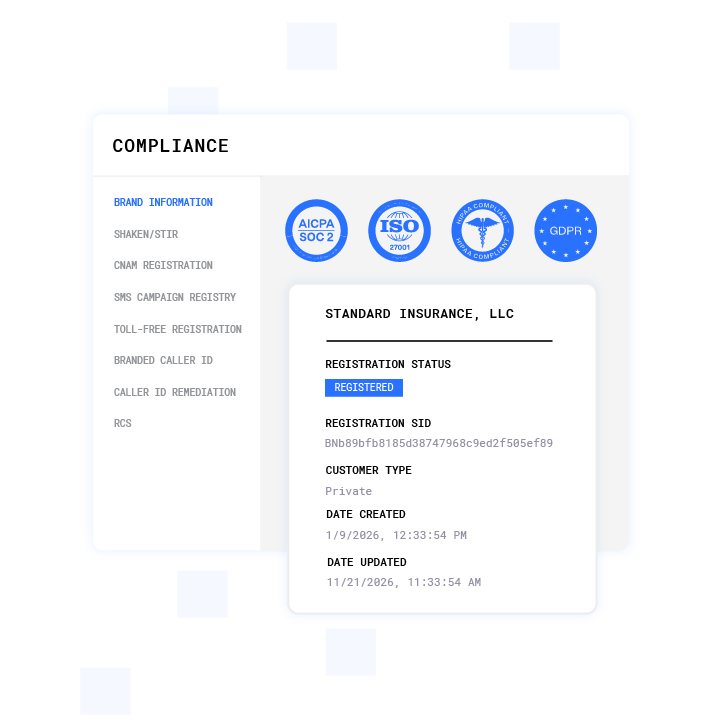
As detailed in the enterprise section above, Plura’s FCC-licensed carrier status means it provisions capacity directly rather than through a CPaaS reseller. Branded caller ID is issued at the carrier level, and STIR/SHAKEN authentication runs on every outbound call. The platform’s compliance engine supports TCPA, DNC, HIPAA, and SOC 2 postures, with real-time DNC scrubbing before every outbound contact and immutable consent records.1,2 Because Plura owns the carrier stack, it provisions channel capacity directly instead of relying on a pre-purchased tier. Operators running thousands of calls per month can scale capacity without the lead times or reseller caps that third-party CPaaS-dependent platforms impose.
What should operators test before going live with a high-volume AI answering deployment?
Before going live, operators should confirm SIP trunk channel capacity against their peak concurrency target with the headroom discussed in the sizing process. They should validate that speech provider accounts have sufficient concurrent session quotas in writing. They should run load tests at 1.5 times expected peak concurrency and stress-test CRM and webhook endpoints at target call volume, including queue backup scenarios. Gradual ramp tests expose memory leaks and connection pool exhaustion. Sudden spike tests expose SIP stack limits and queue overflow. Operators should also confirm that per-number virtual number limits will not trigger carrier anti-fraud systems during outbound campaigns. Any failures observed at 1.5 times peak during testing will appear in production if not resolved beforehand.
Conclusion: Where AI Answering Capacity Really Comes From
The AI is not what limits how many calls a 24/7 AI phone answering service can handle at once. SIP trunk channel caps, virtual number limits, speech provider rate limits, and LLM WebSocket session quotas are the real constraints. Platforms built on third-party CPaaS providers inherit those providers’ caps and pass the bottleneck to the operator. Plura removes that bottleneck by operating as an FCC-licensed carrier on 100% U.S. infrastructure, provisioning its own channel capacity directly rather than through a reseller. For contact-center leaders, agency owners, and franchise operators running thousands of calls per month, that distinction determines whether the system holds at peak or drops calls when volume spikes.
Ready to size your deployment? Run your numbers through Plura’s calculator and see your required concurrency and projected ROI in real time.
1 Plura AI maintains SOC 2, HIPAA, ISO, and GDPR posture as part of its platform infrastructure. References to compliance frameworks in this article describe Plura’s platform capabilities and do not constitute a guarantee that any customer using Plura will themselves be compliant with applicable laws or standards. Customers remain solely responsible for their own regulatory obligations, certifications, consent management, recordkeeping, and the claims they make to their own end users. Consult qualified legal counsel for guidance specific to your use case.
2 This article describes regulatory frameworks at a general level and does not constitute legal advice. Laws and regulations vary by jurisdiction, change over time, and apply differently depending on facts and circumstances. Readers should consult qualified legal counsel before making compliance decisions.
3 References to third-party products, services, companies, or research are made for informational and comparative purposes only. Plura AI is not affiliated with, endorsed by, or sponsored by any third party named in this article unless explicitly stated. Trademarks and product names referenced remain the property of their respective owners.
4 Performance figures, customer outcomes, and industry statistics referenced in this article are drawn from cited third-party sources or Plura customer case studies. Individual results vary based on implementation, use case, industry, audience, and execution. Past or aggregate performance is not a guarantee of future results.
5 This article contains forward-looking statements regarding industry trends, technology adoption, and future capabilities. These statements reflect current expectations and are subject to change. Plura AI undertakes no obligation to update forward-looking statements except as required.
This article is provided for informational purposes only and reflects Plura AI’s understanding at the time of publication. Product capabilities, integrations, and specifications are subject to change. For the most current information, visit plura.ai.
This article was produced with the assistance of AI tools and reviewed by Plura AI prior to publication.