

Written by: Matt Beucler, CEO, Plura AI
Updated July 2026
Key Takeaways for Outbound Leaders
- Single-line dialing (preview or power) keeps a one-to-one agent-to-call ratio, removes abandoned-call risk, and lowers spam-label exposure compared to multi-line dialing.
- Multi-line predictive dialing can push agent talk time to 45 to 50 minutes per hour but introduces structural risk under the TCPA 3% abandoned-call cap and accelerates carrier spam flagging.
- Regulatory and platform changes in 2026, including FCC RMD recertification, the March 2026 NPRM, and iOS 26 on-device screening, have increased the cost and complexity of running traditional multi-line dialers on third-party infrastructure.5
- Plura AI’s AI Predictive Dialer reduces these risks through carrier-owned branded caller ID, real-time DNC and TCPA controls, A-level STIR/SHAKEN attestation, and stateful cross-channel memory shared with SMS, RCS, and webchat.
- Ready to modernize your outbound program? See how Plura’s carrier-grade dialer improves connect rates while supporting compliance controls.
How Single-Line Dialing Works in Daily Operations
Single-line dialing covers two common modes that most outbound teams already know. Preview dialing presents the agent with contact information before the call, which gives the agent a moment to review context and notes. Power dialing automatically calls the next number the instant a call ends or goes to voicemail, which keeps the agent in a steady one-at-a-time rhythm. Both modes keep a strict one-to-one ratio between dials and available agents, which removes the structural abandoned-call problem.
How Multi-Line Predictive Dialing Works
Multi-line dialing, often called parallel or predictive dialing, places two to ten calls at once from a single agent seat and connects the agent only when a live person answers. A predictive dialer uses an algorithm to start dialing before the current call ends and forecasts agent availability based on historical answer rates and average handle time. The Telephone Consumer Protection Act (TCPA, 47 U.S.C. § 227) and the FTC’s Telemarketing Sales Rule (TSR) describe an abandoned call as one where a live person answers and no agent connects within two seconds of the completed greeting. The Do Not Call (DNC) registry and the STIR/SHAKEN caller-ID authentication framework apply to both single-line and multi-line dialing.1
Talk Time Gains vs Dropped-Call Risk
The productivity gap between dialing modes is significant and measurable. Before predictive dialing, outbound agents typically spent 10 to 20 minutes per hour talking to prospects, and predictive dialing increased this to 40 to 52 minutes per hour3 by skipping voicemails, busy signals, and unanswered rings. Progressive single-line dialing usually lands in the middle for talk time, while preview dialing delivers lower talk times but higher call quality.
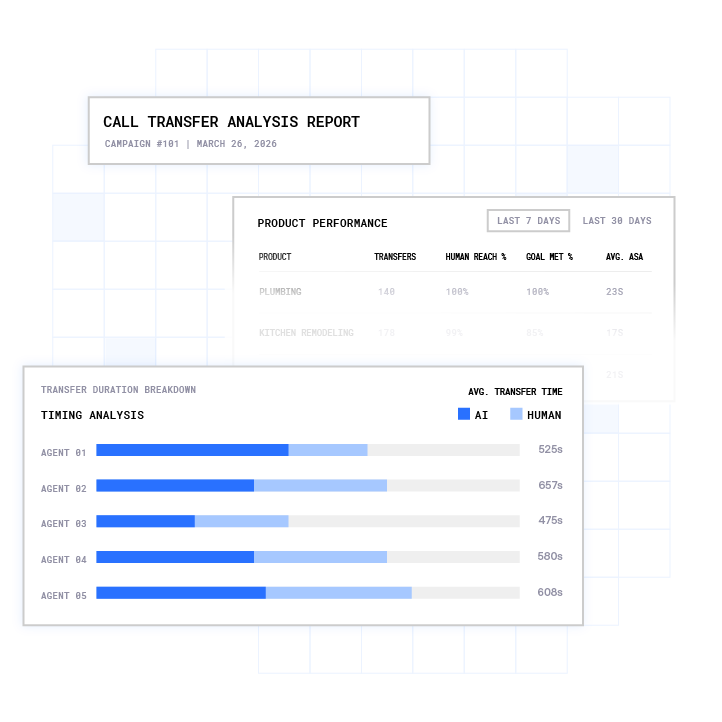
The productivity gain from multi-line dialing carries a structural cost that leaders must factor into planning. Parallel dialers create high simultaneous call volume plus short no-audio drops that carrier reputation analytics interpret as robocaller behavior, which degrades number reputation and triggers “Spam Likely” or “Scam Likely” labels that collapse answer rates. High-volume parallel dialing often reduces connect rates within a few weeks as carriers flag the numbers.
The answer-rate environment has deteriorated sharply over the past decade. Mobile answer rates for unknown U.S. numbers dropped from 25 to 30% in 2015 to 8 to 12% in 2026 due to carrier spam labeling, iOS Silence Unknown Callers, Android equivalents, and STIR/SHAKEN attestation warnings, which reduced predictive dialer connect rates from roughly 250 live conversations per 1,000 numbers to 80 to 120.3
TCPA, DNC, and FCC NPRM Exposure in 2026
These declining answer rates compound the compliance challenges that multi-line dialers already face. The 3% abandoned-call cap is the central compliance constraint for multi-line dialing. Exceeding the 3% abandonment threshold can create TCPA exposure, including potential penalties and class action risk. TCPA cases have produced significant settlements that often involve DNC and consent issues.
The FCC has added new layers of regulatory pressure in 2026 that affect both infrastructure and documentation. In its March 26, 2026 Open Meeting, the FCC adopted a Notice of Proposed Rulemaking that would extend robocall certification requirements to every provider that obtains access to phone numbers, including resellers, and proposed limiting resale of phone numbers to a single level. This infrastructure-focused proposal builds on earlier enforcement measures. The FCC tightened rules for the Robocall Mitigation Database (RMD) effective February 5, 2026, requiring providers to recertify annually by March 1 and report any changes within 10 days, with a $10,000 base fine per violation for false or inaccurate information.
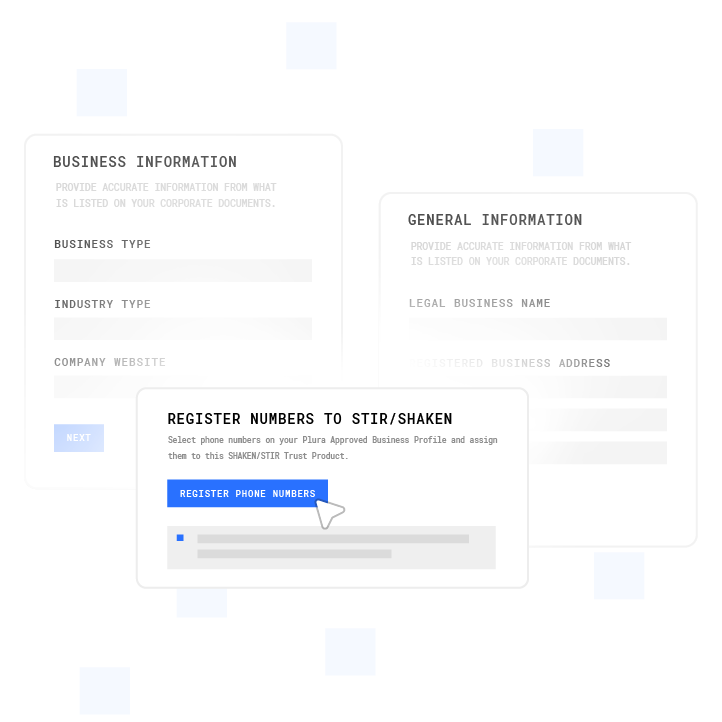
The FCC’s March 2026 NPRM (FCC-26-16) also describes potential call-center onshoring rules and measures that target offshore robocall origination. These proposals remain at the comment stage. Outbound leaders should consult qualified counsel for guidance on how pending rules may relate to their operations.
Spam Labeling and iOS 26 Call-Screening Impact
Carrier spam-labeling systems operate separately from STIR/SHAKEN authentication. Calls can pass STIR/SHAKEN signature verification but still be flagged by carrier analytics based on dialing patterns, reported complaints, or number reputation, because terminating carriers apply their own proprietary scoring on top of the signature check.4
iOS 26 introduced on-device AI screening with live transcripts and three modes (Never, Ask Reason for Calling, Silence) that can silently deliver flagged calls without ringing or notification when Silence Unknown Callers is enabled. The average cold calling success rate dropped from 4.82% in 2024 to 2.3% in 2025, a nearly 50% decline.3
Parallel dialers create audible connection delays when contacts pick up, which drives hangups, blocks, and spam reports, and they generate a high volume of short-duration calls that carriers track as nuisance signals. A flagged number usually experiences a sharp drop in connect rate, and many teams need several weeks to notice the spam labeling and respond.
Run your numbers through Plura’s ROI calculator to quantify what spam-label erosion is costing your outbound program today.
How Plura’s AI Predictive Dialer Changes the Equation
Plura AI’s AI Predictive Dialer runs on Plura’s own FCC-licensed audio bridging carrier, not on a third-party Communications Platform as a Service (CPaaS) layer. That carrier ownership matters for three core operational reasons.
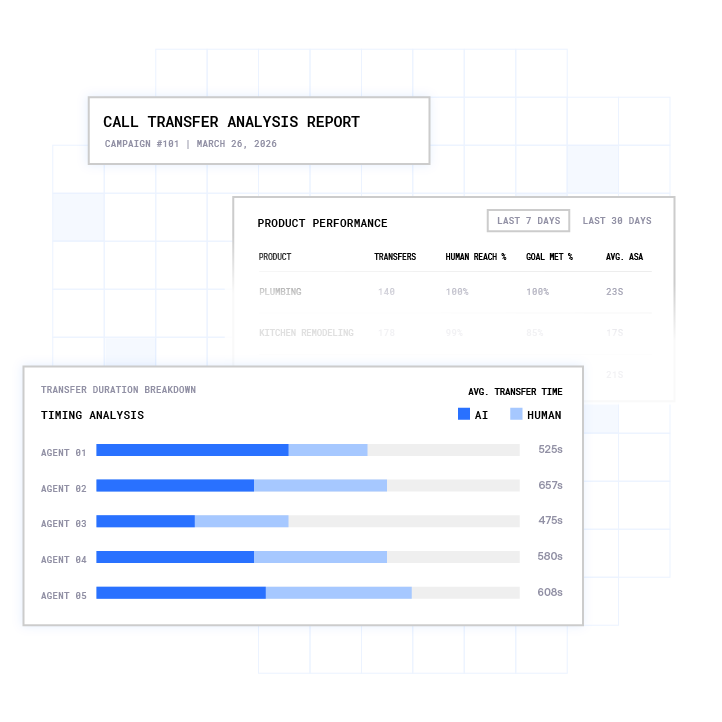
First, branded caller ID is issued at the carrier level. Calls present with the company’s name and the reason for the call instead of an unfamiliar number, which directly addresses the iOS 26 screening problem. Second, STIR/SHAKEN authentication runs on every outbound call at full A-level attestation from Plura’s own infrastructure. Third, real-time DNC scrubbing checks every number against federal and state DNC registries before dial, and TCPA-litigator list filtering runs on every campaign to support compliance controls.
The dialer also shares Plura’s Stateful Conversation Database with AI SMS, AI RCS, and AI Webchat. An agent who texted a lead at 9 a.m. can take the dialer call at noon already knowing what was said, what was offered, and what objections came up. That cross-channel memory does not exist in standalone dialer platforms.
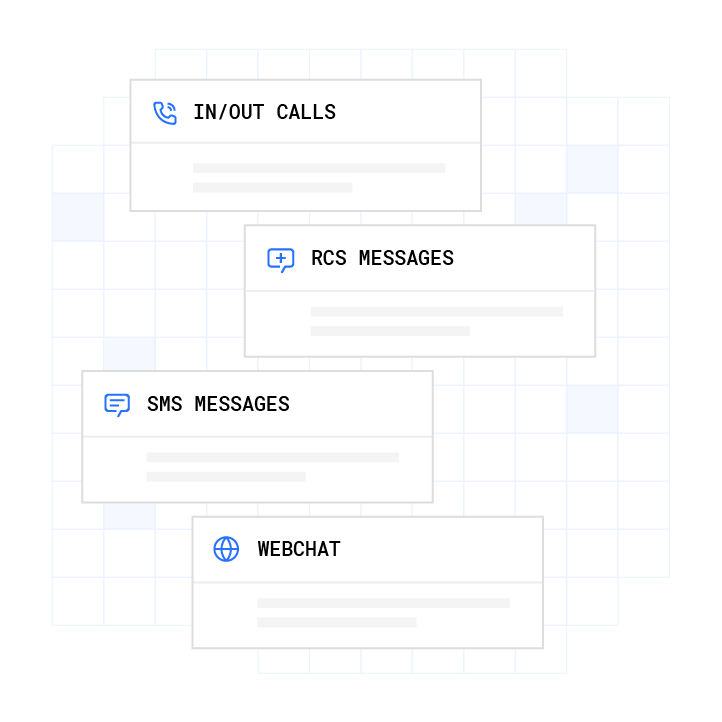
Spam-label remediation occurs at the carrier level instead of through third-party portals. Because Plura owns the carrier stack, number reputation monitoring and remediation live inside the platform rather than as a bolt-on service.
Outbound Use Cases by Lead Type and Volume
| Scenario | Recommended Mode | Rationale |
|---|---|---|
| High-value B2B accounts, relationship-sensitive outreach | Single-line (preview or power) | Call quality matters more than volume, and no predictive algorithm or awkward pauses affect the experience |
| Large B2C cold lists, disposable numbers, volume-first campaigns | Traditional multi-line | Works when numbers are treated as throwaways and reuse is not part of the strategy |
| High-volume outbound with reusable numbers, compliance requirements, and cross-channel follow-up | AI-powered multi-line (Plura) | Carrier-owned branded caller ID, real-time DNC, stateful memory, and spam remediation live in one platform |
Decision Framework for Dialing Strategy
| Dimension | Single-Line | Traditional Multi-Line | AI-Powered Multi-Line (Plura) |
|---|---|---|---|
| Agent talk time per hour | 10 to 40 min (preview to power, consistent with ranges noted above) | 40 to 52 min (predictive, as noted above) | Up to 47 min with AI voicemail detection and live-answer routing (per plura.ai/ai-predictive-dialer) |
| Abandoned-call risk | None, because the one-to-one dial ratio removes the abandonment variable | High, with a need to stay under 3% per 30-day campaign window | Managed through stateful pacing and real-time agent-availability signals |
| Spam-label exposure | Low, with no connection delay and no short-duration drop pattern | High, because parallel dialing is a primary driver of spam flagging in 2026 | Mitigated through carrier-level branded caller ID and STIR/SHAKEN A-attestation |
| Stateful cross-channel memory | Not available in standalone dialers | Not available in standalone dialers | Built in, with a shared Stateful Conversation Database across voice, SMS, RCS, and webchat |
Compliance Controls to Evaluate in Your Stack
| Compliance Control | Single-Line | Traditional Multi-Line | AI-Powered Multi-Line (Plura) |
|---|---|---|---|
| Real-time DNC scrubbing | Must be configured per campaign | Must be configured per campaign | Enforced at carrier level before every dial |
| TCPA consent ledger | Operator-managed | Operator-managed | Timestamped, immutable, and audit-ready by default |
| Quiet-hours enforcement | Must be tied to area-code logic per campaign | Must be tied to area-code logic per campaign | Automatic through time-zone detection on every contact |
| STIR/SHAKEN authentication | Depends on carrier used | Depends on carrier used | A-level attestation on every outbound call through Plura’s FCC-licensed carrier |
Compare Plura’s plans and rates to see which tier aligns with your outbound volume and compliance requirements.
Conclusion: Matching Dialing Mode to Risk and Volume
Single-line dialing protects against abandoned-call exposure and spam-label risk but leaves meaningful agent capacity unused. Traditional multi-line dialing recovers that capacity yet introduces structural compliance risk and speeds up number reputation decay in a carrier environment that now flags high-volume outbound traffic more aggressively.
The 2026 regulatory landscape, including the FCC’s RMD recertification requirements, the March 2026 NPRM proposals, and iOS 26 on-device call screening, has raised the cost of running traditional multi-line dialing on rented infrastructure. Operators that own the carrier stack, issue branded caller ID at origination, and enforce DNC and TCPA controls before each dial sit in a structurally different position than those that rely on third-party CPaaS layers.
Plura’s AI Predictive Dialer is built for that position: carrier-owned, stateful, and designed to support compliance controls as a first-class layer rather than a configuration toggle.
- Cost-focused: Run your numbers through Plura’s ROI calculator to model talk-time gains and cost per connected call against your current dialing setup.
- Capability-focused: Compare plans and rates to find the right tier for your outbound volume.
- Ready to see it live: Book a live demo with Plura and walk through the dialer, compliance controls, and stateful memory in a real session.
Frequently Asked Questions
What is the difference between single-line and multi-line dialing?
Single-line dialing places one call at a time, either waiting for agent review before dialing in preview mode or automatically dialing the next number when a call ends in power mode. Multi-line dialing places two to ten calls at once and connects the agent only when a live person answers. Single-line dialing removes the abandoned-call problem entirely because an agent is always ready when the call connects. Multi-line dialing maximizes agent talk time but generates abandoned calls when multiple recipients answer the same burst, which creates the primary compliance and spam-label risk for this approach.
How does the TCPA abandoned-call rule relate to predictive dialers?
The TCPA and the FTC’s Telemarketing Sales Rule describe an abandoned call as one where a live person answers and no sales representative connects within two seconds of the completed greeting. The FCC caps abandoned calls at 3% of answered calls per campaign over any 30-day period. Predictive dialers generate abandoned calls structurally because they dial more lines than available agents and forecast that some calls will go to voicemail or ring without an answer. When the forecast is wrong and several live answers arrive at once, the excess calls are abandoned. Operators running multi-line dialing programs should consult qualified counsel to understand how these rules relate to their specific campaigns and dialing configurations.
Why do multi-line dialers drive spam labeling, and how can teams reduce that risk?
Carrier analytics engines score phone numbers based on call volume, call duration, early hangup rates, user complaints, and behavioral patterns that resemble robocalling. Multi-line dialers create several signals that these systems flag, including a one-to-two-second connection delay when a live answer routes to an agent, a high volume of short-duration calls when abandoned calls drop, and concentrated call volume from individual numbers. Once a number is flagged, answer rates usually fall sharply and the flag can spread to other numbers in the same pool through shared behavioral patterns. Mitigation strategies include distributing volume across a larger number pool, using branded caller ID registered at the carrier level, maintaining STIR/SHAKEN A-level attestation, and monitoring number reputation continuously. Plura addresses this at the infrastructure level by issuing branded caller ID directly through its FCC-licensed carrier instead of through a third-party reseller.
What does iOS 26 call screening mean for outbound dialing programs?
iOS 26 introduced on-device AI call screening that can intercept unfamiliar calls before they ring through, deliver them silently, or prompt the caller to state a reason for calling. The screening layer integrates with carrier analytics data, so numbers already flagged as spam by carrier systems face a compounding disadvantage because the call may not ring at all on iOS 26 devices with Silence Unknown Callers enabled. For outbound programs, this shift means that number reputation management and branded caller ID now influence whether a call rings or is silently discarded. Plura’s carrier-level branded caller ID communicates with the iOS 26 screening layer so calls can present a recognizable identity instead of an unknown number.
When does an AI predictive dialer make more sense than a single-line power dialer?
An AI predictive dialer becomes the stronger choice when the operation runs high daily call volumes, uses a large contact list with varied answer rates, and has infrastructure that can manage abandoned-call rates and number reputation continuously. The talk-time advantage of multi-line dialing, up to 45 to 50 minutes per hour versus roughly 30 to 40 minutes for single-line modes, compounds significantly at scale. A single-line power dialer fits better for relationship-sensitive B2B outreach where call quality and personalization matter more than raw volume, or for smaller teams where the overhead of managing a predictive dialer’s pacing ratio does not match the volume. The key variable in 2026 is not just talk time but whether the dialing infrastructure can maintain number reputation and support compliance controls at the volume the operation requires.
1 Plura AI maintains SOC 2, HIPAA, ISO, and GDPR posture as part of its platform infrastructure. References to compliance frameworks in this article describe Plura’s platform capabilities and do not constitute a guarantee that any customer using Plura will themselves be compliant with applicable laws or standards. Customers remain solely responsible for their own regulatory obligations, certifications, consent management, recordkeeping, and the claims they make to their own end users. Consult qualified legal counsel for guidance specific to your use case.
2 This article describes regulatory frameworks at a general level and does not constitute legal advice. Laws and regulations vary by jurisdiction, change over time, and apply differently depending on facts and circumstances. Readers should consult qualified legal counsel before making compliance decisions.
3 Performance figures, customer outcomes, and industry statistics referenced in this article are drawn from cited third-party sources or Plura customer case studies. Individual results vary based on implementation, use case, industry, audience, and execution. Past or aggregate performance is not a guarantee of future results.
4 References to third-party products, services, companies, or research are made for informational and comparative purposes only. Plura AI is not affiliated with, endorsed by, or sponsored by any third party named in this article unless explicitly stated. Trademarks and product names referenced remain the property of their respective owners.
5 This article contains forward-looking statements regarding industry trends, technology adoption, and future capabilities. These statements reflect current expectations and are subject to change. Plura AI undertakes no obligation to update forward-looking statements except as required.
This article is provided for informational purposes only and reflects Plura AI’s understanding at the time of publication. Product capabilities, integrations, and specifications are subject to change. For the most current information, visit plura.ai.
This article was produced with the assistance of AI tools and reviewed by Plura AI prior to publication.