

Written by: Matt Beucler, CEO, Plura AI
Key Takeaways for 2026 Contact Center Leaders
- Four vendor tiers define the 2026 contact center AI market, and each tier carries distinct regulatory exposure, TCO, and containment ceilings.
- The FCC’s March 2026 NPRM (FCC 26-16) and related legislation are reshaping vendor viability by capping offshore routing and tightening rules around U.S.-based handling of sensitive data.2
- Most AI voice tools depend on third-party CPaaS providers and lack carrier ownership, which creates compliance liabilities under the new regulatory framework.
- AI-native, carrier-owned platforms like Plura AI deliver 100% U.S. infrastructure, real-time DNC enforcement, and stateful cross-channel memory that other tiers do not provide.
- Evaluate your compliance and cost requirements today, and book a live demo with Plura AI to see the carrier-owned tier in action.
The 2026 Regulatory and Infrastructure Shift
Three converging forces are reshaping which contact center AI vendors remain viable for U.S. high-volume operators in 2026.
First, the FCC voted unanimously on March 26, 2026 to launch a new rulemaking proceeding via Notice of Proposed Rulemaking FCC 26-16 (CG Docket No. 26-52), targeting offshore call center operations and customer service standards. The NPRM proposes capping the percentage of customer service calls that FCC-regulated communications providers may route to foreign call centers, and it proposes that calls involving sensitive customer information such as payment data, account credentials, and personal identification be handled exclusively by U.S.-based agents or infrastructure. Operators evaluating vendors should consult qualified counsel on their specific exposure under this proceeding.2
Second, companion federal legislation extends the regulatory perimeter. The Keep Call Centers in America Act (S.2495) and the Foreign Robocall Elimination Act (S.2666) are active in the 119th Congress, creating a federal baseline for offshore restrictions. State-level laws in New York, New Jersey, Connecticut, Missouri, and Florida already impose stricter requirements on offshore handling of medical, financial, and consumer data, with penalties reaching $10,000 per day in some jurisdictions. Operators therefore face compliance obligations at both the federal and state level, and state penalties may apply even when federal rules are satisfied.
Third, most AI voice tools on the market today are API resellers built on top of third-party CPaaS (Communications Platform as a Service) providers. They do not own the carrier, cannot issue branded caller ID at the carrier level, and cannot guarantee 100% U.S. infrastructure by architecture. Under the FCC NPRM’s proposed foreign-infrastructure prohibitions, that dependency becomes a compliance liability, not just a performance limitation.
The result is clear. Vendor selection in 2026 functions as a regulatory decision as much as a technology decision.
See how Plura’s carrier-owned infrastructure addresses the FCC NPRM’s proposed restrictions in a live demo.
Who Are the Major AI Vendors?
The contact center AI vendor landscape in 2026 organizes into four tiers. Each tier addresses a different operational problem and carries a different compliance and infrastructure profile. The table below maps each tier to its primary use case and infrastructure model, the two dimensions that shape regulatory exposure under the FCC NPRM.
| Tier | Primary Use Case | Infrastructure Model |
|---|---|---|
| Legacy CCaaS | Human-agent workflow management with AI assist layers added post-architecture | Multi-tenant cloud, third-party telecom |
| Real-Time Agent Assist | Reducing average handle time and after-call work for live agents | SaaS overlay on existing telephony |
| Voice-First Autonomous | Inbound deflection and outbound qualification via AI voice | CPaaS-dependent (typically Twilio), no owned carrier |
| AI-Native, Carrier-Owned | Full omnichannel conversation automation across voice, SMS, RCS, and webchat on owned telecom infrastructure | FCC-licensed carrier, 100% U.S. infrastructure by architecture |
Each tier in the table above represents a different architectural approach to contact center AI. Legacy CCaaS platforms such as Five9 were designed for human agents and have added AI capabilities on top of existing architecture.4 Plura deploys in days versus the 3-6 months typical of legacy CCaaS migrations, with real-time data enrichment from 30+ sources embedded in every conversation.
Voice-first autonomous platforms such as Vapi and Synthflow operate as software layers on third-party telecom.4 Synthflow depends on Twilio infrastructure and operates without a carrier license, while Vapi is developer-first with limited compliance infrastructure and no stateful cross-channel memory. Bland AI requires approximately $10,000 upfront to build a single conversation before the platform engages, with a build-and-forget delivery model.
The AI-native, carrier-owned tier is where Plura AI operates. This tier is the only one that owns the full stack from FCC-licensed carrier through stateful conversation database through compliance enforcement.
The 30% Offshore Rule
The FCC NPRM described earlier proposes a cap on the percentage of customer service calls that FCC-regulated communications providers may route to foreign call centers. The proceeding cites poor service quality, communication barriers, and data security risks from offshore outsourcing as the basis for the proposed cap.
It also proposes that calls involving sensitive customer information, including payment data, account credentials, and personal identification numbers, be handled exclusively by U.S.-based agents or infrastructure. The rationale cited is foreign law and national security risk.
The $400 billion offshore BPO industry, concentrated in the Philippines, India, and Latin America, faces direct exposure under this proceeding. Every contract a covered entity holds with an offshore vendor that handles sensitive consumer data is a potential compliance liability pending the final rule. Operators should consult qualified counsel to assess their specific exposure. The FCC’s public comment record for CG Docket No. 26-52 is available at FCC.gov.
Plura runs on 100% U.S. infrastructure by architecture. Voice origination, model hosting, data storage, and call recording all sit on domestic infrastructure, not by promise but by design.
The 80/20 Call-Center Rule and AI Economics
The FCC NPRM addresses where contact center infrastructure can sit, and the 80/20 rule explains why AI is replacing that infrastructure in the first place. The 80/20 dynamic in contact center economics refers to the labor utilization problem: human agents in traditional contact centers spend roughly 40% of their paid hours in actual talk time. The remaining 60% covers hold, after-call work, idle queue time, and administrative overhead. For a 100-seat contact center, traditional operations cost $4 million to $7 million annually, with labor accounting for 50-70% of total cost.3
AI agents operate at 100% talk utilization because they eliminate the three largest sources of non-productive time in traditional contact centers: idle queue, after-call work overhead, and the recruiting and training cycle tied to benefits and turnover cost. For a 50-seat equivalent contact center, traditional offshore operations cost $35,000-$50,000 monthly, while AI contact centers cost $8,000-$15,000 monthly.
Run your numbers through Plura’s calculator to check your ROI in real time.
The utilization gap compounds at scale. AI agents can resolve interactions end-to-end for under $1 per resolution, compared to a McKinsey benchmark of $7.16 for the average inbound call.3 Contact centers carry 30-45% annual agent turnover, with each replacement costing $10,000-$20,000 to recruit, train, and bring to productivity. AI removes that turnover cycle from the cost structure.
Regulatory Filter Table
The table below compares the three primary vendor tiers across the regulatory dimensions most affected by the FCC NPRM and companion legislation: offshore exposure, DNC enforcement, and U.S. infrastructure guarantees. These three dimensions determine whether a vendor can operate under the proposed rules without architectural changes.
| Regulatory Dimension | Legacy CCaaS / Offshore BPO | CPaaS-Dependent AI Voice | AI-Native, Carrier-Owned (Plura) |
|---|---|---|---|
| FCC NPRM Offshore Exposure (CG Docket No. 26-52) | High: offshore routing and foreign infrastructure dependencies create direct exposure under the proposed cap and sensitive-data restrictions | Medium-High: foreign infrastructure dependencies in CPaaS layer may trigger foreign-infrastructure prohibitions in the final rule | Low: 100% U.S. infrastructure by architecture, with voice origination, model hosting, data storage, and call recording on domestic infrastructure |
| Real-Time DNC Enforcement | Varies: typically a bolt-on or manual process, not enforced at the carrier level | Varies: DNC scrubbing is a software layer, not a carrier-level control | Enforced at the carrier level before every outbound contact via Plura’s compliance engine, including integration with The Blacklist Alliance’s TCPA Litigation Firewall |
| 100% U.S. Infrastructure | No: offshore BPOs operate on foreign infrastructure by definition, and legacy CCaaS may use global CDN routing | No: CPaaS providers such as Twilio route traffic through global infrastructure | Yes: FCC-licensed audio bridging carrier, with all four channels on U.S. infrastructure |
Will AI Replace Call Centers?
AI will not replace call centers entirely, but it is restructuring the economics and staffing model of every contact center operating at scale. The evidence from 2026 deployments points to a hybrid model as the operational standard. The table below shows 2026 production containment rates across three interaction tiers, which illustrates where AI handles resolution autonomously and where human agents still add value.
| Interaction Type | AI Containment Rate (2026 Production Data) | Human Role |
|---|---|---|
| Tier 1: FAQs, order status, appointment confirmation, account inquiries | 65-77% containment in hybrid deployments3 | Escalation handling for exceptions |
| Tier 2: Complex issue resolution, multi-step troubleshooting | 70-85% containment with agentic AI | High-emotion, authority, and compliance-sensitive cases |
| Tier 3: Sales, upsell, complex negotiation | AI handles qualification and warm transfer, human closes | Selling new products (61%), upselling during service (59%) |
Metrigy research indicates that 85% of organizations now deploy a combination of human agents and AI agents, and that 82% of interactions in contact centers involve voice at some stage. Salesforce’s State of Service research found that 30% of service cases were resolved by AI in 2025, with that share expected to reach 50% by 2027.4,5 The decision for contact center leaders centers on which vendor tier delivers the containment rate, compliance posture, and TCO their operation requires.
Vendor Comparison Table
The table below compares the three vendor tiers across the four capabilities that determine operational performance in high-volume contact centers: containment rate, handoff quality, compliance enforcement, and U.S. infrastructure. These four dimensions map directly to the TCO and regulatory exposure questions contact center leaders face in 2026.
| Capability | Legacy CCaaS Tier | CPaaS-Dependent AI Voice Tier | AI-Native, Carrier-Owned Tier (Plura) |
|---|---|---|---|
| Containment Rate | Up to 85% for specialized bots in defined workflows | 65-80% on routine inbound queries | AI-native architecture supports agentic containment, and the Stateful Conversation Database enables context-aware resolution across channels |
| Handoff Quality | Warm transfer with CRM data, with context depth varying by integration | Cold or warm transfer, with context limited to a single-channel session | Warm transfer with full cross-channel conversation history, so the human agent sees the same memory the AI held |
| Compliance Enforcement | Bolt-on or manual, not enforced at carrier level | Software-layer DNC scrubbing, with no carrier-level control | Real-time DNC scrubbing, TCPA consent logging, quiet-hours enforcement, and STIR/SHAKEN authentication at the carrier level via Plura’s compliance engine |
| U.S. Infrastructure | Varies, with global CDN routing common | No, because the CPaaS layer routes through global infrastructure | 100% U.S. by architecture, with an FCC-licensed audio bridging carrier |
Compare plans and rates side by side at plura.ai/pricing.
Plura AI: AI-Native, Carrier-Owned Tier
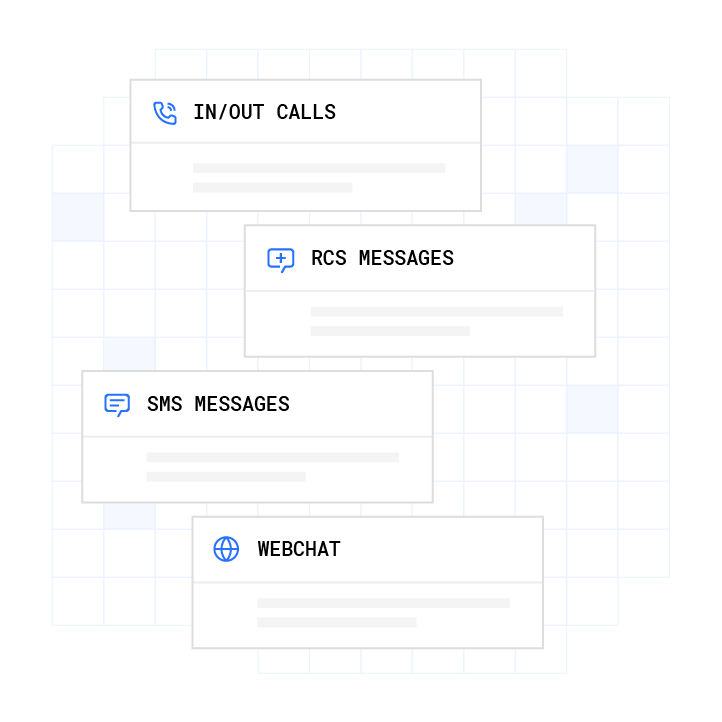
Plura AI is an FCC-licensed platform of AI agents that runs voice, SMS, RCS, and webchat conversations on 100% U.S. infrastructure. It is not a wrapper on top of Twilio or another CPaaS. Plura owns the full stack: the FCC-licensed audio bridging carrier, the branded caller ID layer, the real-time DNC and TCPA compliance engine, and the Stateful Conversation Database that holds context across every channel.
The operational impact shows up in every interaction. A customer who received an AI SMS at 9 a.m. is the same customer when the AI voice agent calls at noon. The agent already knows what was said, what was offered, and what is still open. No other tier of vendor preserves that context across channels by default.
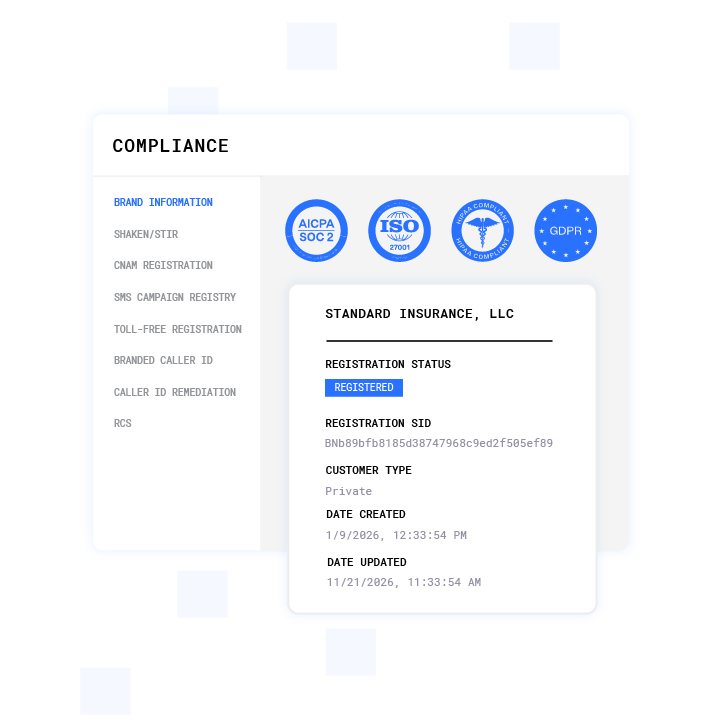
Plura’s AI Predictive Dialer uses stateful conversion signals to prioritize outbound contacts by historical answer rates and prior negotiation outcomes, with calls flowing over the FCC-licensed carrier with branded caller ID and STIR/SHAKEN authentication. The compliance engine checks every outbound contact against federal and state DNC registries in real time before dial, with TCPA consent records that are timestamped, immutable, and audit-ready. Plura supports compliance with SOC 2, HIPAA, ISO certification, GDPR, STIR/SHAKEN caller ID verification, TCPA compliance, and DNC compliance.1 Customers remain responsible for their own regulatory obligations and certifications.
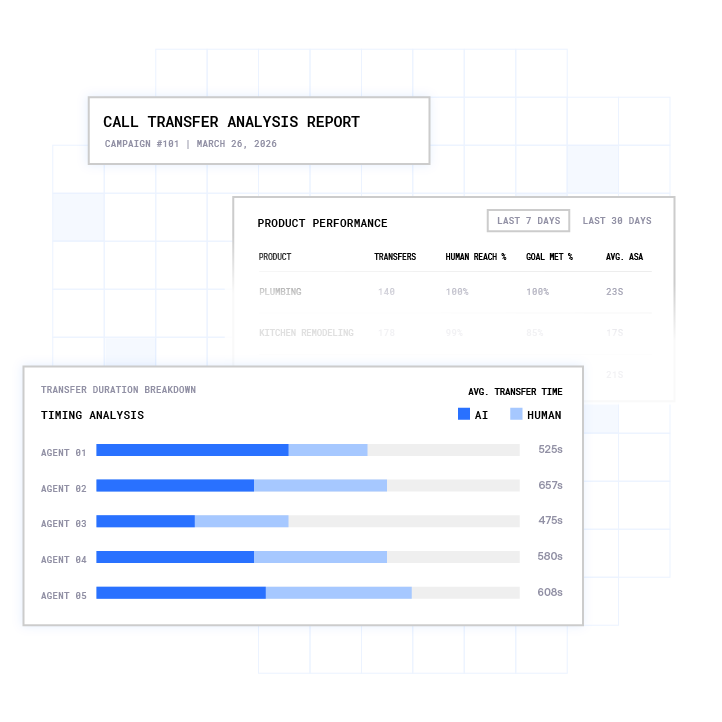
TCO for a Plura deployment runs $300,000-$700,000 annually, replacing the $4M-$7M traditional contact-center cost structure on equivalent volume. The ROI calculator at plura.ai/calculator models the savings for your specific headcount and volume. Agent build fees are $2,500-$2,750 per agent, and every annual contract includes a 90-day opt-out window so leaders can measure outcomes against real performance.
Schedule a demo to see Plura’s Stateful Conversation Database and compliance engine in production.
Frequently Asked Questions
What is the difference between an AI contact center and a traditional CCaaS platform?
A traditional CCaaS (Contact Center as a Service) platform is designed to route and manage interactions for human agents, with AI capabilities added on top of that architecture. An AI contact center is built from the ground up for AI agents to handle conversations autonomously, with human escalation as the exception rather than the default. The architectural difference matters operationally. AI-native platforms embed enrichment, routing, and compliance enforcement into the conversation itself, while legacy CCaaS platforms layer those capabilities onto a human-agent workflow that was never designed for autonomous resolution. The practical result is a difference in containment rate, deployment speed, and TCO. AI-native platforms typically deploy in days to weeks, while legacy CCaaS migrations run 8-16 weeks at minimum.
How does Plura support compliance with TCPA, DNC, and HIPAA?
Plura’s compliance engine is a first-class layer of the platform, not a bolt-on. Every outbound contact is checked against federal and state DNC registries in real time before dial. TCPA consent records are timestamped, immutable, and exportable for audit. Quiet-hours rules enforce automatically through time-zone detection. HIPAA-aligned encryption, access controls, and audit logging cover protected health information across all four channels. Plura’s compliance posture, described earlier in the article, covers SOC 2, HIPAA, ISO, GDPR, STIR/SHAKEN, TCPA, and DNC.1 Customers are responsible for their own regulatory obligations and should consult qualified counsel on their specific compliance posture.
What does it mean that Plura is an FCC-licensed carrier, and why does it matter for vendor selection?
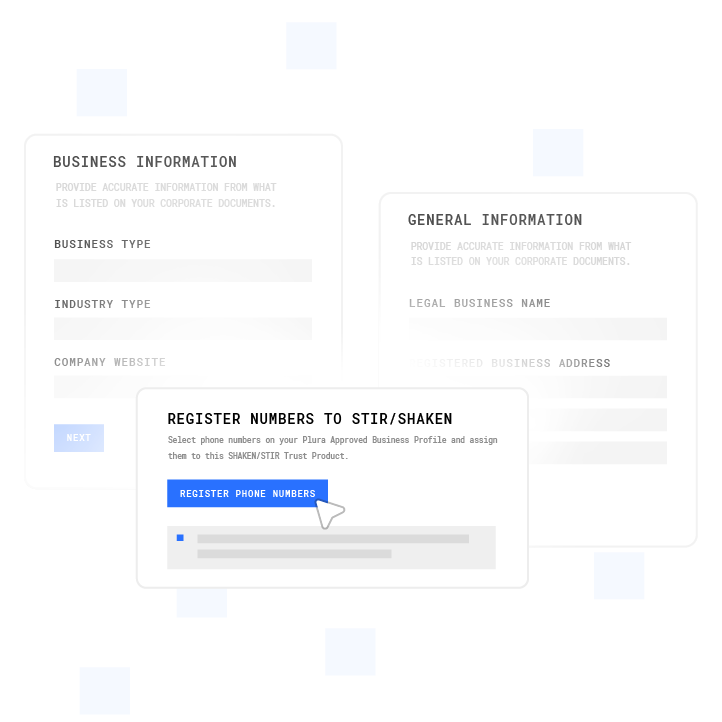
Most AI voice platforms are software layers built on top of a third-party CPaaS provider such as Twilio. They rent the telecom infrastructure underneath their product. Plura is its own FCC-licensed audio bridging carrier, which means voice originates on Plura’s domestic infrastructure. The practical consequences are straightforward. Branded caller ID is issued at the carrier level rather than bolted on. STIR/SHAKEN authentication runs at origination. Real-time DNC scrubbing is enforced before the call leaves the carrier. 100% U.S. infrastructure is a structural fact, not a contractual promise. Under the FCC NPRM (CG Docket No. 26-52), platforms with foreign infrastructure dependencies face potential compliance exposure that carrier-owned platforms do not. Operators evaluating vendors should ask each vendor to specify where voice origination, model hosting, data storage, and call recording physically reside.
What omnichannel workflows does Plura support, and how does context carry across channels?
Plura runs AI voice agents, AI SMS, AI RCS, and AI webchat on a single Stateful Conversation Database. Every interaction across all four channels is keyed to a customer token, such as phone number, email, or ID, and persisted in one place. When a customer texts at 9 a.m. and receives a call at noon, the voice agent already holds the full context of the SMS conversation, including what was offered, what was accepted, what objections were raised, and what is still open. The no-code workflow builder at plura.ai/managed-workflows lets operators design conversation logic that branches on real-time enrichment results and references prior interaction history at every node. The Unified Inbox gives human agents the same cross-channel view the AI holds, so escalations do not require the customer to repeat themselves.
How should contact center leaders evaluate ROI before committing to an AI vendor?
The most reliable ROI model starts with three inputs: current cost per contact, current talk utilization rate for human agents, and monthly contact volume. Human agents in traditional contact centers typically operate at 40% talk utilization, while AI agents operate at much higher utilization. The gap between those utilization rates, multiplied by your loaded hourly cost, forms the baseline savings before any containment rate is applied. From there, apply a realistic containment rate for your interaction type. Routine Tier 1 inquiries such as order status, FAQs, and appointment confirmation achieve 65-77% containment in production hybrid deployments, while complex multi-step interactions run lower. Plura’s ROI calculator at plura.ai/calculator models this for your specific headcount and volume. IDC research found an average return of $3.50 for every $1 invested in AI. The 90-day opt-out window in every Plura annual contract means the deployment is measured against real outcomes, not projected ones.
Conclusion
The 2026 contact center AI vendor landscape has four tiers, and the tier you select determines your regulatory exposure, your TCO, and your containment ceiling. Legacy CCaaS platforms carry the cost structure and offshore dependencies that the FCC NPRM (CG Docket No. 26-52) is designed to address. CPaaS-dependent AI voice tools inherit foreign infrastructure risk from the telecom layer they rent. The AI-native, carrier-owned tier, where Plura operates, is the only tier that eliminates offshore exposure by architecture, enforces compliance at the carrier level, and holds conversation context across voice, SMS, RCS, and webchat in a single stateful database.
The economics are documented. TCO of $300,000-$700,000 replaces $4M-$7M traditional contact-center cost structures on equivalent volume. AI agents run at high talk utilization with no turnover, no ramp time, and no offshore exposure. The regulatory window for deferring that decision is closing.
- Compare plans and rates side by side at plura.ai/pricing.
- Run your numbers through Plura’s calculator to check your ROI in real time at plura.ai/calculator.
1 Plura AI maintains SOC 2, HIPAA, ISO, and GDPR posture as part of its platform infrastructure. References to compliance frameworks in this article describe Plura’s platform capabilities and do not constitute a guarantee that any customer using Plura will themselves be compliant with applicable laws or standards. Customers remain solely responsible for their own regulatory obligations, certifications, consent management, recordkeeping, and the claims they make to their own end users. Consult qualified legal counsel for guidance specific to your use case.
2 This article describes regulatory frameworks at a general level and does not constitute legal advice. Laws and regulations vary by jurisdiction, change over time, and apply differently depending on facts and circumstances. Readers should consult qualified legal counsel before making compliance decisions.
3 Performance figures, customer outcomes, and industry statistics referenced in this article are drawn from cited third-party sources or Plura customer case studies. Individual results vary based on implementation, use case, industry, audience, and execution. Past or aggregate performance is not a guarantee of future results.
4 References to third-party products, services, companies, or research are made for informational and comparative purposes only. Plura AI is not affiliated with, endorsed by, or sponsored by any third party named in this article unless explicitly stated. Trademarks and product names referenced remain the property of their respective owners.
5 This article contains forward-looking statements regarding industry trends, technology adoption, and future capabilities. These statements reflect current expectations and are subject to change. Plura AI undertakes no obligation to update forward-looking statements except as required.
This article is provided for informational purposes only and reflects Plura AI’s understanding at the time of publication. Product capabilities, integrations, and specifications are subject to change. For the most current information, visit plura.ai.
This article was produced with the assistance of AI tools and reviewed by Plura AI prior to publication.