
Written by: Matt Beucler, CEO, Plura AI | Last updated: August 25, 2026
Key Takeaways for Healthcare Leaders
- AI appointment booking in healthcare uses Plura AI voice agents to handle patient scheduling 24/7 with direct EHR integration and real-time confirmations.
- Practices using AI scheduling can achieve up to 40% improvement in no-show rates while cutting front-desk minutes per patient by 60-80%.3
- Plura owns its FCC-licensed carrier stack, enabling SHAKEN/STIR caller ID verification, TCPA compliance, and DNC compliance at the network level.1
- Voice-first AI agents outperform chatbot-only platforms by handling the majority of patient phone interactions with real-time bidirectional EHR booking capabilities.
- Book a live demo with Plura AI to see the 5-step workflow running against a live EHR sandbox.
Why Doctors Are Moving Scheduling to AI
No-show rates across U.S. outpatient clinics average around 23% but range from 5% to 30% depending on specialty, patient population, and other factors, costing the healthcare system an estimated $150 billion annually.3 Each missed appointment averages $200 or more in lost revenue.3 An independent physician practice can lose roughly $150,000 per year to no-shows alone.3
Plura AI voice agents answer every call on the first ring and write confirmed bookings directly to the EHR. Practices using layered reminders with conversational AI scheduling can achieve up to 40% improvement in no-show rates. Plura supports customer compliance and does not absolve customers of their own obligations.
Beyond no-shows, front-desk staffing costs compound the operational burden. AI scheduling and intake tools can cut front-desk minutes per patient by 60 to 80% for repetitive booking and confirmation tasks. Staff can then focus on higher-complexity work such as clinical questions and financial counseling. AI contact centers provide 24/7/365 availability compared to business hours plus shifts for traditional operations, closing the after-hours gap that drives missed scheduling opportunities.
Book a live demo with Plura to see the 5-step workflow running against a live EHR sandbox.
AI Appointment Architecture That Protects Control
The most defensible architecture for healthcare AI appointment booking owns its FCC-licensed carrier stack so compliance enforcement happens at origination, not as a bolt-on. Plura runs on 100% U.S. infrastructure and shares stateful memory across voice and SMS channels. This architecture enables SHAKEN/STIR caller ID verification, TCPA compliance, and DNC compliance on every outbound contact.
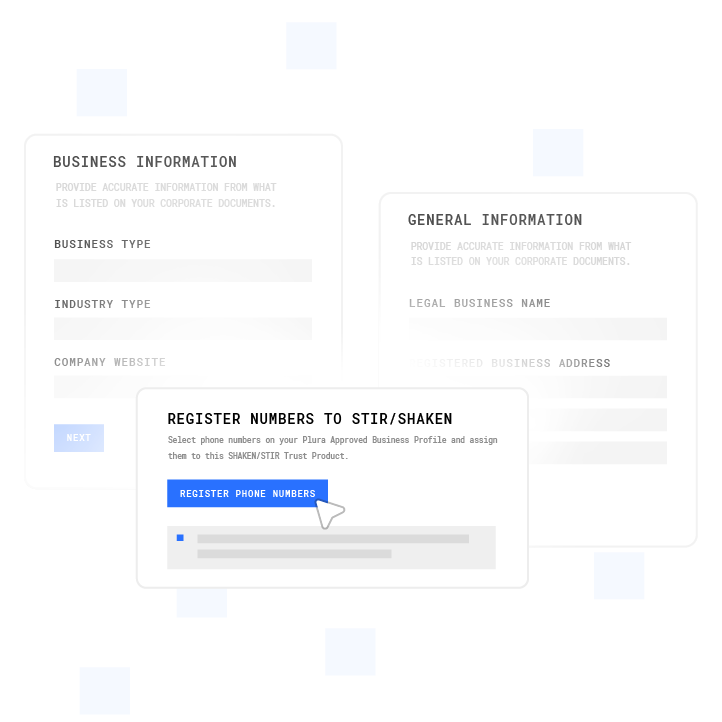
Most AI voice platforms in this category are API resellers built on top of third-party CPaaS (Communications Platform as a Service) providers. Plura owns its telecom infrastructure and holds an FCC carrier license, whereas platforms that depend on third-party carriers operate as a software layer without a carrier license. That distinction matters for branded caller ID issuance, real-time DNC scrubbing, and the ability to enforce compliance before a call leaves the network.
Plura uses stateful AI architecture that remembers previous interactions, preferences, and outcomes across channels, so a patient who texted at 9 a.m. is the same patient when the call comes at noon. The patient does not need to re-introduce themselves or repeat intake questions.
The healthcare AI voice agents market was valued at $468 million in 2024 and is projected to reach $3.18 billion by 2030 at a 37.8% CAGR, with North America accounting for over 55% of global healthcare AI voice agents revenue in 2024.4 Appointment scheduling, rescheduling, and reminders represent a substantial portion of inbound call volume at U.S. health systems and are the highest-ROI starting point for AI deployment.
Voice-First AI Agents Versus Chatbot-Only Tools
In many practices, a majority of patient interactions still occur by phone, so voice AI agents align with the primary channel of patient engagement. The table below compares the two approaches on the dimensions that matter most for scheduling operations.
| Attribute | Voice-first agents | Chatbot-only platforms |
|---|---|---|
| Primary channel coverage | Phone calls (majority of patient interactions) | Web and app text inquiries |
| EHR write capability | Real-time bidirectional booking | Often read-only or one-directional |
| After-hours containment | 24/7 autonomous scheduling | Limited to async text support |
| Complex scheduling accuracy | Higher resolution on complex issues compared to chatbots | Keyword matching with higher escalation rates |
5-Step Voice-Booking Workflow in Plura
Plura’s voice-booking workflow runs inside the no-code workflow builder and writes confirmed appointments back to the EHR in real time.
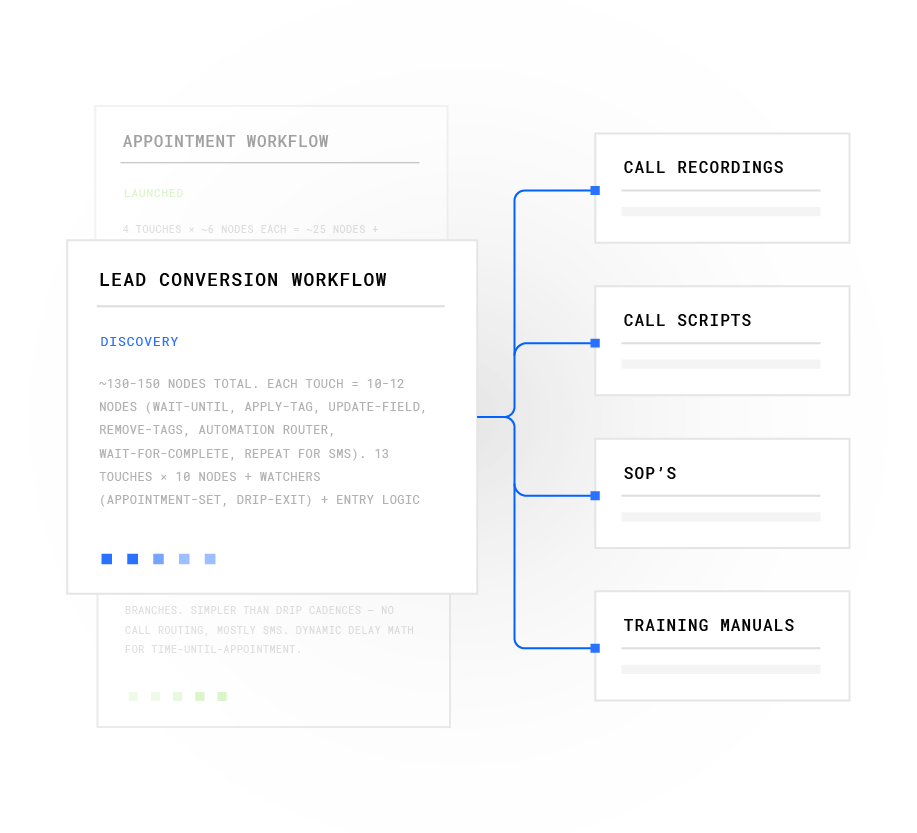
- Verify patient identity using name and date of birth.
- Look up live EHR availability based on specialty and provider preferences.
- Match open slots to patient needs and confirm the preferred appointment time.
- Write the confirmed appointment to the EHR in real time.
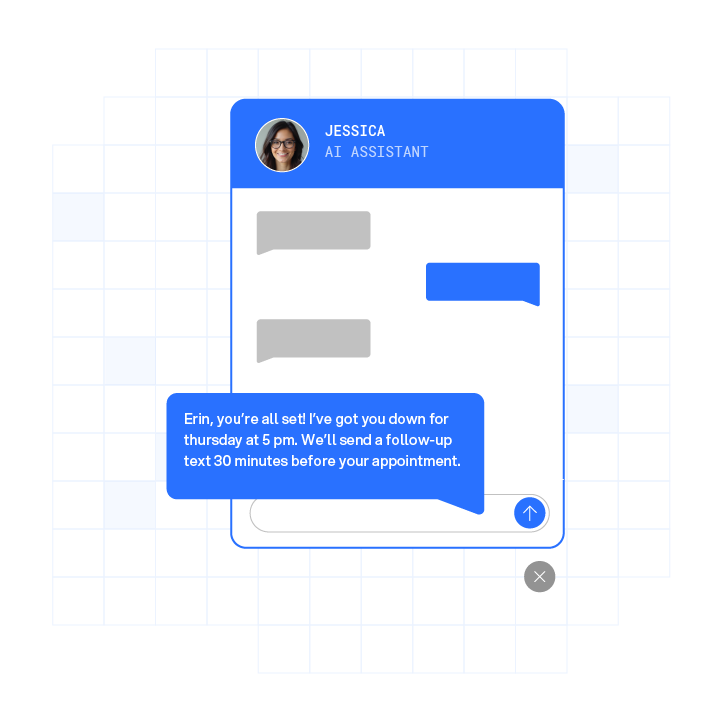
- Send an automated SMS confirmation with appointment details and a calendar link.
Every step logs to the stateful conversation database so follow-up SMS reminders carry full context from the original booking call.
Clinics using AI patient scheduling systems report significant reductions in average booking time. Common EHR integration methods include native API connections for real-time bidirectional flow, FHIR-based connections for Epic and Cerner, HL7v2 interfaces for legacy systems, and middleware bridges for systems without direct API access.
Integration setup follows a structured process: technical discovery and mapping, establishing secure connections and configuring rules, then testing booking flows, rescheduling, and data accuracy validation. The biggest technical risk is insufficient real-time EHR integration, which creates parallel calendars and forces staff to manually reconcile data.
Book a live demo with Plura to walk through the workflow against your EHR environment.
Key HIPAA, TCPA, and Disclosure Considerations
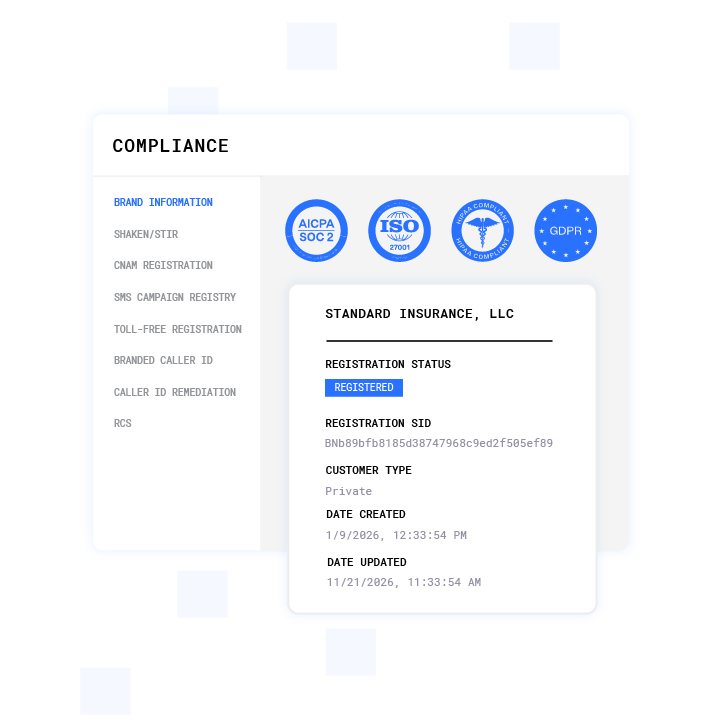
Plura applies SOC 2, HIPAA, ISO certification, GDPR, SHAKEN/STIR caller ID verification, TCPA compliance, and DNC compliance controls at the carrier level.1 Plura supports customer compliance and does not absolve customers of their own obligations.
Practices deploying AI voice agents for patient scheduling should consult qualified counsel on their specific obligations. Key framework considerations documented in public regulatory sources include:
- Under HIPAA, any AI voice agent that answers patient calls, looks up scheduling data, or touches insurance information qualifies as a business associate because it processes protected health information on behalf of a covered entity. A Business Associate Agreement (BAA) is required before PHI flows to any vendor system.
- The FCC’s February 8, 2024 declaratory ruling classifies AI-generated voices as “artificial or prerecorded” under TCPA, adding consent and disclosure considerations for outbound AI voice calls to patient cell phones.2
- HIPAA compliance for voice AI requires encryption in transit and at rest, role-based access controls, comprehensive audit trails kept for at least six years, and documented retention and deletion policies.
- California’s AB 3030, effective January 1, 2025, requires health facilities to notify patients when generative AI is used in clinical communications, with specific disclosure requirements for audio interactions.2
Practices must still maintain their own BAAs, consent records, and risk assessments. Plura’s compliance infrastructure provides the carrier-level enforcement layer, and downstream obligations remain with the covered entity.
Deploying AI Scheduling in Small Clinics
Small clinics deploy the 5-step workflow in days. The recommended sequence is to start with after-hours coverage, connect one EHR system, and measure recovered calls against the no-show improvement benchmark described earlier.
Analyses of general practices indicate that implementing AI voice agents can achieve substantial monthly benefits from recovered calls, no-show prevention, staff hours returned, and after-hours bookings. Studies have reported that U.S. medical practices miss 42% of inbound patient calls during business hours, with each missed call representing roughly $200 in lost appointments.
The highest-performing 2026 voice AI deployments in U.S. clinical settings target high-volume, low-ambiguity interactions such as appointment scheduling, where decision paths are finite and success criteria are objective. Deployment timelines for simple IVR replacement or after-hours coverage can be measured in days on a FHIR-compliant EHR with documented real-time APIs.
Rolling Out AI Scheduling Across Hospital Networks
Hospital networks require phased rollout across multiple EHR instances, centralized compliance dashboards, and role-based access controls. Health systems should follow a four-phase governed rollout: Foundation, Design and Prototyping, Pilot Launch and Evaluation targeting containment above 70% and escalation accuracy above 95%, and Phased Rollout, rather than big-bang deployment.
Hospital-network timelines are materially longer than clinic pilots. Full multi-workflow deployments with custom integrations take longer depending on EHR complexity and organizational readiness. Networks begin with high-volume specialties, enforce SHAKEN/STIR caller ID verification on every line, and scale stateful memory across voice and SMS channels. Organizations that standardize on FHIR in healthcare integration projects can see reductions in development time compared to those relying on legacy HL7 v2 or custom mappings.
Book a live demo with Plura to map your network’s EHR environment against the 5-step workflow.
Evaluation Framework for AI Booking Platforms
Assess any AI appointment booking platform on four criteria that together determine operational control and compliance posture. First, review carrier ownership and confirm whether the vendor holds its own FCC license or rents from a third-party CPaaS. Ownership determines whether compliance enforcement happens at the network level or as a bolt-on.
Second, confirm stateful cross-channel memory so voice context carries into SMS follow-up and patients do not repeat information across channels. Third, review permitted compliance language and whether the vendor supports SOC 2, HIPAA, ISO certification, GDPR, SHAKEN/STIR caller ID verification, TCPA compliance, and DNC compliance at the carrier level. Finally, confirm the vendor offers separate scaling paths for clinics versus hospital networks, since implementation complexity differs by an order of magnitude.
Plura’s conversation intelligence layer surfaces outcome metrics across every booking interaction, and the integrations directory covers 50+ tools including major EHR systems. Run your numbers through Plura’s calculator to check your ROI in real time.
Frequently Asked Questions
How does Plura integrate with existing EHR systems?
Plura uses native APIs and FHIR (Fast Healthcare Interoperability Resources) endpoints to read provider availability and write confirmed bookings in real time. The integration supports bidirectional data exchange with major EHR and practice management platforms, including Epic, Cerner, Athenahealth, eClinicalWorks, and AdvancedMD.
Every booking event logged through the 5-step workflow writes back to the EHR as structured data, not unstructured notes, so the appointment record is immediately actionable for staff. Practices with legacy systems that lack direct FHIR support can connect through middleware bridges that translate existing APIs to FHIR format without requiring a full EHR replacement. Integration timelines range from days on FHIR-compliant systems to several weeks when custom middleware is required.
What compliance documentation does Plura provide?
Plura supports customer compliance across SOC 2, HIPAA, ISO certification, GDPR, SHAKEN/STIR caller ID verification, TCPA compliance, and DNC compliance. Audit-ready exports are available from the compliance dashboard for legal review, carrier requirements, or regulatory inquiries.
Plura does not absolve customers of their own obligations. Practices remain responsible for executing their own Business Associate Agreements, maintaining consent records, conducting HIPAA risk assessments that include AI systems, and meeting any state-specific disclosure requirements such as California AB 3030. Customers should consult qualified counsel on their specific regulatory posture before deployment.
How quickly can a practice go live with AI appointment booking?
Simple clinic deployments targeting after-hours coverage on a FHIR-compliant EHR can complete in days. A single-workflow pilot focused on appointment scheduling typically goes live in two to four weeks, including BAA execution, integration testing, and a shadow period where AI completions are reviewed before full handoff.
Hospital-network integrations spanning multiple EHR instances, centralized compliance dashboards, and role-based access controls typically require a phased rollout measured in weeks to months depending on EHR complexity and organizational readiness. The recommended sequence for any size practice is to start with a defined, high-volume workflow such as after-hours scheduling, validate containment and escalation accuracy, then expand to additional specialties or locations.
How does Plura handle after-hours scheduling gaps?
Plura AI voice agents answer every inbound call on the first ring, 24 hours a day, seven days a week, including evenings, weekends, and holidays. When a patient calls after the front desk closes, the agent verifies identity, pulls live EHR availability, offers matching slots, confirms the booking, and triggers a confirmation message, all without staff involvement.
The confirmed appointment writes back to the EHR in real time so the morning schedule reflects overnight bookings without manual reconciliation. Outbound reminder sequences run on the same stateful database, so the reminder message carries the full context of the original booking call. This reduces the Monday morning backlog of voicemails and the revenue loss from calls that go unanswered and convert to a competitor’s schedule.
What is the difference between Plura and chatbot-only scheduling platforms?
The primary difference is channel coverage and EHR write capability. Chatbot-only platforms address web-based and app-based text inquiries, which represent a minority of patient scheduling interactions. Voice AI agents handle phone calls, which account for the majority of patient interactions at most practices.
On EHR integration, voice agents with real-time bidirectional API connections can read availability and write confirmed bookings in the same call, whereas many chatbot platforms offer read-only or one-directional integration that requires staff to complete the booking manually. On complex scheduling, voice agents handle multi-constraint scenarios such as insurance checks, provider preferences, and specialty routing, while chatbot platforms rely on keyword matching with higher escalation rates. Plura’s stateful conversation database means that a patient who starts a scheduling interaction via SMS and calls to confirm is recognized across both channels without repeating intake information.
1 Plura AI maintains SOC 2, HIPAA, ISO, and GDPR posture as part of its platform infrastructure. References to compliance frameworks in this article describe Plura’s platform capabilities and do not constitute a guarantee that any customer using Plura will themselves be compliant with applicable laws or standards. Customers remain solely responsible for their own regulatory obligations, certifications, consent management, recordkeeping, and the claims they make to their own end users. Consult qualified legal counsel for guidance specific to your use case.
2 This article describes regulatory frameworks at a general level and does not constitute legal advice. Laws and regulations vary by jurisdiction, change over time, and apply differently depending on facts and circumstances. Readers should consult qualified legal counsel before making compliance decisions.
3 Performance figures, customer outcomes, and industry statistics referenced in this article are drawn from cited third-party sources or Plura customer case studies. Individual results vary based on implementation, use case, industry, audience, and execution. Past or aggregate performance is not a guarantee of future results.
4 This article contains forward-looking statements regarding industry trends, technology adoption, and future capabilities. These statements reflect current expectations and are subject to change. Plura AI undertakes no obligation to update forward-looking statements except as required.
This article is provided for informational purposes only and reflects Plura AI’s understanding at the time of publication. Product capabilities, integrations, and specifications are subject to change. For the most current information, visit plura.ai.
This article was produced with the assistance of AI tools and reviewed by Plura AI prior to publication.