

Written by: Matt Beucler, CEO, Plura AI
Key Takeaways
- Multi-signal AMD that combines VAD, cadence, temporal features, and carrier-layer detection consistently outperforms tone-only methods and supports a 95% accuracy target in 2026.3
- Building a labeled test set from real campaign recordings and stratifying by campaign type, time of day, and list source is essential for thresholds that support both accuracy and compliance goals.
- Campaign-specific thresholds, such as 1,800-2,000 ms speech for B2C reminders versus 2,400-3,000 ms for B2B office lines, directly affect false-positive rates, agent efficiency, and adherence to the FTC’s 3% abandonment cap.
- Plura’s Stateful Conversation Database turns every voicemail detection into an automated cross-channel follow-up via SMS or RCS, which removes dead ends and improves future answer rates through historical context.
- Operators who want to quantify these accuracy and compliance gains can chat with Plura AI for a personalized ROI assessment.3
Comparing Tone-Only AMD to Multi-Signal AMD in Production
Answering machine detection (AMD) classifies a connected call as either a live human or a voicemail system before routing it to an agent or leaving a message. That classification method drives accuracy, latency, and compliance exposure on every campaign.
Tone-only AMD waits for the post-greeting beep tone, which is typically a single-frequency tone in the 1000-1700 Hz range. The system must wait for the greeting to complete, which adds latency on live calls and can increase abandonment rates.
Multi-signal AMD combines several detection layers at the same time:
- Voice Activity Detection (VAD): Runs continuously with 20-50 ms decision latency to detect speech presence for initial classification and endpointing.
- Cadence analysis: Measures speech length, silence gaps, and energy distribution. Cadence-based detection can reach strong accuracy within a few seconds after connection.
- Temporal speech features: Voicemail greetings often show distinct patterns such as a brief initial delay followed by one long continuous speech segment distributed evenly across the detection window. Analysis of these temporal features supports more reliable classification.
- Hybrid carrier-layer detection: Combining carrier-level AMD with AI agent self-detection can capture a high percentage of voicemails while keeping false positives low.
By running these signals in parallel and weighting their outputs, multi-signal systems classify calls faster and more accurately than any single method alone. The accuracy gap between approaches can be significant.
Traditional CPD-based AMD often delivers lower accuracy with default parameters that only improve after careful per-carrier tuning. AI-based AMD systems can reach higher overall accuracy in production. Traditional rule-based AMD can misclassify a substantial portion of calls, while AI-powered AMD can reduce error rates significantly.
Twilio-based API resellers operate at the CPaaS layer and cannot tune AMD at the carrier level.4 Plura AI’s AI Predictive Dialer runs on Plura’s own FCC-licensed audio-bridging carrier, which enables signal tuning at origination rather than as a bolt-on.
Building a Labeled AMD Test Set From Real Calls
A labeled test set forms the foundation of any tuned AMD system. Without it, operators adjust parameters based on intuition instead of measured outcomes. The following five-step workflow, drawn from production methodology documented by Moisi Trungu on dev.to, applies to a 10,000-call corpus:
- Extract calls with known outcomes. Query the dialer database for calls with human-indicating dispositions such as sale, callback, or transfer and machine-indicating dispositions such as answering machine or voicemail. These disposition codes establish ground truth before any audio review.
- Isolate the first 5 seconds of each recording. AMD classification happens in the opening seconds. Longer clips introduce noise from post-classification conversation that can skew feature extraction.
- Run manual verification via random sampling. Sample 10-15% of extracted clips and listen to confirm or correct automated disposition labels. A production-grade AMD corpus requires at least 500-1,000 verified samples per class to reach 90-93% accuracy. A range of 1,000-3,000 samples per class is recommended for 93-96% accuracy.
- Stratify by campaign, time of day, and list source. AMD accuracy varies by operational context. A test set that reflects only morning B2C calls will produce thresholds that fail on afternoon B2B campaigns. Stratification keeps threshold tuning validated under each relevant production condition.
- Hold out a separate test set for final validation. Tune thresholds on a validation split, then confirm on a completely held-out test set before deployment. Evaluation sets must remain entirely separate from training data to produce unbiased accuracy estimates.
When labeled samples are limited, teams can augment the corpus with realistic variations such as speed changes at 0.9x and 1.1x, additive white noise, volume shifts, and telephone-bandpass filtering while preserving the held-out validation set for final testing. Once you have a validated test set, the next step is tuning thresholds for each campaign type.
Campaign-Specific AMD Thresholds That Protect Revenue
No single threshold configuration performs well across every campaign type. Twilio’s documentation notes that list-specific tuning works better than a single universal configuration, and the same principle applies across carriers. The matrix below reflects production patterns from the background research:
- Appointment reminders (B2C mobile): Set speech threshold to 1,800-2,000 ms and speech-end threshold to 1,400-1,500 ms. Humans at residences or on mobiles typically answer with greetings shorter than 1,800 ms. Target beep detection window at 400-500 Hz with a minimum 120 ms duration. Keep energy threshold at a standard level. Aim for a false positive rate under 5%.
- Debt collection (mixed B2C/B2B): Raise speech threshold to 2,000-2,400 ms to account for longer residential greetings and IVR screening. Route early DTMF signals to a separate IVR state instead of classifying as HUMAN or VOICEMAIL, because call-screening behavior indicates a distinct call type that needs human handoff or retry. Use a silence window of 600-900 ms post-greeting.
- Lead qualification (B2B office lines): Set speech threshold to 2,400-3,000 ms. Business greetings often last 1,800-3,000 ms and machine greetings commonly exceed 3,000 ms. The accuracy gap between AI AMD and tuned traditional AMD narrows to 2-4 percentage points on B2B office lines, with 95-97% versus 90-94%. For B2B campaigns, bias ambiguous signals toward VOICEMAIL rather than HUMAN, because false positives drive zero callback rates and corrupt CRM data.
Across all campaign types, additional post-answer silence reduces conversation rates, and longer AMD latency can cause prospects to disconnect before reaching an agent. Threshold tuning functions as a direct revenue lever, not just a technical parameter.
Stateful Memory and Smarter Voicemail Retries
Traditional AMD systems classify a call, route it, and discard the outcome, so each subsequent dial starts from zero context. Plura’s Stateful Conversation Database replaces that stateless model with persistent memory.
When Plura’s AI Predictive Dialer detects a voicemail, that outcome is written to the customer’s token in the Stateful Conversation Database. The next outreach attempt reads that record and routes accordingly. An SMS follow-up can fire automatically, an RCS message with a callback link can deploy if the contact’s device supports it, or the dialer can schedule a retry at a time-of-day window with a historically higher live-answer rate for that list segment.
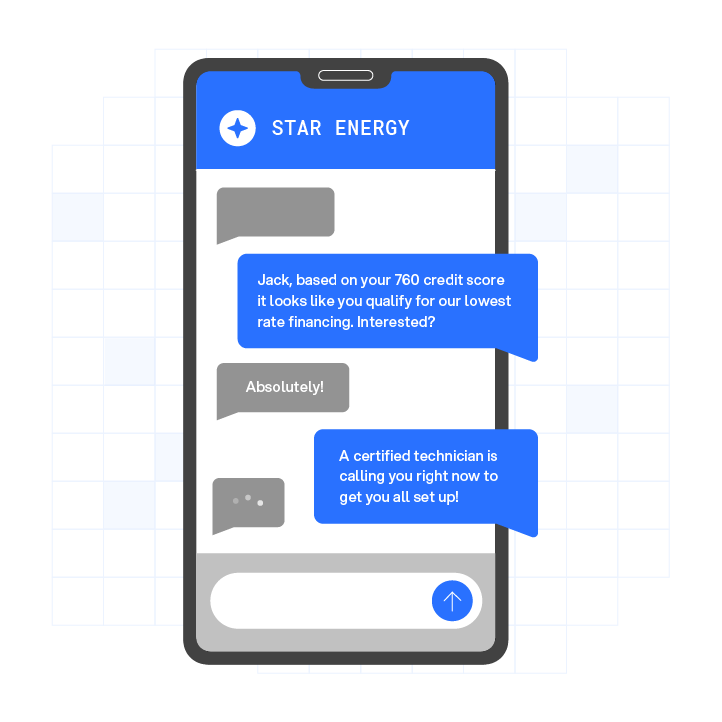
This cross-channel routing turns a voicemail detection event into a trigger instead of a dead end. The AI SMS agent that picks up the thread already knows the call was attempted, what campaign it belonged to, and what offer was pending. The contact receives a message that references the missed call with full context rather than a generic text.
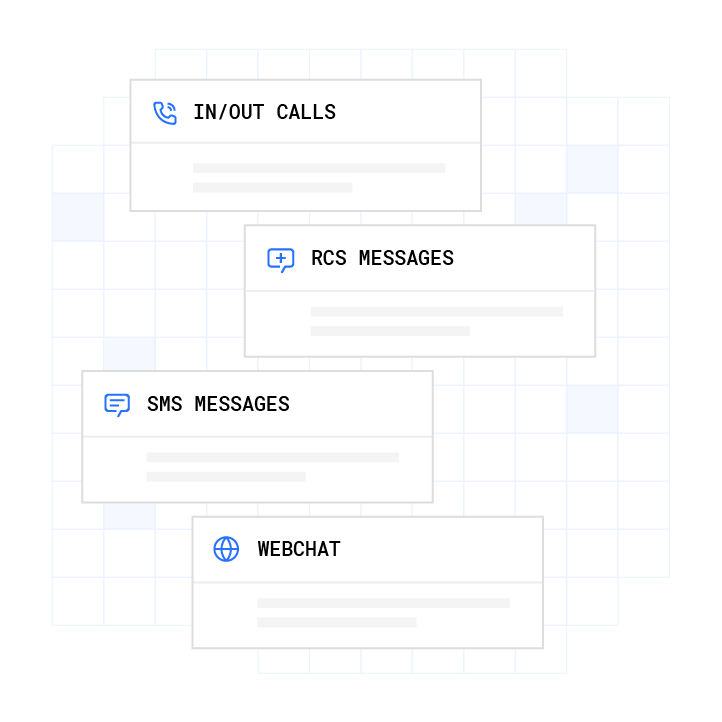
For operators running voicemail detection at scale, stateful routing also improves AMD accuracy over time. Historical answer-rate data by contact, time of day, and list source feeds back into the dialer’s prioritization logic. The system then dials contacts most likely to answer live first, which reduces the proportion of calls that reach voicemail.
AMD Tuning and TCPA/TSR Considerations
AMD tuning and compliance sit on the same decision tree. The same threshold choices that affect accuracy also influence whether a campaign aligns with the boundaries described by the FTC’s Telemarketing Sales Rule (TSR) and the TCPA (Telephone Consumer Protection Act, 47 U.S.C. § 227).2
Key regulatory parameters operators should be aware of, based on published rule text and compliance guidance, include the following:2
- 3% abandonment cap: The TSR caps abandoned telemarketing calls at 3% of answered calls over a rolling 30-day period per campaign. An abandoned call is defined as one where a live person answers but the call is disconnected before a representative connects. AMD false positives that drop live calls count toward this cap.
- Two-second connect requirement: The TSR defines an abandoned call as one where a live person answers but the call is disconnected before a representative connects within two seconds. AMD latency that exceeds this window creates exposure. Under TCPA rules, live calls must connect within 2 seconds of a person answering to avoid dead air violations.
- AI-generated voice classification: The FCC’s February 2024 Declaratory Ruling clarified that AI-generated voices, text-to-speech engines, and any synthesized audio not spoken live by a human in real time qualify as an artificial or prerecorded voice under 47 U.S.C. § 227(b)(1). Operators should consult qualified counsel on how this classification applies to their specific deployment.
- Ringless voicemail: The FTC’s 2024 TSR amendments extended coverage to inbound technical-support telemarketing calls and updated recordkeeping and B2B rules but did not address ringless voicemail or its classification as a prerecorded message.
Plura supports compliance through built-in TCPA and DNC infrastructure such as real-time DNC scrubbing before every dial, immutable consent records, and automated quiet-hours enforcement by time zone.1 Customers remain responsible for their own regulatory obligations and should consult qualified counsel on their specific campaign configurations.
Signal-Level AMD Comparison Across Providers
The table below compares signal-level configurations across Plura’s carrier-owned AMD, Twilio’s CPaaS defaults, and Vapi’s defaults.4 Data points are drawn from published documentation and the background research cited throughout this guide. Accuracy impact and compliance risk reflect the operational consequences of each configuration at high call volume.
| Signal Type | Plura Threshold | Twilio CPaaS Default | Vapi Default | Accuracy Impact | Compliance Risk |
|---|---|---|---|---|---|
| Tone (beep detection) | 400-500 Hz, 120 ms min duration, carrier-layer verified | DetectMessageEnd mode, tone and VAD combined | Tone-only baseline, no carrier-layer tuning | Beep-only approaches can have lower accuracy with higher false positive rates | High: 5-15 s latency can risk the 2-second connect requirement |
| Cadence (speech length) | Campaign-specific 1,800-3,000 ms speech threshold by list type | MachineDetectionSpeechThreshold 1,800-3,000 ms recommended range | Static default, no per-campaign tuning documented | Threshold tuning can improve accuracy over defaults | Medium: misconfigured cadence can raise false positive rate toward the 5% cap |
| Energy (speech amplitude) | Carrier-layer energy normalization, codec-adjusted per trunk | Not independently configurable, bundled in speech detection | Not independently configurable | Codec choice and jitter buffers can alter word-boundary detection by 20-30 ms | Low if normalized, high on noisy or mobile-heavy trunks without adjustment |
| Silence (inter-segment gaps) | 600-900 ms post-greeting silence window, 70 ms between-words silence baseline | MachineDetectionSpeechEndThreshold 1,400-1,500 ms recommended | Static silence threshold, no per-carrier documentation | 200 ms max session silence with 30 ms silence-between-speech reduces dead air | Medium: excessive silence after live answer counts as an abandoned call |
| VAD (voice activity detection) | Neural VAD on 32 ms chunks, 0.5 threshold, 0.35 hysteresis, 15 temporal features extracted | VAD bundled in DetectMessageEnd, not independently tunable | VAD not independently exposed in default configuration | Temporal VAD features achieved 96.1% combined accuracy across 764 recordings | Low: fast VAD classification reduces the dead-air window |
| Beep (post-greeting tone) | Multi-carrier beep profile library, O2-style double-beep and music-on-hold patterns included | US-pattern beep detection, reduced accuracy on non-US voicemail tones | US-pattern only, no carrier-specific beep profiles documented | Non-US defaults can produce higher misclassification on international networks such as BT, EE, Vodafone, and O2 | Medium: missed beep on a live call creates dead air, false beep drops a live prospect |
| Hybrid (multi-signal ensemble) | Carrier-owned temporal features plus VAD, beep, and stateful campaign history, 46 ms inference | Enable mode combines tone and VAD, returns result about 4 seconds after answer on default settings | No carrier-layer ownership, hybrid relies on third-party CPaaS signals | Hybrid carrier-level AMD with AI self-detection can capture a high percentage of voicemails | Low: multi-signal ensembles can keep false positive rates low in production validation |
Conclusion: Carrier Ownership and Stateful AMD as Differentiators
Tone-only AMD reflects a 2015 approach running in 2026 contact centers. The accuracy gap is measurable. Traditional rule-based AMD can misclassify a substantial portion of calls, while multi-signal AI AMD can reduce that error rate significantly. At 10,000 dials per day, this difference can mean fewer lost connections, less wasted agent time, and fewer calls that count against the TSR’s 3% abandonment cap.
As noted earlier, carrier ownership is the key differentiator. Plura’s AI Predictive Dialer runs on Plura’s own FCC-licensed audio-bridging carrier, which enables signal tuning, branded caller ID issuance, and TCPA and DNC compliance support at the infrastructure level rather than through a third-party add-on. The Stateful Conversation Database routes voicemail outcomes to AI SMS and RCS automatically, so a detected voicemail becomes a cross-channel follow-up trigger instead of a dead end.
Operators who want to quantify what that accuracy improvement is worth at their specific call volume have a direct path to the answer.
Run your numbers through Plura’s calculator to check your ROI in real time.
Frequently Asked Questions
What is the target accuracy rate for answering machine detection in a high-volume predictive dialer?
The operational target for AMD accuracy in a high-volume predictive dialer is 95% or higher. Below that threshold, false positives accumulate fast enough to push abandoned-call rates toward the 3% cap defined by the FTC’s Telemarketing Sales Rule, and false negatives waste agent time on voicemail greetings. Multi-signal AI AMD systems that combine voice activity detection, temporal speech features, cadence analysis, and carrier-layer beep detection consistently reach 92-96% accuracy in production environments. Plura’s carrier-owned AMD implementation targets 95% accuracy with a false positive rate below 1% in production validation, achieved through labeled-test-set tuning on real campaign recordings rather than generic audio benchmarks.
How does a labeled test set improve AMD performance compared to default settings?
Default AMD settings are calibrated for average conditions across all carriers, all campaign types, and all times of day. A labeled test set built from actual call recordings lets teams measure how the default settings perform on their specific traffic, then tune thresholds against real outcomes rather than vendor assumptions. The methodology involves extracting calls with known dispositions from the dialer database, manually verifying a sample of those labels, stratifying the corpus by campaign and list source, and holding out a separate test set for final validation. Production data shows that iterative threshold tuning on a representative labeled corpus can improve accuracy over default settings. The minimum viable corpus is 500-1,000 verified samples per class, human and machine, to reach high accuracy levels, with more samples recommended for even better performance.
What is the difference between AMD false positives and false negatives, and which matters more?
A false positive occurs when a live human is classified as a voicemail. The call is either dropped or routed to a prerecorded message, the prospect receives dead air or an unwanted recording, and the event counts toward the TSR’s 3% abandonment cap. A false negative occurs when a voicemail system is classified as a live human. The agent connects to a voicemail greeting, wastes talk time, and may leave a message that was not intended.
For most high-volume outbound campaigns, false positives carry higher business and compliance cost than false negatives. A dropped live prospect represents a lost sale and a potential regulatory event. A voicemail classified as human wastes agent time but does not create the same legal exposure. B2B campaigns on office lines are an exception. False positives that play a prerecorded message to a live decision-maker produce zero callback rates and corrupt CRM disposition data, which makes them particularly damaging in enterprise sales contexts.
How does Plura’s Stateful Conversation Database change what happens after a voicemail is detected?
In a standard dialer, a voicemail detection event ends the interaction. The call is logged, the agent moves to the next dial, and the contact sits in the queue for a future attempt with no memory of the prior outcome. Plura’s Stateful Conversation Database replaces that sequence with persistent context.
When the AI Predictive Dialer detects a voicemail, the outcome is written to the contact’s record and immediately triggers cross-channel follow-up logic. An AI SMS agent can deploy a text referencing the missed call within seconds. If the contact’s device supports RCS, a richer message with a callback link can fire instead. The dialer’s retry logic reads the voicemail history and schedules the next attempt at a time-of-day window with a higher historical live-answer rate for that list segment. Every subsequent touchpoint, whether voice, SMS, or RCS, inherits the full context of prior interactions, so the contact does not receive a generic outreach that ignores what already happened.
What TCPA and TSR parameters are most directly affected by AMD configuration choices?
Three regulatory parameters connect most directly to AMD configuration. First, the TSR’s 3% abandoned-call cap. AMD false positives that drop live calls count as abandoned calls, and a false positive rate above 3% of answered calls over a rolling 30-day period creates exposure under the TSR.
Second, the two-second connect requirement. The TSR defines an abandoned call as one where a live person answers and the telemarketer does not connect to a representative within two seconds of the completed greeting. AMD latency that exceeds this window on live calls creates the same exposure as a dropped call.
Third, the identification and opt-out requirement. When a call is abandoned, an automated message may be required that identifies the seller and provides an opt-out mechanism. Operators should consult qualified counsel to understand how these parameters apply to their specific campaign configurations and dialer architecture. Plura supports compliance through real-time DNC scrubbing, immutable consent records, and automated quiet-hours enforcement, but customers remain responsible for their own regulatory obligations.1
1 Plura AI maintains SOC 2, HIPAA, ISO, and GDPR posture as part of its platform infrastructure. References to compliance frameworks in this article describe Plura’s platform capabilities and do not constitute a guarantee that any customer using Plura will themselves be compliant with applicable laws or standards. Customers remain solely responsible for their own regulatory obligations, certifications, consent management, recordkeeping, and the claims they make to their own end users. Consult qualified legal counsel for guidance specific to your use case.
2 This article describes regulatory frameworks at a general level and does not constitute legal advice. Laws and regulations vary by jurisdiction, change over time, and apply differently depending on facts and circumstances. Readers should consult qualified legal counsel before making compliance decisions.
3 Performance figures, customer outcomes, and industry statistics referenced in this article are drawn from cited third-party sources or Plura customer case studies. Individual results vary based on implementation, use case, industry, audience, and execution. Past or aggregate performance is not a guarantee of future results.
4 References to third-party products, services, companies, or research are made for informational and comparative purposes only. Plura AI is not affiliated with, endorsed by, or sponsored by any third party named in this article unless explicitly stated. Trademarks and product names referenced remain the property of their respective owners.
5 This article contains forward-looking statements regarding industry trends, technology adoption, and future capabilities. These statements reflect current expectations and are subject to change. Plura AI undertakes no obligation to update forward-looking statements except as required.
This article is provided for informational purposes only and reflects Plura AI’s understanding at the time of publication. Product capabilities, integrations, and specifications are subject to change. For the most current information, visit plura.ai.
This article was produced with the assistance of AI tools and reviewed by Plura AI prior to publication.