
Written by: Matt Beucler, CEO, Plura AI
Key Takeaways for High-Volume Outbound Teams
- High-volume parallel dialing often triggers carrier spam blocking when daily dials exceed 100-150 per number with short call durations, which produces flagged numbers and falling connect rates.
- Simultaneous answers that exceed agent capacity on multi-line systems create dead air and telemarketer delay, signaling automated behavior to both prospects and carrier analytics engines.
- Abandonment rates above the FTC 3% threshold expose operations to TCPA statutory damages, with class action settlements averaging $6.6M.
- Number reputation can decay quickly, with steep connect-rate drops over a few weeks when short-duration calls and spam flags accumulate across carrier networks.
- Plura AI’s FCC-licensed carrier, stateful pacing, and branded caller ID address these reliability issues at the infrastructure layer, and you can explore Plura’s carrier-owned architecture in detail here.
Carrier Spam Blocking Triggers on Multi-Line Dialers
Threshold: more than 100-150 dials per number per day combined with short-duration calls.
AT&T, Verizon, and T-Mobile route every outbound call through real-time analytics engines, including Hiya, TNS/Call Guardian, and First Orion, that score numbers based on call volume, answer rates, call duration, and user complaint rates. High outbound call volumes exceeding 100-150 calls per day per number combined with average durations under 30 seconds cause carrier AI systems to classify the traffic as robocall-like and apply spam flags. At 200 or more dials per number per day, flagging becomes nearly guaranteed, particularly for teams using auto-dialers that concentrate traffic on limited DIDs.
STIR/SHAKEN (Secure Telephone Identity Revisited/Signature-based Handling of Asserted information using toKENs) attestation level compounds this risk. Calls placed with B-level or C-level attestation face higher scrutiny or outright blocking because carriers cannot fully verify number ownership or identity, unlike A-level calls that display a “Verified” checkmark and achieve higher deliverability.
Plura AI’s AI Predictive Dialer originates calls on Plura’s own FCC-licensed carrier with full SHAKEN/STIR caller ID verification and carrier-provisioned branded caller ID, a capability not available on platforms that depend on third-party CPaaS (Communications Platform as a Service) infrastructure.4 Integration with Number Verifier supports outbound call connection rates through built-in spam prevention.
Dead Air on Multi-Line Dialers from Overdialing
Threshold: simultaneous answers exceeding available agents on 3-10 line ratios.
Parallel dialing structurally generates abandoned calls because it dials a fixed number of lines per seat simultaneously and bridges only the first answer, so extra live pickups receive dead air then a drop. A 2-second delay in a phone call sounds like a dropped line or dead air, unlike chat where the same delay is merely annoying.
Plura’s stateful pacing on its AI Predictive Dialer connects only when an agent is ready, which removes sub-two-second drops. The platform maintains a 99.9% uptime SLA with automatic failover and no single point of failure3, closing the infrastructure-layer reliability gaps that affect many shared SIP environments.
Run your numbers through Plura’s calculator to check your ROI in real time.
Telemarketer Delay as an Architectural Problem
Threshold: 1-3 seconds of silence after greeting on parallel systems.
Telemarketer delay in parallel dialing systems creates 1-3 seconds of silence after a prospect answers before a live representative is bridged, which is experienced as dead air. Telemarketer delay occurs when predictive and multi-line dialers call multiple numbers simultaneously and use voice detection to connect an agent only after an answer is detected, causing prospects to hear an awkward pause after saying “hello” and signaling automated or robocaller behavior to carrier analytics.
The delay is not a configuration problem, it is an architectural one. Any system that dials ahead of agent availability and then bridges after answer detection will produce this gap, which means operators cannot eliminate telemarketer delay without changing their dialing architecture. Plura’s stateful pacing bridges calls with zero delay while preserving context across channels through its Stateful Conversation Database, so the agent receives full prior interaction history at the moment of connection.
Abandonment Rate Limits for Multi-Line Dialers
Threshold: more than 3% of live-answered calls abandoned over any 30-day period under the FTC Telemarketing Sales Rule (16 CFR 310.4(b)(1)(iv)).
The FTC Telemarketing Sales Rule defines an abandoned call as any outbound call where a live person answers but is not connected to a sales representative within two seconds of the consumer answering the phone. Industry guides recommend monitoring abandon rate to stay under the 3% ceiling, yet monitoring alone cannot correct an architecture that routinely dials ahead of agent capacity.
Smaller teams using predictive dialers may experience spikes in abandoned calls and compounded compliance exposure.
Plura’s stateful pacing maintains abandonment rates below this threshold without predictive over-dialing, by design rather than by monitoring. Operators consulting qualified counsel on their specific TCPA compliance obligations can review the FTC rule directly at 16 CFR 310.4.
TCPA Exposure Patterns with Multi-Line Dialers
Threshold: abandoned calls exceeding 3% or missing the 2-second live-agent connection window.
Under the TCPA (47 U.S.C. § 227), statutory damages are $500 per violation for ordinary violations and up to $1,500 per violation for willful or knowing violations, assessed on a per-call or per-text basis with no statutory cap on aggregate liability.2 Given these statutory damages, class action settlements averaged $6.6M in 2023.3
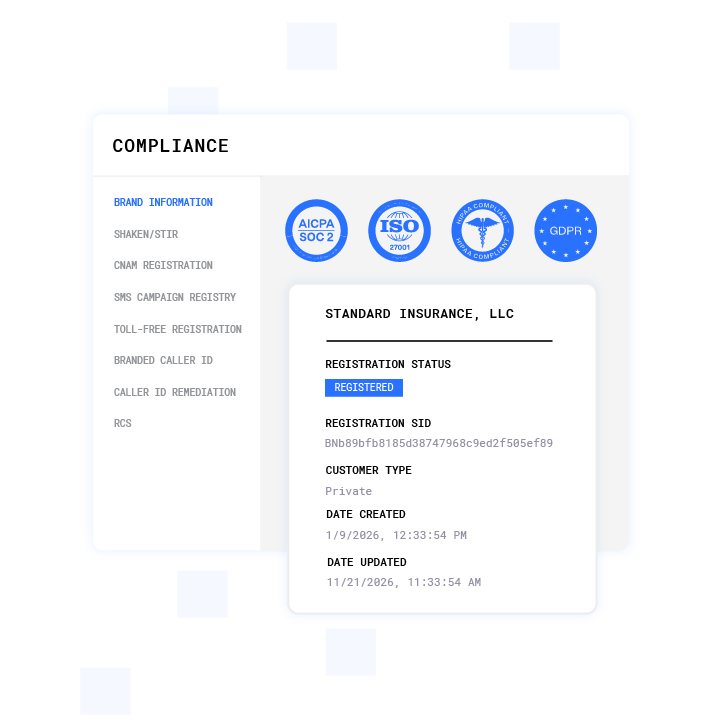
Plura supports TCPA compliance and DNC (Do Not Call) compliance through real-time scrubbing and immutable consent records. Plura’s compliance framework includes SOC 2 compliant infrastructure, TCPA and STIR/SHAKEN enforcement, integration with Blacklist Alliance for DNC screening, and Number Verifier for caller ID reputation.1 Customers remain responsible for their own compliance obligations and should consult qualified counsel on their specific regulatory posture.
Book a live demo with Plura to see how stateful pacing and real-time DNC scrubbing work in a production environment.
Number Reputation Decay Timelines
Threshold: 30-50% connect-rate drop within 2-3 weeks from repeated short calls.
A sudden drop in connect rate over 2-3 weeks with no other variables changing typically indicates that a number has been flagged as spam. High-volume outbound numbers can reach spam-flagged status with aggressive use, and new numbers can accumulate flags within the first week when daily dial volumes exceed carrier thresholds.
Plura’s FCC-licensed carrier and branded caller ID maintain positive reputation scores across Hiya, First Orion, and TNS engines by issuing calls with verified origination at the carrier level rather than through a third-party CPaaS. This reflects the same carrier-owned infrastructure advantage described earlier: Plura owns its telecom infrastructure and holds an FCC carrier license, whereas platforms that depend on Twilio operate as a software layer without a carrier license.4
2026 Benchmarks: Multi-Line Dialer vs. Plura AI Predictive Dialer
| Metric | Typical multi-line dialer | Plura AI Predictive Dialer |
|---|---|---|
| Abandonment rate | Often above 3% | Below 3% (stateful pacing by design) |
| Connect rate | 8-12% on generic data3 | Improved with verified data and caller-ID hygiene |
| Spam-label incidence | 25% of legitimate businesses | Carrier-managed via FCC-licensed origination and branded caller ID |
30-Day Migration Checklist from Legacy Multi-Line Dialer to Plura
This checklist reflects Plura’s standard onboarding sequence. Operators should engage qualified counsel on any compliance obligations specific to their campaigns before migration.
- Day 1-7: Audit current dialer logs for abandonment rate, connect rate, and spam-label incidence, and flag numbers showing connect-rate drops of 30% or more as likely affected by carrier analytics engines.
- Day 8-14: Provision numbers on Plura’s FCC-licensed carrier and enable SHAKEN/STIR caller ID verification, and retire flagged numbers rather than rotating them into the new pool.
- Day 15-21: Configure stateful pacing and branded caller ID on the AI Predictive Dialer, then import lists with DNC compliance scrubbing against federal and state registries.
- Day 22-30: Run a parallel pilot, compare abandonment rate and connect rate against the legacy baseline, and cut over while monitoring TCPA compliance controls and SOC 2 audit logs.
Run your numbers through Plura’s calculator to check your ROI in real time before committing to a migration timeline.
Frequently Asked Questions
What measurable thresholds trigger carrier spam blocking in multi-line dialers?
Carrier analytics engines from Hiya, First Orion, and TNS begin flagging numbers when daily dial volume exceeds the 100-150 calls per number threshold mentioned earlier, when average call duration falls below 10-15 seconds, or when three to five users report a number as spam within a 24-hour window. Calls lacking full A-level STIR/SHAKEN attestation face accelerated flagging regardless of volume. A connect-rate drop of 30-50% over two to three weeks with no other variables changed is a reliable indicator that one or more numbers in a pool have been flagged. The threshold is behavioral, not intent-based, because carrier systems score the pattern of calls, not the content.
How does telemarketer delay affect connect rates?
Telemarketer delay is the 1-3 seconds of silence a prospect hears after answering a call placed by a parallel or predictive dialer before an agent is bridged. This delay signals automated dialing behavior to both the prospect and the carrier’s analytics engine. Prospects who experience dead air are more likely to hang up immediately, generating a short-duration call that further degrades the originating number’s reputation score. Over time, the combination of dead-air drops and short-duration calls accelerates spam flagging, which collapses connect rates across the entire number pool. The structural fix is a pacing architecture that never dials ahead of confirmed agent availability.
What abandonment-rate limits apply under TCPA rules in 2026?
The FTC Telemarketing Sales Rule (16 CFR 310.4(b)(1)(iv)) caps abandoned calls at 3% of all calls answered by a live person, measured over a 30-day campaign period.2 A call is classified as abandoned when a live person answers but is not connected to a sales representative within two seconds of the consumer answering the phone. TCPA statutory damages follow the ranges outlined earlier, and the FCC can impose separate civil forfeiture penalties. Operators should consult qualified counsel on how these frameworks apply to their specific campaigns, list types, and consent records.
How quickly can operators migrate from legacy multi-line systems to Plura?
Plura’s standard onboarding sequence runs 30 days for most high-volume outbound operations. The first week covers a dialer audit and baseline metric capture. The second week provisions numbers on Plura’s FCC-licensed carrier with SHAKEN/STIR caller ID verification enabled. The third week configures stateful pacing, branded caller ID, and DNC compliance scrubbing. The fourth week runs a parallel pilot before full cutover. More complex deployments involving multi-step intake workflows or large list migrations may extend the timeline. Every annual contract includes a 90-day opt-out window if the deployment is not delivering against the agreed metrics.
Conclusion: Fixing Dialer Reliability at the Infrastructure Layer
Multi line dialer reliability issues are architectural, not operational. Spam flags, dead air, telemarketer delay, abandonment-rate violations, and number-reputation decay all trace back to the same root cause: dialing ahead of agent availability on infrastructure that does not own the carrier layer. Adjusting pacing settings or rotating numbers addresses symptoms without touching the source.
Plura AI’s FCC-licensed carrier, stateful pacing, and branded caller ID address each failure mode at the infrastructure layer. SHAKEN/STIR caller ID verification runs on every outbound call. DNC compliance scrubbing checks every number before dial. SOC 2, HIPAA, ISO certification, and GDPR controls are built into the platform, not bolted on.1 The AI Predictive Dialer connects only when an agent is ready, which keeps abandonment rates below the FTC threshold by design.
Run your numbers through Plura’s calculator to check your ROI in real time, or book a live demo with Plura to see the carrier-owned architecture in action.
1 Plura AI maintains SOC 2, HIPAA, ISO, and GDPR posture as part of its platform infrastructure. References to compliance frameworks in this article describe Plura’s platform capabilities and do not constitute a guarantee that any customer using Plura will themselves be compliant with applicable laws or standards. Customers remain solely responsible for their own regulatory obligations, certifications, consent management, recordkeeping, and the claims they make to their own end users. Consult qualified legal counsel for guidance specific to your use case.
2 This article describes regulatory frameworks at a general level and does not constitute legal advice. Laws and regulations vary by jurisdiction, change over time, and apply differently depending on facts and circumstances. Readers should consult qualified legal counsel before making compliance decisions.
3 Performance figures, customer outcomes, and industry statistics referenced in this article are drawn from cited third-party sources or Plura customer case studies. Individual results vary based on implementation, use case, industry, audience, and execution. Past or aggregate performance is not a guarantee of future results.
4 References to third-party products, services, companies, or research are made for informational and comparative purposes only. Plura AI is not affiliated with, endorsed by, or sponsored by any third party named in this article unless explicitly stated. Trademarks and product names referenced remain the property of their respective owners.
This article is provided for informational purposes only and reflects Plura AI’s understanding at the time of publication. Product capabilities, integrations, and specifications are subject to change. For the most current information, visit plura.ai.
This article was produced with the assistance of AI tools and reviewed by Plura AI prior to publication.