

Written by: Matt Beucler, CEO, Plura AI
Key Takeaways for Multi‑Line Dialing Setup
- Multi-line dialing works best on carrier-owned infrastructure with native STIR/SHAKEN A-level attestation, which reduces spam flags and closes gaps that resellers cannot control.
- Provider selection should focus on FCC-licensed carriers that issue branded caller ID and run real-time DNC scrubbing at the network layer instead of relying on third-party CPaaS resellers.
- Number provisioning, contact import, and CRM sync should include consent records, daily dial caps, and local-presence numbers to protect number reputation and support TCPA requirements.
- Line capacity, pacing rules, and spam remediation should keep abandon rates under the FTC’s 3% cap while predictive algorithms increase agent talk time.
- Plura AI is an FCC-licensed carrier that delivers branded caller ID, real-time DNC scrubbing, and stateful cross-channel memory. Start your free trial today to see multi-line dialing at scale with compliance support built into the network.
Step 1: Choose a Carrier-Owned Provider, Not a Reseller
Objective: Select infrastructure that manages compliance and caller ID reputation at the network layer instead of as an add-on feature.
Most AI predictive dialer platforms sit on top of third-party CPaaS providers. They rent the carrier layer, so branded caller ID, STIR/SHAKEN attestation, and real-time DNC scrubbing depend on an upstream provider instead of your own platform.
Under the FCC’s Third-Party Authentication Order, effective September 18, 2025, every voice provider with a STIR/SHAKEN obligation must obtain its own Service Provider Code token and certificate instead of using an upstream carrier’s certificate.2 Only providers that sign their own traffic with their own certificate can assign full A-level attestation. Resellers without network control typically cannot meet this standard.
Use this five-question checklist when you evaluate any provider:
- Does the provider sign its own traffic with its own STIR/SHAKEN certificate at A-level attestation?
- Does it own the underlying carrier network, or does it resell capacity?
- How quickly can it port numbers, and does it own number inventory directly?
- Is encryption and signaling isolation built into the platform?
- Is per-minute pricing transparent at volume, with all fees disclosed upfront?
Plura AI operates as its own FCC-licensed audio bridging carrier. Voice originates on Plura’s domestic infrastructure, not a third-party CPaaS, which allows direct issuance of branded caller ID and compliance controls at the carrier level. Once you have a carrier-owned provider in place, you can safely move to number provisioning.
Step 2: Provision Numbers With Local Presence and Clean Reputation
Objective: Provision numbers with clean reputation, correct registration, and local-presence coverage for every target market.
Number reputation is one of the strongest drivers of contact rate. Per-DID daily dial volume above 75 to 100 calls often triggers carrier spam signatures. Analytics engines track total volume, call-to-answer ratio, and short-duration call patterns. A focused pool of 8 to 12 well-attested DIDs per market usually outperforms a large pool of unattested numbers.
During provisioning, operators should:
- Register numbers through 10DLC (10-Digit Long Code) for any SMS campaigns tied to the same workflow.
- Confirm that STIR/SHAKEN A-level attestation is active on all provisioned DIDs.
- Configure local-presence numbers for each target market, since local numbers answer at about 27.5% compared with 7% for toll-free numbers.3
- Set daily dial caps per DID at or below 100 and enable automatic number rotation.
Step 3: Sync Contacts and CRM Before the First Dial
Objective: Load a clean, consent-documented contact list and establish bidirectional CRM sync before agents start calling.
Native CRM integration keeps multi-line dialing usable for frontline teams. The integration should support click-to-call from contact records, automatic call logging, in-call contact history, and automatic task creation after each call. Teams without these capabilities often abandon new dialers within 30 days because of manual data entry.
Follow these contact import steps:
- Scrub the list against the National DNC Registry. Under FTC Telemarketing Sales Rule (16 CFR Part 310) and FCC TCPA regulations (47 USC 227),2 lists are typically scrubbed no more than 31 days before placing calls.
- Validate numbers against the Reassigned Numbers Database to remove disconnected or reassigned lines, which often make up a large share of standard B2B lists.
- Attach consent records to each contact, including timestamp, IP address, URL, user agent, and seller identity, and retain these records for at least four years to support TCPA audit trails.
- Map CRM fields to dialer disposition codes so call outcomes write back automatically.
Plura’s CRM integration layer connects with HubSpot, Salesforce, Zoho, and more than 50 additional tools.4 All contact history feeds the Stateful Conversation Database so every channel uses the same lead context. With data and consent in place, you can plan line capacity.
Step 4: Configure Line Capacity and Pacing Rules
Objective: Set concurrent line count and dial ratio so agents maximize talk time while abandon rates stay under the regulatory ceiling.
The FTC’s Telemarketing Sales Rule caps abandoned calls at 3% of answered calls over any 30-day campaign period, with TCPA penalties of $500 to $1,500 per violation for willful infractions. Many enterprise predictive dialers use conservative pacing to stay under this threshold.
Set these capacity configuration parameters before go-live:
- Concurrent channels: Calculate agents multiplied by dial ratio, then add headroom for ramp-up. A channel cap below burst volume produces failed call attempts that the software may treat as network errors. This ceiling defines how many simultaneous connections your infrastructure can support.
- Calls per second (CPS): Treat CPS as separate from concurrent channels. CPS controls how quickly the dialer starts new attempts. Dialers front-load attempts at the start of each pacing cycle, so a low CPS ceiling can distort the pacing model and limit the algorithm’s ability to reach the target dial ratio.
- Abandon rate target: Set operational targets below the 3% cap to create a buffer. Monitor abandonment continuously per campaign so you can adjust pacing before you approach the limit.
- Wrap-up time: Configure post-call disposition time so agents finish notes before the next dial. Short wrap-up windows compress the pacing model’s view of agent availability and can push abandon rates higher.
- Time-zone enforcement: Enforce the 8 AM to 9 PM calling window in the called party’s local time zone automatically. Use zip code or IP-based inference instead of area code alone, since area codes no longer reliably match geography.
Predictive dialing in larger operations often delivers 45 to 55 minutes of agent talk time per hour.3 Manual dialing usually delivers about 15 minutes.
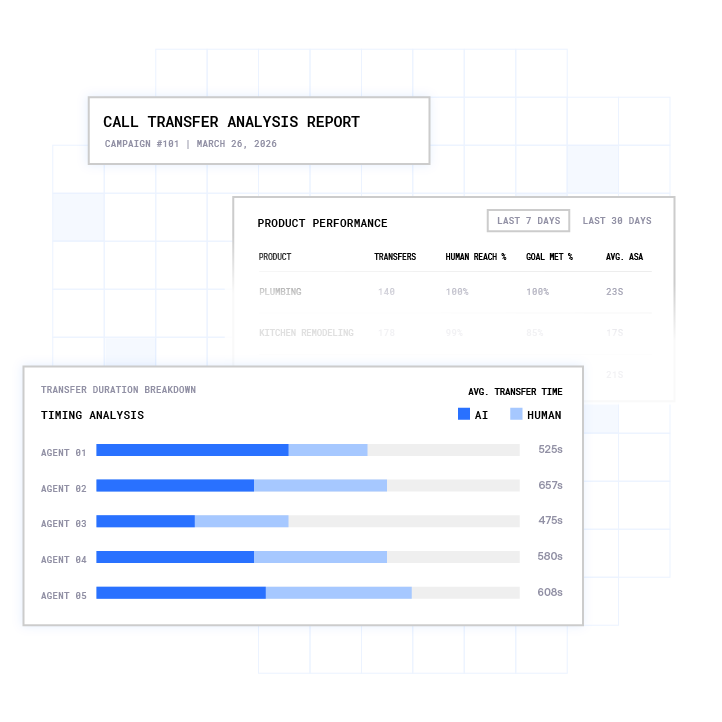
Use Plura’s ROI calculator to estimate talk-time gains and cost savings for your team.
Step 5: Protect Caller ID and Reduce Spam Labels
Objective: Present a verified, branded identity on every outbound call that passes carrier analytics and mobile call screening.
Spam labels originate at the carrier level, so they require carrier-level controls. Outbound contact rates in insurance, mortgage, and home services dropped from 9 to 11% in late 2024 to 4 to 7% by mid-2026.3 STIR/SHAKEN gaps and carrier-side spam analytics drove much of that decline.
Caller ID Controls That Reduce Spam Flags
Branded caller ID and STIR/SHAKEN A-level attestation serve as the two core technical controls. Plura issues branded caller ID directly through its FCC-licensed carrier, so calls display the company name and call purpose instead of “Spam Likely” or an unknown number. STIR/SHAKEN authentication runs on every outbound call, and the destination carrier uses that signal to verify origination.
Operational controls that reduce spam flagging include:
- Keeping per-DID daily volume within the cap set during provisioning, typically 100 to 200 dials, before rotating to a rested number.
- Monitoring short-duration call ratios per DID, since high rates of calls under six seconds often trigger analytics flags.
- Maintaining call-to-answer ratios within normal ranges by keeping abandon rates below 3%.
- Registering all numbers through STIR/SHAKEN with A-level attestation before the first production dial.
FCC rules at 47 C.F.R. § 64.1200 describe caller ID transmission requirements for covered telemarketing calls. Plura’s AI also communicates with Apple’s iOS 26 call-screening layer. This connection helps more calls present a recognizable identity instead of being intercepted as unknown traffic. With caller ID stabilized, you can focus on DNC and TCPA enforcement.
Step 6: Enforce DNC and TCPA Rules at the Platform Layer
Objective: Enforce federal and state DNC rules and TCPA consent requirements inside the platform before each dial.
TCPA statutory damages are $500 per violation for unintentional violations and up to $1,500 per violation for willful or knowing violations, with each non-compliant call counted separately. FTC civil penalties under the Telemarketing Sales Rule can reach $53,088 per violation. The FCC’s one-to-one consent rule, scheduled to take effect January 27, 2025, was vacated by the 11th Circuit on January 24, 2025 and later removed by the FCC.
Configure enforcement with these steps:
- Enable real-time DNC scrubbing against the National DNC Registry and applicable state DNC lists before each dial attempt.
- Configure the internal company DNC list to honor opt-out requests within 30 days and retain suppressed numbers for at least five years, as described in 47 C.F.R. § 64.1200(d).
- Attach immutable, timestamped consent records to every contact before the number enters a dialing campaign.
- Enable TCPA-litigator list filtering to keep known serial plaintiffs out of outbound queues.
- Configure quiet-hours enforcement by time-zone data on the contact record instead of area code.
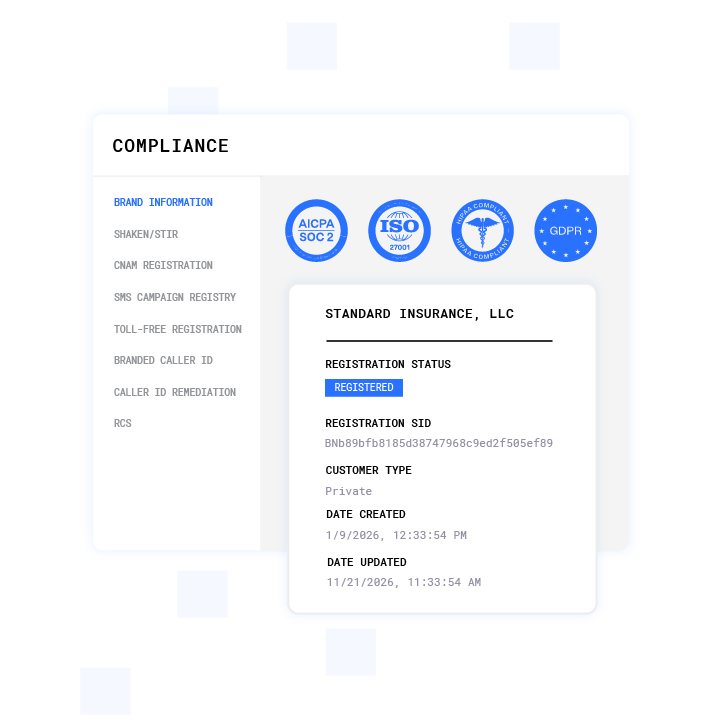
Plura’s Compliance Engine supports TCPA compliance and DNC compliance as a core platform layer, with SOC 2, HIPAA, and ISO certification on the underlying infrastructure.1 Every outbound contact is checked against federal and state DNC registries in real time before dial. Operators can export audit-ready reports from the dashboard with a single click. With enforcement in place, you can safely scale through testing and analytics.
Step 7: Test on a Pilot and Monitor Performance
Objective: Validate configuration on a controlled subset before full rollout, then monitor KPIs continuously.
Run pilot campaigns on smaller lists before you scale to full volume. From day one, track these metrics:
- Effective Contact Rate (ECR): Human conversations of 60 seconds or more divided by calls placed. ECR benchmarks on shared internet-generated leads often range from 3 to 9% by vertical.
- Agent talk time ratio: Total talk time divided by total logged-in time. Well-tuned predictive dialing often targets a 45 to 55% talk time ratio.
- Abandon rate per campaign: Keep this metric under the 3% FTC cap over any rolling 30-day period.
- Dials per unique prospect: Watch this number for signs of list fatigue and diminishing returns.
- Short-duration call ratio: High rates can signal voicemail detection gaps or spam-flag-driven hang-ups.
Plura’s conversation intelligence layer analyzes every interaction across voice, SMS, RCS, and webchat. It surfaces conversion patterns, objection themes, and script performance. The Unified Inbox consolidates all channel transcripts per customer so CX leaders can review full conversation history.
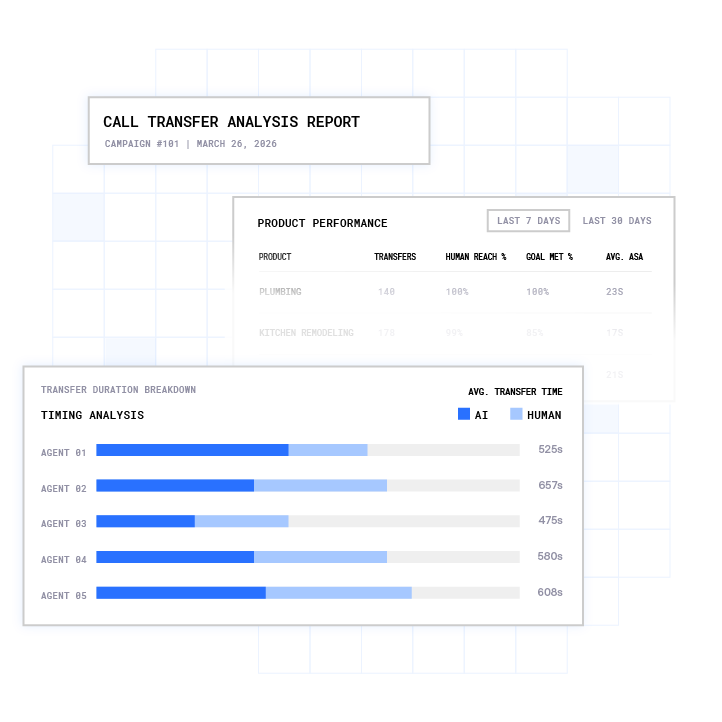
Review Plura’s plans and rates side by side.
Comparing Line-Capacity Models: Predictive, Power, and Preview
| Dialer Mode | Agent Talk Time Per Hour | Contacts Per Hour | Abandon Rate Risk |
|---|---|---|---|
| Preview | Lower due to manual preview step | Lower | 0% by design, since the agent initiates each dial |
| Power (single-line) | Moderate | Moderate | Low, because one line per agent removes multi-connect drops |
| Predictive / Multi-line (larger operations) | 45 to 55 minutes when optimized | Higher volume | High, with a need to stay under the 3% FTC cap per 30-day campaign |
Predictive and multi-line modes require carrier-level controls, real-time DNC scrubbing, and STIR/SHAKEN A-level attestation to stay within regulatory limits. Predictive pacing becomes unreliable below about 15 agents because the algorithm lacks enough data. Preview mode fits high-value leads where conversion rate matters more than throughput.
Frequently Asked Questions
How does multi-line dialing place several calls at once?
Multi-line dialing places several simultaneous outbound calls per available agent, often between two and ten lines. When a live person answers one of those lines, the system routes that call to the agent and drops the remaining unanswered lines before the recipient hears anything. A pacing algorithm controls the ratio of simultaneous lines to agents by monitoring agent availability, average handle time, and abandon rate in real time. On a carrier-owned platform like Plura, this process also runs real-time DNC scrubbing and STIR/SHAKEN authentication on every dial before the call leaves the network.
What are the main multi-line dialer configuration steps?
A production-grade multi-line dialer configuration follows seven steps. First, select a carrier-owned provider with native STIR/SHAKEN A-level attestation. Second, provision and register numbers with local-presence coverage and daily dial caps. Third, import a scrubbed, consent-documented contact list with bidirectional CRM sync. Fourth, set concurrent line count, dial ratio, abandon rate target, and time-zone enforcement rules. Fifth, configure branded caller ID and spam remediation at the carrier layer. Sixth, enable real-time DNC scrubbing, TCPA consent logging, and TCPA-litigator list filtering. Seventh, run a pilot campaign on a controlled subset before scaling, and monitor effective contact rate, talk time ratio, and abandon rate per campaign.
Which multi-line dialer model fits high-volume call centers?
High-volume call centers benefit most from multi-line dialers built on carrier-owned infrastructure instead of CPaaS resellers. Key differentiators include whether the provider issues branded caller ID directly through its own FCC license, whether STIR/SHAKEN A-level attestation is native or inherited, whether real-time DNC scrubbing runs before each dial at the network layer, and whether conversation context persists across channels so agents see full history. Plura’s AI Predictive Dialer runs on Plura’s own FCC-licensed audio bridging carrier, with branded caller ID, real-time DNC scrubbing, TCPA compliance support, and a Stateful Conversation Database shared across voice, SMS, RCS, and webchat.
What does multi-line dialing compliance involve?
Multi-line dialing compliance spans several regulatory frameworks. The FTC’s Telemarketing Sales Rule caps abandoned calls at 3% of answered calls over any 30-day campaign period. The TCPA covers consent requirements for autodialed calls to wireless numbers. The FCC’s one-to-one consent rule, discussed in Step 6, was vacated before taking effect. The National DNC Registry requires list scrubbing within 31 days of placing calls. Caller ID transmission is described in 47 C.F.R. § 64.1200, and STIR/SHAKEN authentication requirements flow from FCC orders implementing the TRACED Act. State rules add quiet-hours, disclosure, and consent standards that vary by jurisdiction. Operators should consult qualified legal counsel to understand their specific obligations.
How does AI predictive dialer setup differ from standard multi-line?
AI predictive dialer setup builds on standard multi-line configuration with machine learning that refines pacing decisions in real time. Instead of a fixed dial ratio, an AI predictive dialer uses historical answer rates, agent availability patterns, and prior conversion signals to decide how many lines to open per agent at each moment. On Plura, the AI Predictive Dialer also uses stateful conversion signals from the Stateful Conversation Database, such as prior negotiation outcomes and offer-acceptance history, to prioritize contacts more likely to convert. Setup follows the same seven-step workflow in this guide, with an additional step to train the pacing model on historical campaign data before go-live.
How does a power dialer differ from a multi-line dialer?
A power dialer places one call per agent at a time and automatically dials the next contact as soon as the previous call ends. This removes manual dialing time while keeping the agent on a single active line, which avoids abandoned calls from simultaneous connections. A multi-line dialer places several calls per agent at once, often between two and ten lines, and routes the first live answer to the rep while dropping the others. Multi-line dialing delivers higher talk time per hour and more live conversations per day, but it introduces abandoned-call risk that must stay within the FTC’s 3% cap. Power dialing fits smaller teams or high-value lists where conversion per contact matters more than volume. Multi-line dialing fits large outbound operations where maximizing agent talk time is the primary objective and compliance infrastructure manages pacing.
Conclusion: Build Multi-Line Dialing on Carrier-Level Controls
Multi-line dialing on a generic VoIP reseller often creates spam-flag exposure, compliance gaps, and caller ID issues that pacing alone cannot fix. The same configuration on Plura’s FCC-licensed carrier infrastructure delivers branded caller ID, STIR/SHAKEN A-level attestation, real-time DNC scrubbing, and stateful cross-channel memory, with TCPA compliance and DNC compliance support built into the network layer instead of added later.
The seven-step workflow in this guide covers provider selection, number provisioning, contact import, line capacity configuration, caller ID remediation, DNC enforcement, and analytics in sequence because each step depends on the previous one. Skipping provider evaluation in step one often creates issues that configuration changes in later steps cannot resolve.
Operators running 500 or more daily outbound interactions need infrastructure that supports compliance before the dial, not after a complaint. Book a live demo with Plura to see the AI Predictive Dialer running on carrier-owned infrastructure.
1 Plura AI maintains SOC 2, HIPAA, ISO, and GDPR posture as part of its platform infrastructure. References to compliance frameworks in this article describe Plura’s platform capabilities and do not constitute a guarantee that any customer using Plura will themselves be compliant with applicable laws or standards. Customers remain solely responsible for their own regulatory obligations, certifications, consent management, recordkeeping, and the claims they make to their own end users. Consult qualified legal counsel for guidance specific to your use case.
2 This article describes regulatory frameworks at a general level and does not constitute legal advice. Laws and regulations vary by jurisdiction, change over time, and apply differently depending on facts and circumstances. Readers should consult qualified legal counsel before making compliance decisions.
3 Performance figures, customer outcomes, and industry statistics referenced in this article are drawn from cited third-party sources or Plura customer case studies. Individual results vary based on implementation, use case, industry, audience, and execution. Past or aggregate performance is not a guarantee of future results.
4 References to third-party products, services, companies, or research are made for informational and comparative purposes only. Plura AI is not affiliated with, endorsed by, or sponsored by any third party named in this article unless explicitly stated. Trademarks and product names referenced remain the property of their respective owners.
This article is provided for informational purposes only and reflects Plura AI’s understanding at the time of publication. Product capabilities, integrations, and specifications are subject to change. For the most current information, visit plura.ai.
This article was produced with the assistance of AI tools and reviewed by Plura AI prior to publication.