

Written by: Matt Beucler, CEO, Plura AI | Last updated: August 25, 2026
Key Takeaways for Contact Center and Revenue Leaders
- Advanced call center AI in 2026 combines autonomous multi-intent agents, real-time copilots, 100% automated QA, predictive routing, and cross-channel stateful memory to support scale and compliance.5
- Plura AI owns its FCC-licensed carrier stack, enforces real-time DNC and TCPA controls at origination, and runs on 100% U.S. infrastructure by architecture.
- The five-phase roadmap starts with auditing call types, then deploys AI agents on high-volume flows, activates real-time copilots, automates QA, and integrates predictive routing and workforce management.5
- Organizations see 3x ROI in 90 days, 47% pipeline growth, 90% faster lead-response times, and a 10x TCO reduction for a 100-seat equivalent operation.3
- Book a live demo with Plura AI to map this roadmap against your current call mix and compliance requirements.
The 5-Phase Implementation Roadmap for Advanced Call Center AI
- Phase 1 – Audit and baseline. Map every inbound and outbound call type by volume, complexity, and regulatory exposure. Identify the 30-50% of contacts that are routine and well-defined, such as order status, appointment scheduling, eligibility checks, and FAQ resolution. Treat these as the first candidates for autonomous AI handling.
- Phase 2 – Deploy autonomous AI agents on high-volume, low-complexity flows. Stand up AI voice agents and AI SMS on the top two or three interaction types. Target contained resolution rates of 35-55% in the first 90 days. Validate CSAT before expanding scope.
- Phase 3 – Activate real-time copilots for live agent support. Layer sentiment detection and next-best-action prompts onto assisted calls. Workforce studies indicate that agents working alongside AI can achieve meaningful reductions in handle time and faster ramp-up for new hires.
- Phase 4 – Enable 100% automated QA and compliance monitoring. Replace 1-3% manual sampling with full-interaction AI scoring. Connect QA data to coaching workflows and compliance dashboards. AI-powered QA scores 100% of interactions compared to the 2-5% coverage typical of manual QA sampling.
- Phase 5 – Integrate predictive routing, workforce management, and cross-channel stateful memory. Connect volume forecasting to staffing models. Unify conversation history across voice, SMS, RCS, and AI webchat so every agent and AI picks up where the last touchpoint left off.
Book a live demo with Plura to walk through the roadmap against your current call mix.
Autonomous AI Agents That Handle Complete Conversations
Autonomous AI agents handle complete conversations end-to-end without human intervention on in-scope call types. The core requirement is multi-intent reasoning, which detects, confirms, and resolves more than one customer need inside a single interaction. Failure to properly decompose multi-intent utterances can increase call duration due to repetition and misrouting.
Cross-channel stateful memory is the architectural layer that makes autonomous agents viable at scale. Plura’s AI voice agent platform shares a single Stateful Conversation Database across voice, AI SMS, AI RCS, and AI webchat. Every interaction is keyed to a customer token so the agent that texted a lead at 9 a.m. can answer the call at noon already knowing what was said, what was offered, and what objections were raised. Without cross-channel context continuity, a customer who moves from chat to voice has to repeat everything they already explained.
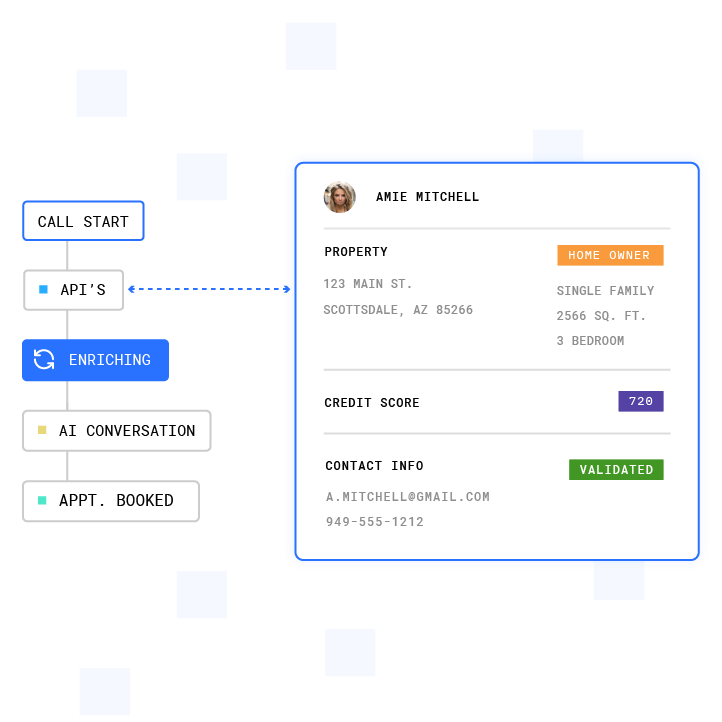
Plura enriches every lead in real time from 30+ data sources during the conversation itself, not in a downstream batch job. The AI voice agent enters each call with qualification data already loaded. This enables autonomous handling of sales conversations, intake interviews, and appointment booking without a human SDR in the path. Plura provides full lead enrichment before every interaction, enabling autonomous AI voice agents to handle complete sales conversations, qualify leads, and book appointments.
Real-Time Copilots with Sentiment Triggers for Live Agent Support
Real-time copilots sit alongside human agents during live calls, surfacing knowledge base suggestions, next-best-action prompts, and escalation alerts triggered by sentiment signals. The operational impact is measurable. AI copilots can reduce average handle time when surfacing real-time knowledge base suggestions and next-best-action prompts.
Sentiment triggers serve two functions. First, they flag calls where customer frustration is rising so supervisors can intervene before escalation. Second, they prompt agents with retention or save-call scripts at the moment the conversation turns negative. On retention calls, real-time agent assist can improve save rates.
New agent ramp time benefits directly from this support. Real-time copilot guidance can accelerate new agent ramp time to proficiency. For contact centers running 30-40% annual agent turnover, that compression translates to lower training cost and faster revenue contribution per new hire.
Plura’s conversation intelligence layer analyzes every interaction across channels to surface objection patterns, script adherence gaps, and conversion path data. Findings feed back into the no-code workflow builder so conversation logic stays tuned continuously against actual outcomes rather than assumptions.
100% Automated QA and Compliance Monitoring at Scale
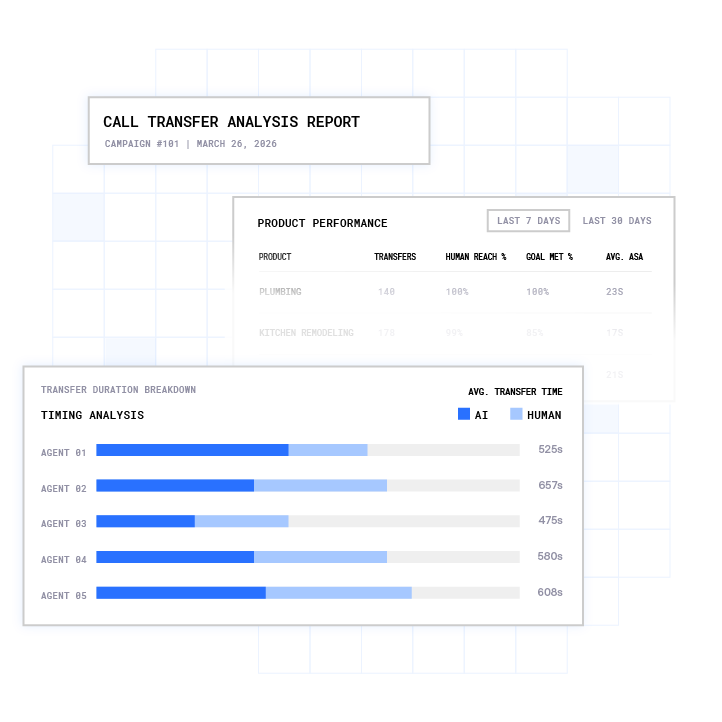
The 1-3% manual sampling mentioned in Phase 4 leaves 97-99% of interactions unscored. A contact center handling 10,000 calls per month with QA teams sampling 2-3% scores roughly 250 calls and leaves the other 9,750 unreviewed, creating compliance risk and coaching blind spots. Automated QA closes that gap by scoring every interaction against the same rubric, with no sampling bias and no reviewer fatigue.
Plura’s compliance engine sits as a first-class layer of the platform, not a bolt-on module. That architecture means every outbound contact is checked against federal and state DNC registries in real time before dial, so the compliance check happens at origination, not downstream. Consent records are timestamped and immutable, which creates an audit trail that supports legal discovery. Quiet-hours rules enforce automatically through time-zone detection, reducing manual configuration errors that can create TCPA exposure. The platform supports compliance with SOC 2, HIPAA, ISO certification, GDPR, SHAKEN/STIR caller ID verification, TCPA compliance, and DNC compliance, and audit-ready reports export in one click when regulators or counsel request documentation.1
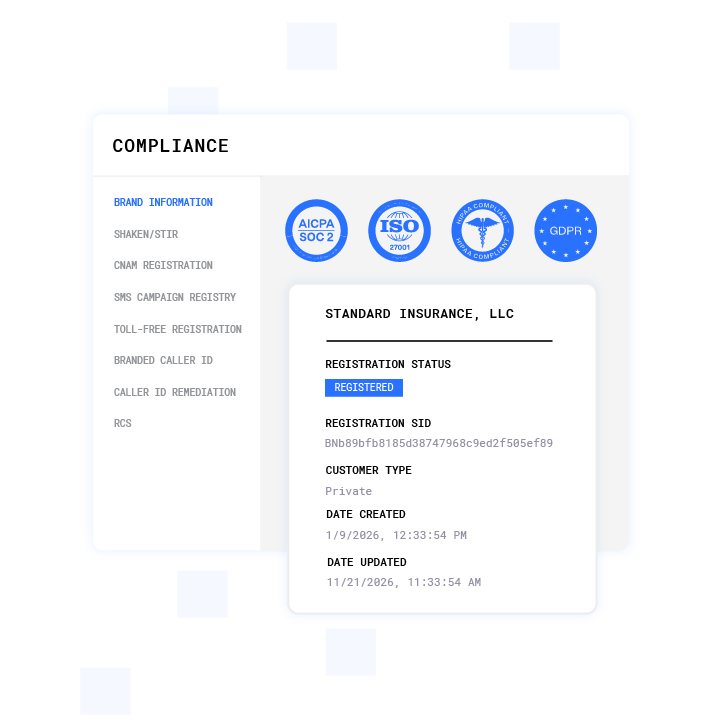
Script adherence monitoring covers required disclosures, prohibited language, and regulatory triggers. Automated quality management monitors every interaction for required disclosures, prohibited language, and regulatory triggers, surfacing compliance issues in near real time rather than weeks later. For regulated verticals including healthcare, insurance, and financial services, that near-real-time visibility can mean catching a disclosure gap in the same shift instead of discovering it during a regulator audit.
Predictive Routing and Workforce Management for Volume Spikes
Predictive routing uses historical answer rates, prior conversation outcomes, and real-time enrichment signals to decide who to contact next and which agent or AI flow should handle them. By prioritizing contacts with the highest likelihood of answering and converting, the system produces higher contact rates per dial and lower cost per connected conversation. Plura’s AI Predictive Dialer applies stateful conversion signals from prior interactions to prioritize the contacts most likely to convert, running over Plura’s own FCC-licensed carrier with SHAKEN/STIR caller ID verification on every outbound call.
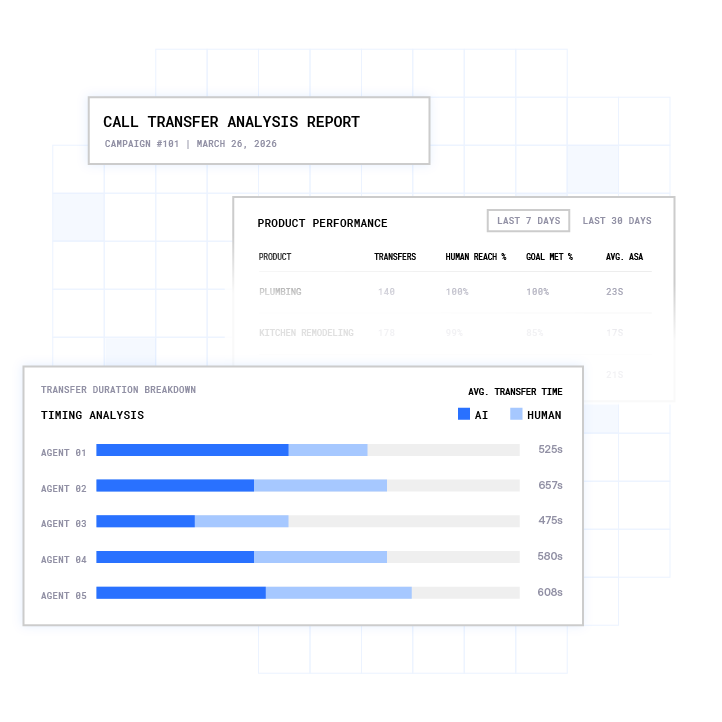
Workforce management accuracy is the operational lever most contact centers underinvest in. AI predictive workforce management systems can achieve high accuracy in call volume forecasts and help reduce abandonment rates, improve NPS, and manage staffing costs more precisely.
Peak-season scaling is where the economics of AI versus human staffing diverge most sharply. Human contact centers must hire and train months in advance of Medicare AEP, tax season, or Black Friday. AI agents scale to peak volume without a hiring cycle. A retailer using NiCE CXone handled a 300% volume surge during the 2024 holiday season with autonomous digital agents, absorbing peak demand without adding temporary staff and decreasing cost per contact due to higher containment rates.4
Run your numbers through Plura’s calculator to check your ROI in real time.
Call Center AI Compliance: FCC NPRM and State Onshoring Requirements
The infrastructure choices that enable peak-season scaling without temporary staff also determine whether your operation can meet the compliance requirements now taking effect. The FCC’s Notice of Proposed Rulemaking (CG Docket No. 26-52) proposes capping offshore customer-service calls at 30% and limiting offshore handling of sensitive consumer data including passwords, multi-factor authentication codes, Social Security numbers, and banking and card data.2 Companion federal legislation includes the Keep Call Centers in America Act (S.2495) and the Foreign Robocall Elimination Act (S.2666). Operators and their counsel should consult the Federal Register and Congress.gov directly for current rule text and status.
State-level exposure is already active. New York’s Call Center Jobs Act carries penalties up to $10,000 per day. New Jersey, Connecticut, Missouri, and Florida have enacted or proposed statutes that address offshore handling of medical, financial, and consumer data. Every offshore vendor contract a covered entity holds now represents a compliance risk that legal and procurement teams are actively reviewing.
Plura runs on 100% U.S. infrastructure by architecture. Voice origination, model hosting, data storage, and call recording all sit on domestic infrastructure. This is not a contractual promise layered on top of a foreign-hosted stack, but a design decision at the architecture level. AI voice and SMS tools built as wrappers on third-party CPaaS providers cannot make the same claim because their infrastructure dependencies sit outside their control.
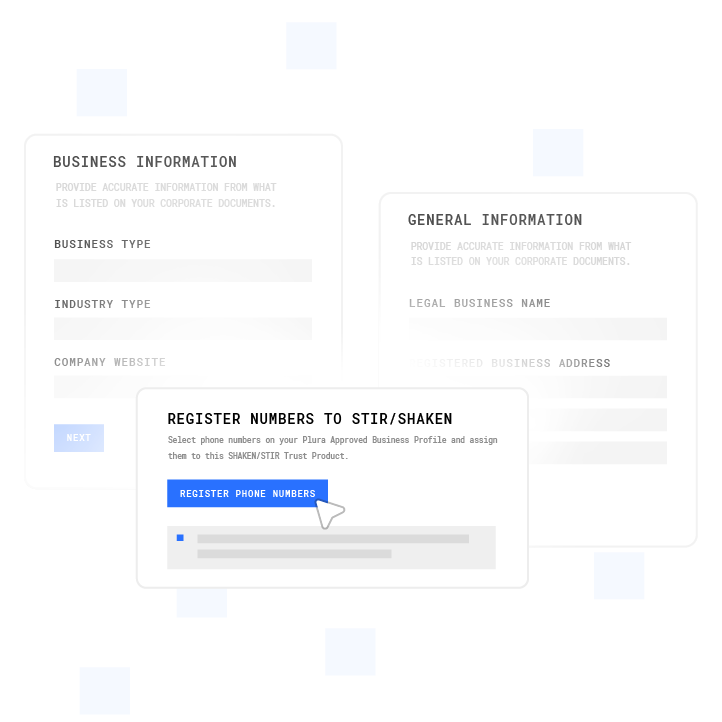
Real-time DNC and TCPA controls inside the platform mean every outbound contact is scrubbed before dial, not after.2 The FCC’s revocation-of-consent rules that took effect April 11, 2025 describe how businesses should handle opt-outs in a timely manner. AI agents can help reduce TCPA exposure by delivering required disclosures verbatim on every call, performing real-time DNC and opt-out list checks before each outbound contact, automatically logging call recordings, transcripts, consent records, and timestamps, and enforcing state-specific calling-hour restrictions by default. Operators should consult qualified counsel regarding their specific obligations under applicable federal and state law.
KPI Benchmarks for Advanced Call Center AI Strategies
The benchmarks below show the performance gains organizations report when they implement advanced call center AI across agents, QA, routing, and workforce management.
| KPI | Benchmark | Source |
|---|---|---|
| Average ROI in 90 days | 3x3 | Plura AI calculator |
| Pipeline growth | 47% average | Plura AI communications strategy guide |
| Lead-response time improvement | 90% faster than baseline | Plura AI communications strategy guide |
| QA interaction coverage (AI vs. manual) | 100% vs. 1-3% | Knowmax AI QA guide 2026 |
| WFM forecast accuracy | High accuracy in hourly forecasts | Orchestra Intelligence 2026 |
| AHT reduction with AI copilot | Measurable reduction | Salesforce State of Service 2025 via Stealth Agents |
| Annual TCO: Plura vs. traditional 100-seat center | $300K-$700K vs. $4M-$7M | Plura AI communications strategy guide |
Infrastructure Comparison Across Contact Center Models
The four categories of contact center infrastructure differ on the dimensions that matter most to compliance, cost, and scale. The comparison below highlights how carrier ownership and U.S.-only architecture close compliance gaps and reduce cost volatility that appear in API reseller and offshore models.
| Attribute | Plura (carrier-owned, U.S. infrastructure)4 | Twilio-based API resellers | Offshore BPOs | Legacy onshore contact centers |
|---|---|---|---|---|
| Carrier ownership | FCC-licensed audio bridging carrier, voice originates on Plura’s own infrastructure | Depends on Twilio or another CPaaS, no carrier license of their own | Not applicable, human agents on third-party telecom | Typically leased carrier capacity, no owned FCC license |
| U.S. infrastructure | 100% domestic by architecture | Varies, CPaaS infrastructure may include foreign nodes | Offshore by definition, exposed to FCC NPRM CG Docket No. 26-52 | Domestic, but real estate and labor costs are fixed |
| Real-time DNC/TCPA enforcement | Enforced inside the platform before every dial, immutable consent ledger | Bolted on, configuration handled by the customer | Varies by vendor, enforcement is contractual, not architectural | Manual or third-party scrubbing, not enforced at origination |
| Cross-channel stateful memory | Single Stateful Conversation Database across voice, SMS, RCS, and webchat | Typically channel-siloed, no shared memory layer by default | CRM-dependent, context transfer relies on agent notes | CRM-dependent, context transfer relies on agent notes |
| Annual TCO (100-seat equivalent) | $300K-$700K | Usage-based, build and integration costs add significantly to sticker price | ~$1.2M annually fully loaded for a 50-seat offshore team in insurance | $4M-$7M annually for a 100-seat onshore center |
Note: TCO figures for API resellers vary widely based on build complexity and are not directly comparable on a per-seat basis. Offshore BPO and legacy onshore figures reflect fully loaded labor, real estate, and overhead costs from published Plura research. Operators should model their specific call mix using the Plura ROI calculator.
Book a live demo with Plura to see the infrastructure difference in a working environment.
Frequently Asked Questions
What makes an AI call center strategy “advanced” in 2026?
An advanced strategy in 2026 goes beyond basic IVR replacement or single-channel chatbots. It combines autonomous multi-intent agents that resolve complete conversations end-to-end, real-time copilots that detect customer sentiment and guide agents toward optimal responses during live calls, 100% automated QA that scores every interaction rather than a 1-3% sample, predictive routing and workforce management that forecast volume with 90-95% hourly accuracy, and cross-channel stateful memory that preserves full conversation context across voice, SMS, RCS, and webchat. The infrastructure layer matters as much as the AI layer. Platforms that own their carrier stack can enforce compliance at origination, issue branded caller ID directly, and maintain U.S.-only data residency by architecture rather than by contract.
How does Plura’s carrier ownership affect compliance and call quality?
Plura holds its own FCC carrier license and operates its own audio bridging infrastructure. Branded caller ID is issued at the carrier level, not through a reseller. SHAKEN/STIR caller ID verification authenticates every outbound call at origination. Real-time DNC scrubbing and TCPA-litigator list filtering run inside the platform before each dial, not as a third-party add-on. Platforms built as wrappers on third-party CPaaS providers inherit that provider’s caller ID reputation and cannot enforce compliance before the call leaves the network. Plura can, which supports higher pickup rates, lower spam-label exposure, and an architectural compliance posture. Plura supports the full compliance framework described earlier, including SOC 2, HIPAA, GDPR, and TCPA requirements.1 Customers remain responsible for their own regulatory obligations and should consult qualified counsel regarding their specific requirements.
What does 100% automated QA actually mean operationally?
100% automated QA means every conversation across every channel is scored against the same rubric, with no sampling bias and no reviewer fatigue. Traditional manual QA programs review 1-3% of interactions, leaving the other 97-99% unscored. An AI QA system transcribes and scores every call, chat, and SMS thread in near real time, flags high-severity compliance issues for human review, and generates coaching notes with specific timestamps and suggested alternative phrasing. Human reviewers focus only on flagged interactions rather than random samples. The operational outputs include a visible compliance violation rate across 100% of volume, coaching data that reflects actual agent behavior rather than a curated sample, and audit-ready records for every interaction. Plura’s compliance engine surfaces these outputs through a dashboard that exports audit-ready reports in one click.
How does the FCC NPRM affect operators currently using offshore BPOs or AI tools with foreign infrastructure?
The FCC’s Notice of Proposed Rulemaking (CG Docket No. 26-52) proposes a 30% cap on offshore customer-service calls and limits on offshore handling of sensitive consumer data. Companion federal legislation and active state laws in New York, New Jersey, Connecticut, Missouri, and Florida extend the regulatory perimeter further. Operators using offshore BPOs or AI platforms with foreign infrastructure dependencies should consult qualified counsel to assess their exposure under current and proposed rules. Plura runs on 100% U.S. infrastructure by architecture, with voice origination, model hosting, data storage, and call recording all on domestic infrastructure. This design removes foreign-infrastructure exposure that API resellers built on third-party CPaaS providers cannot address without rebuilding their stack.
What is the realistic TCO difference between Plura and a traditional onshore contact center?
For a 100-seat equivalent operation, traditional onshore contact centers cost $4 million to $7 million annually when payroll, taxes, benefits, commissions, real estate, and turnover-driven rehiring are fully loaded. Plura’s AI-powered platform costs $300,000 to $700,000 annually for equivalent volume, running at 100% talk utilization with no taxes, benefits, commissions, or training ramp on each new hire. The default scenario on Plura’s ROI calculator uses a 15-agent operation at $20 per hour with standard overhead and 40% talk utilization, costing $60,000 per month. Replacing that team with Plura drops the monthly cost to $14,400, producing $45,600 in 30-day savings and $547,200 over 12 months. Operators can model their specific headcount, hourly rate, and call mix using the Plura ROI calculator to generate a figure specific to their operation.
Conclusion: Turning AI Strategy into Measurable Contact Center Outcomes
Advanced call center AI strategies in 2026 require more than a capable AI model. They require carrier-owned infrastructure that enforces compliance at origination, cross-channel stateful memory that preserves conversation context across every touchpoint, 100% automated QA that closes the 97-99% blind spot left by manual sampling, and predictive routing and workforce management that keep staffing aligned with actual volume. The regulatory environment has made infrastructure ownership a business-critical requirement, because the FCC NPRM, state onshoring laws, and real-time DNC and TCPA controls cannot be bolted onto a CPaaS wrapper after the fact.
Plura delivers all five capabilities on a single platform, running on its own FCC-licensed carrier stack, with 100% U.S. infrastructure by architecture. The economics follow the 10x TCO reduction described earlier, alongside 3x average ROI in 90 days, 47% pipeline growth, and 90% faster lead-response time.
Run your numbers through Plura’s calculator to check your ROI in real time.
Compare plans and rates side by side at Plura pricing.
1 Plura AI maintains SOC 2, HIPAA, ISO, and GDPR posture as part of its platform infrastructure. References to compliance frameworks in this article describe Plura’s platform capabilities and do not constitute a guarantee that any customer using Plura will themselves be compliant with applicable laws or standards. Customers remain solely responsible for their own regulatory obligations, certifications, consent management, recordkeeping, and the claims they make to their own end users. Consult qualified legal counsel for guidance specific to your use case.
2 This article describes regulatory frameworks at a general level and does not constitute legal advice. Laws and regulations vary by jurisdiction, change over time, and apply differently depending on facts and circumstances. Readers should consult qualified legal counsel before making compliance decisions.
3 Performance figures, customer outcomes, and industry statistics referenced in this article are drawn from cited third-party sources or Plura customer case studies. Individual results vary based on implementation, use case, industry, audience, and execution. Past or aggregate performance is not a guarantee of future results.
4 References to third-party products, services, companies, or research are made for informational and comparative purposes only. Plura AI is not affiliated with, endorsed by, or sponsored by any third party named in this article unless explicitly stated. Trademarks and product names referenced remain the property of their respective owners.
5 This article contains forward-looking statements regarding industry trends, technology adoption, and future capabilities. These statements reflect current expectations and are subject to change. Plura AI undertakes no obligation to update forward-looking statements except as required.
This article is provided for informational purposes only and reflects Plura AI’s understanding at the time of publication. Product capabilities, integrations, and specifications are subject to change. For the most current information, visit plura.ai.
This article was produced with the assistance of AI tools and reviewed by Plura AI prior to publication.