
Written by: Matt Beucler, CEO, Plura AI
Updated: September 2026
Key Takeaways for Multi-Line Dialing in 2026
- Multi-line dialing is legal in the U.S. and sits under TCPA and TSR rules for telemarketing, and Kari’s Law and RAY BAUM’s Act for office MLTS.2
- Outbound telemarketers need prior express written consent, regular National DNC scrubs, and tight control of abandoned calls.2
- Federal calling hours run from 8 a.m. to 9 p.m. local time, and several states apply earlier cutoffs and narrower windows.
- Violations can trigger significant penalties, including TCPA statutory damages and higher per-violation exposure under state mini-TCPA laws.2
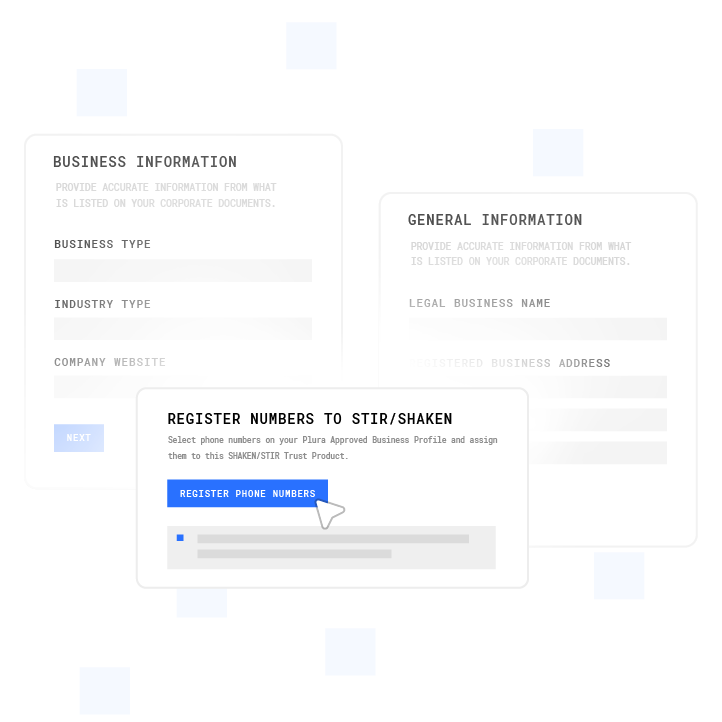
- Plura AI’s AI Predictive Dialer supports TCPA and DNC compliance at the carrier level, so teams can scale outreach with guardrails in place.
Outbound Telemarketing: How Multi-Line Dialing Fits Under TCPA
Outbound multi-line dialing for telemarketing is legal under federal law and operates inside a detailed TCPA and TSR framework. The primary federal statute is the TCPA at 47 U.S.C. § 227, with FCC rules at 47 C.F.R. § 64.1200. The FTC’s Telemarketing Sales Rule at 16 C.F.R. Part 310 applies to many outbound programs in parallel.
Prior express written consent (PEWC). Under 47 C.F.R. § 64.1200(f)(9), autodialed or prerecorded marketing calls to cell phones require a signed written agreement. That agreement must clearly authorize the specific seller, identify the phone number, and confirm that consent is not a condition of purchase. The FCC’s 2012 omnibus order (CG Docket No. 02-278) established this definition. A pre-checked checkbox does not satisfy this standard because the consumer must take an affirmative action.
Calling hours. 47 C.F.R. § 64.1200(c)(1) restricts telemarketing calls to 8 a.m. through 9 p.m. local time at the called party’s location. The FCC is reviewing whether this window also applies to texts sent with prior express written consent, but as of September 2026, no formal decision has been issued.
Do Not Call (DNC) compliance. Under 47 C.F.R. § 64.1200(c)(2), telemarketers must scrub against the National Do Not Call Registry at least every 31 days. As of 2024, approximately 249 million numbers are registered. Telemarketers must also maintain internal company-specific DNC lists under 47 C.F.R. § 64.1200(d) and honor individual opt-out requests with no expiration.
Abandonment rate limits. The FCC caps abandoned calls at 3% of live-answered calls over a 30-day period under 47 C.F.R. § 64.1200(a)(7). A live agent must connect within two seconds of the called party finishing their greeting. A call counts as abandoned if that two-second window is missed.
Consent revocation. Under 47 C.F.R. § 64.1200(a)(10), consumers may revoke consent by any reasonable means, including replying STOP, making a verbal request on a live call, or sending a written communication. Revocations must be honored within 10 business days.
Reassigned Numbers Database (RND). The FCC’s Reassigned Numbers Database (RND), administered by Somos Inc. under FCC contract, provides a safe harbor for callers who query it before dialing. Approximately 35 million U.S. phone numbers are reassigned each year, and original consent does not transfer to a new subscriber.
State mini-TCPA laws. At least 13 states have passed telemarketing statutes stricter than the federal floor. Florida’s Telephone Solicitation Act (Fla. Stat. § 501.059) allows $500 to $1,500 per violation with a broader autodialer definition and a private right of action. Oklahoma’s Telephone Solicitation Act (15 O.S. § 775A) and Maryland’s statute (Md. Code Com. Law § 14-3201) similarly provide private rights of action. Pennsylvania’s amended Telemarketer Registration Act, effective October 2026 under SB 992, allows up to $1,000 per violation or $3,000 when the recipient is 60 or older. Texas SB 140, effective September 1, 2025, allows up to $5,000 per violation.
See Plura’s AI Predictive Dialer in a live walkthrough to understand how carrier-level controls support TCPA and DNC compliance for outbound teams.
Beyond outbound telemarketing, multi-line dialing also appears in office phone systems that carry their own federal safety mandates. Leaders who manage both outbound programs and internal voice infrastructure benefit from a single view of these parallel frameworks.
Office MLTS: 911 Rules for Multi-Line Phone Systems
Multi-line telephone systems (MLTS) in offices, hotels, campuses, and similar facilities are legal and must satisfy two core FCC safety mandates. These rules sit in 47 C.F.R. Part 9.
Kari’s Law. The FCC’s rules implementing Kari’s Law require MLTS users to reach 911 directly without dialing a prefix such as “9” for an outside line. The rules also require MLTS to send a notification to a central location at the facility, such as a front desk or security office, when a 911 call is made. That notification helps staff guide first responders into the building. These requirements appear on the FCC’s 911 services page.
RAY BAUM’s Act (Section 506). Section 506 of RAY BAUM’s Act directed the FCC to require “dispatchable location” information with 911 calls, to the extent technically feasible. Dispatchable location includes the street address, floor level, and room number of the caller so first responders can find the right spot quickly. These rules apply to MLTS, fixed telephony, interconnected VoIP, Internet-based TRS, and mobile text service.
Outbound vs. MLTS: Side-by-Side Regulatory View
The table below summarizes key regulatory requirements for outbound telemarketing dialers and office MLTS. This overview is informational only. Consult qualified counsel to determine which obligations apply to your operation.
| Requirement | Outbound Telemarketing Dialers | Office Phone Systems (MLTS) |
|---|---|---|
| Governing law | TCPA (47 U.S.C. § 227), FCC rules (47 C.F.R. § 64.1200), FTC TSR (16 C.F.R. Part 310) | Kari’s Law, RAY BAUM’s Act Section 506 (47 C.F.R. Part 9) |
| Consent required | Prior express written consent for autodialed or prerecorded calls to cell phones under 47 C.F.R. § 64.1200(f)(9) | Not applicable |
| DNC compliance | National DNC Registry scrub every 31 days under 47 C.F.R. § 64.1200(c)(2), plus internal DNC list | Not applicable |
| Calling hours | 8 a.m. to 9 p.m. local time under 47 C.F.R. § 64.1200(c)(1), with stricter windows in some states | Not applicable |
| Abandonment rate | Maximum 3% of live-answered calls over 30 days under 47 C.F.R. § 64.1200(a)(7) | Not applicable |
| 911 requirements | Not applicable | Direct 911 dialing without prefix, on-site notification, dispatchable location (floor, suite, room) under 47 C.F.R. Part 9 |
Penalties Linked to Multi-Line Dialing Rules
TCPA penalties. Under 47 U.S.C. § 227(b)(3), a private plaintiff may recover $500 per violation or actual damages, whichever is greater. Courts may increase damages to $1,500 per violation for knowing or willful conduct. There is no statutory cap on aggregate exposure. Class-action TCPA settlements regularly reach tens of millions of dollars, and the DISH Network matter exceeded $200 million after combined enforcement.
FTC civil penalties. The FTC can assess civil penalties up to $53,088 per violation under the Telemarketing Sales Rule, adjusted for inflation effective January 2025.
State mini-TCPA penalties. Florida’s FTSA allows $500 to $1,500 per violation in addition to federal TCPA exposure. Texas SB 140 allows up to $5,000 per violation. Pennsylvania’s amended Telemarketer Registration Act allows up to $1,000 per violation, or $3,000 when the recipient is 60 or older. Colorado’s No-Call Act allows up to $10,000 per violation, and Minnesota reaches $25,000 per violation. A campaign that sends 50,000 texts without adequate consent to Florida residents faces theoretical statutory exposure of $75 million under the FTSA alone if a class is certified.
MLTS penalties. The FCC can address Kari’s Law and RAY BAUM’s Act issues through enforcement actions and fines under 47 C.F.R. Part 9.
For a deeper view of recent TCPA activity, including 2,588 federal TCPA lawsuits filed between January and November 2025, see Goodwin’s 2026 TCPA Year-in-Review.
Practical Checklist for Multi-Line Dialing Compliance
The checklists below outline common practices that outbound and facilities teams review with counsel. They provide a starting point for internal audits and vendor evaluations.
For outbound dialers:
- Obtain prior express written consent with the specific seller named and the authorized phone number identified, per 47 C.F.R. § 64.1200(f)(9).
- Scrub against the National DNC Registry every 31 days and maintain internal DNC lists.
- Respect calling hours at the called party’s location, including stricter state windows in Florida, Oklahoma, Oregon, Connecticut, and others.
- Keep abandonment within the 3% cap and meet the two-second agent connect rule.
- Query the Reassigned Numbers Database (RND) before dialing.
- Honor consent revocations within 10 business days across all channels.
- Retain consent records for at least four years under the TCPA’s statute of limitations in 28 U.S.C. § 1658.
- Use dialer software with TCPA and DNC controls built into the workflow.
For MLTS:
- Enable direct 911 dialing without a prefix.
- Configure on-site notification to a central location such as a front desk or security office.
- Provide dispatchable location information including floor, suite, and room number.
- Test 911 call routing on a regular schedule.
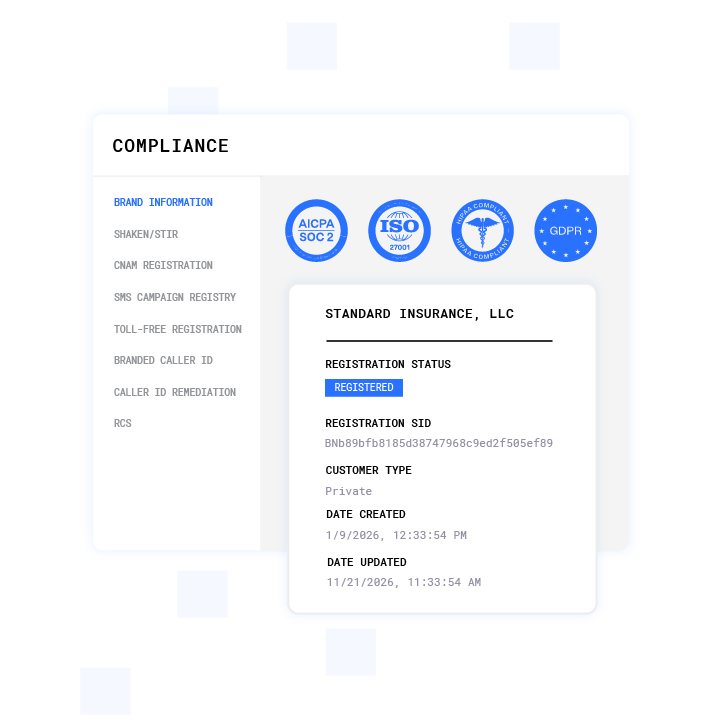
For outbound operations, Plura’s AI Predictive Dialer includes TCPA and DNC compliance features, SOC 2, HIPAA, ISO, GDPR support, and SHAKEN/STIR caller ID verification inside a single platform.1 Plura is its own FCC-licensed audio bridging carrier, so DNC scrubbing and TCPA-litigator list filtering are enforced at the carrier level before a call leaves the network.
Watch a live demo of Plura’s compliance engine or review pricing and plan tiers with your team.
Frequently Asked Questions
What is Kari’s Law?
Kari’s Law is a federal mandate, implemented by the FCC in August 2019, that requires MLTS in offices, hotels, campuses, and similar facilities to allow users to dial 911 directly without a prefix such as “9.” The law also requires MLTS to send a notification to a central on-site location, such as a front desk or security office, whenever a 911 call is placed so staff can assist first responders with building access. The rules are codified at 47 C.F.R. Part 9. The law is named after Kari Hunt, who was killed in a hotel room in 2013 while her daughter could not reach 911 because the hotel’s phone system required a prefix.
What is RAY BAUM’s Act?
RAY BAUM’s Act is a federal law that includes Section 506, which directed the FCC to adopt rules ensuring that “dispatchable location” information travels with 911 calls. Dispatchable location means the street address, floor level, and room number of the person placing the 911 call, rather than only the building address. The FCC adopted implementing rules in August 2019 under 47 C.F.R. Part 9. These rules apply to MLTS, fixed telephony, interconnected VoIP services, Internet-based Telecommunications Relay Services, and mobile text service, to the extent technically feasible. The goal is to give 911 dispatchers enough detail to send first responders to the correct floor and room.
Can you get in trouble for cold calling?
Cold calling can expose a business to significant legal risk when calls do not align with TCPA consent standards, DNC rules, or calling-hour limits. Under 47 U.S.C. § 227(b)(3), statutory damages run $500 per violation for negligent violations and $1,500 per violation for knowing or willful violations, with no aggregate cap. State mini-TCPA laws in Florida, Oklahoma, Maryland, and others add separate per-violation exposure on top of federal damages. The FTC can also assess civil penalties up to $53,088 per violation under the Telemarketing Sales Rule. Liability attaches to the entity placing the call, even when a lead generator supplied the list. Qualified counsel can help map the specific rules that apply to a given outbound program.
What are the calling hours for telemarketing?
Under 47 C.F.R. § 64.1200(c)(1), telemarketing calls are restricted to 8 a.m. through 9 p.m. local time at the called party’s location, seven days a week. Several states impose narrower windows. Florida and Oklahoma cap calls at 8 p.m. Oregon, effective January 1, 2026, also enforces an 8 p.m. cutoff and limits solicitations to three per 24-hour period per contact. Connecticut restricts calls to 9 a.m. through 8 p.m. Texas applies a 9 a.m. start time Monday through Saturday and a noon start on Sundays. Massachusetts requires calls to end by 8 p.m. At least 13 states impose a 9 a.m. start time, stricter than the federal 8 a.m. floor. Consent does not override calling-hour restrictions because the time windows function as a statutory floor. The called party’s location controls which state’s rules apply, not the caller’s location.
What is the 3% abandonment rate rule?
The FCC’s abandonment rate rule at 47 C.F.R. § 64.1200(a)(7) caps the percentage of live-answered telemarketing calls that may be abandoned at 3%, measured over a 30-day period for a single campaign. A call is counted as abandoned if a live agent is not connected within two seconds of the called party finishing their greeting. Violating the abandonment cap is a separate TCPA violation with the same $500 to $1,500 per-violation exposure as other TCPA infractions. The rule is designed to prevent predictive dialers from generating more connected calls than available agents can handle.
Do I need consent for multi-line dialing?
For outbound telemarketing that uses an automatic telephone dialing system (ATDS) or prerecorded voice to call cell phones, prior express written consent is required under 47 C.F.R. § 64.1200(f)(9). The consent must be in writing, must name the specific seller, must identify the authorized phone number, and must confirm that consent is not a condition of purchase. For informational or transactional calls, a lighter standard of prior express consent may apply depending on the call type and number called. State mini-TCPA laws in Florida, Oklahoma, and others use broader autodialer definitions than the federal standard established in Facebook v. Duguid (592 U.S. 395, 2021), so list-based dialers that fall outside the federal ATDS definition may still require consent under state law. Qualified counsel can help determine the applicable consent standard for a specific program.
What are state mini-TCPA laws?
State mini-TCPA laws are state statutes that impose telemarketing restrictions stricter than the federal TCPA floor. The federal TCPA at 47 U.S.C. § 227(e)(1) does not preempt state laws that impose more restrictive intrastate requirements, so federal compliance does not shield a caller from state liability. At least 13 states have passed their own stricter telemarketing laws. Florida’s FTSA, Oklahoma’s Telephone Solicitation Act, and Maryland’s statute each provide private rights of action with $500 to $1,500 per-violation damages that stack on top of federal TCPA exposure. Texas SB 140 allows up to $5,000 per violation. Pennsylvania’s amended Telemarketer Registration Act allows up to $1,000 per violation or $3,000 for violations affecting consumers age 60 or older. State jurisdiction generally attaches based on where the called party is located at the time of the call, not the area code or the caller’s location.
How do I avoid “Spam Likely” labels on outbound calls?
Spam labels operate at the carrier level, so they require carrier-level tools. SHAKEN/STIR caller ID verification, implemented under the TRACED Act, authenticates caller ID on IP networks and signals to destination carriers that a call has legitimate origination. Branded caller ID, issued directly through an FCC-licensed carrier rather than a third-party reseller, presents the company’s name and call purpose to the recipient instead of an unfamiliar number. Plura issues branded caller ID directly through its own FCC-licensed carrier and runs SHAKEN/STIR authentication on every outbound call. Many Twilio-based API resellers cannot issue branded caller ID under their own carrier identity and inherit the reseller’s number reputation instead. For a full look at Plura’s outbound dialing capabilities, see the AI Predictive Dialer page.
Conclusion: Connecting Outbound and Office Multi-Line Rules
Multi-line dialing is legal in the United States for both outbound telemarketing and office phone systems, and each context carries its own compliance framework. Outbound dialers must manage TCPA consent, DNC scrubbing, calling-hour limits, the 3% abandonment cap discussed earlier, and a growing set of state mini-TCPA laws with per-violation exposure that can reach thousands of dollars. Office MLTS must satisfy Kari’s Law and RAY BAUM’s Act 911 requirements under 47 C.F.R. Part 9. Both areas continue to evolve as state legislatures and the FCC update rules, so leadership teams benefit from ongoing legal review.
For outbound operations, Plura’s AI Predictive Dialer runs on Plura’s FCC-licensed carrier infrastructure with TCPA and DNC controls, SOC 2, HIPAA, ISO, GDPR support, and SHAKEN/STIR caller ID verification built into the platform.1 Real-time DNC scrubbing and TCPA-litigator list filtering run before each dial. Consent records are timestamped, immutable, and audit-ready, and quiet-hours rules apply automatically through time-zone detection on every contact.
Schedule a Plura demo to see how carrier-level intelligence supports compliance, or compare plan options with your operations and legal teams.
1 Plura AI maintains SOC 2, HIPAA, ISO, and GDPR posture as part of its platform infrastructure. References to compliance frameworks in this article describe Plura’s platform capabilities and do not constitute a guarantee that any customer using Plura will themselves be compliant with applicable laws or standards. Customers remain solely responsible for their own regulatory obligations, certifications, consent management, recordkeeping, and the claims they make to their own end users. Consult qualified legal counsel for guidance specific to your use case.
2 This article describes regulatory frameworks at a general level and does not constitute legal advice. Laws and regulations vary by jurisdiction, change over time, and apply differently depending on facts and circumstances. Readers should consult qualified legal counsel before making compliance decisions.
This article is provided for informational purposes only and reflects Plura AI’s understanding at the time of publication. Product capabilities, integrations, and specifications are subject to change. For the most current information, visit plura.ai.
This article was produced with the assistance of AI tools and reviewed by Plura AI prior to publication.